Leave Your Message
*Name Cannot be empty!
* Enter product details such as size, color,materials etc. and other specific requirements to receive an accurate quote. Cannot be empty
0%

As the Die Casting industrycontinues to push boundaries and drive innovation across different sectors, we’re honestly expectin’ some pretty exciting develoPments by 2025. With tech advancing so rapidly, it’s really reshaping how manufacturing works. Experts likeDr. Richard Chang — who’s pretty much a go-to guy in die casting research — keep sayin’ that 'the future of die casting is all about smart automation and sustainability.' That kind of sets the stage for us to dive into the top ten die casting innovations that are seriously about to make a big splash soon.
Top 10 Die Casting Innovations to Watch for in 2025

Here at Ningbo Jiehuang Chiyang Electronic Tech Co., Ltd., we’re right in the middle of this shift, leading the way with comprehensive solutions for Metal Parts right here in China. Our team’s got years of hands-on experience designing custom metal parts, so we’re pretty tuned into these industry changes. We’re really focused on things likebetter materials, smarter energy use, and cutting-edge manufacturing techniques — all to make sure we’re not just meeting but actually surpassing what our clients expect, especially as the market keeps evolving. As the world of die casting keeps changing, we’re excited for you to check out the innovations that are set to shape the industry come 2025.

Emerging Materials Transforming Die Casting Processes for Enhanced Performance

The die casting industry is on the brink of a transformative evolution, largely driven by the emergence of innovative materials that are set to enhance performance across a multitude of applications. As the demand for lightweight and durable components escalates, the incorporation of advanced alloys such as magnesium and aluminum-lithium is becoming increasingly significant. According to a report by MarketsandMarkets, the die casting market is projected to reach $8.8 billion by 2026, driven by these emerging materials that promise not only improved strength-to-weight ratios but also better wear resistance and thermal stability.

Furthermore, advancements in polymer-based die casting are surfacing as game-changers. These materials offer enhanced flexibility in design and can significantly reduce production times and costs. The Global Die Casting Market Analysis by Allied Market Research predicts that the increasing use of 3D printing technologies to develop die casting molds will further streamline the process, allowing for intricate shapes and complex geometries. As manufacturers look to optimize their production processes, these emerging materials are playing a crucial role, enabling higher efficiency and fostering sustainable practices while maintaining quality.

Integration of Smart Technologies in Die Casting Equipment and Processes

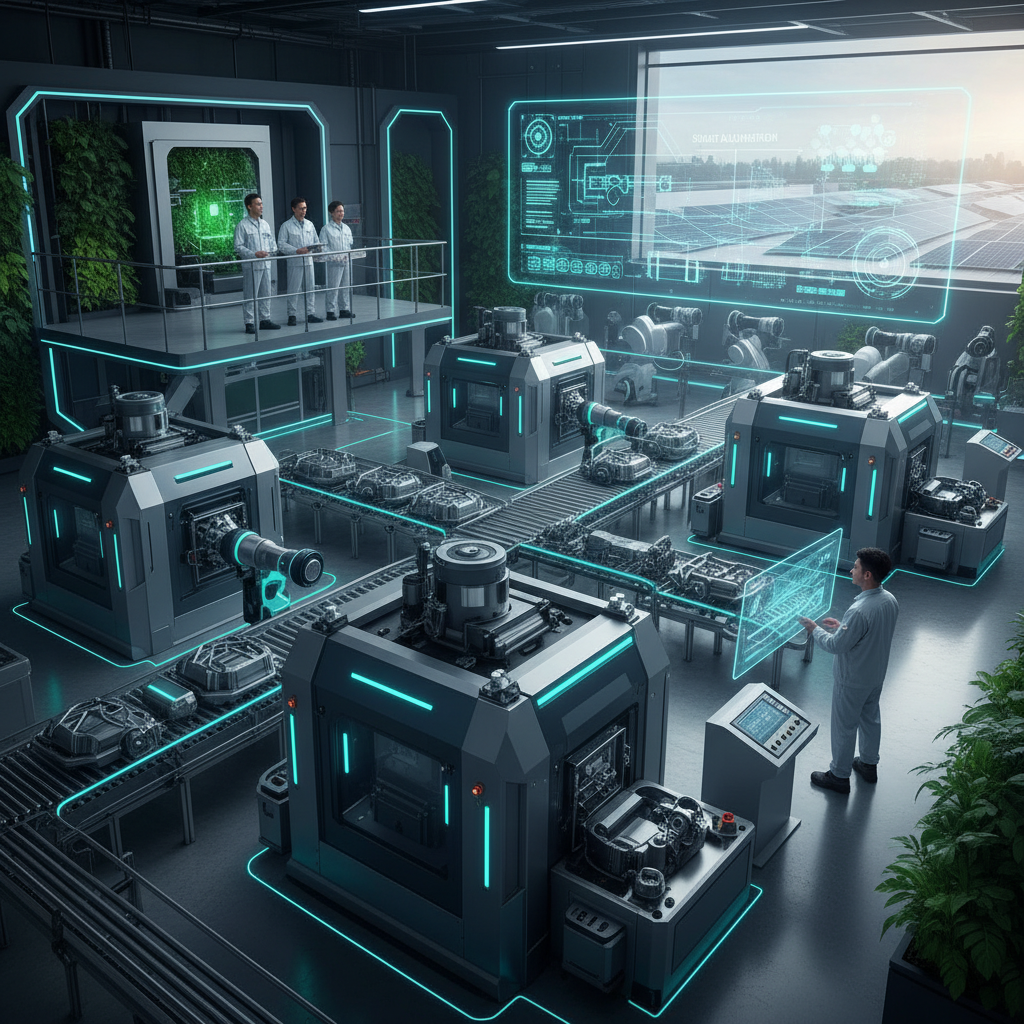
The integration of smart technologies in die casting processes is emerging as a critical innovation in the manufacturing industry. These advancements leverage digital manufacturing technologies, enabling significant improvements in productivity and efficiency. With the implementation of smart solutions such as robotic systems, factories can adapt to high part variety and smaller batch sizes, meeting the demands of a rapidly changing market. This flexibility not only boosts output but also enhances the quality and precision of the components produced.

In addition to automation, the use of smart technologies facilitates better supply chain management, an area that saw newfound importance during the COVID-19 pandemic. Blockchain technology, for example, is becoming a game-changer by ensuring transparency and traceability throughout the supply chain. As organizations strive for sustainability, investing in smart and secure processes becomes vital for optimizing resource usage and reducing waste. Companies like Ningbo Jiehuang Chiyang Electronic Tech Co., Ltd. are at the forefront of this movement, using their extensive experience to develop custom metal parts that incorporate these cutting-edge innovations.

Advancements in Simulation Software for Better Die Design and Production Efficiency

Top 10 Die Casting Innovations to Watch for in 2025

Advancements in simulation software are set to revolutionize die casting in 2025, aligning with the industry's increasing demands for efficiency and precision. With the emergence of sophisticated algorithms and enhanced computational capabilities, manufacturers can expect significant improvements in die design processes. These innovations enable engineers to create highly accurate digital models that simulate the casting process, allowing for real-time analysis of variables such as temperature distribution and material flow. As a result, potential issues can be identified and mitigated before physical production, leading to reduced waste and optimized resource allocation.

Moreover, the integration of artificial intelligence and machine learning into simulation tools promises even greater advancements. These technologies can analyze large datasets generated during the casting process, uncovering patterns that traditional methods might miss. As a result, manufacturers can achieve a deeper understanding of their operations and harness predictive analytics to improve production efficiency. This not only minimizes the risk of defects but also enhances the overall quality of the die-cast products, making it a game-changer for the industry as it moves towards more automated and efficient practices in 2025.

Sustainability Trends in Die Casting: Eco-friendly Innovations to Reduce Waste

As the die casting industry evolves, sustainability has emerged as a pivotal focus in innovation. Companies are increasingly adopting eco-friendly practices to significantly reduce waste and minimize their environmental footprint. A key development in this area is the implementation of closed-loop systems, where scrap metal from the die casting process is recycled back into production, thereby decreasing the overall demand for raw materials and energy.

Moreover, advancements in materials and technologies are enabling manufacturers to create lighter and more durable components without compromising quality. For instance, the introduction of biodegradable coatings and energy-efficient furnaces is helping to decrease emissions and resource consumption. Additionally, 3D printing technology is making it possible to produce complex die casting molds that require less material and generate less waste during the manufacturing process. These innovations not only align with global sustainability goals but also add value by providing cost-effective solutions for manufacturers looking to enhance their operational efficiency.

Customization Techniques Revolutionizing Die Casting for Niche Markets

The die casting industry is on the brink of a transformative evolution, especially when it comes to customization techniques that cater to niche markets. As manufacturers increasingly demand unique solutions, innovative methods are emerging to meet these specific needs. Advanced technologies such as 3D printing combined with automated die casting processes are paving the way for tailored designs that were once thought impossible. This shift not only allows for intricate geometries but also enhances the ability to produce small batches, which is essential for specialized products in sectors such as automotive and aerospace.

Moreover, the integration of smart manufacturing technologies is enabling real-time adjustments during the die casting process. By using data analytics and machine learning, companies can create highly customized parts that fit precise specifications, minimizing waste and reducing lead times. This is particularly relevant for businesses catering to specialized applications, where standard solutions may not suffice. As these innovations gain traction, we can expect a significant increase in the ability to cater to diverse customer requirements, ultimately reshaping the landscape of die casting for years to come.

Top 10 Die Casting Innovations to Watch for in 2025

This chart illustrates the impact score of various die casting innovations anticipated to shape the industry in 2025. Each innovation reflects advancements in customization techniques that target niche markets, revealing significant potential for improvement and adaptation in manufacturing processes.

Future Challenges: Adapting Die Casting Practices for Industry 4.0 Standards

Top 10 Die Casting Innovations to Watch for in 2025

As the die casting industry gears up for 2025, the transition to Industry 4.0 standards poses both challenges and opportunities. The integration of smart technologies, such as the Internet of Things (IoT) and artificial intelligence (AI), is reshaping die casting practices. Manufacturers must adapt their processes to enhance automation, improve data analytics, and increase operational efficiency. This demands a significant investment in new technologies and equipment, as well as a skilled workforce capable of operating and maintaining these advanced systems.

Moreover, embracing Industry 4.0 requires a cultural shift within organizations. Companies must foster a mindset of continuous innovation and agility, encouraging cross-disciplinary collaboration among engineering, IT, and production teams. Developing an ecosystem that prioritizes sustainability and resource efficiency will also be crucial, as consumers increasingly demand environmentally friendly products. To succeed in this evolving landscape, die casting businesses must not only focus on technological advancements but also cultivate a corporate culture that embraces change and drives collective progress.

Exploring Market Trends and Key Suppliers in the China Custom Wholesale Aluminum Pressure Die Casting Parts Industry: A Data-Driven Analysis

The China custom wholesale aluminum pressure die casting parts industry is experiencing significant growth, driven by increasing demand across various sectors such as automotive, electronics, and consumer goods. According to recent market reports, the industry is projected to grow at a compound annual growth rate (CAGR) of over 6% through 2027, as manufacturers seek lightweight yet durable materials for their products. This trend underscores the importance of high-quality die casting services that can deliver precision and efficiency.

At the forefront of this industry are manufacturers like Aluminium Casting China, who specialize in providing 100% quality guaranteed die casting services. With an emphasis on both aluminum and zinc die casting, these manufacturers are well-equipped to meet the diverse needs of their clients. Their capacity to produce complex OEM die casting parts allows businesses to innovate and refine their product designs without compromising on quality or performance. As the industry continues to evolve, the need for reliable suppliers who can adapt to changing market demands becomes increasingly critical.

Data indicates that the shift toward eco-friendly materials and processes is influencing purchasing decisions in the aluminum die casting market. Companies are increasingly seeking suppliers who can demonstrate sustainable practices along with competitive pricing. This presents a significant opportunity for Aluminium Casting China to position itself as a leader in both quality and sustainability, offering clients tailored solutions that align with their operational goals and environmental commitments.

FAQS

: What are the emerging materials driving the transformation in die casting processes?

: Innovative materials such as magnesium and aluminum-lithium alloys are driving the transformation, offering improved strength-to-weight ratios, better wear resistance, and enhanced thermal stability.

What is the projected market value of the die casting industry by 2026?

According to MarketsandMarkets, the die casting market is projected to reach $8.8 billion by 2026.

How are polymer-based die casting materials changing the industry?

Polymer-based die casting materials provide enhanced design flexibility, significantly reduce production times and costs, and allow for more intricate shapes and complex geometries.

What role do smart technologies play in die casting processes?

Smart technologies improve productivity and efficiency in die casting by enabling better supply chain management, enhancing quality and precision, and allowing for adaptability to high part variety and smaller batch sizes.

How are companies addressing sustainability in die casting?

Companies are adopting eco-friendly practices like closed-loop systems to recycle scrap metal, reducing waste and the demand for raw materials.

What innovations are contributing to reduced waste in die casting manufacturing?

Innovations such as biodegradable coatings, energy-efficient furnaces, and 3D printing technology contribute to reduced waste by minimizing resource consumption and allowing for complex designs with less material usage.

How is blockchain technology impacting the die casting supply chain?

Blockchain technology enhances transparency and traceability in the supply chain, which is crucial for optimizing resource usage and reducing waste, especially highlighted during the COVID-19 pandemic.

What benefits do the emerging materials and technologies provide to manufacturers?

These emerging materials and technologies enable manufacturers to achieve higher efficiency, foster sustainable practices, and maintain quality while enhancing operational efficiency.

Conclusion

In anticipation of the advancements in die casting for 2025, several key innovations are emerging that promise to redefine the landscape of this manufacturing process. The integration of advanced materials is not only enhancing performance but also paving the way for the adoption of smart technologies within die casting equipment. This evolution will lead to more efficient production processes and improved die designs, supported by advancements in simulation software. Additionally, sustainability trends are driving eco-friendly innovations that aim to minimize waste, while customization techniques are revolutionizing die casting to cater to niche markets.

At Ningbo Jiehuang Chiyang Electronic Tech Co., Ltd., we recognize these trends and the need for adaptability in die casting practices as Industry 4.0 standards continue to rise. Our extensive experience in developing custom metal parts positions us to leverage these innovations effectively, ensuring that we remain at the forefront of the evolving die casting industry.

Ethan

Ethan

Ethan is a dedicated marketing professional at Ningbo Jiehuangchi Yang Electronic Technology Co., Ltd., where he excels in promoting the company's innovative electronic products. With extensive knowledge of the industry and a keen understanding of market trends, Ethan plays a crucial role in......
Previous Ultimate Resource for Global Buyers on Die Casting Solutions