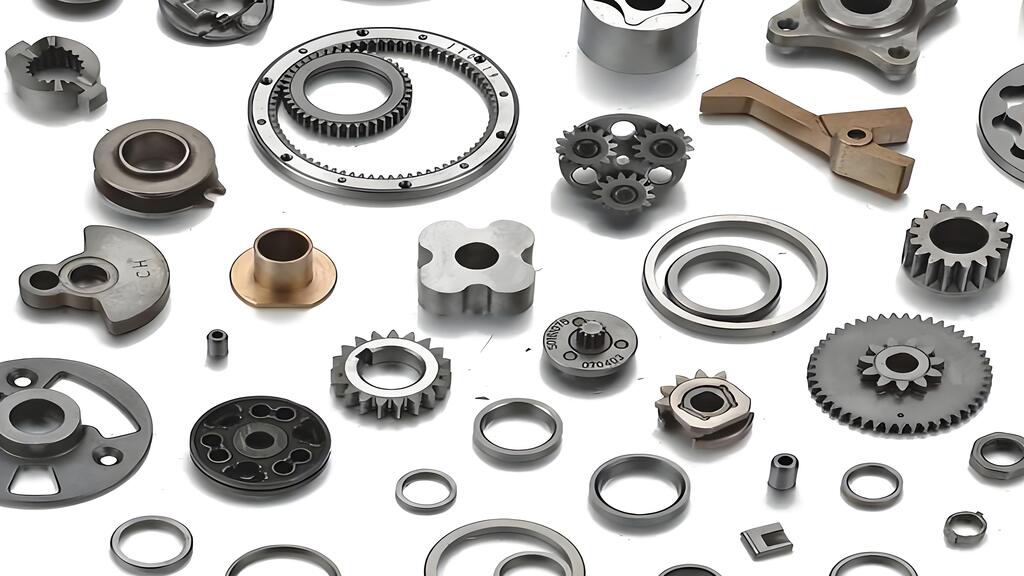


10 key factors affecting injection molding

1. Material selection
In the Powder Metallurgy injection molding process, the selection of the right material has an important impact on the performance and cost of the final product. High performance alloys or special materials are usually more expensive because they may have higher material costs or require additional processing conditions, processing steps. In addition, some special materials may require specific certifications or standards, which can also increase costs. Therefore, manufacturers need to carefully weigh material performance, cost and application requirements to select the most economical and suitable material.
Here are a few common MIM materials , sorted by price:
1) Iron, the commonly used iron basic material is MIM-4605.
2) Stainless Steel: Stainless steel is a common MIM material with good corrosion resistance and mechanical properties and is suitable for many industrial applications. The price of stainless steel materials is relatively high, especially high-performance grade stainless steel, MIM-304L, MIM-316L stainless steel or MIM-17-4PH stainless steel.
3) Titanium Alloy: Titanium alloy Ti-MIM has excellent strength and corrosion resistance, as well as low density, so it is widely used in aerospace and medical devices and other fields. However, the price of titanium alloy is relatively high and it is a high-end MIM material.
4) Nickel-based Alloy: Nickel-based alloy has excellent high temperature resistance and corrosion resistance, and is widely used in aerospace, chemical industry, energy and other fields. Due to its complex material composition and difficulty in processing, the price is higher.
5) Iron-based Alloy: Iron-based alloy is one of the most common materials in MIM. It has good mechanical properties and formability and is suitable for industries such as automobiles, electronics and machinery. Compared with other high-performance alloys, the price of iron-based alloys is relatively moderate.
6) Tungsten Alloy: Tungsten alloy has extremely high melting point and density and is widely used in the manufacture of heavy parts and high-temperature tools. However, due to the higher cost of tungsten alloy, it is usually used in special fields such as aerospace or defense.
2. Part complexity
The design complexity of the part directly affects the difficulty and cost of the manufacturing process. Parts with complex geometries, subtle features, or tight tolerance requirements often require more complex production processes and more sophisticated equiPment. This may include the use of special molds, multi-step machining processes or longer production runs. Therefore, manufacturers need to take the complexity of the part into account at the design stage and simplify the design as much as possible to reduce costs.
3. Production volume
Production quantity is one of the important factors affecting costs. Large-scale production often allows for lower unit costs because fixed costs can be spread over more products. In addition, high-volume production can leverage automation and process optimization to further reduce the manufacturing cost of each part. In contrast, low-volume production may result in a higher proportion of fixed costs, thereby increasing the cost of each part.
4. Mold cost 
Molds are key equipment in the powder metallurgy injection molding process, and their manufacturing and maintenance costs are often high. The complexity of the mold, material selection, and expected service life all affect its cost. Highly customized molds typically require more machining steps and higher quality materials, and therefore cost more. Manufacturers typically evaluate the cost-effectiveness of a mold based on expected production volume and part complexity and select the most appropriate mold option.
Here is a detailed explanation of a few of the main factors:
1) Complexity of the Mold: The complexity of the mold is one of the important factors affecting cost. Complex mold designs may require more processing steps and higher levels of technology, resulting in a corresponding increase in manufacturing costs. For example, molds with multiple hollow parts, internal channels, or fine structures will be more complex and require higher-precision processing equipment and longer processing cycles, which will increase the cost of the mold.
2) Material Selection: The material selection of the mold also has an important impact on the cost. Some specialty materials have a higher cost but may have better wear resistance, corrosion resistance or thermal conductivity and are suitable for specific production needs. Selecting the appropriate mold material requires comprehensive consideration of the material's performance, durability and cost to ensure that production requirements are met while minimizing costs.
3) Size and Weight of the Mold: The size and weight of the mold will also directly affect the cost. Larger or heavier molds require more material and longer processing time, and therefore will be more expensive to manufacture. In addition, large molds also require larger processing equipment and more human resources to complete the processing work, which will increase costs.
4) Expected Lifespan: The expected lifespan of the mold has an important impact on the cost. If the mold needs to operate stably for a long time without damage or wear, then more durable materials and more precise machining processes usually need to be selected, which will increase costs. In addition, some special wear-resistant coatings or surface treatments may also be required to extend the life of the mold, but these additional measures will increase the cost.
5) Design Improvements and Optimization: Improvements and optimization during the mold design stage can help reduce costs. By optimizing structural design, reducing unnecessary material consumption, and simplifying processing techniques, the manufacturing cost of molds can be effectively reduced. At the same time, the use of advanced CAD/CAM technology and simulation analysis tools can improve design efficiency and accuracy, thereby reducing design costs.
6) Number of holes in the mold
Depending on the size and structure of the product, we can do up to 32 caves. The more mold cavities, the more complex the structure, and the higher the mold cost.
5. mim product tolerance requirements
Tolerance refers to the allowable deviation range of part size and shape. MIM products usually have high accuracy and dimensional stability, and their basic tolerances are generally between ±0.3% and ±0.5%. This means that during production, MIM part dimensions may fluctuate between plus or minus 0.3% and 0.5% of design specifications.
If the manufacturing process requires more precise tolerances, then more precise mold manufacturing or additional CNC machining will be required, as well as stricter process control and more frequent quality inspections. These additional measures will increase production costs.

6. Surface treatment
The surface treatment of a part has a significant impact on its appearance, performance and durability. Some applications require a smooth surface to reduce friction or improve corrosion protection, while other applications may require special coatings to increase wear resistance or improve appearance. Different surface treatment methods have different costs, such as mechanical polishing, chemical treatment or coating technology. Manufacturers need to select the appropriate surface treatment based on their part’s needs and budget.
1) Polishing: Polishing is a common surface treatment method that can make the surface of MIM parts smooth and uniform, and improve its appearance quality. Through mechanical polishing or chemical polishing, surface defects and roughness can be removed, giving the part surface a better finish and brightness.
Some products have particularly high surface requirements and require mirror polishing. This process will increase more costs than ordinary polishing.
2) Sandblasting: Sandblasting is a method of treating the surface of MIM parts by spraying abrasive particles at high speed. This surface treatment method can improve the surface quality to a certain extent, increase surface roughness, improve adhesion, and provide better adhesion for subsequent coatings or coatings.
3) Coating: Spraying is a commonly used surface treatment method that can add a protective coating to the surface of MIM parts to improve its corrosion resistance and wear resistance. Common spray coating materials include anti-rust paint, spray paint, spray paint, etc. The appropriate coating material can be selected according to specific application requirements.
4) Anodizing: Anodizing is a commonly used surface treatment method, suitable for metal materials such as aluminum alloys. By forming an oxide film on the surface, the corrosion resistance, hardness and wear resistance of MIM parts can be increased while improving their appearance quality.
5) Plating (PVD Plating): Plating is a common surface treatment method that can coat the surface of MIM parts with a layer of metal or alloy coating to improve its appearance, corrosion resistance and conductive properties. Common plating materials include nickel, chromium, copper, zinc, etc. The appropriate plating materials and processes can be selected according to specific requirements.
6) Polishing + Plating: Sometimes, MIM parts are polished first and then plated to obtain better surface quality and appearance. This combined surface treatment method can give the surface of the part a higher finish and gloss, increasing its visual appeal and decorative effect.
7. Production lead time
Urgent orders or fast delivery requirements may result in increased production costs. Overtime charges, expedited processing fees, and supply chain strains can drive up production costs. Therefore, manufacturers need to plan in advance and reasonably arrange production schedules to minimize additional costs caused by emergency orders. The production lead time of most factories is 30-40 days. If customers have special requirements, it can be advanced to 15-20 days.
8. Quality standards
Compliance with quality standards and certifications is essential to ensure product quality and compliance with specified requirements. However, this may require additional investment, including the establishment of a quality management system, employee training, and the purchase of quality testing equipment. Manufacturers need to weigh the costs of quality standards against their benefits and ensure that they remain cost-effective while meeting customer needs.
Common certifications include ISO90001, and ISO/TS 16949
9. Market demand
Changes in market demand will affect the price of raw materials, supply chain stability, and production lead times. In the event of an imbalance between supply and demand, raw material prices may rise, and supply chain disruptions may cause production to stall, affecting costs. Therefore, manufacturers need to pay close attention to market dynamics and flexibly adjust supply chains and production plans to respond to changes in market demand.
10. Supplier relations
Establishing good relationships with suppliers is important to reduce costs and improve production efficiency. Stable supply chain, timely technical support and flexible cooperation terms can help manufacturers reduce procurement costs and production costs. In addition, long-term cooperative relationships can also bring more cooperation opportunities and the possibility of joint development, further enhancing the competitive advantages of both parties.
Ningbo Jiehuang, as an excellent craftsman and experienced engineer involved in the MIM industry in China for more than 15 years, can provide the most professional DFM report to meet customers' customized needs, and provide customers with more cost-effective quotation suggestions from materials selection, mold design, post-processing and other aspects.
Customized is complex, JH let it easy - send us an inquiry