

Introduction
Selecting ceramic rods for furnaces, semiconductor tools, chemical processing lines, or high-wear assemblies requires more than matching a diameter and length. Performance depends on how material choice, purity, tolerances, surface finish, and operating conditions interact under heat, corrosion, load, and rapid thermal cycling. This article explains how B2B buyers can compare options such as alumina, zirconia, and silicon carbide, define critical custom specifications, and evaluate suppliers against real application risks. The goal is to help procurement and engineering teams reduce failure rates, control lifecycle cost, and move from generic component sourcing to application-specific ceramic rod selection.
Why High-Precision Ceramic Rods Are Strategic Components
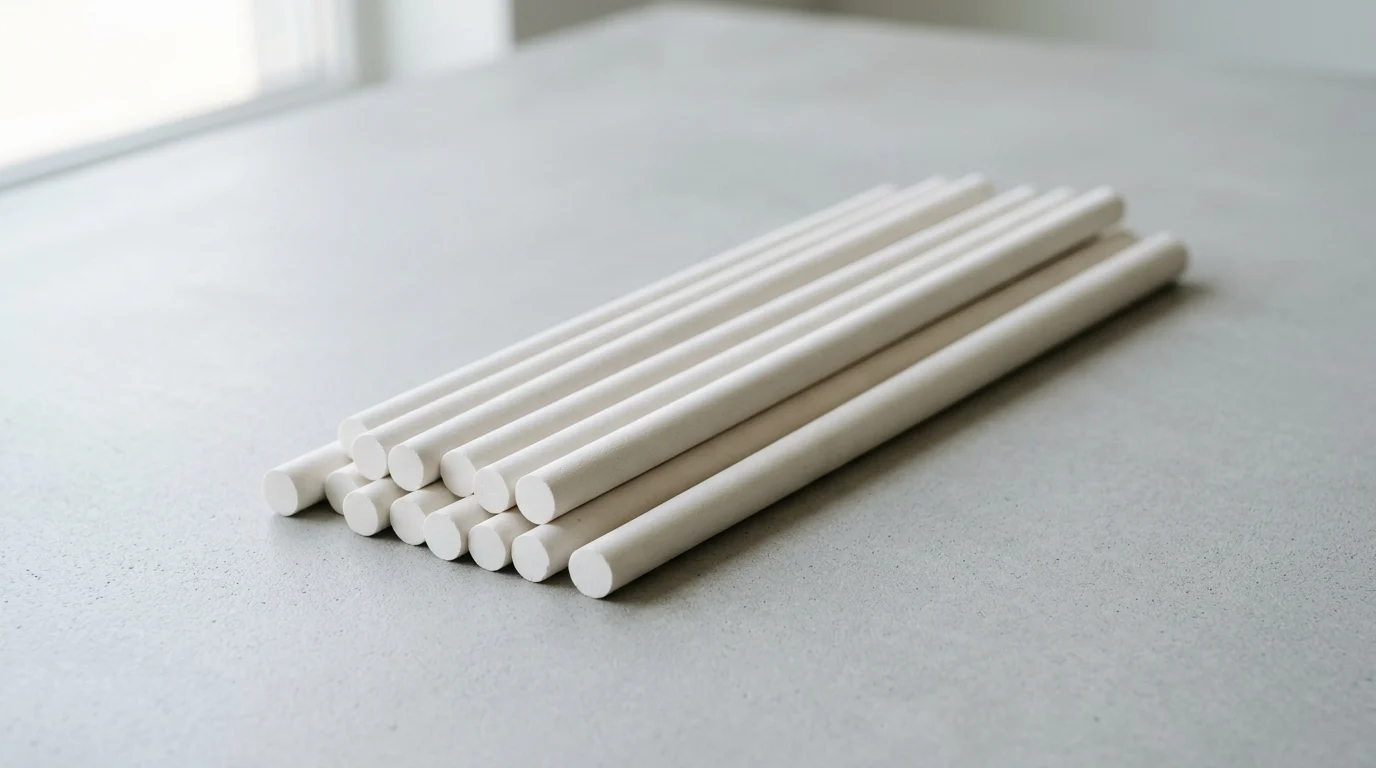
High-precision ceramic rods serve as structural and functional cornerstones in industrial applications where conventional metals and advanced polymers fail. Engineered to withstand aggressive degradation, these components provide critical structural integrity under extreme conditions. For instance, advanced technical ceramics routinely maintain mechanical stability at temperatures exceeding 2,000°C, a threshold where superalloys undergo severe plastic deformation or melting.
How ceramic rods reduce failure risk in high-heat environments
In high-heat processing environments, catastrophic failure often stems from thermal shock or continuous high-temperature creep. Ceramic rods, particularly those formulated from high-purity Alumina (Al2O3) or Silicon Carbide (SiC), mitigate this risk through exceptionally low coefficients of thermal expansion (CTE). Alumina rods typically exhibit a CTE of approximately 8.0 x 10^-6 /°C and can operate continuously at 1,700°C without oxidizing. This dimensional stability prevents seizing or fracture within precision assemblies during rapid thermal cycling.
Which B2B sectors drive demand for custom ceramic rods
Several demanding B2B sectors heavily rely on custom ceramic rods to maintain operational continuity. The semiconductor manufacturing industry requires ultra-high purity components—often specifying 99.9% to 99.99% Al2O3—for wafer handling and plasma chamber internals to prevent ionic contamination. In the aerospace sector, ceramic rods serve as high-temperature sensor housings and actuator components. Additionally, the medical device industry depends on Zirconia rods for surgical instruments and implantable components due to their superior biocompatibility and resilience to repeated autoclave sterilization.
How B2B Buyers Evaluate Ceramic Rods

Selecting the appropriate ceramic material requires a rigorous evaluation of the operating environment. Buyers must move beyond generic material categories and analyze specific grade formulations to combat wear, chemical attack, or electrical arcing. For high-voltage applications, advanced ceramics provide exceptional insulation, often boasting dielectric strengths exceeding 15 kV/mm, making them indispensable for specialized electrical feedthroughs and high-power insulators.
Which ceramic grades perform best under different conditions
Different ceramic grades are formulated to excel under distinct environmental stressors. Silicon Nitride (Si3N4) offers outstanding thermal shock resistance and fracture toughness, making it ideal for molten metal handling and high-speed bearing components. Zirconia (ZrO2), specifically Yttria-Stabilized Zirconia (YSZ), provides the highest mechanical strength and toughness at room temperature, often replacing steel in high-wear tooling. Conversely, Silicon Carbide (SiC) is the preferred choice for extreme hardness, superior thermal conductivity, and resistance to aggressive chemical corrosion.
What comparison points a material selection table should include
To facilitate objective decision-making, procurement and engineering teams should rely on standardized material selection matrices. A comprehensive comparison table must include metrics that directly impact application viability.
| Material Grade | Max Continuous Temp (°C) | Flexural Strength (MPa) | Fracture Toughness (MPa·m^1/2) | Hardness (HV) |
|---|---|---|---|---|
| Alumina (99.5%) | 1,700 | 300 - 400 | 4.0 - 5.0 | 1,500 |
| Zirconia (Y-TZP) | 1,000 | 900 - 1,200 | 8.0 - 10.0 | 1,250 |
| Silicon Nitride | 1,200 | 700 - 900 | 6.0 - 7.0 | 1,600 |
| Silicon Carbide | 1,600 | 400 - 500 | 3.0 - 4.0 | 2,500 |
How to assess trade-offs among strength, machinability, purity, and dimensional stability
Selecting the optimal rod involves navigating inherent material trade-offs. While Zirconia offers exceptional fracture toughness (up to 10.0 MPa·m^1/2), its strength rapidly degrades at temperatures exceeding 1,000°C, a point where Alumina remains highly stable. Machinability presents another challenge; traditional technical ceramics require expensive diamond grinding post-Sintering. If complex geometries and tight tolerances are required on short notice, buyers might consider machinable glass-ceramics, acknowledging that this choice sacrifices ultimate tensile strength and maximum operating temperature for ease of fabrication.
What Specifications Matter When Ordering Ceramic Rods
Translating an engineering requirement into a manufacturable product requires precise specification documentation. Ambiguous drawings lead to excessive manufacturing costs or components that fail to integrate into the final assembly. Buyers must define exact parameters, recognizing that achieving surface finishes finer than Ra 0.2 µm on hard ceramics significantly increases machining time and unit cost.
Which dimensional and geometric tolerances buyers should define
Precision applications dictate strict geometric dimensioning and tolerancing (GD&T). For ceramic rods used as pump plungers or guide rails, outer diameter tolerances are frequently specified to ±0.005 mm. Beyond simple diameter, buyers must strictly define straightness (e.g., 0.01 mm per 100 mm of length) and cylindricity. Centerless grinding is the standard method for achieving these tight tolerances, but buyers must explicitly state the required measurement methodology to ensure alignment with the supplier's inspection capabilities.
How to document operating conditions and assembly interfaces
Ceramic rods rarely operate in isolation; they must interface with metal housings, polymers, or other ceramics. Documentation must account for the operating conditions, particularly the thermal expansion mismatch between a ceramic rod and a metal receptacle. Specifications should detail the exact clearance or interference fit required at both room temperature and maximum operating temperature to prevent the ceramic from fracturing due to compressive stress or slipping due to thermal expansion of the surrounding metal.
What manufacturing factors affect final rod performance
Final rod performance is heavily influenced by the manufacturer's processing methods. Technical ceramics typically experience 15% to 20% volumetric shrinkage during the high-temperature sintering phase. Suppliers must account for this shrinkage during green machining, which involves shaping the soft, unfired material. If the final tolerances are exceptionally tight, the supplier must rely on hard grinding post-sintering using diamond abrasives. This secondary operation increases lead times and introduces the risk of micro-cracking if feed rates are not meticulously controlled.
How Buyers Assess Ceramic Rod Suppliers
The reliability of high-precision ceramic components is inextricably linked to the operational maturity of the supplier. Because internal defects in ceramics can lead to sudden, catastrophic failure, rigorous supplier vetting is mandatory. Industry-leading buyers typically mandate defect rates below 500 Parts Per Million (PPm) and require comprehensive quality management systems certified to ISO 9001:2015 or AS9100D standards.
Which quality systems and inspection records matter most
Effective suppliers deploy multi-tiered inspection protocols to guarantee consistency. Surface dimensions are verified using non-contact laser micrometers and Coordinate Measuring Machines (CMM). However, verifying internal structural integrity is equally critical. Buyers should prioritize suppliers that utilize ultrasonic flaw detection or X-ray inspection to identify subsurface voids, inclusions, or micro-cracks that could act as stress concentrators and precipitate premature mechanical failure.
What compliance, documentation, and traceability requirements to verify
Traceability and regulatory compliance are non-negotiable in highly regulated sectors. Suppliers must provide full material certifications, such as EN 10204 3.1, confirming the chemical composition and physical properties of the specific batch. For medical and aerospace applications, end-to-end lot traceability—from raw ceramic powder batches to the final machined rod—is required. Additionally, compliance documentation for RoHS and REACH directives must be readily available to ensure seamless global market access.
How packaging, MOQ, batch consistency, and shipping conditions affect supply reliability
Supply chain reliability extends beyond the manufacturing floor to encompass logistics and order fulfillment.
| Assessment Parameter | Standard Expectation | High-Risk Indicator |
|---|---|---|
| Minimum Order Quantity (MOQ) | 50 - 500 units for custom profiles | > 5,000 units (prohibits prototyping) |
| Packaging Protocols | Custom foam inserts, individual tubes | Bulk bagging (high risk of transit chipping) |
| Batch Consistency | Cpk > 1.33 for critical dimensions | Absence of statistical process control |
| Production Lead Time | 6 - 8 weeks standard | > 16 weeks without inventory buffering |
Proper shock-absorbing packaging is vital, as ceramics are highly susceptible to impact damage during transit. Buyers must also align the supplier's MOQ with their inventory strategy to prevent costly overstocking while ensuring uninterrupted production lines.
A Practical Framework for Specifying and Sourcing Ceramic Rods
Securing a reliable supply of custom ceramic rods requires a strategic, phased approach to procurement. By implementing a structured framework, B2B buyers can effectively bridge the gap between engineering specifications and commercial realities. A well-executed sourcing strategy typically allocates 4 to 6 weeks for initial prototype validation before committing to full-scale production contracts.
Which qualification process helps align material choice with application needs
The qualification process should begin with a comprehensive design-for-manufacturability (DFM) review with the chosen supplier. This is followed by the procurement of prototype rods for rigorous functional testing. Engineering teams must subject these prototypes to destructive testing, thermal cycling, and accelerated wear simulations to validate the material grade. Once the prototypes pass, a pilot run verifies the supplier's ability to maintain tight tolerances and structural consistency across a larger batch size.
How procurement teams balance unit price, service life, and supply risk
Procurement teams face the complex task of balancing upfront unit costs against long-term service life and supply chain vulnerability. Utilizing a Total Cost of Ownership (TCO) model is highly effective in this context. For example, a specialized Zirconia rod may carry a unit price three times higher than a standard Alumina counterpart, but if it extends the maintenance interval of a critical chemical pump by a factor of ten, the higher initial investment is easily justified. Furthermore, implementing a dual-sourcing strategy for critical ceramic components mitigates the risk of production downtime caused by geopolitical disruptions or localized supplier constraints.
Key Takeaways
- The most important conclusions and rationale for Ceramic Rods
- Specs, compliance, and risk checks worth validating before you commit
- Practical next steps and caveats readers can apply immediately
Frequently Asked Questions
Which ceramic rod material is best for very high temperatures?
For continuous heat, 99.5% alumina suits up to about 1700°C; silicon carbide fits severe wear and corrosion; silicon nitride is better for thermal shock.
What specifications should I provide when requesting custom ceramic rods from JHPIM?
Share material grade, purity, diameter, length, tolerances, surface finish, operating temperature, and exposure to wear, chemicals, or voltage.
When should I choose zirconia ceramic rods?
Choose Y-TZP zirconia when you need high room-temperature strength, toughness, and wear resistance, especially for tooling, medical parts, or impact-prone components.
Why do tight tolerances and fine finishes raise ceramic rod cost?
Hard ceramics usually need diamond grinding after sintering. Tighter diameter tolerances or finishes like Ra 0.2 µm add machining time, inspection, and scrap risk.
How can B2B buyers reduce failure risk in extreme environments?
Match the rod to the main failure mode: alumina for heat stability, silicon nitride for thermal shock, silicon carbide for corrosion, and high-purity alumina for semiconductor contamination control.