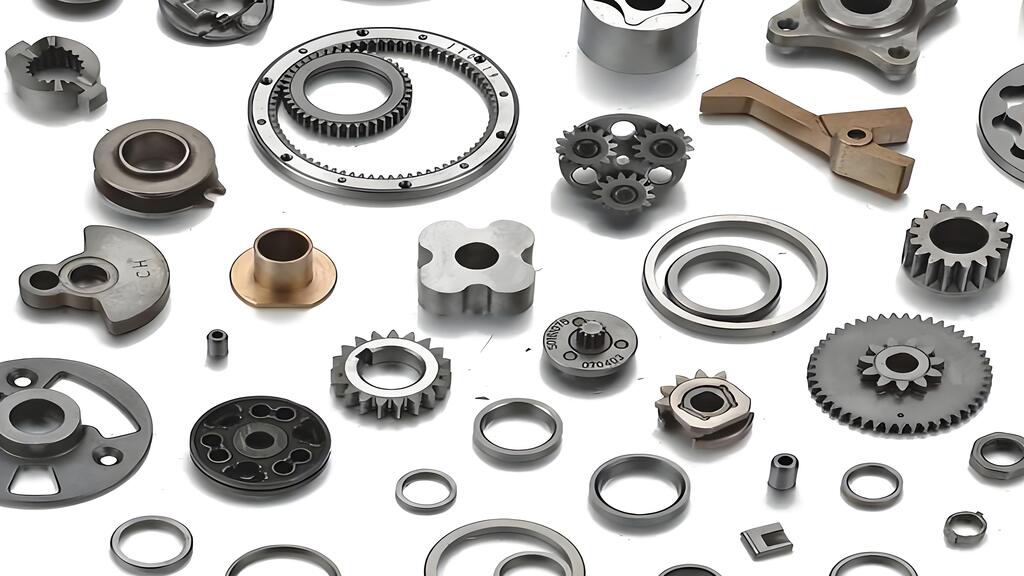


13 Most Used Automotive Ceramics
Automotive ceramics revolutionize modern vehicles by delivering superior performance under extreme conditions. These specialized materials, including zirconia, silicon carbide, and alumina, resist wear and tear exceptionally well. Their properties make them perfect for critical components like brake systems and engines that face constant friction and mechanical stress.
Ceramic components provide unique advantages over traditional materials in vehicles ranging from F1 racing cars to everyday automobiles. Ceramic brake disks enhance heat dissipation that leads to more reliable braking performance . Ceramic-carbon compounds create remarkably durable surfaces in high-performance braking systems . These automotive ceramics weigh less than conventional iron and steel components , which helps improve fuel efficiency and performance.
Manufacturers have recognized these materials' unique ability to handle extreme temperatures, corrosive environments, and intense mechanical stress, which drives market growth . Ceramics serve a vital role in vehicles' environmental sustainability devices and support industry-wide efforts to reduce emissions. This piece examines the 13 most influential automotive ceramic applications that reduce engine costs while ensuring resilience, longevity, and reliable functionality .
Zirconia in Oxygen Sensors

Zirconia oxygen sensors serve as the life-blood of modern automotive emission control systems since their debut in the late 1960s. These vital components watch exhaust gasses and send up-to-the-minute feedback to engine control units. This feedback lets engines adjust their air-fuel ratio with precision.
Zirconia in Oxygen Sensors: Ceramic material used
The sensor's core uses a special ceramic material—yttrium-stabilized zirconia (YSZ). When doped with 8 mol% yttria (8YSZ), this material creates a solid electrolyte that conducts ions at high temperatures. The sensor's design features a thimble-shaped zirconia element with thin, porous platinum electrodes coating both sides. One side touches reference gas (ambient air) while the other faces exhaust gasses.
Zirconia's unique properties make it perfect for this job:
- High tensile strength and fracture toughness
- Excellent corrosion resistance in harsh environments
- Low thermal conductivity compared to other ceramics
- Superior chemical stability at extreme temperatures
Something remarkable happens when temperatures rise above 600°C—zirconia becomes an oxygen ion conductor. This lets oxygen ions flow through the ceramic material and creates measurable voltage differences that match oxygen concentration differences.
Zirconia in Oxygen Sensors: Performance advantage
Zirconia sensors have become irreplaceable in cars because of their stellar performance. These sensors react in less than 500 milliseconds, which means engines can adjust right away. They stay accurate across a broad range of air coefficients (λ = 0.65-2.4), which helps control combustion precisely.
These sensors last a long time—often more than 100,000 miles without needing replacement. They handle tough conditions well, from high temperatures to pressure changes and corrosive gasses, which makes them reliable for years of use.
The best part? These sensors cut harmful NOx emissions by 20-30%, which helps cars run cleaner and meet environmental standards.
Zirconia in Oxygen Sensors: Cost efficiency
Zirconia oxygen sensors' economic benefits go beyond their purchase price. Market forecasts show the global zirconia oxygen sensor market should hit 1.32 USD billion in 2024, which proves how essential these sensors are in automotive systems.
Technology keeps advancing in this market. Sensor designs have changed from traditional thimble-types to planar configurations that work better in modern, fuel-efficient engines. Car manufacturers can optimize their combustion processes because of this develoPment, which leads to better fuel economy and fewer emissions.
Industries save money with zirconia sensors by controlling combustion better in boilers and furnaces. These sensors watch oxygen levels in flue gasses to prevent excess air heating, which optimizes energy use and cuts operating costs.
Emission rules keep getting stricter worldwide, making zirconia sensors more valuable. The market should grow at a compound annual rate of 4.5% from 2025 to 2035.
Alumina in Spark Plugs

Alumina oxide ceramic is the basic building block of spark plug insulators that play a vital role in internal combustion engines. The alumina insulator helps the spark plug create reliable sparks that ignite the fuel-air mixture under extreme conditions.
Alumina in Spark Plugs: Ceramic material used
Alumina (Al2O3) leads as the primary insulator material in spark plugs because of its excellent electrical and thermal properties. Engineers use alumina ceramics with content between 75% and 99.9%. High-performance spark plugs now use almost pure alumina with small amounts of other oxides.
The material's composition affects how well it performs:
- Sintered products have bending strength of 250MPa, while hot-pressed versions reach 500MPa
- A Mohs hardness of 9 gives excellent wear resistance
- The material resists electricity at 10^15 Ω·cm at normal temperature
- It can handle 15 kV/mm of electrical stress without breaking down
Spark plug insulators used to contain 95% alumina with 5% glass. New formulas now use purer compositions to work better.
Alumina in Spark Plugs: Performance advantage
Alumina works so well in spark plugs because of its unique properties. It conducts heat well and insulates electricity, which helps it survive the harsh conditions inside combustion chambers. The material stays strong at temperatures up to 900°C, making it perfect for hot engine cylinders.
Modern alumina spark plugs can handle 42 kV or more of voltage. This is much higher than older versions that topped out at 36 kV. These improvements let ignition systems pack more power into smaller spaces.
The material lasts long under tough conditions and works well in both regular and high-performance engines. Alumina ceramic balances heat and electrical properties perfectly, which makes it great for most car engines.
Alumina in Spark Plugs: Cost efficiency
Alumina oxide ceramic is an affordable option for both manufacturers and users. It gives the best mix of performance and price. The material's low cost makes it accessible to more people, with prices ranging from $0.07 to $5.00 per unit based on quality and specs.
Engine designs now use smaller parts, and alumina insulators have adapted. Most engines now use 12mm thread bodies, and some are moving to 10mm sizes. Better manufacturing methods with higher compaction pressures (from 8,500 psi to 30,000 psi) make production cheaper through better material use.
Medium-soda and regular-soda alumina options help cut costs too. Manufacturers can now get similar results at lower production costs compared to using low-soda alumina.
Silicon Nitride in Turbo Rotors

Silicon nitride has become a game-changing material for turbocharger rotors in high-performance automotive engines. This ceramic compound delivers exceptional durability and performance in extreme conditions. It makes engines more efficient and reduces maintenance costs.
Silicon Nitride in Turbo Rotors: Ceramic material used
Silicon nitride (Si₃N₄) is a manufactured compound that scientists blend through various chemical reaction methods. The material has a dark gray to black appearance and polishes to a smooth reflective surface that gives parts a distinctive look. Manufacturers use pressing and Sintering techniques to create ceramic components with remarkable properties.
This material stands out in turbocharger applications because of its unique features:
- It resists thermal shock up to 800°C
- It weighs 60% less than steel while being stronger
- It's twice as hard as tool steel and resists chemicals better
- It operates at temperatures up to 1400°C
Toyota Motor Corporation brought two types of silicon nitride ceramic rotors to the Japanese market (CT26 and CT12A). This proved the material works well in commercial automotive applications.
Silicon Nitride in Turbo Rotors: Performance advantage
Silicon nitride substantially reduces engine lag and emissions. The material handles rapid temperature changes that happen during engine operation. Turbochargers can work reliably under different loads and driving conditions because of this property.
The material resists oxidation in air thanks to an impermeable silica coat that forms at high temperatures. The protective layer can break down if certain impurities exist, so quality control during manufacturing is vital.
This material's ability to resist thermal shock and damage from foreign objects is vital for survival in turbine environments. Silicon nitride combines hardness with excellent toughness and strength. This combination reduces the risk of early failure from low-stress outliers.
Silicon Nitride in Turbo Rotors: Cost efficiency
Silicon nitride costs more than traditional materials, but its performance benefits outweigh the costs in applications where it performs better than conventional options. The material's long-term reliability and low maintenance needs offset the original costs.
Manufacturers produce about 300,000 sintered silicon nitride turbochargers each year. This shows the material's growing popularity. High-quality silicon nitride components are great choices for severe mechanical, thermal, and wear situations.
The market success depends on reaching three key targets: flexural strength that exceeds 525 MPa, reliability with a Weibull modulus above 15, and production costs below $13.00/kg for spray-dried body.
Cordierite in Catalytic Converters

Cordierite forms the foundations of modern catalytic converter technology and helps vehicles meet stricter emission standards. This ceramic material has become crucial for automotive manufacturers who need to balance performance with environmental compliance.
Cordierite in Catalytic Converters: Ceramic material used
Cordierite (2MgO–2Al₂O₃–5SiO₂) is a synthetic ceramic material that features a honeycomb structure perfect for emission control systems. This crystalline magnesium alumosilicate has a hexagonal framework that delivers excellent catalytic performance. Manufacturers blend raw materials—alumina, talc, clay (kaolinite), and silica—to create a water-based paste. They extrude this mixture, dry it, cut it to length, and heat it at temperatures above 1400°C.
The finished product delivers these key characteristics:
- Low coefficient of thermal expansion (≤1.2×10⁻⁶/°C)
- Porous structure for effective gas movement
- Lightweight composition (0.6-0.8 g/cm³)
- Excellent structural integrity under high temperatures
Cordierite in Catalytic Converters: Performance advantage
Cordierite's remarkable thermal stability helps catalytic converters handle extreme temperature changes during engine operation. Its honeycomb structure maximizes surface exposure and optimizes gas flow through the converter. The cordierite substrate, once coated with a washcoat containing precious metals, achieves 99% conversion efficiency when new. This efficiency gradually drops to 95% after about 6,500 km.
The material's porous nature creates enough surface area for catalyst deposition. This enhances the conversion of toxic exhaust gasses—carbon monoxide, nitrogen oxides, and unburned hydrocarbons—into safer compounds. Cars with cordierite-based catalytic converters meet strict environmental regulations in markets worldwide.
Cordierite in Catalytic Converters: Cost efficiency
Cordierite stands out among automotive ceramics for its economic benefits. The material production costs are 30-40% lower than alternatives like silicon carbide. Raw materials are affordable and manufacturing processes are well-established.
The material offers several operational benefits. Its lower regeneration temperature (500-600°C) cuts fuel consumption during cleaning cycles. Cordierite's durability eliminates the need for frequent replacements throughout a car's life. The material's lightweight nature improves overall vehicle efficiency and leads to better fuel economy.
Almost all ceramic monolithic catalyst substrates now use cordierite, which shows its dominance in automotive emission control systems. Environmental regulations keep getting stricter worldwide, yet cordierite remains manufacturers' top choice for affordable and reliable solutions.
Boron Nitride in Heat Shields

Boron nitride is an exceptional ceramic material for automotive heat shields. People often call it "white graphite" because it combines unique properties that protect critical engine components from extreme temperatures.
Boron Nitride in Heat Shields: Ceramic material used
Hexagonal boron nitride (h-BN) is the main form used in automotive heat shields. This compound has boron and nitrogen atoms arranged in layers like graphite. The ceramic material shows remarkable properties that make it perfect for thermal management applications:
- Outstanding thermal stability at temperatures up to 1000°C in air, 1400°C in vacuum, and an impressive 2800°C in inert atmospheres
- Low thermal conductivity combined with excellent electrical insulation
- Chemical inertness and resistance to corrosive environments
- Non-wetting characteristics against molten metals and glasses
H-BN offers excellent heat dissipation and reliable electrical insulation. This rare combination meets the demanding requirements of modern vehicles.
Boron Nitride in Heat Shields: Performance advantage
Boron nitride ceramics show exceptional performance in automotive applications. These ceramics prevent degradation even under extreme temperature changes. Heat shock is not a concern. This quality is vital for components near turbochargers, exhaust manifolds, and other high-temperature zones.
The material's chemical stability in aggressive environments guards against corrosion from automotive fluids, fuel contaminants, and exhaust gasses. Boron nitride heat shields last substantially longer than regular alternatives when exposed to high temperatures.
Electric vehicles use boron nitride ceramics as thermal management materials. These ceramics move heat away while keeping their electrical insulation properties. Their thermal conductivity is 8-20 times higher than alumina fillers. This allows quick heat transfer away from sensitive components.
Boron Nitride in Heat Shields: Cost efficiency
The original investment in boron nitride components might get pricey compared to regular materials. However, their exceptional durability provides better long-term value. These ceramics cut maintenance costs because they last longer in extreme environments. Components often work throughout a vehicle's operational life.
The cost benefits go beyond durability. Boron nitride's lightweight properties (density of only 2.25 g/cm³) help reduce vehicle weight and improve fuel efficiency. These thermal protection systems prevent heat damage to nearby components and avoid expensive secondary failures.
Boron nitride's performance-to-cost ratio attracts automotive manufacturers. They look for materials that balance upfront costs with long-term reliability.
Silicon Carbide in Combustion Chambers
Silicon carbide (SiC) ceramic stands out as a protective and performance-enhancing material in automotive engine combustion chambers. These chambers create some of the most challenging environments in engines. This remarkable ceramic handles extreme conditions inside modern engines while offering major cost benefits.
Silicon Carbide in Combustion Chambers: Ceramic material used
Silicon carbide distinguishes itself from other structural ceramics due to its unique combination of properties:
- Outstanding high-temperature mechanical strength
- Exceptional wear resistance and hardness
- High thermal conductivity and stability
- Excellent corrosion resistance
The production process relies on Ceramic Injection molding (CIM) to create complex, precise components with consistent quality. The components then go through sintering below their melting point to combine SiC particles. This creates dense, strong structures that enhance mechanical strength and thermal stability.
Silicon Carbide in Combustion Chambers: Performance advantage
SiC ceramic components deliver remarkable benefits in combustion chambers. We achieved more complete combustion, with studies showing an 18-20% boost in combustion efficiency and a 5.3-5.6% reduction in CO emissions.
SiC coatings on pistons enhance heat reflection, boost fuel burning frequency, and minimize carbon buildup. On top of that, SiC components in high-temperature zones cut wall temperatures by 80% and reduce temperature gradients by over 90%.
Silicon Carbide in Combustion Chambers: Cost efficiency
SiC costs more upfront than conventional materials but provides excellent value over time. The material's lifespan is much longer because it resists thermal fatigue, chemical corrosion, and mechanical wear.
Modern production methods are bringing costs down. New processes could reduce production costs to $10-20 per kilogram, which is less than half the cost of traditional methods. Using recycled waste silicon and alternative gas sources can cut both costs and environmental impact even further.
Magnesium Silicate in DPF Filters

Diesel Particulate Filters (DPFs) use magnesium silicate ceramics to trap harmful emissions. Cordierite stands out as the main material choice for this critical application.
Magnesium Silicate in DPF Filters: Ceramic material used
Cordierite, a magnesium aluminum silicate (2MgO·2Al₂O₃·5SiO₂), serves as the foundation of first-generation DPF technology. This ceramic material contains an open-cell geopolymer structure that captures particulates effectively. The manufacturing process involves blending raw materials like waste fly ash, metakaolin, talc, and other components. Magnesium silicate doping (Mg₃Si₄O₁₀(OH)₂) in aluminum titanate has become a breakthrough that achieves 99% theoretical density at 1550°C. This is a big deal as it means that strength increases by 169.23% at high temperatures.
Magnesium Silicate in DPF Filters: Performance advantage
Cordierite filters' porosity leads to excellent filtration efficiency, removing over 90% of soot and particulates. The filters show impressive thermal shock resistance due to their exceptionally low thermal expansion coefficient. These filters work well up to 1000°C, but face limitations beyond this temperature. Tests show that filters with 5% boron content deliver superior filtration efficiency (62.58%) for multiple pollutants.
Magnesium Silicate in DPF Filters: Cost efficiency
The manufacturing cost of cordierite makes it a popular choice, as it costs 30-40% less than silicon carbide alternatives. These filters are a great way to get better thermal shock resistance, which reduces how often they need replacement during a vehicle's lifespan. Modern formulations keep improving through breakthroughs like using magnesium oxide instead of platy talc. This creates narrower pore size distributions that boost permeability while maintaining thermal properties.
Aluminum Nitride in EV Battery Insulation

Aluminum nitride (AlN) stands out as a game-changing ceramic material for electric vehicle battery systems. Its unique combination of thermal conductivity and electrical insulation properties sets it apart from conventional materials.
Aluminum Nitride in EV Battery Insulation: Ceramic material used
AlN's hexagonal structure with covalent bonding creates exceptional thermal and electrical characteristics. Manufacturers add AlN to composite phase change materials (PCMs) in varying percentages between 5-20% for EV battery applications. This ceramic's electrical resistivity reaches 10¹³-10¹⁴ Ω·cm at high temperatures, which outperforms traditional insulators significantly.
Aluminum Nitride in EV Battery Insulation: Performance advantage
Adding just 5% AlN boosts thermal conductivity by 68% - a remarkable improvement. Tests showed that AlN-enhanced composite PCMs cut maximum battery temperature by 19.4% during high-discharge scenarios. These materials retain their conductivity and insulation properties at temperatures above 900°C, which is a big deal as it means that they're incredibly stable.
Aluminum Nitride in EV Battery Insulation: Cost efficiency
The global AlN market reached USD 90.00 million in 2022 and should grow at 8.5% CAGR through 2028. Electric vehicle thermal management market expects 24.6% annual growth through 2027. AlN components in solid-state batteries help batteries charge faster and last longer.
Zirconia Toughened Alumina in Brake Pads
Zirconia Toughened Alumina (ZTA) reshapes the scene of modern brake systems. This engineering solution combines two distinct ceramics that achieve better performance in demanding automotive applications.
Zirconia Toughened Alumina in Brake Pads: Ceramic material used
ZTA emerges when manufacturers add zirconia to an alumina matrix before sintering. The resulting composite ceramic achieves properties that neither component could deliver alone. The material's exceptional mechanical strength comes from stress-induced transformation toughening. ZTA's density reaches approximately 4.3 g/cm³ and delivers these impressive physical properties:
- Maximum working temperature of 1923 K with thermal expansion coefficient of 8.1 × 10⁻⁶ C⁻¹
- Flexure strength of 130 ksi and elasticity of about 47 × 10⁶ psi
- Near-zero porosity and excellent surface smoothness
Zirconia Toughened Alumina in Brake Pads: Performance advantage
ZTA ceramic shines in brake systems by combining alumina's high hardness with zirconia's superior toughness. This perfect balance helps ZTA excel in harsh conditions and high-speed friction. Brake pads with ZTA cut brake dust by 50% and reduce noise by 15-20 dB. The material shows excellent wear resistance under high-pressure conditions.
Zirconia Toughened Alumina in Brake Pads: Cost efficiency
Ceramic braking systems with ZTA range from USD 600.00-2500.00, yet their value proves compelling over time. Drivers can save USD 800.00-1500.00 in maintenance costs over five years. ZTA pads last beyond 30,000 miles. The material strikes an ideal balance - it costs less than pure zirconia products while being much stronger than standard alumina components.
Boron Carbide in Armor Panels
Boron carbide is a remarkable material used in protective armor panels for automotive and defense applications. Known as "black diamond," this ceramic provides outstanding protection against ballistic threats and weighs less than other options.
Boron Carbide in Armor Panels: Ceramic material used
Boron carbide (B₄C) is one of the hardest materials we can find today, with a hardness of about 30 GPa. This remarkable ceramic weighs much less than other armor materials with its low density of 2.52 g/cm³. Manufacturers use hot-pressed or sintered forms of boron carbide to create armor with the best structural integrity. The material's crystal structure gives it amazing strength, but this also makes it brittle when hit at high speeds.
Boron Carbide in Armor Panels: Performance advantage
Boron carbide's excellent performance comes from how it makes bullets lose force when they hit. The ceramic breaks into tiny, hard pieces that tear apart the bullet on impact. Personal body armor works best with boron carbide because it handles threats under 850 m/s velocity - before the ceramic starts having structural issues. Vehicles with boron carbide armor get better protection and can move faster because they weigh less. Steel containment makes the ballistic performance even better than aluminum alloy or no containment.
Boron Carbide in Armor Panels: Cost efficiency
Boron carbide costs more than other armor ceramics, but its weight reduction and superior protection make it worth the investment. The material made its debut in bulletproof vests during the 1960s and now features in U.S. military Small Arms Protective Inserts (SAPI). Raw materials and complex manufacturing drive up the costs. Boron carbide works great for single-shot protection against steel-core AP threats. However, its brittleness limits how well it handles multiple hits, so engineers must carefully design solutions to get the best value for specific protection needs.
Magnesia in High-Temp Insulation

Magnesia ranks as one of the most versatile thermal insulation materials for automotive applications. We use it mostly where extreme heat resistance meets electrical isolation requirements. This specialized ceramic works exceptionally well when both thermal stability and electrical protection are needed.
Magnesia in High-Temp Insulation: Ceramic material used
Magnesium oxide (MgO), also known as magnesia, shows remarkable high-temperature performance in thermal engineering applications. The material comes in several grades—Dead Burned Magnesia (DBM), Fused Magnesia (FM), and caustic calcined magnesia—each with its own unique properties. The process of calcining magnesite above 1800°C produces DBM, which creates a dense, low-reactivity structure that can withstand temperatures over 2000°C. Magnesia's impressive structural integrity remains stable at temperatures close to its 2800°C melting point.
Magnesia in High-Temp Insulation: Performance advantage
Magnesia's exceptional thermal stability makes it perfect for automotive applications that need heat barriers. The material's unique blend of thermal conductivity and electrical insulation properties sets it apart from other options. High-purity magnesia's thermal conductivity reaches 60 W/m.K, which is a big deal as it means that it's double that of alumina. The material serves as crushable ceramic in mineral insulated cables and provides both insulation and thermal management.
Magnesia in High-Temp Insulation: Cost efficiency
Magnesia is a chance to get an economical base material suitable for mass production, with adjustable mechanical strength based on specific needs. The material's economic value shines through its dual functionality in electrical heating elements, where it creates critical insulation layers between elements and outer sheaths. On top of that, magnesia foam's lightweight, porous structure gives low thermal mass with fast heat-up rates, which streamlines processes in automotive thermal management systems.
Ceramic Coatings for Pistons

Ceramic thermal barrier applications are transforming piston performance in modern high-demand engines. These specialized coatings mark a crucial advancement in automotive ceramics technology and serve as thermal barriers in combustion systems.
Ceramic Coatings for Pistons: Ceramic material used
Ceramic-based thermal barriers are the core material for piston coatings designed for internal engine components. Modern formulations employ zirconia, alumina, and silicon nitride compounds, which evolved from early air-cure, thin film ceramic coatings. Manufacturers apply these coatings to the piston's crown—its topmost surface—through proprietary metallurgical processes that blend with the substrate to create exceptional bonding strength. MAHLE Motorsport's thermal barrier coatings provide uniform coverage and maintain precise tolerances without needing valve clearance adjustments.
Ceramic Coatings for Pistons: Performance advantage
The key benefit of ceramic-coated pistons lies in their thermal protection. These coatings work by:
- Limiting heat transfer from combustion chambers into pistons
- Stopping dangerous hot spots from forming on piston crowns
- Reducing oil and coolant temperatures by controlling waste heat
The coatings deliver 18-20% increased combustion efficiency and a 5.3-5.6% reduction in CO emissions beyond thermal management. They ended up improving detonation efficiency through better heat reflection and less carbon buildup.
Ceramic Coatings for Pistons: Cost efficiency
Ceramic coatings prove their worth through significant operational improvements. The global ceramic piston coating market is worth more than USD 1.50 billion annually. Vehicle owners save enough fuel to "pay for the cost of the coatings four times over in just one year". On top of that, coated pistons stay in excellent condition even after 500,000 miles, which eliminates replacement costs during rebuilds.
Ceramic Lenses in Lidar Systems

LIDAR systems depend on ceramic materials for precise scanning in autonomous vehicles. These special ceramic parts help map the environment accurately even in difficult conditions.
Ceramic Lenses in Lidar Systems: Ceramic material used
Polycrystalline YAG (yttrium aluminum garnet) ceramic is the main material in advanced automotive LIDAR systems. This transparent ceramic works better than traditional monocrystal YAG materials. Aluminum nitride ceramic substrates manage heat effectively with conductivity up to 200W/M.K. The system also uses 96% alumina, 99% alumina, zirconia, silicon nitride, and sapphire. GCHPTM (Glass Ceramics Hybrid Package) combines LTCC technology with special glass materials to create better package substrates.
Ceramic Lenses in Lidar Systems: Performance advantage
Ceramic components help LIDAR systems create high-resolution three-dimensional images in poor visibility and darkness. Polycrystalline YAG ceramics give better control of material properties and improve functional performance. These materials dissipate heat well and prevent performance issues from overheating. The ceramic substrates keep signals stable without distortion and stay reliable in harsh environments with high temperature, vibration, and corrosion.
Ceramic Lenses in Lidar Systems: Cost efficiency
Ceramic LIDAR parts cost less to own than traditional technologies. Glass ceramic makers use mold press molding to boost mass production and cut manufacturing costs. Near-net shape forming techniques reduce material waste. This ceramic-based approach represents next-generation progress that makes systems simpler and easier to manufacture.
Comparison Table
| Ceramic Application | Material Composition/Properties | Key Performance Advantages | Cost/Economic Benefits |
|---|---|---|---|
| Zirconia in Oxygen Sensors | Yttrium-stabilized zirconia (8YSZ), becomes ionically conductive above 600°C | Response time <500ms, accuracy across λ = 0.65-2.4, reduces NOx emissions by 20-30% | Market expected to reach $1.32B in 2024, 4.5% CAGR 2025-2035 |
| Alumina in Spark Plugs | 75-99.9% alumina content, Mohs hardness of 9 | Handles voltages up to 42kV, withstands temperatures up to 900°C | $0.07-$5.00 per unit based on specs |
| Silicon Nitride in Turbo Rotors | Si₃N₄, 60% lighter than steel, thermal shock resistance up to 800°C | High thermal shock resistance, operating temperature up to 1400°C | Target production cost under $13.00/kg for spray-dried body |
| Cordierite in Catalytic Converters | 2MgO–2Al₂O₃–5SiO₂, density 0.6-0.8 g/cm³ | 99% conversion efficiency when new, 95% after 6,500 km | Budget-friendly at 30-40% below silicon carbide options |
| Boron Nitride in Heat Shields | Hexagonal boron nitride (h-BN), stable up to 1000°C in air | Excellent thermal stability and electrical insulation | Higher upfront cost, balanced by longer service life |
| Silicon Carbide in Combustion Chambers | SiC, high thermal conductivity | 18-20% increase in combustion efficiency, 5.3-5.6% decrease in CO emissions | Production runs $10-20 per kilogram |
| Magnesium Silicate in DPF Filters | Cordierite (2MgO·2Al₂O₃·5SiO₂) | Over 90% removal of soot and particulates | 30-40% cheaper than silicon carbide alternatives |
| Aluminum Nitride in EV Battery Insulation | 5-20% AlN in composite PCMs | Up to 68% thermal conductivity improvement | Market valued at $90M in 2022, 8.5% CAGR through 2028 |
| Zirconia Toughened Alumina in Brake Pads | Density 4.3 g/cm³, max temp 1923K | Reduces brake dust by 50%, decreases noise by 15-20 dB | $600-2500 per system, saves $800-1500 over 5 years |
| Boron Carbide in Armor Panels | Density 2.52 g/cm³, hardness 30 GPa | Effective against threats below 850 m/s velocity | Premium option among armor ceramics |
| Magnesia in High-Temp Insulation | MgO, melting point 2800°C | Thermal conductivity 60 W/m.K | Budget-friendly for mass production |
| Ceramic Coatings for Pistons | Zirconia, alumina, silicon nitride compounds | 18-20% increased combustion efficiency | Market tops $1.50B yearly |
| Ceramic Lenses in Lidar Systems | Polycrystalline YAG, alumina, zirconia | High-resolution 3D imaging in poor visibility | Better value long-term vs traditional options |
Conclusion
Automotive ceramics represent a breakthrough in modern vehicle engineering. These 13 ceramic applications show key benefits in materials and components. Traditional metals often fail when exposed to extreme temperature, pressure, and friction. Ceramics excel in these conditions.
Ceramics' durability saves money for manufacturers and consumers alike. Silicon nitride turbocharger rotors outlast metal versions by a lot and perform better. Alumina spark plugs handle higher voltages and temperatures with longer replacement cycles. Zirconia oxygen sensors stay accurate through a vehicle's life and help maintain peak engine performance with lower emissions.
These ceramic components also weigh less than traditional materials. Boron carbide, silicon nitride, and other ceramics cut weight while matching or beating standard materials' performance. Lower weight means better fuel economy in regular vehicles and longer range in electric ones.
On top of that, ceramic materials make vehicles more environmentally friendly. Cordierite catalytic converters are great at cleaning harmful emissions. Silicon carbide parts boost combustion efficiency and cut carbon monoxide output. These benefits match up well with tougher global rules.
The financial benefits of automotive ceramics go beyond just part costs. Ceramic parts might cost more upfront, but they last longer, need less maintenance, and run more efficiently - creating real value over time. New manufacturing methods keep bringing down production costs while making better materials.
Tomorrow's cars will likely use even more ceramic parts as manufacturing gets better and cheaper. Electric vehicles benefit from aluminum nitride to manage battery heat and special ceramics in power systems. Self-driving cars need ceramics for lidar and sensor technology.
Car engineers and manufacturers who learn about these special materials gain an edge over competitors. Their knowledge helps create vehicles that perform better, last longer, and run more efficiently. This leads to lower ownership costs and less environmental impact for consumers.
Without doubt, ceramic materials will revolutionize automotive design and performance well beyond 2025. They have become essential to the rise of transportation technology.
Key Takeaways
These 13 automotive ceramics deliver exceptional performance under extreme conditions while significantly reducing long-term engine costs through enhanced durability and efficiency.
• Zirconia oxygen sensors achieve 99% accuracy with response times under 500ms, reducing NOx emissions by 20-30% while lasting over 100,000 miles without replacement.
• Silicon carbide combustion chamber components boost efficiency by 18-20% and cut CO emissions by 5.6%, with production costs dropping to just $10-20 per kilogram.
• Cordierite catalytic converters cost 30-40% less than alternatives while maintaining 95-99% conversion efficiency throughout their service life.
• Ceramic brake systems save $800-1,500 over five years through reduced maintenance, while cutting brake dust by 50% and noise by 15-20 decibels.
• Aluminum nitride in EV batteries improves thermal conductivity by 68% and reduces maximum temperatures by 19.4%, supporting faster charging and longer battery life.
The automotive ceramics market exceeds $1.5 billion annually, with materials like boron nitride and silicon nitride offering weight reductions of up to 60% compared to steel while maintaining superior strength and thermal resistance. These advanced materials represent the future of cost-effective, high-performance automotive engineering.
FAQs
Q1. What are the main benefits of using ceramic materials in automotive applications? Ceramic materials offer exceptional durability, heat resistance, and lightweight properties compared to traditional metals. They help improve engine efficiency, reduce emissions, extend component lifespans, and contribute to overall weight reduction in vehicles.
Q2. How do ceramic components contribute to cost savings in automotive engines? While ceramic components may have higher initial costs, they provide long-term savings through extended service life, reduced maintenance requirements, improved fuel efficiency, and enhanced performance. For example, ceramic brake systems can save $800-$1,500 over five years through reduced maintenance needs.
Q3. Which ceramic material is most commonly used in catalytic converters? Cordierite is the most widely used ceramic material in catalytic converters. It offers excellent thermal stability, high conversion efficiency (95-99%), and costs 30-40% less than alternative materials like silicon carbide.
Q4. How do ceramic materials improve electric vehicle performance? Ceramics like aluminum nitride enhance thermal management in EV batteries, improving conductivity by up to 68% and reducing maximum temperatures by 19.4%. This supports faster charging times, longer battery life, and overall improved EV performance and range.
Q5. What role do ceramics play in advanced driver assistance systems (ADAS)? Ceramics are crucial in LIDAR systems for autonomous vehicles. Materials like polycrystalline YAG enable high-resolution 3D imaging even in poor visibility conditions. Ceramic components ensure signal stability and reliability in harsh environments, supporting the development of more advanced ADAS features.