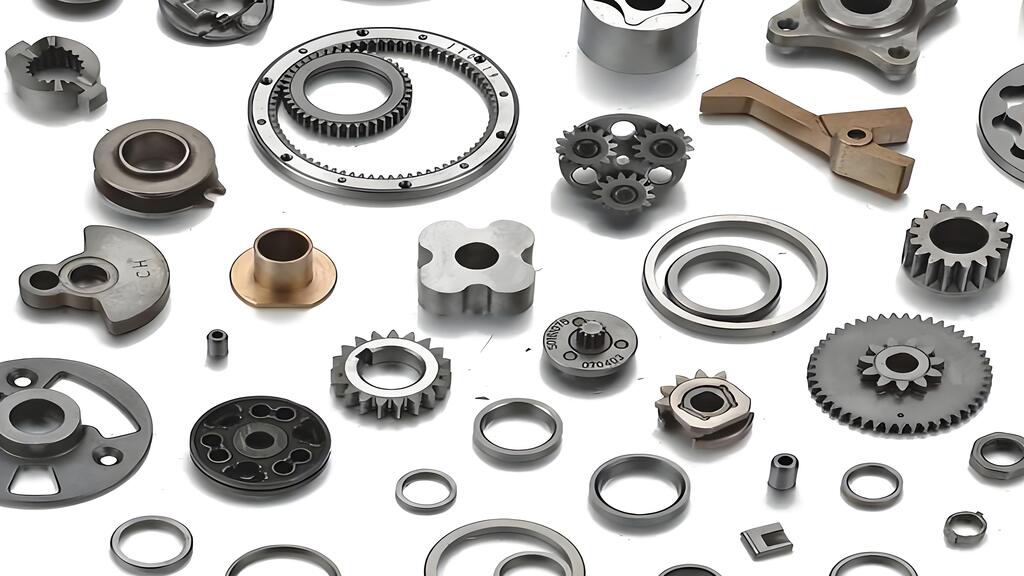


Aluminum Casting Costs in Manufacturing
Aluminum casting cost ranges from $1 to $3 per pound in today's manufacturing world. The startup costs can reach $45,000 for Die Casting equipment, but the investment pays off in the long run.
The casting method you choose will substantially affect your final costs. Sand casting costs about $80 per part. Die casting brings this down to $30 per unit when you produce in large volumes. The benefits show up in bigger production runs. Manufacturing 5,000 parts drops the unit price to £5.18, while 500 parts cost £6.91 each.
This piece gets into all the factors that affect Aluminum Casting Costs. You'll learn everything from material choices to production volumes that help you make smart decisions about casting processes and investments.
Cost Components in Aluminum Casting Processes
Manufacturing professionals know that tooling, material, and operational expenses are the main cost drivers in aluminum casting. Manufacturers can make better decisions about production methods by understanding these components.
Tooling cost in aluminum die casting vs sand casting
The biggest cost difference between casting methods comes from the original tooling investment. Aluminum die casting needs a big upfront investment for steel molds, which costs between $5,000 to $75,000 based on part complexity. Notwithstanding that, these tools last exceptionally long, with tooling insert life reaching 100,000 parts or even 1,000,000 parts under the best conditions.
Sand casting offers a more budget-friendly starting point with tooling costs between $500 and $7,500. This makes sand casting the preferred choice for prototyping and low-volume production runs. Many manufacturers analyze production volumes carefully before picking a casting method because of the huge difference in upfront investment.
Material cost based on alloy type and casting weight
Raw material expenses make up 40-60% of total aluminum casting costs. Aluminum market prices usually range from $1.00 to $3.00 per pound and change based on market conditions. The choice of specific alloy substantially affects both cost and performance characteristics.
Casting weight directly affects material costs. Engineers must think over both the final part weight and the total tree weight, including runners and risers that become scrap during production. Material waste rates typically reach 8-10% during the casting process.
Labor and energy cost in furnace operations
Energy consumption stands as a major operational expense in aluminum casting, and electricity makes up about 25% of primary metal production costs. Modern melting furnaces have streamlined processes, with some operations achieving energy costs as low as $0.03 per pound of aluminum output.
Labor costs cover furnace operation, deburring, packaging, and inspection - these add up to roughly 1.5% of die-casting blank costs . Furnace load cells help track material weight and energy use, and quickly spot operational inefficiencies.
Modern furnaces with integrated heat-recovery systems cut energy use by almost half compared to traditional crucible melting furnaces. This improvement comes from using exhaust heat to preheat charge material, which reduces energy needs and metal loss through oxidization. Material yields can reach up to 99.7% with optimized furnace operations.
Aluminum Casting Cost Estimation by Method
Choosing the right aluminum casting method needs a complete cost analysis for different production scenarios. Each casting technique comes with its own cost structure that changes based on volume, complexity, and finish requirements.
Aluminum die casting cost per part vs per pound
Die casting prices range from a few cents to several dollars per component. This depends on production volume and part complexity. Raw aluminum costs between $1.00 to $3.00 per pound. The per-unit cost drops as production quantities go up - high-volume runs can bring costs down to $0.10 per part for simple components. The total die casting cost equation (Kt = Kd/N + Ke + Km) shows how tooling costs (Kd) are spread across production volume (N), which lowers unit costs.
Custom aluminum casting cost in sand and investment casting
Sand casting is a more affordable option at about $80 per part for moderate complexity components. Investment casting of similar parts costs around $100 each. The tooling costs for sand casting ($2,000-$5,000) are much lower than die casting's original investment of $45,000. Investment casting gives better precision and surface finish, making it right for intricate components despite higher costs. Sand casting works best for prototypes or limited production runs under 100 units.
Post-processing and finishing cost variations
Finishing choices affect final component costs in all casting methods. "As-cast" finishes are the most affordable, while polished, textured, or coated surfaces cost more. Surface treatments include grit belt polishing, shot blasting, mirror buffing and anodizing. Each adds its own cost . Secondary machining operations make up much of the total expenses, especially for tight tolerances. The right mix of casting method and finishing requirements comes down to production volume, part complexity, and performance specifications.
Volume-Based Cost Scaling and Tooling Amortization
Production volume shapes aluminum casting economics and determines which manufacturing process delivers the best cost-efficiency. Manufacturers need to understand how costs scale with volume to evaluate their long-term production strategies.
Break-even analysis: sand casting vs die casting
Sand casting and die casting reach their break-even point between 1,000 to 1,500 parts. This number represents when the high original investment in die casting tooling starts paying off. Each aluminum die-cast part brings in $15.80 more profit than sand casting after producing 1,298 units. Companies save $15,800 yearly with moderate production of 1,000 parts, which adds up to $79,000 over five years.
The economics work this way because of the stark difference in tooling costs. Sand casting needs modest tooling investments of $500 to $7,500. Die casting, however, needs $5,000 to $75,000 upfront. Sand casting makes more financial sense for prototype development or small runs under several hundred units.
Tooling amortization over 100, 1,000, and 10,000 units
Unit economics depend heavily on how tooling costs spread across different production volumes. Die casting follows this formula: Total Part Cost = Kd/N + Ke + Km. Here, Kd represents tooling costs, N equals production volume, Km means material costs, and Ke shows processing expenses.
Tooling costs dominate the per-part price at 100 units because the high original investment spreads across a few components. The tooling portion drops by 90% when production reaches 1,000 units. At 10,000 units, tooling costs become a tiny part of the overall cost.
Tool lifespan plays a crucial role in these calculations. Sand casting molds typically last for about 5,000 parts. Die casting tools prove more durable and can produce between 100,000 and 1,000,000 components. This extended life span is a big deal as it means better long-term manufacturing economics, especially for programs making more than 10,000 units.
Die casting's financial benefits grow with production volume because of this amortization effect. The original tooling investment becomes less important in per-unit cost calculations for high-volume manufacturing.
Materials and Methods: Data Collection and Estimation Models
Engineers need precise data collection and reliable modeling techniques to estimate aluminum casting costs accurately. Advanced methods now help predict costs before manufacturing starts and ensure competitive pricing throughout the product's lifecycle.
Using CAD models and weight estimates for cost prediction
CAD models are the foundations for early cost estimation. Engineers can extract critical geometric data before physical production begins. The CAD model serves as the target case that helps calculate similarities with previously manufactured parts. Manufacturers can prepare cost predictions for new components based on historical data through this case-based reasoning approach.
Modern estimation systems extract several key metrics from CAD files:
- Part volume and weight calculations
- Envelope dimensions for tooling requirements
- Surface area for determining finishing costs
Engineers apply material utilization calculations to these metrics and typically estimate a 90-95% material utilization rate in die casting processes. The simple formula for material cost calculation follows: Material cost of 1 kg die casting = (product weight 1 kg × material unit price $4/kg) / (1 - 8% material loss) = $4.3. This approach helps manufacturers predict costs with minimal part information during early design stages.
Setting aluminum casting cost per pound using LME data
The London Metal Exchange (LME) sets the global standard price for aluminum that serves as the industry standard for material cost calculation. The LME aluminum price stands at $2,509 per ton for 3-month contracts as of April 2025. This data is the lifeblood for accurate material cost estimation in the casting industry.
Global metal exchanges serve as significant cost standards for analyzing raw material requirements. The LME index has various metals: Aluminum at $3,582 per ton, Copper at $10,278 per ton, and several others needed for alloy production. Manufacturers add 8-10% to these base material costs to account for melting loss, oxidation, and gate material.
Cost estimation combines material standards with processing expenses. The rough formula applied is: Cost of 1 kg of die-casting blank = material cost ($4.3) + die-casting machine cost ($1) + labor costs ($0.08) = $5.38. This calculation methodology and LME standard data help make reasonably accurate predictions that account for both material and operational variables.
Conclusion
The economics of aluminum casting depend on many factors, from original tooling investments to production volumes. Die casting offers clear money-saving benefits for high-volume production. The cost per part drops to $0.10, while sand casting remains at $80 per unit. Die casting needs a big upfront investment of $45,000, but its benefits show up through longer tool life and better cost savings at scale.
Raw materials make up much of the total cost, usually between 40-60%. Market prices range from $1.00 to $3.00 per pound. Energy costs account for about 25% of the metal production expenses. New furnace technology works efficiently now and reduces energy costs to $0.03 for each pound of aluminum produced.
Companies start saving money with die casting after producing 1,000-1,500 units. At this point, the original tooling costs spread out across all parts and save about $15.80 per part compared to sand casting. Manufacturers can predict costs early in the design phase by using CAD-based estimates and LME standard data. Well-optimized processes achieve 90-95% material usage rates.
These cost factors show why careful process selection matters based on production needs, part complexity, and expected volumes. Smart manufacturers use this cost information to balance their upfront investments with long-term operating costs.
FAQs
Q1. What factors influence the cost of aluminum casting?
The main factors affecting aluminum casting costs include tooling expenses, material costs based on alloy type and casting weight, labor and energy costs for furnace operations, production volume, and the chosen casting method (e.g., die casting, sand casting, or investment casting).
Q2. How does production volume affect aluminum casting costs?
As production volume increases, the per-unit cost of aluminum casting typically decreases. This is due to the amortization of tooling costs over a larger number of parts. For example, high-volume die casting can reduce costs to as low as $0.10 per part for basic components.
Q3. What is the break-even point between sand casting and die casting?
The break-even point between sand casting and die casting usually occurs between 1,000 to 1,500 parts. After this threshold, die casting becomes more cost-effective due to its lower per-unit costs, despite higher initial tooling investments.
Q4. How do material costs impact aluminum casting expenses?
Material costs generally account for 40-60% of total aluminum casting expenses. The market price of aluminum typically ranges from $1.00 to $3.00 per pound, fluctuating based on market conditions. Specific alloy selection and casting weight directly impact these costs.
Q5. How can manufacturers estimate aluminum casting costs accurately?
Manufacturers can estimate aluminum casting costs accurately by using CAD models for weight estimates and geometric data, applying case-based reasoning with historical data, and benchmarking material costs using London Metal Exchange (LME) data. This approach allows for cost predictions even during early design stages.