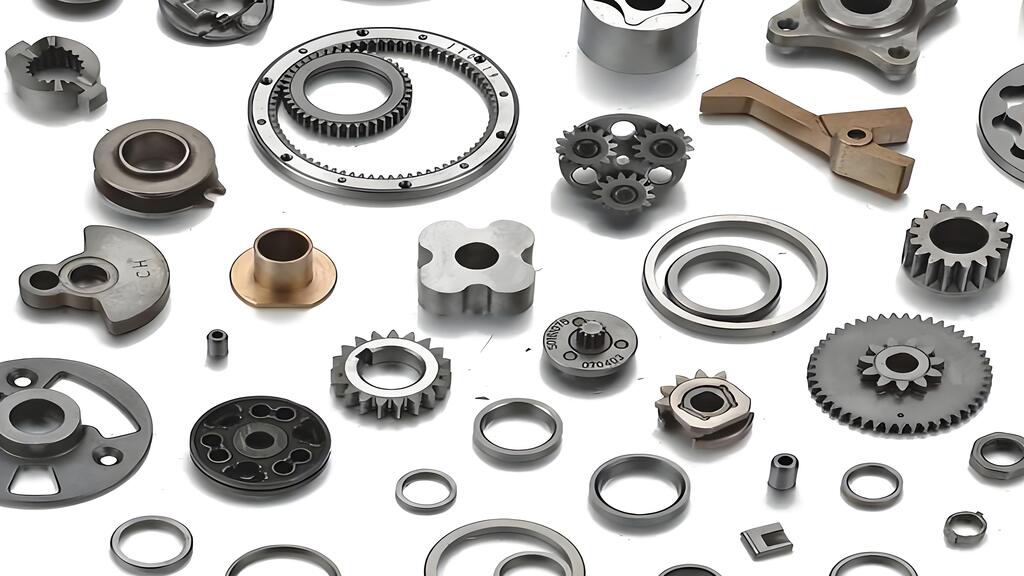


Ceramic sintering process
Sintering is a technology that uses heat energy to densify powder billets. The definition of sintering refers to the densification process of porous ceramic billet under high temperature conditions, the surface area is reduced, the porosity is reduced, and the mechanical properties are improved. Only by mastering the law of the change of the body in the process of high temperature firing, correctly selecting and designing the kiln, scientifically formulating and implementing the firing system, and strictly implementing the operating procedures of loading and firing, can the product quality be improved, fuel consumption be reduced, and good economic benefits be obtained.
Sintering parameter
| Material parameters | Powder |
| Morphology, particle size, particle size distribution, agglomeration, mixing uniformity, etc | |
| Chemical characteristic | |
| Chemical composition, purity, non-stoichiometric, absolute homogeneity, etc | |
| Process parameter | Sintering temperature, sintering time, pressure atmosphere, rising and falling temperature, etc |
The technological parameters affecting the sintering of Ceramic Materials
(1) Effect of firing temperature on product performance
- The firing temperature refers to the corresponding temperature when the ceramic body is fired to obtain the optimal property, that is, the fire stopping temperature during operation.
- The level of firing temperature directly affects the size and number of grains. For solid phase diffusion or liquid phase recrystallization, it is beneficial to increase the firing temperature. However, for special porcelain, too high a firing temperature will cause the overall grain size to be too large or a small number of grains to increase sharply, destroying the uniformity of the organizational structure, thus deteriorating the electromechanical properties of the product.
(2) The impact of holding time on product performance
Maintaining the highest firing temperature for a certain period of time will, on the one hand, make the physical and chemical changes more complete, so that the green body will have sufficient liquid phase and appropriate grain size, and on the other hand, the organizational structure will also become more uniform. However, if the heat preservation time is too long, the crystal grains will dissolve, which is not conducive to the formation of a strong skeleton in the blank and reduces the mechanical properties.
(3) The impact of firing atmosphere on product performance
- The influence of atmosphere on the over-firing expansion of ceramic bodies
- The effect of atmosphere on the shrinkage and sintering of the green body
- The influence of atmosphere on the color and transmittance of the blank and the quality of the glaze layer.
(4) The influence of heating and cooling speed on product performance
Solid-phase sintering can generally be divided into three stages: the initial stage, which is mainly manifested by the change of particle shape; the intermediate stage, which is mainly manifested by the change of pore shape; the final stage, which is mainly manifested by the reduction of pore size.
Liquid phase sintering (LPS for short) refers to the sintering of a body containing multiple powders. The sintering temperature is at least higher than the melting temperature of one of the powders, so that liquid phase sintering occurs during the Sintering Process. process.
advantage:
- Improve sintering driving force.
- Ceramic composite materials with controlled microstructure and optimized properties can be prepared

Ceramics Of Ignition Pin
Featured sintering-hot press sintering
Hot pressing applies pressure to the blank at the same time during the sintering process, which accelerates the densification process. Therefore, the temperature of hot press sintering is lower and the sintering time is shorter.
Hot pressing technology has a history of 70 years and was first used in the preparation of tungsten carbide and tungsten powder dense parts. It is now widely used in the production of ceramics, powder metallurgy and composite materials.

Advantages of hot press sintering
- The required molding pressure is only 1/10 of that of the cold pressing method
- Lowering the sintering temperature and shortening the sintering time inhibits the growth of grains.
- It is easy to obtain products with good mechanical properties and electrical properties.
- Able to produce products with complex shapes and precise dimensions.

Ceramic Parts Curling Iron