

High-Purity Alumina in Hot Pressing Applications
High-Purity Alumina plays a crucial role in hot pressing applications. Its unique properties significantly enhance the performance of materials used in various industries. For example, recent studies show that High-Purity Alumina exhibits impressive hardness, thermal stability, and low porosity, as detailed in the table below:
| Property | Description |
|---|---|
| Hardness | Vickers ~15–20 GPa |
| Thermal Stability | Up to ~1700°C |
| Porosity | Low porosity (<2%) |
These characteristics make High-Purity Alumina invaluable in sectors like electronics, aerospace, and medical devices, where material performance is paramount.
Key Takeaways
- High-Purity Alumina enhances material performance in industries like electronics, aerospace, and medical devices.
- The production process starts with selecting high-quality bauxite and refining it through the Bayer method.
- Achieving high purity levels (over 99.99%) and fine particle size is crucial for effective hot pressing.
- Conditioning methods optimize microstructure, improving thermal conductivity and mechanical properties.
- Hot pressing combines heat and pressure to create dense, high-performance components with improved strength.
- High-Purity Alumina offers exceptional thermal stability, making it suitable for high-heat applications.
- Its superior chemical resistance ensures durability in harsh environments, reducing degradation risks.
- The market for High-Purity Alumina is projected to grow significantly, driven by its diverse applications.
Production Process of High-Purity Alumina
Raw Material Selection
The production of High-Purity Alumina begins with the careful selection of raw materials. Bauxite serves as the most widely utilized source, rich in aluminum content. This mineral is not only abundant but also cost-effective, with a projected market value of USD 1.3 billion by 2025. The extraction of bauxite through mining is the essential first step in the alumina production process. Following extraction, the Bayer method refines bauxite to produce high-purity alumina powder.
To achieve the desired purity levels, raw materials must meet specific standards. The table below outlines the required purity levels for various applications:
| Purity Level | Percentage |
|---|---|
| 3N | 99.9% |
| 4N | 99.99% |
| 5N | 99.999% |
| 6N | 99.9999% |
| UHPA | >99.9999% |
Powder Preparation Techniques
Achieving high-purity alumina suitable for hot pressing requires meticulous powder preparation techniques. The alumina purity must exceed 99.99%, and the particle size should be finely ground to below 1 μm for uniformity. Techniques such as spray granulation enhance powder flowability, which is essential for automatic filling in dry pressing. While binders and plasticizers may be used in other methods like extrusion or injection molding, they are not necessary for hot pressing.
The morphology of Al2O3 is influenced by raw materials, synthesis methods, and heat treatment. High temperatures during heat treatment can lead to particle diffusion and agglomeration, affecting the final morphology. Therefore, selecting appropriate Powder Metallurgy methods significantly enhances the mechanical properties of high-purity alumina ceramics. The sintering process plays a crucial role in maximizing preparation efficiency, directly influencing the final quality of the alumina ceramics.
Conditioning Methods
Conditioning methods significantly impact the microstructure of high-purity alumina. Factors such as calcination temperature and particle morphology affect grain size and packing density, which are crucial for enhancing thermal conductivity. Improved packing and densification during sintering lead to a denser microstructure with fewer voids, resulting in better heat transfer performance.
By optimizing these conditioning methods, manufacturers can produce high-purity alumina that meets the stringent requirements of various applications, ensuring superior performance in hot pressing processes.
Hot Pressing Process Overview
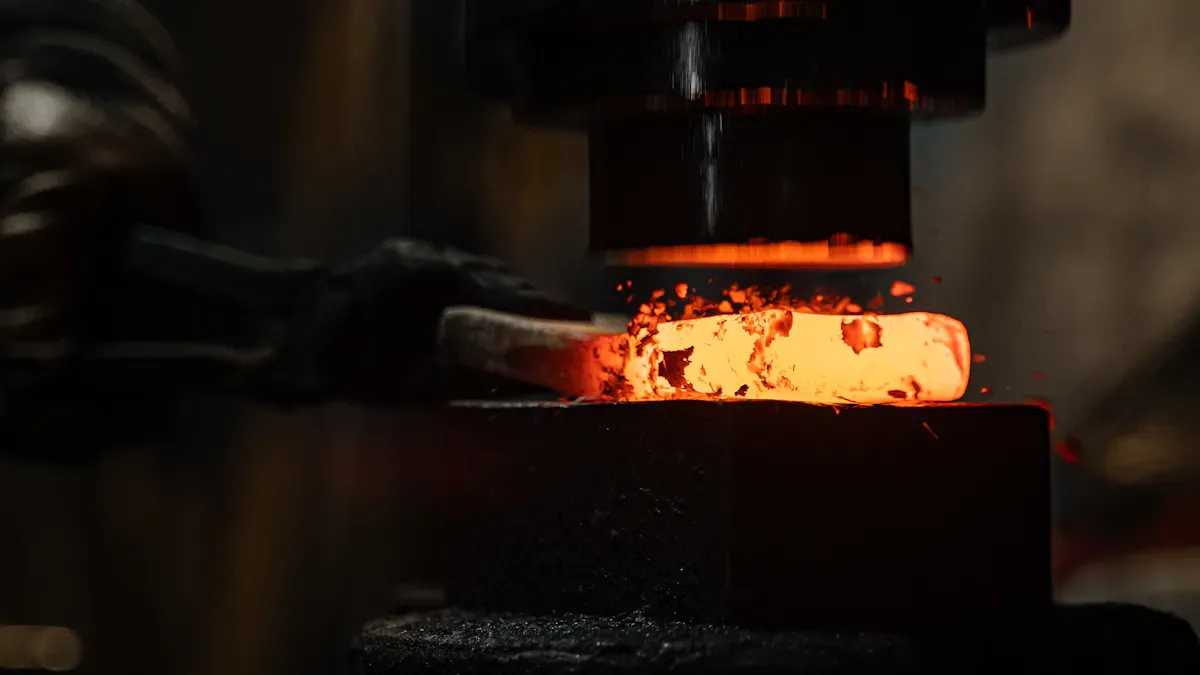
The hot pressing process combines heat and pressure to form high-purity alumina into dense, high-performance components. This method enhances the material's mechanical properties and ensures uniformity in the final product. The process typically involves several key steps:
-
Preparation of the Powder: Manufacturers begin by preparing high-purity alumina powder. This powder must meet strict purity standards and have a specific particle size to ensure optimal flow and packing density.
-
Molding: The prepared powder is placed into a mold. The choice of mold material can affect the final product's surface finish and dimensional accuracy.
-
Application of Heat and Pressure: The mold is then subjected to high temperatures, often exceeding 1500°C, while simultaneously applying significant pressure. This combination promotes sintering, where particles bond together, reducing porosity and enhancing density.
-
Cooling: After the desired temperature and pressure are maintained for a specific duration, the mold is cooled. Controlled cooling is crucial to prevent thermal shock and cracking in the final product.
-
Post-Processing: Once cooled, the components may undergo additional processes such as machining or surface treatment to achieve the required specifications.
The hot pressing process offers several advantages, including:
- Improved Density: The application of pressure during sintering leads to a denser microstructure, which enhances mechanical strength.
- Uniform Microstructure: The combination of heat and pressure promotes a more uniform grain structure, resulting in consistent material properties.
- Reduced Processing Time: Hot pressing can significantly reduce the time required to achieve high-density components compared to traditional sintering methods.
Benefits of High-Purity Alumina
Enhanced Mechanical Properties
High-Purity Alumina significantly enhances the mechanical properties of materials used in hot pressing applications. With a purity level exceeding 99.99%, it exhibits remarkable strength and durability. The following points highlight its mechanical advantages:
- High-purity alumina ranks 9 on the Mohs scale, indicating extreme hardness.
- It retains structural integrity under high temperatures, unlike metals.
- The material's density reaches approximately 3.94 g/cm³, contributing to its robust performance.
| Property | Value |
|---|---|
| Density | 3.94 g cm−3 |
| Bending Strength | 529.09 MPa |
| Vickers Hardness | 18.85 GPa |
| Thermal Conductivity | 38.86 W m−1K−1 |
These properties make High-Purity Alumina suitable for applications in aerospace, electronics, and industrial machinery, where mechanical strength is critical.
Thermal Stability Advantages
High-Purity Alumina offers exceptional thermal stability, making it ideal for high-heat industrial processes. Its advantages include:
- High Melting Point: High-Purity Alumina can operate in extreme temperatures up to 1500°C.
- Excellent Thermal Shock Resistance: This material prevents cracking or fracturing during rapid temperature changes, ensuring structural integrity.
- Superior Corrosion Resistance: It protects against chemical degradation, enhancing sensor longevity in harsh environments.
The ability to maintain performance at elevated temperatures is crucial. High-Purity Alumina exhibits enhanced thermal conductivity, allowing it to withstand high temperatures without degrading. Unlike metals, it retains its structural integrity even after cooling, preventing degradation that is common in metals.
Chemical Resistance Features
High-Purity Alumina distinguishes itself with superior chemical resistance compared to lower purity grades. Its stable alpha-phase crystal structure effectively resists acids, bases, and reactive gases. The high packing density results in a dense microstructure with minimal gaps, reducing the penetration of corrosive substances. This feature enhances its durability in harsh environments.
| Property | Description | Benefit |
|---|---|---|
| Chemical Purity | High-purity Al₂O₃ content | Prevents melt contamination & ensures data validity |
| Thermal Stability | Maintains structural rigidity | Prevents vessel deformation or catastrophic failure |
| Wettability | Low wetting with Al-alloys | Prevents metal penetration and crucible degradation |
| Inertness | Minimal reaction with Al-Si | Isolates reaction products to the test substrate |
These chemical resistance features make High-Purity Alumina an excellent choice for applications in environments where exposure to corrosive agents is a concern.
Applications of High-Purity Alumina in Electronics

Use in Semiconductor Manufacturing
High-Purity Alumina plays a vital role in semiconductor manufacturing. It serves multiple functions that enhance production efficiency and product quality. For instance, manufacturers utilize High-Purity Alumina as a coating for fabrication tools. This coating ensures low impurity levels, crucial for preventing wafer damage and enhancing die yield. Additionally, it acts as a component in plasma chambers, where its high hardness and chemical resistance protect against reactive gases used in etching and deposition processes.
Moreover, electrostatic chucks made from High-Purity Alumina securely hold silicon wafers during processing. Die collets crafted from this material maintain precision and reliability in die attach processes due to their dimensional stability and chemical inertness. High-Purity Alumina also finds application in vacuum interrupters, where it serves as the insulating ceramic tube that maintains the vacuum seal around internal electrodes. Lastly, it is used in handling arms for electronics assembly, providing the necessary chemical inertness and thermal stability for safe transport of fragile substrates.
Role in LED Technology
High-Purity Alumina significantly improves performance and reliability in LED technology. Its unique properties contribute to the efficiency and longevity of LED devices. The following table summarizes the impact of High-Purity Alumina on LED technology:
| Property | Impact on LED Technology |
|---|---|
| Thermal Conductivity | Efficient heat dissipation, crucial for maintaining brightness and extending lifespan. |
| Optical Transparency | Allows maximum light passage, minimizing light loss and enhancing brightness. |
| Chemical Inertness | Ensures durability and stability under harsh conditions, contributing to longevity. |
| Dimensional Stability | Maintains precise shape and size of components for uniform light emission. |
| Electrical Insulation | Prevents current leakage, improving safety and reliability of LED devices. |
These attributes make High-Purity Alumina an essential material in the production of high-performance LED components.
Applications in Capacitors
High-Purity Alumina also plays a critical role in the fabrication of capacitors for electronic devices. Its high purity level, exceeding 99.99%, reduces contamination from copper and iron, which can adversely affect performance. The lower soda and calcium content minimizes loss tangent for RF applications, ensuring efficient energy storage and discharge. Additionally, reduced SiO2 content decreases particulate contamination, enhancing the reliability of capacitors in various electronic applications.
The integration of High-Purity Alumina in capacitors ensures that these components meet the stringent demands of modern electronics, providing enhanced performance and longevity.
Applications of High-Purity Alumina in Aerospace
Components for Aircraft Engines
High-Purity Alumina significantly enhances the durability of aircraft engine components. Its remarkable properties make it an ideal choice for demanding aerospace applications. The following table summarizes the key attributes of High-Purity Alumina that contribute to its effectiveness in aircraft engines:
| Property | Description |
|---|---|
| Mechanical Strength | High-purity alumina is the second hardest material, contributing to its durability in demanding environments. |
| Thermal Stability | With a melting point of 2050 °C, it withstands extreme temperatures, ideal for turbine blades and exhausts. |
| Chemical Resistance | Its ability to resist thermal shock enhances reliability in applications exposed to rapid temperature changes. |
| Abrasion Resistance | The hardness of alumina protects components from wear due to friction and impact, crucial for long-term use. |
These properties ensure that components such as turbine blades and combustion chambers maintain their integrity under extreme conditions, ultimately improving engine performance and longevity.
Use in Thermal Barrier Coatings
High-Purity Alumina also plays a vital role in thermal barrier coatings (TBCs) for aerospace applications. TBCs protect engine components from extreme heat, allowing for improved efficiency and performance. The benefits of using High-Purity Alumina in TBCs include:
| Benefit | Description |
|---|---|
| Excellent thermal properties | High-purity alumina can withstand temperatures up to 1650 °C (2900°F) in atmospheric conditions and 2000 °C (3000°F) under vacuum. |
| High hardness | Provides durability and resistance to wear in harsh aerospace environments. |
| Chemical stability | Maintains integrity and performance in various chemical environments. |
| Resistance to thermal shock | Can endure rapid temperature changes without degrading, ensuring reliability in aerospace applications. |
These characteristics make High-Purity Alumina an essential material for enhancing the performance and lifespan of thermal barrier coatings, which are critical for modern aircraft engines.
Lightweight Structural Applications
The aerospace industry increasingly demands lightweight materials to improve fuel efficiency and reduce emissions. High-Purity Alumina meets this need by offering a combination of strength and low weight. Its lightweight nature allows for the design of structural components that do not compromise on performance.
Incorporating High-Purity Alumina into structural applications can lead to significant weight savings, which translates to improved fuel efficiency. As manufacturers continue to explore innovative designs, High-Purity Alumina will likely play a pivotal role in the develoPment of next-generation aerospace components.
Applications of High-Purity Alumina in Medical Devices
Biocompatibility of High-Purity Alumina
High-Purity Alumina demonstrates excellent biocompatibility, making it suitable for various medical applications. The tests conducted provide a thorough profile of the biological safety of high-purity alumina. Results confirm its suitability for medical applications, reinforcing its biocompatibility.
- Studies indicate that nanoporous alumina membranes are non-toxic and do not significantly activate the complement system.
- In vivo studies show that implantation in rats leads to only a transient inflammatory response, suggesting good biocompatibility.
- The use of polyethylene glycol (PEG) is noted to minimize the host response to the material.
These findings highlight the potential of High-Purity Alumina in medical devices, ensuring patient safety and comfort.
Use in Dental Ceramics
High-Purity Alumina plays a critical role in dental ceramics, significantly improving patient outcomes. Composed primarily of aluminum oxide (Al2O3), high-purity alumina ceramics possess superior mechanical strength and thermal conductivity. These properties enhance the durability and effectiveness of dental applications.
- High-purity alumina ceramics significantly reduce fracture rates in dental applications from 13% to less than 5%.
- Functionally Graded Materials (FGMs) improve biocompatibility and mechanical performance in dental implants.
- Alumina composites can achieve fracture toughness up to 10.90 MPam½, enhancing mechanical properties.
The α-Al2O3 crystalline form, primarily used in dental prosthetics, ensures optimal performance in restorative applications, contributing to improved patient outcomes.
Applications in Prosthetics
High-Purity Alumina offers numerous advantages in prosthetic devices, enhancing their performance and longevity. The following table summarizes the key properties that make High-Purity Alumina an ideal choice for prosthetics:
| Property | Description |
|---|---|
| Superior Biocompatibility | Chemically inert, minimizing inflammatory reactions and tissue irritation. |
| Excellent Mechanical Strength | Flexural strength often exceeding 350 MPa, suitable for load-bearing implants. |
| Wear Resistance | Exceptional hardness (9 Mohs), resists wear and abrasion, extending implant lifespan. |
| Chemical Stability | Highly resistant to chemical degradation, ensuring durability in harsh physiological environments. |
- High wear resistance is crucial for implant components with articulating surfaces, such as artificial joints.
- The ceramic–ceramic pairing minimizes wear rate, reducing the risk of aseptic loosening in total hip replacements.
These characteristics make High-Purity Alumina a valuable material in the development of advanced prosthetic devices, ensuring they meet the rigorous demands of modern healthcare.
Future Trends for High-Purity Alumina
Innovations in Production Techniques
Recent advancements in production techniques for High-Purity Alumina have significantly improved efficiency and product quality. Manufacturers now utilize several innovative methods, including:
- Precision milling and controlled atmosphere furnaces: These technologies enhance the consistency and purity of the final product.
- High-purity gas systems: Implementing these systems ensures batch consistency and quality, which is crucial for high-performance applications.
- Modification of chemical compositions and particle morphologies: This approach allows for tailored properties that meet specific application requirements.
- Incorporation of dopants or stabilizers: These additives enhance the functionality of High-Purity Alumina, making it suitable for advanced applications.
- Low-energy milling and recycling of process gases: These methods reduce energy consumption by 40%-75%, making production more sustainable.
These innovations not only improve the quality of High-Purity Alumina but also contribute to more environmentally friendly manufacturing processes.
Emerging Applications
The versatility of High-Purity Alumina continues to drive its adoption in emerging applications across various industries. Some notable areas include:
- Energy storage systems: High-Purity Alumina is being explored for use in solid-state batteries, where its thermal stability and electrical insulation properties can enhance performance.
- Advanced ceramics: The material's mechanical strength and chemical resistance make it ideal for next-generation ceramic components in automotive and aerospace applications.
- Biomedical devices: As research progresses, High-Purity Alumina's biocompatibility opens new avenues for its use in implants and prosthetics.
These emerging applications highlight the potential for High-Purity Alumina to address the evolving needs of modern technology and healthcare.
Market Growth Projections
The market for High-Purity Alumina is poised for substantial growth in the coming years. Analysts project that the global high-purity alumina market will grow at a compound annual growth rate (CAGR) of 20.90%. The market size, valued at approximately US$ 3,353.3 million in 2025, is expected to reach US$ 7,647.8 million by 2032. This growth reflects a significant CAGR of 12.5% from 2026 to 2032.
Such projections indicate a robust demand for High-Purity Alumina, driven by its applications in electronics, aerospace, and medical devices. As industries continue to seek materials that enhance performance and durability, High-Purity Alumina will likely play a pivotal role in future innovations.
High-Purity Alumina stands as a vital material in various industries due to its exceptional properties. Its enhanced mechanical strength, thermal stability, and chemical resistance make it indispensable in applications ranging from electronics to aerospace and medical devices.
The future of High-Purity Alumina in hot pressing applications appears promising. As industries continue to innovate, the demand for this material will likely grow, driving advancements in production techniques and expanding its applications.
In summary, High-Purity Alumina not only meets current industry needs but also paves the way for future technological developments.
FAQ
What is High-Purity Alumina?
High-Purity Alumina is a refined form of aluminum oxide with purity levels exceeding 99.99%. It exhibits exceptional mechanical strength, thermal stability, and chemical resistance, making it suitable for various industrial applications.
How is High-Purity Alumina produced?
High-Purity Alumina production involves selecting high-quality bauxite, refining it through the Bayer process, and employing advanced powder preparation techniques. Conditioning methods optimize the microstructure before hot pressing.
What are the main applications of High-Purity Alumina?
High-Purity Alumina finds applications in electronics, aerospace, and medical devices. It enhances performance in semiconductors, aircraft engines, dental ceramics, and prosthetics due to its superior properties.
Why is High-Purity Alumina important in hot pressing?
In hot pressing, High-Purity Alumina improves mechanical properties, reduces porosity, and ensures uniformity in the final product. Its thermal stability and chemical resistance also enhance the durability of components.
What are the benefits of using High-Purity Alumina?
High-Purity Alumina offers enhanced mechanical properties, excellent thermal stability, and superior chemical resistance. These features make it ideal for demanding applications in various industries.
Is High-Purity Alumina biocompatible?
Yes, High-Purity Alumina demonstrates excellent biocompatibility, making it suitable for medical applications. It minimizes inflammatory responses and ensures patient safety in devices like implants and prosthetics.
What are the future trends for High-Purity Alumina?
Future trends include innovations in production techniques, emerging applications in energy storage and advanced ceramics, and significant market growth projections. These developments will expand its role in various industries.
How does High-Purity Alumina compare to other materials?
High-Purity Alumina outperforms many materials in terms of hardness, thermal stability, and chemical resistance. Its unique properties make it a preferred choice for high-performance applications across multiple sectors.