

Introduction
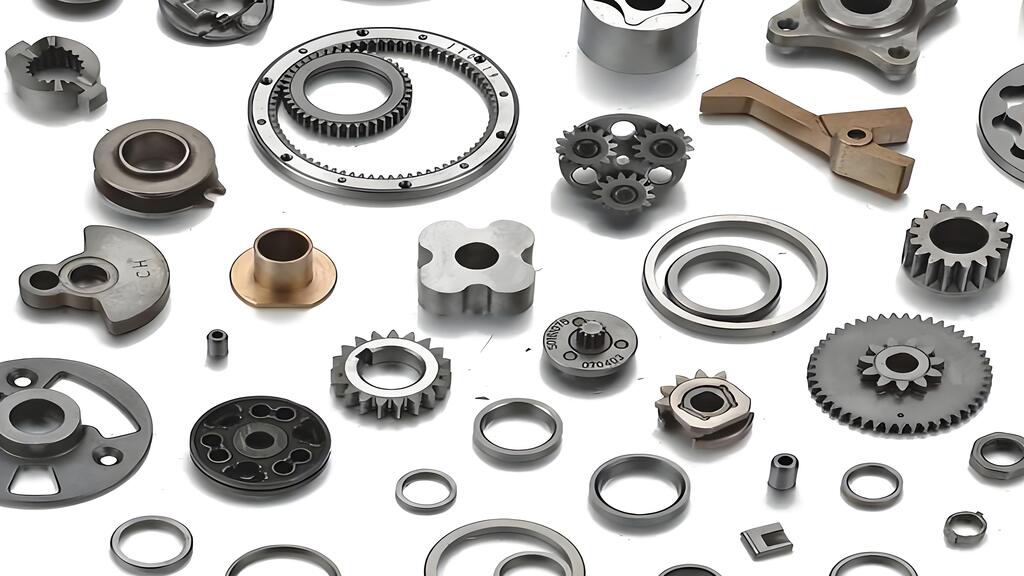
Sinter metal technology offers manufacturers a practical way to produce precise industrial parts at lower total cost without sacrificing performance. By shaping components from metal powder rather than carving them from solid stock, it reduces scrap, shortens machining time, and cuts labor tied to multiple production steps. That makes it especially valuable for high-volume parts with tight tolerances, where even small savings per unit add up quickly. The following discussion explains where these cost reductions come from, why the process is well suited to complex geometries, and how it compares with conventional methods in real production settings.
How Sinter Metal Lowers Total Production Costs
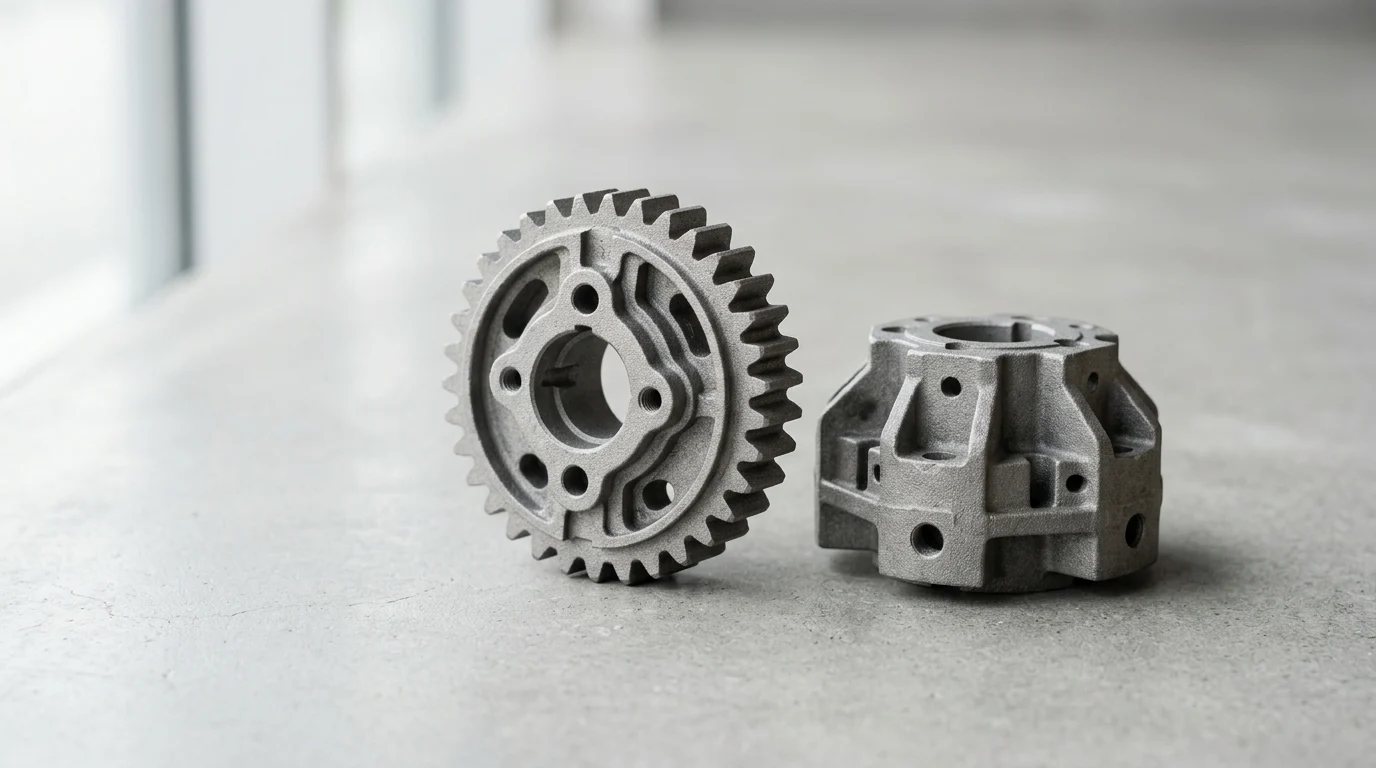
Sinter metal technology, formally known as powder metallurgy (PM), is a highly effective manufacturing paradigm for reducing the total cost of high-precision industrial components. By converting fine metal powders into solid, complex geometries through high-pressure compaction and controlled heating, the process fundamentally alters the traditional cost equation of component manufacturing.
Unlike subtractive methods that carve away valuable raw material, sinter metal is a formative process that builds the part directly to its intended shape. This shift targets the most expensive variables in industrial production: material waste, extended machine time, and multi-step labor overhead.
Which cost drivers in precision part manufacturing does sinter metal reduce?
The primary cost drivers mitigated by sinter metal include raw material consumption, multi-axis machining time, and energy expenditures. In traditional subtractive manufacturing, producing a complex gear or cam from bar stock can result in scrap rates of 40% to 60%. Sinter metal flips this paradigm, routinely keeping material waste below 2%.
Furthermore, by eliminating the need for sequential machining setups—such as turning, milling, and broaching—manufacturers dramatically reduce direct labor hours and machine depreciation costs allocated to each unit. The elimination of cutting fluids and associated environmental disposal costs further drives down the total overhead.
Why is sinter metal preferred for cost-sensitive, high-volume production?
Sinter metal is uniquely suited for cost-sensitive, high-volume production because of its exceptional scalability and repeatability. Once the initial compaction tooling is fabricated, the marginal cost of producing each subsequent part drops precipitously compared to traditional methods.
Economic viability typically begins at annual production volumes exceeding 20,000 units. At these volumes, the initial capital expenditure for custom tooling is rapidly amortized across the production run. For multi-year automotive or industrial equiPment programs, this results in a significantly lower piece-price that remains shielded from the volatility of raw steel pricing due to the lower material input.
How does near-net-shape production improve cost efficiency?
Near-net-shape production refers to the capability to manufacture a part that requires little to no surface finishing or secondary machining to meet its final specifications. Sinter metal excels in this area, frequently achieving 97% or greater dimensional accuracy relative to the final engineering print directly out of the Sintering furnace.
This near-net-shape capability eliminates downstream bottlenecks. When secondary operations are bypassed entirely, manufacturers save on specialized cutting tools, coolant management, and the logistical overhead of moving parts between different workstations. By consolidating the supply chain into a single primary forming operation, cycle times from raw powder to finished component are drastically shortened.
Why Sinter Metal Is a Cost-Efficient Process
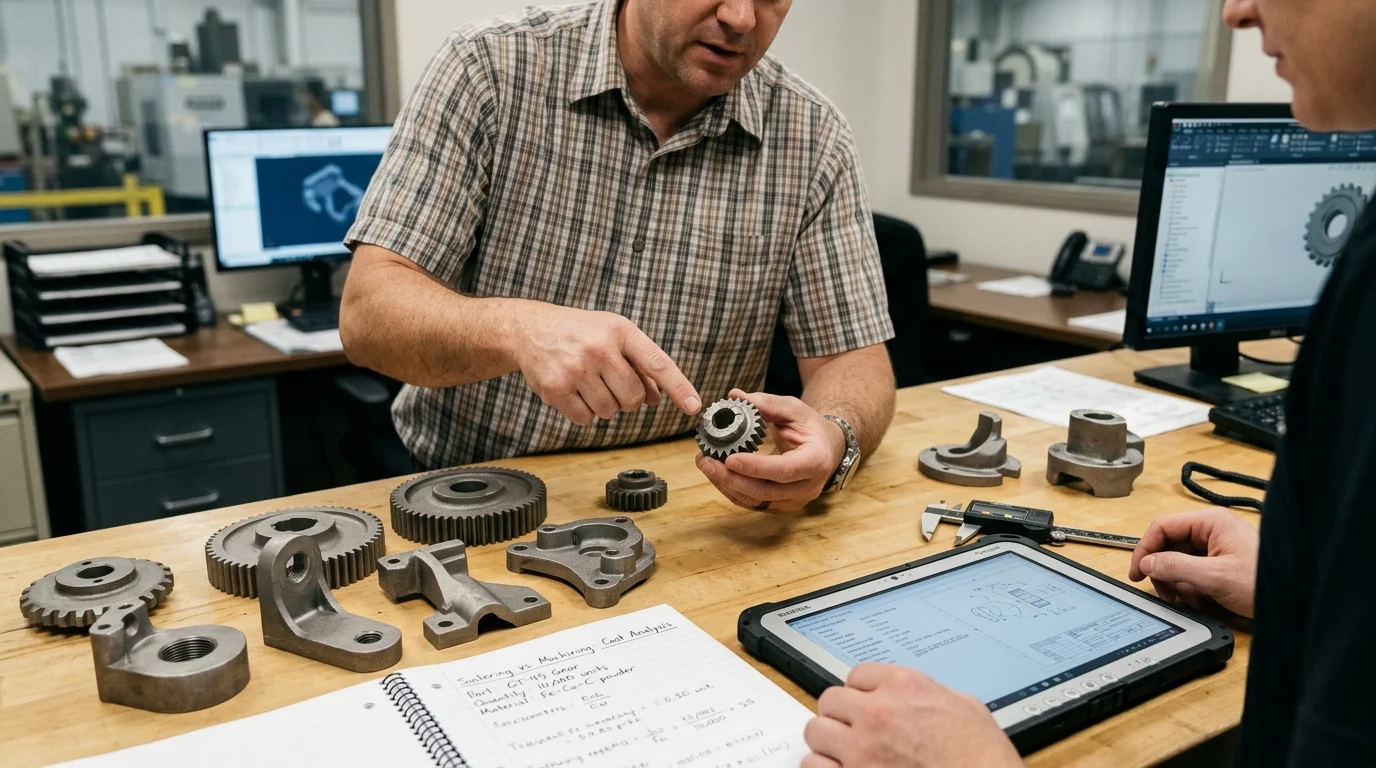
The fundamental cost-efficiency of sinter metal lies in the mechanics of the Powder Metallurgy process itself. By leveraging automated mechanical or hydraulic presses followed by continuous-belt sintering furnaces, manufacturers achieve economies of scale that are difficult to match with discrete manufacturing methods.
This efficiency is a direct result of optimized material flow, rapid production cycles, and the ability to strictly control the physical properties of the component without over-engineering.
How do material utilization and cycle times reduce cost?
Material utilization in sinter metal manufacturing routinely exceeds 95%, ensuring that manufacturers only pay for the metal that ends up in the final product. This is highly advantageous when working with expensive alloys like copper-infiltrated steels or stainless steel powders.
Simultaneously, cycle times are remarkably rapid. Standard compaction presses can operate at speeds ranging from 10 to 60 parts per minute depending on part complexity and size. This high-throughput capability allows a single press to output millions of parts annually, significantly reducing the machine-hour cost burden on individual components.
How do tooling, density control, and secondary operations affect cost?
Tooling for sinter metal, typically machined from high-grade tool steel or tungsten carbide, requires an upfront investment ranging from $10,000 to $40,000. However, this tooling boasts an exceptional lifespan, often exceeding 500,000 compaction cycles before requiring refurbishment, which drives the per-part tooling cost down to fractions of a cent.
Density control adds another layer of financial efficiency. Engineers can specify the exact density required for the application—typically ranging from 6.4 to 7.2 g/cm³ for structural steel parts. By intentionally leaving 10% to 15% controlled porosity in non-critical areas, manufacturers reduce part weight and material usage. Additionally, this inherent porosity can be impregnated with oil to create self-lubricating bearings, eliminating the need for costly secondary lubrication systems.
Where do scrap reduction and process stability create savings?
Scrap reduction translates directly into bottom-line savings. Because the process captures and re-uses any loose powder before the sintering stage, the concept of 'chips' or 'swarf' is entirely eliminated. This creates a highly predictable material supply chain.
Process stability further compounds these savings. Sinter metal production is highly automated, yielding exceptional statistical process control. It is common to achieve a process capability index (Cpk) exceeding 1.33 for critical dimensions. This high level of repeatability minimizes the need for 100% manual inspection, reduces the rate of non-conforming parts, and protects profit margins from the hidden costs of poor quality.
How Sinter Metal Compares With CNC Machining, Casting, and Other
Evaluating sinter metal requires benchmarking it against established manufacturing technologies like CNC machining, investment casting, and die casting. Each process has distinct boundaries regarding geometric complexity, mechanical properties, and economic viability.
Understanding where sinter metal fits within this spectrum allows engineering and procurement teams to route components to the most cost-effective manufacturing process based on specific application requirements.
Which comparison points best clarify cost, tolerance, and volume?
The most critical comparison points are piece-price, dimensional tolerance, and break-even volume. While CNC machining offers superior precision for low volumes, its piece-price scales poorly. Conversely, casting handles complex internal geometries well but often requires extensive secondary machining to meet tight tolerances.
| Manufacturing Process | Material Waste | Typical Tolerance Range | Min. Economic Volume | Production Cycle Time |
|---|---|---|---|---|
| Sinter Metal | < 2% | IT7 - IT9 | 20,000 units/yr | Fast (seconds) |
| CNC Machining | 40% - 60% | IT5 - IT7 | 1 unit | Slow (minutes) |
| Investment Casting | 5% - 10% | IT9 - IT11 | 5,000 units/yr | Very Slow (days) |
| Die Casting | 5% - 10% | IT8 - IT10 | 10,000 units/yr | Fast (seconds) |
What trade-offs exist in strength, geometry, and surface finish?
The primary trade-off with sinter metal is its mechanical strength relative to wrought steel. Because sintered parts retain 10% to 15% porosity, their impact toughness and tensile strength are generally lower than those of fully dense machined parts, unless subjected to secondary processes like powder forging or copper infiltration.
Geometrically, sinter metal is limited to profiles that can be ejected from a die. Cross-holes, undercuts, and threads cannot be compacted in the primary pressing direction and require secondary machining. Surface finishes directly out of the die are generally excellent, often achieving an Ra of 1.6 to 3.2 µm, which rivals or exceeds standard investment casting finishes without additional processing.
When does sinter metal outperform alternative manufacturing processes?
Sinter metal decisively outperforms alternative methods when producing complex, multi-level 2D profiles—such as gears, sprockets, cams, and ratchets—that weigh under 1 kilogram. If a part requires three or more distinct CNC machining setups (e.g., turning, gear hobbing, and broaching a keyway), sinter metal can usually form all these features simultaneously in a single compaction stroke.
When the annual volume exceeds 30,000 units and the mechanical requirements do not mandate wrought-steel impact toughness, sinter metal provides the lowest total cost of ownership by eliminating the expensive, time-consuming gear-cutting and broaching phases.
How Manufacturers Can Capture Sinter Metal Cost Savings
Realizing the full financial benefits of sinter metal requires proactive collaboration between OEMs and powder metallurgy suppliers. Cost savings are not automatic; they must be engineered into the component during the design phase.
By applying specific Design for Manufacturing (DFM) principles and establishing robust supply chain qualification protocols, manufacturers can seamlessly transition legacy machined parts into highly profitable sintered components.
How should part design, powder selection, and tooling strategy be optimized?
Part design must be optimized for uniaxial compaction. Engineers should eliminate undercuts and lateral holes, ensuring a uniform draft to facilitate ejection from the tooling. Wall thicknesses should generally be maintained above 1.5 mm to prevent tooling fracture during the high-pressure compaction phase.
Powder selection also plays a vital role in cost optimization. Specifying standard, widely available powder blends—such as FC-0208 (an iron-copper-carbon alloy)—keeps raw material costs low while providing excellent general-purpose strength. Tooling strategy should focus on multi-cavity dies if the component footprint is small enough, doubling or tripling output per press stroke.
Which quality control and supplier qualification steps matter most?
To ensure cost savings are not eroded by field failures, strict quality control and supplier qualification are mandatory. Manufacturers should partner with suppliers holding relevant certifications, such as ISO 9001 or IATF 16949 for automotive applications.
Critical quality metrics must be established early. Because standard hardness testing (like Rockwell C) can be misleading due to part porosity, apparent hardness scales (such as Rockwell B or specialized macro-hardness tests) should be used. Additionally, monitoring radial crush strength is essential for cylindrical parts like bearings to guarantee structural integrity before assembly.
When does a sinter metal conversion business case make sense?
A conversion business case is highly compelling when an existing CNC-machined component requires more than 3 minutes of total machining time and generates more than 30% material waste. If the annual volume exceeds 30,000 units, the cost delta between the machined piece-price and the sintered piece-price usually justifies the change.
In a well-qualified conversion, manufacturers can expect the return on investment (ROI) for the custom sinter tooling to be achieved within 8 to 12 months. Beyond that break-even point, the transition yields pure margin improvement for the lifecycle of the product.
How to Decide Whether Sinter Metal Is the Right Choice
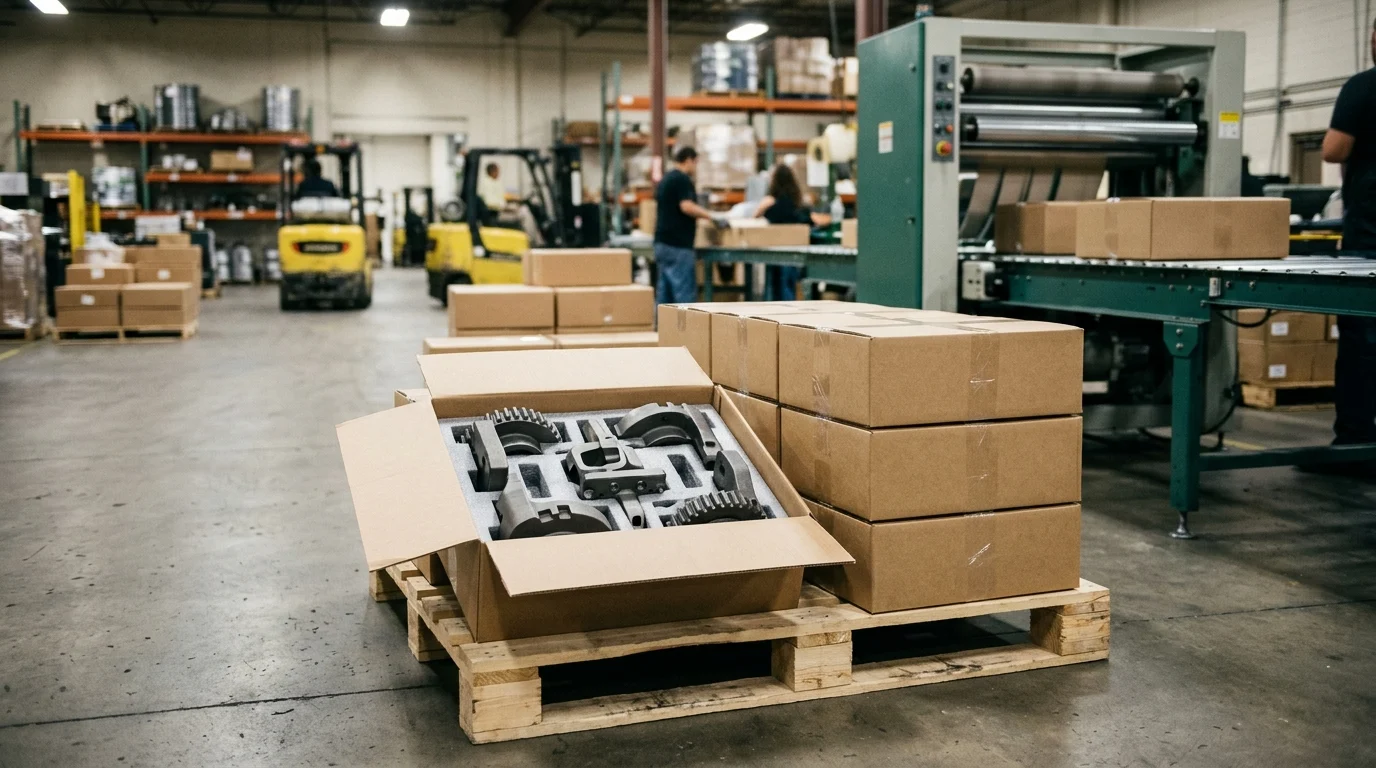
Transitioning to sinter metal requires a holistic evaluation of the commercial landscape, technical feasibility, and supply chain dynamics. It is not a universal replacement for all metalworking, but rather a specialized process that dominates specific niches.
Decision-makers must weigh upfront capital expenditures against long-term operational savings, ensuring that the chosen parts align perfectly with the physical constraints of powder metallurgy presses.
Which commercial, technical, and supply chain signals point to fit?
Commercial signals indicating a strong fit include high annual spend on raw bar stock and significant costs associated with machining chip recycling. Technically, the ideal candidate has a uniform cross-section and a maximum projected surface area under 50 square inches, as larger parts exceed the capabilities of standard 200- to 800-ton compaction presses.
Supply chain signals include long lead times for complex castings or bottlenecks in internal CNC machining departments. By offloading complex profile parts to a sinter metal supplier, manufacturers can free up internal machining capacity for larger, lower-volume, or higher-tolerance components.
How can procurement and engineering balance upfront tooling against lifecycle savings?
Procurement and engineering must collaborate to evaluate the Total Cost of Ownership (TCO) rather than just the initial quote. While the upfront tooling cost for sinter metal can be a hurdle, the lifecycle savings are often exponential.
| Cost Component | CNC Machining (100k units) | Sinter Metal (100k units) |
|---|---|---|
| Upfront Tooling | $0 | $25,000 |
| Material Cost/Unit | $3.50 | $1.10 |
| Processing Cost/Unit | $8.00 | $1.40 |
| Total Cost per Unit | $11.50 | $2.50 |
| Total Project Cost | $1,150,000 | $275,000 |
As demonstrated, an upfront investment of $25,000 in tooling can yield hundreds of thousands of dollars in savings over a standard production run.
What risks should decision-makers evaluate before adoption?
Before adoption, decision-makers must evaluate several inherent risks.
Key Takeaways
- The most important conclusions and rationale for Sinter Metal
- Specs, compliance, and risk checks worth validating before you commit
- Practical next steps and caveats readers can apply immediately
Frequently Asked Questions
What makes sinter metal cheaper than machining?
It forms parts near-net-shape, so you use far less raw material and avoid most cutting, milling, and finishing steps.
How does sinter metal reduce material waste?
Powder metallurgy typically keeps waste below 2%, compared with 40%–60% scrap common in subtractive machining.
When does sinter metal become cost-effective?
It usually pays off at annual volumes above 20,000 units, where tooling costs are spread across large runs.
Does sinter metal still need secondary machining?
Often not. Many parts come out about 97% accurate, so secondary operations can be minimized or eliminated.
What long-term cost benefit does sinter metal offer?
Tooling lasts for hundreds of thousands of cycles, which lowers per-part cost and keeps pricing stable for high-volume programs.