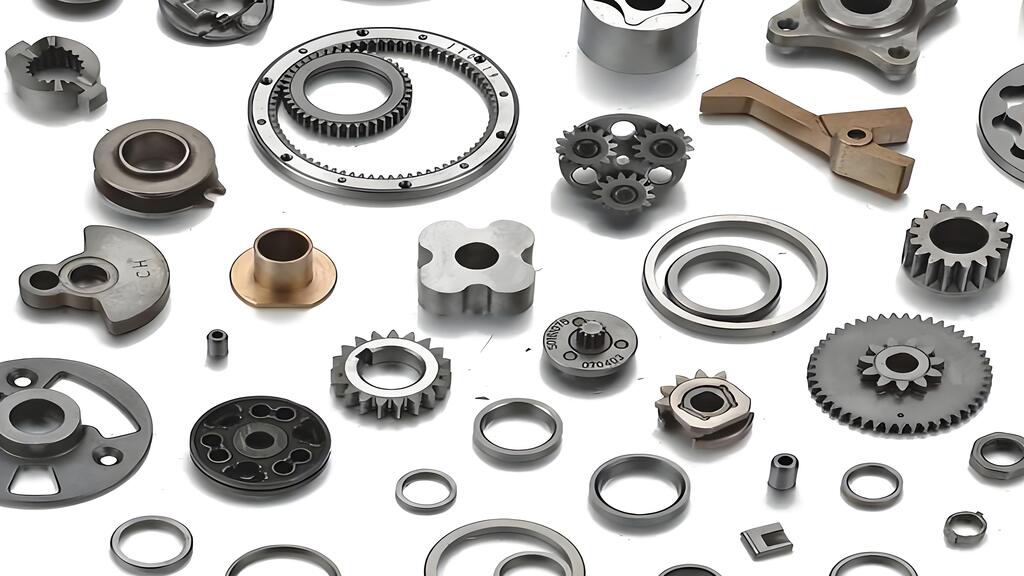


How Surface Treatments Double the Life of Powder Metal Parts
Powder metal parts are a budget-friendly way to mass-produce small, complex components with tight tolerances. Surface treatments boost these parts by creating a thin oxide layer that's just five to seven micrometers thick. This layer can reach a micro-hardness of about 50 Rockwell C. The parts last twice as long because they resist wear better, protect against corrosion, and have better mechanical properties.
Surface characteristics play a crucial role in how long Powder Metallurgy products last. Steam treatment is a simple, cost-effective secondary operation that creates a controlled, tightly adherent oxide layer. This layer makes the surface harder than 40 HRC and protects against corrosion. Powder metallurgy steel components work even better with Dacromet coating. This coating fights corrosion and handles high temperatures up to 300°C. The strength, ductility, and hardness of these parts depend on how dense the compacted and sintered powdered materials are. These properties determine their performance in tough applications.
Deburring and Surface Cleaning Techniques for Powdered Materials

Surface preparation will give a perfect performance in powder metallurgy products. The manufacturing process can create unwanted metal protrusions called burrs that affect part quality and how well they work. These burrs need quick removal.
Deburring from die gaps during compaction
Powder Metal Parts often develop burrs where the upper punch, lower punch, core rod, and die meet during compaction. These small metal bits can hurt people handling them and might break loose to damage moving parts like engines. When powder gets compacted, it creates a nose-shaped pattern that leaves gaps between the front wall of the shoe and powder mass in the die. You need to remove these burrs to keep parts working properly.
High-volume production lines work best with automated deburring machines like the Mag Series and 4000 Series. These machines can work on flat parts from both sides at once as they move through the line. They cut down on mistakes and make parts more consistent. Unlike old methods where workers had to flip parts by hand, these new systems use magnetic conveyors to handle parts quickly.
Sandblasting with aluminum oxide or silicon carbide
Sandblasting is a vital first step to prepare powdered materials. This rough treatment does two things well: it cleans surfaces right down to bare metal and creates a rough surface that helps coatings stick better.
The process shoots tiny particles through compressed air—usually aluminum oxide, silicon carbide, or similar rough materials—at the part's surface. This removes:
- Rust and surface contaminants
- Minor surface defects and burrs
- Welding splatter and imperfections
The tiny scratches from sandblasting help coatings stick by a lot through better mechanical bonding. Powder metallurgy steel parts need this step to make sure every surface is clean and properly textured—you can't get an even coating without it.
Tumbling for burr removal and pore sealing
Tumbling offers another great way to boost powder metallurgy parts. Parts go through this process after sintering to smooth out corners and rough edges. Parts tumble in a spinning drum with materials like ceramic pieces, water, gravel, or chemical compounds.
Parts get smooth as they roll around against each other and the rough materials. You can do this wet or dry, depending on what you need. Tumbling gives powder metal parts several benefits:
- Machines can run with minimal supervision
- You can process many parts at once economically
- Parts keep their shape while getting smoother
- Pores get sealed effectively
Beyond just removing burrs, tumbling seals up the tiny holes in parts. This keeps fluids or gasses from leaking under pressure—which matters a lot for parts used in compressed air, fuel systems, or hydraulic housings. The process also makes parts easier to machine by keeping powder metal granules in place, stopping tool chatter, and leaving a smoother finish.
Electrochemical and Chemical Coatings for Powder Metallurgy Parts
Surface treatments play a vital role in improving powder metal parts' mechanical properties and protection against wear and corrosion. The right application of electrochemical and chemical coatings brings remarkable performance benefits to porous substrates.
Zinc and nickel electroplating process steps
Powder metallurgy products need a protective metal layer through electroplating. The process requires seven key steps that work together for powdered materials:
- Degreasing by baking: Components need heating at 200-300°C for about an hour to remove oil from pores
- Sealing: Parts go through immersion in molten zinc stearate (135-180°C) under vacuum conditions
- Chemical degreasing: A low-alkaline solution removes remaining zinc stearate
- Acid etching: The parts need a hydrochloric acid solution soak (50-100 mL/L) for 30-60 seconds
- Electroplating: A nearly neutral solution deposits the metal layer
- Ultrasonic cleaning: Cold and hot water cleaning removes residues
- High-temperature drying: The process ends with drying at 100°C
Zinc-nickel alloy plating (85% zinc, 15% nickel) provides corrosion protection that is a big deal as it means that standard zinc-only coatings by two to three times. These coatings achieve 450 on the Vickers hardness scale, while standard zinc coatings stay below 150. The coatings maintain their corrosion resistance at temperatures up to 200°C, but zinc coatings start breaking down above 120°C.
Dacromet coating for high-temperature resistance
Dacromet technology uses zinc powder, aluminum powder, chromic acid, and deionized water to create environmentally friendly coatings. Powder metallurgy steel components benefit from this treatment in several ways:
- Temperature resistance reaches 300°C, while galvanizing stops at 100°C
- Salt spray tests show corrosion resistance that is 7-10 times better than traditional zinc plating
- The application creates zero wastewater discharge
- Metal substrates bond metallurgically, which prevents flaking
This coating creates a complete defense system through barrier protection and sacrificial corrosion mechanisms.
Phosphate treatment for wear and corrosion resistance
Chemical reactions between iron-based powder metallurgy parts and phosphoric acid solutions create phosphate treatments. Two main reactions form a tight phosphate layer:
Iron reacts with phosphoric acid during acid pickling, which oxidizes the iron and releases hydrogen gas. Metal phosphates then form a conversion coating on the substrate. This layer works great as a foundation for paint or powder coating.
The coating delivers several benefits:
- Creates a chemical barrier against environmental elements
- Metal surfaces get better anti-friction properties
- The coating resists chipping or scratching better than traditional options
- The base metal bonds strongly with a uniform, inert layer
Thermal Surface Treatments to Improve Hardness and Durability

Thermal treatments change the surface properties of powder metal parts to create harder, more durable components that work better than untreated ones. These methods change the microstructure but leave the core properties intact.
Steam treatment (blackening) and oxide layer formation
Steam treating, also known as blackening, makes powder metallurgy products better through controlled oxidation. The process works by exposing iron-based components to steam at temperatures between 500°C and 600°C (932°F to 1112°F). This creates a thin, black magnetite (Fe₃O₄) layer on the surface instead of red iron oxide (Fe₂O₃).
A standard steam treatment process has these steps:
- Heating parts to approximately 600°F (316°C)
- Introducing steam to purge all air
- Raising temperature to around 1000°F (538°C)
- Cooling in room-temperature air
This treatment brings several benefits: hardness above 45 HRC, better compressive strength, improved corrosion resistance, and better wear resistance. Plus, the blue/black finish looks attractive.
Induction hardening for localized strength
Induction hardening uses controlled heat on specific areas of powdered materials through electromagnetic induction. PM parts need a minimum density of 7.0 g/cm³ to work well, though 7.2 g/cm³ works better for components with geometric discontinuities.
Porous materials need special attention during this process. The thermal conductivity drops with porosity and creates larger temperature gradients. The electrical resistivity goes up, which leads to a larger current penetration depth. This means higher energies and frequencies are needed compared to wrought equivalents.
Laser hardening for precision surface hardening
Laser hardening gives precise control when surface-hardening powder metallurgy steel. A focused laser beam heats the surface layer above transformation temperature quickly, then self-quenches as heat spreads into the material below.
This treatment creates very hard microstructures—sometimes going over 1000 Hv—with minimal distortion. This makes laser hardening perfect for complex, high-accuracy components where traditional methods might cause warping.
Carburizing for surface hardness in powder metallurgy steel
Carburizing adds carbon to the surface of powder metal parts to create a wear-resistant outer layer. Carbon moves into the surface at temperatures around 925°C (1700°F), which forms a hard case after quenching.
The sintered density plays a big role in how well carburizing works. Parts with density below 6.8 g/cc are hard to control because carburizing gas gets into the entire part. Parts with density above 7.3 g/cc act like solid steel, which makes the process easier to predict.
Dimensional and Structural Enhancements Post-Sintering

Post-sintering operations are vital in finalizing the properties of powder metallurgy parts. The original compaction and sintering stages set the foundation, but specialized treatments can further improve dimensional precision and structural integrity.
Sizing for dimensional accuracy and oil sealing
Sizing improves the dimensional control of powder metal parts through cold repressing after sintering. This process compacts the component again in a rigid mold with the symmetrical opposite shape of the part. Manufacturers can improve dimensional precision by up to 50%. The components can hold tighter tolerances and sometimes reach IT5 precision levels.
Sizing offers several advantages beyond dimensional control:
- Density increases through 7-10% additional compaction
- Relief geometrical details emerge that weren't possible during the original compaction
- Both inner and outer diameter tolerances get better
Sizing works especially well with self-lubricating bearings. It creates components with diameter accuracy up to IT 5-7, which gives a proper fit in fans, coffee machines, and motors.
Effect of surface treatments on porosity and compressive strength
Surface treatments change the porosity characteristics of powdered materials. Vacuum impregnation with resin or oil seals the porosity that could create leak paths. Resin impregnation works best when parts have 80-90% density (6.2-7.0g/cm³ for iron-based components).
Reducing porosity brings several benefits:
- Oil-impregnated components last longer due to continuous lubrication
- Parts become stronger and stable at high temperatures up to 400°C with resin impregnation
- Steam treatment creates a magnetite layer that boosts compression strength
- Surface plastic deformation cuts porosity by almost 50% while boosting microhardness by 30%
Surface finish considerations for mating components
Surface quality of powder metallurgy products affects how components interact and last. As-built parts with rough surfaces often have stress concentration points that lead to early cracks. Manufacturing processes can create uneven profiles from partially fused powder particles.
Good surface finishing solves these challenges. Turning can improve roughness to 0.8-1.2 Ra, grinding achieves 0.5 Ra, and fine grinding reaches 0.3-0.4 Ra. These improvements matter because rough surfaces make inspection hard and reduce fatigue performance and fracture toughness. Better surface quality will give optimal interaction between mating components and make powder metallurgy steel parts last longer.
Conclusion
Surface treatments will change ordinary powder metal components into exceptional performers that last twice as long. This piece shows several methods to boost durability and performance by a lot. Deburring techniques remove dangerous protrusions. Electrochemical coatings like zinc-nickel plating give superior corrosion resistance. Thermal treatments such as steam blackening create protective oxide layers that shield against wear and environmental damage.
Post-sintering operations deliver remarkable precision through dimensional and structural improvements. To cite an instance, sizing operations improve dimensional accuracy by up to 50% and help components reach impressive IT5 precision levels. On top of that, it seals porosity, increases compressive strength, and creates better surface finish. These factors determine how long components will last.
Companies should pick the right treatments based on their specific needs. The right surface treatment helps powder metallurgy components last much longer than untreated ones, whether you want corrosion resistance, wear protection, or dimensional stability. Manufacturers save money through longer component life and fewer replacements.
Ningbo JIEHUANG offers complete metal parts solutions with years of experience in custom powder metal components. Their work covers everything from planning requirements to manufacturing and logistics. We focused on 3C sectors, automotive parts, and industrial applications. Anyone wanting these life-extending treatments for their components can Send Inquiry to learn about custom solutions.
Surface treatments add steps to manufacturing, but their value is nowhere near their cost. These thin but mighty oxide layers turn basic powder metal parts into high-performance components. This all-encompassing approach to component improvement will give optimal performance even in tough applications. Surface-treated powder metal parts remain the top choice for engineers who want economical solutions and exceptional durability.
FAQs
Q1. What is powder metallurgy and how does it work? Powder metallurgy is a manufacturing process that involves compressing metal powders into a desired shape and then heating them to bond the particles together. The process includes compacting the powder in a die, followed by sintering in a controlled atmosphere furnace to create a solid metal part.
Q2. What are the advantages of powder metallurgy over traditional manufacturing methods? Powder metallurgy offers several benefits, including the ability to create complex shapes, reduce material waste, achieve tight tolerances, and produce parts with unique material properties. It's also cost-effective for high-volume production and allows for the creation of alloys that may not be possible through conventional casting.
Q3. How strong are powder metal parts compared to cast or forged components? Properly sintered powder metal parts can be stronger than cast components due to their finer grain structure and lower likelihood of internal defects. While they may not match the strength of forged parts, powder metal components can achieve excellent mechanical properties suitable for many applications, including automotive and industrial uses.
Q4. What types of surface treatments can be applied to powder metal parts? Surface treatments for powder metal parts include deburring, sandblasting, tumbling, electroplating, chemical coatings like Dacromet, and thermal treatments such as steam treatment and induction hardening. These processes can significantly enhance the durability, corrosion resistance, and wear resistance of the components.
Q5. How does sintering affect the properties of powder metal parts? Sintering is a crucial step in powder metallurgy that involves heating the compacted powder to near its melting point. This process causes the metal particles to bond together, reducing porosity and increasing density. Sintering improves the strength, hardness, and overall mechanical properties of the part, while also allowing for precise control over the final dimensions and surface finish.