

Latest Powder Metallurgy Advances: Breaking Through Sintering Barriers

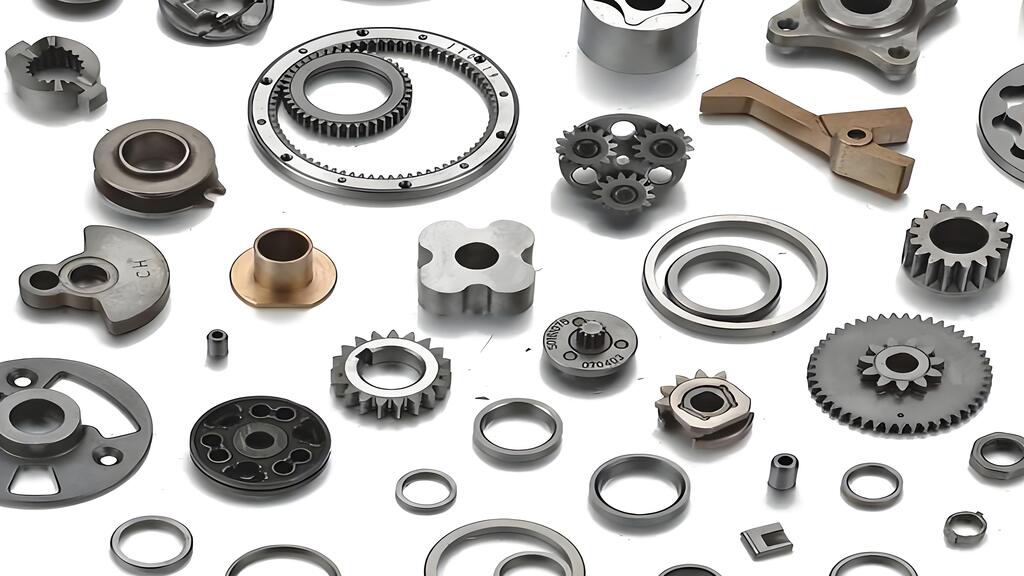
Powder metallurgy keeps pushing past traditional sintering limits and changes how manufacturers make Metal Parts today. The field has grown substantially with new processes such as high-velocity compaction, magnetic pulse compaction, hot pressing, spark plasma sintering, and microwave sintering. These advances are changing manufacturing capabilities for industries of all sizes by delivering better material properties and production efficiency.
Modern sintering furnaces now deliver consistent and repeatable results. They create cost-effective relationships between part positioning, temperature control, and atmosphere management throughout the Sintering Process. Techniques like Hydrogen Sintering and Phase Transformation (HSPT) show impressive results. The as-sintered ultra-fine-grained Ti-6Al-4V achieves strength above 1 GPa and ductility above 15% elongation. These advances are promising, though all but one of these techniques - the combination of sinter hardening and high-temperature sintering - remain uncommon in practice.
This piece covers the newest breakthroughs in powder metallurgy's properties, processing methods, and applications. Numerical models based on continuous media help us understand mechanisms and design processes, from basic powder production to advanced additive manufacturing integration with powder metallurgy. Powder metallurgy technology's economic value keeps growing and creates many jobs across the industry. Companies like Jiehuang Chiyang lead this change as China's one-stop metal parts solution provider, specializing in powder metallurgy manufacturing.
Powder Production and Characterization Fundamentals
Metal powders with specific properties are the starting point of powder metallurgy. Companies use four main processes to produce these powders: solid-state reduction, atomization, electrolysis, and chemical methods. Each method yields powders with unique traits that shape how they perform in later processing steps.
Ultrasonic Spray Pyrolysis for Conductive Powders
Ultrasonic spray pyrolysis (USP) has changed how we make conductive powders. This technique combines the advantages of bottom-up, liquid phase, and gas phase methods. The process starts with metal salts dissolved in a solution. An ultrasonic generator turns this solution into tiny droplets that pass through a high-temperature furnace. The material dries and decomposes in just seconds.
Scientists have made a breakthrough in USP by creating core-shell particles in one step. To cite an instance, they've made copper particles with a uniform coating of barium borosilicate glass (BBS). This coating acts as an oxidation barrier through natural phase-separation. These Cu@BBS particles form naturally as the mixed solution separates into a copper core and a BBS shell in just 2.1 seconds.
The BBS shell does more than just protect against oxidation. It serves as:
- A permanent binder
- A sintering promoter
- A way to create void-free, continuous conductive films
The electrodes made with these composite powders show a 50% lower specific resistivity compared to single-metal powders. The spherical shape of these particles makes them flow better and pack more efficiently.
Wettability of Probiotic and Metallic Powders
Wettability is vital for powder applications in industries of all types. This property affects how powders disperse, stay stable, and perform during processing, storage, and use. Metallic powders' wettability determines their interaction with binders and other components during sintering.
Scientists use two main techniques to measure powder wettability:
-
Sessile drop method: Scientists compress powder into pellets and measure liquid contact angles on the surface.
-
Capillary rise technique: This measures how liquid moves through packed powder over time.
Research shows that equilibrium contact angles with various solvents can reach zero quickly, in under 500 ms. This indicates complete wettability of compressed powder surfaces. Capillary rise experiments show that compacted probiotic samples have about 85% porosity. These methods give valuable data about surface properties.
Powder Morphology and Flowability Metrics
A powder's particle morphology shapes its bed properties. This becomes particularly important in advanced manufacturing. The powder's behavior during processing depends on particle size distribution, shape, and surface features.
Recent studies show that spherical particles flow better than irregular ones because there's less friction between them. Irregular-shaped particles don't flow as well, but can make stronger green products.
Metal powder flowability depends on:
- Physical properties (shape, particle size, humidity)
- Stress state
- Equipment used
- Handling methods
Scientists use Jenike's flow index (ffc) to classify flowability. This index shows the ratio of major principal stress at steady state flow to unconfined yield strength. Research using different measurement techniques shows that all RST-01.pc samples, 70% of PFT samples, and 50% of FT4 samples qualify as free-flowing.
Jiehuang Chiyang, China's leading metal parts solution provider, knows these powder characteristics are the foundations of quality powder metallurgy manufacturing.
Sintering Techniques for Improved Density and Properties

Modern sintering techniques lead the vanguard of powder metallurgy advances. Manufacturers can now achieve better density and mechanical properties in finished parts. These new methods solve traditional problems and need less energy and processing time.
Spark Plasma Sintering of NiCrSiBC Alloys
Spark Plasma Sintering (SPS) revolutionizes powder consolidation technology. It applies pressure and temperature through pulsed direct current at the same time. This method creates components faster at lower temperatures, yet delivers higher density and better mechanical properties.
SPS works through these key mechanisms:
- DC creates electric fields that help thermal diffusion
- Spark plasma helps form necks between particles
- Applied pressure boosts densification
NiCrSiBC alloys (specifically Colmonoy-5) processed with SPS at 900°C under 50 MPa pressure for 15 minutes achieved over 90% density. Scientists found hardening phases like borides and chromium carbides that resulted in Vickers hardness values of 860 ± 10 HV. Other studies showed hardness values of 601 ± 6 HV and about 625 HV.
SPS works exceptionally well with nickel-based alloys. It creates beneficial microstructural phases: gamma (γ) matrix phase, gamma prime (γ') intermetallic phases, secondary gamma prime (γ") intermetallic phase, and precipitation of solid solution strengthening elements. This method eliminates common problems like microsegregation, pores, and pinholes that plague conventional fabrication.
Multilayered Aluminum FGMs via Pressureless Sintering
Pressureless sintering (PLS) offers great advantages in creating functionally graded materials (FGMs) with complex compositions. PLS uses changes in surface free energy as its driving force, unlike methods that need external pressure. This simpler, affordable approach allows complex-shaped products and batch production.
Scientists create Ni/Al₂O₃ FGMs through several steps: weighing elementary powders, blending, stacking, cold compacting, and sintering at 1200°C for 90 minutes. Research with different cooling rates (5°C/min, 15°C/min, 20°C/min, and 25°C/min) found the best results at 20°C/min.
Four-layered aluminum-aluminum oxide FGMs with ceramic concentrations from 0% to 30% showed impressive results. Scientists used pressureless sintering at 620°C for 120 minutes in a two-step cycle. These specimens had no macro-cracks or micro-cracks at interfaces and showed smooth transitions between layers.
Research on multilayered Ni/Al₂O₃ FGMs with varying nickel content (85%, 70%, 60%, 50%, 30%, 20%, and 10%) revealed interesting findings. Longer sintering times from 3 to 4 hours improved relative densities from 57.64% to 62.06% and reduced porosity from 42.36% to 37.94%. Extended sintering periods created better inter-particle connections and bonds.
Sintering of Mo-9Si-8B with Ni Additives
Nickel as a sintering activator has changed how we process molybdenum matrix composites (MMC) with Mo-9Si-8B inclusions. Adding just 1 wt.% Ni makes materials more sinterable and helps create continuous molybdenum matrices.
Nickel boosted shrinkage by almost one-third in pressureless sintering. Temperature changes showed clear effects:
- Samples with Ni showed about 9% shrinkage at 1200°C
- Shrinkage reached about 19% at 1500°C
Samples with nickel stayed nearly 10% denser than nickel-free samples between 1200-1500°C. Maximum relative density hit 89% with nickel versus 82% without at 1500°C.
Combining nickel with Spark Plasma Sintering produced even better results. MMCs reached over 98% relative density after SPS at 1400-1500°C. These dense composites showed exceptional hardness at 482 ± 9 (HV20).
Jiehuang Chiyang, China's leading metal parts solution provider, uses these advanced sintering techniques. Their expertise in powder metallurgy manufacturing helps create custom metal parts with exceptional performance. These sintering innovations are a great way to get superior density and mechanical properties.
Microstructure Control through Phase Transformation

Phase transformation processes are the lifeblood of advanced powder metallurgy. These processes let manufacturers control microstructural development and properties with great precision. Materials can now be engineered at the microscopic level, which helps overcome the limits of regular powder metallurgy techniques.
Hydrogen Sintering and Phase Transformation (HSPT) in Ti-6Al-4V
HSPT stands out as a breakthrough in powder metallurgy processing that researchers have studied since 2012. This method uses multi-step pressureless sintering. Titanium hydride or partly hydrogenated titanium powder mixes with master-alloy or elemental powders and sinters under a controlled hydrogen atmosphere. The process uses phase transformations in (Ti-alloy)-H alloy systems to make the microstructure better during thermal cycling.
The process works in three main steps. The material heats up above the β-transus (1000-1300°C) in a hydrogen partial pressure of 1-100 kPa. The material then cools in a controlled way, which makes β-Ti change into lower temperature phases. The last step removes leftover hydrogen through annealing under vacuum or inert gas. This method creates wrought-like microstructures without the usual energy-heavy thermomechanical processing needed for high-performance titanium alloys.
Formation of Ultrafine α/β Microstructures
HSPT shines in its ability to create ultrafine-grain microstructures. The α colonies measure several microns across, while individual α grains stretch several microns long with submicron widths. Two main mechanisms refine the microstructure: ultra-fine α/α2 precipitates within coarse β grains during isothermal hold, and β transforms into α + δ at about 473K (200°C).
Laser beam focus manipulation in laser powder bed fusion offers another way to control microstructure. Manufacturers can shape the melt pool and control material reheating by adjusting laser focal offset. This creates specific "microstructure architectures" with controlled phase distribution at sizes as small as 10² μm.
Tailoring Mechanical Properties via Heat Treatment
Heat treatments after sintering help customize mechanical properties based on what's needed. UFG HSPT Ti-6Al-4V typically shows:
- Strength above 1 GPa with ductility above 15% elongation
- Properties that adjust through heat treatments to boost ductility past 20% or strength past 1100 MPa
- Fatigue properties that match wrought Ti-6Al-4V
Different heat treatments create unique microstructures. Quick cooling or water quenching plus aging creates a bi-modal microstructure. This includes about 50 vol% globularized primary α grains and acicular α grains with small amounts of retained β. Slow cooling or furnace cooling with aging leads to a fully globularized structure.
Research on PM Ti-6Al-4V extruded rods shows varied results. Quick aging creates fine acicular α (0.5 μm width). Broken-up structure treatment makes coarser laths (2.5 μm width). Solution and aging treatment produce mixed microstructures where primary plates separate very fine acicular α.
Companies like Jiehuang Chiyang bring their unique experience in custom metal parts and powder metallurgy manufacturing to the table. These advances in microstructure control through phase transformation help them develop high-performance components that match specific application needs.
Integration of Additive Manufacturing with Powder Metallurgy

Manufacturing technologies have taken a big leap forward. Traditional powder metallurgy (PM) now works together with additive manufacturing (AM). This combination creates new ways to produce complex metal components with better properties. The materials processing field has not seen such a breakthrough in the last decade.
Comparison of AM and Traditional PM Methods
Powder Bed Fusion (PBF) leads the way as a key AM method. It uses either a laser or an electron beam to fuse powdered materials layer-by-layer. This method lets manufacturers create complex geometric designs that regular manufacturing techniques can't match.
A newer study, published by different manufacturing methods, showed some surprising differences. Material Extrusion (MEX) and Powder Injection Molding (PIM) parts had much higher yield strength than Direct Metal Laser Sintering (DMLS) parts. DMLS parts showed the best overall strength and ductility.
The surface features are quite different, too. PIM components' mean RSm value (average width of profile elements) usually measures 16.75 μm. This matches the size of individual particles used. Surface analysis revealed that PIM and MEX surfaces are about 58% similar. DMLS surfaces match PIM surfaces about 53% of the time.
GKN Powder Metallurgy leads the industry in metal AM. They run fully automated production chains that work best for high-volume serial manufacturing. Their Laser Powder Bed Fusion (LPBF) process creates high-precision, fully dense metal components. These parts have complex geometries and lightweight designs that regular methods can't achieve.
Nanomaterials in Additive Manufacturing for Energy Devices
Adding nanomaterials to AM processes boosts mechanical, thermal, and electrical properties. However, this comes with some challenges. The main problems include:
- Inconsistent mechanical properties
- Material instability
- Non-uniform dispersion
- Limited scalability
- Unpredictable thermal characteristics
- Biocompatibility concerns
Scientists have mixed nanoscale reinforced materials—like LiMnO, graphite, and NH4Cl—with polymers such as Nylon 6 for FDM processes. Differential scanning calorimeter tests showed that nanofillers reduced crystallinity. These particles acted as thermodynamic sinks and made the material more stable against heat.
Commercial FDM setups can use these composite materials as feedstock filaments without any changes to hardware or software. This flexibility helps create functional energy storage components with custom shapes and capacities.
Powder Metallurgy in 3D-Printed Supercapacitors
3D printing brings unique benefits to making electrochemical energy storage devices. Traditional manufacturing methods can't match its precise geometric design and quick prototyping abilities. This becomes crucial when building complex 3D structures with high surface area.
3D-printed supercapacitor electrodes often have poor conductivity and limited electrochemical properties. Researchers have found ways to improve 3D-printed nanocarbon electrodes through activation and adding materials like Ti3C2Tx MXene.
A major advance came with 3D-printed graphene composite aerogel (3D-GCA) electrodes. These electrodes keep about 90% capacitance retention (from 0.5 to 10 A∙g-1) despite being millimeters thick. Their power densities top 4 kW∙kg-1—as good as or better than devices with electrodes 10-100 times thinner.
The making process usually follows these steps:
- Development of conductive filaments with graphene or carbon nanotube fillers
- FDM 3D printing of electrode structures
- Surface activation (chemical, thermal, or electrochemical)
- Deposition of electrochemically active materials
Companies like Jiehuang Chiyang, China's leading metal parts solution provider, see these advances as a chance to grow. They can expand their powder metallurgy manufacturing by adding integrated AM-PM technologies to their expertise in custom metal components.
Industrial Applications of Advanced PM Materials

Advanced powder metallurgy (PM) materials are finding new roles in a variety of industrial sectors. These materials provide superior performance characteristics that meet demanding applications. Many industries with specialized requirements for strength, durability, and operational efficiency now rely on them.
Automotive Applications of Sinter-Hardened Steels
The automotive industry leads PM component usage. Nearly 70% of ferrous PM products go into automotive applications annually. Sinter-hardened materials meet automotive requirements for high hardness and hardenability. They maintain mechanical performance and provide good compressibility with improved properties. Best of all, they don't need expensive secondary heat treatments.
PM usage varies between different vehicle types. Recent teardown studies show interesting patterns. The Toyota Yaris uses just 3.2 kg (0.2%) of PM parts. The VW Passat GTE PHEV has 4.2 kg (0.3%), while the Ford F150 uses a substantial 32.1 kg (1.7%). Common parts made with PM include clutch plates, connecting rods, camshafts, and planetary gear carriers.
Sinter hardening offers several benefits compared to traditional processing:
- One-step processing (gas quenching directly after sintering)
- Environmental benefits compared to oil hardening
- Unique combinations of mechanical properties
Medical Implants Using Ti-Based PM Alloys
Titanium PM alloys are perfect for medical applications because of their biocompatibility, corrosion resistance, and mechanical properties. Different crystalline phases—α, near-α, α+β, β, and shape memory alloys—give doctors many options for orthopedic implants.
Research shows C.P. Ti, Ti-Nb-Zr and Ti-Mo alloys resist corrosion better than alternatives. Titanium alloys with Ta-30Zr show great promise. They improve osseointegration by helping osteogenic cells stick and grow better.
Thermal Management in Electronics with Al/Si Composites
Al/SiC metal matrix composites offer exceptional solutions for managing heat in electronics. These materials combine excellent thermal conductivity (170-200 W/mK) with a controlled coefficient of thermal expansion that works well with semiconductor devices.
Popular applications include:
- High-brightness LEDs
- Flip chip lids
- Processor heat sinks
Al/SiC composites containing 60-75% SiC are taking over from traditional materials like Kovar and W-Cu alloys in electronic packaging. Their light weight (3.0 g/cm³ compared to 17.0 g/cm³ for W/Cu) makes them perfect for aerospace and portable electronics, where reducing weight matters most.
Jiehuang Chiyang makes use of these PM advances to create custom metal components for these industrial sectors.
Economic and Technological Impact of PM Advancements

Powder metallurgy brings significant economic benefits beyond its technical advantages. The technology creates more jobs and helps companies save money in manufacturing sectors. These benefits show up in material savings and innovative business solutions.
Cost Reduction via Near-Net Shape Processing
Near-net shape manufacturing through PM achieves material utilization rates of 95%, which outperforms other processes. A commercial vehicle notch segment made with PM used only 1.24 kWh per piece compared to 2.85 kWh when machined from barstock. This resulted in 57% less energy use. PM manufacturing of commercial vehicle oil pump gears saved 68% of the total costs when compared to machined products.
Job Opportunities in PM and Additive Manufacturing
The powder metallurgy industry creates many career opportunities in the global economy. Key roles in this field are:
- Laboratory and research technicians
- Mechanical engineers
- Metallurgists
- Press operators and setup specialists
- Quality control professionals
- Tool designers and developers
These positions support vital sectors from agriculture and consumer goods to healthcare, defense, and aerospace applications.
Role of Jiehuang Chiyang in Custom Metal Part Solutions
Ningbo Jiehuang Chiyang Electronic Tech Co., Ltd. shows how companies can use powder metallurgy advances in business. This leading one-stop metal parts solution provider in China specializes in powder metallurgy manufacturing and metal injection molding. The company creates custom metal components for businesses of all types, with a focus on 3C sectors (Computer, Communication, Consumer Electronics), automotive, and industrial applications. Jiehuang Chiyang develops commercially viable solutions through every project phase—from requirement planning and tooling design to manufacturing and logistics.
Conclusion
Powder metallurgy technology is revolutionizing manufacturing capabilities in many industries. Recent advances have brought several breakthrough developments. Powder production techniques have improved substantially - ultrasonic spray pyrolysis now creates specialized conductive powders with better properties. Modern sintering methods like spark plasma sintering and hydrogen sintering phase transformation have broken through traditional limits. These methods help manufacturers achieve better density and mechanical properties that weren't possible before.
We've seen remarkable progress in microstructure control. Engineers can now tailor material properties through precise phase transformations. This creates components with exceptional strength-to-weight ratios and customizable performance. Manufacturers design materials at microscopic levels to meet specific needs rather than working around material limitations.
The combination of powder metallurgy and additive manufacturing opens up exciting possibilities. This powerful duo lets us produce complex components with improved properties while keeping the efficiency of powder-based processes. These advances will expand how we use powder metallurgy in automotive, medical, and electronic sectors.
These technological improvements bring huge economic benefits. Powder metallurgy's near-net shape processing achieves 95% material utilization rates. This cuts waste and uses less energy than traditional manufacturing. Companies like Jiehuang Chiyang are a great example of turning these advantages into business success. They provide specialized powder metallurgy solutions to many industries.
The future looks bright for powder metallurgy. It will be crucial in solving manufacturing challenges related to material performance, sustainability, and budget-friendly solutions. As research moves forward and new processing methods emerge, we'll have more ways to create advanced materials with engineered properties. The old limits are falling away, and designers and engineers can expand what materials can do.
Key Takeaways
Modern powder metallurgy is revolutionizing manufacturing through breakthrough sintering techniques and advanced material processing methods that overcome traditional limitations.
• Advanced sintering techniques like Spark Plasma Sintering achieve 90%+ densification at lower temperatures while reducing processing time and energy consumption significantly.
• Hydrogen Sintering Phase Transformation (HSPT) produces ultra-fine Ti-6Al-4V with strength exceeding 1 GPa and 15% ductility without energy-intensive thermomechanical processing.
• Integration of additive manufacturing with powder metallurgy enables complex geometries with 95% material utilization rates, delivering superior performance and cost savings.
• Near-net shape processing through PM reduces energy consumption by 57% and total costs by 68% compared to traditional machining methods.
• Ultrasonic spray pyrolysis creates specialized conductive powders with 50% lower resistivity through innovative core-shell particle structures formed in seconds.
These advances position powder metallurgy as a cornerstone technology for sustainable, high-performance manufacturing across automotive, medical, and electronics industries, with companies like Jiehuang Chiyang leading commercial implementation of these breakthrough techniques.
FAQs
Q1. What are some key advantages of modern powder metallurgy techniques? Modern powder metallurgy offers several advantages, including near-net shape manufacturing with 95% material utilization, the ability to create complex geometries through additive manufacturing integration, and advanced sintering techniques like Spark Plasma Sintering that achieve over 90% densification at lower temperatures with reduced processing time and energy consumption.
Q2. How does Hydrogen Sintering Phase Transformation (HSPT) improve titanium alloy properties? HSPT produces ultra-fine grained Ti-6Al-4V alloys with strength exceeding 1 GPa and 15% ductility without requiring energy-intensive thermomechanical processing. This technique allows for tailoring of mechanical properties through controlled phase transformations during the sintering process.
Q3. What role does powder metallurgy play in the automotive industry? Powder metallurgy is extensively used in the automotive industry, consuming about 70% of ferrous PM products annually. It's applied in manufacturing components like clutch plates, connecting rods, camshafts, and planetary gear carriers, offering benefits such as improved material properties and cost-effective production of complex parts.
Q4. How is powder metallurgy advancing medical implant technology? Powder metallurgy enables the production of titanium-based alloys for medical implants with superior biocompatibility, corrosion resistance, and mechanical properties. Different crystalline phases of titanium alloys offer diverse options for orthopedic implants, with some alloys like Ti-Nb-Zr and Ti-Mo demonstrating enhanced corrosion resistance and improved osseointegration.
Q5. What economic benefits does powder metallurgy offer to manufacturers? Powder metallurgy provides significant economic benefits through near-net shape processing, which can reduce energy consumption by up to 57% and total costs by 68% compared to traditional machining methods. It also enables material savings, with utilization rates of up to 95%, making it a cost-effective solution for producing complex metal components across various industries.