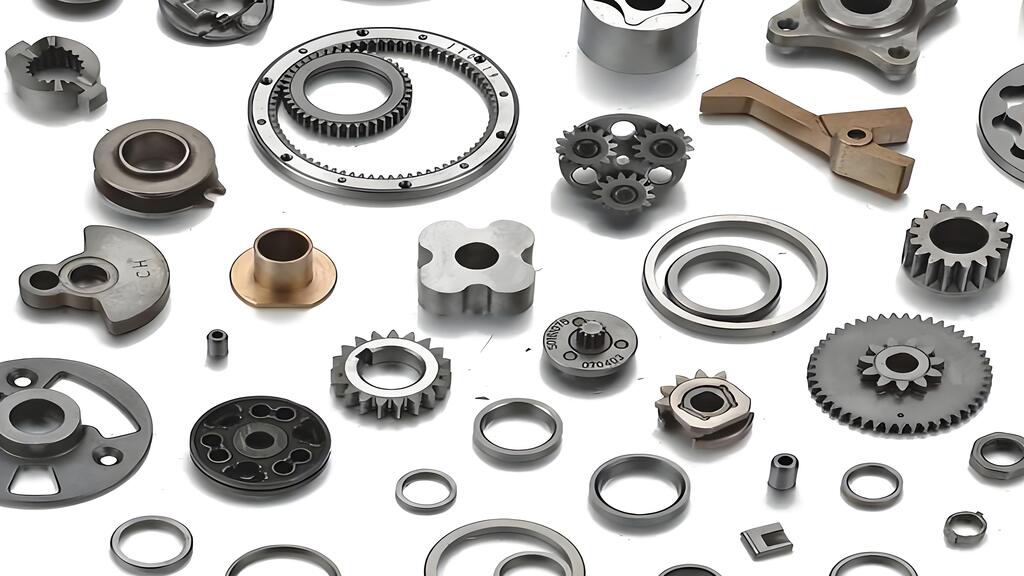


Metal injection molding MIM process

1. What is Metal Injection Molding?
Metal Injection Molding (MIM) is a new near-net forming technology in the field of powder metallurgy. The Mim Process includes six steps: Metal Powder Binder - Kneading - Injection Molding -Debinding - intering and solidification - post processing.
Powdering: The metal powder required for MIM has a very small particle size, generally in the range of 0 to 30 microns, and is produced by a very high-pressure water atomization method or a gas atomization method;
Mixed powder and binder: metal powder and organic binder are fully mixed to make particles, and the mixture particles are heated to a plasticized state;
Injection molding: The mixture is extruded into the mold cavity through an injection molding machine to form a rough part;
Degreasing and binding agent removal: The binder in the part blank is removed through chemical or thermal decomposition to obtain a part blank with only metal or only a small amount of binder remaining;
Sintering and curing: Send the parts into a sintering furnace for solidification to further remove residual binder;
Post-processing: Use quenching heat treatment, chemical heat treatment, steam treatment and other methods to reduce the internal pores of the part, improve the density of the part, improve the strength of the part, corrosion resistance and wear resistance, etc., to form the final part.

2. In what situations is metal injection molding suitable?
Currently, MIM process is widely used in electronic products, watches, small medical equipment, automobile engine parts, sports equipment, light weapons, etc. Compared with traditional mechanical processing, MIM technology can effectively utilize materials and form parts with complex structures. It is one of the effective supplementary methods to traditional processing.
The processing applicable to MIM technology can be classified into the following situations:
- 1. In traditional cutting or grinding processes, material loss is very large, and parts with a relatively long processing period are suitable for reducing costs through MIM technology.
- 2. MIM can be mass produced. Parts that meet certain mass production conditions but have low demand relative to mold opening costs are suitable for MIM technology.
- 3. Metals that are difficult to cut, such as titanium, nickel alloys, etc., can be manufactured through MIM technology. The accuracy of the product will be improved compared with traditional processing, and materials will be significantly saved.
- 4. Parts with complex geometries, such as parts with surface threads, knurling, cross channels, etc. Such parts are difficult to achieve in traditional powder metallurgy. Multi-axis parts or multi-datum parts that require multiple changes of processing stations during cutting. Parts suitable for processing through MIM technology.
- 5. Parts that need to be processed by a combination of different materials, such as parts processed with a combination of metal and ceramic materials, or parts made of different materials, such as hard magnetic-soft magnetic, magnetic-non-magnetic, conductive-insulating materials Overlay parts.
3. What materials are suitable for metal injection molding technology?
The range of materials applicable to metal injection molding is relatively broad. In principle, parts can be manufactured through MIM as long as the powder material has a melting point above the sintering temperature. Considering the economy, currently commonly used materials mainly include iron-based, nickel-based, and low alloys. Carbide,Titanium alloy, ceramic etc.