Microwave and Spark Plasma Sintering: The Future of Powder Metallurgy?

Powder metallurgy has seen dramatic changes in the last two decades. We adopted microwave heating to process metals and alloys, which revolutionized the field. This advanced technique led to massive reductions in processing times and energy use . The processed materials showed better microstructural characteristics and mechanical properties. Microwave heating applications now cover Sintering, melting, joining, cladding, drilling, and 3D printing operations .
Spark plasma sintering (SPS) stands out as another breakthrough technique in Powder Metallurgy. This rapid sintering method helps achieve quick densification while keeping grain growth minimal during shorter sintering times . Research data shows that powders under SPS have improved sinterability. The main reasons are particle surface activation and faster diffusion rates in contact zones due to applied pulse current . Scientists can now prepare various inorganic compounds with unique structures and shapes using both microwave heating and spark plasma sintering .
Researchers have extensively studied field-assisted sintering techniques. These methods help control metal matrix composite structures, especially for aluminum and magnesium matrix composites . Metallurgists can now get materials with new properties that were hard to achieve with regular powder metallurgy furnaces. This piece explores how these innovative sintering techniques have altered the map of powder metallurgy processing and examines if they truly represent this vital manufacturing discipline's future.
Comparative Overview of Sintering Techniques in Powder Metallurgy
Metal Powder Sintering techniques each have their own way of turning loose particles into solid components through atomic diffusion. Each method offers distinct benefits for various applications.
Conventional Furnace Sintering vs. Microwave Sintering
Traditional sintering, also known as 'free' or 'pressureless' sintering, is the classic approach in powder metallurgy. Box or tubular furnaces with silicon molybdenum heating elements run at about 1120°C to process more than 80% of structural powder metal components. The process uses external heat sources that move energy through conduction, radiation, and convection to heat materials from outside to inside.
Microwave sintering works in a completely different way. Electromagnetic waves (300 MHz to 300 GHz) create heat inside the material. This creates an inside-out heating pattern - the core gets hotter than the surface. The process speeds up diffusion so much that manufacturers can cut sintering time by 90% or more.
Recent tests of copper-cobalt alloys show that microwave methods cut processing time by a lot compared to old-school approaches. Microwave sintering also keeps material phases separate, which might mix during long conventional heating - we see this with iron and cobalt phases.
Microwave sintering's energy savings are worth noting. Research shows it uses much less energy while making denser products with better grain distribution. This makes it a great option for manufacturers who want to cut costs without losing quality.
Spark Plasma Sintering vs. Hot Isostatic Pressing
SPS and HIP both use pressure and heat, but they work quite differently. SPS sends high-density pulsed direct current through a conductive die and often through the powder itself, which creates quick Joule heating. The technique heats materials at amazing rates—up to 1000°C per minute—and finishes the job in minutes instead of hours.
HIP works by applying even pressure (100-200 MPa) using inert gas, usually high-purity argon, along with high temperatures. This creates equal compression on all surfaces with exact temperature control, producing parts that are almost 100% dense.
Studies on Bi₂Te₃ nano-powder reveal that SPS creates better thermoelectric performance than HIP. Research on NiTi-nano alumina composites shows that SPS-processed samples have more B2-NiTi phase than HIP-processed ones because there's less matrix breakdown.
SPS gets great results, but its equipment costs more than standard systems because the dies must handle both extreme heat and pressure at once. The better properties and faster processing times make up for the cost, especially in high-performance uses.
Hybrid Sintering Approaches in Modern Manufacturing
Hybrid sintering methods mix different heating techniques to get the best of each. These systems usually combine SPS with inductive or resistance heating. Electric current heats the material's core directly, while inductive elements add heat to the edges to even out temperature differences.
Research on HfB2-SiC composites shows that hybrid sintering makes denser materials than either SPS or inductive heating alone. These hybrid-sintered materials don't crack during resistance testing, which is vital for aerospace parts that need to resist high-temperature oxidation.
Companies like Jiehuang Chiyang use these advanced sintering techniques in their powder metallurgy facilities to make custom metal parts with exact properties. Their experience with sintering methods of all types helps them pick the right approach for each project.
The choice of sintering technique depends on production volume, part complexity, and performance needs. This decision shapes modern powder metallurgy manufacturing.
Microwave Sintering: Process Design and Use Cases

Microwave heating has revolutionized sintering in powder metallurgy. It works through electromagnetic energy conversion instead of conventional thermal transfer. The technology runs at 2.45 GHz and 915 MHz frequencies, using equipment with 1-6 kW power output.
Microwave Sintering of Metal Matrix Composites
Microwave sintering techniques have transformed metal matrix composites (MMCs). Research shows impressive results across material systems. Aluminum-based composites with SiC nanoparticles (0.3-0.9 vol.%) show excellent particle distribution when processed this way. The homogeneity happens because nanosized reinforcements fill spaces between aluminum powders during mixing. This creates even heating throughout compacted specimens.
These composites show improved mechanical properties through microwave processing. The microhardness values rise with higher reinforcement content because:
- Reinforcement particles block dislocation motions
- Rapid processing creates finer grain structures
- Better matrix-reinforcement interfaces form during sintering
SEM observations reveal that microwave-sintered samples have finer and more uniform microstructures than conventional methods. Jiehuang Chiyang, a leading Chinese metal parts provider, makes use of these benefits in its powder metallurgy manufacturing.
Energy Efficiency and Time Reduction Metrics
Microwave sintering saves time and energy compared to conventional methods. Research shows it cuts sintering time by 75-80% while delivering better mechanical properties. Some applications have seen processing times drop from 36.5 hours to just 70 minutes - making it 30 times faster.
Temperature requirements also drop by a lot. KAIST researchers cut sintering temperatures from 1,400°C to 1,200°C in solid oxide electrolysis cell production. This helps manufacturers save energy while making better products.
The main difference between conventional and microwave sintering is in how they heat materials. Traditional methods heat from outside inward, while microwaves generate heat inside the material. This creates more even temperature distribution with fewer thermal gradients.
Limitations in Dielectric Loss and Penetration Depth
Despite its benefits, microwave sintering has technical limits. Penetration depth of microwave energy is crucial as it determines how deep electromagnetic waves can heat materials. This varies from less than 1 cm for water to over 100 cm for materials like ice or Teflon at 2.45 GHz.
Large components with high dielectric loss factors might overheat at their surfaces before inner regions reach sintering temperatures. Materials whose dielectric properties change with temperature can experience thermal runaway.
Hybrid heating techniques combine microwave energy with conventional heating sources to solve these challenges. This helps heat materials that don't work well with microwaves at room temperature and provides more uniform heating throughout the specimen.
Spark Plasma Sintering: Mechanism and Performance
Spark plasma sintering (SPS) is a pressure-assisted pulsed-current method that unites powder samples under uniaxial pressure in electrically conducting dies. This technology differs from conventional sintering techniques. It employs direct heating of the die through high-intensity, low-voltage pulsed direct current. The process achieves remarkable heating rates up to 1000°C/min and reduces processing times.
Localized Heating and Neck Formation in SPS
SPS works through electrical discharge phenomena between powder particles. The pulsed current flows through the conductive die and powder, creating spark discharge at particle contact points. These sparks generate momentary localized high-temperature states that reach thousands of degrees centigrade. Such extreme temperatures cause evaporation and melting on particle surfaces, which leads to neck formation around contact areas.
Research with spherical copper powders shows significant temperature differences from particle contact surfaces to their centers. The temperatures at contact points can reach the material's boiling point. This heat creates necks through localized melting and quick solidification. Multiple necks develop between adjacent particles as sintering continues. Their size grows through what scientists call a "self-adjusting" mechanism.
The current density first concentrates at the original small contact points. The necks grow larger, and current distribution changes based on neck cross-sectional area and temperature-dependent electrical resistivity. This natural progression creates uniform neck size distributions and fine-grain formation throughout the material.
Densification of Nanostructured Powders
SPS proves highly effective at densifying hard-to-sinter nanostructured materials while minimizing grain growth. Scientists achieved 99.5% theoretical density under optimal parameters (temperature: 1100°C, pressure: 60 MPa, time: 5 minutes). TiB2-TiC-Ti composites reached 99.8% relative density at 1500°C under 50 MPa pressure for 5 minutes.
Pressure plays a vital role by reducing particle distances and improving inter-particle contacts. This mechanical effect reduces atomic diffusion needs and shortens sintering time. The process can operate at temperatures 200-500°C lower than conventional methods, which helps preserve nanoscale features.
Mechanical Property Enhancement in SPS-Processed Alloys
SPS-processed materials consistently show superior mechanical properties. X30Cr13 steel samples processed through SPS reached hardness values averaging 556 HV. These values match conventionally hardened steel without martensite in its microstructure. X-ray analysis revealed Cr-enriched carbides that likely cause this exceptional hardness.
A comparative study of NiTi-10Cu-0.8Mo alloys revealed remarkable results. Samples processed under optimal SPS conditions (C35) showed up to 163.7% higher hardness than standard NiTi alloys. Better powder fusion and microstructural homogeneity came from the combination of higher temperature and pressure.
The process requires careful parameter control. Research shows that sintering temperature drives densification and determines relative density, grain size, and morphology. Pressure and holding time remain significant during different sintering stages, though they are secondary factors. Jiehuang Chiyang utilizes this technical expertise in its powder metallurgy manufacturing process to create high-performance custom metal parts.
Industrial Applications and Case Studies

Advanced sintering technologies have evolved beyond laboratory research. These technologies now serve as vital manufacturing processes in many industries and deliver measurable performance improvements in commercial products.
SPS in Cutting Tool and Biomedical Component Fabrication
SPS technology creates cutting tools with superior wear resistance. Tools made using SPS from ultrafine powder (400nm) show a lower friction coefficient (μavg = 0.100) compared to conventional tools (μavg = 0.151). Tool life doubles during chipboard cutting operations. Al2O3-SiCw-rGO composites sintered through SPS have achieved remarkable hardness (~30 GPa) and fracture toughness (10.5 MPa m1/2). These properties make them perfect for electrical discharge machining applications.
SPS-processed zinc shows promising properties as biodegradable implants. The process creates fine, uniform equiaxed grains (19μm average) that achieve complete densification (7.1 g/cc). These materials show controlled degradation rates—starting at 0.1325mm/year and dropping to 0.075mm/year after 21 days. They also support healthy cell proliferation.
Microwave Sintering in Electronic Packaging Materials
Microwave sintering substantially improves electronic packaging materials. Graphite/copper composites processed through rapid microwave sintering demonstrate thermal conductivity 1.78 times higher than traditional methods. The process helps distribute graphite uniformly within the copper matrix and makes shared welding between materials possible. Ceramic-based packaging components also benefit from microwave sintering's lower processing temperatures while maintaining excellent microwave dielectric properties.
Powder Metallurgy Process Integration at Jiehuang Chiyang
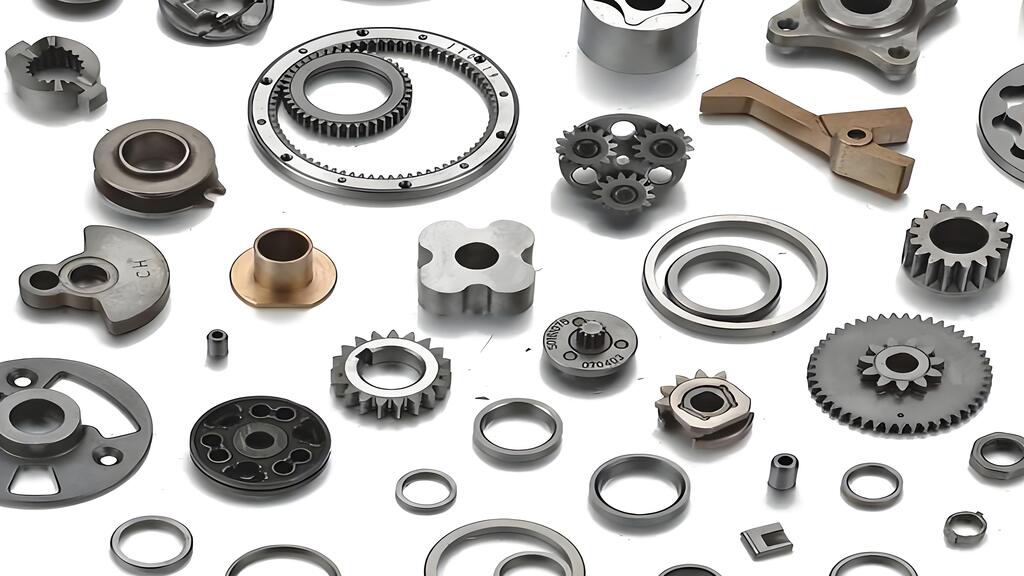
Ningbo Jiehuang Chiyang Electronic Tech Co., Ltd. stands as China's leading powder metallurgy manufacturer. The company integrates innovative sintering technologies into its production processes. They specialize in creating high-precision powder metallurgy components like gears, shafts, and structural parts. The company's detailed powder metallurgy processing expertise helps them produce complex-shaped components with tight tolerances and excellent mechanical properties. Their products serve the automotive, electronics, and machinery industries.
Scalability and Commercialization Challenges

Advanced sintering technologies offer great benefits, but manufacturers face many roadblocks in adopting them widely. These limitations affect how companies like Jiehuang Chiyang blend these methods into their powder metallurgy processing operations.
Die Size Limitations in SPS Equipment
SPS technology's path to commercialization faces big hurdles. We focused on capital intensity, adaptable solutions, and non-uniform heating that creates thermal gradients in sintered materials. The largest parts made with SPS reach only 450mm diameter × 7mm thickness, even with the best designs. High-throughput operations need trailblazing solutions. These include automatic die movement systems that use reciprocating carriages and hot-stripping mechanisms to stop scoring damage during disassembly.
Uniform Heating in Large Microwave Chambers
Large microwave sintering processes don't deal very well with heating uniformity. Large ceramic parts create temperature gradients due to their higher volume-to-surface area ratios. Uneven heating becomes more noticeable as sample sizes grow relative to penetration depth. Materials like graphite show this clearly with penetration depths of just 38 μm at 2.45 GHz. Scientists tackled these issues through hybrid heating setups, mode stirrers, and smart cavity designs.
Cost-Benefit Analysis for Mass Production
Advanced sintering methods depend on their operational efficiency. SPS systems need a big upfront investment plus ongoing costs. The cooling tower operation and compressed air cost about $100 weekly. A complete setup might need several graphite die-sets at $10,000 each. The investment makes sense when you look at production costs. High-throughput SPS systems can bring consolidation costs down to $37.77 per part compared to standard methods
Conclusion
Advanced sintering technologies have, without doubt, revolutionized powder metallurgy over recent decades. Microwave sintering and Spark Plasma Sintering (SPS) are revolutionary approaches that offer major advantages over conventional techniques. These methods dramatically reduce processing times and boost material properties through their unique heating mechanisms.
A comparative analysis shows that microwave sintering excels through volumetric heating and creates temperature profiles that accelerate diffusion while preserving distinct material phases. This technique achieves remarkable energy efficiency and delivers superior density and grain distribution in final products. SPS produces exceptional results through localized heating at particle contact points, which enables rapid neck formation and outstanding densification of even the most challenging nanostructured powders.
These technologies have proven their worth in a variety of industrial applications. SPS-processed cutting tools last twice as long due to superior wear resistance. Microwave-sintered electronic packaging materials show thermal conductivity nearly 80% higher than conventional alternatives. Biomedical components also benefit from the controlled microstructures and properties these advanced techniques achieve.
Notwithstanding that, several challenges remain before these technologies can fully replace conventional sintering methods in mass production environments. Die size limitations restrict the maximum dimensions of SPS-processed components. Uniform heating poses major hurdles for large-scale microwave chambers. Equipment costs present barriers, though the superior properties and reduced processing times often justify these investments for high-performance applications.
Companies like Jiehuang Chiyang understand the potential of these advanced sintering techniques. They strategically incorporate them within their powder metallurgy manufacturing processes to deliver high-precision components with exceptional properties. Their expertise in sintering methods of all types allows them to select optimal approaches based on specific application requirements.
The future of powder metallurgy will involve continued refinement of these technologies and hybrid approaches that combine their strengths. Conventional sintering will remain relevant for certain applications, but microwave and spark plasma sintering definitely represent critical advancement pathways for manufacturers seeking increased efficiency, energy efficiency, and process optimization. These technologies will become the life-blood of modern powder metallurgy as they mature and overcome their scaling limitations.
Key Takeaways
Advanced sintering technologies are revolutionizing powder metallurgy by dramatically reducing processing times and energy consumption while enhancing material properties through innovative heating mechanisms.
• Microwave sintering reduces processing time by 75-80% through volumetric heating that creates uniform temperature distribution and accelerates atomic diffusion compared to conventional methods.
• Spark Plasma Sintering (SPS) achieves 99.5% theoretical density in minutes rather than hours by using pulsed current to create localized heating at particle contact points.
• Advanced sintering delivers superior mechanical properties - SPS-processed cutting tools show doubled lifespans while microwave-sintered materials exhibit 78% higher thermal conductivity.
• Scalability challenges limit commercial adoption including die size restrictions (450mm max for SPS), uniform heating issues in large chambers, and high equipment costs.
• Hybrid approaches combining multiple heating methods overcome individual technique limitations and represent the future direction for industrial powder metallurgy applications.
These technologies are transforming manufacturing capabilities, enabling production of high-performance components with properties previously unattainable through conventional sintering methods, though scaling challenges must be addressed for widespread adoption.
FAQs
Q1. What are the main advantages of microwave sintering over conventional methods? Microwave sintering offers significantly reduced processing times (75-80% faster), lower energy consumption, and improved material properties due to volumetric heating. It creates more uniform temperature distribution and accelerates atomic diffusion compared to conventional sintering.
Q2. How does Spark Plasma Sintering (SPS) achieve rapid densification? SPS uses high-intensity pulsed direct current to create localized heating at particle contact points. This causes rapid neck formation between particles and enables densification of even nanostructured powders in minutes, often achieving 99.5% theoretical density.
Q3. What industries benefit most from advanced sintering technologies? Advanced sintering technologies have found applications in various industries, including cutting tool manufacturing, biomedical implants, electronic packaging, and automotive components. They enable the production of parts with superior wear resistance, controlled degradation rates, and enhanced thermal properties.
Q4. What are the main challenges in scaling up microwave and SPS technologies? Key challenges include die size limitations for SPS (maximum 450mm diameter), achieving uniform heating in large microwave chambers, and high initial equipment costs. These factors can limit the adoption of these technologies for mass production of larger components.
Q5. How do hybrid sintering approaches address limitations of individual techniques? Hybrid approaches combine multiple heating methods, such as integrating SPS with inductive or resistance heating systems. This helps overcome individual limitations like temperature gradients and material-specific heating issues, allowing for more uniform and efficient sintering of a wider range of materials and component sizes.