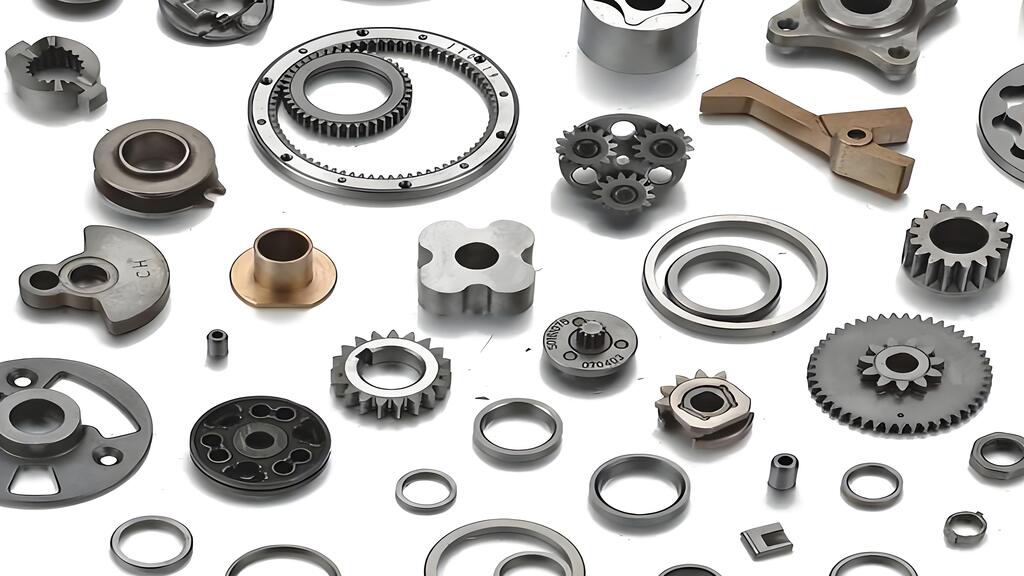


Performance Stamping vs. Powder Metallurgy
Performance stamping and powder metallurgyare two manufacturing approaches with different cost implications for 2025. Powder Metallurgy shows an impressive 97% material utilization efficiency, which makes it a "green technology" that produces minimal waste. Performance stamping shines in high-volume production scenarios with simpler designs. Both these metal-forming processes serve as the foundations of modern manufacturing, each with its own advantages based on project needs.
Several factors determine which process works best. Stamping materials mostly work with low-carbon steels and nonferrous options. Powder metallurgy accepts a wider range of materials such as stainless steel and copper alloys. Manufacturers need to balance their original investment costs against production volume when comparing forging vs stamping or fine blanking vs stamping. Performance stamping companies achieve high production efficiency and good surface finish naturally. Powder metallurgy creates complex, net-shape parts in just one operation.
Powder metallurgy traces its roots back to ancient Egypt and still competes strongly with modern stamping techniques across manufacturing industries. The economics of both processes depend heavily on project volume. Stamping proves more economical for simpler, high-volume parts. Powder metallurgy works better for complex components. The specialized equiPment needed for powder metallurgy requires substantial upfront investment, which might affect its feasibility for low-volume production.
Understanding the Manufacturing Processes
Metal manufacturing needs exact processes to create components with specific properties. Powder metallurgy and performance stamping each provide unique ways to work with metal. These approaches follow different operational principles.
How Powder Metallurgy Works: Press and Sinter
Powder metallurgy starts with metal powders as raw materials. Manufacturers create these through grinding, crushing, atomization, or chemical reactions. This fabrication method creates highly accurate components in four main stages. Manufacturers prepare metal powders from materials like iron, steel, copper, or bronze. They mix these powders with binders or lubricants that shape the final part's characteristics.
The compacting stage plays a vital role. Here, manufacturers press blended powders into rigid metal dies under controlled conditions. The compacting pressures range from 80 MPa to 1600 MPa based on material complexity. Copper and aluminum powders need pressures between 100-350 MPa. Iron and steel require higher pressures of 400-700 MPa. This pressing creates a "green compact" that keeps the right shape for later processing.
Sintering is a vital heat treatment that happens in controlled furnaces. The temperature stays just below the metal's melting point. This step removes internal voids and makes the microstructure stable. The result is parts with final strength and integrity.
How Performance Stamping Works: Die and Press
Performance stamping turns flat metal sheets or coils into precisely shaped components. The process uses force, pressure, and specialized tooling. The stamp press sits at the heart of this process and applies pressure to shape metal.
The presses can handle up to 600 tons with speeds of 150 SPM. They work with materials up to 0.250" thick and maintain tolerances of +/- 0.003". Several techniques exist here. Deep draw stamping can make draws up to 5". Progressive die stamping and compound stamping round out the options.
Forging vs Stamping vs PM: Key Process Differences
Forging shapes metal with compressive forces and keeps the grain flow for better strength. Stamping forms flat sheets into shapes. Forging arranges the metal grain structure with the component shape. This leads to better impact and fatigue resistance.
Powder metallurgy creates complex three-dimensional shapes in one press operation. Stamping usually produces two-dimensional profiles that might need more forming. Powder metallurgy works well with materials that stamping can't handle. This becomes important when high-strength materials might break stamping tools.
Material use is different by a lot. Stamping wastes considerable material with complex geometries. Powder metallurgy achieves about 97% material utilization.
Material Options and Suitability
Material selection determines manufacturing outcomes. Each process supports specific material options that shape how the final parts perform.
Stamping Materials: Aluminum, Copper, Steel
High-performance stamping works with metals that can handle shearing forces and pressure during shaping. Aluminum alloys provide great strength-to-weight ratios, which makes them perfect for lightweight car and aircraft parts. These alloys can be shaped into complex forms without breaking. Copper and its alloys (brass, bronze) stand out for their electrical conductivity and corrosion resistance. They also have antimicrobial properties that work well in medical devices. Steel remains the most versatile option for stamping and balances strength with cost. Different types of carbon steel and stainless steel resist corrosion and offer varying strength levels.
Powder Metallurgy Materials: Iron, Nickel, Titanium
Powder metallurgy can handle more materials than stamping. Iron-based powders lead PM applications with tensile strengths reaching 900 N/mm² after sintering or 1200 N/mm² with heat treatment. Nickel-based alloys handle high temperatures well and resist oxidation, which makes them crucial for aircraft components. Titanium powders create strong yet lightweight parts that work well as medical implants [11]. PM can work with materials that would damage stamping tools because they're too hard.
Material Strength and Ductility: What Each Process Supports
These processes handle material properties differently. Stamping works best with ductile materials that won't tear during shaping - usually low-carbon steels and nonferrous metals. A material's ability to be shaped directly affects stamping success. Materials like 304 stainless steel reduce tool stress and help dies last longer. PM parts show impressive strength but moderate ductility (usually less than 2% elongation). Powder forged steels can be both strong (up to 2050 N/mm² with heat treatment) and more ductile (5-18% elongation). PM suits complex shapes that need high strength, while stamping works better with simpler designs using ductile materials.
Production Speed and Lead Time
Time efficiency plays a key role in picking the right manufacturing method. The time taken from design to delivery can affect project costs and market competitiveness by a lot.
Setup Time: Tooling and Powder Preparation
Performance stamping needs 4-20 weeks for tooling design and creation based on part complexity. The process uses computer numerical control (CNC) machines to create custom designs that shape metal blanks. Powder metallurgy takes longer to get started. The process needs about a month just to get the right powder materials. Teams also spend several weeks getting production ready.
Cycle Time: Stamping Press vs Sintering Furnace
Production speeds pick up once the tooling is ready. Modern stamping presses run at 150-1,500 strokes per minute. High-performance models like the 30-ton Bruderer can hit 600 strokes per minute. This leads to faster cycle times compared to powder metallurgy, which needs long sintering processes in special furnaces.
Lead Time for Prototypes vs Mass Production
Both processes struggle with low-volume production. Performance stamping companies deliver first articles in 2-3 weeks. Production lead times range from 6-8 weeks. Powder metallurgy works best with high volumes. It becomes affordable when producing more than 10,000 parts.
Performance Stamping Company Capabilities
Performance stamping companies come with unique capabilities that boost production speed. Many use progressive die stamping to lower production costs through continuous high-volume metal stamping. These automated operations need less human input and speed up manufacturing. Progressive dies create complex parts in one go, which removes multiple setups and makes production smoother.
Performance stamping proves faster for high-volume, simple parts. Powder metallurgy takes longer to set up and run but excels at making complex components with exact dimensions when you need large quantities.
Cost and Application Trade-Offs
Manufacturing methods need careful analysis of project requirements and cost implications. Each approach has unique advantages in 2025's competitive digital world.
When to Choose PM: Complex, High-Strength Parts
Powder metallurgy stands out in producing components with intricate designs that other metalworking processes can't handle. The process works best especially when you have high dimensional accuracy and complex geometries. Engineers prefer it to manufacture connecting rods, fuel system components, catalytic reduction systems, and main bearing caps. Complex PM components might need secondary processing to remove bars and smooth edges.
When to Choose Stamping: Simple, High-Speed Runs
Simple, high-volume production runs make performance stamping the obvious choice. The process delivers great results for flat metal parts from low-carbon steel or nonferrous materials. You can achieve up to 2,000 strokes per minute with high-speed stamping, which speeds up production and cuts lead times. Of course, stamping works best with straightforward shapes that have excellent surface finishes without extra processing.
Performance Stamping Industries Use Cases
Performance stamping companies serve industries of all types with precision metal components. You'll find these parts in automotive (engine and structural parts), electronics (connectors, terminals), aerospace (aircraft structural components), medical devices (surgical instruments), and consumer goods. The process also fits industrial applications like electric motors, industrial pumps, and window fixtures. Performance stamping's versatility makes it valuable in lighting, fencing, railroad, and satellite industries.
Cost per Unit vs Total Project Cost
Production volume determines cost efficiency against original investment. Powder metallurgy needs heavy upfront investment in presses, sintering furnaces, and powder mixing machines. Complex stamping operations' tooling can be expensive too, particularly for progressive dies. Simple designs make stamping more cost-effective, but powder metallurgy becomes competitive as stamped components get complex. Neither method suits low-volume work. Both save money at high volumes—PM becomes affordable beyond 10,000 units.
Comparison Table
| Characteristic | Performance Stamping | Powder Metallurgy |
|---|---|---|
| Material Options | - Low-carbon steels - Nonferrous metals - Aluminum - Copper and alloys | - Iron-based powders - Nickel-based alloys - Titanium - Stainless steel - Copper alloys |
| Material Utilization | Lower efficiency with waste | 97% material utilization |
| Press Capacity | Up to 600 tons | 80-1600 MPa (pressure range) |
| Production Speed | 150-1,500 strokes per minute | Not specified (longer due to sintering) |
| Dimensional Tolerance | +/- 0.003" | High dimensional accuracy (exact value not specified) |
| Material Thickness | Up to 0.250" | Not mentioned |
| Setup Time | 4-20 weeks for tooling | ~1 month for powder sourcing plus extra preparation weeks |
| Original Investment | Lower than PM (exact value not specified) | Most important investment due to specialized equipment |
| Best Applications | - Simple designs - High-volume production - Flat metal parts - Automotive components - Electronics | - Complex geometries - High-strength parts - Connecting rods - Fuel system components - Main bearing caps |
| Production Volume | High volume (specific number not mentioned) | >10,000 units |
| Surface Finish | Good, minimal finishing needed | May need additional processing |
Conclusion
The best choice between performance stamping and powder metallurgy comes down to your project's specific needs rather than cost alone. Without doubt, both manufacturing processes shine in their own ways. Performance stamping works best with simpler designs and high-volume production runs, especially when you have automotive components and electronics. This process achieves cycle times at 150-1,500 strokes per minute. Powder metallurgy shows its strength with 97% material efficiency and becomes the go-to option for complex geometries and intricate parts that would need multiple operations otherwise.
Money-wise, stamping needs less original investment but wastes more material. Powder metallurgy costs more upfront for equipment but saves money on complex components that exceed 10,000 units. These processes are a big deal as it means that they work with different materials. Stamping excels with low-carbon steels and nonferrous metals. Powder metallurgy handles more options including stainless steel, copper alloys, and titanium.
Decision-makers should think over part complexity, production volume, material needs, and long-term goals. Stamping runs faster and creates excellent surface finishes for simpler designs. Powder metallurgy gives better dimensional accuracy for complex parts that need high strength. Manufacturers should review their needs for speed, complexity, material properties, and total production volume. This helps them pick the process that saves more money in their specific application for 2025.
FAQs
Q1. What are the main differences between performance stamping and powder metallurgy? Performance stamping is ideal for simpler, high-volume production of flat metal parts, while powder metallurgy excels in creating complex, high-strength components. Stamping offers faster production speeds, while powder metallurgy provides better material utilization and can work with a wider range of materials.
Q2. Which manufacturing process is more cost-effective for large production runs? Both processes become more cost-effective at higher volumes. Performance stamping is generally more economical for simpler, high-volume parts, while powder metallurgy becomes cost-effective for complex components when production exceeds 10,000 units.
Q3. How do the material options differ between stamping and powder metallurgy? Stamping typically works with low-carbon steels and nonferrous metals like aluminum and copper. Powder metallurgy can use a broader range of materials, including iron-based powders, nickel alloys, titanium, and stainless steel, allowing for more diverse applications.
Q4. What are the typical production speeds for performance stamping? Performance stamping presses can operate at speeds ranging from 150 to 1,500 strokes per minute, with some high-performance models reaching up to 600 strokes per minute. This allows for rapid production of parts in high-volume scenarios.
Q5. How does material utilization compare between the two processes? Powder metallurgy boasts an impressive 97% material utilization efficiency, making it a more environmentally friendly option with minimal waste. Performance stamping, while efficient for certain applications, typically produces more waste, especially when creating complex geometries.