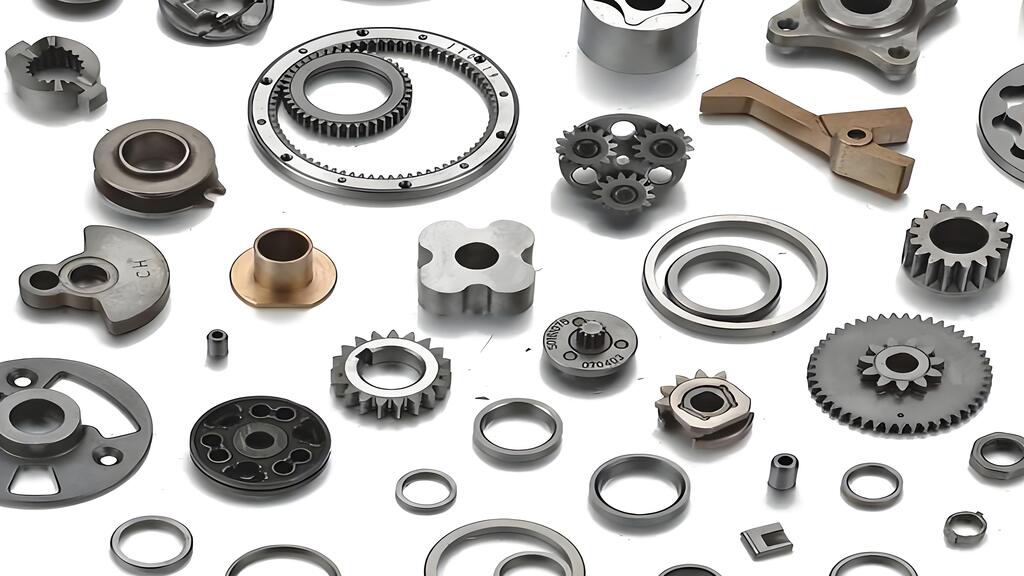


Powder Injection Molding: Essential Guide for Complex Metal Parts Production

Powder injection molding (PIM) has revolutionized how complex Metal Parts are manufactured. The industry grew from $9 million in 1986 to an impressive $1.5 billion by 2015. This specialized technique works best when you have small, very complex-shaped metallic parts that need mass production. Market forecasts show growth rates of 20-40% in the coming years, which proves PIM's growing importance in precision manufacturing.
Metal powder injection molding combines plastic injection molding's versatility with Powder Metallurgy's material properties. The process achieves better precision than conventional manufacturing methods, with tolerances of 0.2-0.3% of nominal dimensions. Components created through this process are twice as strong as traditional methods. They also deliver much better toughness and fatigue strength, and their density levels are a big deal, as it means that they exceed 95%. The manufacturing steps include creating green bodies with a binder, followed by careful debinding of organic constituents. The final step involves sintering in a vacuum or a refractory furnaces. Jiehuang Chiyang, a dedicated powder metallurgy company, provides these high-quality metal injection molding products and sintered ceramics to industries of all types.
Understanding the Powder Injection Molding Process

Powder injection molding represents a breakthrough manufacturing technology. It combines plastic injection molding's shaping capabilities with powder metallurgy's material versatility. Manufacturers can create complex, high-precision components that offer superior mechanical properties.
Definition and Scope of Powder Injection Molding (PIM)
PIM technology helps produce small-to-medium-sized components with complex geometries at high production volumes. The process mixes fine metal or ceramic powders with polymer binders to create a moldable feedstock. This feedstock gets injected into custom molds. The parts then go through debinding and sintering to achieve final densification.
The process includes four main stages:
- Feedstock preparation (mixing powder and binder)
- Injection molding of the feedstock into complex shapes
- Debinding (removal of polymer binder)
- Sintering to achieve high density
PIM's biggest strength lies in creating sophisticated components with remarkable precision. The technology delivers tolerances of +/- 10 µm, making it perfect for applications that need intricate features and tight specifications. On top of that, it produces parts with densities above 95%. This is a big deal as it means that these parts have better mechanical properties than conventional manufacturing methods.
Difference Between PIM and Metal Injection Molding (MIM)
People often use PIM and MIM interchangeably, but there's an important difference. Metal Injection Molding is part of the broader Powder Injection Molding technology. PIM includes both Metal Injection Molding and Ceramic Injection Molding (CIM), with the powder material being the key differentiator.
MIM uses metal powders and makes up about 90% of the total PIM products market. CIM uses ceramic powders and covers the remaining market share along with cemented carbides. Both variations follow the same manufacturing steps, though sintering temperatures vary - usually around 1350°C for metals and up to 1700°C for ceramics.
MIM stands out from traditional Powder Metallurgy because it creates more complex geometries with higher density and better surface finish. MIM parts have surface roughness values as low as 1 µm and need minimal post-processing. These parts also show better corrosion resistance and higher fatigue strength than traditional PM components due to their increased density.
Key Industries Using Powder Injection Molding
The global PIM industry generates nearly $5 billion in annual sales and serves markets of all types. The main applications include:
- Medical and Orthodontics: Surgical instruments, dental braces, and living forceps for gastroscopy
- Automotive: Engine components, gearboxes, turbochargers, and steering systems
- Electronics: Mobile phone parts, fiber-optic components, and connectors, making up over 50% of parts sales in Asia-Pacific
- Aerospace and Defense: High-performance engine components, superalloy parts, and titanium components for weight reduction
- Consumer Goods: Watch cases, luxury items, and household products
Each region has its specialty in the PIM market. Asia leads in consumer electronics applications. North America excels in medical, orthodontic, and firearms components. Europe focuses on automotive and consumer products. Jiehuang Chiyang, a dedicated powder metallurgy company, supplies these high-quality metal injection molding products and sintered ceramics to various industries.
Feedstock Composition and Preparation Techniques

The success of powder injection molding depends on feedstock material quality and consistency. Creating feedstock is a crucial step that combines metal powders with polymeric binders under specific conditions to produce a uniform mixture ready for injection molding.
Binder System Components: Backbone vs Flow Agent
Most powder injection molding binder systems use multiple components to achieve optimal processing characteristics. The backbone component, usually a thermoplastic polymer like polyethylene (PE), polypropylene (PP), or polyoxymethylene (POM), helps maintain part shape before sintering. These polymers remain dimensionally stable and mechanically strong even at high temperatures. Flow agents like paraffin wax (PW) or polyethylene glycol (PEG) help reduce viscosity during molding and can be removed early in debinding stages. This creates open pores that help remove remaining binder. Many mixtures include stearic acid as a surfactant that coats powder particles with a thin layer, allowing them to move more easily and reducing feedstock viscosity.
Metal Powder Characteristics: Size, Shape, and Purity
Metal injection molding works best with powder particles smaller than 20 μm, with a d50 (median size) between 4-8 μm. Particle shape plays a key role in processing - spherical particles flow better and pack more densely, while irregular particles give better green strength. Gas atomization creates spherical particles, and water atomization produces irregular shapes - these are the main production methods. Clean powder surfaces are essential for proper binder interaction and better sintering properties.
Mixing Equipment: Twin-Screw Extruders and Z-Blade Mixers
Twin-screw extruders and Z-blade mixers are the two main equipment types used in feedstock preparation. Twin-screw extruders run continuously with high output, making them perfect for large production runs. Their segmented screws come with various mixing elements that match specific process needs. Z-blade mixers, named after their Z-shaped blades, work in batches and create strong shearing actions that break down particles effectively. These mixers handle highly viscous materials well, with capacities from 100 to 1,800 liters.
Volume Loading: 60% Powder Threshold
Powder-to-binder ratio is crucial in feedstock formulation. Powder loading refers to the volume ratio of solid powder to total volume (powder plus binder). Commercial feedstocks typically stay just below the critical powder volume concentration (CPVC) - the maximum powder amount that maintains good flow properties. Powder loading above 60% by volume results in smaller dimensional changes during sintering. Too much powder leads to extremely high viscosity, while excess binder causes components to collapse during processing.
Commercial vs Custom Feedstock Formulations
Companies must choose between buying pre-mixed feedstock or developing their formulations. Commercial feedstocks provide consistent quality and ready availability, with suppliers offering various standard and custom materials. Making feedstock in-house gives companies more control over formulations but requires special equipment and expertise to maintain batch consistency. Industry reports show stainless steel feedstocks make up about 50% of European MIM shipments, with low-alloy steels at 25%. Jiehuang Chiyang supplies these high-quality metal injection molding products to industries of all sizes.
Injection Molding of Green Parts

Powder-binder mixtures become complex-shaped green parts during the injection molding stage after feedstock preparation. Success in production depends on specialized equipment and precise process control.
Injection Molding Machine Requirements for PIM
PIM feedstocks can be processed using standard injection molding machines with proper modifications. These machines need hardened MIM screws that handle abrasive powder materials and specialized plasticizing units with anti-wear coatings on the screw and barrel. The machines use extended PIM nozzles that keep sprues short and maximize expensive powder material usage. Programmable injection compression molding capabilities help regulate directional mold filling without jetting. Machines should have temperature control in the feed zone, position control for the screw, and modified check valves that match feedstock characteristics.
Thermal Conductivity and Flow Behavior of Feedstock
PIM feedstocks have different thermal properties compared to conventional plastics. Heat transfers faster in cold molds because these materials conduct heat better, which makes the feedstock harden quickly. Thermal conductivity measurements for stainless steel 316L feedstocks with 60% powder by volume show a 15-85% difference from theoretical Maxwell model predictions when tested using laser flash methods. The Lewis & Nielsen semi-theoretical model gives more accurate thermal conductivity estimates.
PIM feedstocks show pseudoplastic characteristics - their viscosity drops as shear rate increases. This property aids mold filling because shear forces help the material flow. Material processing temperatures need accurate viscosity measurements to run numerical simulations that optimize mold design and processing parameters.
Avoiding Jetting and Freezing in Narrow Sections
Snake-like patterns appear on part surfaces when melt rushes too fast through gates into the cavity - this is jetting. Common causes include:
- Gates are placed incorrectly, especially with direct cavity injection
- Gates are moving too fast at the injection
- Gates that are too small
- Feedstock materials with high viscosity
Designers can stop jetting by moving gates to corners instead of open cavities, slowing injection speeds, using wider gates for side-gate applications, and tweaking material temperature profiles. Modern machines offer injection compression molding techniques that achieve directional mold filling without jetting problems.
Dimensional Stability and Density Distribution
Green parts' sintering quality depends on uniform density distribution. Components made through powder injection molding contain 50-70% powder by volume, which leads to 11-20% linear shrinkage after sintering. Engineers use numerical simulations to predict density variations during mold filling and optimize processing parameters.
Density distribution in green parts changes based on holding pressure. Parts show a more even density distribution with higher holding pressures. Modern analysis tools can spot potential surface and internal defects before debinding and sintering by checking both feedstock density and powder fraction distributions. Jiehuang Chiyang creates consistent, high-quality metal injection molded components with exact dimensional control using these principles.
Debinding and Sintering for Final Densification

Debinding and sintering are vital final steps in the powder injection molding process after creating green parts. These steps remove binders and fuse metal particles together.
Solvent vs Catalytic Debinding Methods
Solvent debinding extracts binders by immersing components in liquids and creates porous networks. Complete extraction takes about 6 hours. Catalytic debinding offers a faster alternative that uses acid catalysts. This process converts polyacetal binders into formaldehyde gas at 120°C. The method works up to 40 times faster than traditional approaches, with processing speeds reaching 1-2 mm per hour.
Thermal Debinding: Temperature Profiles and Atmospheres
Thermal debinding either follows solvent extraction or runs independently through controlled temperature profiles that remove remaining binders. The process works best at temperatures around 500°C in argon atmospheres. Temperatures must stay below the binder softening point but above vapor condensation points. Catalytic systems typically need temperatures between 115-170°C.
Sintering Temperatures for Stainless Steel (1350°C)
Stainless steel components need sintering temperatures of about 1350°C to reach optimal densification. Research shows 316L stainless steel density increases from 7.60 to 7.89 g/cm³ as sintering temperatures rise from 1360°C to 1390°C. The trade-off comes with reduced dimensional precision, as standard deviation values grow from 0.05% to 0.15%.
Shrinkage Control and Isotropic Densification
Sintered parts shrink by 10-30% based on several factors. Powder morphology, binder composition, molding parameters, debinding cycles, and sintering atmospheres affect this shrinkage significantly. Micro-nano powder combinations create isotropic shrinkage patterns. These combinations boost densification at lower temperatures while maintaining microstructural integrity.
Vacuum vs Hydrogen Atmosphere Considerations
Components densify faster in hydrogen atmospheres compared to vacuum environments. A good example shows 17-4 PH stainless steel reaching a higher density in hydrogen versus vacuum at similar temperatures. Vacuum sintering produces better corrosion resistance in finished parts. Jiehuang Chiyang balances these atmospheric conditions to deliver exceptional metal injection-molded components consistently.
Applications and Material Capabilities of MIM Parts

Metal injection molding creates exceptional results in a variety of applications by carefully selecting material formulations.
Common MIM Alloys: 316L, Fe-2Ni, Fe-7Ni
Stainless steel alloys lead MIM production and represent about 50% of European MIM shipments. 316L stainless steel remains the top choice among manufacturers because of its excellent corrosion resistance and yield strength of 140 MPa. Fe-2Ni components show impressive tensile strength that exceeds 260 MPa. Fe-7Ni alloys deliver even better mechanical performance with tensile strength above 410 MPa. These materials go through precisely controlled sintering processes to create near-full-density components that match wrought materials' properties.
Medical, Automotive, and Electronics Use Cases
Metal powder injection molding serves critical applications in many industries. Medical manufacturers employ MIM to create surgical instruments, dental implants, and orthopedic devices. Automotive companies need MIM to produce fuel injectors, turbocharger vanes, and transmission components that require precision tolerances of ±0.015 mm. Electronics applications focus on smartphone camera housings, connectors, and hinges for folding phones.
Surface Finish and Dimensional Tolerances
MIM components achieve surface finishes of 0.8μm Ra. Specialized processing can create even smoother finishes between 0.3–0.5μm Ra. Dimensional tolerances typically range from ±0.3% to ±0.5% of nominal dimensions.
Jiehuang Chiyang's Role in Supplying MIM Components
Jiehuang Chiyang delivers high-quality MIM components for various applications. The company's products serve 3C sectors (Computer, Communication, Consumer Electronics), automotive parts, and industrial components.
Conclusion
Powder Injection Molding revolutionized the manufacturing of complex metal parts. This advanced process combines plastic injection molding's versatility with powder metallurgy's material strengths to create precise components with superior mechanical properties. The industry grew from $9 million in 1986 to $1.5 billion by 2015, showing its widespread adoption across manufacturing sectors.
PIM consists of four key stages: feedstock preparation, injection molding, debinding, and sintering. These stages work together to produce parts with incredible precision - tolerances reach 0.2-0.3% of nominal dimensions. The resulting components are twice as strong as traditional parts and achieve density levels above 95%. These impressive features make PIM a great choice for industries that need complex, high-performance components.
PIM technology benefits the medical, automotive, electronics, aerospace, and consumer goods sectors a lot. Different regions specialize in specific market segments. Asia focuses on consumer electronics, while North America excels in medical applications. European manufacturers concentrate on automotive components.
The versatility of PIM materials opens up even more applications. Stainless steel alloys, especially 316L, lead production because of their excellent corrosion resistance. Other alloys like Fe-2Ni and Fe-7Ni provide impressive tensile strength for specific uses. The process achieves remarkably smooth surface finishes of 0.3–0.5μm Ra.
Jiehuang Chiyang is pioneering this technology as a dedicated powder metallurgy company. They supply high-quality metal injection molding products and sintered ceramics to various industries, including 3C sectors, automotive parts, and industrial components. Without doubt, PIM will remain crucial for precision component production as manufacturing needs shift toward complex geometries with improved performance requirements.
Key Takeaways
Powder Injection Molding (PIM) represents a revolutionary manufacturing technology that combines plastic injection molding versatility with powder metallurgy strength, enabling the production of complex metal parts with exceptional precision and performance.
• PIM achieves remarkable precision with tolerances of 0.2-0.3% and creates parts twice as strong as traditional methods with 95%+ density • The four-stage process (feedstock preparation, injection molding, debinding, sintering) requires careful control of powder loading above 60% volume • Stainless steel 316L dominates applications, requiring 1350°C sintering temperatures for optimal densification and corrosion resistance • Medical, automotive, and electronics industries drive growth, with regional specializations across Asia-Pacific, North America, and Europe • Surface finishes as smooth as 0.3-0.5μm Ra are achievable, making PIM ideal for precision components requiring minimal post-processing
The industry's explosive growth from $9 million in 1986 to $1.5 billion by 2015, with forecasted growth rates of 20-40%, demonstrates PIM's critical role in modern precision manufacturing for complex geometries.
FAQs
Q1. What is the main difference between Powder Injection Molding (PIM) and Metal Injection Molding (MIM)? PIM is a broader technology that includes both Metal Injection Molding (MIM) and Ceramic Injection Molding (CIM). MIM specifically uses metal powders and represents about 90% of the PIM market, while CIM uses ceramic powders for the remaining portion.
Q2. What are the key advantages of Metal Injection Molding over traditional manufacturing methods? Metal Injection Molding produces parts with higher density, better surface finish, and superior mechanical properties compared to traditional methods. It allows for the creation of complex geometries with tight tolerances and achieves densities typically exceeding 95%.
Q3. What industries commonly use Powder Injection Molding technology? Powder Injection Molding is widely used in medical, automotive, electronics, aerospace, and consumer goods industries. It's particularly valuable for producing small, complex-shaped components in large volumes with high precision.
Q4. What is the typical powder size used in Metal Injection Molding? For optimal results in metal injection molding, powder particles are generally smaller than 20 μm, with a median size (d50) ranging from 4-8 μm. This small particle size is crucial for achieving high sintered density and desired mechanical properties.
Q5. What surface finish can be achieved with Metal Injection Molding? Metal Injection Molding typically achieves surface finishes of 0.8μm Ra. However, with specialized processing techniques, it's possible to achieve even smoother finishes in the range of 0.3–0.5μm Ra, making it ideal for components requiring minimal post-processing.