

Introduction
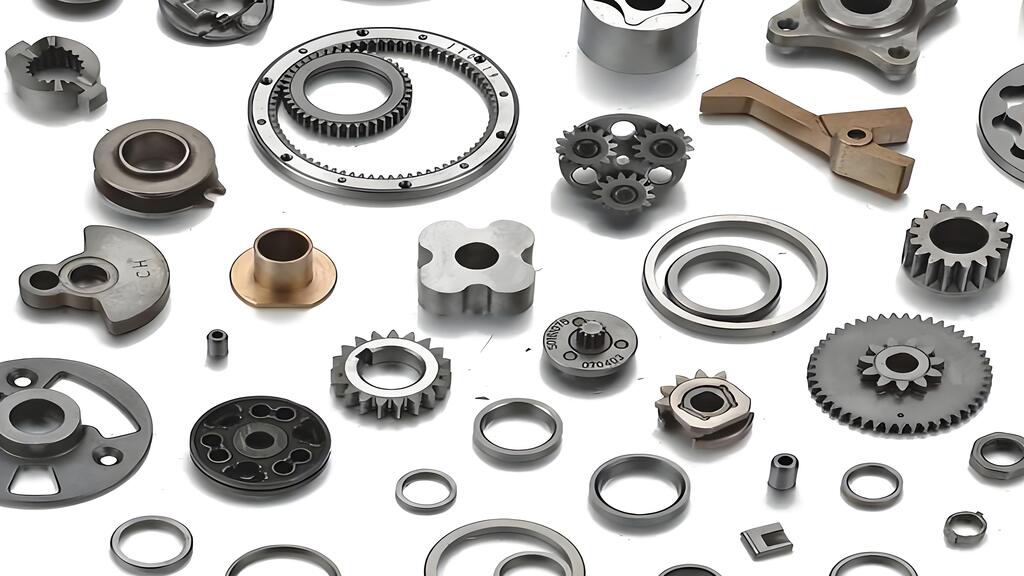
Powder metal manufacturing is more than an alternative to machining—it is a production method that can reshape cost, consistency, and design flexibility for high-volume parts. This article explains how a custom precision Powder Metallurgy supplier helps reduce material waste, minimize secondary operations, and deliver tight tolerances across complex geometries. It also outlines where powder metal components perform best, which industries rely on them most, and what engineering and procurement teams should evaluate when selecting a manufacturing partner. With that context, the discussion can move directly into the economic and technical advantages of powder metal production.
Why a Powder Metal Parts Manufacturer Matters for Cost
Partnering with a specialized powder metal parts manufacturerfundamentally alters the cost structure of high-volume component production. By leveraging powder metallurgy (Pm), engineers can bypass the heavy material waste and extended cycle times inherent to traditional subtractive manufacturing.
For procurement and engineering teams, understanding the economic mechanics of the PM process is critical. The technology shifts the financial burden from variable machining costs to fixed tooling investments, yielding massive economies of scale for precision components.
How custom precision powder metal parts reduce machining costs
Custom precision powder metal parts drive substantial cost reductions primarily through near-net-shape manufacturing. Unlike machining from billet or bar stock, which frequently results in 40% to 60% material loss in the form of scrap chips, the powder metal process boasts a material utilization rate routinely exceeding 95%.
Eliminating multi-axis CNC machining centers from the primary production path slashes both labor and machine-hour overhead. For complex geometries such as internal splines, asymmetrical cams, and spur gears, forming the part in a single compaction stroke can decrease per-part production costs by 30% to 60% compared to traditional hobbing, milling, or broaching.
Which industries depend on powder metal parts for dimensional consistency
The automotive sector remains the dominant consumer of PM components, accounting for approximately 70% of global demand. Critical applications like transmission gears, variable valve timing (VVT) sprockets, and oil pump rotors rely heavily on the dimensional consistency that powder metallurgy provides across production runs scaling into the millions.
Beyond automotive, the power tool, industrial fluid power, and medical device industries depend on PM for miniature, high-precision components. A tightly controlled powder metal process can reliably hold International Tolerance (IT) grades of IT 7 to IT 9 straight out of the sintering furnace. This consistency ensures seamless assembly of interchangeable parts without necessitating costly secondary grinding or honing operations.
Powder Metal Manufacturing Capabilities
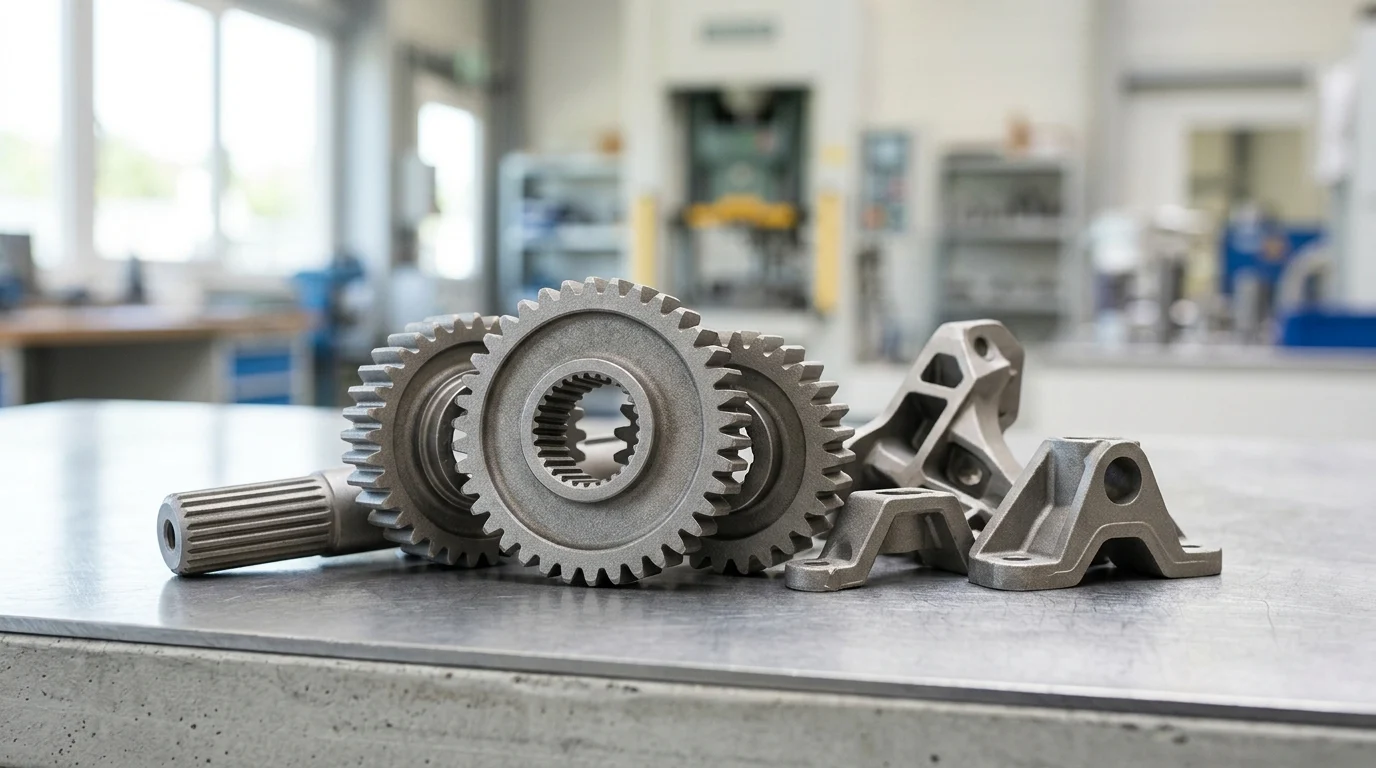
The capabilities of a powder metal parts manufacturer are defined by their metallurgical expertise, press tonnage, and mastery of thermal processing. Modern PM is not limited to simple iron shapes; it encompasses a vast array of engineered alloys tailored for specific mechanical, magnetic, or thermal properties.
Materials, densities, tolerances, and secondary operations
The selection of powder blends dictates the final component's performance. Common materials include iron-copper-carbon alloys, nickel steels, and 300/400 series stainless steels. By controlling the compaction pressure, manufacturers can engineer the final density of the part, typically ranging from 6.4 g/cm³ for self-lubricating bearings to over 7.4 g/cm³ for high-strength structural gears.
While PM is a near-net-shape process, manufacturers frequently employ secondary operations to achieve tighter tolerances or enhanced physical properties. Coining (re-pressing) can improve dimensional accuracy to ±0.025 mm, while resin or copper infiltration seals surface porosity. Heat treatments like case hardening or steam treating are also standard for boosting surface hardness and corrosion resistance.
| Material Grade | Typical Density (g/cm³) | Ultimate Tensile Strength (MPa) | Primary Application |
|---|---|---|---|
| FC-0208 (Iron-Copper) | 6.4 - 6.8 | 350 - 450 | General structural components |
| FN-0205 (Nickel Steel) | 6.9 - 7.3 | 600 - 850 | High-stress automotive gears |
| SS-316L (Stainless) | 6.5 - 6.9 | 300 - 400 | Corrosion-resistant medical parts |
Powder metal process flow from design to production
The powder metal process flow begins with the precise blending of elemental or pre-alloyed metal powders with solid lubricants (such as zinc stearate) to aid ejection from the die. This homogeneous mixture is then fed into a rigid tool steel or tungsten carbide die.
Compaction occurs in mechanical or hydraulic presses, applying pressures between 20 and 50 tons per square inch (TSI) to form a fragile "green" part. This green part is then transferred to a continuous belt furnace for sintering. Operating at temperatures between 1,120°C and 1,300°C in a controlled atmosphere (typically nitrogen-hydrogen), the solid-state diffusion bonds the powder particles together, yielding a rigid, high-strength metal component.
Powder metal vs machining: key differences
The decision between powder metal and conventional machining hinges on geometry and volume. Machining excels at low-volume, highly customized parts with extreme tolerance requirements (e.g., ±0.005 mm) and complex cross-holes that cannot be molded. However, it scales poorly due to linear cycle times.
Conversely, PM offers unmatched speed for complex 2D profiles extruded into the Z-axis. A PM press can produce 15 to 60 parts per minute. While machining handles undercuts and transverse holes easily, PM requires secondary machining for these features since the compaction punches operate strictly in a vertical, uniaxial direction.
Quality, Compliance, and Production Risk
Because powder metallurgy is inherently a high-volume manufacturing process, stringent quality assurance and process controls are paramount. A single undetected tooling flaw or furnace temperature fluctuation can quickly result in thousands of non-conforming parts, making proactive risk management a non-negotiable trait for top-tier suppliers.
Inspection methods, process controls, and traceability
Leading PM manufacturers utilize a combination of in-line monitoring and post-process inspection to ensure dimensional integrity. Coordinate Measuring Machines (CMM) and optical comparators are standard for verifying complex gear tooth profiles and concentricity. Advanced facilities increasingly integrate automated vision systems capable of detecting surface defects, cracks, or edge chipping as small as 0.1 mm at full production speeds.
Statistical Process Control (SPC) is aggressively applied to critical characteristics such as green density and sintered weight. By monitoring the compaction tonnage on every stroke, presses can automatically reject parts that fall outside the established ±2% density control limits, preventing structural failures before the parts even reach the sintering furnace.
Certifications, PPAP readiness, and material consistency
For industries with zero-tolerance policies for failure, such as automotive and aerospace, supplier certifications act as the first filter in the sourcing process. A reputable powder metal parts manufacturer should hold, at minimum, ISO 9001 certification, with IATF 16949 being mandatory for automotive supply chains. These standards push suppliers to maintain defect rates below 10 Parts Per Million (PPM).
Production Part Approval Process (PPAP) readiness is another critical indicator of maturity. A Level 3 PPAP submission requires the manufacturer to provide comprehensive documentation, including Process Failure Mode and Effects Analysis (PFMEA), Control Plans, and material certifications proving that the chemical composition of the powder lots matches the engineered specifications precisely.
Commercial and Supply Chain Factors
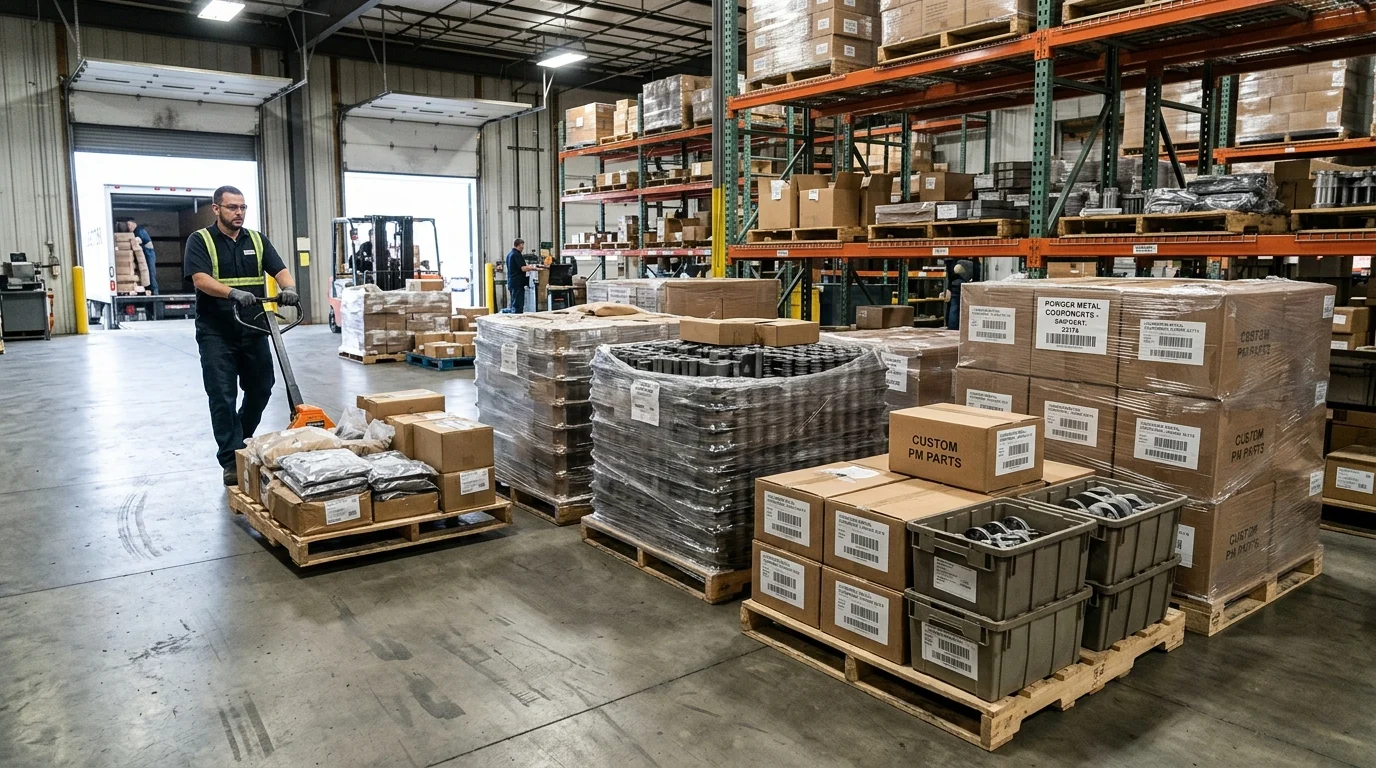
The commercial viability of sourcing powder metal parts is heavily influenced by supply chain mechanics, specifically the interplay between upfront capital expenditures and long-term piece-price savings. Navigating these factors requires a total cost of ownership (TCO) approach rather than merely comparing per-unit quotes.
Tooling amortization, order volume, lead time, and total cost
Tooling is the most significant barrier to entry in powder metallurgy. Compaction dies and punches, typically machined from high-speed steel or tungsten carbide, cost anywhere from $5,000 for simple bushings to over $30,000 for multi-level, complex gear tooling. This investment must be amortized over the life of the project.
Because of these tooling costs and setup times, Minimum Order Quantities (MOQs) usually start between 10,000 and 20,000 units annually. Lead times for initial tooling design, fabrication, and PPAP approval generally span 8 to 12 weeks. However, once in production, the low unit cost quickly offsets the initial capital.
| Annual Volume | Machining Unit Cost | PM Tooling Cost | PM Unit Cost | Cost Advantage |
|---|---|---|---|---|
| 1,000 | $12.00 | $15,000 | $2.50 | Machining wins |
| 10,000 | $10.50 | $15,000 | $2.20 | Break-even range |
| 50,000 | $9.00 | $15,000 | $1.80 | PM saves $345k |
| 200,000 | $8.50 | $15,000 | $1.50 | PM saves $1.38M |
Practical steps for comparing suppliers and quotations
When comparing quotations from different powder metal manufacturers, procurement teams must look beyond the bottom line. Evaluate how tooling maintenance is handled—whether the supplier guarantees the tool for a specific number of shots (e.g., 500,000 cycles) or covers routine refurbishment costs.
Additionally, assess the supplier's material supply chain. Manufacturers who purchase pre-blended powders in bulk from established global mills often offer better price stability and shorter raw material lead times than those who custom-blend small batches, which can introduce lot-to-lot variability and cost premiums.
How to Select the Right Powder Metal Parts Manufacturer
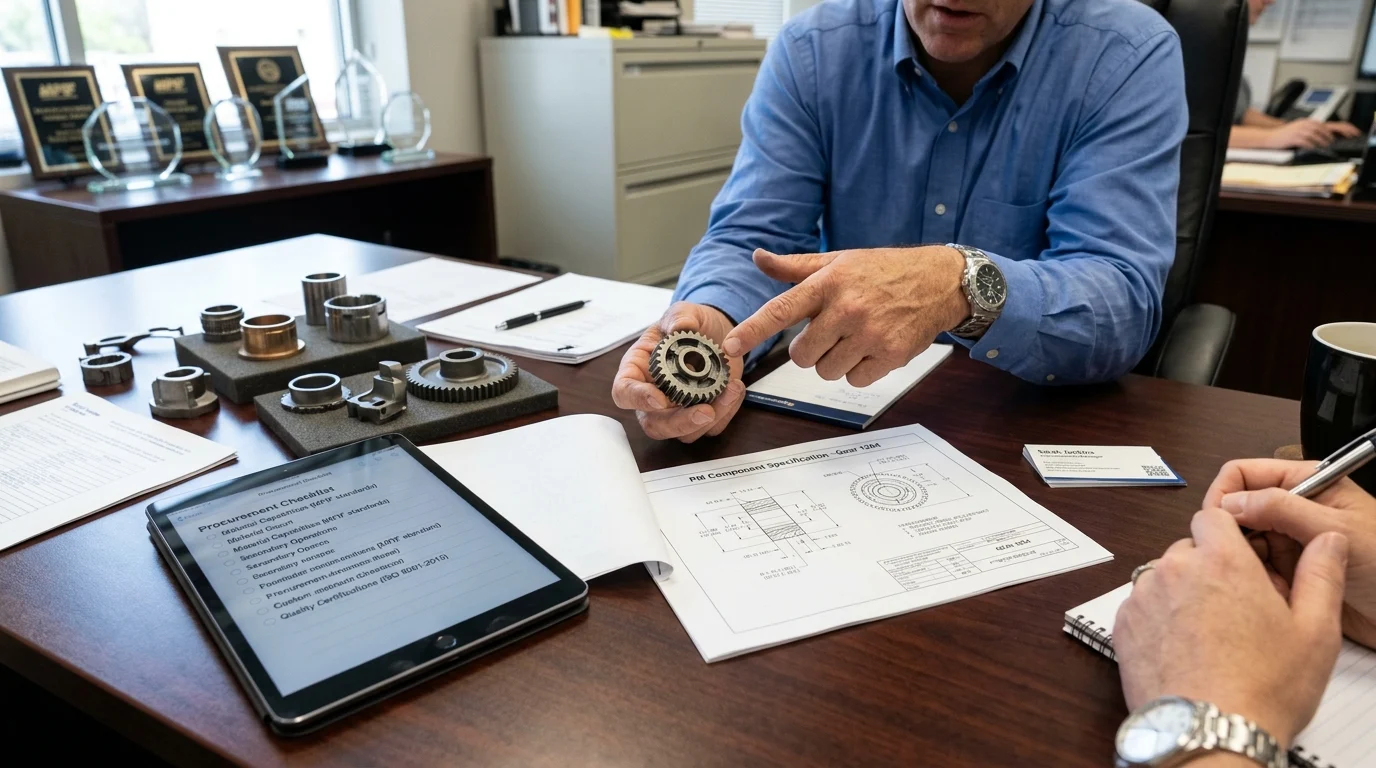
Selecting the right powder metal parts manufacturer is a strategic decision that binds your product's performance to the supplier's technical execution. The ideal partner does more than just press powder; they act as an extension of your design and value engineering teams.
When powder metal is the right choice
Powder metal is the optimal choice when a component requires complex 2D shapes, such as asymmetrical profiles, gears, or cams, and is needed in volumes exceeding 15,000 units per year. It is also the exclusive manufacturing method for components requiring controlled porosity, such as self-lubricating bronze bearings, which hold 15% to 25% oil by volume.
Conversely, if a part features massive undercuts, intersecting cross-holes, or requires the absolute maximum tensile strength of a forged wrought alloy, PM may not be suitable without extensive—and costly—secondary machining operations that negate its economic advantages.
Final shortlist criteria for supplier selection
When finalizing a shortlist of suppliers, technical capacity and operational alignment are the deciding factors. Review the manufacturer's press capabilities; a diverse fleet ranging from 10-ton presses for miniature components to 800-ton presses for large structural parts indicates flexibility and scale.
Furthermore, prioritize manufacturers who keep critical secondary operations—such as heat treating, resin infiltration, and CNC turning—in-house. Relying on third-party subcontractors for these steps introduces logistical delays, increases scrap risk, and complicates traceability. Finally, verify their financial stability and proximity to your assembly plants to ensure resilient, just-in-time (JIT) delivery capabilities over the multi-year lifespan of the tooling.
Key Takeaways
- The most important conclusions and rationale for Powder Metal
- Specs, compliance, and risk checks worth validating before you commit
- Practical next steps and caveats readers can apply immediately
Frequently Asked Questions
When is powder metal more cost-effective than machining?
Powder metal is usually more cost-effective for medium to high volumes, especially with gears, splines, and cams. The tooling cost is offset by low scrap, fast cycles, and fewer secondary machining steps.
What materials can JHPIM use for custom powder metal parts?
Typical options include iron-copper-carbon alloys, nickel steels, and 300/400 series stainless steels. Material choice depends on strength, wear resistance, corrosion needs, and target density.
How accurate are powder metallurgy components?
Standard PM parts commonly achieve IT7 to IT9 consistency after sintering. For tighter requirements, coining and other secondary operations can improve tolerances to about ±0.025 mm.
Which industries commonly use powder metal parts?
Automotive is the largest user, especially for transmission gears, VVT sprockets, and oil pump rotors. Power tools, fluid power, and medical devices also use PM for precise, repeatable parts.
What is the basic powder metal manufacturing process?
The process starts with powder blending, then compaction in a die, followed by sintering in a controlled-atmosphere furnace. Secondary steps like sizing, infiltration, or heat treatment are added as needed.