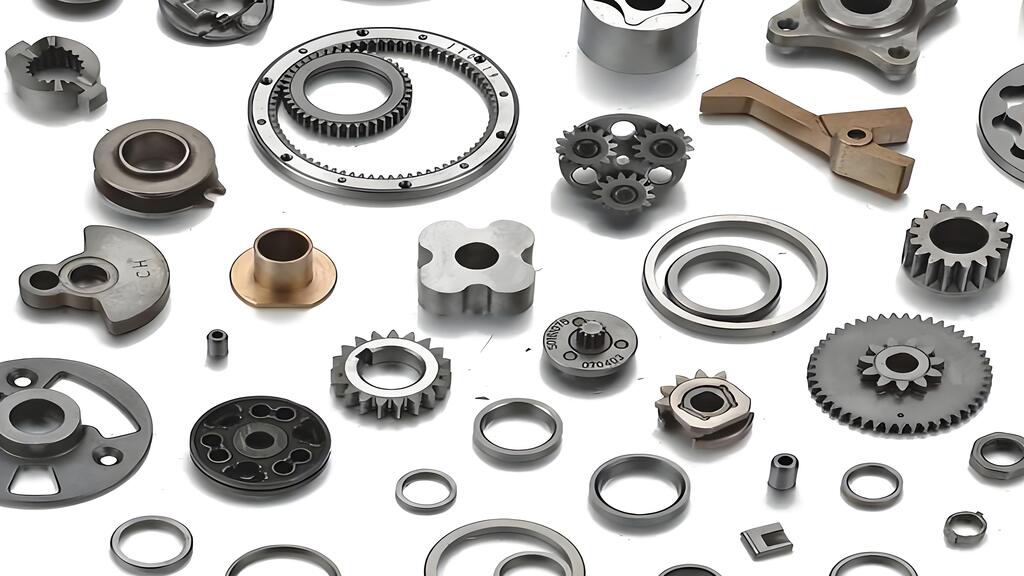


Secondary Machining in Powder Metallurgy: Essential Process Guide

Powder Metallurgy applications can improve tolerance limits by up to 50% through secondary machining. The production of complex parts needs fewer steps than traditional manufacturing methods with powder metallurgy. The sintering process leads to dimensional changes that can't be avoided. These small variations often need more processing to meet exact specifications.
Secondary operations in powder metallurgy fill the crucial gap between near-net shape capabilities and what the final product needs. These traditional secondary machining processes don't just control component dimensions - they boost wear resistance, stop corrosion, and make the parts look better. Parts reach their final specifications through secondary machining when tooling compensation alone can't fix dimensional variations. Some features that aren't possible during the first compaction stage become achievable through these secondary manufacturing processes.
This piece looks at everything in secondary machining for powder metallurgy. We analyzed why it's needed, which traditional techniques work best, and how these procedures ended up boosting product performance and life span.
Why Secondary Machining is Needed in Powder Metallurgy
Powder metallurgy creates parts that are almost similar to their final shape. Several factors make secondary machining processes necessary. These extra steps help ensure that parts meet exact specifications and function optimally in their intended applications.
Dimensional accuracy after sintering
Powder metallurgy produces near-net shape components; however, dimensional variations occur during sintering. Metal Parts expand by 1% to 3% after sintering. The radial dimensional accuracy ranges from IT8 to IT9. Secondary operations become essential when you need tighter tolerances.
Sizing, a repressing process, improves dimensional precision by a lot. This secondary machining operation can improve tolerances from IT8-IT9 to IT6-IT7. Small parts can achieve tolerances as tight as ±5 μm. The dimensional accuracy of diameters can reach IT5-IT7 levels for precision applications like self-lubricating bushings.
Adding features is not possible during compaction
Powder metallurgy has its limits. Some design elements are hard to create during the original compilation. Features perpendicular to the pressing direction need a secondary manufacturing process. These include side holes, undercuts, slots, and grooves.
Manufacturers use traditional secondary machining processes like drilling, milling, and turning to add these features instead of redesigning expensive tooling. This practical approach works well for complex geometries and keeps production efficient.
Improving surface finish and wear resistance
Secondary operations boost surface properties that are critical for component longevity. We improved surface finish and functional properties by placing parts in a vibrating container with grinding media for vibratory finishing.
Steam treatment (blacking) creates a protective Fe3O4 oxide layer on iron-based components at temperatures between 510°C and 570°C. This improves corrosion and wear resistance. Shot peening boosts surface fatigue life. Specialized coatings like Dacromet protect parts in high-temperature environments above 300°C.
Sealing porosity for fluid-tight applications
The natural porosity in powder metallurgy parts creates challenges, especially for pressure-tight applications. Interconnected porosity lets fluids escape through leak paths. This makes parts unsuitable for hydraulic or pneumatic systems.
Vacuum impregnation seals these porous structures without changing dimensions or functionality. This secondary process pushes sealant under pressure into internal leak paths. Parts can then withstand pressures up to 215 psi. The process also stabilizes the metal structure during machining operations. This reduces tool chatter, extends tool life, and improves surface quality.
Oil impregnation lets components absorb 12%-30% oil by volume for self-lubricating applications. Resin impregnation makes parts easier to machine and prepares surfaces for plating operations.
Core Traditional Secondary Machining Processes
Secondary machining processes are the foundations of finishing steps in powder metallurgy production. These operations help near-net shape components become precision parts that meet exact specifications.
CNC Machining: Drilling, Milling, Turning, Grinding
CNC machining creates geometric features that compaction alone cannot achieve. We drilled precise holes while milling created slots, flat faces, and contours on powder metal parts. Turning works best for shaping cylindrical components and maintaining concentricity, which makes it perfect for forming undercuts that compaction tools cannot create. Grinding operations enhance tolerances and improve surface finish. Powder metallurgy components need specially developed coolants to protect their porous structure, unlike conventional machining.
Sizing for ±0.001 inch tolerance correction
Controlled repressing through sizing revolutionizes dimensional accuracy. This cold-working process uses precision dies to hold sintered components while the upper punch applies vertical pressure to meet tighter tolerances. The surface layer deforms under pressure and fills the mold cavity while sealing surface pores. Sizing can improve tolerance limits by up to 50% compared to sintering alone. Parts typically reach accuracy levels of 0.01mm, which helps fix dimensional variations from thermal expansion and contraction during sintering.
Deburring using rotary brushes and tumbling
Manufacturing often creates small metal protrusions or burrs that need removal to avoid serious problems. These tiny imperfections can injure handlers and break free, which could damage mechanical systems. Rotary brushes with abrasive bristles remove burrs from edges and surfaces effectively. Parts go through tumbling processes in rotating barrels or vibratory bowls with abrasive media to smooth surfaces and eliminate imperfections. The Mag Series and other modern automated systems use magnetic conveyors to process flat parts that need deburring on both sides, which reduces human error and streamlines processes.
Coining for adding embossed features
Coining is a specialized closed-die forging operation that completely confines workpiece surfaces to create well-defined imprints. High stress forces metal to conform exactly to the die shapes in this precise stamping process. Coining adds features that would be impractical during the original compaction because compaction tools might break, or complex geometries are needed. This technique creates finer details and better surface finishes while making the surface harder to resist impact and abrasion. Common applications include identification numbers, embossed features, and precision energy springs.
Advanced Surface and Thermal Treatments
Surface and thermal treatments are advanced secondary operations that turn ordinary powder metallurgy parts into high-performance components. These processes change surface characteristics but keep core properties intact.
Steam Treating for Fe3O4 oxide layer formation
Steam treating produces a controlled oxide layer on ferrous PM components. The process runs between 510°C and 570°C (950°F-1060°F) and creates magnetite (Fe3O4) on the surface and inside pores. The oxide layer offers multiple benefits. It seals surface porosity, boosts surface hardness to about HRC 50, and improves corrosion resistance. This economical treatment costs just 15% of copper infiltration and 30% of plastic impregnation. Parts are heated above 700°F before dry steam is introduced. The temperature then rises to around 1000°F for 30-60 minutes based on application needs.
Plating for corrosion and wear resistance
PM components need special attention during plating because of their porosity. Zinc, nickel, and chrome plating are common electroplating methods. These coatings create thin metal layers through electrolysis or chemical reduction that improve corrosion resistance by a lot. The porosity must be sealed first to prevent solution entrapment and contamination. Well-executed plating gives PM parts better surface properties while keeping precise dimensions.
Dacromet Coating for high-temperature protection
Dacromet coating blends zinc flakes, aluminum powder, and inorganic compounds in a water-based solution. The coating creates a protective layer 7-8 μm thick when applied through dip-spin processes and cured at about 300°C. Dacromet's performance is impressive as it handles temperatures up to 300°C without breaking down, while traditional galvanizing fails at just 100°C. This eco-friendly coating has no toxic metals like nickel, cadmium, lead, barium, or mercury. Dacromet-coated parts show excellent corrosion resistance and last over 1,000 hours in salt spray testing.
Carburizing and Nitriding for surface hardening
Carburizing heats steel in a carbon-rich environment (1,700°-1,750°F/925°-955°C). Carbon atoms then move to the surface. This creates a hard exterior but keeps a ductile core, which works great for gears and bearings. Nitriding works differently by adding nitrogen at lower temperatures (500°C-600°C). It forms hard nitrides with alloying elements. Nitrided surfaces reach hardness levels of 1000-1200 HV, which beats carburized surfaces (58-64 HRC). Both methods boost fatigue strength, but nitriding gives better corrosion resistance through its dense nitride layer.
Porosity Management and Functional Enhancements
Powder metallurgy components' porosity needs specialized secondary processes that change this characteristic from a potential limitation into a functional advantage. These techniques don't just tackle manufacturing challenges - they boost part performance by modifying porous structures strategically.
Oil and resin impregnation for self-lubrication
Self-lubricating sintered bearings contain high porosity (20-25% by volume) that gets filled with lubricating oil. Oil moves from inside the bearing outward through a pumping action during operation. This creates an oil wedge that lifts the shaft and prevents metal-to-metal contact. Capillary force pulls the oil back into the pores at the time the shaft stops rotating, which maintains a continuous lubrication cycle. Components impregnated with oil typically absorb between 12-30% oil by volume. This extends the product's lifespan by reducing friction and provides corrosion protection.
Shot peening for fatigue resistance
Shot peening makes powder metallurgy components stronger through controlled surface deformation. The process boosts fatigue performance by creating compressive residual stresses in the surface layer. Components should be peened at 20 Almen intensity with 100% saturation to get optimal results. Notwithstanding that, fatigue performance deteriorates with excessive peening at higher intensities or saturation levels. Crack initiation moves from the surface to subsurface layers, which minimizes surface roughness's negative effects.
Vibratory finishing for smooth and polished surfaces
Vibratory finishing removes burrs and makes surfaces better through controlled abrasive action. A vibratory bowl containing ceramic media rotates at 1,500-3,000 RPM with parts inside. This creates a scrubbing effect that smooths edges and improves surface finish. Parts need fifteen minutes to several hours depending on requirements. Manufacturers can achieve various finishes from simple deburring to near-polished surfaces by switching media types—from ceramic to porcelain, stainless steel balls, or organic media.
Surface sealing before electroplating
Powder metallurgy parts need sealing treatments before electroplating to stop solution entrapment in pores that could cause internal corrosion. The most effective sealing methods include:
- Mechanical sealing through finishing, sandblasting, or polishing
- Solid substance blockage using molten organic compounds
- Steam treatment forming protective oxide films
- Melting infiltration with low-melting point metals
- Organic silicide application creating protective films at 200°C
Sealed components prevent fluids from leaking through interconnected porosity while maintaining their dimensional characteristics [8].
Conclusion
Final Considerations for Secondary Machining in PM
Secondary machining processes revolutionize powder metallurgy components from near-net shape parts into precision-engineered products that meet exact specifications. We got into how dimensional variations during sintering just need extra processing steps to achieve required tolerances and performance characteristics in this piece.
Specific application requirements determine which secondary operations work best. CNC machining adds features you can't create during the original compaction. Sizing improves dimensional accuracy by up to 50%. Surface treatments like steam treating and Dacromet coating substantially improve corrosion resistance and extend the component's lifespan.
Managing porosity plays a crucial role in secondary processing. Vacuum impregnation seals leak paths effectively and lets components withstand pressures up to 215 psi. Oil impregnation creates self-lubricating properties that are the foundations of bearings and other moving parts exposed to friction.
Manufacturers should think over these secondary operations during the design phase instead of treating them as afterthoughts. Planning ahead improves production efficiency and cuts overall costs. The right mix of secondary machining techniques turns powder metallurgy from a near-net shape process into a precision manufacturing method that meets the toughest specifications.
These extra steps might add time and cost to production, but remain nowhere near as expensive as other manufacturing methods for complex components. Secondary machining processes link powder metallurgy's natural efficiency to modern engineering's precision demands.
FAQs
Q1. What are the main reasons for using secondary machining in powder metallurgy? Secondary machining in powder metallurgy is necessary to improve dimensional accuracy after sintering, add features not possible during compaction, enhance surface finish and wear resistance, and seal porosity for fluid-tight applications.
Q2. How does sizing improve dimensional accuracy in powder metallurgy parts? Sizing, a repressing process, can improve tolerance limits by up to 50% compared to sintering alone. It typically achieves accuracy levels of 0.01mm, addressing dimensional variations caused by thermal expansion and contraction during sintering.
Q3. What are some common surface treatments used in powder metallurgy? Common surface treatments include steam treating for creating a protective oxide layer, plating for corrosion and wear resistance, Dacromet coating for high-temperature protection, and carburizing and nitriding for surface hardening.
Q4. How does oil impregnation benefit powder metallurgy components? Oil impregnation creates self-lubricating properties in components like bearings. These parts can absorb 12-30% oil by volume, which helps reduce friction, extend product lifespan, and provide corrosion protection.
Q5. Why is surface sealing important before electroplating powder metallurgy parts? Surface sealing is crucial before electroplating to prevent solution entrapment in pores, which could cause internal corrosion. Effective sealing methods include mechanical sealing, solid substance blockage, steam treatment, melting infiltration, and organic silicide application.