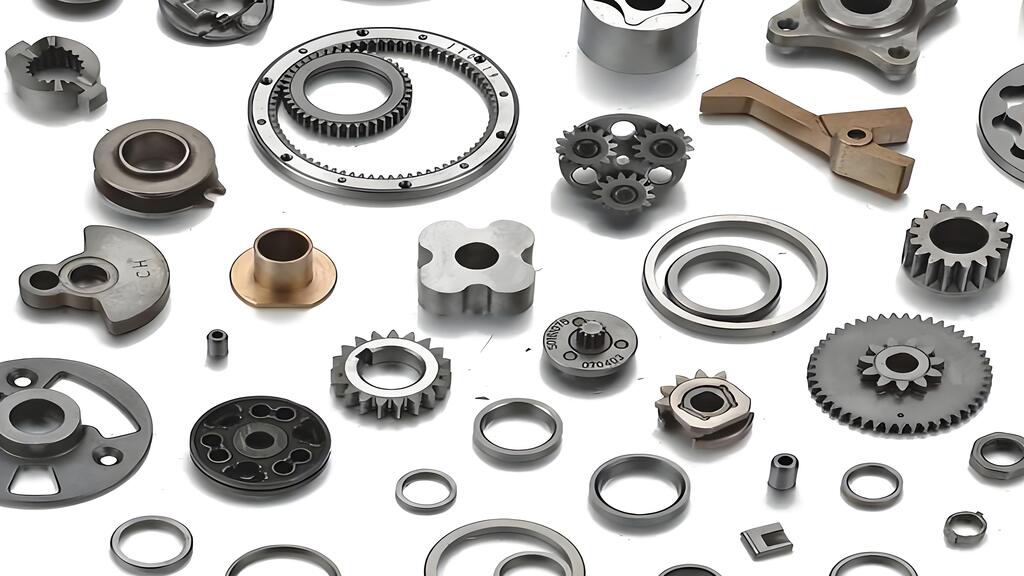


Sintered Metal Filters: Essential Guide to Industrial Applications
Material Types and Their Industrial Suitability

Engineers must choose the right material for sintered metal filters to get optimal performance in industrial settings. Different materials excel in specific ways when it comes to durability, heat resistance, and chemical compatibility. A good grasp of these properties helps you pick the best filter elements for your needs.
Sintered Stainless Steel: High Corrosion and Heat Resistance
Sintered stainless steel filters are tough performers in challenging environments. You can find them in various alloys like 316L, 304L, 310, 347, and 430. These filters resist corrosion well and stay strong under heat and mechanical stress. The heat tolerance varies quite a bit depending on the alloy and atmosphere - anywhere from 750°F up to an impressive 1750°F.
316L stainless steel works great up to 400°C (750°F) in oxidizing atmospheres. It performs even better in reducing atmospheres, handling up to 482°C (900°F). These filters can handle pressure differences of more than 3000 psi without any media movement. This makes them perfect for high-pressure jobs in chemical processing, petrochemical, and pharmaceutical industries.
The welded construction of these filters makes them incredibly durable. They don't shed media when pressure changes suddenly. They handle pressure spikes well, which is great for systems with changing conditions. Some applications need extra corrosion protection - that's where specialized alloys like Hastelloy come in. They outperform standard stainless steel in tough environments.
Sintered Bronze: Budget-friendly for Low-Pressure Systems
Sintered bronze filters are a smart choice when you want quality without the high cost. Made with 89% copper and 11% tin, these filters let air flow smoothly with minimal pressure drop thanks to their even pore structure. Their porosity ranges from 25% to 43%, which means they filter very efficiently.
Bronze filters don't handle heat as well as stainless steel. They work up to 200°C in oxidizing atmospheres and 450°C in reducing ones. But they're excellent for:
- Cleaning medium in oil and hydraulic systems
- Controlling flow in hydraulic applications
- Degreasing compressed air
- Filtering sand from crude oil
Bronze's heat-conducting properties make it ideal when you need to dissipate heat. These filters are easy to maintain - just backflush or use ultrasonic cleaning to extend their life. They cost less than stainless steel, which makes them attractive for less demanding jobs.
Sintered Titanium: Ideal for Harsh Chemical Environments
Sintered Titanium filters are the champions of extreme chemical conditions. They resist corrosive materials like acids, alkalis, and seawater better than any other option. These filters keep working in conditions that would quickly destroy other materials. They operate up to 280°C and have 28-50% porosity.
Titanium resists oxidation and chemical attack because it forms a protective oxide layer on its surface. This natural shield makes titanium filters valuable in:
- Processing aggressive chemicals
- Manufacturing pharmaceuticals
- Treating water in corrosive settings
- Refining petroleum
Titanium costs more upfront, but its long life in harsh conditions often pays off through fewer replacements and less downtime.
Sintered Plastic and Ceramic: Lightweight and Brittle Use Cases
Sintered plastic and ceramic filters fill special roles where metal just won't do. Ceramic filters bring several benefits: low heat conductivity, good wear resistance, and strong chemical resistance. Their large surface area works great for catalytic applications. They also handle high temperatures and corrosion well, which helps in environmental protection and energy applications.
Ceramic filters have their drawbacks. They're brittle and can break when temperatures change too quickly. You need high temperatures to make them - usually 1600-2000°C. Some newer methods using nanopowders can work at lower temperatures around 1350°C.
Sintered plastic filters use polymers like polyethylene or polypropylene. They're lightweight and work well with chemicals in less demanding settings. They're easier to make, cost less to produce, and work great where weight matters.
Manufacturing Process of Sintered Metal Filter Elements

The manufacturing process of sintered metal filter elements needs precision at every stage to create uniform porosity, structural integrity, and consistent performance. This multi-step procedure changes metal powders into highly effective filtration components under carefully controlled conditions.
Powder Selection and Mixing for Targeted Porosity
Creating sintered filter elements starts with careful powder selection. The powder's characteristics determine the filter's performance capabilities. Manufacturers select specific metal powders based on the desired end application. Particle size, shape, and distribution are key parameters that influence the filter's final properties.
Manufacturers get metal powders for sintering processes through grinding, atomization, or chemical decomposition. The size distribution of these particles needs careful control because it affects the pore structure and filtration efficiency of the finished product. To name just one example, see how finer powder particles create smaller pores and higher filtration precision, while larger particles produce a more open structure with higher flow rates.
The appropriate powder goes through precise blending to achieve even distribution. Manufacturers sometimes combine different metals to form alloys with improved properties or mix particles of varying sizes to create specific pore architectures. This careful preparation phase creates the foundations for consistent performance in the finished filter.
Cold Isostatic Pressing and Mold Shaping
The material undergoes compaction after powder preparation to create the simple shape of the filter element. Cold isostatic pressing (CIP) is a common technique where uniform pressure (ranging from 5,000 psi to 100,000 psi, equivalent to 34.5 to 690 MPa) compresses the powder in a flexible mold at room temperature.
Wet bag and dry bag are the two main methods for cold isostatic pressing. The wet bag process submerges the powder-filled mold in pressurized liquid, resulting in highly uniform density. The dry bag method fixes the mold bottom to the equipment with pressurizing fluid around only the sides and top. This offers quicker production but somewhat less uniform pressure distribution.
Manufacturers insert mandrels or cores into the mold before compression to create complex filter geometries, such as cylindrical elements with internal channels. This allows production of intricate shapes like filter candles that would be hard to make through conventional pressing techniques.
High-Temperature Sintering Below Melting Point
The compacted "green body" then enters the sintering phase – the crucial process that turns pressed powder into a solid, porous structure. The compact heats up in a controlled atmosphere furnace to temperatures substantially below the metal's melting point. Stainless steel components typically sinter at temperatures between 1100°C and 1300°C.
Rising temperatures cause diffusion at contact points between adjacent particles, creating metallurgical bonds without complete melting. This process leaves interconnected void spaces between particles that form the characteristic porous structure needed for filtration. The exact control of sintering time, temperature, and atmosphere shapes the pore size, distribution, and mechanical strength of the finished filter.
Post-Sintering Operations: Machining and Cleaning
Sintered filter elements often need finishing operations to meet exact specifications after cooling. These include machining to precise dimensions, surface treatments to boost corrosion resistance, or integration into housing components through welding or other joining methods. Quality control at this stage confirms dimensional accuracy and structural integrity.
The filters undergo thorough cleaning to remove any residual contaminants from manufacturing. Methods include ultrasonic cleaning that effectively removes fine particulates from the porous structure, or specialized processes like pyrolysis to eliminate polymer residues used as binders. Some filters go through backflushing with pressurized fluids to verify flow performance and ensure clear pores.
This sophisticated manufacturing sequence gives sintered metal filters their unique combination of mechanical strength, precise filtration capability, and durability—qualities that make them essential in demanding industrial applications.
Performance Characteristics in Industrial Filtration

Sintered metal filters stand out in industrial applications because of their adaptable performance characteristics. These significant components deliver reliable filtration in a variety of operating conditions and play an indispensable role in critical industrial processes.
Filtration Ratings: 0.2 to 100 Micron Range
Sintered metal filter elements showcase exceptional versatility with filtration ratings from 0.2 microns to 100 microns. Grade designations relate directly to the mean flow pore size, with common grades including 0.1, 0.2, 0.5, 1, 2, 5, 10, 20, 40, and 100. These filters capture 99.99% of particles at 0.01 micron size for high-grade filters. Liquid applications have filtration ratings from 1.4 to 35 μm absolute for media grades 0.2 to 20. Gas filtration ratings stretch from 0.1 to 100 μm absolute.
Working Temperature Range: -50°C to 1000°C
Sintered metal filters' remarkable temperature tolerance sets them apart. The selected alloy and environmental conditions let these filters work effectively at temperatures from -150°F to 300°F (-100°C to 149°C). Standard 316L stainless steel works up to 400°C (750°F) in oxidizing atmospheres, while Hastelloy X stays functional up to 788°C (1450°F). Temperature capabilities increase even more in reducing atmospheres—316L performs up to 482°C (900°F), and Hastelloy X reaches up to 927°C (1700°F).
Pressure Drop and Flow Rate Optimization
System performance and energy consumption depend heavily on pressure drop. Material composition and porosity determine sintered metal filters' pressure characteristics. Higher porosity media (up to 85%) deliver superior permeability and lower pressure drops. Metal fiber media's higher porosity compared to powder metal media results in better flow characteristics.
Research data shows pressure drop specifications change by application. Clean filters show differential pressures of 2-6 psid at rated flow. Maximum allowable differential pressures range from 60 to 500 psid based on construction.
Backwash and Ultrasonic Cleaning Compatibility
Sintered metal filters can be regenerated through several cleaning methods. Backwashing removes accumulated particles with pressurized gas that creates brief high reverse differential pressure. Ultrasonic cleaning with appropriate detergents removes insoluble contaminants effectively. The solid structure allows chemical cleaning with compatible solvents, caustic wash, acid wash, and thermal cleaning at controlled temperatures.
These cleaning options extend the filter's operational life significantly. This makes sintered metal filters a budget-friendly choice for demanding industrial applications despite higher upfront costs.
Industrial Applications of Sintered Metal Filters

Sintered metal filters play a vital role in industries that face extreme operating conditions and need reliable filtration. These filters combine durability, heat resistance, and precise filtration capabilities that make them essential for challenging applications.
Chemical Processing: Acid and Solvent Filtration
Sintered metal filters handle corrosive substances in chemical processing facilities that would quickly destroy standard filters. They clean particulates from harsh acid and solvent streams at temperatures up to 1000°C, based on the alloy chosen. Their metallurgical stability helps them resist concentrated chemicals while delivering consistent performance. This makes them essential for nuclear manufacturing, where reliability cannot be compromised.
Petroleum Refining: Fuel and Lubricant Purification
Refineries use sintered metal filters to remove catalyst fines from slurry oil. The systems work at 350°C and withstand pressures up to 20 kg/cm². Catalyst solids range from 2,000 ppm to 12,000 ppm, yet these filters achieve filtrate quality below 50 ppm - over 99.5% efficiency. This cleaning process adds value to products and shields downstream equipment from wear.
Food and Beverage: Juice and Water Clarification
Sintered metal filters keep products pure without changing their taste or smell in food and beverage production. They excel in juice clarification, wine making, and water treatment to maintain product quality. FDA-approved ozone systems use sintered porous metal diffusers that maximize water-to-ozone contact. This sanitizes food products and equipment without harmful byproducts.
Power Generation: Turbine Water Filtration
Power plants protect their valuable turbine parts with sintered metal filters. These systems process up to 26,400 lbs/hr of clean saturated steam (2095 ACFM) at 78 PSIG and temperatures reaching 322°F. The 316L stainless steel construction ensures these filters last longer. They only need maintenance during planned plant shutdowns - usually after several years of non-stop operation.
Gas Filtration: Catalyst Recovery and Dust Removal
Gas filtration systems with sintered metal media shine in catalyst recovery, especially in fluid catalytic cracking (FCC) and continuous catalytic reforming/regeneration (CCR) processes. These systems work with plenum blowback and venturi pulse blowback setups to capture valuable catalyst particles. Well-designed systems meet particulate emission standards as low as 30 to 50 mg/Nm³. This helps companies comply with environmental rules while recovering valuable materials.
Maintenance, Limitations, and Customization Options

Good maintenance practices help sintered metal filters last longer and give you the best return on investment. System performance depends on regular upkeep, the right material choices, and customization options.
Routine Inspection and Pressure Drop Monitoring
The best way to maintain these filters starts with keeping track of pressure drops across filter elements. Cleaning becomes essential once the terminal pressure drop hits 37-40 PSI, which varies based on media grade. The recovery pressure should stay within 2-3 PSI of the original clean flow pressure drop after cleaning. You'll need to check any steady pressure increases after regeneration cycles, as they point to progressive fouling. Recovery pressure readings are a great way to get insights into filtration efficiency and system health.
Ultrasonic and Chemical Cleaning Methods
These filters can be cleaned in several ways. Chemical cleaning works well with compatible solvents like 15% nitric acid (up to 150°F), 20% caustic (up to 212°F), alcohols, acetone, and industrial cleaners such as Oakite 31. Ultrasonic cleaning works wonders on tough deposits, especially when your equipment provides at least 60 watts per gallon of cleaning solution. The cleaning time ranges from 10-60 minutes depending on the type of contaminant. For gas/solid service elements, drying at 300-400°F removes all moisture after cleaning liquid/solid applications.
Material Limitations in Extreme Environments
These filters are tough but have their limits in extreme conditions. Different alloys handle different temperatures: 316L stainless steel works up to 400°C in oxidizing environments and 482°C in reducing atmospheres. Inconel 600 can withstand 593°C and 815°C, respectively. Hastelloy X performs well at temperatures up to 788°C (oxidizing) and 927°C (reducing). Temperature isn't the only concern - carbon monoxide monitoring shows that incomplete regeneration might happen after long periods of use.
OEM Customization: Shape, Pore Size, and Housing
Manufacturers can customize these filters in many ways. You'll find elements shaped as disks, cups, bushings, tubes, and sheets, plus they can make complex shapes if needed. Pore sizes usually range from 0.1 to 100 microns, so you can pick exactly what you need. Custom designs might include special features like flanges, end caps, or connectors built right into filter housings. Beyond standard 316L stainless steel, you can choose from materials like Hastelloy, Inconel, Monel, titanium, and various alloys for tough environments.
Conclusion
Sintered metal filters are the lifeblood of modern industrial filtration systems. They deliver unmatched durability and performance in extreme operating environments. This piece showcases their exceptional versatility through adaptable material compositions, precise manufacturing processes, and applications in various fields.
Engineers can choose between stainless steel, bronze, titanium, and ceramic materials to match filter characteristics with specific needs. They consider factors like chemical resistance, temperature tolerance, and economical solutions. The combination of customization options and strict manufacturing techniques with powder metallurgy and controlled sintering creates filtration products that perform consistently.
Sintered metal filters outperform alternative filtration technologies. They withstand temperatures from -50°C to 1000°C and maintain efficiency across filtration ratings from 0.2 to 100 microns. Their resistance to degradation under extreme chemical exposure makes them vital in critical systems. On top of that, these filters can be regenerated through backwashing and ultrasonic cleaning. This leads to longer service life and lower operational costs despite higher upfront investments.
These filters prove their worth in chemical processing, petroleum refining, food production, power generation, and gas filtration. Each industry gains unique benefits - from corrosion resistance in chemical processing to high-temperature stability in petroleum refining and sanitary characteristics in food production.
Proper maintenance helps maximize filter lifespan and performance. Maintenance teams can get the most value from these systems by monitoring pressure drops regularly, following cleaning protocols, and understanding material limitations. Custom manufacturing options let designers specify exact dimensions, pore sizes, and material compositions for unique operational requirements.
Sintered metal filters remain vital in industrial processes where reliability, precision, and durability matter most. Their continuous development and customization capabilities make them indispensable filtration solutions for demanding applications throughout industry.
Key Takeaways
Understanding sintered metal filters is crucial for selecting the right filtration solution for demanding industrial environments. Here are the essential insights every engineer should know:
• Material selection drives performance: Stainless steel offers high-temperature resistance up to 1000°C, bronze provides cost-effective solutions for low-pressure systems, while titanium excels in harsh chemical environments.
• Filtration precision spans 0.2 to 100 microns: These filters deliver 99.99% particle removal efficiency at 0.01 micron size, making them suitable for applications from fine chemical processing to coarse industrial filtration.
• Temperature tolerance exceeds conventional filters: Operating range from -50°C to 1000°C depending on alloy selection, with 316L stainless steel handling up to 482°C in reducing atmospheres.
• Regenerative cleaning extends service life: Backwashing, ultrasonic cleaning, and chemical treatments restore filter performance, providing superior long-term value despite higher initial costs.
• Critical applications demand sintered metal reliability: From catalyst recovery in petroleum refining (99.5% efficiency) to turbine protection in power generation, these filters protect valuable equipment and processes.
The manufacturing precision of powder metallurgy, combined with controlled sinterin,g creates filters that withstand extreme conditions while maintaining consistent filtration performance. For engineers specifying filtration systems, sintered metal filters represent the gold standard where reliability, precision, and durability cannot be compromised.
FAQs
Q1. What are the main advantages of sintered metal filters in industrial applications? Sintered metal filters offer exceptional durability, high temperature resistance (up to 1000°C), and precise filtration (0.2 to 100 microns). They excel in harsh chemical environments, withstand high pressures, and can be cleaned and reused, making them ideal for demanding industrial processes.
Q2. How do different materials used in sintered metal filters affect their performance? Material choice significantly impacts filter performance. Stainless steel provides excellent corrosion and heat resistance, bronze is cost-effective for low-pressure systems, titanium excels in harsh chemical environments, while ceramic offers unique properties for specialized applications. Each material has specific temperature tolerances and chemical compatibilities.
Q3. What is the manufacturing process for sintered metal filters? The process involves selecting and mixing metal powders, cold isostatic pressing to shape the filter, high-temperature sintering below the melting point to create a porous structure, and post-sintering operations like machining and cleaning. This precise manufacturing sequence ensures consistent porosity and performance.
Q4. In which industries are sintered metal filters commonly used? Sintered metal filters are widely used in chemical processing, petroleum refining, food and beverage production, power generation, and gas filtration industries. They're particularly valuable in applications requiring high temperature resistance, corrosion resistance, and precise filtration of aggressive substances.
Q5. How should sintered metal filters be maintained for optimal performance? Regular maintenance includes monitoring pressure drop, cleaning through backwashing or ultrasonic methods when necessary, and periodic inspections. Chemical cleaning may be used for stubborn deposits. It's important to understand the filter's material limitations and follow manufacturer guidelines for cleaning and regeneration to extend the filter's lifespan.