

Sintered Steel vs Stainless Steel: Which is Better for Industrial Parts?
The manufacturing of stainless steel components wastes more than 50% of materials, while sintered steel vs stainless steel shows a remarkable difference in production efficiency. The sintering process turns Powdered Metal into 80-95% solid mass without melting it completely and creates complex shapes with minimal waste.
Sintered stainless steel has found its place in industrial uses, especially when you have food processing, medical equiPment, and chemical manufacturing needs. People usually focus on corrosion resistance when comparing standard steel vs stainless steel, but sintered materials are a great way to get intricate shapes in just one manufacturing cycle. The choice between these materials comes down to specific application needs. Some austenitic stainless steel types work exceptionally well in temperatures ranging from 161°C to 870°C.
This piece gets into the main differences, performance traits, and cost factors between these two materials. Engineers and manufacturers can use this information to make better decisions about their industrial applications.
What Is Sintered Steel? Understanding the Basics
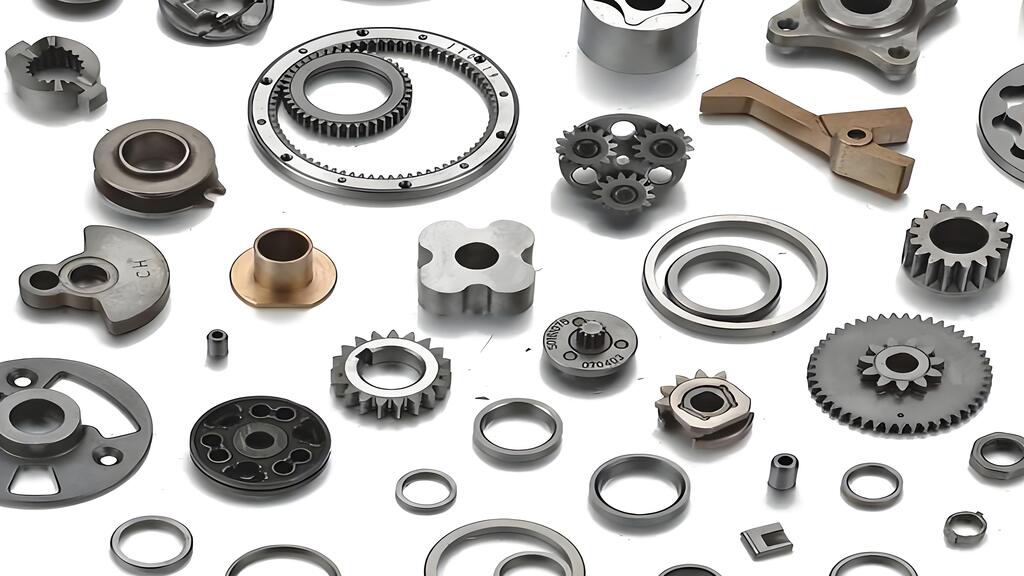
Sintered steel emerges from powder metallurgy as a versatile material that manufacturers create through sintering. This process differs from conventional steelmaking because it forms solid metal components without complete melting. The process bonds metal particles together at temperatures below their melting point.
Definition and Manufacturing Process
The final material properties depend on carefully selected metal powders. These powders can be pure metals like iron or copper, or pre-alloyed powders such as steel or bronze. The manufacturing process consists of three main steps:
Manufacturers start by blending the base powder (usually iron-based) with alloying elements and a solid lubricant. The lubricant reduces friction during compaction. Strict dosing and control processes ensure the precise material composition needed for specific mechanical and physical characteristics.
The mixture then goes into a die containing the negative shape of the desired part. This step involves uni-axial pressure between 200 and 1,500 MPa, which varies based on the required final density. The high-pressure compaction creates a "green part" strong enough for handling.
The compacted part moves to a sintering furnace where it undergoes a controlled thermal cycle. Temperatures range from 750°C to 1,300°C, staying below the base metal's melting point. Stainless steel components might reach temperatures up to 2,350°F (1,288°C). These conditions allow metal particles to form molecular bonds through solid-state diffusion, which greatly improves the part's mechanical properties.
Key Properties of Sintered Material
Sintered steel stands apart from conventional materials with its unique characteristics. These components have controlled porosity, reaching densities between 85% and 95% of theoretical maximum. This special porosity creates opportunities for self-lubricating bearings and wicking structures in heat pipes.
The material's strength is remarkable. Pressed and sintered ferrous materials can reach an ultimate tensile strength of 900 N/mm² as-sintered or 1,200 N/mm² after heat treatment. The yield stress levels can hit 480 N/mm² as-sintered or 1,200 N/mm² after heat treatment.
Sintered materials excel in other areas too:
- They resist deformation and high temperatures
- Their tolerances surpass those of stamping, forging, or casting
- They maintain excellent dimensional precision and stability
- They show superior wear resistance and thermal stability
Common Applications in Industry
Sintered steel's unique properties make it perfect for many industrial uses. Automotive manufacturers can reduce component weight by 15% compared to traditional cast parts, which helps fuel efficiency. Cars use these components in engine connecting rods, transmission gears, exhaust systems, brakes, and actuators.
The aerospace industry needs lightweight construction and high-temperature resistance, making sintered metals ideal. Jet engines rely on sintered parts like turbine blades, fuel injectors, and heat shields. These nickel-based superalloy components withstand extreme thermal stress.
Sintered stainless steel plays a crucial role in medical and pharmaceutical equipment. Its uniform porosity separates particles precisely down to 0.2 microns. The material also works well in plumbing fittings, electrical appliances, and industrial machinery.
The energy sector benefits from sintered materials too. Oil and gas industries use wear-resistant sintered tungsten carbide valves and nozzles for offshore drilling. High-pressure sintered seals and bearings perform reliably in challenging subsea environments.
Stainless Steel: Properties and Industrial Applications
Chromium is what makes stainless steel special. You need at least 10.5% of it to turn regular steel into something that won't rust. This creates a self-healing passive layer that protects the metal underneath from breaking down.
Types of Stainless Steel for Industrial Use
The stainless steel family has five main types. Each type works best for different industrial uses:
- Austenitic stainless steel (304 and 316 grades) makes up most of what's produced worldwide - over 70%. It has 16-26% chromium and up to 35% nickel. Food companies, drug makers, and chemical plants love it because it fights rust so well.
- Ferritic stainless steel has lots of chromium (11.2-19%) but very little nickel. This makes it cheaper to use in car parts and kitchen appliances.
- Martensitic stainless steel has 11.5-18% chromium and up to 1.2% carbon. It's strong enough for surgical tools and cutting equipment.
- Duplex stainless steel mixes equal amounts of austenitic and ferritic structures. This makes it tough enough for offshore equipment and water treatment plants.
- Precipitation hardening stainless steel is very strong for its weight. Aerospace companies use it a lot, along with some specialized industries.
Corrosion Resistance and Durability Factors
Stainless steel fights rust so well because chromium reacts with oxygen. This creates a protective chromium oxide layer just 1-3 nanometers thick. The layer can fix itself if it gets damaged in oxidizing environments.
Three things affect how long stainless steel lasts: steel grade, environment, and surface finish. Chloride ions pose the biggest threat to stainless steel's strength, especially near the ocean. Grade 316 stainless steel has about 2-3% molybdenum, which helps it resist pitting from chlorides better than regular 304 grade.
Standard Steel vs Stainless Steel: Key Differences
Regular steel and stainless steel are quite different. Regular steel is mostly iron - about 98% of it. Stainless steel has less iron, around 90%. Regular steel rusts easily as iron mixes with oxygen to form iron oxide. Stainless steel stays strong thanks to its chromium-oxygen protective layer.
Stainless steel is usually stronger because of its chromium content. Regular steel bends and welds more easily though. Stainless steel also looks better and comes in different finishes - brushed, polished, or matte.
Comparing Performance in Harsh Industrial Environments
Industrial environments push components to their limits under extreme conditions. Sintered steel and stainless steel each bring unique advantages to harsh operating conditions. Their performance varies substantially across different parameters.
Temperature Resistance Comparison
Sintered stainless steel shows impressive heat tolerance and can handle temperatures up to 450°C (842°F). Traditional sintered bronze materials top out at about 200°C (392°F). Some specialized sintered metal constructions can even withstand temperatures up to 1000°C without melting.
These temperature differences matter a lot in real applications. Heat pipes made with stainless steel work at much higher temperatures than other options [16]. Sintered materials also handle thermal shock well. They stay intact even with quick temperature changes.
Martensitic stainless steels shine after proper heat treatment. You'll find them in demanding environments like plastic mold dies, industrial knives, and ball bearings, where stable temperatures are crucial.
Chemical Exposure Tolerance
Stainless steel's corrosion resistance changes based on the chemicals it encounters. To name just one example, it works great with acetone, most alcohols, and ammonia. However, it struggles against hydrochloric acid and hydrofluoric acid.
Sintered stainless steel filters resist corrosion better than other options. This makes them perfect for acid filtration and chemical processing. The material does have its limits though - it doesn't handle alkaline environments well.
Picking the right alloy becomes crucial in corrosive settings. Engineers can choose from various corrosion-resistant alloys including Stainless Steel 316L, 304L, 310, Hastelloy, Inconel, and Titanium. This variety helps match materials to specific chemical needs.
Load-Bearing Capabilities
Sintered materials prove their worth under mechanical stress. These metal filters can handle pressure differences that are a big deal, as it means that 3000 psi. This makes them ideal for high-pressure industrial uses.
Sintering boosts mechanical properties substantially. Sintered steels can reach tensile strengths up to 1,147 MPa after solution annealing and aging. People often think cast materials work better for bearing loads. Research shows something different - sintered stainless steel actually has better tensile properties up to 600°C than similar cast versions.
Self-lubricating sintered bearings handle loads exceptionally well and resist wear. They don't need extra lubrication systems. Among stainless steel types, martensitic grades offer about 80% of standard 52100 bearing steel's load capacity. This strikes a great balance between fighting corrosion and mechanical performance.
Cost-Benefit Analysis: Investment vs. Longevity
A proper cost-benefit analysis helps evaluate the financial aspects of sintered steel vs stainless steel. The material choice depends on both immediate costs and long-term performance benefits, according to industry experts.
Original Manufacturing Costs
Sintered components costs depend on metal powder choice, design complexity, and production volumes. Premium metal powders with special properties cost more and affect manufacturing expenses. Complex designs need specialized tools and longer sintering cycles, which adds to the costs.
Raw material costs tell an interesting story. Regular steel costs between USD 0.50 to USD 0.75 per pound. Stainless steel prices range from USD 1.50 to USD 3.00 per pound. The price gap exists because stainless steel contains chromium, nickel, and sometimes molybdenum.
Powder metallurgy manufacturing gives you better material efficiency. The sintered production wastes almost no material because of its additive nature. This is a big deal as it means that machining stainless steel wastes over 50% as scrap. High-volume production benefits from this reduced waste, making sintered components more cost-effective.
Maintenance Requirements and Long-Term Expenses
Material choice affects maintenance needs and ownership costs. Each stainless steel grade needs different care—316L works well with minimal upkeep even in tough environments. Grade 304 offers strength but needs more attention when exposed to corrosive elements. The 17-4 PH grade needs regular maintenance for saltwater uses.
Stainless steel stays in good shape with basic cleaning once or twice a year using mild detergents. Harsh environments need more frequent cleaning. Good maintenance prevents expensive repairs later and keeps long-term costs low.
ROI Calculations for Different Industries
Smart ROI calculations look at both purchase costs and operational savings. Fracing operations showed better ROI with special stainless steel formulas. These formulas last longer and use less nickel, which cuts material costs by up to 80%.
Metal additive techniques in manufacturing pay for themselves in under two years and save 65% on part costs. The right tooling for sintered components pays off after making about 2kg of finished parts.
Car manufacturers love sintered components because they weigh 15% less than cast parts. This weight reduction helps save fuel and reduces operating costs throughout the vehicle's life.
Selection Guide: Choosing Between Sintered and Stainless Steel
Material selection for industry-specific applications depends on understanding each operation's unique needs. Performance requirements, manufacturing complexities, and costs help determine the choice between sintered steel and stainless steel in different sectors.
Automotive Industry Requirements
The automotive sector employs sintered components because of their material efficiency and ability to create complex geometries. Engine components make up 37-42% of automotive sintered metals used worldwide. Transmission parts are the second most common application, especially when reducing weight in both conventional vehicles and EVs. Cars with sintered steel parts weigh about 15% less than those with traditional cast components, which helps improve fuel efficiency. Stainless steel works best in exhaust systems that need corrosion resistance at high temperatures. Specific grades can handle exhaust temperatures over 1000°C.
Aerospace Applications
Aerospace materials must maintain structural integrity in extreme conditions. Stainless steel grades 1.4301 (AISI 304) and its variants work well in mild environments with less than 200 ppm chloride. These grades are perfect for cabin components and internal fuel tanks. Grades 1.4818, 1.4835, 1.4833, and 1.4845 can withstand temperatures up to 1150°C when oxidation resistance is crucial. Jet engine parts benefit from sintered metal components that provide both lightweight construction and high-temperature performance.
Medical and Pharmaceutical Equipment
Medical applications rely on 304 stainless steel with 18% chromium, 8% nickel, and a maximum of 0.08% carbon. This composition provides excellent durability and resistance to fire, corrosion, and rust. The 300 series, particularly grades 304, 316, and 316L, dominates medical-grade stainless steel applications. Pharmaceutical manufacturers prefer 316L stainless steel for vessel fabrication. Medical materials must also withstand high-temperature sterilization without melting or warping.
Heavy Machinery Components
Heavy machinery needs materials that combine strength, wear resistance, and budget-friendly solutions. Sintered components provide net-shape capabilities with minimal machining and waste. They also allow complex geometries that other metal forming processes can't achieve. Industrial settings often use stainless steel variants for superior corrosion protection, especially where harsh chemicals are present.
Comparison Table
| Characteristic | Sintered Steel | Stainless Steel |
|---|---|---|
| Manufacturing Process | Powder metallurgy process that uses heat and pressure below the melting point | Traditional melting and casting process |
| Material Efficiency | Material utilization ranges from 80-95% | Material waste reaches ~50% during machining |
| Density | Reaches 85-95% of theoretical maximum | Not mentioned |
| Tensile Strength | Achieves 900 N/mm² as-sintered; reaches 1,200 N/mm² after heat treatment | Varies by grade |
| Temperature Resistance | Standard rating up to 450°C; specialized versions reach 1000°C | -161°C to 870°C (austenitic varieties) |
| Corrosion Resistance | Varies with composition | Excellent protection from chromium oxide layer (min 10.5% Cr) |
| Key Applications | - Automotive components - Self-lubricating bearings - Medical equipment - Complex shaped parts | - Food processing - Chemical manufacturing - Offshore equipment - Surgical instruments |
| Cost Factors | - Higher tooling costs - Lower material waste - Cost-effective for high volume production | - USD 1.50-3.00 per pound - Higher material costs - Higher machining waste |
| Maintenance Requirements | Not mentioned | Needs cleaning 1-2 times yearly with mild detergents |
| Weight Reduction | Weighs 15% less than cast parts | Not mentioned |
Conclusion
A detailed analysis of sintered steel vs stainless steel shows clear advantages in specific industrial uses. Material efficiency makes a big difference. Sintered steel uses 80-95% of materials efficiently. Traditional stainless steel manufacturing wastes about 50% during machining.
These materials show significant performance differences. Sintered components work better with complex shapes and provide self-lubrication. This makes them ideal for automotive and aerospace uses. Standard stainless steel excels at resisting corrosion and proves durable in environments of all types.
Sintered steel costs less in high-volume production, but you need to review the original tooling investments carefully. The automotive industry shows great results. Their sintered components reduce weight by 15% without losing structural strength. Medical and pharmaceutical sectors use both materials effectively. Sintered steel gives precise control over porosity. Stainless steel resists corrosion well and handles sterilization easily.
Engineers and manufacturers should match their specific needs with the right material. Production volumes and environmental factors play a crucial role in this choice. Both materials have unique strengths, but neither one wins overall. The key to success lies in matching the right material properties to your application. This ensures the best performance and budget-friendly industrial components.
FAQs
Q1. What are the key differences between sintered steel and stainless steel?
Sintered steel is made through powder metallurgy, offering high material efficiency and complex shapes, while stainless steel is traditionally cast and known for excellent corrosion resistance. Sintered steel can be more porous, while stainless steel generally offers higher strength and durability.
Q2. In which industrial applications is sintered steel preferred over stainless steel?
Sintered steel is often preferred in automotive components, self-lubricating bearings, and parts requiring complex geometries. It's particularly advantageous in high-volume production scenarios where its material efficiency and net-shape capabilities offer cost benefits.
Q3. How does the corrosion resistance of sintered stainless steel compare to traditional stainless steel?
While both offer corrosion resistance, traditional stainless steel generally provides superior protection due to its chromium oxide layer. Sintered stainless steel's corrosion resistance can vary based on its composition and porosity, but it can be tailored for specific corrosive environments.
Q4. What are the cost considerations when choosing between sintered and stainless steel?
Sintered steel often has higher initial tooling costs but lower material waste, making it economical for high-volume production. Stainless steel typically has higher material costs but may require less specialized equipment. The choice depends on production volume, part complexity, and long-term performance requirements.
Q5. How do sintered and stainless steel compare in terms of temperature resistance?
Standard sintered steel can withstand temperatures up to 450°C, with specialized versions reaching 1000°C. Austenitic stainless steel varieties can perform in a range from -161°C to 870°C. The specific grade and composition of each material determine its temperature resistance capabilities.