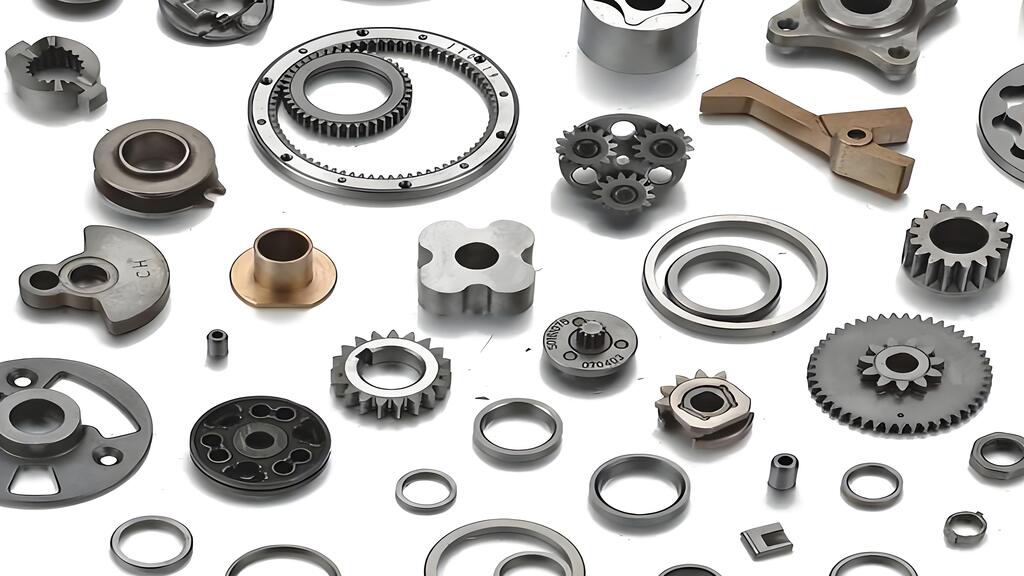


The Secret to Durable and Lightweight Parts: Aluminum Die Casting
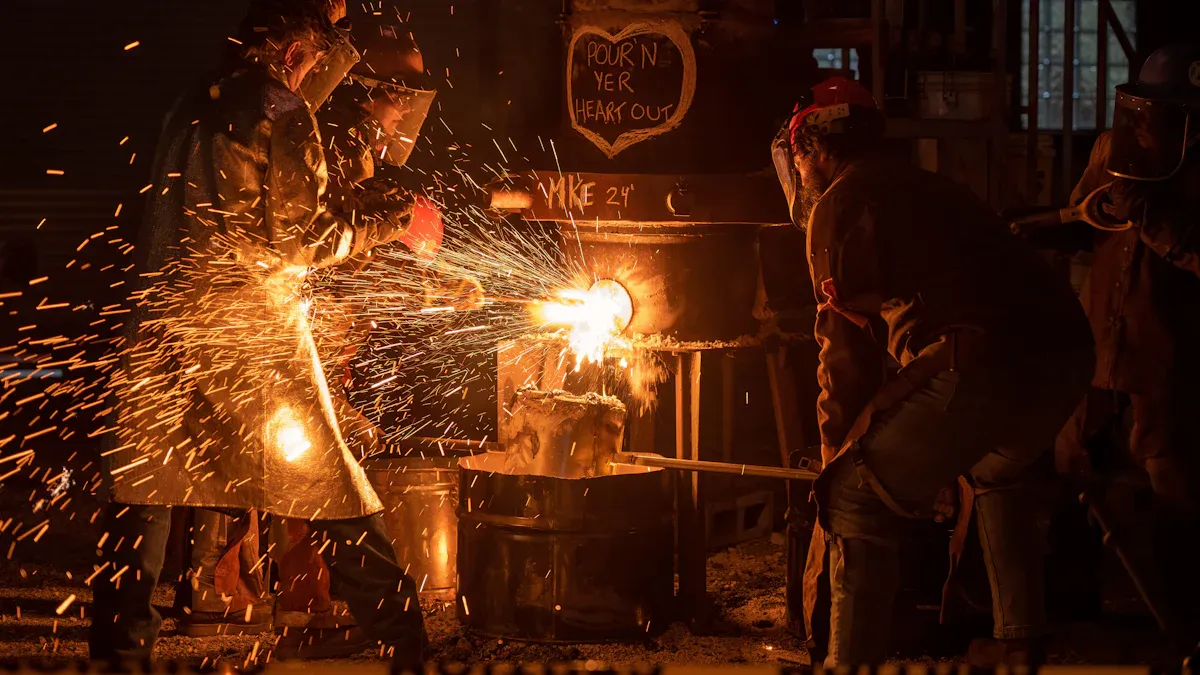
Aluminum die casting revolutionizes manufacturing by delivering lightweight, durable, and high-performance components. Its ability to produce intricate shapes with tight tolerances ensures superior design flexibility. This process achieves shorter production cycles, reduces costs, and enhances product consistency. Aluminium Die casting products excel in automotive and aerospace industries due to their strength, corrosion resistance, and thermal conductivity.
Why Aluminum is Perfect for Lightweight Components
Lightweight and strong: The unique properties of aluminum
Aluminum stands out as a material that combines lightweight characteristics with exceptional strength. Its low density makes it ideal for applications requiring reduced weight without compromising durability. For instance, aluminum alloys like T6 Aluminum 6061 exhibit impressive tensile strength of 45,000 psi, ensuring they can endure high stress. The material also offers excellent thermal conductivity, with values reaching 1160 BTU-in/hr-ft²-°F, making it suitable for heat-sensitive environments.
| Property | T4 Aluminum 6061 | T6 Aluminum 6061 |
|---|---|---|
| Tensile Strength | 35,000 psi | 45,000 psi |
| Yield Strength | 21,000 psi | 40,000 psi |
| Thermal Conductivity | 1070 BTU-in/hr-ft²-°F | 1160 BTU-in/hr-ft²-°F |
These properties make aluminum a preferred choice for industries like automotive and aerospace, where lightweight and strong materials are essential for performance and safety.
The role of lightweight materials in modern manufacturing
Lightweight materials have become a cornerstone of modern manufacturing. Industries increasingly prioritize innovation and sustainability, driving the demand for materials like aluminum. The automotive sector, for example, benefits from aluminum's ability to improve fuel efficiency and reduce CO2 emissions. The aerospace industry also relies on aluminum to enhance energy efficiency and reduce overall weight.
- The U.S. leads the market for lightweight materials due to its focus on fuel-efficient vehicles.
- Asia Pacific holds a 44.9% market share, driven by rapid industrialization.
- The shift toward electric vehicles (EVs) further amplifies the need for lightweight components to improve range and performance.
Advancements in die casting technologies have also streamlined the production of lightweight materials, making processes like aluminum die casting more efficient and cost-effective.
Environmental benefits: Recyclability and sustainability
Aluminum's recyclability significantly contributes to its environmental appeal. Over 80% of U.S. aluminum production relies on recycled materials. This process requires only 5% of the energy needed for producing new aluminum, drastically reducing carbon emissions. By choosing recycled aluminum, manufacturers not only lower production costs but also support global sustainability efforts.
Tip: Using recycled aluminum in aluminium die casting products ensures a balance between performance and environmental responsibility.
The material's sustainability aligns with the growing emphasis on eco-friendly manufacturing practices, making it a top choice for industries aiming to reduce their environmental footprint.
Durability and Strength of Aluminium Die Casting Products
Enhanced strength through the die casting process
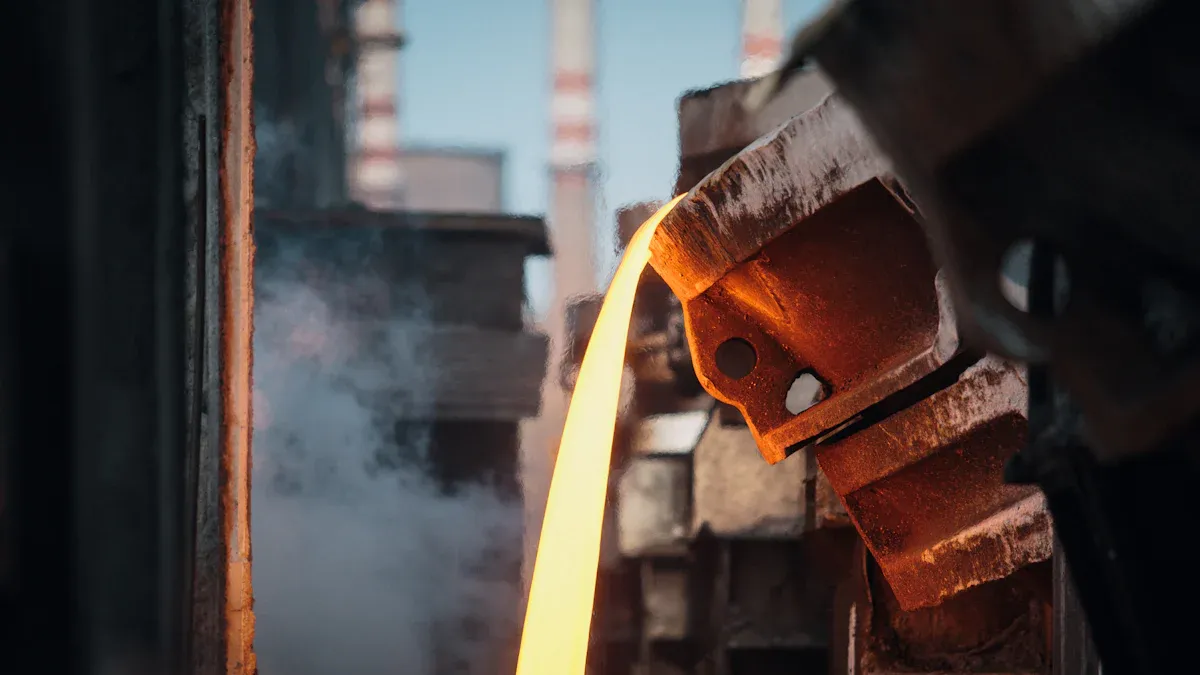
The die casting process enhances the strength of aluminum components by creating dense, uniform structures. This method ensures minimal porosity, which improves mechanical properties like tensile and yield strength. Research by Wen et al. (2019) demonstrated that aluminum alloy components produced through die casting achieved tensile strengths of up to 400 MPa and elongation rates of 18%, surpassing conventional methods.
| Alloy Designation | Yield Strength (MPa) | Tensile Strength (MPa) | Elongation (%) | Key Features |
|---|---|---|---|---|
| B390 | 250 | 400 | 1.0 | High-silicon alloy with excellent wear resistance and dimensional stability |
These properties make aluminium die casting products ideal for applications requiring strength and precision, such as engine components in the automotive and aerospace industries.
Resistance to wear, corrosion, and extreme conditions
Aluminum die castings naturally resist wear and corrosion due to the formation of a protective oxide layer. This resistance can be further enhanced through surface treatments, making the material suitable for harsh environments. The high silicon content in certain alloys, such as B390, provides excellent wear resistance, ensuring durability under extreme conditions.
- Aluminum's corrosion resistance extends the lifespan of components in marine and industrial applications.
- Its ability to withstand high temperatures and pressure makes it a reliable choice for demanding environments.
The combination of these properties ensures that aluminium die casting products maintain their integrity even in the most challenging conditions.
Long-lasting performance in demanding applications
Aluminum die casting offers a high strength-to-weight ratio, making it suitable for high-stress applications. This durability is particularly valuable in industries like automotive and aerospace, where components must endure constant stress and environmental exposure.
| Performance Attribute | Description |
|---|---|
| Strength-to-Weight Ratio | Aluminum die casting offers a high strength-to-weight ratio, making it suitable for high-stress applications. |
| Corrosion Resistance | The material exhibits excellent corrosion resistance, enhancing its durability in various environments. |
| Complex Shape Production | The ability to produce complex shapes allows for innovative designs that can withstand demanding conditions. |
By combining strength, corrosion resistance, and design flexibility, aluminium die casting products deliver long-lasting performance, even in the most demanding applications.
Precision and Versatility in Aluminum Die Casting

Aluminium die casting products
Creating intricate and complex designs with ease
Aluminum die casting enables the creation of intricate and complex designs that meet the demands of modern industries. This process allows manufacturers to produce components with exceptional surface finishes and dimensional accuracy. For example, advancements in alloys like A356 and A357 have enhanced the strength-to-weight ratio, making them ideal for automotive and aerospace applications. Simulation tools such as Computational Fluid Dynamics (CFD) and Finite Element Analysis (FEA) further optimize the process, ensuring efficient designs with minimal waste.
| Evidence Description | Details |
|---|---|
| Production Capability | Aluminum die casting enables the creation of complex, high-precision components with exceptional surface finish. |
| Design Flexibility | This process allows for intricate and complex shapes that are difficult to achieve with other manufacturing methods. |
| Process Optimization | Simulation tools like CFD and FEA improve design efficiency and reduce waste. |
High-dimensional accuracy for consistent quality
The precision of aluminum die casting ensures consistent quality across production runs. Manufacturers achieve this by carefully controlling parameters such as temperature and pressure during the casting process. Real-time monitoring systems maintain optimal conditions, while advanced inspection techniques reduce defects and enhance structural integrity. High-vacuum die casting technology further minimizes air entraPment, resulting in components with superior mechanical properties and surface finishes.
| Technique | Description |
|---|---|
| Process Parameter Control | Optimizing temperature and pressure ensures consistent quality. |
| Real-time Monitoring | Systems monitor parameters in real-time to maintain optimal production conditions. |
| Advanced Inspection | Techniques reduce defects and enhance structural integrity. |
| High-Vacuum Die Casting | Minimizes air entrapment, improving mechanical properties and surface finish. |
Customization for diverse industry needs
Aluminum die casting offers unmatched versatility, enabling manufacturers to customize components for various industries. Compliance with standards like IATF 16949 ensures high-quality automotive parts, while advanced alloys like A356 provide corrosion resistance for demanding applications. High-vacuum technology enhances the mechanical properties of components, making them suitable for defense and medical industries. This adaptability makes aluminium die casting products a preferred choice for lightweight and durable solutions.
| Evidence Type | Description |
|---|---|
| Industry Standards | Compliance with IATF 16949 ensures defect prevention and continuous improvement. |
| Advanced Alloys | Alloys like A356 and A357 provide superior strength-to-weight ratios and corrosion resistance. |
| Versatility in Use | Aluminum die casting is favored in defense and medical industries for its lightweight properties. |
Cost-Effectiveness of Aluminum Die Casting
Lower production costs and material efficiency
Aluminum die casting offers significant cost advantages due to its material and process efficiency. Aluminum, as a raw material, is more affordable than many other metals, making it an economical choice for manufacturers. Additionally, the die casting process itself is highly efficient, enabling the rapid production of complex parts. This reduces labor and operational costs while maintaining high-quality output.
| Aspect | Details |
|---|---|
| Raw Material Cost | Aluminum is relatively low-cost compared to other metals, contributing to lower production costs. |
| Process Efficiency | The die casting process allows for rapid production of complex parts, reducing overall manufacturing costs. |
| Energy Efficiency | Processing aluminum requires less energy than metals like steel, leading to further cost savings. |
These factors make aluminum die casting a cost-effective solution for industries requiring high-performance components.
Minimal waste and resource optimization
The aluminum die casting process minimizes waste through advanced design and manufacturing techniques. Simulation tools like Computational Fluid Dynamics (CFD) and Finite Element Analysis (FEA) optimize designs, reducing scrap rates and conserving raw materials. By eliminating trial-and-error methods in die design, manufacturers achieve greater efficiency and lower operational costs.
| Evidence Description | Key Benefits |
|---|---|
| Use of simulation tools | Optimizes designs, reduces scrap rates, minimizes raw material and energy consumption. |
| Reduction of trial and error | Cuts down waste and operational costs, promoting efficiency in manufacturing. |
This resource optimization not only reduces environmental impact but also enhances the overall sustainability of aluminium die casting products.
Scalability for high-volume manufacturing
Aluminum die casting is ideal for high-volume manufacturing due to its scalability and efficiency. The process delivers exceptional precision and consistency, ensuring uniformity across large production runs. Cycle times range from 10 to 60 seconds, enabling the production of thousands of parts daily. As production volumes increase, the per-part cost decreases, making it an economical choice for large-scale operations.
- High Precision and Consistency: Ensures uniformity in high-quality components.
- Cost-Effectiveness: Reduces per-part costs significantly for large production runs.
- High Speed and Efficiency: Produces thousands of parts daily with short cycle times.
- Scalability: Supports intricate designs and complex shapes with ease.
- Market Growth: The global high-pressure die casting market is projected to grow at a CAGR of 8.8%, with aluminum accounting for over 70% of the market share in 2020.
These attributes make aluminum die casting a preferred choice for industries requiring scalable, high-volume production of lightweight and durable components.
Aluminum die casting offers unmatched advantages for manufacturers seeking lightweight, durable, and cost-effective solutions. Its versatility supports applications across industries, including automotive, aerospace, and consumer goods.
- Complex geometry enables intricate designs with precision.
- High strength-to-weight ratio ensures durability in lightweight components.
- Recyclability and corrosion resistance enhance sustainability and longevity.
- Short production times and reduced assembly costs improve efficiency.
Tip: Aluminum die casting combines performance and affordability, making it an excellent choice for innovative, high-quality components.
FAQ
What industries benefit the most from aluminum die casting?
Automotive, aerospace, and consumer goods industries benefit significantly. Aluminum die casting provides lightweight, durable, and precise components essential for high-performance applications in these sectors.
How does aluminum die casting improve production efficiency?
The process enables rapid production of complex parts with minimal waste. Short cycle times and high repeatability reduce costs and enhance manufacturing efficiency.
Is aluminum die casting environmentally friendly?
Yes, aluminum is highly recyclable. Using recycled aluminum in die casting reduces energy consumption by 95%, supporting sustainability and lowering the environmental impact.