

Titanium sintering

Effect of titanium powder injection molding Sintering Process on performance
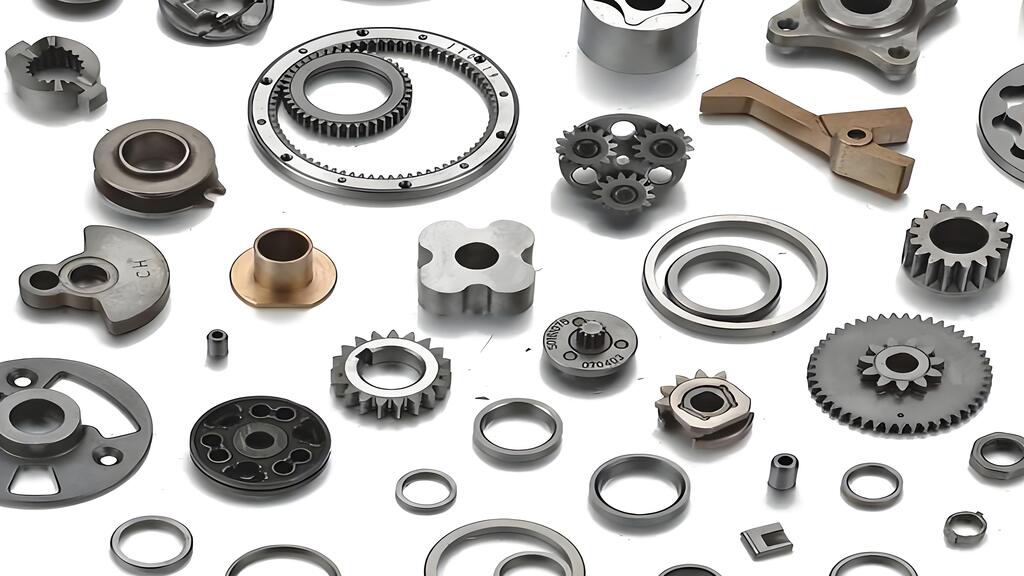
Metal powder sintered porous materials are made of metal or alloy powders as raw materials and are formed and sintered at high temperatures. They are porous materials with a rigid structure.
Production process: screening - isostatic pressing - vacuum high temperature sintering
Structural features: The material contains a large number of connected or semi-connected pores. The pore structure is formed by stacking regular and irregular powder particles. The size and distribution of the pores and the size of the porosity can be adjusted according to the powder particle size combination and preparation process. Meet actual customer needs.
Product advantages: good permeability, controllable pore size and pores, stable shape, high filtration accuracy, wear resistance, good mechanical properties, good thermal conductivity, heat resistance, and heat dissipation properties, and can be backwashed and used multiple times.
Functional characteristics of titanium sintered porous materials:
- 1) Uniform pore diameter, stable pores, and high separation efficiency.
- 2) High porosity, small filtration resistance and high penetration efficiency.
- 3) Good chemical stability, acid and alkali corrosion resistance, and anti-oxidation properties.
- 4) The morphological structure is stable, no particles fall off, and meets the requirements of food hygiene and pharmaceutical GMP.
- 5) Good mechanical properties, low pressure difference and large flow rate.
- 6) It has strong antimicrobial ability and does not interact with microorganisms.
- 7) It can be regenerated online, easy to clean and has a long service life.
- 8) Excellent biocompatibility, can be widely used in biological, food, pharmaceutical and medical industries.
- 9) Excellent electromagnetic wave shielding performance.
- 10) Good damping characteristics and impact resistance.
Sintering is one of the most important processes in the MIM process. It not only removes the residual binder but also eliminates the pores between the powder particles, making the MIM product fully dense or nearly fully densified. The sintering of titanium alloy requires a high temperature. Environment, the sintering process should be protected with argon gas as much as possible. The sintering time in this test is set to keep the temperature constant for 120 minutes, and the maximum temperature is 1220℃, 1240℃, 1250℃, 1270℃ and 1290℃ respectively for TC4 drawn parts and round parts. Shape parts are sintered.
 Sintering process of TC4 tensile parts
 Sintering process of circular parts
From the sintering process of circular parts, it can be roughly seen that when TC4 lasts for 120 minutes, higher densification can be obtained at 1250°C, and the density decreases slightly as the temperature increases. This is because grain growth occurs at too high temperatures. The gaps between grain boundaries also become larger, which also results in the yield strength of standard tensile parts being lower than 1250°C after high temperature.
 TC4 metallographic diagram at 1250℃
 Sintered TC4 round parts
In order to understand the relationship between different temperatures and holding times and TC4 sintering densification, we selected 1240°C, 1250°C and 1270°C to conduct the experiments as shown below. The sintering atmosphere was all argon gas environment.
 The sintering atmosphere is argon
Data processing and analysis
According to the density data of the sample after sintering, it is not difficult to see that the density obtained by holding the temperature at 1250°C for 120-180 minutes is higher than that obtained by other processes. Based on the relationship between the sintering process of the TC4 drawn parts and the sintered TC4 round parts, we also conclude that the density is higher than that obtained by other processes. The densification and yield strength are consistent, so the densification and mechanical properties obtained by holding the temperature at 1250°C for 120min~180min are the highest; this is because too high a temperature and too short a holding time do not improve the titanium alloy sintering process. Titanium alloy crystals are optimally densified. Similarly, low temperature and long-term heat preservation will cause the powder surface driving energy to be continuously consumed due to the slow diffusion rate of grain boundaries. During the movement and diffusion process of grain boundaries, good overlap and slip of the crystal lattice cannot be achieved. In this way, there are still certain gaps inside that cannot be eliminated, making it impossible to achieve better densification.
in conclusion
The industrialization process of MIM titanium alloy is complex, and there are many factors that affect the final densification and mechanical properties of the product. Under these experimental conditions, after comprehensive consideration of the product density and mechanical properties, we used an HP high vacuum metal furnace to continuously sinter at 1250°C for 120 minutes. This allows TC4 to have a higher density and obtain the maximum yield strength, paving the way for the industrialization of MIM-TC4.