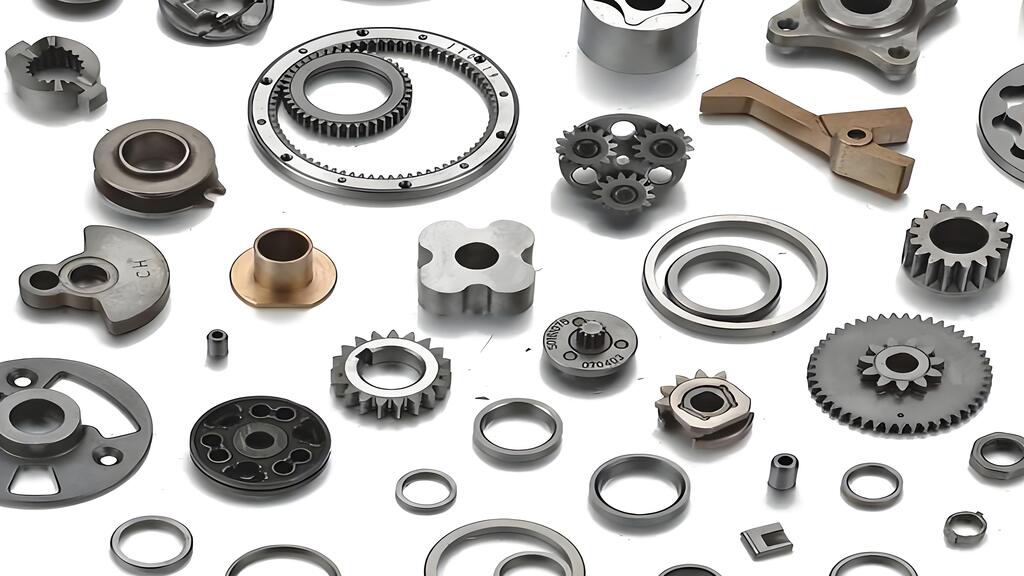


Top Advantages of Ceramic Custom Injection Molding
Ceramic injection molding creates incredibly thin walls of 0.2 mm and tiny features of just 0.1 mm. This precision lets manufacturers make complex ceramic components with unprecedented accuracy. The process blends plastic injection molding's design flexibility with technical ceramics' exceptional properties. The global market now stands at $800 million, and experts expect substantial growth as this technology transforms high-performance component production.
The benefits of Ceramic Injection molding go well beyond precision manufacturing. The CIM process produces parts with outstanding mechanical, thermal, and electrical properties that maintain excellent surface finish. Manufacturers save money because they can recycle excess material in future production runs. Medical, aerospace, automotive, and electronics industries rely heavily on this technology. It helps them combine multiple parts into single integrated components, which makes assembly simpler and cuts overall costs.
Design Flexibility for Complex Ceramic Parts
Ceramic injection molding (CIM) now makes it possible to manufacture complex ceramic components that were impossible before. Engineers can create parts with intricate geometries that traditional manufacturing methods can't produce. This breakthrough has changed the game in ceramic manufacturing.
Thin Wall and Undercut Capabilities in CIM
CIM stands out from traditional methods because of its exceptional thin-wall capabilities. Parts can be made with wall thicknesses as thin as 0.2 mm and features as small as 0.1 mm. Some manufacturers have taken this even further. They can now create walls as thin as 0.02 mm and through-holes with diameters as small as 0.08 mm. These features are vital for electronics and microfluidics that need tiny components.
CIM's flexibility and molding accuracy make undercuts easy to achieve. The process handles:
- Re-entrant angles and multishaped blind holes
- Screw threads and perpendicular holes
- Intricate cavities and surface profiles
- Internal features that would need multiple parts otherwise
Net-Shape Production with Minimal Post-Processing
CIM excels at forming net-shape parts right in the tool. You won't need many secondary operations that can get pricey and time-consuming. Some parts might need a light touch-up, but CIM creates components very close to their final dimensions - that's why we call it "near-net shape".
Many designs that were too hard or expensive to make with traditional methods are now commercially possible. The process wastes less material and needs less heat energy for firing. This makes it good for both your wallet and the environment.
Multi-axis Geometries Achievable with Custom Tooling
Custom tooling lets CIM create complex multi-axis geometries in one step, instead of needing multiple manufacturing steps. Manufacturers use precise mold design and advanced injection techniques to make components with sophisticated 3D features.
The process is great at making parts with high aspect ratios and complex structures on multiple levels. You can make components with three levels in front and two levels at the back efficiently. This eliminates separate machining and assembly, which cuts costs and makes stronger parts.
High Precision and Dimensional Accuracy
CIM creates intricate components with exceptional accuracy through precision engineering. Parts with very narrow tolerances don't need extra finishing when you control the mold design, feedstocks, processing parameters, and post-processing properly.
Modern CIM achieves high accuracy through:
- Advanced monitoring systems that keep things stable
- Better feedstock composition and particle distribution
- CAD and CAM software that improves mold design accuracy
- Careful Sintering control to prevent distortion
Tolerances Achievable in Injection Molding Ceramics
CIM achieves impressive tolerances despite Ceramic Materials shrinking during sintering. Linear dimensions usually stay within ±0.025mm to ±0.127mm (±0.001″ to ±0.005″), while angular tolerances range from ±0.5° to ±1.0°.
Some manufacturers hit tolerances within 25 μm across 10-200 different dimensions on one part. Standard tolerance capabilities typically reach ±0.3% of the dimension. You can get even tighter tolerances with extra processing.
Surface Finish Quality Without Secondary Machining
CIM creates excellent surface finishes without extra machining. Parts come out smooth, with no machining marks or tool paths. This gives them better looks and function.
Medical implants and precision electronic components benefit from this high-quality finish. You save money by skipping post-processing steps while ensuring consistent quality.
Consistency Across High-Volume Production Runs
Parts made with CIM stay consistent even in high-volume production. This automated process creates uniform parts that barely vary, which is perfect for making components that need consistent performance and interchangeability.
Sophisticated processes create uniform pelletized feedstock, which helps achieve tight tolerances and repeatability. Engineers use advanced cavity pressure control and transducers to manage part weight and dimensions. This virtually eliminates common problems like flash, sinks, and warpage.
The quality is so consistent that manufacturers achieve process capability index (Cpk) values above 1.66. This means fewer rejections and often eliminates the need for customer inspection.
Material Versatility and Performance Benefits

Ceramic materials in injection molding give engineers many options to meet performance requirements in a variety of applications. The right ceramic material choice can significantly affect component durability, thermal properties, and electrical characteristics.
Zirconia vs Alumina in Custom Ceramic Parts
Zirconia (ZrO₂) and alumina (Al₂O₃) are the most common materials used in ceramic injection molding. Each material has its strengths for different applications.
Zirconia shines with its exceptional mechanical properties. It's 4 times tougher than alumina ceramics, which helps overcome the typical brittleness of ceramic materials. The material's bulk density of 6.05 g/cm³ is about twice that of alumina at 3.7 g/cm³, giving it better compressive properties. These features make it perfect for high-stress applications where you need impact resistance.
Alumina, on the other hand, leads in hardness with 1800-2000 Hv10 compared to zirconia's 1200 Hv10. The material can withstand temperatures up to 1600°C for long periods. It's 2-3 times stronger than regular ceramics, and some variants can be 5-6 times stronger.
Zirconia components achieve better surface finish after processing, with roughness values near Ra0.02 compared to alumina's Ra0.2-Ra0.4. This mirror-like finish creates lower friction coefficients, which helps parts that need smooth movement.
Thermal and Electrical Insulation Properties
Both materials excel in thermal properties but in different ways. Zirconia's thermal conductivity is less than one-tenth of other ceramics, making it valuable for heat retention or thermal barriers.
Alumina works great as an electrical insulator, even at high temperatures. This makes it perfect for spark plug insulators, electronic substrates, and various electrical equipment parts. Its high resistivity (about 10¹⁵ Ω·cm) and insulation strength (15kV/mm) make it excellent for electrical applications.
Silicon carbide offers different thermal properties with high thermal conductivity (90-120 W/mK), making it great for heat dissipation.
Wear and Corrosion Resistance in Harsh Environments
Ceramic injection molded parts work well where metal components usually fail. Advanced ceramics keep their structural integrity, dimensional stability, and surface finish even under long chemical exposure.
Alumina resists most acids but can be damaged by hydrofluoric acid and possibly hot concentrated sulfuric or hydrochloric acids. It handles moderate alkaline solutions well but might break down in strong, hot alkalis.
Zirconia has better corrosion resistance, especially in highly corrosive environments, which makes it a top choice for chemistry labs. It resists most acids and alkalis but can still be affected by hydrofluoric acid.
These ceramic materials' chemical inertness makes them useful in many applications, from medical implants to automotive parts exposed to tough conditions. Ceramic components often perform better than the best metal alloys when it comes to resisting pitting or chemical breakdown, especially in extreme acid/base conditions.
JHMIM Ceramic Injection Molding team uses these material properties to create custom ceramic components that match specific environmental challenges. They provide detailed technical support throughout material selection and manufacturing.
Cost Efficiency in Mass Production

Manufacturing economics in ceramic injection molding creates a perfect balance between upfront investments and long-term cost advantages. The process brings substantial financial benefits for mass production through lower per-part costs, material reuse, and process optimization, despite high upfront costs.
Tooling Investment vs Per-Part Cost Tradeoff
Complex high-precision molds cost anywhere from $10,000 to over $100,000. The process makes financial sense only when you spread this investment across large production volumes. Companies typically see a break-even point between 500-10,000 pieces, depending on the component's added value.
Alternative manufacturing methods like pressing and green milling work better economically for smaller production runs below these numbers. The per-part cost drops substantially as production quantities grow, which makes ceramic injection molding an attractive choice for mass production.
Mold durability plays a crucial role in this economic equation. You'll need to refurbish CIM molds after 1,000-20,000 shots, based on material abrasiveness, paste properties, and operating conditions. Good mold maintenance helps extend production capacity and maximize returns on your tooling investments.
Reduced Waste Through Recyclable Feedstock
Ceramic injection molding lets you cut waste substantially through material recycling. You can reprocess post-injection waste from cold-runner systems without hurting quality, just as with polymer injection molding's reuse of sprues and runners.
Many manufacturers now use industrial waste polymers as binder systems. This creates an economical and eco-friendly alternative that keeps the molded ceramic part quality intact. This strategy fits well with circular economy principles and helps cut both production costs and environmental impact.
Recycled porcelain brings remarkable economic and environmental benefits. Raw material costs drop when you use recycled materials, and you'll need less waste disposal. The injection molding process works great with recycled porcelains since each grain contains all porcelain components from its previous formation.
Automation and Cycle Time Optimization
Automation stands out as one of the biggest cost advantages in ceramic injection molding today. Short molding cycles result from high levels of mechanization and automation. These cycles take just a fraction of the time needed for casting and hot pressing. This speed boost means more production capacity and lower labor costs.
Manufacturers can use several strategies to optimize cycle time and maximize cost-efficiency:
- Temperature control optimization to reduce cooling time, as cooling takes up about 80% of the entire cycle
- Replacement of cooling time with additional packing time, which can cut overall cycle time without affecting part quality
- Implementation of proper mold temperature control for faster cooling and solidification
- Selection of optimal materials with high thermal conductivity and high thermal diffusivity to increase heat removal rates
Your profitability in any injection molding process depends on minimizing cycle time. A manufacturer's competitive edge comes directly from the number of quality parts produced per shift. Ceramic injection molding delivers exceptional cost efficiency for mass production applications when each processing phase gets carefully optimized.
Scalability and Application Diversity

Ceramic injection molding adapts to the unique requirements of many industries. This versatile manufacturing technique has become the life-blood of several critical sectors because it works well for both high-volume production and specialized component fabrication.
Medical Implants and Dental Components
CIM ceramic injection molding stands out in medical applications because alumina and zirconia materials provide biocompatibility, corrosion resistance, and excellent wear properties. The technology's precision shines in dental applications. Ceramic dental implants made through CIM show remarkable consistency, durability, and biocompatibility. Dental professionals have reported substantial cost savings and better quality control compared to traditional manufacturing methods.
Medical applications benefit from surface treatments. Sandblasting and acid etching create micro-structured surfaces on dental implants that boost osseointegration. The chemical stability and sterilizability of ceramics make them perfect for orthopedic implants, diagnostic equipment, and surgical instruments.
Consumer Electronics: Smartphone Back Covers
The consumer electronics industry has accepted new ideas in ceramic injection molding, particularly for smartphone back covers. Xiaomi became a game-changer with its '3D ceramic process' in the Xiaomi 5 model that offered ceramic black and white versions. The company's patented ceramic-related technologies have substantially reduced production costs.
These covers' production involves complex ceramic slab layering with careful sintering processes to boost density while reducing thickness. Xiaomi's color options have grown. They now include emerald green (MIX2S Dunhuang Art Edition) and gemstone blue (MIX3) ceramic back covers.
Aerospace and Automotive Use Cases
Aerospace applications make use of information from ceramics' exceptional thermal resistance and lightweight properties. CIM-manufactured components handle corrosive environments, extreme temperatures, and high mechanical stresses well, perfect for jet engine components, turbine blades, and aerospace sensors. Spacecraft's thermal protection systems employ ceramics' heat resistance during re-entry phases.
CIM-produced parts have improved component reliability for automotive manufacturers, especially in high-stress engine and braking applications. Cars use these parts in sensors, engine components, exhaust systems, braking systems, and fuel injectors. Silicon carbide ceramic components provide outstanding thermal shock resistance and wear properties that work well in spark plugs and emission control systems.
JHMIM Ceramic Injection Molding team's technical support throughout the design and manufacturing process ensures consistent quality in all these applications. Their advanced machining technologies create precise ceramic components that meet each industry's performance requirements.
Conclusion
Ceramic injection molding has revolutionized manufacturing by blending exceptional design flexibility with superior material performance. This piece showed how CIM creates complex ceramic components with unmatched precision. The process achieves wall thicknesses as thin as 0.2 mm and features as small as 0.1 mm. The material benefits through zirconia and alumina options offer distinct advantages that meet thermal, electrical, and mechanical requirements.
Mass production reveals clear economic benefits. The original tooling investments lead to lower per-part costs, recyclable feedstock, and optimized production cycles. These cost savings and scalability explain why ceramic injection molding has become popular in many industries. Medical implants, smartphone components, aerospace parts, and automotive systems showcase CIM-manufactured ceramics' versatility and reliability.
The precision, consistency, and exceptional performance of ceramic injection molded components give manufacturers clear advantages over traditional methods. JIEHUANG Ceramic Injection Molding team provides high-precision ceramic molds and parts to clients worldwide. Our commitment ensures companies can utilize these benefits whatever their industry or application needs.
The ceramic injection molding technology keeps advancing. Companies that welcome this process will gain competitive edges through improved component performance, design freedom, and production efficiency. The $800 million global market for ceramic injection molded components will grow as more industries discover this manufacturing method's value for creating high-performance ceramic parts.
FAQs
Q1. What are the key advantages of ceramic injection molding? Ceramic injection molding offers exceptional design flexibility, allowing for complex shapes with thin walls and intricate features. It provides high precision, excellent surface finish, and consistent quality across large production runs. The process also enables cost-efficient mass production and the use of high-performance ceramic materials with superior thermal, electrical, and mechanical properties.
Q2. How does ceramic injection molding compare to traditional ceramic manufacturing methods? Ceramic injection molding surpasses traditional methods by enabling the production of more complex geometries, achieving tighter tolerances, and offering better surface finishes. It allows for net-shape or near-net-shape production, reducing the need for post-processing. CIM is also more efficient for high-volume production, making it cost-effective for mass manufacturing of ceramic components.
Q3. What industries benefit most from ceramic injection molding? Ceramic injection molding finds applications across various industries, including medical (for implants and dental components), consumer electronics (such as smartphone back covers), aerospace (for engine components and thermal protection systems), and automotive (for sensors, engine parts, and braking systems). Its versatility makes it valuable in any field requiring high-performance, precision ceramic components.
Q4. Is ceramic injection molding cost-effective for small production runs? While ceramic injection molding requires a significant initial investment in tooling, it becomes increasingly cost-effective as production volumes increase. The break-even point typically occurs between 500-10,000 pieces, depending on the component's complexity and value. For smaller production runs, alternative methods like pressing or green milling might be more economical.
Q5. What materials are commonly used in ceramic injection molding? The most widely used materials in ceramic injection molding are zirconia and alumina. Zirconia offers superior fracture toughness and is ideal for high-stress applications, while alumina excels in hardness and wear resistance. Other materials like silicon carbide are also used, each offering unique properties suitable for specific applications. The choice of material depends on the required performance characteristics of the final component.