

What Is a Camshaft Phaser? A Complete Guide

Modern vehicles equipped with advanced camshaft phasers achieve 5% better fuel economy, according to Automotive Engineering. Some studies even show these improvements can reach 20%. These impressive gains come from cam phasers, which are part of variable valve timing (VVT) systems that have transformed modern engines' efficiency and power output.
Cam phasers are precision components that adjust the camshaft's position relative to the crankshaft. This adjustment lets engines modify valve timing based on driving conditions. The 2020 Ford F-150's EcoBoost engine relies on its camshaft phaser to deliver peak performance. Engine designs vary - some use phasers only on the exhaust cam while others feature them on both intake and exhaust cams. A failing cam phaser can trigger the check engine light, reduce engine performance, or create rattling sounds. Repairs aren't cheap - professional replacement costs run between $800 and $2,500. Drivers should learn about cam phaser problems to maintain their vehicle's performance and avoid costly repairs.
Camshaft Phaser Design and Manufacturing Methods
A camshaft phaser's core function substantially depends on how precisely it's manufactured and what materials it contains. Modern phasers have two main parts: the rotor connects to the camshaft through a dowel pin, while the phaser body bolts to the camshaft sprocket. These parts can move about 20° on their own, which lets them adjust valve timing with precision.
Powder metallurgy vs metal injection molding for phaser parts
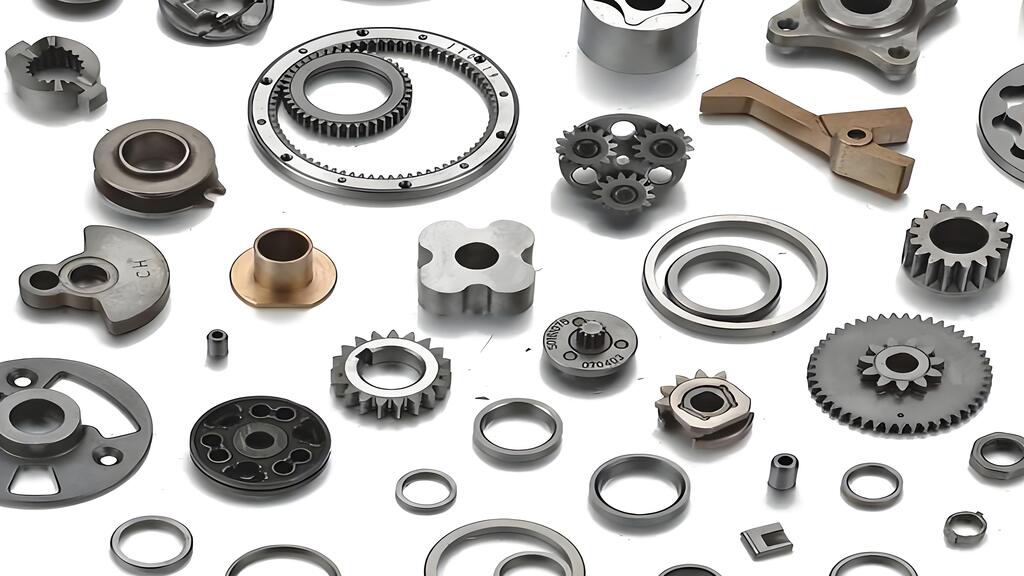
Powder metallurgy (PM) has become a reliable way to make camshaft phaser components because it can create complex shapes with exact measurements. PM uses coarse metal powders (50-150 µm) that have irregular to spheroidal particle shapes. Metal injection molding (MIM) uses finer powders (<20 µm) and creates denser parts—usually 95-99% of theoretical density compared to PM's 85-93%. Mim Parts have better mechanical properties and smoother surfaces, but PM remains more economical for large-scale production. PM's material costs range from $1.00-$2.00 per pound, while MIM costs $10.00-$12.00 per pound.
Material selection for wear resistance and oil flow control
Material choice directly shapes how a cam phaser performs. Manufacturers use custom PM material solutions that make powder handling, compacting, Sintering, and machining work better. Parts that need excellent wear resistance often use materials similar to alloyed steels found in bearings. These parts sometimes get surface hardening treatments to reach 55-65 HRC. The rotor's oil seals fit into machined grooves and must create tight seals between chambers to control oil flow precisely.
Precision tolerances in rotor and vane assembly
Oil-pressure actuation drives cam phaser operation, so the housing and rotor need precise tolerances. The phaser has eight chambers—four on each side ('A' and 'B')—that use pressurized oil to move or hold the rotor against the phaser body. These clearances must stay very tight, or pressure loss will hurt performance. The rotor's spring-loaded lock pin must also fit perfectly with the phaser body to lock both pieces together when needed.
Internal Mechanics: Oil Flow, Solenoids, and Lock Pins

The cam phaser's hydraulic system uses precise oil pressure control to change valve timing. A closer look at this system shows how cam phasers optimize engine performance in different conditions.
Oil control valve (OCV) and spool valve operation
The oil control valve sits at the core of camshaft phaser operation. This spool valve works like those in automatic transmissions. It directs engine oil traffic by controlling which ports get pressurized oil and which ones vent. The pressurized oil flows through the OCV into a camshaft bearing journal and moves through internal passages to the front of the camshaft. The phaser has eight separate chambers - four advance and four retard chambers. Oil enters all four advance chambers while leaving the retard chambers when the system needs to advance the camshaft. The oil control system's powder metallurgy parts need tight clearances to work effectively.
Solenoid PWM control and PID feedback loop
The powertrain control module controls the OCV through pulse-width modulation of solenoid current from 0 to 1000 mA. The spool valve fully advances timing at 0% duty cycle, maintains position at 50%, and retards timing above 50%. A digital pulse train from the camshaft's trigger wheel provides position feedback. This signal shifts its phase relationship to the crankshaft's pulse train as the cam phases. A PID control loop uses this feedback to create appropriate duty-cycle outputs. Advanced systems use gain-scheduling PID based on engine speed and temperature because oil temperature affects flow resistance and pressure.
Lock pin engagement and failure modes
The spring-loaded lock pin plays a vital role by securing the rotor and phaser body during low oil pressure events, such as engine startup. This prevents noise and wear while giving proper valve timing until oil pressure builds up. The lock pin disengages when oil pressure reaches about 15 psi by pushing against an annular land or end surface. Precise manufacturing with powder metallurgy or metal injection molding gives proper pin fitment. Worn lock pin wells and spring cap degradation are common failures. A worn lock pin well creates a smooth ramp instead of a sharp cylindrical hole. This prevents proper locking and causes the distinctive rattle noise that indicates a bad cam phaser.
Failure Analysis and Design Limitations

Camshaft phaser failures usually happen because components wear out after long use, especially when engines have high mileage. Modern manufacturing methods like powder metallurgy and metal injection molding have improved these precision parts. Yet these components still face specific failure patterns that reduce the cam phaser's effect on engine performance.
Wear on lock pin wells and spring cap degradation
The spring-loaded lock pin system tends to fail first in most phaser designs. High-mileage engines develop a characteristic "ramp" shape in their lock pin well instead of keeping their exact cylindrical form. This stops the pin from locking the rotor and phaser body together properly. The plastic spring cap that centers the return spring can break down from constant contact with the phaser backplate. A degraded spring won't align right and can't seat the lock pin properly. This leads to that distinctive cold-start rattle that shows what happens with a bad cam phaser.
Oil viscosity and pressure's effect on phaser timing
Oil quality and viscosity play a crucial role in how phasers work. Low oil pressure—below 15 psi—stops the lock pin from disengaging properly. As engine bearings wear out, oil pressure drops. This often leaves phasers as the last parts to get enough oil flow. Wrong oil viscosity can mess up how phasers work. Most modern engines need lightweight synthetic oils to maintain proper oil flow and pressure in the phaser's tiny channels. Oil that's dirty or broken down can block passages no bigger than a ballpoint pen tip. This causes unstable timing and makes components wear out faster.
Common failure points in HL3Z vs MLZ phaser designs
The HL3Z and MLZ phaser designs show major differences in how long they last, even though their basic structure looks similar. MLZ designs have bigger chamber volumes that create more torque at the same oil pressures. The lock pin well feed channel sits in different spots—MLZ models have it in the vane rather than the well plate. The MLZ's plastic spring cap doesn't touch moving plates, which might fix a major problem found in HL3Z designs. The newer MLZ phasers came out in 2021 and seem to fix several weak points in older designs. Both types can still fail from oil-related issues, though.
Advanced Diagnostics and Maintenance Tools
Accurate diagnosis of camshaft phaser problems needs specialized tools that work directly with precision components made through powder metallurgy and metal injection molding processes. Technicians need these advanced tools to find problems before they cause catastrophic engine failure.
Using Forscan to monitor cam angle and duty cycle
Forscan diagnostic software helps technicians monitor a cam phaser's behavior during engine operation. Technicians can track vital parameters by connecting an OBD-II adapter, including commanded versus actual cam angles. The software shows a graphical interface that displays intake and exhaust cam angles and duty cycle percentages. A properly working phaser should keep the difference between commanded and actual position within ±1 degree. The actual position graph shows phaser instability through quick oscillations that look like a "rollercoaster" pattern. Modern engines that use powder metallurgy components typically show PWM duty cycles around 35-36% to maintain a steady cam position.
Camshaft phaser locking tools and torque specs
Professional phaser service needs specialized locking tools to hold the camshaft steady during maintenance. These precision tools work with metal injection molded surfaces and protect critical mating surfaces from damage. Each manufacturer's kit comes with cam phaser lock blocks, chain tensioner release pins, and specific holding tools designed for different engine families. The right torque prevents timing noise and engine misfires. Technicians must follow the manufacturer's torque sequence that often needs multiple steps: 22 ft-lb to start, then 33 ft-lb, a 40° angular tightening, and finally a 90° turn.
Testing camshaft position sensors and solenoids
A multimeter set to proper AC/DC voltage settings lets technicians test camshaft position sensors. Two-wire inductive sensors should read 200-1000 ohms of resistance and create a voltage when metal passes near their tip. Three-wire Hall-effect sensors need testing while connected to the vehicle through back-probe connectors. Solenoid testing measures current flow as technicians watch actual phaser movement. Both components work with precision metal injection-molded phaser parts and need careful handling during diagnostics.
Conclusion
Camshaft phasers are, without doubt, a major step forward in modern engine technology. These precision components know how to adjust valve timing on the fly and deliver substantial improvements. Power output and fuel economy can improve from 5% to as high as 20%, depending on how they're used.
The chosen manufacturing method substantially affects a phaser's performance and longevity. Powder metallurgy leads production techniques because it's budget-friendly for high volumes. Metal injection molding provides better density and surface finish. Both methods must hit exceptional precision targets to keep the tight tolerances needed for proper oil pressure control and component interaction.
The internal hydraulic system's success depends on proper oil pressure and quality. Using the right oil viscosity and changing oil regularly affects the phaser's performance and lifespan. Poor pressure or dirty oil will wear down critical components faster. Lock pin wells and spring caps break down most often.
Modern diagnostic technology has grown with phaser design improvements. Technicians can now use tools like Forscan to check cam angles and duty cycles with up-to-the-minute data. Specialized locking tools make maintenance easier. These improvements help catch problems before they cause major failures.
The progress from earlier HL3Z designs to newer MLZ configurations shows manufacturers' dedication to fixing known issues. Yet all phaser designs can still fail due to oil problems, whatever their manufacturing method.
Knowing why camshaft phasers fail helps vehicle owners create better maintenance plans. Replacement costs run from $800 to $2,500. Proper oil maintenance and quick response to warning signs like cold-start rattles or check engine lights can push these costs further down the road.
The automotive engineering world keeps moving forward, and camshaft phasers will see more improvements in design and materials. In spite of that, their core operation principle won't change. Precise oil flow control through carefully made components remains key to meeting modern engines' performance and efficiency needs.
Key Takeaways
Understanding camshaft phasers is crucial for modern engine maintenance and performance optimization. These precision hydraulic components can deliver significant fuel economy improvements while requiring careful attention to prevent costly failures.
• Camshaft phasers improve fuel economy by 5-20% by dynamically adjusting valve timing to match driving conditions and engine load demands.
• Oil quality is critical—use manufacturer-specified viscosity and change regularly, as contaminated or low-pressure oil causes most phaser failures.
• Lock pin well wear creates the characteristic cold-start rattle; early detection through tools like Forscan can prevent $800-$2,500 replacement costs.
• Powder metallurgy manufacturing enables cost-effective production while maintaining the tight tolerances essential for proper hydraulic operation.
• Modern MLZ phaser designs address common HL3Z failure points, but all phasers remain vulnerable to oil-related issues regardless of design.
Proper maintenance and early diagnosis using advanced diagnostic tools can significantly extend phaser lifespan and prevent catastrophic engine damage.
FAQs
Q1. What are the signs of a failing camshaft phaser? Common symptoms include an illuminated check engine light, reduced engine performance, loss of power during acceleration, and rattling noises, especially during cold starts.
Q2. How much does it typically cost to replace camshaft phasers? The cost of replacing camshaft phasers usually ranges from $800 to $2,500, depending on the vehicle make and model and labor costs in your area.
Q3. What is the main function of a camshaft phaser? A camshaft phaser dynamically adjusts valve timing by altering the camshaft's position relative to the crankshaft, optimizing engine performance and fuel efficiency across various operating conditions.
Q4. How can regular maintenance help prevent camshaft phaser issues? Regular oil changes using the correct viscosity oil and maintaining proper oil pressure are crucial for preventing camshaft phaser problems, as most failures are related to oil quality and flow issues.
Q5. What diagnostic tools are used to identify camshaft phaser problems? Advanced diagnostic software like Forscan can monitor cam angles and duty cycles in real-time. Technicians also use specialized locking tools and multimeters to test camshaft position sensors and solenoids for accurate diagnosis.