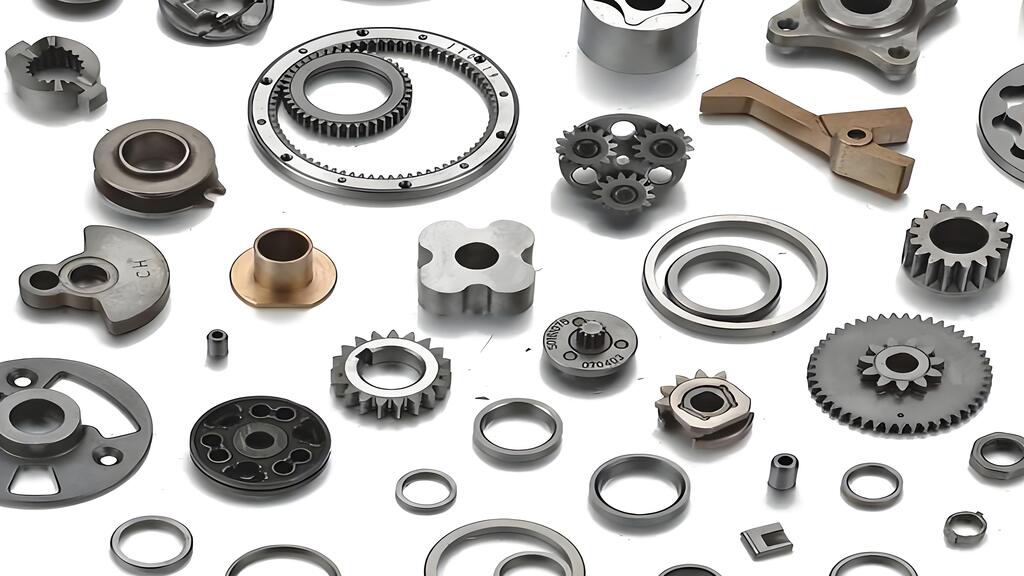


Why Magnesium Alloy Is Becoming Popular in Lightweight Manufacturing

The demand for lightweight materials continues to surge across various manufacturing sectors. The global automotive lightweight material market is projected to expand significantly, growing from USD 34.2 billion in 2025 to USD 47.32 billion by 2035. This growth reflects an increasing need for efficiency and performance in products.
Magnesium alloy stands out due to its unique properties. It offers a high strength-to-weight ratio, excellent corrosion resistance, and remarkable damping capacity. Innovations in alloy formulations and processing techniques further enhance its appeal, making magnesium alloy a preferred choice in modern manufacturing.
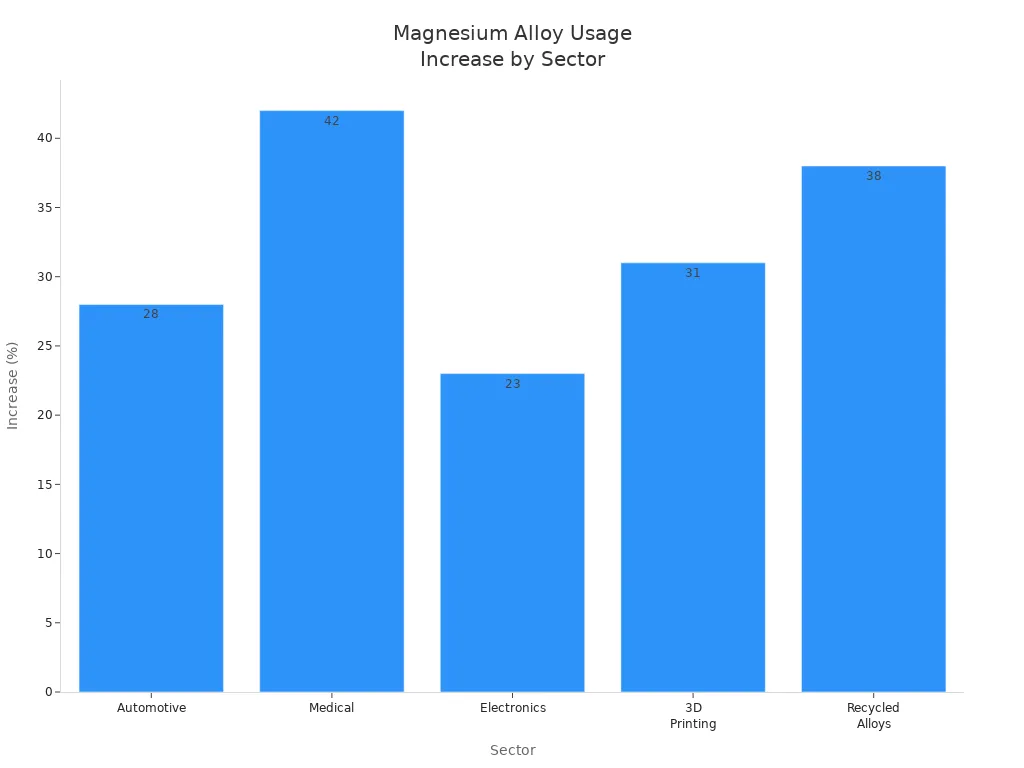
Key Takeaways
- Magnesium alloys are the lightest structural metals, making them ideal for reducing weight in manufacturing.
- These alloys have the highest strength-to-weight ratio, enabling efficient product designs without compromising strength.
- Magnesium alloys resist corrosion more effectively than many metals, thereby enhancing their durability in harsh environments.
- The excellent damping capacity of magnesium alloys makes them suitable for applications requiring vibration control.
- Using magnesium alloys in vehicles can significantly improve fuel efficiency and reduce CO₂ emissions.
- Magnesium alloys are increasingly used in the aerospace sector for their thermal stability and lightweight properties.
- The medical device industry benefits from magnesium alloys due to their biocompatibility and ability to degrade safely in the body.
- Innovations in processing techniques and alloy develoPment are driving the growing demand for magnesium alloys across various industries.
Unique Properties of Magnesium Alloy

Lightweight Nature
Magnesium alloy is renowned for its lightweight nature, making it an ideal choice for various manufacturing applications. As the lightest structural metal known, magnesium has a density of only 1.7 g/cm³. This characteristic allows it to be 4.5 times lighter than steel and 1.7 times lighter than aluminum. The lightweight properties of magnesium alloys significantly contribute to their increasing adoption in industries focused on reducing emissions and enhancing efficiency.
- Magnesium alloys are lighter than other structural materials, including:
- Steel: Heavier and denser, making it less suitable for lightweight applications.
- Aluminum: While lighter than steel, aluminum is still heavier than magnesium alloys.
This unique property positions magnesium alloys as a preferred material in sectors such as automotive and aerospace, where weight reduction is crucial for performance.
High Strength-to-Weight Ratio
The strength-to-weight ratio of magnesium alloys is another compelling reason for their popularity. These alloys exhibit the highest strength-to-weight ratio among common structural materials. For instance, magnesium alloys are approximately 33% lighter than aluminum and 75% lighter than steel while maintaining comparable tensile strength.
| Material | Strength-to-Weight Ratio | Weight Comparison |
|---|---|---|
| Magnesium Alloys | Highest | 33% lighter than aluminum, 75% lighter than steel |
| Aluminum | Moderate | Heavier than magnesium |
| Steel | Low | Heaviest among the three |
This remarkable strength-to-weight ratio allows manufacturers to create lighter, more efficient products without sacrificing structural integrity. As a result, magnesium alloys are increasingly utilized in applications where performance and weight are critical factors.
Corrosion Resistance
Corrosion resistance is a vital property of magnesium alloys, enhancing their durability in various environments. Laboratory tests have shown that magnesium alloys can withstand corrosive conditions better than many other metals. For example, the average tensile strength of EW75 magnesium alloy samples decreased by only 33.63% after exposure to corrosive environments, indicating their resilience.
- Key findings from corrosion resistance studies include:
- The average yield strength dropped by 35.06%, demonstrating the alloy's ability to maintain strength under stress.
- Corrosion pits and micro-cracks may form, but the overall structural integrity remains relatively intact compared to other materials.
These properties make magnesium alloys suitable for applications in harsh environments, such as automotive components and marine equipment, where corrosion resistance is essential.
Excellent Damping Capacity
Magnesium alloys exhibit excellent damping capacity, making them highly suitable for applications where vibration control is critical. Damping capacity refers to a material's ability to dissipate energy from vibrations, which is essential in reducing noise and enhancing the longevity of components.
Research indicates that pure magnesium demonstrates a high damping capacity, outperforming traditional materials such as cast iron and aluminum alloys. Specifically, pure magnesium has a damping factor of ( Q^{-1} = 0.11 ) and ( \epsilon = 10^{-4} ), which is five times better than cast iron and twelve times better than aluminum alloys. This superior performance makes magnesium alloys an attractive option for industries that require precision and reliability.
The incorporation of various solid solution elements into magnesium alloys significantly influences their damping capacity and mechanical properties. For instance, Mg-Zr magnesium alloys show remarkable damping performance, surpassing commercial aluminum alloys and gray cast iron. These alloys possess mechanical strengths of ( \sigma_B ) at 175 MPa and ( \sigma_{0.2} ) at 60 MPa, making them ideal for precision aerospace instruments where vibration sensitivity is a concern.
Another widely used alloy, the AZ91D Mg-Al alloy, showcases excellent damping and shock absorption capabilities. It is three times more effective than the 110OH18 aluminum alloy and nearly four times more effective than quenched and tempered 60 steel. This exceptional performance in damping makes AZ91D a preferred choice in applications ranging from automotive components to electronic devices.
Applications of Magnesium Alloy Across Industries

Automotive Industry
Magnesium alloy plays a significant role in the automotive industry, where manufacturers prioritize weight reduction and performance enhancement. Common automotive components made from magnesium alloy include:
- Gearbox
- Front end and IP beams
- Steering column
- Driver’s airbag housings
- Steering wheels
- Seat frames
- Fuel tank covers
These components contribute to reduced overall vehicle mass, which leads to improved handling and turning capabilities. By shifting the center of gravity, magnesium alloys enhance vehicle dynamics. Additionally, manufacturers report reduced vibration and noise through the tuning of magnesium parts. The use of magnesium also lowers manufacturing costs by minimizing tooling and gauges.
The shift towards electric vehicles (EVs) has further accelerated the adoption of magnesium alloys. Lighter vehicles improve range and performance, making magnesium alloys essential for modern automotive designs. Innovations in Die-Casting processes have made these alloys more accessible for mass-market vehicles, allowing manufacturers to meet regulatory pressures for fuel efficiency.
Aerospace Sector
In the aerospace sector, magnesium alloys provide excellent strength-to-weight ratios, crucial for aircraft performance. These alloys enable thermal stability up to 900°C, meeting stringent flammability standards for cabin interiors. Key applications include:
- Fuselage panels
- Brackets
- Landing gear
- Interior components for enhanced passenger comfort
The use of magnesium alloys in engine parts capitalizes on their vibration-dampening properties. These materials reduce the weight of aircraft structures without compromising strength. The high thermal stability of magnesium alloys makes them suitable for weight-sensitive aerospace designs, enhancing safety and efficiency.
Electronics Manufacturing
Magnesium alloy has gained traction in electronics manufacturing due to its lightweight nature and strength. Common devices incorporating magnesium alloy include:
- Cameras
- Laptops
- Smartphones
- Tablets
Manufacturers cite several advantages of using magnesium alloys in electronic devices. These include superior heat dissipation properties, which help maintain optimal operating temperatures. The strength-to-weight ratio of magnesium alloys allows for durable yet lightweight casings, enhancing portability without sacrificing protection.
Overall, the versatility of magnesium alloy across these industries highlights its growing importance in lightweight manufacturing. As technology advances, the demand for magnesium alloys will likely continue to rise, driving innovation and efficiency in product design.
Medical Devices
Magnesium alloys have gained significant traction in the medical device industry due to their unique properties and clinical benefits. These materials offer lightweight solutions that enhance patient comfort while providing the necessary strength and biocompatibility for various applications.
Historically, magnesium was first used in medical applications as ligatures for bleeding vessels in 1878. Since then, extensive studies have explored its potential in cardiovascular, musculoskeletal, and general surgery. Today, magnesium alloys are commonly utilized in devices such as orthopedic implants and vascular stents.
The following table summarizes key types of medical devices produced using magnesium alloy, along with their clinical applications and outcomes:
| Device Type | Clinical Application | Approval/Outcome |
|---|---|---|
| Orthopedic Implants | Hallux valgus surgery in Germany | CE mark approval for MAGNEZIX screw in 2013 |
| Fixation of vascularised bone flaps in femoral heads in China | Approval for a multi-centre clinical trial for HP Mg screws in 2019 | |
| Distal radius fractures in Korea | K-MET screw approved by the Korea FDA in 2015 | |
| Vascular Stents | Regulate heart rhythm, improve blood flow, and inhibit platelet activation | Gradual degradation and replacement by neovascular tissue |
| Biodegradable Devices | Temporary structural support and dynamic scaffold for tissue repair | Demonstrated therapeutic properties, including antibacterial and osteogenic effects |
Magnesium alloys provide several advantages in medical applications:
- They regulate heart rhythm and improve blood flow.
- They inhibit platelet activation and prevent vasoconstriction.
- They degrade into non-toxic molecules post-healing, avoiding the need for removal surgery.
- They promote bone remodeling and healing.
These properties make magnesium alloys particularly suitable for biodegradable devices, which offer temporary structural support while enhancing tissue healing through their bioactive characteristics. This shift from passive support to active modulation represents a significant advancement in medical technology.
Clinical outcomes have shown that magnesium-based devices not only provide structural integrity but also actively contribute to patient recovery. For instance, the gradual degradation of vascular stents allows for natural tissue integration, minimizing complications associated with permanent implants.
Benefits of Using Magnesium Alloy
Improved Fuel Efficiency
Magnesium alloys significantly enhance fuel efficiency in various transportation sectors. By reducing vehicle weight, these alloys lead to improved fuel economy and lower CO₂ emissions. Studies indicate that weight reductions of 22% to 70% can result in substantial gains in fuel efficiency. The following points summarize the impact of magnesium alloys on fuel consumption:
- Magnesium alloys can reduce vehicle weight significantly, leading to better fuel efficiency.
- The correlation between reduced vehicle mass and improved fuel consumption is well established.
- Magnesium's density of 1.813 g/cm³ compared to steel's 7.873 g/cm³ allows for substantial weight reduction.
This weight savings translates into reduced tailpipe emissions, making magnesium alloys a strategic choice for manufacturers aiming to meet sustainability goals.
Enhanced Performance
The mechanical performance of magnesium alloys, particularly the AZ91D variant, is noteworthy. These alloys improve performance through advanced manufacturing techniques such as wire arc additive manufacturing (WAAM). This process creates a concentration gradient of solute atoms during non-equilibrium solidification, which reduces stress concentrations and promotes uniform plastic deformation. The benefits include:
- Increased aluminum solute concentration refines twin lamellae, enhancing work hardening.
- Improved strength and ductility are crucial for industrial applications.
These enhancements make magnesium alloys suitable for demanding environments, where performance and reliability are paramount.
Cost-Effectiveness
Cost-effectiveness remains a critical consideration in the adoption of magnesium alloys. While magnesium alloys are about 33% lighter than aluminum and approximately 75% lighter than steel, the high production costs and raw material price volatility can impact their overall cost-effectiveness. However, the benefits often outweigh the costs:
- Weight reduction leads to better mileage and improved battery range for electric vehicles.
- Lower CO₂ emissions make magnesium a strategic material in the automotive industry's transition to sustainability.
Manufacturers increasingly recognize that the long-term savings from improved fuel efficiency and performance can justify the initial investment in magnesium alloys.
Design Flexibility
Magnesium alloys offer remarkable design flexibility, making them a preferred choice in various manufacturing applications. Their unique properties allow engineers and designers to explore innovative solutions that were previously unattainable with traditional materials. This flexibility manifests in several ways:
-
Versatile Applications: Magnesium alloys can be molded into complex shapes and structures, accommodating a wide range of design requirements. This versatility enables manufacturers to create lightweight components without compromising strength or functionality.
-
Customization: The ability to tailor magnesium alloys for specific applications enhances their appeal. Manufacturers can modify alloy compositions to achieve desired mechanical properties, such as increased strength or improved ductility. This customization supports the development of specialized components that meet unique industry demands.
-
Integration with Other Materials: Magnesium alloys can be effectively combined with other materials, such as plastics and composites. This integration allows for hybrid designs that leverage the strengths of multiple materials, resulting in products that are both lightweight and durable.
Several case studies illustrate the design flexibility offered by magnesium alloys in product development:
| Case Study | Description |
|---|---|
| Automotive OEMs | This study reviews the development and application of magnesium alloy parts in the automotive industry. It highlights the expansion of magnesium alloy use in various vehicle systems, including body, chassis, and powertrain. The study discusses the design logic and challenges faced in implementing magnesium alloys in automotive applications. |
| Self-decision design strategy | This research presents a design strategy for optimizing magnesium alloys, validated through experimental data. It leads to the development of a new alloy with enhanced strength and ductility, showcasing innovative design flexibility in alloy development. |
The automotive industry increasingly utilizes magnesium alloys for various components, demonstrating their design flexibility in real-world applications. Additionally, the development of a new self-decision design strategy for magnesium alloys showcases innovative approaches to enhance material properties. This adaptability not only improves product performance but also allows for more efficient manufacturing processes.
Environmental Impact of Magnesium Alloy
Sustainability of Magnesium Alloy
The sustainability of magnesium alloy production has gained attention in recent years. The International Magnesium Association (IMA) conducted life cycle assessments (LCA) that reveal the potential for low-carbon magnesium production. By switching energy sources from oil to natural gas, manufacturers can reduce greenhouse gas emissions by 34%. Further incorporation of renewable energy sources can decrease emissions by an additional 38%. These findings highlight magnesium alloy's sustainability compared to other metals, particularly when considering the energy sources used in production.
Recycling Potential
Recycling magnesium alloys presents significant opportunities for reducing waste and conserving resources. Various regions have adopted different approaches to enhance recycling practices. The following table summarizes trends in magnesium recycling across major manufacturing countries:
| Region | Trends in Magnesium Recycling |
|---|---|
| North America | Increased R&D investments in recycling technologies, focusing on efficiency and sustainability in automotive and aerospace sectors. |
| Europe | Implementation of stringent environmental regulations and circular economy initiatives promoting magnesium recycling practices. |
| Asia-Pacific | Surge in demand for magnesium in manufacturing and construction, driven by industrialization and infrastructure development. |
These trends indicate a growing recognition of the importance of recycling magnesium alloys. As industries strive for sustainability, the recycling of magnesium alloys will play a crucial role in minimizing environmental impact.
Reduced Carbon Footprint
The carbon footprint of magnesium alloy production is significantly lower than that of many other metals. A recent life cycle assessment revealed the following carbon footprint data for various materials:
| Material Type | Carbon Footprint (kg CO2eq/kg) |
|---|---|
| Eco-Mg Alloy | 76.2 |
| Caustic Calcined MgO | 1.6 - 1.8 |
| Hard-burnt MgO | 2.0 - 2.7 |
| Fused MgO | 10.6 - 12.7 |
These figures demonstrate that magnesium alloys can contribute to a reduced carbon footprint in manufacturing processes. The lower emissions associated with magnesium production make it an attractive option for industries aiming to meet sustainability goals. By choosing magnesium alloys, manufacturers can significantly lower their environmental impact while benefiting from the material's unique properties.
Challenges in the Adoption of Magnesium Alloy
Manufacturing Limitations
Manufacturers face several challenges when working with magnesium alloys. These limitations often hinder the widespread adoption of this material. Key issues include:
- Manipulation Difficulties: Magnesium alloys are challenging to manipulate into various forms at room temperature. This limitation necessitates high-temperature processing, which can increase costs and compromise the alloy's strength.
- Reactivity Issues: The high reactivity of magnesium complicates processing. Achieving desired mechanical properties can be difficult, particularly in additive manufacturing.
- Advanced Processing Needs: To improve formability and mechanical characteristics, manufacturers must employ advanced processing techniques and heat treatments. These methods can add complexity and cost to production.
Additionally, the high surface energy of magnesium powder leads to rapid corrosion rates. This characteristic poses challenges in creating near-fully dense structures, particularly for biodegradable implants, which require specific properties for effective use.
Cost of Raw Materials
The cost of raw materials significantly impacts the adoption of magnesium alloys in manufacturing. Several factors contribute to this issue:
- Price Volatility: The magnesium market exhibits structural characteristics that lead to price fluctuations. Supply and demand mismatches, geopolitical events, and currency fluctuations complicate the market landscape.
- Supply Constraints: High-quality dolomite, essential for magnesium production, faces supply constraints. If alternative sources cannot adequately replace production disruptions, future pricing may be affected.
- Energy-Intensive Production: Magnesium production is energy-intensive and relies on limited sources. Environmental regulations and output restrictions, particularly from China, can lead to price spikes, further complicating the adoption of magnesium alloys.
These factors create significant barriers for manufacturers, especially in cost-sensitive sectors.
Market Perception
Market perception plays a crucial role in the adoption of magnesium alloys. Various studies highlight the following aspects:
| Aspect | Details |
|---|---|
| Sustainability Benefits | Magnesium alloys are recognized for their recyclability and lower environmental impact compared to traditional materials. This aligns with sustainability goals in industries like aerospace, automotive, and consumer electronics. |
| Cost Challenges | Higher costs associated with magnesium alloys, due to extraction and processing complexities, present a barrier to adoption in cost-sensitive sectors such as automotive and consumer electronics. |
| Impact of COVID-19 | The pandemic initially disrupted manufacturing and supply chains, leading to reduced demand in key sectors like automotive and aerospace. However, recovery efforts have sparked renewed interest in lightweight and sustainable designs. |
These perceptions can influence decision-making among manufacturers, impacting the overall adoption of magnesium alloys in various industries. Addressing these challenges will be essential for unlocking the full potential of magnesium alloys in lightweight manufacturing.
Technical Expertise Requirements
Working with magnesium alloys necessitates specialized technical expertise. Professionals in this field must understand the unique properties and behaviors of these materials. The following skills and knowledge areas are essential:
-
Material Composition Knowledge:
- Magnesium alloys primarily consist of magnesium combined with metals such as aluminum, zinc, and rare earth elements.
- Understanding how each component affects the alloy's properties is crucial. For instance, aluminum enhances strength and corrosion resistance, while zinc improves castability and mechanical robustness. Rare earth metals contribute to high-temperature performance and durability.
-
Processing Techniques:
- Professionals must be familiar with various processing methods, including Die Casting, extrusion, and machining.
- Each technique requires specific adjustments to optimize the properties of magnesium alloys. For example, die casting can produce complex shapes but demands precise temperature control to prevent defects.
-
Mechanical Properties Analysis:
- Knowledge of the mechanical properties of magnesium alloys is vital. These alloys exhibit superior energy absorption properties in bending and buckling compared to aluminum and mild steel.
- They can absorb up to 50% more energy than aluminum and over 10 times more than mild steel due to their low density. This allows for thicker sections without added weight, making them ideal for applications requiring impact resistance.
-
Welding and Joining Techniques:
- Joining magnesium alloys presents unique challenges due to their reactivity and thermal properties.
- Professionals must be skilled in specialized welding techniques, such as TIG (Tungsten Inert Gas) welding, to ensure strong and reliable joints.
-
Corrosion Management:
- Understanding corrosion mechanisms is essential for extending the lifespan of magnesium components.
- Professionals should be knowledgeable about protective coatings and surface treatments that enhance corrosion resistance.
-
Quality Control and Testing:
- Implementing rigorous quality control measures is critical.
- Professionals must conduct tests to evaluate the mechanical properties and integrity of magnesium components, ensuring they meet industry standards.
Note: The high rate of work hardening in magnesium alloys significantly contributes to their energy absorption capabilities. This characteristic is essential for applications in automotive and aerospace industries, where safety and performance are paramount.
Future Trends in Magnesium Alloy Manufacturing
Innovations in Alloy Development
Recent innovations in magnesium alloy development have focused on enhancing performance and expanding applications. Manufacturers and researchers have made significant strides in several areas:
- Advancements in alloy compositions for improved performance.
- New processing methods that enhance the properties of magnesium alloys.
- Applications in lightweight vehicle construction to improve fuel efficiency.
- Development of biodegradable magnesium alloys for medical implants.
- Research focused on corrosion resistance and coating performance.
These innovations position magnesium alloys as a versatile material for various industries, particularly in automotive and medical applications.
Advancements in Processing Techniques
The manufacturability of magnesium alloys has improved due to several advancements in processing techniques. The following table summarizes key developments:
| Advancement Type | Description |
|---|---|
| Novel processing methods | New techniques for wrought sheet and plate to enhance manufacturability. |
| Alloy development | Development of alloys, including ultralight Mg-Li alloys, to improve formability. |
| Productive processing methods | Efficient methods for mass market production of extruded and rolled magnesium products. |
| Additive manufacturing advancements | Innovations in additive manufacturing that improve the properties of magnesium alloys. |
| Post-processing techniques | Techniques that enhance the final properties of magnesium alloys after initial processing. |
These advancements enable manufacturers to produce magnesium components more efficiently while maintaining high quality. As a result, the industry can meet the growing demand for lightweight materials.
Growing Market Demand
Market forecasts indicate a robust growth trajectory for magnesium alloys in global manufacturing. The following table illustrates projected market values:
| Year | Market Value (USD) | CAGR (%) | Magnesium Alloys Share (%) | Key Growth Region |
|---|---|---|---|---|
| 2025 | 5.89 billion | 5.4 | 45 | Asia-Pacific |
| 2035 | 10.0 billion | - | - | - |
| 2024 | 5.62 billion | - | - | - |
| 2032 | 6.67 billion | 4.9 | - | - |
| 2034 | 9.50 billion | 5.39 | - | - |
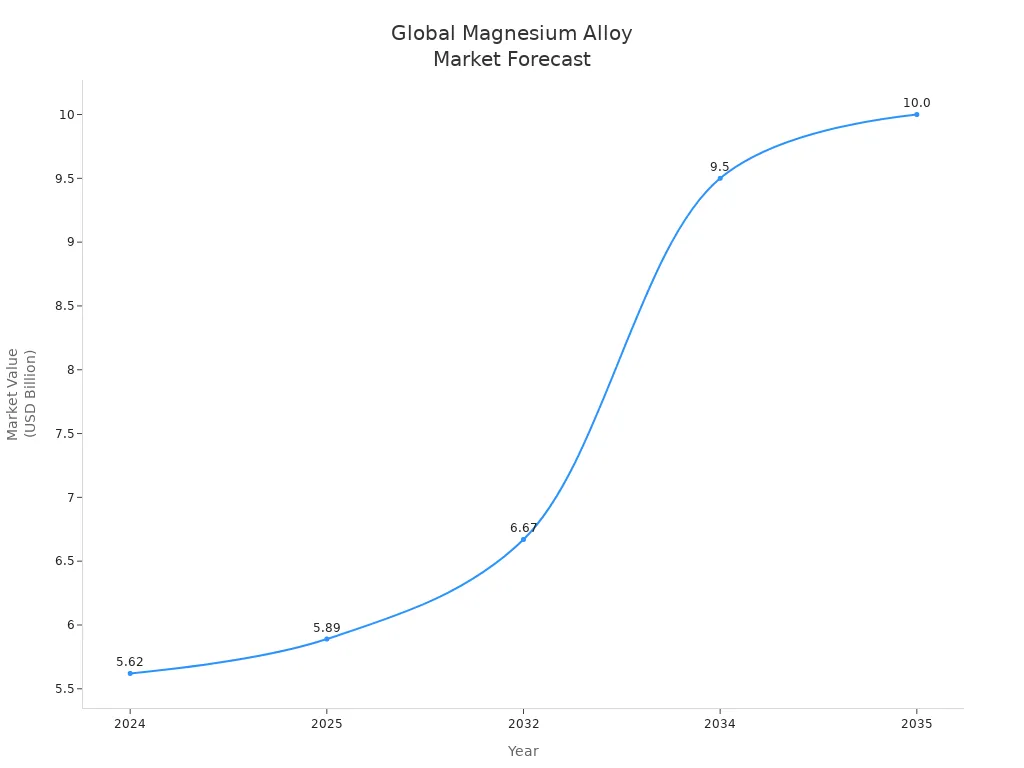
The data indicates a growing interest in magnesium alloys, particularly in the Asia-Pacific region. This trend reflects the increasing demand for lightweight materials across various sectors, including automotive, aerospace, and electronics.
Regulatory Influences
Regulatory influences play a crucial role in the adoption of magnesium alloys across various regions. Governments worldwide recognize the importance of lightweight materials in enhancing fuel efficiency and reducing emissions. As a result, they implement policies and initiatives that encourage the use of magnesium alloys in manufacturing.
In France, the government actively supports alloy development through grants and funding. This initiative has led to significant investments in magnesium alloys, particularly in the aerospace and defense sectors. Major companies like Airbus and Dassault have integrated magnesium alloys into their projects, showcasing the material's potential in high-performance applications.
The United Kingdom also emphasizes lightweighting initiatives. The government promotes the integration of magnesium alloys in electric vehicles, aligning with its sustainability goals. Companies such as Jaguar Land Rover and Rolls-Royce have adopted magnesium alloys in their vehicle designs, enhancing performance while reducing weight. These regulatory frameworks not only facilitate innovation but also drive market demand for magnesium alloys.
The following table summarizes key regulatory influences in different regions:
| Region | Regulatory Influence | Examples of Adoption |
|---|---|---|
| France | Government grants for alloy development | Investment in magnesium alloys for aerospace and defense by Airbus and Dassault |
| UK | National lightweighting initiatives | Integration of magnesium alloys in electric vehicles by Jaguar Land Rover and Rolls-Royce |
In addition to direct financial support, regulations often set standards for emissions and fuel efficiency. These standards compel manufacturers to seek lightweight materials like magnesium alloys to comply with environmental regulations. As industries strive to meet these requirements, the demand for magnesium alloys is expected to rise.
Furthermore, international collaborations and agreements can influence regional regulations. Countries may align their policies to promote sustainable practices and reduce carbon footprints. Such collaborations can lead to shared research and development efforts, accelerating the adoption of magnesium alloys in various sectors.
Magnesium alloy offers numerous advantages that make it a valuable material across various industries. Its low density, recyclability (up to 99%), and strength position it as an ideal choice for automotive, aerospace, and electronics applications. The magnesium alloys market is projected to reach USD 6.62 billion by 2027, with automotive applications expected to grow at a CAGR of 10.5% due to the rise of electric vehicles.
The importance of magnesium alloy in future manufacturing cannot be overstated. Industry leaders recognize its potential in sustainable practices, particularly in lightweighting for energy efficiency and reduced emissions. Ongoing research in additive manufacturing techniques further enhances its usability, addressing challenges like corrosion.
To fully leverage these benefits, industries should prioritize the adoption of magnesium alloy. Companies are encouraged to invest in research and development for eco-friendly processing and comply with evolving regulatory standards. By embracing magnesium alloys, manufacturers can contribute to a greener future while improving product performance.
FAQ
What are magnesium alloys?
Magnesium alloys are materials made by combining magnesium with other metals, such as aluminum or zinc. These alloys enhance the mechanical properties of magnesium, making them suitable for various applications in industries like automotive and aerospace.
Why are magnesium alloys preferred in lightweight manufacturing?
Manufacturers prefer magnesium alloys due to their lightweight nature, high strength-to-weight ratio, and excellent corrosion resistance. These properties contribute to improved fuel efficiency and performance in vehicles and aircraft.
Are magnesium alloys recyclable?
Yes, magnesium alloys are highly recyclable. They can be recycled up to 99%, making them an environmentally friendly choice for manufacturers aiming to reduce waste and conserve resources.
What industries use magnesium alloys?
Magnesium alloys find applications in several industries, including automotive, aerospace, electronics, and medical devices. Their unique properties make them suitable for components requiring lightweight and durable materials.
What challenges do manufacturers face with magnesium alloys?
Manufacturers encounter challenges such as high production costs, reactivity during processing, and the need for specialized technical expertise. These factors can hinder the widespread adoption of magnesium alloys in various sectors.
How do magnesium alloys impact fuel efficiency?
Magnesium alloys significantly reduce vehicle weight, leading to improved fuel efficiency. Studies show that weight reductions of 22% to 70% can result in substantial gains in fuel economy and lower CO₂ emissions.
What is the future of magnesium alloy manufacturing?
The future of magnesium alloy manufacturing looks promising, with ongoing innovations in alloy development and processing techniques. Growing market demand and regulatory influences will likely drive further adoption across various industries.
Are there any health concerns associated with magnesium alloys?
Generally, magnesium alloys are safe for use in medical devices. They are biocompatible and degrade into non-toxic substances in the body, minimizing health risks during and after medical procedures.