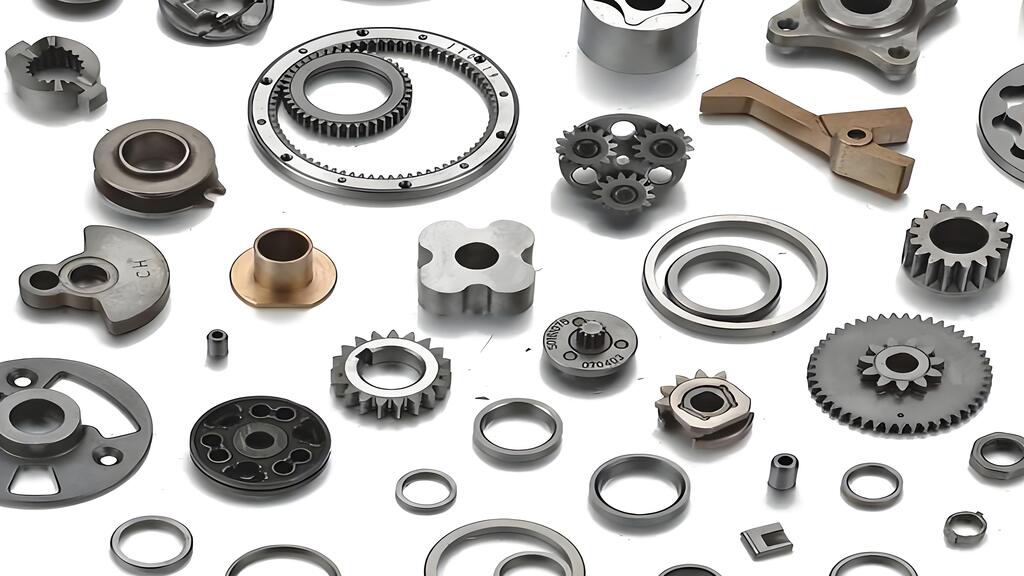


Why Medical Ceramics Outperform Traditional Materials in Joint Replacements
Medical ceramics are growing faster in healthcare. The global market will reach $26 billion by 2025. Doctors use ceramic balls in more than 50% of hip replacements today. This shows how widely accepted these advanced materials are in orthopedic surgery. These ceramics outperform traditional metals with better hardness, corrosion resistance, and stability in the body's active chemical environment.
Bio ceramics have advantages that go beyond their mechanical strengths. They are highly biocompatible and stay stable when exposed to body fluids. Advanced ceramic medical devices, especially those made from alumina and zirconia, are almost inert and resist wear better than other materials. These materials also bond directly with bone tissue. This leads to improved healing and integration compared to standard implants. This piece gets into why medical ceramics are now the top choice for joint replacements. It covers their mechanical properties, biological performance, and clinical results.
Failure Modes in Traditional Joint Replacement Materials
Traditional joint replacement materials have several critical limitations that have led researchers to look for better alternatives. Metal-on-polyethylene implants, cobalt-chromium alloys, and ultra-high molecular weight polyethylene (UHMWPE) components are widely used but don't deal very well with challenges that affect patient outcomes long-term.
Wear-induced osteolysis in metal-on-polyethylene implants
Ultra-high molecular weight polyethylene wear-induced osteolysis substantially limits the long-term success of total hip replacements. This destructive process starts when prosthetic debris breaks off from moving surfaces and triggers an immune response that breaks down bone. Research shows that osteolysis risk rises with more UHMWPE wear particles—the more particles present, the worse the osteolysis becomes .
The biological process begins when macrophages start a foreign body reaction marked by granulomatous chronic inflammation. Macrophages can't break down particles sized between 150 nm and 10 μm after absorbing them, which leads to endosomal instability. This process ends up changing normal bone metabolism toward breakdown through three main pathways:
- Increased osteoclastogenesis
- Proinflammatory enzymatic bone resorption
- Decreased osteoblastic activity
Clinical evidence associates polyethylene wear with osteolysis, especially when you have conventional UHMWPE components. Highly crosslinked polyethylene (HXLPE) has reduced early osteolysis cases, but the issue persists. Doctors still see cases 5-7 years after total hip replacement with HXLPE bearings.
Corrosion and ion release in cobalt-chromium alloys
CoCrMo alloys are valued for resisting corrosion and being biocompatible. Yet they break down through tribocorrosion—a cooperative process that combines wear and corrosion. Studies of removed implants confirm damage patterns that suggest in vivo fretting-corrosion, particularly at modular junctions where tiny movements occur.
Metal particles and ions leak into nearby tissues and the bloodstream as a result. These particles can cause adverse local tissue reactions (ALTRs) and possible systemic toxicity. Clinical studies have found metal-related complications in both hip and knee replacements, though hip implants seem to have more severe problems.
The alloy's microstructure substantially affects its fretting-corrosion behavior. About 80% of wrought CoCrMo heads contain banded structures from molybdenum loss during manufacturing. These areas become weak spots that may deteriorate inside the body, which raises metal release.
Polymer fatigue and delamination in UHMWPE liners
UHMWPE components can fail mechanically through fatigue and delamination beyond wear-induced osteolysis, particularly in knee replacements. Delamination remains a common fatigue-related failure mode where damage below the material's surface allows large plate-like debris to break off and causes severe wear.
UHMWPE's fatigue resistance directly associates with peak stress intensity, which matters greatly for devices that experience high static stresses like tibial bearing components. Tests also show that oxidation substantially decreases conventional UHMWPE's bending fatigue strength.
Scientists have developed vitamin E-doped irradiated UHMWPE to address these issues. This material resists oxidation better than conventional UHMWPE. All the same, studies comparing different modified materials found mixed results between delamination resistance and fatigue crack growth tests, which shows how complex polymer failure mechanisms can be.
These basic limitations of traditional materials have pushed scientists to develop advanced ceramic alternatives that solve these failure modes while offering better mechanical properties and biological performance.
Mechanical Advantages of Medical Grade Ceramic
Medical-grade ceramics have remarkable mechanical properties that make them increasingly popular in joint replacement applications. These materials work better than traditional implant materials because of their unique physical properties.
High compressive strength in alumina and zirconia
Medical ceramics' compressive strength makes them valuable for orthopedic applications. Zirconia ceramic shows more than double the compressive strength of polycrystalline aluminum oxide, reaching about 2000 MPa. These materials have a built-in structural advantage over other biomedical materials - ceramics can handle compressive loads about 15 times better than tensile loads.
Pure zirconia gets its amazing strength from its unique structural arrangement of metal-oxygen ionic bonds without a glassy phase. The tetragonal phase proves to be the most stable among its three polymorphic forms (monoclinic, tetragonal, and cubic).
Alumina doesn't match zirconia's compressive strength, but still delivers excellent mechanical properties. These properties depend on three key factors: purity, crystal size, and distribution, as well as density. The combined benefits of both materials led scientists to develop zirconia toughened alumina (ZTA). This material provides outstanding compressive strength that works perfectly for high-stress applications like artificial joints.
Low wear rates in ceramic-on-ceramic bearings
Ceramic-on-ceramic (CoC) bearings show much lower wear rates than other bearing surfaces. Clinical studies found a mean annual wear rate of only 0.0096 mm/year for CoC bearings compared to 0.047 mm/year for ceramic-on-crosslinked polyethylene (CoXPE) bearings using reconstructed CT. CoC bearings showed about 50% less wear than metal-on-polyethylene bearings in another study.
Ceramics resist wear better because they have these key properties:
- Very high hardness and scratch resistance
- Better lubrication properties
- Low coefficient of friction
Alumina/zirconia composite ceramics are biocompatible and resist third-body wear exceptionally well. These materials are less likely to get damaged during surgery, which could speed up wear. After 10 years, studies showed that CoC bearings kept their wear advantage with median linear wear of 0.000 mm/year (range 0.000-0.005) compared to CoPE at 0.130 mm/year (range 0.010-0.350).
Fracture toughness improvements in yttria-stabilized zirconia
The original fracture toughness of Ceramic Materials ranged between 2-4 MPa·m1/2. We have made big improvements in this area, especially with yttria-stabilized zirconia (YSZ).
Adding 2-3% mole yttrium oxide (Y2O3) creates partially stabilized zirconia with better mechanical properties. This stabilization creates a transformation toughening mechanism where stress-induced t-ZrO2→m-ZrO2 phase transformation absorbs energy and stops cracks from spreading.
Scientists found a direct link between fracture toughness and the amount of transformable tetragonal phase. An inverse power-law relationship exists between KIc and bulk mol% Y2O3 content. The HV and KIc values of 0.5(3Y-TZP)/0.5(8 Mg-PSZ) composite sintered at 1500°C for 2 hours went up by 7% and 30% compared to the standard 3Y-TZP.
New zirconia ceramics now reach fracture toughness values up to 14-15 MPa·m1/2, which makes them much more resistant to crack spread. Energy-absorbing mechanisms like crack-bridging, crack-deflection, and crack branching help improve toughness further.
These mechanical advantages make medical-grade ceramics the best choice for joint replacement applications. They effectively solve the biggest problems of traditional implant materials and last longer, too.
Biological Performance and Biocompatibility of Bio Ceramics
Medical ceramics offer remarkable advantages beyond mechanical properties in joint replacement applications. Medical-grade ceramics show better biocompatibility and reduce complications that often occur with traditional materials.
Reduced inflammatory response vs metal debris
Ceramic implants have a key advantage over metallic alternatives due to their immunocompatibility. Ceramic materials trigger lower inflammatory responses after implantation. The acute inflammation during the first few days after surgery decreases faster compared to metal implants.
Bio ceramics stay stable without releasing harmful ions, unlike metal-on-metal bearings that release ionic debris throughout the body. This stability helps avoid hypersensitivity reactions and cobalt toxicity that sometimes happen with metallic implants. Ceramic materials prevent aggressive inflammatory responses and the osteolysis that often leads to revision surgeries with traditional materials.
Osteointegration with hydroxyapatite coatings
Hydroxyapatite (HA) coatings give ceramic implants exceptional osseointegration properties. Clinical studies show that HA surface treatments improve bone fixation because of the molecule's bioactivity. This bioactivity makes protein absorption easier and helps bone cells stick and grow.
Studies measured implant displacements at 0.050 mm before osseointegration. These measurements dropped to 0.012 mm and ended up at 0.002 mm after integration with HA-coated surfaces. Stress values also fell from 52 MPa to just 1 MPa after complete osseointegration. HA coatings create a direct bond with surrounding bone tissue that enables stronger fixation without forming fibrous membranes.
Antibacterial surface properties of silicon nitride
Silicon nitride (Si₃N₄) ceramics have unique antibacterial features that traditional implant materials lack. Research shows that Si₃N₄ surfaces actively stop bacteria from attaching and can even break down specific bacterial strains by forming ammonia ions when exposed to water.
Clinical data backs up these lab findings. By 2018, around 35,000 silicon nitride implantations led to fewer than 30 FDA-reportable adverse events with almost no implant-related infections. This compares well to industry standards of 3-10%.
The antibacterial process works through several ways: silicon nitride helps produce peroxynitrite in bacterial cells, creates an environment where bacteria cannot thrive, and breaks down bacteria through its thermodynamic instability in oxidative environments. These properties remain even after various surface changes to improve bioactivity. This makes silicon nitride especially valuable in areas where infection risk runs high.
Clinical Outcomes and Revision Rates in Ceramic Medical Devices
Clinical data from many studies confirm that ceramic medical devices perform better in joint replacement applications. These studies prove the theoretical advantages seen in laboratory settings are correct.
Lower revision rates in ceramic hip implants
Ceramic components lead to reduced revision rates in hip arthroplasty. A study of over 33,000 total hip arthroplasties (THAs) found 2-year cup revision rates of 0.67% for ceramic-on-ceramic (CoC) compared to 0.44% for ceramic-on-polyethylene (CoPE) bearings. This trend reverses with longer follow-up. Meta-analyses show 10-year revision rates for CoC bearings in patients under 60 achieved a 96% survival rate (95% CI: 95.4-96.8%). Head size plays a crucial role, as research showed larger head size CoC implants had a 27% lower revision risk (HR = 0.73, 95% CI: 0.60-0.88).
Ceramic implants offer benefits beyond simple survivorship. Metal bearings carry a higher risk of revision due to infection. Ceramic bearings show a protective effect—CoC and CoP bearings reduced revision for infection by 25.2% and 22.5%, respectively, compared to metal-on-polyethylene.
Patient-reported outcomes in ceramic knee prostheses
Patient satisfaction metrics support ceramic knee implants' clinical value. Studies of ceramic total knee arthroplasty (TKA) prostheses report post-operative Knee Society Scores between 83-96, while function scores range from 74-83. These outcomes remain stable during long-term follow-up and show the durability of functional improvements.
A randomized controlled trial that compared newer ceramic knee systems with predecessors found no substantial differences in Oxford Knee Scores two years after surgery. This suggests consistent performance across ceramic device generations.
Long-term survivorship data from registry studies
Registry data makes a compelling case for ceramic implant longevity. A meta-analysis of third-generation ceramic components reported 93% implant survival at 25 years. Another study showed 93.8% overall survival at 10 years. Specific components showed remarkable survivorship rates—97.0% for heads and liners, 97.5% for stems, and 99.3% for acetabular cups.
Cemented prostheses with ceramic-on-polyethylene bearing surfaces showed impressive results, with 10-year revision rates between 1.88-2.11%. Fourth-generation ceramics show substantial improvements over third-generation materials. Fracture rates decreased from 0.8% to just 0.2%, which highlights ongoing advances in ceramic technology.
Materials and Methods: Comparative Evaluation Framework
Standardized evaluation frameworks help compare ceramic and traditional implant materials objectively by assessing performance in multiple ways. Researchers, manufacturers, and clinicians can make evidence-based decisions about implant selection through these frameworks.
Selection criteria for ceramic vs traditional implants
Clinical indications serve as the primary consideration while evaluating implant materials. Ceramic implants have fewer applications than their titanium counterparts. Patient-specific factors like age, bone quality, and activity levels need careful consideration against material properties. Ceramics were used mainly in one-piece, cement-retained systems until a few years ago. This created challenges with the rigidity and stability of cemented restorations.
The manufacturing methods need thorough evaluation before selection. Even tiny imperfections during production can weaken ceramic strength. This becomes crucial for zirconia implants due to their brittle material properties. The complex industrial process of manufacturing zirconia implants affects their price, which impacts selection.
Testing protocols: ISO 14242 for wear simulation
ISO 14242 sets standard conditions to simulate edge loading caused by steep acetabular cup inclination angles and dynamic separation conditions. The protocol works with ISO 14242-1, which defines testing parameters such as:
- Angular movements between articulating components
- Applied load patterns (maximum 3000N, minimum 300N)
- Speed cycles reflecting walking activity
- Testing duration of five million cycles
- Sample configuration specifications
- Environmental control parameters
The standard mimics loads that occur during walking, which range from zero to four times body weight. Wear rate measurements happen at 500,000 cycle intervals using gravimetric methods as per ISO 14242-2.
Data sources: National Joint Registry and FDA MAUDE database
The National Joint Registry (NJR) for England, Wales, Northern Ireland, and the Isle of Man collects detailed clinical data through surgeon-completed forms during primary and revision procedures. The registry tracks more than a million hip replacement procedures. Researchers use this data to study the relationship between implant materials and revision rates. The NJR's method captures patient demographics, surgeon details, diagnosis, component data, and reasons for revision.
The FDA MAUDE database stores medical device reports from manufacturers, importers, device facilities and voluntary reporters like healthcare professionals and patients. These reports document adverse events, injuries, and malfunctions. This provides real-life performance data beyond controlled studies.
Conclusion
Medical ceramics are better than traditional materials for joint replacement applications. These materials have amazing mechanical properties that solve the biggest problems with metal and polymer implants. Their high compressive strength and low wear rates make them stand out. Advanced options like yttria-stabilized zirconia are tough and resistant to breaking, while silicon nitride adds antibacterial properties.
Real-world evidence shows how well ceramic implants work. Patients have better outcomes and need fewer revision surgeries. The numbers tell an impressive story - ceramic components last a long time, with 93% still working after 25 years. This success comes from the material's compatibility with the body, reduced inflammation, and ability to bond with bone.
Standard testing methods and detailed tracking systems keep proving it right - ceramic implants perform exceptionally well. Modern manufacturing creates reliable Ceramic Parts consistently. Surgeons must choose the right material carefully to get the best results. These devices work so well in challenging joint replacements that they've become the top choice for orthopedic implants.
Medical ceramics are the most important breakthrough in joint replacement technology. They give patients and surgeons reliable, lasting solutions backed by solid clinical evidence and strict testing standards. Their proven success and ongoing improvements point to an even bigger role in future medical devices.
FAQs
Q1. What are the main advantages of ceramic materials in joint replacements?
Ceramic materials offer superior mechanical properties, including high compressive strength and low wear rates. They also demonstrate excellent biocompatibility, reduced inflammatory responses, and enhanced osseointegration capabilities compared to traditional materials.
Q2. How do ceramic implants perform in terms of long-term survivorship?
Clinical data shows impressive long-term survivorship for ceramic implants. Some studies report 93% implant survival rates at 25 years, with specific components like ceramic heads and liners achieving up to 97% survival rates at 10 years.
Q3. Are there any unique properties of ceramic implants that help prevent infections?
Yes, certain ceramic materials like silicon nitride exhibit antibacterial properties. These ceramics can inhibit bacterial attachment and even induce lysis in some bacterial strains, potentially reducing the risk of implant-related infections.
Q4. How do ceramic-on-ceramic bearings compare to other bearing surfaces in terms of wear?
Ceramic-on-ceramic bearings consistently demonstrate significantly lower wear rates compared to alternative bearing surfaces. Studies have shown that they can have wear rates approximately 50% lower than metal-on-polyethylene bearings.
Q5. What improvements have been made to address the fracture risk in ceramic implants?
Advancements in ceramic technology, particularly with yttria-stabilized zirconia, have greatly improved fracture toughness. Modern ceramic implants now achieve fracture toughness values up to 14-15 MPa·m1/2, dramatically improving their resistance to crack propagation compared to earlier generations.