

Additive Manufacturing vs Powder Metallurgy
Additive Manufacturing vs Powder Metallurgy presents a unique dynamic in today’s manufacturing landscape. Industry reports show strong growth, with the market expected to reach USD 10.5 billion by 2033, driven by sectors like aerospace, automotive, and medical.
| Metric/Aspect | Details |
|---|---|
| Market Size (2024) | USD 4.1 Billion |
| Forecast CAGR (2026-2033) | 10.9% |
| Market Size (2033 forecast) | USD 10.5 Billion |
| Leading Region | North America |
| Emerging Region | Asia-Pacific |
- Surveys highlight increasing demand for lightweight, high-strength, and sustainable materials.
- Technological advances such as AI integration and hybrid manufacturing shape adoption choices.
- Regional growth reflects industrialization and rising investments, especially in Asia Pacific.
Understanding this evolving relationship helps industry leaders make informed decisions.
Key Takeaways
- Additive manufacturing builds complex, custom parts layer by layer, ideal for low-volume and intricate designs, while powder metallurgy produces high-volume, reliable parts with simpler shapes.
- Both technologies use metal powders but differ in processes, costs, and applications; additive manufacturing offers design flexibility, and powder metallurgy ensures consistency and cost efficiency.
- Industries like aerospace, automotive, and medical benefit from both methods, choosing based on part complexity, production volume, and material needs.
- Hybrid manufacturing combines the strengths of both technologies, improving part performance, reducing waste, and enabling repair and customization.
- Ongoing collaboration in research, standards, and technology advances drives innovation and helps companies stay competitive in a rapidly evolving manufacturing landscape.
Additive Manufacturing vs Powder Metallurgy: Defining the Relationship
Additive Manufacturing Explained
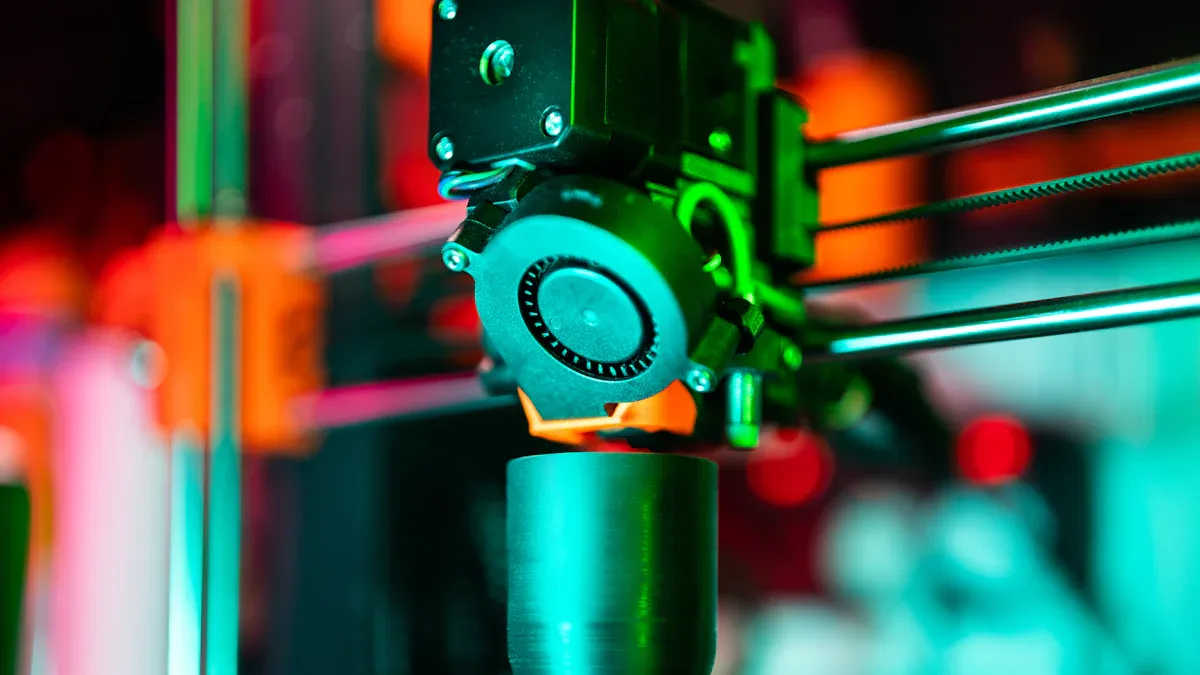
Additive manufacturing, often called 3D printing, builds objects layer by layer from digital models. This technology uses metal powders, polymers, or ceramics to create parts with complex geometries. Engineers can design intricate lattice structures and internal channels that traditional methods cannot achieve. Industries such as aerospace, medical, and automotive rely on additive manufacturing for rapid prototyping and custom components. The process supports design flexibility and enables the production of lightweight, high-strength parts.
Powder Metallurgy Explained
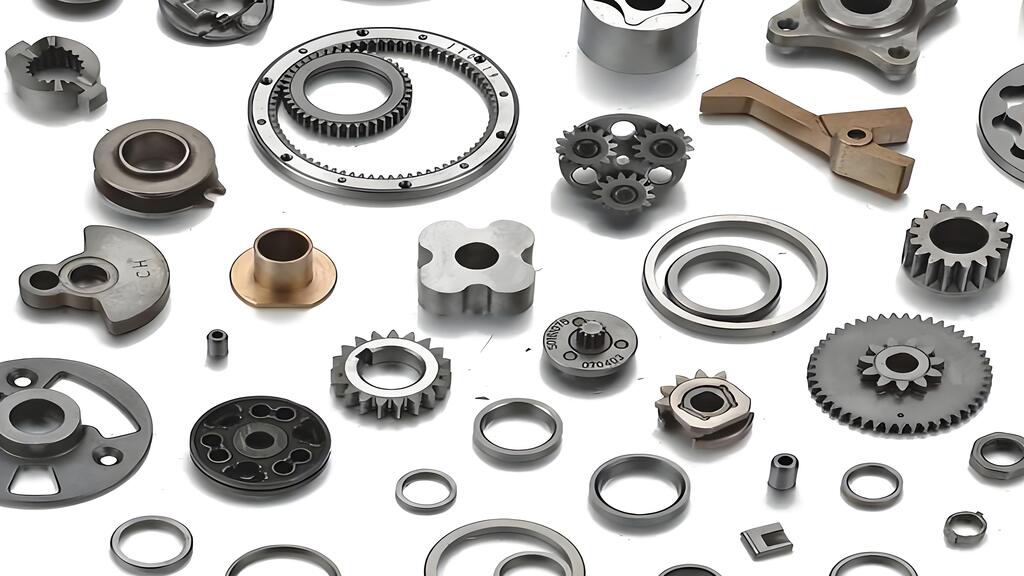
Powder metallurgy forms metal components by compacting metal powders in a die and then Sintering them at high temperatures. This method produces parts with precise dimensions and consistent properties. Manufacturers use powder metallurgy for high-volume production of gears, bearings, and structural parts. Recent studies have modeled the mechanical behavior of metal powders during cold die compaction. These models, calibrated with real-world fracture energy data, simulate processes like diametral compression and ejection. The simulations help predict crack formation, allowing engineers to improve product quality by managing defects in green compacts.
Comparing Core Purposes and Applications
Additive Manufacturing vs Powder Metallurgy highlights both overlap and distinction in their applications. Additive manufacturing excels in producing complex, porous structures, especially for biomedical implants and aerospace components. Powder metallurgy, on the other hand, delivers consistent quality for parts with less geometric complexity. The table below summarizes key differences:
| Parameter | Additive Manufacturing | Powder Metallurgy |
|---|---|---|
| Manufacturing Method | 3D printing from metal powder | Die compaction and sintering |
| Surface Roughness (Ra) | Median ~0.43 μm | Median ~0.18 μm |
| Roundness Deviation | Higher | Lower |
| Structural Voids | Present, especially near surfaces | Fewer, less impact on properties |
| Post-processing Needs | More, especially for void reduction | Less, due to fewer defects |
| Application Focus | Complex, custom, lightweight parts | High-volume, reliable, simple shapes |
Additive manufacturing enables design-for-function, while powder metallurgy ensures reliability and consistency. Both technologies play vital roles in modern manufacturing.
Overlaps and Key Differences
Additive Manufacturing vs Powder Metallurgy presents both shared foundations and distinct technical paths. Both technologies rely on metal powders with carefully controlled particle size, shape, and chemical composition. Manufacturers in both fields focus on powder characteristics such as morphology, density, and surface chemistry. These factors play a critical role in ensuring consistent part quality. Powder recycling also affects both processes, requiring attention to changes in powder properties over time.
Key overlaps and differences include:
- Both methods use metal powders as the starting material. Consistency in powder batches remains essential for reliable results.
- Powder characteristics, including particle size and surface chemistry, influence the final product in both processes.
- Additive manufacturing builds parts layer by layer, often using lasers or electron beams to melt or sinter the powder. This approach enables the creation of complex geometries and internal features that powder metallurgy cannot achieve.
- Powder metallurgy forms parts by compacting powders in a die and then sintering them. This method produces components with less geometric complexity but offers high dimensional accuracy and repeatability.
- Additive manufacturing currently lacks standardized methods for powder and mechanical property characterization. In contrast, powder metallurgy benefits from well-established industry standards.
- The layer-wise build process in additive manufacturing demands tighter control over powder properties. Small variations can impact the mechanical properties and surface finish of the final part.
- Powder behavior during additive manufacturing, such as selective incorporation of particle sizes and changes in crystallographic phases after recycling, introduces unique challenges not as prominent in powder metallurgy.
Note: The ability of additive manufacturing to produce customized, intricate metal parts sets it apart from traditional powder metallurgy, which excels in high-volume production of simpler shapes.
Understanding these overlaps and differences helps engineers select the right process for specific applications. Additive Manufacturing vs Powder Metallurgy continues to evolve as both fields address technical challenges and expand their capabilities.
Additive Manufacturing vs Powder Metallurgy: Points of Competition
Market Share and Industry Adoption
Additive manufacturing and powder metallurgy both play significant roles in modern industry, but their adoption patterns differ. The aerospace sector leads in the use of metal powders for additive manufacturing, driven by the need for lightweight, high-strength components. North America stands as the largest regional market for metal powders in additive manufacturing, supported by advanced manufacturing infrastructure and robust research and development activities. Key companies such as EOS, Arcam, Concept Laser, 3D Systems, Trumpf, and Renishaw drive innovation and competition in this space.
Powder metallurgy holds a strong position in the automotive industry, supplying nearly 40% of the market share for high-strength, wear-resistant components in 2023. Automotive manufacturers rely on powder metallurgy for gears, bearings, and structural parts that require precision and durability. Both additive manufacturing and powder metallurgy benefit from trends toward lightweight materials, design freedom, and customization. These trends create overlapping and competing application areas, especially as industries seek sustainable solutions and improved performance.
Note: Market growth for both technologies is fueled by expanding applications, technological advancements, sustainability initiatives, and support from governments and industry groups.
Competing Application Areas
Additive manufacturing and powder metallurgy serve many of the same industries, but each technology offers unique advantages. The following points highlight their overlapping and competing application areas:
- The aerospace industry uses both technologies for lightweight, high-performance parts. Additive manufacturing enables the creation of complex lattice structures, while powder metallurgy delivers advanced alloys tailored for aerospace needs.
- Automotive manufacturers adopt both methods to produce lightweight, fuel-efficient components. Powder metallurgy excels in high-volume production of gears and mechanical parts, while additive manufacturing supports small batch customization and intricate designs.
- The medical sector benefits from additive manufacturing’s ability to create custom implants and devices with complex geometries. Powder metallurgy provides reliable, high-strength materials for surgical tools and orthopedic components.
- Consumer goods manufacturers use both technologies to meet demands for customization, durability, and rapid prototyping.
- Powder metallurgy supplies the metal powders used in additive manufacturing, creating a complementary relationship even as the two compete for market share.
Both technologies face challenges. Additive manufacturing struggles with high material costs, limited multi-material printing capabilities, and scalability issues. Powder metallurgy, while established and efficient, cannot match the geometric complexity achievable with additive manufacturing.
Material Capabilities and Limitations
Material capabilities and limitations define the competitive edge of each technology. The table below compares key technical parameters of powder bed fusion (a common additive manufacturing process) and powder injection (a powder metallurgy technique):
| Feature | Powder Bed Fusion (LPBF, SLM) | Powder Injection (DED, DMD) |
|---|---|---|
| Particle size (µm) | Smaller (15–45) | Larger (40–110) |
| Power range (W) | Lower (100–400) | Higher (300–1000) |
| Beam spot size (µm) | Smaller (30–600) | Larger (660–5000) |
| Scanning speed (mm/s) | Faster (300–1200) | Slower (1–20) |
| Microstructure | Fine-grained, non-equilibrium phases, columnar grains | Fine-grained with mixed grain types, near-equilibrium phases |
| Porosity and defects | Relatively higher porosity and cracking | Lower porosity and cracking |
| Surface finish | Lower surface roughness | Higher surface roughness (30.6–63.9 µm) |
| Residual stresses (MPa) | Relatively higher | Lower |
| Advantages | Complex geometries, optimal material usage, powder reuse | Higher fabrication rate, direct powder injection reduces raw material need |
| Limitations | Expensive machinery, longer build times | Challenging complex geometries, higher surface roughness |
Powder bed fusion produces parts with fine microstructures and allows for intricate designs, but it introduces higher residual stresses and longer build times. Powder injection methods offer faster fabrication and lower residual stresses, but they struggle with complex geometries and result in rougher surfaces.
Empirical studies show that fusion-based additive manufacturing processes like laser powder bed fusion (LPBF) and directed energy deposition (DED) differ in thermokinetics and fluid dynamics. LPBF creates complex, non-equilibrium microstructures with higher residual stresses, while DED produces mixed grain structures and lower residual stresses. Additive manufacturing stands out for its ability to fabricate complex shapes and reuse materials, but it faces challenges such as expensive equipment and surface roughness issues. Powder metallurgy, on the other hand, excels in producing high-strength, wear-resistant parts with minimal waste, especially in high-volume applications.
Additive Manufacturing vs Powder Metallurgy continues to evolve as both technologies address their respective limitations and expand their capabilities. Manufacturers must weigh these material factors when selecting the best process for their specific needs.
Real-World Competitive Examples
Manufacturers often face a choice between additive manufacturing and powder metallurgy when developing new products. Several industries provide clear examples of this competition.
Aerospace Industry
Aerospace companies demand lightweight, high-strength components. Engineers at GE Aviation use additive manufacturing to produce fuel nozzles for jet engines. This process allows them to combine multiple parts into a single, complex structure. The result is a nozzle that weighs less and performs better than those made with traditional methods. In contrast, other aerospace suppliers rely on powder metallurgy to create turbine disks and structural parts. Powder metallurgy offers high-volume production and consistent material properties, which remain essential for safety-critical components.
Automotive Sector
Automotive manufacturers seek cost-effective solutions for mass production. Companies like Ford and General Motors use powder metallurgy to produce gears, bearings, and connecting rods. This method ensures high precision and repeatability at scale. However, additive manufacturing has started to disrupt this space. BMW, for example, uses 3D printing to create custom brackets and lightweight fixtures for limited-edition vehicles. Additive manufacturing enables rapid prototyping and design flexibility, which helps automakers accelerate product development.
Medical Devices
The medical field values customization and biocompatibility. Surgeons require implants tailored to individual patients. Stryker, a leading medical device company, uses additive manufacturing to produce porous titanium implants. These implants promote bone growth and improve patient outcomes. Powder metallurgy remains important for producing surgical tools and standard implant components. Its ability to deliver high-strength, reliable parts supports the demands of hospitals and clinics worldwide.
Consumer Electronics
Consumer electronics manufacturers also benefit from both technologies. Powder metallurgy provides efficient production of small, intricate metal parts for smartphones and laptops. Additive manufacturing, on the other hand, enables rapid prototyping of new device housings and internal components. Companies can test designs quickly and bring innovative products to market faster.
Tip: Companies often evaluate both technologies for each application. They consider factors such as part complexity, production volume, and required material properties before making a decision.
The competition between additive manufacturing and powder metallurgy continues to drive innovation. Companies that understand the strengths and limitations of each process can select the best technology for their needs.
Additive Manufacturing vs Powder Metallurgy: Collaboration and Synergy
Hybrid and Combined Manufacturing Processes
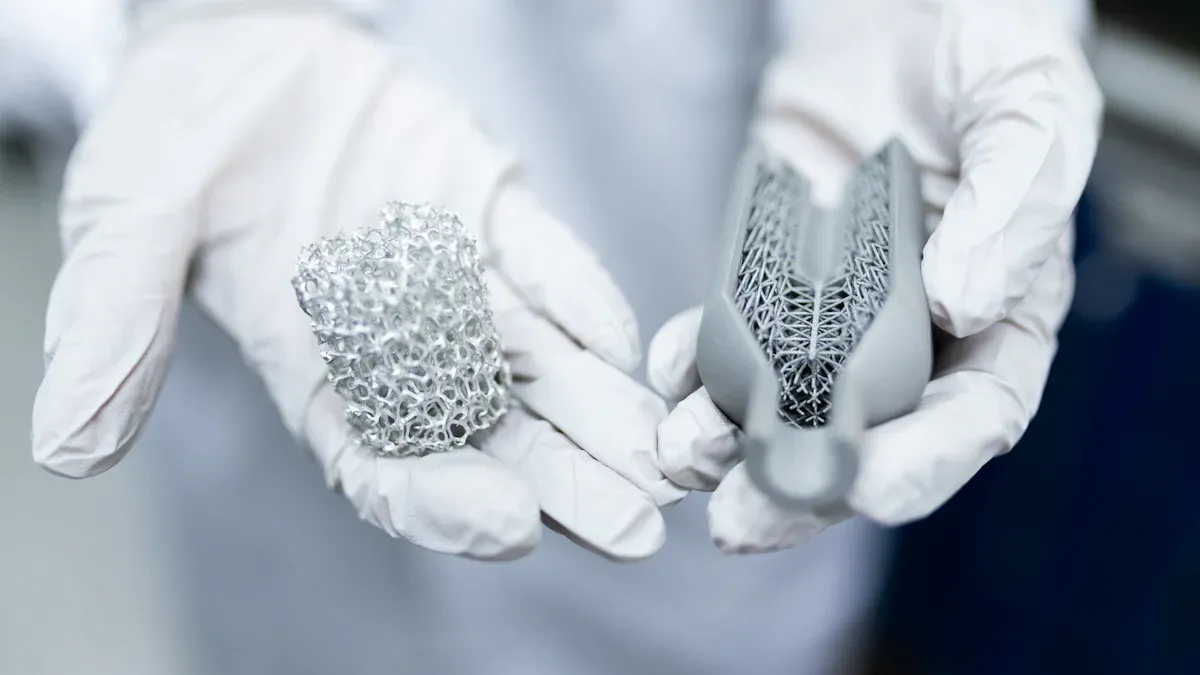
Manufacturers increasingly explore hybrid processes that blend the strengths of additive manufacturing and powder metallurgy. These combined methods allow engineers to create parts with complex shapes and high performance. For example, a company may use additive manufacturing to build a lightweight lattice structure and then apply powder metallurgy techniques to enhance surface properties or fill internal voids. This approach improves both the mechanical strength and the reliability of the final product.
Hybrid manufacturing also supports the repair and refurbishment of high-value components. Technicians can add new material to worn parts using additive techniques, then densify or finish the surface with powder metallurgy processes. This method extends the life of expensive equipment in industries such as aerospace and energy.
Key benefits of hybrid processes include:
- Enhanced design flexibility and part complexity
- Improved material properties through post-processing
- Reduced waste and better use of raw materials
- Greater efficiency in producing custom or low-volume parts
Hybrid manufacturing bridges the gap between rapid prototyping and mass production, offering a practical solution for industries that demand both innovation and reliability.
Shared Technological Advancements
Additive manufacturing and powder metallurgy share many technological advancements. Both fields rely on precise control of metal powders, advanced process monitoring, and strict quality management systems. Recent breakthroughs include real-time monitoring of powder bed fusion processes, improved post-processing steps, and advanced inspection methods for finished parts. These innovations help manufacturers detect defects early and optimize performance.
The following table summarizes key areas of shared progress:
| Aspect | Description |
|---|---|
| Technological Breakthroughs | Metal powder bed fusion process monitoring, post-processing steps, AM part inspection, performance optimization, and integration of powder metallurgy principles in AM |
| R&D and Collaboration | Coordinated R&D projects, involvement of industry leaders and research consortia, government-sponsored research (NSF, DOD, DOE, DOC), and academic activities |
| Standards Development | ASTM Committee F42, ISO/TC 261, AM Standardization Collaborative, certification and qualification for repeatable, consistent parts and processes |
| Numerical Performance Metrics | Metal additive manufacturing growth rate of 24.4% reported in 2024, indicating rapid adoption and scaling of AM technologies involving metal powders |
| Cost and Quality Considerations | Discussions on operating costs, machine throughput, metal part production cost, quality management systems, and scaling production |
Industry leaders and research consortia work together on coordinated projects, often with support from government agencies such as the National Science Foundation and the Department of Defense. These collaborations drive the development of new standards and best practices. Committees like ASTM F42 and ISO/TC 261 focus on creating guidelines for consistent, repeatable results. The rapid growth rate of metal additive manufacturing, reported at 24.4% in 2024, highlights the impact of these shared advancements.
Note: Shared technological progress in process monitoring, inspection, and standardization benefits both additive manufacturing and powder metallurgy, leading to higher quality and more reliable parts.
Mutual Benefits in Research and Development
Collaboration in research and development brings significant advantages to both fields. Academic institutions, industry leaders, and government agencies often join forces to solve common challenges. These partnerships accelerate the discovery of new materials, improve powder production methods, and refine process controls.
Joint R&D projects focus on:
- Developing new metal alloys with improved properties
- Enhancing powder recycling and sustainability
- Optimizing process parameters for better part quality
- Establishing certification and qualification protocols
Shared research efforts also reduce costs and speed up innovation. When organizations pool their resources, they can test more ideas and bring new products to market faster. This approach benefits industries that require both high performance and cost efficiency.
Tip: Companies that participate in collaborative R&D gain access to the latest knowledge, advanced testing facilities, and a network of experts. This involvement helps them stay competitive in a rapidly changing market.
Collaboration between additive manufacturing and powder metallurgy continues to shape the future of advanced manufacturing. By working together, these fields unlock new possibilities for design, performance, and sustainability.
Additive Manufacturing vs Powder Metallurgy: Industry Impact and Decision Factors
Choosing the Right Technology
Selecting the optimal manufacturing process depends on several factors. Engineers assess part complexity, production volume, and required material properties. Additive manufacturing suits projects that demand intricate geometries or rapid prototyping. Powder metallurgy excels in high-volume production where consistency and cost efficiency matter most. Decision-makers often consider the end-use environment. For example, aerospace and medical sectors prioritize lightweight, custom parts, while automotive and consumer goods industries value repeatability and scalability.
Tip: Early collaboration between design and manufacturing teams helps align technology selection with project goals.
Cost and Economic Considerations
Cost remains a critical factor in technology selection. Additive manufacturing processes such as Electron Beam Melting (EBM) and Direct Metal Laser Sintering (DMLS) show distinct cost profiles. The table below highlights key economic parameters:
| Parameter | Electron Beam Melting (EBM) | Direct Metal Laser Sintering (DMLS) |
|---|---|---|
| Cost per cm³ of material | £2.39 | £6.18 |
| Build time | Experimentally measured | Experimentally measured |
| Energy consumption | Experimentally measured | Experimentally measured |
| Machine productivity | Key driver of cost | Key driver of cost |
| Economies of scale | Demonstrated | Demonstrated |
Machine productivity and economies of scale influence overall costs. EBM offers lower material costs per unit volume compared to DMLS. However, both methods require significant investment in equipment and skilled labor. Powder metallurgy typically achieves lower costs for large production runs due to established processes and material efficiency.
Performance, Quality, and Mechanical Properties
Performance and quality assessments rely on standardized testing. Engineers use methods such as Hall Flow Rate and Dynamic Avalanche Rheometry to evaluate powder flowability and consistency. BET Surface Area Measurement and Karl Fischer Titration help determine powder morphology and moisture content, which impact part quality. Scanning Electron Microscopy and Optical Microscopy reveal microstructural features and porosity. Mechanical tests like tensile and Charpy impact testing measure strength, ductility, and toughness. Elevated temperature stress rupture tests assess durability for demanding applications. NASA Standard 6030 provides a framework for qualifying parts, especially in aerospace.
| Test Method | Purpose / Property Evaluated | Relevance to AM vs PM Quality Differences |
|---|---|---|
| Hall Flow Rate Test | Measures powder flowability through an orifice | Indicates powder consistency and feed reliability in AM |
| Dynamic Avalanche Rheometry | Observes powder avalanching behavior in rotating drum | Provides reproducible data correlating with powder properties |
| BET Surface Area Measurement | Determines powder surface area using inert gas adsorption | Impacts flow properties; differentiates powder morphology effects |
| Karl Fischer Titration | Measures moisture content in powders | Moisture affects powder particle adhesion and flowability |
| Scanning Electron Microscopy | Microstructural and porosity characterization at sub-micron | Reveals fine microstructural features affecting mechanical traits |
| Optical Microscopy | Microstructure and porosity at micrometer scale | Useful for general microstructural assessment |
| Tensile Testing | Measures strength, stiffness, ductility | Standard qualification test for mechanical performance |
| Charpy Impact Testing | Measures energy absorbed during fracture (malleability) | Assesses shock absorption and toughness |
| Elevated Temperature Stress Rupture | Evaluates lifetime under high stress and temperature | Critical for aerospace parts durability comparison |
| NASA Standard 6030 | Specifies metallographic and mechanical testing requirements | Provides standardized framework for AM part qualification |
Quality control ensures that both additive manufacturing and powder metallurgy deliver reliable, high-performance parts for critical industries.
Scalability and Production Volume
Manufacturers often evaluate scalability and production volume when selecting a manufacturing process. Additive manufacturing offers unmatched flexibility for low-volume and custom parts. Engineers can produce prototypes or small batches without investing in expensive tooling. This approach supports rapid design changes and short lead times. However, additive manufacturing faces challenges when scaling up. Build times increase with part size, and machine throughput remains limited compared to traditional methods.
Powder metallurgy excels in high-volume production. Companies use automated presses and sintering furnaces to produce thousands of identical parts efficiently. This process reduces per-unit costs as volume increases. Automotive and consumer goods industries benefit from this scalability. Powder metallurgy also supports consistent quality across large batches. The table below highlights key differences:
| Factor | Additive Manufacturing | Powder Metallurgy |
|---|---|---|
| Best for | Low-volume, custom | High-volume, standard |
| Tooling required | No | Yes |
| Lead time | Short | Longer (setup phase) |
| Per-unit cost | Higher (low volume) | Lower (high volume) |
Note: Companies often combine both methods to balance flexibility and efficiency in their production strategies.
Role in Driving Innovation
Both additive manufacturing and powder metallurgy drive innovation in the manufacturing sector. Additive manufacturing enables engineers to design parts with complex geometries that were impossible before. Medical device companies create patient-specific implants with porous structures that promote bone growth. Aerospace firms reduce weight by consolidating multiple components into a single printed part.
Powder metallurgy also contributes to innovation. Researchers develop new alloy compositions and advanced powder processing techniques. These advancements improve material properties and open new applications. The automotive industry benefits from lightweight, high-strength components that enhance fuel efficiency.
Collaboration between the two fields accelerates progress. Shared research leads to better powders, improved process controls, and new hybrid manufacturing methods. Companies that embrace these innovations gain a competitive edge in the global market.
Tip: Organizations that invest in research and adopt new technologies position themselves as leaders in advanced manufacturing.
Additive Manufacturing vs Powder Metallurgy: Future Outlook
Trends Toward Convergence
Industry experts observe a clear movement toward convergence between additive manufacturing and powder metallurgy. Companies now invest in research that combines the strengths of both technologies. Engineers develop new metal powders that work well in both processes. Equipment manufacturers design machines that support multiple manufacturing methods. This trend leads to more flexible production lines and greater material efficiency.
Note: As digital manufacturing advances, the boundaries between these two fields continue to blur. Companies that adapt to this convergence position themselves for long-term success.
Areas of Ongoing Competition
Despite growing collaboration, Additive Manufacturing vs Powder Metallurgy remains a topic of competition in several areas. Manufacturers compete for market share in aerospace, automotive, and medical sectors. Additive manufacturing offers unmatched design freedom and customization. Powder metallurgy delivers cost-effective solutions for high-volume production. Each technology pushes for better material properties, faster production rates, and lower costs.
The table below highlights ongoing competitive factors:
| Factor | Additive Manufacturing | Powder Metallurgy |
|---|---|---|
| Design Complexity | High | Moderate |
| Production Speed | Moderate | High |
| Customization | Excellent | Limited |
| Cost Efficiency | Low (small batch) | High (large batch) |
Emerging Hybrid Solutions
Hybrid solutions represent the next phase in advanced manufacturing. Engineers now combine additive manufacturing with powder metallurgy to create parts that feature complex shapes and strong mechanical properties. For example, a company may use 3D printing to build a lightweight structure, then apply powder metallurgy techniques to enhance surface finish or add wear resistance. These hybrid approaches reduce waste and improve product performance.
- Hybrid manufacturing supports:
- Repair of high-value components
- Production of multi-material parts
- Enhanced sustainability through powder recycling
Tip: Companies that explore hybrid solutions gain a competitive edge by leveraging the best features of both technologies.
Additive Manufacturing vs Powder Metallurgy continues to shape modern manufacturing. Each technology offers unique strengths. Engineers select between them based on part complexity, production volume, and cost targets. Some projects require the precision of powder metallurgy, while others benefit from the flexibility of additive manufacturing. Many companies now combine both approaches to achieve optimal results. Careful evaluation of project needs ensures the best manufacturing strategy.
FAQ
What is the main difference between additive manufacturing and powder metallurgy?
Additive manufacturing builds parts layer by layer from digital designs. Powder metallurgy compacts and sinter metal powders in molds. Additive manufacturing allows for complex shapes. Powder metallurgy excels in high-volume, simple parts.
Can manufacturers use both technologies together?
Yes. Many companies combine additive manufacturing and powder metallurgy. Hybrid processes create parts with complex geometry and strong mechanical properties. This approach improves efficiency and product performance.
Which industries benefit most from these technologies?
Aerospace, automotive, and medical sectors gain the most. Additive manufacturing supports custom, lightweight parts. Powder metallurgy delivers reliable, high-strength components for mass production.
How do material costs compare between the two methods?
Additive manufacturing often has higher material costs due to specialized powders and equipment. Powder metallurgy uses established materials and processes, which lowers costs for large production runs.