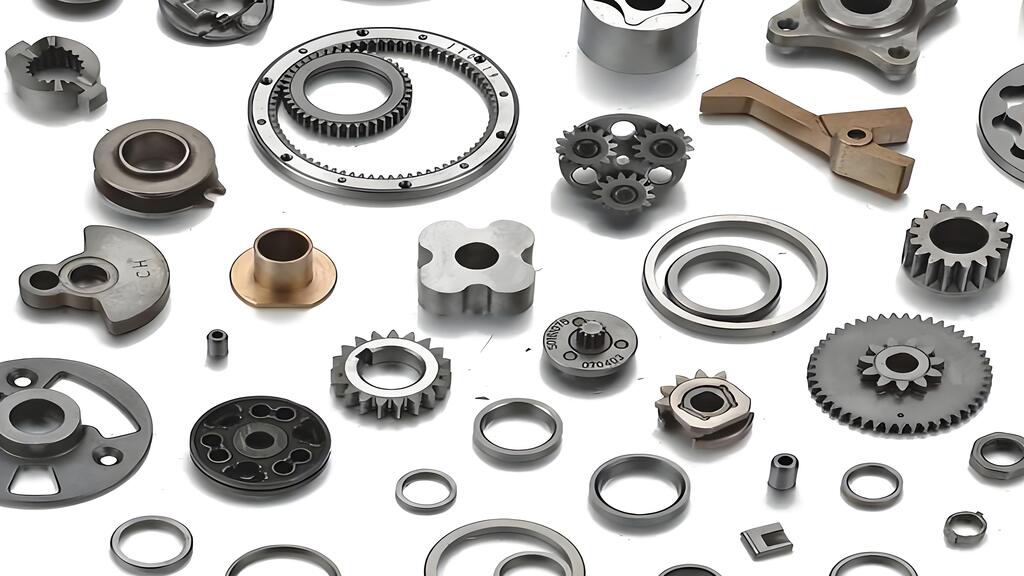


Aluminum Stamping Secrets: Engineering Better Parts at Lower Costs

Aluminum stamping brings remarkable benefits by using a material that weighs just one-third of steel and delivers excellent strength and workability. The metal creates its own protective oxide layer on contact with air, which makes it highly resistant to corrosion. The metal's quality stays almost unchanged after recycling, which makes it a green choice for manufacturing operations.
The aluminum Stamping Process comes with its own engineering challenges. The metal's lower formability compared to steel means manufacturers must plan design elements like radii, draw depths, and wall angles. Creating high-quality stamped aluminum parts needs specialized expertise in stamping techniques such as punching, blanking, embossing, and bending. Most engineers want to keep the Limiting Draw Ratio (LDR) below 1.6 when working with aluminum stamping machines, unless they have deep experience with the specific alloy. Manufacturers can create lightweight aluminum stamping parts with outstanding performance by selecting the right materials from common alloys like 1100, 3003, 5052, and 6061.
Engineering Aluminum Stamped Parts for Performance

Engineers need precise engineering know-how to make aluminum stamping work well. Steel stamping experts must adapt their methods with aluminum alloys because material differences can affect design choices.
Designing for Strength with Lower Thickness
Aluminum's elastic modulus is about one-third of steel's, which changes how stamped parts handle loads. A part made of aluminum with dimensions like its steel counterpart will be nowhere near as stiff. The cube of material thickness (t³) affects the final part's performance, making thickness a big deal.
Engineers usually increase material thickness by 45% to match steel's stiffness when switching from steel to aluminum. This approach alone might cancel out weight benefits. A better strategy combines small thickness increases with changes in structural design.
The stamping process makes parts stronger through work hardening - permanent deformation during forming strengthens the material. Engineers should calculate the failure thinning strain for their aluminum alloy to get the best results. Ultra-low-carbon materials with an n-value of 0.25 can thin up to 29.6% before failing.
Using Ribs and Stiffeners to Improve Stiffness
Ribs are one of the best ways to boost aluminum stamping performance without adding too much weight. These raised profiles add strength to flat surfaces and help parts resist bending under load. Ribs work like internal support beams that redistribute material to increase stiffness without extra mass.
The best design practices include:
- Keep rib height 3-4 times the sheet thickness to prevent thinning or splitting
- Use rounded corners instead of sharp angles so material stretches without tearing
- Put ribs in strategic spots to fight predicted bending forces
You can add strength with:
- Flanges and hems that support edges and stop warping
- Gussets that reinforce corners and joints at angles
- Strategic holes that cut weight while focusing material around stress points
Smart rib design lets engineers use thinner material while keeping performance the same. To name just one example, a 1.5mm ribbed part can match a 2.0mm thick part's rigidity with 25% less material.
Optimizing Corner Radii and Wall Angles
Corner radii are crucial for aluminum stamping success. Small radii concentrate strain and cause localized stretching that leads to early forming failure. Large radii reduce contact between the blankholder and part flange, which might create wrinkles.
Aluminum stamping works best with these parameters:
- Die radii 5-10 times sheet thickness
- Punch radii 8-10 times sheet thickness
- Inside corner radii at least 4 times material thickness
Vertical and open-angled walls each serve specific purposes. Thin materials, deep parts, or features made by feeding metal from the draw pad work better with vertical walls. Features made by stretching metal, parts with large punch radii, or features far from blank edges need open wall angles.
The best aluminum stamping design spreads strain evenly across the part. Careful selection of radii, wall angles, and structural reinforcements helps avoid localized stretching. Complex shapes might need addendum features to help material flow and achieve peak performance.
Tooling and Die Design for Cost Efficiency

The life-blood of economical aluminum stamping operations lies in proper tooling and die design. Tools designed well do more than just produce parts - they optimize production costs, quality, and the entire manufacturing process.
Die Clearance and Alignment for Clean Cuts
The quality of stamped aluminum components depends on how the punch and die work together. Clean-cut edges prevent slivers or fine particles that could damage part surfaces and lead to galling in later processes. Cut-edge quality directly relates to how well the punch and die line up and the space between them.
Different aluminum alloys need specific per-side cutting clearance:
- 3-8% of material thickness works for lower-strength alloys (UTS up to 230 MPa)
- Higher-strength alloys (UTS over 230 MPa) need up to 11%
The right clearance helps fractures from the top and bottom sheet surfaces meet cleanly without extra shearing. Too little clearance creates "double-breaks." Too much clearance leads to a large radius or dished contour at the shear edge, often with big burrs. The largest longitudinal study shows that more clearance can cut piercing loads by about 10%, which helps tools last longer. In spite of that, bigger clearances might cause vibration that affects hole quality and consistency.
Cutting-edge condition matters too - dull tools create problems like those from too much clearance. Many manufacturers pick high-grade tool steels with PVD, TD or other surface treatments to fight against aluminum's natural oxide layer.
Using Addendum Features to Improve Material Flow
Addendum features are vital to aluminum stamping efficiency. These extra die elements sit beyond the product trim line but inside the punch opening line. They serve three main purposes: they enable transition features, stop wrinkling and tearing, and help with later process steps.
Die designers add these features to balance cross-sectional lengths and keep draw depth consistent. You'll find common addendums like draw walls, draw bars, material gainers, take-up beads, pillows and punch extensions.
Aluminum stampings work best with these parameters:
- Draw wall punch radius around 20 millimeters
- Die radius near 10 millimeters
- Draw wall angle starting at 6 degrees, getting bigger with draw depth
- Draw beads 16-20 millimeters from die radius
- Drawbar radius no less than 20 millimeters
Spotting helps control uneven thickening in corner flange areas by grinding specific spots on the blankholder. This improves how material flows into the cavity. Aluminum alloys really need this technique because they tend to wrinkle and buckle.
Reducing Tool Wear with Surface Coatings
Surface treatments and coatings help tools last longer and reduce friction in aluminum stamping. Yes, it is essential because the natural layer of aluminum oxide can break down during forming and wear down tools.
Diamond-Like Carbon (DLC) coatings such as "Triton Star" work well to cut friction and keep aluminum from sticking to tool surfaces . Tools with this coating last much longer and make better stamped parts.
Physical vapor deposition (PVD) coatings bond mechanically with the tool and suit closely toleranced stamping tools. These coatings need to be at least 4-5 micrometers thick. Popular PVD options include titanium nitride (TiN), titanium carbonitride (TiCN), chromium nitride (CrN), and aluminum titanium nitride (AlTiN). Their hardness ranges from 1,800 to 3,400 Vickers.
A bearing manufacturer's case study showed impressive results - production jumped from 10,000 parts per uncoated punch to 250,000 parts with AlTiN coating and dry lubricant film. Light lubrication should cover both sides of aluminum sheet, even during blanking and shearing.
Deep Drawing and Forming Techniques for Complex Shapes

Complex aluminum shapes just need specialized deep drawing techniques that consider aluminum's unique material properties. We controlled material flow through precise engineering principles to create complex shapes in stamping manufacturing.
Limiting Draw Ratios for Different Aluminum Grades
Success in aluminum deep drawing comes from preventing the material from stretching too much. Engineers calculate draw ratios carefully to prevent material failure. These ratios show the direct relationship between draw punch diameter and starting blank size. Aluminum alloys work best with a Limiting Draw Ratio (LDR) below 1.6.
Different aluminum grades have their own formability limits:
- First draw reduction: 40% for 1100, 3003 and 5005 alloys; 30% for higher-strength alloys (2014, 2024, 3004, 5052, 6061)
- Second draw reduction: 20% for softer alloys; 15% for higher-strength alloys
- Third draw reduction: 15% for softer alloys; 10% for higher-strength alloys
The 1100, 3003, and 5005 alloys can handle four or more successive draws without interstage annealing. Quality components emerge when aluminum gets evenly compressed during operations because of its highly inelastic nature.
Using Curved Blankholders for Uniform Strain
Curved (or developed) blankholders work better than flat ones by pre-shaping the blank to match the finished stamping's general shape. This method reduces required draw depth and spreads strains evenly during forming.
A well-designed curved blankholder paired with proper addendum features creates uniform draw depth throughout the forming process. This approach helps aluminum especially well since it handles strain distribution worse than steel due to its negative m-value.
Controlling Blankholder Force and Friction
Blankholder force (BHF) control stands as one of the most crucial factors in aluminum stamping. The basic rule is simple: use enough pressure to stop wrinkling without stretching the material too much. Too little pressure leads to wrinkling, while too much makes aluminum stretch where it should draw.
Modern manufacturers use variable blank holder force (VBHF) systems that adjust pressure throughout drawing. Research shows VBHF can boost forming limits by about 30% compared to constant BHF. Advanced systems use proportional-integral-derivative (PID) feedback loops with wrinkling sensors and force transducers to adjust pressure automatically.
Proper lubrication through friction control makes aluminum more formable. Polyethylene (PE) or polyvinylchloride (PVC) films on aluminum surfaces provide better lubrication than oil. These methods help manufacturers create complex aluminum components with minimal defects.
Lubrication and Surface Protection Strategies

Proper lubrication plays a vital role in aluminum stamping operations. Aluminum differs from steel because its brittle oxide layer breaks during forming. This exposes raw metal that sticks to tooling surfaces.
Choosing the Right Lubricant for Aluminum Stamping
Oil-based lubricants deliver excellent film strength and cooling properties for aluminum stamping machines. The synthetic versions are cleaner and easier to remove. Specially formulated lubricants with inorganic salts and synthetic additives prevent carbonization when warm forming occurs at 150-250°C. Traditional lubricants containing chlorinated paraffins (CLPs) help aluminum reach maximum elongation.
Using PE and PVC Films to Reduce Friction
Polyethylene (PE) or polyvinylchloride (PVC) plastic films on aluminum surfaces create lower friction coefficients than oil. PE films are enough for most applications, while PVC becomes essential for severe draws and multiple forming operations. These films create an exceptional barrier between the die surfaces and the blank's oxide film.
Preventing Galling and Surface Damage
When aluminum particles stick to die surfaces, they cause galling that scratches workpieces and creates adhesive die wear. Surface scratching shows up as moderate COF increases, while quick rises point to galling beginning. Research proves that Drycote 2-90 lubricant keeps COF very low, which allows complex shapes and deeper draws. Diamond-Like Carbon coatings such as CARBON-X®-AL cut friction, reduce material adhesion, and boost production rates by about 75%.
Reducing Defects and Improving Yield
Quality control plays a significant role in the aluminum stamping process. Defect reduction affects production costs and part performance directly.
Minimizing Springback with Counter Pressure
Aluminum shows more prominent springback—the elastic recovery that changes a part's final form—than steel. The application of counter pressure during bending helps restrict fold formation and minimizes edge stretching. This technique reduces springback a lot when material is held between a punch and a pressure pad. Closed-chamber systems can safely apply up to 6 bar of pressure in counter-pressure casting systems.
Avoiding Wrinkling and Oil Canning in Drawn Parts
Metal flow irregularities during drawing operations lead to wrinkling. Parts that snap between multiple positions indicate unstressed metal areas, known as oil canning. These issues can be prevented through:
- Draw beads that create resistance and strain the metal
- Metal gainers that consume extra material
- Curved blankholders that distribute strain uniformly
Complex aluminum stampings need drawbeads positioned where radial tensile stress stays small. This prevents the material from flowing faster.
Improving Edge Quality with Proper Cutting Clearance
Edge quality and tool life depend on proper cutting clearance. Aluminum alloys require different optimal per-side clearance:
- Lower-strength alloys need 3-8% (UTS up to 230 MPa)
- Higher-strength alloys need up to 11% (UTS over 230 MPa)
Burrs and rollover emerge from excessive clearance, while insufficient clearance results in secondary shearing.
Conclusion
Aluminum stamping has revolutionized manufacturing technology. Its lightweight properties and corrosion resistance make it an excellent choice for modern manufacturing needs. This piece explores what makes aluminum stamping both challenging and rewarding for manufacturers who need high-performance, economical components.
Design engineers tackle unique challenges with aluminum because its elastic modulus is about one-third of steel's. Success in aluminum stamping projects depends on the smart use of ribs, stiffeners, and precise corner radii. These elements help achieve optimal strength without adding extra weight. The right wall angles help distribute strain evenly across parts to prevent localized stretching.
Die design becomes crucial to aluminum stamping success. Clean cuts and minimal tool wear come from proper clearance between punch and die components. Material flow improves a lot during forming operations with addendum features. Tool life extends dramatically with surface coatings like Diamond-Like Carbon and PVD treatments. Some manufacturers report their production jumped from 10,000 parts per uncoated punch to 250,000 parts with proper coating.
Working with aluminum requires careful attention to deep drawing techniques. The Limiting Draw Ratio for specific alloys should stay below 1.6 to get the best results. Curved blankholders and exact control of blankholder force help improve formability. This approach works great since aluminum doesn't distribute strain as well as steel.
Preventing surface damage during aluminum forming relies heavily on proper lubrication. Many manufacturers now use PE and PVC films instead of traditional oil-based lubricants. These films create better barriers between die surfaces and aluminum oxide film. This combination of specialized coatings and films reduces friction and prevents galling during forming operations.
Quality control must stay consistent throughout the aluminum stamping process. Counter pressure during bending operations helps minimize springback. Strategic draw bead placement prevents wrinkling and oil canning. Lower-strength alloys need proper cutting clearance—usually 3-8% of material thickness—for excellent edge quality and longer tool life.
Manufacturers keep pushing aluminum stamping forward as they look for lighter, stronger, and more economical components. The techniques covered here are the foundations for successful aluminum stamping operations that balance performance needs with production efficiency. Companies that become skilled at these principles can produce complex aluminum components. They'll meet tough specifications while keeping production costs competitive.
Key Takeaways
Master these aluminum stamping fundamentals to achieve superior parts while reducing manufacturing costs and improving production efficiency.
• Design with aluminum's unique properties in mind - Increase thickness by 45% compared to steel designs and use strategic ribs to maintain stiffness without excessive weight penalties.
• Optimize tooling for clean cuts and extended life - Maintain 3-8% cutting clearance for lower-strength alloys and apply Diamond-Like Carbon coatings to increase tool life up to 25x.
• Control draw ratios to prevent material failure - Keep Limiting Draw Ratio below 1.6 for aluminum alloys and use curved blankholders for uniform strain distribution during deep drawing.
• Implement proper lubrication strategies - Use PE or PVC films instead of oil-based lubricants to achieve lower friction coefficients and prevent galling on aluminum surfaces.
• Apply counter pressure techniques to minimize defects - Use counter pressure during bending to reduce springback and strategically place draw beads to prevent wrinkling in complex shapes.
These proven techniques enable manufacturers to successfully produce complex aluminum components that meet demanding specifications while maintaining competitive production costs and achieving higher yields.
FAQs
Q1. What are the key advantages of aluminum stamping? Aluminum stamping offers significant benefits including lightweight properties (one-third the weight of steel), excellent strength-to-weight ratio, natural corrosion resistance, and recyclability. These qualities make it ideal for industries seeking high-performance, cost-effective, and environmentally sustainable components.
Q2. How does aluminum's formability compare to steel in stamping processes? Aluminum has lower formability compared to steel, requiring careful consideration of design elements like radii, draw depths, and wall angles. Engineers typically aim for a Limiting Draw Ratio (LDR) below 1.6 for aluminum alloys, unless they have extensive experience with the specific material.
Q3. What techniques can improve the strength of aluminum stamped parts? To enhance strength without excessive weight, engineers can increase material thickness by about 45% compared to steel designs, incorporate ribs and stiffeners, optimize corner radii, and strategically use flanges, gussets, and punched holes. These techniques help redistribute material and increase stiffness without adding unnecessary mass.
Q4. How important is lubrication in aluminum stamping? Lubrication is critical in aluminum stamping to prevent surface damage and improve formability. Beyond traditional oil-based lubricants, many manufacturers use polyethylene (PE) or polyvinylchloride (PVC) films applied to aluminum surfaces. These films provide excellent lubrication with friction coefficients lower than oil and create an effective barrier between die surfaces and the aluminum oxide layer.
Q5. What are some common defects in aluminum stamping, and how can they be minimized? Common defects include springback, wrinkling, and oil canning. To minimize these issues, manufacturers can apply counter pressure during bending to reduce springback, use draw beads and metal gainers to prevent wrinkling, and implement curved blankholders for uniform strain distribution. Additionally, maintaining proper cutting clearance (typically 3-8% of material thickness for lower-strength alloys) helps improve edge quality and extend tool life.