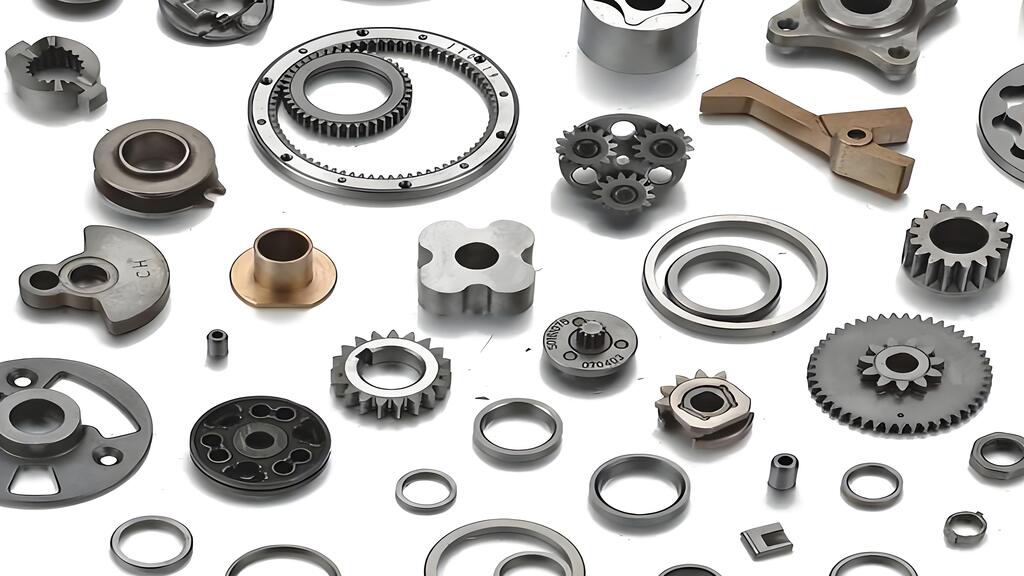


Applications of powder metallurgy in industry
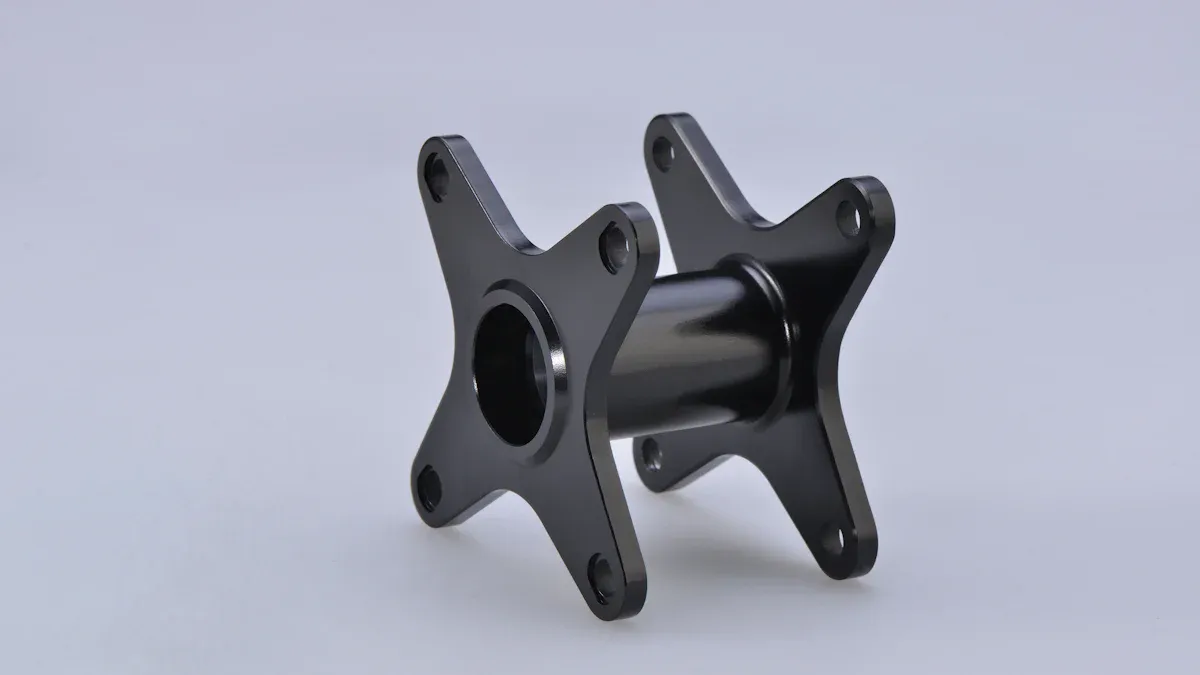
Powder Metallurgy refers to a manufacturing process that creates metal components from fine powdered materials. This method enables engineers to produce intricate, high-performance, and cost-effective parts that meet strict industry standards. Industries worldwide adopt powder metallurgy applications due to their efficiency and ability to support advanced technologies. The global market for powder metallurgy continues to expand, driven by automotive, aerospace, and medical demand.
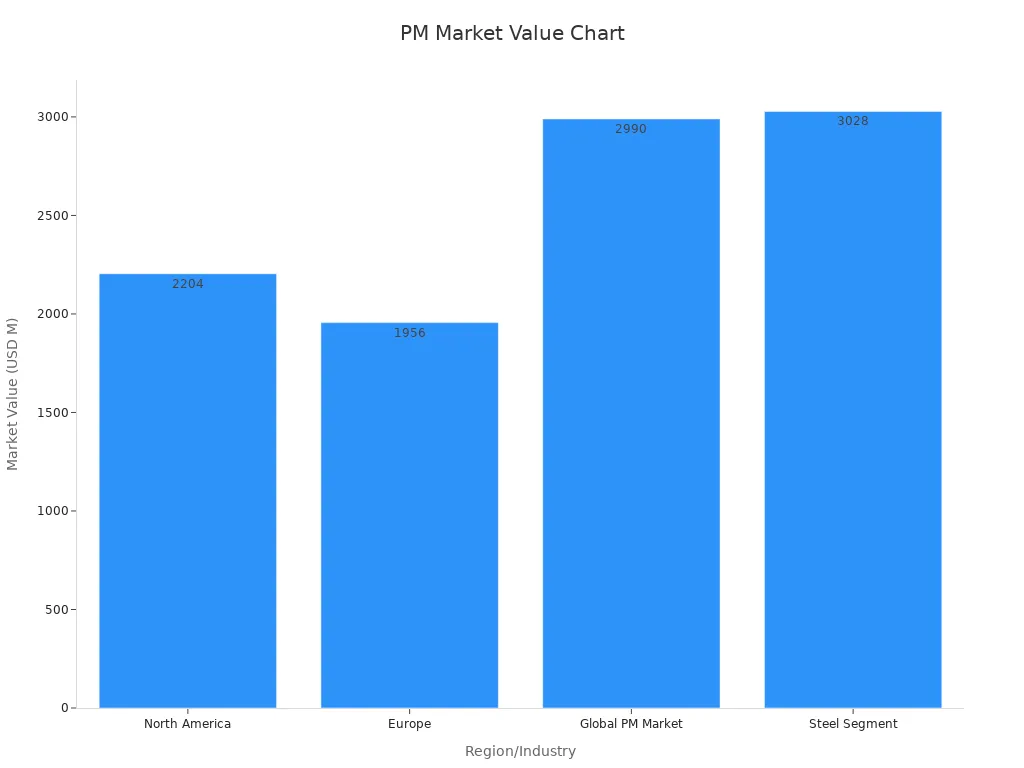
| Region/Industry | Market Value (USD million) | CAGR (%) | Key Trend/Statistic |
|---|---|---|---|
| North America | 2,204 (by 2030) | 11 | Largest Pm market region with strong growth |
| Europe | 1,956 (by 2030) | 12 | Second-largest PM market region |
| Global PM Market | 2.99 billion (2024) | 11.8 | Expected to grow to 8.15 billion by 2033 |
| Steel Segment | 3,028 (by 2030) | 12 | Significant growth in steel PM components |
Key Takeaways
- Powder metallurgy transforms metal powders into strong, precise parts with minimal waste, making it cost-effective and eco-friendly.
- This process supports complex shapes and custom materials, ideal for industries like automotive, aerospace, medical, and electronics.
- Automotive uses powder metallurgy for thousands of parts, reducing weight and improving fuel efficiency with durable engine and transmission components.
- Aerospace benefits from powder metallurgy’s ability to produce lightweight, heat-resistant parts like turbine blades and structural components.
- Medical implants and instruments made by powder metallurgy offer excellent biocompatibility, strength, and precision.
- Powder metallurgy reduces energy use and material waste compared to traditional methods, supporting sustainability and green manufacturing goals.
- The process excels in high-volume production but faces cost and design limits for small batches or very large parts.
- Additive manufacturing integrates with powder metallurgy to create complex, lightweight parts faster and with less waste, shaping the future of manufacturing.
Powder Metallurgy Applications: An Overview
What is Powder Metallurgy?
Powder metallurgy stands as a specialized manufacturing process that transforms metal powders into solid, functional components. This technique enables manufacturers to create parts with intricate geometries and tailored properties, often unattainable through traditional casting or machining. The process supports a wide range of materials, including ferrous metals like steel, non-ferrous metals, and advanced ceramics.
Powder metallurgy offers high material utilization rates—up to 98%—which significantly reduces waste and lowers production costs. Manufacturers can achieve complex shapes and fine tolerances, making the process ideal for industries that demand precision and efficiency.
A variety of sectors rely on powder metallurgy, including automotive, aerospace, medical, and industrial machinery. Major companies such as GKN Powder Metallurgy, Hitachi Chemical Co., Ltd., Höganäs AB, and Sumitomo Electric Industries, Ltd. drive innovation and sustainability in the field. These organizations focus on advanced manufacturing techniques and support emerging trends like additive manufacturing and green initiatives.
| Attribute | Statistic / Description |
|---|---|
| Market Size (2024) | USD 3.4 Billion |
| Market Forecast (2033) | USD 7.1 Billion |
| Compound Annual Growth Rate | 8.13% (2025-2033) |
| Dominant Material Type | Ferrous (especially steel) |
| Leading Manufacturing Process | Powder metal hot isostatic pressing |
| Largest Application Sector | Automotive |
| Regional Market Leader | Asia-Pacific |
| Key Market Drivers | Growth in the automotive industry, demand for lightweight and cost-effective materials, and additive manufacturing adoption |
| Technological Trends | Advancements in additive manufacturing, green manufacturing |
Core Principles and Process Fundamentals
The core of powder metallurgy lies in its ability to manipulate metal powders at the microscopic level. The process begins with the production of fine powders, followed by blending, compaction, and sintering. Each step influences the final properties of the component.
Numerical modeling plays a crucial role in understanding powder behavior during compaction and sintering. Engineers use discrete element methods (DEM) to simulate particle interactions and kinetic Monte Carlo (KMC) simulations to track diffusion and pore evolution. For example, an activation energy value of 2.5 indicates a low transition probability during sintering, while approximately 2900 Monte Carlo steps represent the sintering timeline. The shape factor, calculated as F = (4πA) / B², helps quantify pore morphology, which affects densification and mechanical strength.
Thermal analysis further highlights the importance of temperature control. Preheating IN718 superalloy powder billets between 1300°C and 1330°C can cause density variations from 63% to 95% between the core and surface. Such differences impact mechanical properties and may lead to defects like surface cracks. Consistent temperature and homogenization ensure uniform densification and reliable performance.
- Key fundamentals of powder metallurgy include:
- High material efficiency and minimal waste
- Capability to produce complex, near-net-shape parts
- Flexibility in material selection and property customization
- Integration with modern technologies such as additive manufacturing
Powder metallurgy continues to evolve, driven by advancements in simulation, material science, and sustainable practices. Its principles support the growing demand for lightweight, durable, and cost-effective components across global industries.
How Powder Metallurgy Works
Key Steps in the Powder Metallurgy Process
The powder metallurgy process consists of several well-defined steps. Each stage plays a critical role in determining the final properties and performance of the manufactured part. The workflow typically follows these main steps:
Powder Production
Manufacturers produce metal powders using methods such as atomization, grinding, crushing, or chemical reactions. The choice of production technique depends on the desired powder characteristics, including particle size, shape, and purity. For example, atomization creates spherical particles ideal for high-density applications, while mechanical milling produces irregular shapes that enhance green strength.
Blending and Mixing
Technicians blend and mix powders to achieve uniform composition and tailored properties. This step may involve combining powders of different metals or adding lubricants and binders. Proper mixing ensures homogeneity, which is essential for consistent mechanical performance and dimensional accuracy in the final product.
Compaction
During compaction, operators press the blended powder into a die to form a "green" part. They may use cold die compaction, isostatic pressing, or hot compaction, depending on the application. The goal is to achieve high density and precise shape before sintering. Typically, green parts reach about 80% of their theoretical density at this stage.
Sintering
Sintering involves heating the compacted part below its melting point in a controlled atmosphere. This process bonds the powder particles together, increasing density and mechanical strength. Sintering transforms the fragile green part into a solid, functional component. The process may include initial, intermediate, and final sintering stages to optimize properties.
Secondary Operations
After sintering, manufacturers may perform secondary operations such as sizing, machining, heat treatment, or surface finishing. These steps improve dimensional tolerances, surface quality, or specific mechanical properties. Secondary operations enable powder metallurgy to meet stringent industry requirements.
Note: Performance metrics such as density, mechanical strength, and dimensional tolerances directly relate to process parameters and powder characteristics. Metallographic analysis often reveals how particle size and distribution affect porosity and final part quality.
Typical Workflow and Performance Metrics in Powder Metallurgy
| Process Step | Common Methods | Key Performance Metrics |
|---|---|---|
| Powder Production | Atomization, reduction, milling | Particle size, purity, morphology |
| Blending & Mixing | Mechanical mixing, blending | Homogeneity, composition consistency |
| Compaction | Cold/hot pressing, CIP, HIP | Green density, shape accuracy |
| Sintering | Furnace heating, atmosphere | Final density, strength, microstructure |
| Secondary Operations | Machining, heat treatment | Surface finish, dimensional tolerance |
Types of Materials Used in Powder Metallurgy
Powder metallurgy supports a wide range of metals and alloys, enabling manufacturers to select materials based on application requirements. Common materials include iron, steel, nickel, copper, aluminum, titanium, and refractory metals such as tungsten and molybdenum. Alloys like bronze, brass, stainless steel, and nickel-cobalt superalloys also see frequent use.
- Particle sizes range from 0.1 to 1000 micrometers, produced by atomization, reduction, electrolysis, or chemical methods.
- Advanced processes such as hot isostatic pressing, powder forging, and metal injection molding expand the range of usable materials.
- Studies show that adding elements like magnesium or tin to aluminum alloys improves density and mechanical properties by enhancing sintering and reducing oxide layers.
- Plastic deformation techniques, including extrusion and forging, further increase strength and refine grain structure.
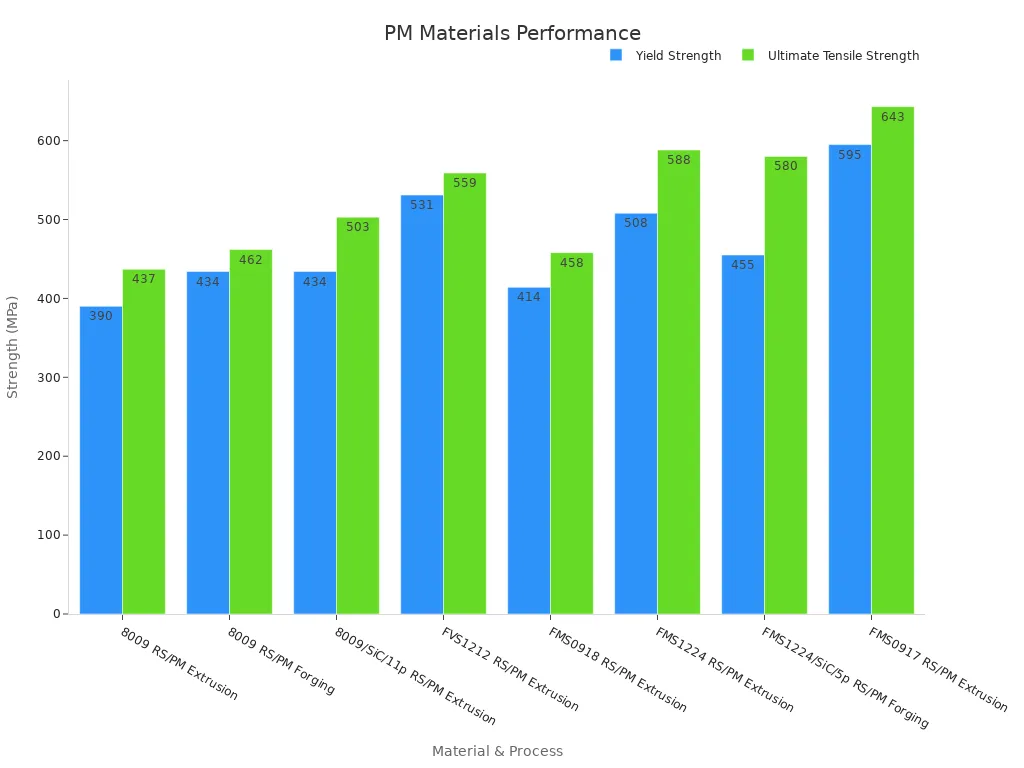
The table below highlights the mechanical performance of several aluminum-based superalloys and composites processed by powder metallurgy:
| Alloy/Composite | Processing Method | Elastic Modulus (GPa) | Yield Strength (MPa) | Ultimate Tensile Strength (MPa) | Elongation (%) |
|---|---|---|---|---|---|
| 8009 | Extrusion | ~88 | ~390 | ~437 | 10 |
| 8009 | Forging | N/A | ~434 | ~462 | 12 |
| 8009/SiC/11p | Extrusion | N/A | ~434 | ~503 | 4.1 |
| FVS1212 | Extrusion | ~95 | ~531 | ~559 | 7.2 |
| FMS0918 | Extrusion | N/A | ~414 | ~458 | 15.7 |
| FMS1224 | Extrusion | N/A | ~508 | ~588 | 3.6 |
| FMS1224/SiC/5p | Forging | ~85 | ~455 | ~580 | 1.6 |
| FMS0917 | Extrusion | N/A | ~595 | ~643 | 3.0 |
These results demonstrate how powder metallurgy enables the production of high-strength, high-performance components for demanding industries such as automotive and aerospace.
Major Powder Metallurgy Applications in Industry
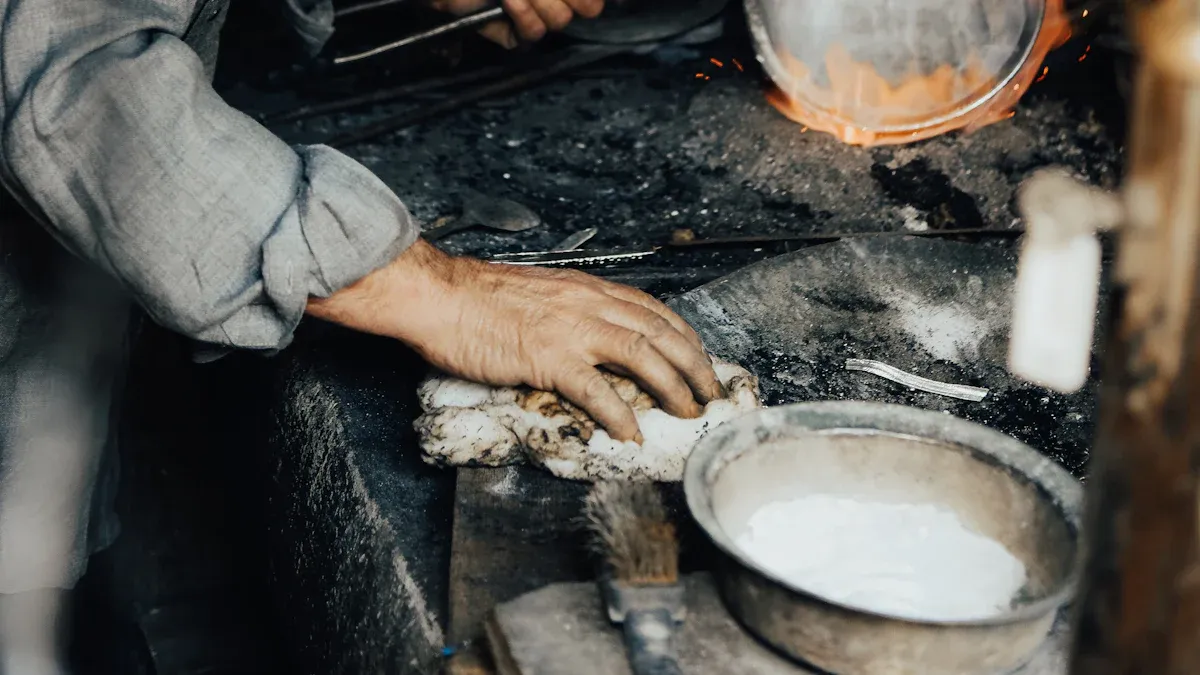
Powder metallurgy applications have become essential in modern manufacturing, offering solutions that meet the demands of various industries. Advances in powder production, densification, and post-processing have enabled manufacturers to produce components with high density, strength, and wear resistance. These improvements allow powder metallurgy to compete with traditional methods such as casting, forging, and machining. The ability to create complex shapes and custom alloys at lower costs has led to widespread adoption in sectors like automotive, aerospace, and medical devices.
Automotive Industry
The automotive sector stands as the largest consumer of powder metallurgy applications. Manufacturers rely on this technology to produce a wide range of components that require precision, durability, and cost efficiency.
Engine Components
Automotive engines contain numerous parts made using powder metallurgy. These include valve guides, camshaft sprockets, connecting rods, and rocker arms. The process allows for the creation of intricate shapes and tailored material properties, which are critical for engine performance and longevity. Sintered iron and aluminum parts help reduce overall vehicle weight, supporting industry efforts to improve fuel efficiency and lower emissions.
Transmission Parts
Transmission systems benefit from powder metallurgy through the production of gears, synchronizer hubs, and clutch plates. These components must withstand high stress and wear, making the enhanced strength and wear resistance of powder metallurgy parts especially valuable. The technology also enables the integration of multiple functions into a single part, reducing assembly time and cost.
Structural Parts
Manufacturers use powder metallurgy to produce structural components such as brackets, levers, and housings. These parts often feature complex geometries that would be difficult or expensive to achieve with traditional methods. Powder metallurgy ensures consistent quality and dimensional accuracy, which are vital for vehicle safety and reliability.
Bearings and Gears
Bearings and gears produced by powder metallurgy offer excellent wear resistance and self-lubricating properties. These features extend the service life of automotive systems and reduce maintenance requirements. The process supports the mass production of high-precision parts, contributing to the overall efficiency of automotive manufacturing.
Powder metallurgy applications in the automotive industry have grown rapidly. More than 1,000 powder metallurgy parts can be found in a typical automobile. The average weight of these components per car is about 10 kg, with U.S. vehicles often containing between 13 and 45 kg of sintered parts. The annual growth rate for powder metallurgy component usage in automobiles ranges from 6% to 7%. For example, an aluminum sprocket and rotor for cam phasers weighs only 450 grams, compared to 900 grams for a sintered iron sprocket, highlighting the benefits of weight reduction.
| Statistic Description | Numerical Value/Comparison |
|---|---|
| Number of PM parts used in automobiles | More than 1,000 parts |
| Weight range of sintered parts per U.S. vehicle | 13 to 45 kg |
| Weight of aluminum sprocket and rotor (cam phasers) | 450 grams |
| Weight of sintered iron sprocket (cam phasers) | 900 grams |
| Average PM components weight per car (general) | About 10 kg (higher in US, lower in Europe/Japan) |
| Annual growth rate of PM component usage | Between 6% and 7% per year |
Aerospace Industry
The aerospace sector depends on powder metallurgy applications to meet strict requirements for strength, weight, and reliability. The technology enables the production of advanced components that support both commercial and military aviation.
Turbine Blades
Turbine blades in jet engines must withstand extreme temperatures and mechanical stress. Powder metallurgy allows for the use of superalloys and precise control over microstructure, resulting in blades with superior fatigue strength and durability. The process also supports the creation of complex cooling channels within the blades, improving engine efficiency.
Lightweight Structural Components
Aerospace engineers prioritize weight reduction to enhance fuel efficiency and payload capacity. Powder metallurgy enables the production of lightweight titanium and aluminum components with high strength-to-weight ratios. Additive manufacturing, a powder-based process, further expands design possibilities by allowing the creation of lattice structures and optimized geometries.
Precision Engine Parts
Critical engine parts such as disks, shafts, and housings benefit from the high material utilization and customization offered by powder metallurgy. The process delivers near-net-shape components with minimal waste, reducing both material costs and energy consumption.
| Aspect | Powder Metallurgy (PM) | Conventional Methods (Machining, Casting, Forging) |
|---|---|---|
| Material Utilization | ~95% of raw materials used | ~50% of raw materials used |
| Energy Consumption | ~29 MJ per kg of finished product | ~82 MJ per kg of finished product |
| Cost Savings | 40% or more cost savings due to low energy use | Higher energy and process costs |
| Performance Characteristics | High strength, durability, wear resistance, high fatigue strength | Generally lower or less consistent in these aspects |
| Production Capability | Near-net shape production, minimal waste, supports complex geometries and additive manufacturing | Multiple sub-processes, higher waste, limited complexity |
| Customization | Tailored metallurgical chemistry for specific aerospace needs | Limited customization capabilities |
Powder metallurgy applications in aerospace have gained recognition through industry awards and performance benchmarks. The ability to tailor metallurgical chemistry and produce complex, high-performance parts at lower cost has made powder metallurgy a preferred choice for many aerospace manufacturers.
Medical Industry
The medical field relies on powder metallurgy applications to produce safe, reliable, and biocompatible devices. The process supports the creation of implants and instruments that meet strict regulatory and clinical standards.
Orthopedic Implants
Manufacturers use powder metallurgy to produce orthopedic implants such as hip and knee replacements. Materials like titanium alloys and cobalt-chromium alloys, processed through powder metallurgy, offer excellent biocompatibility and mechanical compatibility with bone. The sintering process enhances the durability and longevity of these implants.
Dental Devices
Dental professionals benefit from powder metallurgy in the production of crowns, bridges, and orthodontic brackets. The technology enables precise control over material properties, ensuring a comfortable fit and long-term performance. Stainless steel and titanium alloys produced by powder metallurgy have undergone extensive testing to confirm their safety for dental use.
Surgical Instruments
Surgical instruments made using powder metallurgy exhibit high strength, corrosion resistance, and precision. The process allows for the production of complex shapes and fine details, which are essential for minimally invasive procedures. Additive manufacturing, a powder-based technique, has also been applied to create custom surgical tools and implants.
- Powder metallurgy is widely used to produce biocompatible materials such as stainless steel, titanium alloys, and cobalt-chromium alloys for medical implants.
- These materials have undergone extensive testing confirming their safety and suitability for orthopedic and dental applications.
- The sintering process in powder metallurgy enhances mechanical properties critical for implant durability.
- Additive manufacturing (a powder-based process) has been applied to NiTi implants, with multiple scientific studies cited, indicating ongoing clinical and material performance validation.
- Reviews highlight the mechanical compatibility of powder metallurgy-produced implants with bone properties, supporting their clinical use.
Powder metallurgy applications continue to evolve, driven by innovations in powder production, additive manufacturing, and material science. These advancements have expanded the role of powder metallurgy in meeting the diverse and demanding needs of modern industry.
Electronics Industry
Powder metallurgy applications have transformed the electronics industry by enabling the production of advanced components with precise properties and high reliability. Manufacturers use powder metallurgy to create materials that meet the demanding requirements of modern electronic devices.
Magnetic Materials
Magnetic materials produced through powder metallurgy play a crucial role in sensors, inductors, and transformers. Engineers control particle size distribution using ball milling, achieving flakes between 36 and 150 micrometers. They select polymer binders to prepare composite materials tailored for specific magnetic properties. These techniques allow for the fabrication of magnetic sensors that maintain stability across a wide temperature range, from –10 °C to 95 °C. This stability ensures consistent performance in automotive and industrial electronics.
- Key achievements in magnetic material production:
- Controlled particle size for optimal magnetic response
- Use of composite binders for enhanced flexibility
- Temperature-stable sensors for harsh environments
Electrical Contacts
Powder metallurgy enables the creation of electrical contacts with superior conductivity and mechanical strength. Manufacturers fabricate flexible printed circuit boards (FPCs) with fine contact patterns as narrow as 0.25 mm. The Cu-30Fe alloy, produced by mechanical alloying and pressureless sintering, demonstrates a fine, uniform microstructure. This alloy achieves a tensile strength of 620 MPa and electrical conductivity at 50% of the International Annealed Copper Standard (IACS). These properties make it suitable for 5G communications, electromagnetic shielding, and conductive springs.
| Property/Aspect | Description/Result |
|---|---|
| Material | Cu-30Fe alloy (mechanical alloying, sintering, rolling) |
| Microstructure | Fine Fe particles (~1 µm), refined Cu grains |
| Mechanical Properties | Tensile strength: 620 MPa; Elongation: 10% |
| Electrical Properties | Conductivity: 50% IACS |
| Application Relevance | Electronics, 5G, shielding, springs |
| Processing Advantages | Homogeneous microstructure, improved performance |
Camera Modules and Actuator Components
Manufacturers rely on powder metallurgy to produce miniature gears, actuators, and structural parts for camera modules and precision actuators. These components require tight tolerances and high wear resistance. High-entropy alloys (HEAs) produced by powder metallurgy and spark plasma sintering (SPS) achieve impressive hardness and compressive strength, supporting the durability of electronic devices.
| Alloy Type | Hardness (Hv) | Compressive Strength (MPa) | Yield Strength (MPa) | Relative Density (%) |
|---|---|---|---|---|
| FeCoNiSi–Cu HEA | 507 | 1854 | 1390 | 100 |
| FeCoNiSi–Mn HEA | 710 | 1565 | 1482 | 100 |
| FeCoNiSi–Ti HEA | 495 | Lower due to pores | Lower | 95 |
Powder metallurgy applications in electronics deliver high-performance materials for next-generation devices, supporting innovation in communications, sensing, and automation.
Industrial Equipment and Machinery
Powder metallurgy applications extend to industrial equipment and machinery, where they provide cost-effective solutions for high-volume and high-performance parts.
Cutting Tools
Cutting tools manufactured by powder metallurgy exhibit high hardness, wear resistance, and toughness. These properties result from precise control over powder composition and sintering conditions. Manufacturers produce drills, milling cutters, and inserts that maintain sharpness and dimensional stability during demanding operations.
Filters and Porous Components
Engineers design filters and porous components using powder metallurgy to achieve controlled porosity and permeability. These parts serve in fluid filtration, gas diffusion, and lubrication systems. The process allows for the customization of pore size and distribution, ensuring optimal performance in hydraulic and pneumatic equipment.
Agricultural and Appliance Parts
Powder metallurgy supports the production of gears, bushings, and structural parts for agricultural machinery and household appliances. The process enables mass production of durable components with minimal material waste. Manufacturers benefit from reduced costs and improved product consistency.
| Metric Category | Key Data / Findings |
|---|---|
| Market Size & Growth | North American P/M parts industry valued at $1.8 billion; automotive parts grew from 15 to 29.5 pounds per vehicle (1988-1996) |
| Market Share by Segment | Automotive (~69%), recreation/tools (11.4%), industrial equipment (3.7%) |
| Cost Structure | Raw materials ~22% of sales; labor ~10%; manufacturing costs ~82% |
| Productivity | Pounds per employee increased by 33% (1986-1995); net sales per employee rose 24% |
| R&D and Innovation | Patent activity and technical presentations increased, reflecting ongoing innovation |
| Case Studies / Applications | Strong use in structural parts, bearings, torque converter turbine hubs; favored for cost-effectiveness and low scrap |
Powder metallurgy applications in industrial equipment and machinery offer competitive advantages, including low scrap rates, net shape processing, and strong cost efficiency.
Emerging Powder Metallurgy Applications
The scope of powder metallurgy applications continues to expand, driven by advances in materials science and manufacturing technology.
Energy Sector Components (e.g., fuel cell parts, battery contacts)
Powder metallurgy enables the production of components for energy storage and conversion, such as battery electrodes, fuel cell plates, and supercapacitor elements. The process reduces material waste by producing near-net shape parts with minimal machining. Components made by powder metallurgy often display improved thermal conductivity and reduced weight, enhancing energy efficiency. Manufacturers can also use recycled powders, supporting sustainability goals.
- PM techniques improve energy density and power density in storage devices.
- The process supports recycling and reduces environmental impact.
Consumer Products (e.g., locks, hardware, sporting goods)
Manufacturers use powder metallurgy to create durable, cost-effective parts for consumer products. Locks, door hardware, and sporting goods benefit from the process’s ability to produce complex shapes and high-strength alloys. Powder metallurgy reduces material waste and enables the use of recycled materials, aligning with sustainability trends.
- PM supports the production of intricate, high-volume consumer goods.
- The process enables recycling and reduces energy consumption.
Additive Manufacturing and 3D Printing Integration
Additive manufacturing, often called 3D printing, uses powder metallurgy as a foundation for building complex metal parts layer by layer. This integration allows for the creation of geometries that traditional methods cannot achieve. Manufacturers can optimize material usage, reduce lead times, and customize products for specific applications.
- 3D printing enhances the complexity and functionality of powder metallurgy components.
- The technology supports rapid prototyping and low-volume production.
Powder metallurgy applications in emerging sectors demonstrate the process’s adaptability and contribution to sustainability, energy efficiency, and product innovation.
Advantages of Powder Metallurgy Applications
Material Efficiency and Waste Reduction
Powder metallurgy stands out for its exceptional material efficiency. Manufacturers optimize product design and process control to minimize waste at every stage. In aerospace and other advanced industries, engineers use simulation-assisted design to reduce build weight and manufacturing time. This approach leads to less raw material consumption and lower energy use compared to traditional methods. Experimental studies on laser powder bed fusion show that careful selection of build orientation and design can significantly cut material waste. These strategies not only conserve resources but also support circular economy goals by enabling the recycling and reuse of metal powders. As a result, powder metallurgy applications help companies achieve sustainability targets while maintaining high production standards.
Tip: Efficient use of raw materials in powder metallurgy reduces both environmental impact and production costs.
Design Flexibility and Complex Shapes
The sintering process in powder metallurgy allows engineers to create parts with intricate geometries that casting or forging cannot achieve. Advanced sintering techniques enable the production of multi-level parts, complex assemblies, and components with internal features. Engineers can join different materials using sinter bonding or sinter brazing, expanding the range of possible designs. This flexibility proves especially valuable in industries like aerospace, where lightweight and complex shapes are essential. By compressing and sintering powders, manufacturers avoid melting metals, which helps preserve unique material properties and prevents contamination.
| Part Type | Design Features | Notes |
|---|---|---|
| Gears | Blind corners, helical forms, and combined assemblies | Carbide dies ensure accuracy, sound dampening |
| Cams | Consistent surface finish, complex shapes | Self-lubricating, long-lasting |
| Assemblies | Multi-material joining, complex units | Sintering, brazing, and welding options |
| Bearings | Controlled porosity, various types | Self-lubrication, adaptable to different loads |
| Sizes/Shapes | Wide range, multi-level possible | Mechanical presses enable up to 5+ levels |
This table highlights how powder metallurgy enables the production of specialized products with features that are difficult or impossible to achieve using conventional methods.
Cost-Effectiveness for High-Volume Production
Powder metallurgy offers significant cost advantages for high-volume manufacturing. The process achieves about 95% material utilization, which reduces waste and lowers embedded energy in raw materials. Energy consumption per part drops by 40-57% compared to conventional machining. For example, a commercial vehicle oil pump gear produced by powder metallurgy can cost up to 68% less than one made by machining. Although tooling and equipment require a high initial investment, these costs spread over large production volumes, making the process highly economical for mass production. Powder metallurgy is most competitive for small, lightweight parts, where material costs represent a smaller portion of total expenses.
| Factor | PM Advantage | Example/Note |
|---|---|---|
| Material Utilization | ~95% | Less waste, lower energy use |
| Energy Consumption | 40-57% savings vs. machining | Oil pump gear: 50% energy saving |
| Embedded Energy | 10.5 MJ/kg (PM) vs. 28-35 MJ/kg (machining) | Lower environmental impact |
| Cost Savings | Up to 68% reduction for high-volume parts | Commercial vehicle oil pump gear |
| Best Applications | Small, prismatic shapes, limited thickness | Press tonnage limits large parts |
Note: Powder metallurgy applications deliver the greatest cost savings when manufacturers produce large quantities of small, complex parts.
Performance Benefits: Strength, Wear, and Heat Resistance
Powder metallurgy applications deliver significant advantages in mechanical performance. Engineers design components to meet demanding requirements for strength, wear resistance, and heat tolerance. The process allows precise control over material composition and microstructure. This control results in parts with uniform properties and minimal defects.
Manufacturers often select powder metallurgy for parts that must withstand repeated stress or friction. Sintered gears, bearings, and cutting tools show high resistance to wear. These components maintain their shape and function even after prolonged use. The ability to add lubricants or alloying elements during powder blending further enhances wear resistance.
Heat resistance stands as another key benefit. Aerospace and automotive industries require materials that perform reliably at elevated temperatures. Powder metallurgy enables the production of superalloys and composite materials with stable properties under thermal stress. Turbine blades and engine parts made by this method resist deformation and maintain strength during operation.
A summary of performance benefits includes:
- Consistent mechanical strength due to controlled porosity and grain structure
- Enhanced wear resistance from tailored alloy compositions and self-lubricating features
- Superior heat resistance in high-temperature environments, supporting critical applications
Powder metallurgy applications provide a reliable solution for industries that demand durability and long service life from their components.
Environmental Impact and Sustainability
Powder metallurgy supports green manufacturing through efficient resource use and reduced emissions. The process uses less energy than traditional metalworking methods. Material utilization rates often exceed 95%, which minimizes waste and conserves raw materials.
- Powder metallurgy is intrinsically more sustainable than competing technologies due to lower energy intensity and better material utilization.
- Life Cycle Analysis (LCA) demonstrates powder metallurgy's ability to meet consumer and OEM demands for reduced CO2 emissions.
- The industry responds to sustainability drivers such as climate change, energy risks, and regulatory pressures.
- Digitalization and data integration advance sustainability in powder metallurgy.
- Sustainable production of high-performance metal powders for additive manufacturing highlights the role of powder metallurgy in green manufacturing.
Powder compression molding reduces energy consumption by sintering powders at lower temperatures. This approach leads to minimized emissions and a smaller environmental footprint. The process involves fewer hazardous substances, which improves workplace safety and lowers harmful emissions. Real-world examples from the automotive and aerospace sectors show a 40% reduction in waste and a 30% decrease in energy use. Companies adopt recyclable metals, eco-friendly materials, and sustainable supply chain practices to further enhance environmental performance.
A life cycle assessment of metal powder production for additive manufacturing reveals that inert gas use, especially argon, significantly increases environmental impact compared to nitrogen. Powder production has a comparable environmental footprint to the additive manufacturing process itself. Including powder production data in sustainability assessments ensures accurate measurement of environmental impact. Strategies such as preheating inert gases can reduce these effects, supporting environmentally friendly process and product design.
Powder metallurgy applications continue to evolve as industries seek sustainable solutions. The process aligns with global efforts to reduce emissions, conserve resources, and promote workplace safety.
Limitations and Challenges of Powder Metallurgy
Material and Design Constraints
Powder metallurgy offers many advantages, but it also presents notable material and design challenges. Engineers often encounter compatibility issues when combining advanced materials. For example, fabricating 3D graphene-reinforced copper composites highlights several obstacles:
- Copper does not wet graphene well, resulting in poor interface bonding. The equilibrium contact angle remains high, around 140°, which limits mechanical strength.
- Processing temperatures above copper’s melting point (1083°C) can damage the structure of 3D graphene, causing defects.
- The porous graphene network has a very low Young’s modulus, less than 100 MPa. This instability makes it prone to collapse during metal infiltration.
- Reduced graphene oxide nanosheets cannot form integrated 3D networks within the typical densification temperature range of 500°C–1000°C.
These examples show that powder metallurgy sometimes struggles with material compatibility, thermal processing limits, and mechanical stability. Designers must carefully select materials and processing conditions to avoid these pitfalls.
Production Volume Considerations
Production volume plays a critical role in the economic viability of powder metallurgy. The process excels in high-volume manufacturing, but it faces constraints with small batch sizes or large, complex parts. The following table summarizes key production parameters and operational statistics:
| Parameter | Details |
|---|---|
| Forming technology | Die pressing (mechanical, servo-electrical, hydraulic presses) |
| Production cycle steps | 1) Die filling 2) Powder compaction 3) Compact ejection 4) Compact removal |
| Part size limits | Surface area: 0.1–20 sq. in.; Length: 0.1–4 in. (up to 8 in. possible) |
| Production rate | Small presses: ~100 pieces per minute |
| Tooling requirements | Must resist deformation, be polished, and wear-resistant |
| Compaction pressures | 15,000–40,000 psi for metals; 2,000–10,000 psi for non-metals |
| Cold isostatic compaction | Suitable for small quantities, parts up to 100 lbs, precise tolerances, lower compaction pressure |
| Part weight and shrinkage | Parts can weigh 40–300 lbs; shrinkage 25–45% after compacting |
High-volume production, such as automotive camshaft pulleys or sintered steel parts, remains the most cost-effective use of powder metallurgy. Processes like metal injection molding require large runs to justify tooling and setup costs. For small quantities or oversized parts, alternative methods may offer better efficiency.
Mechanical Property Limitations
Mechanical properties of powder metallurgy parts often differ from those of wrought or cast metals. Porosity, a natural result of the process, affects strength, ductility, and hardness. Key findings from mechanical testing include:
- Ultimate tensile and yield strengths depend on density. High-density parts can match or exceed the yield strength of wrought metals.
- Impact energy increases with higher density and lower carbon content.
- Ductility remains low, with elongation typically below 10% due to the presence of pores. Repressing and re-sintering can improve ductility, but not eliminate the limitation.
- Hardness measurements reflect both particle hardness and porosity, making direct comparison with solid metals difficult.
- Microhardness tests, such as Knoop or Vickers, provide more accurate readings of the metal itself, unaffected by porosity.
Mechanical testing also reveals variability and brittleness in powder metallurgy parts. Statistical analysis, rather than simple averages, helps engineers understand the reliability of these components. Porosity remains the main factor limiting mechanical performance, especially in applications requiring high ductility or toughness.
Powder metallurgy continues to evolve, but engineers must recognize and address these limitations to ensure optimal part performance and reliability.
Cost Factors for Low-Volume or Custom Parts
Manufacturers often face unique challenges when producing low-volume or custom parts using powder metallurgy. The process, while highly efficient for mass production, introduces several cost factors that can impact the feasibility of small-batch manufacturing.
1. Tooling and Die Costs
Powder metallurgy relies on precision tooling and custom dies. Creating these tools requires significant investment. For high-volume production, manufacturers spread these costs across thousands or millions of parts, making each unit affordable. In contrast, low-volume or custom orders cannot absorb these expenses as effectively. The result: each part carries a higher share of the tooling cost.
2. Setup and Changeover Expenses
Every new part design demands the setup and calibration of equipment. Technicians must adjust presses, sintering furnaces, and quality control systems. These setup costs remain fixed, regardless of batch size. For small runs, these expenses quickly add up, increasing the per-part price.
3. Material Procurement and Handling
Specialty materials or custom alloy powders often require minimum order quantities from suppliers. Manufacturers may need to purchase more material than needed for a small batch. The storage and handling of excess powder introduce additional costs and logistical challenges.
4. Process Optimization Limitations
Engineers optimize powder metallurgy processes for large-scale production. Small batches do not benefit from process improvements or economies of scale. Custom parts may also require unique process parameters, further increasing costs.
5. Quality Assurance and Testing
Custom or low-volume parts often require more rigorous testing and certification. Each part may need individual inspection, adding labor and time to the production cycle.
Tip: For prototypes or highly customized components, additive manufacturing or CNC machining may offer more cost-effective solutions than traditional powder metallurgy.
Cost Comparison Table: High-Volume vs. Low-Volume Powder Metallurgy
| Cost Factor | High-Volume Production | Low-Volume/Custom Production |
|---|---|---|
| Tooling/Dies | Low per part | High per part |
| Setup/Changeover | Spread over many units | Significant per part |
| Material Procurement | Bulk discounts | Higher unit cost |
| Process Optimization | Highly optimized | Limited optimization |
| Quality Assurance | Batch testing | Individual testing |
Manufacturers seeking to produce small quantities or custom designs should carefully evaluate these cost factors. Powder metallurgy excels in high-volume scenarios. For low-volume or specialized parts, alternative manufacturing methods may provide better value and flexibility.
Future Trends in Powder Metallurgy Applications
Advances in Powder Production Technology
Recent years have seen rapid progress in powder production technology. Companies now produce metal powders with improved flowability and spherical shapes, which are ideal for advanced manufacturing. Specialized atomizers create powders for aerospace-grade steel and titanium, supporting industries that demand high performance and reliability. Hybrid manufacturing techniques combine traditional powder metallurgy with new processes, allowing the creation of intricate components that were once impossible to make.
- Additive manufacturing enables complex geometries that traditional methods cannot achieve.
- Leading producers like Höganäs and BÖHLER India supply powders optimized for 3D printing.
- The automotive sector, especially electric vehicles, drives demand for lightweight powder metallurgy solutions.
- Aerospace and defense industries use industrial-scale atomizers for high-performance parts.
- Innovations such as self-healing composites and spark plasma sintering expand material capabilities.
Market forecasts predict strong growth. The global powder metallurgy market could reach $4.58 billion by 2032, with a CAGR of 6.72%. Asia-Pacific leads in industrialization, while North America maintains a significant market share.
Integration with Additive Manufacturing
Additive manufacturing (AM) has transformed powder metallurgy applications. AM eliminates the need for expensive tooling, reducing both emissions and waste. Manufacturers can now design parts with complex shapes without increasing costs. Topology optimization allows engineers to use material only where needed, making parts lighter and stronger.
- AM enables on-site production, shortening supply chains and reducing transportation energy.
- Case studies show that AM can cut part weight by 50% and emissions by 45% compared to traditional methods.
- Powder bed fusion and directed energy deposition often cost less than milling for complex parts.
- In aerospace, lightweight AM parts reduce fuel consumption, saving millions of gigajoules of energy each year.
- Aircraft engine brackets made by AM are up to 80% lighter than forged versions.
These benefits make AM a key driver for the future of powder metallurgy. Manufacturers can now produce optimized, high-performance components for demanding industries.
New Material Developments and Alloys
Material science continues to push the boundaries of powder metallurgy applications. Researchers have developed high-strength steels, titanium alloys, and metal matrix composites with enhanced properties. Improved atomization and chemical reduction techniques increase powder purity and allow for tighter particle size control.
- High-entropy alloys offer superior strength and corrosion resistance.
- Composite materials combine different substances for better mechanical and thermal performance.
- Functionally graded materials provide varying properties within a single part, optimizing performance.
- New sintering technologies like spark plasma sintering and hot isostatic pressing improve densification and microstructure control.
- Industry 4.0 technologies, including AI and robotics, enhance process efficiency and product quality.
Peer-reviewed studies document advances in aluminum, nickel, and copper alloys, as well as graphene-reinforced composites. These innovations support the ongoing evolution of powder metallurgy and its expanding role in modern manufacturing.
Sustainability and Green Manufacturing Initiatives
Sustainability has become a central focus in modern manufacturing. Companies now seek methods that reduce environmental impact while maintaining high productivity. Powder metallurgy applications support these goals by maximizing material efficiency and minimizing waste. The process uses nearly all raw material, which leads to less scrap and lower energy consumption compared to traditional metalworking.
Manufacturers have adopted green manufacturing initiatives by integrating advanced technologies. Additive manufacturing, such as powder bed fusion (PBF) and directed energy deposition (DED), enables the creation of lightweight, complex parts with less material. These methods also allow for multi-material integration, which optimizes mechanical performance and extends product life. The table below highlights key benefits and trends in these processes:
| Process Type | Key Benefits | Limitations/Drawbacks | Materials Used | Applications and Trends |
|---|---|---|---|---|
| Powder Bed Fusion (PBF) | High-quality, fine resolution parts | High porosity in some methods, expensive, slow | Metals, alloys, some polymers | Lightweight lattice structures, aerospace, biomedical, electronics; evolving with AI/ML integration |
| Directed Energy Deposition (DED) | Enables multi-material integration | Complex process control | Various metals | Multi-material parts for stress reduction and optimized mechanical performance, e.g., nuclear power plants |
| Other AM Methods | Design flexibility | Material limitations, surface finish issues | Polymers, ceramics, composites | Prototyping, smart structures, construction, biomedical fields |
Manufacturers continue to develop new materials, such as stainless steel and high entropy alloys, to expand the range of powder metallurgy applications. These innovations help industries meet stricter environmental regulations and reduce their carbon footprint. The integration of artificial intelligence and machine learning further enhances process optimization. AI-driven systems predict defects, improve quality control, and reduce production time.
Green manufacturing also emphasizes recycling and reuse. Many companies now recycle metal powders and use renewable energy sources in production. These practices lower greenhouse gas emissions and conserve natural resources. For example, powder metallurgy enables the use of recycled metals in automotive and aerospace components, supporting circular economy principles.
Companies that invest in sustainable powder metallurgy applications gain a competitive edge. They meet regulatory requirements, reduce costs, and appeal to environmentally conscious customers.
Sustainability and green manufacturing initiatives will continue to shape the future of powder metallurgy. As technology advances, manufacturers will find new ways to balance performance, cost, and environmental responsibility.
Powder metallurgy applications play a vital role in modern manufacturing. They deliver high efficiency, flexibility, and sustainability. Key performance indicators include:
- High material utilization rates, with up to 97% of starting material used
- Less scrap waste and the ability to reuse unused powder
- Design flexibility for complex shapes and tight tolerances
- Automation that ensures consistent quality
- Use of recycled materials and a wide range of metals
Ongoing innovations in powder production and alloy development continue to expand the possibilities for powder metallurgy applications across industries.
FAQ
What industries use powder metallurgy the most?
Automotive, aerospace, medical, electronics, and industrial machinery sectors rely heavily on powder metallurgy. These industries benefit from the process’s ability to produce complex, high-performance, and cost-effective components.
How does powder metallurgy reduce material waste?
Powder metallurgy achieves high material utilization rates, often above 95%. Manufacturers use only the necessary amount of powder, which minimizes scrap and supports sustainable production practices.
Can powder metallurgy produce parts with complex shapes?
Yes. Powder metallurgy enables the creation of intricate geometries and multi-level parts. Engineers design components with features that traditional casting or machining cannot achieve.
What materials are commonly used in powder metallurgy?
Manufacturers frequently use iron, steel, copper, aluminum, titanium, and various alloys. Advanced applications may require superalloys, high-entropy alloys, or composite materials.
Is powder metallurgy suitable for low-volume production?
Powder metallurgy works best for high-volume manufacturing. High tooling and setup costs make it less economical for small batches or custom parts. Additive manufacturing may offer better value for prototypes.
How does powder metallurgy support sustainability?
The process uses less energy and generates minimal waste. Many manufacturers recycle unused powders and adopt eco-friendly practices, which helps reduce environmental impact.
What are the main limitations of powder metallurgy?
Porosity can affect mechanical properties like strength and ductility. The process may not suit very large or highly customized parts due to tooling and material constraints.
How does additive manufacturing relate to powder metallurgy?
Additive manufacturing builds parts layer by layer using metal powders. This technique expands the design possibilities of powder metallurgy and supports rapid prototyping and complex geometries.