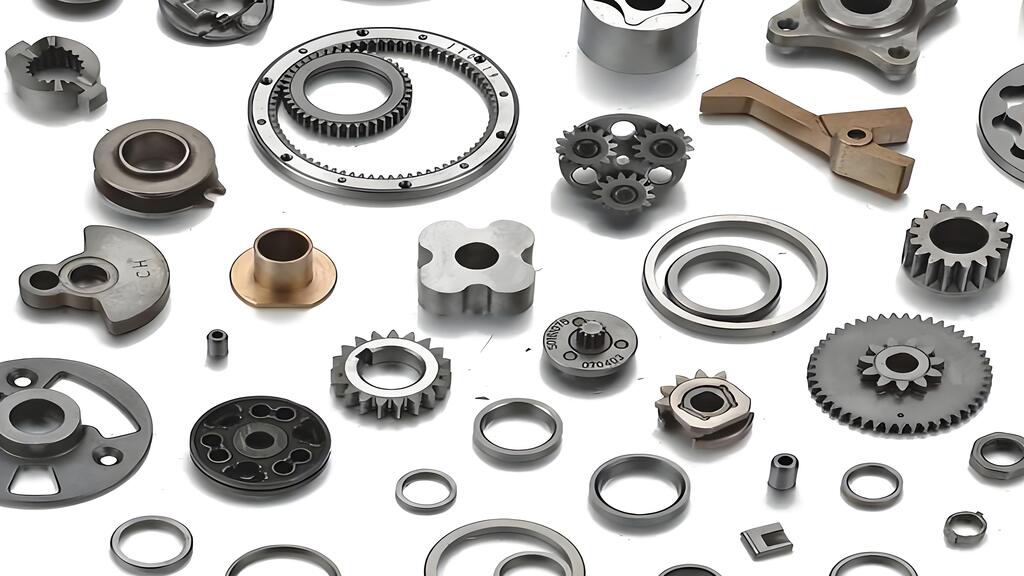
Best materials for powder metallurgy
Selecting the best Powder Metallurgy materials shapes the success of countless industries. Leading choices include iron, stainless steel, copper, aluminum, nickel, titanium, tungsten, tool steels, ceramics, and composites. These materials deliver proven strength, corrosion resistance, and efficiency. The right selection ensures optimal properties for each application while controlling costs.
| Material | Key Advantage | Typical Use |
|---|---|---|
| Iron | Cost-effective, strong | automotive gears, machinery |
| Stainless Steel | Corrosion resistant | Medical, aerospace |
| Copper | Conductive, durable | Electrical contacts, bearings |
Choosing wisely maximizes both performance and material utilization.
Key Takeaways
- Iron is the most cost-effective and widely used powder metallurgy material, ideal for high-volume parts like automotive gears due to its strength and affordability.
- Stainless steel offers excellent corrosion resistance and durability, making it perfect for medical, aerospace, and food processing applications.
- Copper excels in electrical and thermal conductivity, supporting components like electrical contacts and heat exchangers with good wear resistance.
- Lightweight metals like aluminum and titanium provide strong, corrosion-resistant parts for aerospace and automotive uses, with titanium also suited for medical implants.
- Composites combine materials to create parts with tailored properties, offering enhanced strength, wear resistance, and reduced weight for advanced engineering needs.
Overview of Top Powder Metallurgy Materials
Iron
Iron stands as the backbone of powder metallurgy materials. Manufacturers value iron for its abundance, affordability, and mechanical strength. Iron powders form the basis for many structural components, especially in the automotive sector. In 2020, ferrous powders, which include iron and its alloys, accounted for 80% of the powder metallurgy market share. The automotive industry alone consumes over 70% of these ferrous powder components, highlighting iron's dominance in gears, bushings, and other high-volume parts.
Iron powders offer excellent compressibility and sinterability. These properties allow for efficient mass production of complex shapes with consistent quality. Iron-based parts also provide good wear resistance and can be further enhanced through alloying or heat treatment. As a result, iron remains the most widely used material in powder metallurgy, supporting both cost-effective manufacturing and reliable performance.
Tip: Iron powders are ideal for high-volume applications where cost and mechanical strength are top priorities.
Stainless Steel
Stainless steel brings corrosion resistance and durability to powder metallurgy materials. Engineers select stainless steel powders for applications that demand both strength and protection against rust or chemical attack. Medical devices, food processing equipment, and aerospace components often rely on stainless steel for these reasons.
Stainless steel powders enable the production of intricate shapes that would be difficult or expensive to machine from solid stock. The material maintains its properties even after sintering, offering high tensile strength and excellent surface finish. According to market research, steel—including stainless steel—held the largest market share at 46.8% in 2020, driven by its versatility and global demand. Stainless steel's ability to withstand harsh environments makes it a preferred choice for critical components.
- Key benefits:
- High corrosion resistance
- Good mechanical strength
- Suitable for complex geometries
Copper
Copper plays a vital role in powder metallurgy materials, especially where electrical and thermal conductivity are essential. Manufacturers use copper powders to produce electrical contacts, bushings, and heat exchangers. Copper's natural conductivity ensures efficient energy transfer, making it indispensable in electronics and power transmission.
Copper powders also offer good ductility and wear resistance. These properties allow for the creation of self-lubricating bearings and other components that require both strength and flexibility. The ability to blend copper with other metals further expands its application range. Copper-based parts often appear in automotive, electrical, and industrial equipment, supporting both performance and longevity.
Note: Copper powders excel in applications where conductivity and durability are critical.
Aluminum
Aluminum offers a unique combination of lightweight and strength. Manufacturers choose aluminum powders for applications that require reduced mass without sacrificing performance. This metal stands out in industries such as automotive, aerospace, and electronics. Aluminum parts produced by powder metallurgy methods often display excellent dimensional accuracy and surface finish.
Engineers value aluminum for its natural corrosion resistance. The oxide layer that forms on its surface protects components from environmental damage. Aluminum also provides good thermal and electrical conductivity, making it suitable for heat sinks and electrical housings.
Key advantages of aluminum in powder metallurgy materials include:
- Low density for lightweight components
- High strength-to-weight ratio
- Good corrosion resistance
- Excellent machinability after sintering
Note: Aluminum powders require careful handling due to their reactivity and potential for oxidation during processing.
Nickel
Nickel stands as a critical material in powder metallurgy for its outstanding mechanical and chemical properties. This metal resists corrosion and oxidation, even at high temperatures. As a result, nickel-based powders find use in demanding environments such as turbines, chemical processing plants, and high-performance batteries.
Nickel alloys produced through powder metallurgy methods can achieve complex shapes and tight tolerances. These alloys often combine nickel with elements like chromium or molybdenum to enhance specific properties. Nickel-based components maintain their strength and stability under extreme conditions.
Some notable benefits of nickel in powder metallurgy include:
- Superior corrosion and heat resistance
- High strength at elevated temperatures
- Ability to form superalloys for advanced engineering applications
Engineers often select nickel when reliability and longevity are essential.
Titanium
Titanium represents one of the most advanced powder metallurgy materials available today. This metal offers an exceptional balance of strength, low density, and biocompatibility. Aerospace, medical, and high-performance automotive industries rely on titanium powders to create lightweight yet durable parts.
Titanium resists corrosion from most acids and chlorides. Its biocompatibility makes it ideal for medical implants and surgical instruments. Powder metallurgy allows for the production of intricate titanium components that would be difficult or costly to machine from solid stock.
Key features of titanium in powder metallurgy:
- Outstanding strength-to-weight ratio
- Excellent corrosion resistance
- Biocompatibility for medical use
- Capability to produce complex shapes
Tip: Titanium powders require specialized equipment and expertise due to their sensitivity to oxygen and moisture during processing.
Tungsten
Tungsten stands out among powder metallurgy materials for its exceptional hardness and high melting point. Engineers often select tungsten powders when they need components that can withstand extreme temperatures and heavy wear. Tungsten’s melting point exceeds 3,400°C, making it the highest of all metals. This property allows manufacturers to use tungsten in applications such as electrical contacts, heating elements, and rocket engine nozzles.
Tungsten powders also provide excellent density and strength. These qualities make tungsten ideal for radiation shielding and counterweights in aerospace and medical devices. The powder metallurgy process enables the production of complex tungsten shapes that would be difficult to achieve with traditional methods.
Note: Tungsten’s brittleness at room temperature requires careful handling during processing and application.
Key advantages of tungsten in powder metallurgy include:
- Extreme temperature resistance
- High density for specialized uses
- Superior wear resistance
Tool Steels
Tool steels play a critical role in powder metallurgy materials due to their ability to retain hardness and strength under stress. Manufacturers rely on tool steel powders to create cutting tools, dies, and molds. These components must maintain sharp edges and resist deformation during repeated use.
Powder metallurgy allows for precise control over tool steel composition. This control leads to improved uniformity and performance compared to conventionally produced tool steels. Tool steels often contain elements such as tungsten, molybdenum, and vanadium, which enhance their hardness and toughness.
A typical tool steel produced by powder metallurgy offers:
- High wear resistance
- Excellent toughness
- Consistent microstructure
Engineers choose tool steels for demanding manufacturing environments where reliability and longevity are essential.
Ceramics
Ceramics represent a unique category within powder metallurgy materials. These non-metallic powders provide outstanding hardness, electrical insulation, and resistance to corrosion. Manufacturers use ceramic powders to produce components for electronics, medical devices, and cutting tools.
Ceramic parts made by powder metallurgy methods can achieve complex shapes and fine details. The process also allows for the combination of different ceramic materials to tailor properties for specific applications. Common ceramic powders include alumina, zirconia, and silicon carbide.
Key features of ceramics in powder metallurgy:
- High hardness and wear resistance
- Electrical and thermal insulation
- Chemical stability in harsh environments
Tip: Ceramics can be brittle, so designers must consider mechanical stresses during part design.
Composites
Composites represent a rapidly growing category within powder metallurgy materials. Engineers create composites by combining two or more distinct materials to achieve properties that surpass those of the individual components. In powder metallurgy, these combinations often include metals, ceramics, or polymers. The resulting materials display unique characteristics such as improved strength, enhanced wear resistance, or tailored thermal and electrical conductivity.
Manufacturers often select metal matrix composites (MMCs) for demanding applications. These composites typically consist of a metal base, such as aluminum or titanium, reinforced with ceramic particles or fibers. The reinforcement phase increases hardness and stiffness while maintaining the ductility of the metal. For example, aluminum reinforced with silicon carbide particles finds use in automotive brake rotors and aerospace components. These parts benefit from reduced weight and increased durability.
Ceramic matrix composites (CMCs) also play a significant role in advanced engineering. By embedding fibers like carbon or silicon carbide into a ceramic matrix, engineers produce materials that resist cracking and withstand high temperatures. CMCs appear in turbine blades, heat shields, and other components exposed to extreme environments.
Note: Composites allow designers to tailor properties for specific applications, making them highly versatile in modern manufacturing.
Key advantages of composites in powder metallurgy include:
- Customizable mechanical and physical properties
- Superior wear and corrosion resistance
- Reduced weight for high-performance applications
- Ability to combine the best features of different materials
Engineers continue to explore new combinations to push the boundaries of what powder metallurgy materials can achieve. The flexibility of the powder metallurgy process enables the creation of complex composite structures that would be impossible with traditional manufacturing methods.
Key Properties and Advantages of Powder Metallurgy Materials
Iron
Iron offers a strong foundation for many sintered components. Manufacturers value its mechanical strength, cost-effectiveness, and adaptability. Iron powders compress easily, which allows for the efficient production of complex shapes. After sintering, iron parts display reliable strength and wear resistance.
Mechanical testing highlights iron’s performance. Sintered iron samples often show yield strength between 62% and 98% of their ultimate tensile strength. This ratio demonstrates the material’s ability to retain strength under stress. Vickers hardness testing provides further insight, revealing that iron’s apparent hardness reflects both the metal’s intrinsic properties and the effects of porosity. Secondary processing, such as repressing and re-sintering, can improve ductility and toughness.
| Property | Typical Value / Benefit |
|---|---|
| Yield Strength | 62%–98 % of ultimate tensile strength |
| Hardness | Apparent hardness is influenced by porosity |
| Ductility | Elongation <10% can improve with further processing |
| Impact Energy | Increases with higher density and lower carbon content |
Tip: Iron’s balance of strength, cost, and processability makes it the top choice for high-volume automotive and machinery parts.
Stainless Steel
Stainless steel stands out for its corrosion resistance and mechanical durability. Engineers select stainless steel powders for parts that must endure harsh environments or frequent cleaning. The material maintains its strength after sintering, which ensures long-term reliability in demanding applications.
Sintered stainless steel often surpasses its wrought counterparts in yield strength. Laboratory tests show that the yield strength of some powder metallurgy stainless steels can exceed that of conventionally produced metals. The Vickers hardness test confirms that stainless steel retains high hardness, even when porosity is present. This property supports the use of stainless steel in medical, food processing, and aerospace components, where both hygiene and strength are critical.
- High corrosion resistance protects against rust and chemical attack.
- Superior strength retention ensures performance under load.
- Good hardness and surface finish support precision applications.
Note: Stainless steel’s unique combination of properties makes it ideal for parts exposed to moisture, chemicals, or extreme temperatures.
Copper
Copper provides unmatched electrical and thermal conductivity. Manufacturers use copper powders to create components that require efficient energy transfer, such as electrical contacts and heat exchangers. Copper’s ductility allows for the formation of intricate shapes and thin-walled parts.
Mechanical testing reveals that copper-based parts offer good wear resistance and moderate strength. The Vickers hardness test shows that copper’s true hardness remains high, even when porosity is present. Copper’s ductility, although lower than wrought copper due to porosity, can improve with secondary processing. The ability to blend copper with other metals further enhances its versatility.
- Excellent conductivity supports electrical and thermal applications.
- Good wear resistance extends component life.
- Ductility enables the production of self-lubricating bearings and flexible connectors.
Callout: Copper’s unique properties make it indispensable in electronics, automotive, and industrial equipment.
Aluminum
Aluminum stands out for its lightweight nature and impressive strength-to-weight ratio. Engineers often select aluminum powders when they need components that reduce overall mass without sacrificing durability. This property makes aluminum a top choice in industries such as aerospace, automotive, and electronics.
Sintered aluminum parts display excellent dimensional accuracy. The powder metallurgy process allows for the creation of intricate shapes that would be difficult to achieve with traditional casting or machining. After sintering, aluminum components maintain a smooth surface finish, which reduces the need for secondary processing.
Key properties of aluminum in powder metallurgy include:
- Low Density: Aluminum parts weigh significantly less than those made from steel or copper. This feature supports fuel efficiency in vehicles and aircraft.
- Corrosion Resistance: A natural oxide layer forms on aluminum surfaces, protecting them from environmental damage.
- Thermal and Electrical Conductivity: Aluminum efficiently transfers heat and electricity, making it suitable for heat sinks and electronic housings.
- Machinability: Sintered aluminum parts can be easily machined to tight tolerances.
Tip: Aluminum powders require careful storage and handling. Exposure to moisture or air can lead to oxidation, which affects the final part quality.
A table below summarizes the main advantages of aluminum in powder metallurgy:
| Property | Benefit |
|---|---|
| Low Density | Lightweight components |
| Corrosion Resistance | Long service life |
| Conductivity | Efficient heat and electricity transfer |
| Machinability | Easy post-processing |
Engineers continue to push the boundaries of aluminum applications. They use advanced alloying techniques to further enhance strength and wear resistance.
Nickel
Nickel offers a unique combination of mechanical strength and chemical stability. This metal resists corrosion and oxidation, even at elevated temperatures. Nickel powders play a crucial role in industries that demand reliability under extreme conditions.
Sintered nickel components maintain their properties in harsh environments. Turbine blades, chemical processing equipment, and high-performance batteries often rely on nickel-based alloys. These alloys can withstand both mechanical stress and chemical attack.
Key advantages of nickel in powder metallurgy:
- High-Temperature Strength: Nickel retains its mechanical properties at temperatures where other metals weaken.
- Corrosion and Oxidation Resistance: Nickel alloys resist rust and chemical degradation, even in aggressive environments.
- Alloy Versatility: Engineers can combine nickel with elements like chromium or molybdenum to create superalloys with tailored properties.
- Dimensional Stability: Nickel parts produced by powder metallurgy methods hold tight tolerances and complex shapes.
Note: Nickel powders can be expensive. However, their performance in critical applications often justifies the investment.
A list of common applications for nickel-based powder metallurgy parts:
- Gas turbine components
- Chemical processing valves and fittings
- Battery electrodes
- Aerospace fasteners
Nickel’s ability to perform in demanding settings ensures its continued importance in advanced engineering.
Titanium
Titanium represents a premium choice for applications that require both strength and low weight. This metal exhibits an outstanding strength-to-weight ratio, making it ideal for aerospace, medical, and high-performance automotive components.
Sintered titanium parts resist corrosion from most acids and chlorides. The biocompatibility of titanium allows for safe use in medical implants and surgical tools. Powder metallurgy enables the production of complex titanium shapes that would be costly or impossible to machine from solid stock.
Key features of titanium in powder metallurgy:
- Exceptional Strength-to-Weight Ratio: Titanium parts provide high strength while remaining lightweight.
- Corrosion Resistance: Titanium withstands exposure to harsh chemicals and saltwater.
- Biocompatibility: Medical devices and implants benefit from titanium’s compatibility with the human body.
- Design Flexibility: Powder metallurgy allows for intricate geometries and near-net-shape production.
Callout: Titanium powders require specialized processing environments. Exposure to oxygen or moisture during manufacturing can compromise material quality.
A table below highlights the main advantages of titanium in powder metallurgy:
| Property | Benefit |
|---|---|
| Strength-to-Weight Ratio | Lightweight yet strong components |
| Corrosion Resistance | Long-lasting performance |
| Biocompatibility | Safe for medical applications |
| Complex Shape Capability | Innovative design options |
Engineers continue to expand the use of titanium in industries where performance and reliability are critical.
Tungsten
Tungsten stands out as one of the most robust materials available for powder metallurgy. Engineers value tungsten for its extraordinary melting point, which exceeds 3,400°C. This property allows tungsten components to perform reliably in environments where most metals would fail. Tungsten also offers exceptional density and hardness, making it a preferred choice for applications that demand resistance to extreme heat and wear.
Manufacturers often use tungsten powders to produce electrical contacts, heating elements, and rocket engine nozzles. The high density of tungsten makes it ideal for radiation shielding in medical and aerospace devices. Tungsten’s unique characteristics also support its use in counterweights and vibration dampers.
| Property | Typical Value | Application Example |
|---|---|---|
| Melting Point | >3,400°C | Rocket nozzles, heaters |
| Density | 19.3 g/cm³ | Radiation shielding |
| Hardness | Very high | Cutting tools |
| Wear Resistance | Excellent | Electrical contacts |
Note: Tungsten’s brittleness at room temperature requires careful handling during processing. Manufacturers often blend tungsten with other metals to improve ductility and machinability.
Engineers continue to explore new uses for tungsten in advanced manufacturing. The ability to form complex shapes through powder metallurgy expands its role in high-performance industries.
Tool Steels
Tool steels play a critical role in the production of durable and precise components. These steels contain alloying elements such as tungsten, molybdenum, and vanadium, which enhance hardness and toughness. Powder metallurgy enables manufacturers to control the composition and microstructure of tool steels with great precision.
Tool steel powders support the creation of cutting tools, dies, and molds that must withstand repeated stress and high temperatures. The uniformity achieved through powder metallurgy leads to improved wear resistance and longer tool life. Engineers often select tool steels for applications that require sharp edges and dimensional stability.
Key advantages of tool steels produced by powder metallurgy include:
- High wear resistance for extended service life
- Excellent toughness to resist chipping and cracking
- Consistent microstructure for predictable performance
- Ability to form complex or intricate shapes
Tip: Tool steels made by powder metallurgy often outperform conventionally produced steels in demanding manufacturing environments.
A wide range of industries, including automotive, aerospace, and electronics, rely on tool steels for reliable and efficient production processes.
Ceramics
Ceramics represent a unique class of materials in powder metallurgy. These non-metallic powders provide outstanding hardness, electrical insulation, and chemical stability. Engineers use ceramic powders to manufacture components for electronics, medical devices, and cutting tools.
Ceramic parts produced by powder metallurgy can achieve complex geometries and fine details. The process allows for the combination of different ceramic materials to tailor properties for specific applications. Common ceramic powders include alumina, zirconia, and silicon carbide.
| Feature | Benefit |
|---|---|
| High Hardness | Superior wear resistance |
| Electrical Insulation | Essential for electronic components |
| Chemical Stability | Withstands harsh environments |
| Low Density | Lightweight parts |
Callout: Ceramics can be brittle. Designers must consider mechanical stresses and potential impact during part design.
Ceramic matrix composites further expand the possibilities by embedding fibers into the ceramic base. This approach improves toughness and thermal shock resistance. Engineers continue to develop new ceramic formulations to meet the demands of modern technology.
Composites
Composites have transformed the landscape of advanced manufacturing. Engineers design these materials by combining two or more distinct substances to achieve properties that surpass those of the individual components. In powder metallurgy, composites often blend metals with ceramics, polymers, or other reinforcements. This approach creates materials with tailored mechanical, thermal, and electrical characteristics.
A typical composite in powder metallurgy consists of a matrix and a reinforcement phase. The matrix usually provides ductility and toughness, while the reinforcement adds strength, stiffness, or other specialized properties. For example, aluminum reinforced with silicon carbide particles produces a lightweight yet wear-resistant material. This combination finds use in automotive brake rotors and aerospace components, where both durability and reduced weight matter.
Types of Composites in Powder Metallurgy
Engineers categorize composites based on their matrix material and reinforcement type. The most common types include:
- Metal Matrix Composites (MMCs): These composites use a metal as the primary phase. Reinforcements can be ceramic particles, fibers, or whiskers. MMCs offer improved strength, wear resistance, and thermal stability.
- Ceramic Matrix Composites (CMCs): Here, a ceramic forms the matrix. Fibers such as carbon or silicon carbide enhance toughness and thermal shock resistance. CMCs excel in high-temperature environments.
- Polymer Matrix Composites (PMCs): Although less common in powder metallurgy, PMCs use a polymer base with metal or ceramic reinforcements. These materials provide excellent corrosion resistance and low density.
Note: The choice of matrix and reinforcement depends on the desired balance of properties for the application.
Key Properties and Advantages
Composites produced by powder metallurgy display several unique advantages:
| Property | Benefit | Example Application |
|---|---|---|
| Tailored Strength | Customizable for specific load requirements | Aerospace brackets |
| Enhanced Wear Resistance | Longer service life in abrasive conditions | Automotive brake pads |
| Reduced Weight | Improved fuel efficiency and performance | Aircraft structural parts |
| Thermal Stability | Reliable operation at high temperatures | Turbine blades |
| Electrical Conductivity | Tunable for electronic components | Power transmission devices |
Engineers can adjust the composition and processing parameters to fine-tune these properties. This flexibility allows for the creation of parts that meet strict performance criteria.
Applications and Industry Impact
Composites have found widespread adoption across multiple industries. Automotive manufacturers use metal matrix composites for engine components and brake systems. Aerospace engineers rely on ceramic matrix composites for turbine blades and heat shields. The electronics sector benefits from composites with tailored conductivity and thermal management.
- Automotive: Brake rotors, pistons, and drive shafts
- Aerospace: Turbine blades, structural supports, heat shields
- Electronics: Heat sinks, circuit substrates, connectors
- Medical: Prosthetics, dental implants, surgical tools
Callout: Composites enable the design of parts that would be impossible to produce with conventional materials alone.
Challenges and Considerations
Despite their advantages, composites present unique challenges. Processing often requires precise control of temperature, pressure, and atmosphere. Achieving uniform distribution of the reinforcement phase can be difficult. Engineers must also consider the compatibility of the matrix and reinforcement to avoid unwanted reactions during sintering.
Cost remains another factor. Advanced composites, especially those with high-performance reinforcements, can be expensive to produce. However, the performance gains often justify the investment in critical applications.
Future Trends
Research in powder metallurgy composites continues to advance. Scientists explore new combinations of matrices and reinforcements to push the boundaries of material performance. Nanocomposites, which incorporate nanoscale reinforcements, promise even greater improvements in strength, toughness, and functionality.
Tip: Staying informed about the latest developments in composite technology helps engineers select the best material for each application.
Comparative Analysis of Powder Metallurgy Materials

Strength Comparison
Engineers often compare the mechanical strength of sintered materials to select the best option for demanding applications. The ultimate tensile strength (UTS) and yield strength serve as key indicators. ASTM E2652 provides a standardized method for measuring these properties, ensuring reliable data across different grades. The table below summarizes the strength characteristics of several common grades:
| Material Grade/Code | Density (g/cm³) | Ultimate Tensile Strength (MPa) | Yield Strength (MPa) | Hardness |
|---|---|---|---|---|
| Sint-C 10 | 6.4 - 6.8 | 200 | 140 | >40 HRB |
| Sint-C 11 | 6.4 - 6.8 | 390 | 290 | >80 HRB |
| Sint-D 11 | 6.8 - 7.2 | 460 | 370 | >95 HRB |
| FC-0205 (Iron-Cu) | 6.7 | 340 | 310 | 60 HRB |
| FC-0205-90HT | 7.0 | 690 | N/A | 36 HRC |
| FX-1010-25 (Cu-infiltrated) | 7.3 | 350 | 220 | 65 HRB |
| FX-1005-110HT | 7.3 | 830 | N/A | 38 HRC |
| FX-2005-45 | 7.3 | 520 | 410 | 85 HRB |
| Stainless Steel 300 Series | N/A | Good strength and corrosion resistance | N/A | N/A |
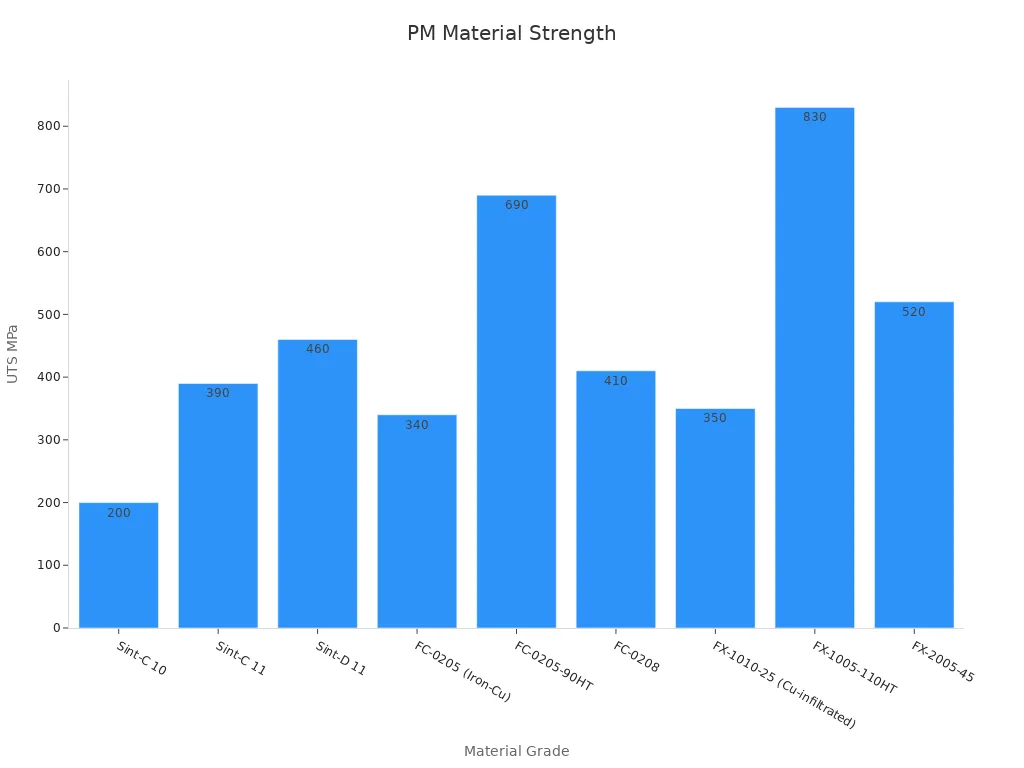
Researchers have shown that alloying and microstructural design, such as adding nitrogen or TiN particles to titanium, can significantly boost tensile strength. These findings help engineers match material strength to specific application requirements.
Cost Comparison
Material cost plays a crucial role in project feasibility. Iron and iron-copper alloys offer the most cost-effective solutions for high-volume production, especially in automotive and machinery parts. Stainless steel and copper cost more due to their enhanced properties, such as corrosion resistance and conductivity. Titanium and tungsten rank among the most expensive, justified by their superior strength-to-weight ratio and high-temperature performance. Composites and advanced alloys may increase costs further, but they deliver tailored properties for specialized uses.
Tip: Selecting the right material involves balancing performance needs with budget constraints. For most general applications, iron-based materials provide the best value.
Density and Weight
Density directly affects the weight and performance of finished components. Tungsten stands out with a density of 19.3 g/cm³, making it ideal for radiation shielding and counterweights. In contrast, aluminum and titanium offer low density, supporting lightweight designs in aerospace and automotive sectors. Empirical research shows that alloying elements like tantalum and nickel can increase the density and refine the microstructure of tungsten-based materials. The table below highlights how fabrication methods and composition influence density:
| Material Composition | Fabrication Method | Relative Density (%) | Observed Effects |
|---|---|---|---|
| Pure Tungsten | L-PBF | 94.4–97.1 | Higher oxygen reduces density |
| W + 10 wt% Ta | L-PBF | 97.5–98.4 | Increased density, refined grains |
| W-Ni alloys | L-PBF | Higher with more Ni | Improved densification |
| W-(Ni)-Cu composites | L-PBF | Higher with more Cu | Increased densification, lower hardness |
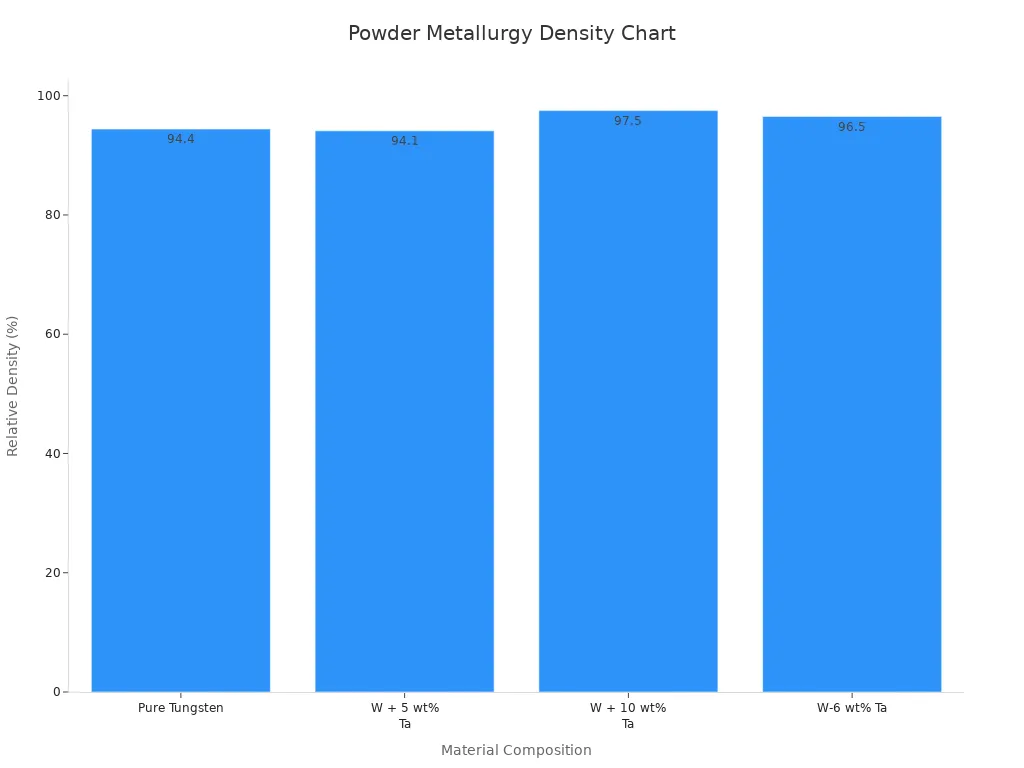
Lightweight composites and ceramics further expand design possibilities, allowing engineers to optimize both weight and performance for advanced applications.
Corrosion Resistance
Corrosion resistance remains a critical property for many engineering applications. Different materials show varying levels of protection against rust, oxidation, and chemical attack. Stainless steel provides excellent resistance due to its chromium content. This property makes it suitable for medical devices, food processing equipment, and marine components. Aluminum forms a natural oxide layer that shields it from environmental damage. Titanium also resists corrosion, even in aggressive environments such as saltwater or acidic conditions.
Copper offers moderate resistance but can tarnish over time. Nickel and its alloys perform well in harsh chemical settings, including chemical plants and high-temperature systems. Tungsten resists oxidation at high temperatures but may oxidize in moist air. Ceramics stand out for their chemical stability and do not corrode in most environments. Composites can be engineered for specific resistance levels by selecting appropriate matrix and reinforcement materials.
| Material | Corrosion Resistance Level | Typical Use Case |
|---|---|---|
| Stainless Steel | Excellent | Medical, food, marine |
| Aluminum | Very Good | Aerospace, automotive |
| Titanium | Outstanding | Medical implants, marine |
| Copper | Moderate | Electrical, plumbing |
| Nickel | High | Chemical processing |
| Tungsten | Good (dry), Poor (moist) | High-temp, electrical |
| Ceramics | Excellent | Electronics, chemical reactors |
| Composites | Variable | Tailored to application |
Tip: For environments with high moisture or chemical exposure, engineers should prioritize materials with proven corrosion resistance.
Application Suitability
Selecting the right material depends on the specific requirements of each application. Engineers evaluate factors such as strength, weight, conductivity, and cost. Iron and tool steels work best for automotive gears, machinery, and cutting tools. Stainless steel fits medical, food, and aerospace uses where hygiene and corrosion resistance matter. Aluminum and titanium serve well in aerospace and automotive parts that require low weight and high strength.
Copper excels in electrical and thermal applications, including contacts and heat exchangers. Nickel-based alloys perform in turbines and chemical plants where high temperature and corrosion resistance are essential. Tungsten finds use in electrical contacts, heating elements, and radiation shielding due to its density and heat tolerance. Ceramics suit electronics, medical devices, and cutting tools because of their hardness and insulation properties. Composites offer tailored solutions for advanced engineering, such as lightweight aerospace structures or wear-resistant automotive parts.
- Iron: Automotive gears, bushings, machinery
- Stainless Steel: Medical devices, food processing, aerospace
- Aluminum: Lightweight automotive and aerospace parts
- Titanium: Implants, aerospace, high-performance automotive
- Copper: Electrical contacts, heat exchangers
- Nickel: Turbines, chemical processing, batteries
- Tungsten: Electrical, high-temperature, shielding
- Ceramics: Electronics, medical, cutting tools
- Composites: Aerospace, automotive, electronics
Note: Engineers should match material properties to the demands of the application for optimal performance and cost-effectiveness.
How to Choose the Best Powder Metallurgy Material
Assessing Project Requirements
Selecting the optimal material begins with a thorough assessment of project requirements. Engineers analyze the intended function, mechanical loads, and regulatory constraints for each application. Modern decision-making tools now support this process by integrating techno-economic analysis with AI-driven recommendations. For example, interactive platforms allow users to query databases containing research from automotive, biomedical, and aerospace fields. These systems retrieve relevant material properties, cost data, and industry-specific constraints, enabling users to compare options based on technical feasibility and cost. Machine learning models, such as Random Forest classifiers, further enhance this process by ranking powders according to user-defined mechanical and chemical criteria. This approach ensures that the selected material aligns with both performance targets and project limitations.
Balancing Performance and Cost
Balancing performance and cost remains a top priority for stakeholders across industries. In high-precision sectors like aerospace, automotive, and medical devices, 79% of decision-makers emphasize the need to achieve cost savings without compromising material performance. Regional trends influence priorities: U.S. companies focus on high-quality powders for 3D printing, Western Europe values sustainability, and Asia seeks low-cost, space-efficient solutions. Strategic investments in advanced powder production technologies and compliance with environmental regulations drive material selection. Performance metrics, such as tensile strength and ductility, guide engineers toward processing routes that deliver the required properties at a reasonable cost. For instance, rapid powder consolidation and efficient heat treatment can produce titanium alloys with high strength and ductility, reducing both time and expense.
| Region | Priority Focus |
|---|---|
| United States | High-quality powders (72%) |
| Western Europe | Sustainability (68%) |
| Asia | Low-cost, space efficiency |
Tip: Engineers should evaluate both direct material costs and long-term performance benefits to ensure project success.
Considering Application Environment
The application environment plays a crucial role in material selection. Engineers must consider factors such as temperature, humidity, chemical exposure, and mechanical stress. Consulting industry standards and certification frameworks provides valuable guidance. Key ISO/ASTM standards, including ISO/ASTM 52942 and ISO/ASTM 52915, offer numerical data and test methods for qualification and certification. These standards address requirements for powder bed fusion operators, digital file formats, and quality assurance protocols. Organizations like ASTM, ISO, VDI, and DIN have developed comprehensive guidelines covering material chemistry, contamination, packaging, handling, and non-destructive testing. By referencing these standards, engineers ensure that selected materials meet safety, quality, and regulatory requirements for each specific environment.
Note: Adhering to recognized standards not only improves reliability but also streamlines certification and compliance processes.
Consulting Industry Standards
Industry standards play a vital role in the selection and application of materials for powder metallurgy. These standards provide clear guidelines for material properties, testing methods, and quality assurance. Organizations such as ASTM International, ISO, and DIN set the benchmarks that manufacturers and engineers follow worldwide.
ASTM International publishes standards like ASTM B243, which defines terminology for powder metallurgy. ISO 4499 outlines methods for measuring the density and porosity of sintered materials. DIN standards, widely used in Europe, specify requirements for both raw powders and finished components. These documents help ensure that parts meet safety, performance, and reliability expectations.
Engineers consult these standards during every stage of the design and manufacturing process. They use them to:
- Verify the chemical composition and purity of metal powders.
- Select appropriate testing procedures for mechanical properties.
- Establish quality control protocols for production batches.
- Ensure traceability and documentation for regulatory compliance.
Note: Adhering to recognized standards reduces the risk of product failure and supports global market acceptance.
A table below highlights some key standards relevant to powder metallurgy:
| Standard | Organization | Focus Area |
|---|---|---|
| ASTM B243 | ASTM | Terminology and definitions |
| ISO 4499 | ISO | Density and porosity measurement |
| DIN 30910 | DIN | Powder and component requirements |
| ISO/ASTM 52915 | ISO/ASTM | Digital file formats for AM |
Manufacturers who follow these standards demonstrate a commitment to quality and safety. Customers and regulatory bodies often require certification to these benchmarks before approving new products or suppliers.
Selecting the right material remains essential for successful powder metallurgy projects. Each option—iron, stainless steel, copper, aluminum, nickel, titanium, tungsten, tool steels, ceramics, and composites—offers unique strengths. Matching material properties to application needs improves manufacturing efficiency and product quality.
- Spherical particles enhance flowability and compaction.
- Particle size and distribution affect strength, cost, and dimensional accuracy.
| Parameter | Impact on Manufacturing |
|---|---|
| Particle Morphology | Consistent flow and compaction |
| Tap Density | Minimizes defects, ensures accuracy |
Engineers should evaluate requirements carefully and consult experts for critical applications.
FAQ
What is the most cost-effective material for powder metallurgy?
Iron offers the best balance of cost and performance. Manufacturers use iron powders for high-volume parts in automotive and machinery industries. Iron’s abundance and ease of processing make it the most economical choice for many applications.
Which powder metallurgy material provides the highest corrosion resistance?
Stainless steel and titanium both deliver excellent corrosion resistance. Stainless steel suits food, medical, and marine environments. Titanium resists aggressive chemicals and saltwater, making it ideal for implants and aerospace parts.
Can powder metallurgy produce complex shapes?
Yes. Powder metallurgy enables the creation of intricate and near-net-shape components. Engineers design parts with internal channels, fine details, or unique geometries that traditional machining cannot achieve efficiently.
How does particle size affect powder metallurgy materials?
Particle size influences flowability, compaction, and final part density. Finer powders improve surface finish and detail but may increase oxidation risk. Coarser powders enhance flow but can reduce part strength.
Are composites suitable for high-temperature applications?
Many composites, especially those with ceramic or refractory metal matrices, perform well at elevated temperatures. Engineers select these materials for turbine blades, heat shields, and other demanding environments.