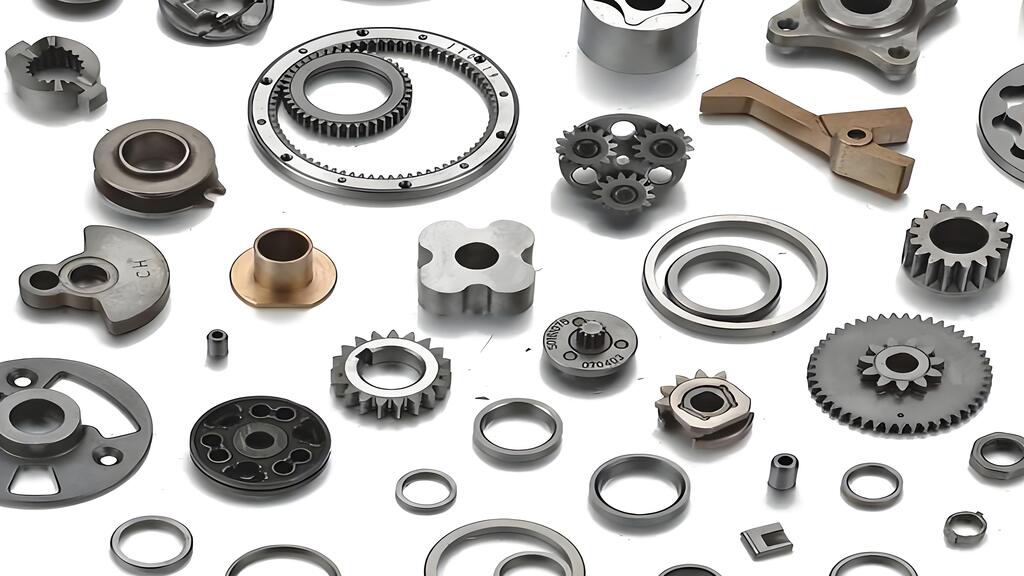


Introduction to titanium 3D printing
1, Titanium alloy 3D printing technology principle
Titanium alloy 3D printing mainly uses the principle of additive manufacturing technology such as Powder Metallurgy, melt deposition, and light curing. Taking powder metallurgy as an example, first of all, the titanium alloy powder is evenly laid on the printing platform, and then the powder is locally melted through a high-energy beam (such as a laser or an electron beam), which is stacked layer by layer according to the preset three-dimensional model, and finally the required titanium alloy parts are formed.
2, Advantage analysis of titanium alloy 3D printing
Titanium alloy 3D printing has the following significant advantages:
1. High degree of customization: 3D printing technology can realize the preparation of titanium alloy parts with complex structures to meet the needs of individuation and customization.
2. High material utilization: Compared with traditional casting and forging processes, 3D printing can greatly reduce the waste of titanium alloy materials.
3. Short production cycle: no need for complex molds and processing processes, can quickly realize the transformation from design to entity.
3, Titanium alloy 3D printing application field
Titanium alloy 3D printing is widely and deeply applied in the medical field, and it has become a revolutionary technology in the medical field with its unique biocompatibility, high strength and lightweight characteristics. The following is the specific application of titanium alloy 3D printing in the medical field:
1. Customized medical instruments and tools: Titanium 3D printing technology can accurately replicate complex geometric shapes and customize various instruments and tools for the medical field, such as surgical guides, dental implants, orthoses, etc. These customized products can be tightly fitted to the patient's anatomy, improving surgical accuracy and treatment outcomes.
2. Artificial joints and bone implants: Titanium alloy has become the ideal material for artificial joints and bone implants because of its good biocompatibility and mechanical properties. Through 3D printing technology, doctors can customize implants that perfectly match the bone structure of patients according to their specific needs, thereby improving the success rate of surgery and the speed of recovery of patients.
3. Complex biological tissue engineering structure: Titanium alloy 3D printing technology can also be used to build complex biological tissue engineering structures, such as blood vessels, heart valves, etc. By printing out a structure similar to natural tissue, it can provide patients with more effective treatments and promote tissue regeneration and repair.
4. Personalized drug delivery system: Titanium alloy 3D printing technology can be used to manufacture personalized drug delivery systems, such as microneedles, drug slow-release devices, etc. These systems can precisely control the speed and dosage of the drug according to the specific needs of the patient, improving treatment effectiveness and reducing side effects.
5. Preoperative planning and model making: Through titanium alloy 3D printing technology, doctors can make 1:1 three-dimensional models according to patients' CT or MRI data for preoperative planning and simulation of surgical process. This helps to improve the success rate of surgery and reduce the risk of surgery.
6. Dental applications: Titanium alloy 3D printing is particularly widely used in the field of dentistry, including the production of dental molds, implant guides, orthodontic and orthopedic guides, invisible braces, denture internal crowns, etc. These applications are able to accurately replicate a patient's tooth morphology, improving treatment accuracy and comfort.

4, Titanium alloy 3D printing case sharing
Taking the aviation field as an example, titanium alloy 3D printing technology has been successfully applied to the manufacturing of engine parts. A well-known aerospace manufacturer has successfully printed complex engine blades using titanium alloy 3D printing technology, which not only improves the performance of components but also significantly shortens the develoPment and production cycle.
5, Titanium alloy 3D printing future development prospects
With the continuous maturity of titanium alloy 3D printing technology, it can be expected to further develop in the following aspects in the future:
1. Material innovation: Develop titanium materials with better performance and lower cost to expand the application range of 3D printing.
2. Technology upgrade: improve printing accuracy, speed and efficiency to meet the production needs of larger scale and higher requirements.
3. Intelligent manufacturing: Combining artificial intelligence, Internet of things and other technologies to achieve automatic and intelligent production of titanium alloy 3D printing.
In short, titanium alloy 3D printing technology with its unique advantages and broad application prospects, is gradually becoming an important force to promote the transformation and upgrading of the manufacturing industry. With the continuous progress of technology and the continuous expansion of the market, titanium alloy 3D printing will play a more important role in the future.
JH MIM titanium 3D printing is constantly improving, and its application in the medical field covers many aspects, which has injected new vitality into the development of medical technology. With the continuous progress of technology and the deepening of applications, titanium alloy 3D printing will play a greater role in the medical field, bringing better treatment results and quality of life to patients. If you have 3D titanium alloy printing needs, please contact us!