Ceramic Tubes vs. Metal Tubes: Which Performs Better in High Temperatures?
High-temperature applications demand specific material properties. Ceramic tubes often surpass metal tubes in these extreme conditions. They provide excellent thermal stability, resisting degradation at intense heat. Furthermore, ceramic tubes exhibit superior chemical resistance, crucial in harsh environments. Their insulating properties also stand out. Selecting the right material, considering Ceramic Tubes vs. Metal Tubes, is vital for operational success and safety.
Key Takeaways
- Ceramic tubes handle very high temperatures better than metal tubes. They do not melt or change shape easily.
- Ceramic tubes resist chemicals and rust well. This makes them good for harsh environments.
- Ceramic tubes are good at blocking heat. They act like insulators, keeping heat where it should be.
- Metal tubes are stronger for heavy loads and impacts. But they get weaker when it gets very hot.
- Metal tubes are good at moving heat quickly. This is useful for cooling systems.
- Ceramic tubes are great electrical insulators. They stop electricity from flowing, even in hot places.
- Ceramic tubes cost more to make than metal tubes. This is because they need special processes.
- Choose ceramic tubes for extreme heat, chemicals, or electrical insulation. Choose metal tubes for strength, quick heat transfer, or lower costs.
Ceramic Tubes vs. Metal Tubes: High-Temperature Stability
High-temperature stability is a critical factor when selecting materials for demanding industrial applications. The ability of a material to maintain its structural integrity and performance under extreme heat directly impacts operational efficiency and safety. This section explores how ceramic tubes and metal tubes perform under such conditions, highlighting their inherent strengths and weaknesses.
Thermal Endurance of Ceramic Tubes
Ceramic tubes demonstrate remarkable thermal endurance, making them ideal for environments where temperatures soar. Their atomic structure provides inherent stability at elevated temperatures.
Exceptional Melting Points
Ceramic Materials possess exceptionally high melting points, allowing them to operate effectively in environments that would cause most metals to fail. For instance, alumina (Al₂O₃) tubes can withstand temperatures up to 1750°C in an inert environment. Silicon carbide (SiC) tubes exhibit even greater resilience, with operating temperatures reaching 1900–2000°C. Specialized metal-ceramic composite tubes, such as MCT (aluminum oxide and chromium), handle temperatures up to 1538°C (2800°F), while SCT (Silicon Carbide) tubes can endure up to 1649°C (3000°F). These high melting points prevent the material from liquefying or undergoing significant phase changes, ensuring structural integrity.
| Material | Maximum Temperature (°C) |
|---|---|
| Alumina, Al₂O₃ | 1750 |
| Silicon Carbide, SiC | 1900–2000 |
Minimal Thermal Expansion
Ceramic tubes also exhibit minimal thermal expansion. This property is crucial in high-temperature cycling applications, where materials repeatedly heat and cool. Low thermal expansion reduces internal stresses that can lead to cracking or fatigue. This characteristic contributes significantly to the long-term durability and reliability of ceramic components in fluctuating thermal environments.
Metal Tube Limitations at High Temperatures
While many metal alloys offer excellent strength at room temperature, their performance degrades significantly as temperatures rise. This degradation presents substantial challenges in high-temperature applications.
Creep Deformation Risks
Metal tubes face a significant risk of creep deformation at elevated temperatures. Creep refers to the slow, permanent deformation of a material under constant stress, even below its yield strength. This phenomenon typically occurs when temperatures exceed 40-50 percent of the metal's absolute melting temperature (0.4-0.5 Tm, measured in Kelvin). For example, Coble creep occurs at cooler temperatures, primarily at grain boundaries, while Harper-Dorn creep can manifest between 35% and 60% of the material's melting temperature, especially under low-stress conditions. This gradual deformation can lead to structural failure over time, compromising the integrity of the system.
Softening and Structural Weakness
As temperatures increase, metal tubes experience a reduction in their mechanical strength and hardness. This softening makes them more susceptible to plastic deformation and structural collapse under load. The atomic bonds within the metal weaken, reducing its ability to resist external forces. This loss of strength necessitates careful design considerations and often limits the maximum operating temperature for metal components, particularly in load-bearing applications. The comparison of Ceramic Tubes vs. Metal Tubes clearly shows ceramics' advantage in maintaining structural integrity under extreme heat.
Chemical Resistance: Ceramic Tubes vs. Metal Tubes
Chemical resistance is a crucial factor in high-temperature applications where materials encounter aggressive substances. The ability of a tube to withstand chemical attack directly impacts its lifespan and the safety of the process. This section explores how ceramic tubes and metal tubes perform when exposed to harsh chemical environments.
Ceramic Tubes: Inertness in Harsh Environments
Ceramic tubes demonstrate exceptional inertness in harsh chemical environments. Their stable chemical bonds make them highly resistant to degradation from various corrosive agents, even at elevated temperatures.
Resistance to Oxidation
Ceramic tubes offer superior resistance to oxidation. Zirconia ceramic tubes, for example, are chemically inert and possess excellent corrosion resistance. This property is vital in environments with high oxygen concentrations or other oxidizing agents. LT-1 ceramic tubes show excellent resistance to oxidizing atmospheres. Specifically, these tubes resist SO2 and SO3 gases. Thermowells made from LT-1 have not shown penetration by these gases over three years. This resistance comes from a tightly bonded layer of chromium oxide and the inherent inertness of alumina within the material.
Immunity to Corrosive Gases
Ceramic tubes are largely immune to corrosive gases. Their stable composition prevents reactions that would degrade other materials. This immunity extends to various aggressive gaseous compounds. Ceramic heat pipes, designed for high-temperature power engineering, exhibit exceptional resistance to wear and corrosion in highly abrasive and corrosive atmospheres. This characteristic makes them suitable for handling ferrous molten metals and for use in metalworking applications. LT-1 ceramic also resists wetting by various molten metals and basic furnace slags, further highlighting its robust chemical stability.
Metal Tube Vulnerabilities to Chemical Attack
Metal tubes, despite their mechanical strengths, often show significant vulnerabilities to chemical attack, especially at high temperatures. Various mechanisms can lead to their degradation.
High-Temperature Corrosion
Metal tubes are susceptible to several forms of high-temperature corrosion. Common mechanisms include carburization, nitriding, high-temperature oxidation, and sulfidation. High-temperature oxidation involves forming a metal oxide skin, or scale, on the metal surface. This external oxidation occurs in boilers, furnaces, and at turbine vanes. While alloying elements like chromium or aluminum can improve oxidation resistance by forming a protective oxide layer, these alloys can still suffer from internal oxidation. This means oxides form below the metal surface, leading to embrittlement.
Sulfidation, or oxidation by sulfur, is generally more destructive than oxidation by oxygen. Sulfide scales tend to crack and spall more easily. Metal sulfides also have lower melting points. Once a melt forms, the corrosion rate increases drastically. Sulfidation can occur on the flue gas side in boilers and in turbines. Hot corrosion is an accelerated attack, particularly on gas turbine blades. It involves sulfidation and occurs in two types: Type I (high-temperature, 850–950°C, involving liquid sodium sulfate) and Type II (low-temperature, 650–700°C, involving low-melting mixtures of Na2SO4 and CoSO4).
Reaction with Molten Substances
Metal tubes can react significantly with molten substances. Sulfur corrosion is a form of sulfidation that occurs at lower temperatures (260–540°C) in carbon and low-alloyed steels exposed to sulfur-containing hydrocarbons. Carburization involves the absorption of carbon into the metal at high temperatures. This process can reduce resistance against oxidation and sulfidation in chromium-containing alloys. It happens because chromium depletes and chromium carbides form at grain boundaries, causing intergranular attack and cracking. Metal dusting is a specific form of carburization. It occurs in low-alloyed steels, chromium steels, austenitic stainless steels, and nickel and cobalt alloys between 450°C and 800°C. Materials disintegrate into a powdery mixture of carbon, metal particles, and sometimes metal oxides and carbides. Nitriding occurs when steel is exposed to ammonia or other nitrogen compounds at high temperatures. This leads to the diffusion of active nitrogen into the metal and the formation of nitrides. While nitriding is used for surface hardening, undesired nitriding can result in a brittle and insufficiently protective nitride skin, reducing corrosion resistance and toughness. Direct attack can occur with extended heating in a nitrogen-containing gas stream at high temperatures. The comparison of Ceramic Tubes vs. Metal Tubes clearly shows ceramics' superior chemical resilience.
Thermal Conductivity: Ceramic Tubes vs. Metal Tubes
Thermal conductivity plays a vital role in high-temperature applications. It determines how efficiently a material transfers heat. Understanding this property helps engineers choose the right tube material for specific thermal management needs.
Ceramic Tubes as Superior Insulators
Ceramic tubes often serve as excellent insulators. Their atomic structure inherently restricts heat flow. This property makes them valuable in applications requiring thermal isolation.
Low Thermal Conductivity Benefits
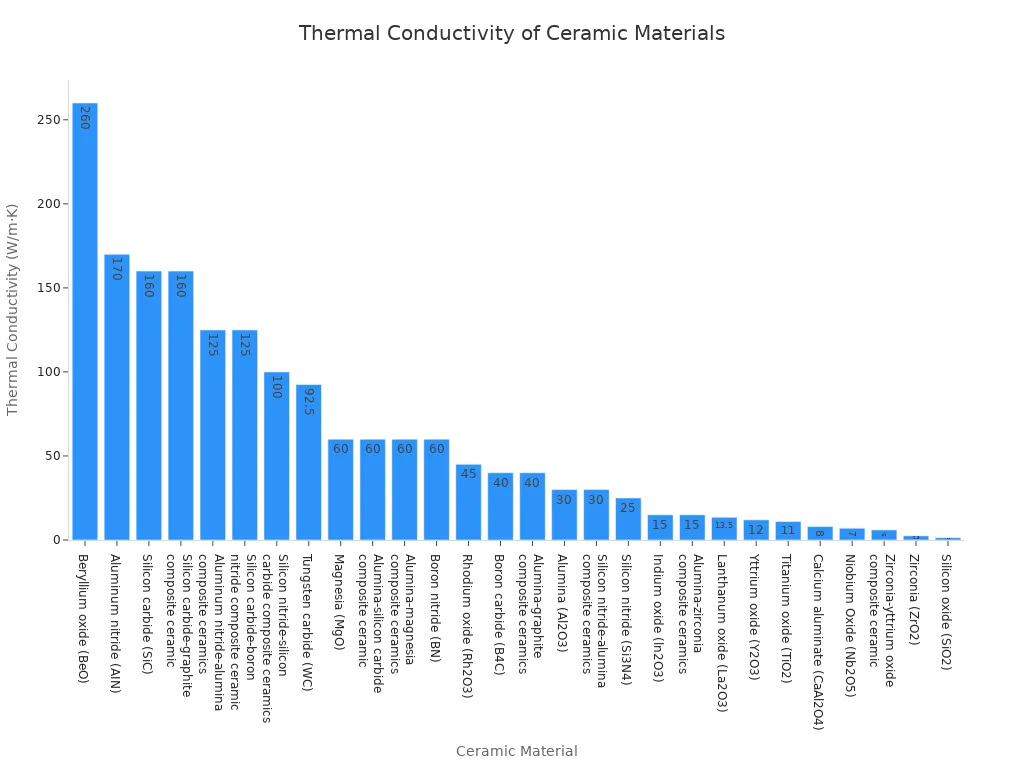
Low thermal conductivity offers significant advantages. It minimizes heat loss from hot processes. It also prevents heat transfer to sensitive components. This characteristic helps maintain stable temperatures within a system. Many ceramic materials exhibit very low thermal conductivity.
| Ceramic Material | Thermal Conductivity (W/m·K) |
|---|---|
| Aluminum nitride (AIN) | 170 |
| Beryllium oxide (BeO) | 260 |
| Silicon carbide (SiC) | 120-200 |
| Silicon nitride (Si3N4) | 20-30 |
| Alumina (Al2O3) | 25-35 |
| Magnesia (MgO) | 60 |
| Zirconia (ZrO2) | 2-3 |
| Boron nitride (BN) | 60 |
| Boron carbide (B4C) | 30-50 |
| Yttrium oxide (Y2O3) | 12 |
| Titanium oxide (TiO2) | 11 |
| Silicon oxide (SiO2) | 1.4 |
| Tungsten carbide (WC) | 85-100 |
| Niobium Oxide (Nb2O5) | 6-8 |
| Indium oxide (In2O3) | 15 |
| Calcium aluminate (CaAl2O4) | 6-10 |
| Lanthanum oxide (La2O3) | 12-15 |
| Rhodium oxide (Rh2O3) | 40-50 |
| Silicon carbide-graphite composite ceramic (SiC-C) | 120-200 |
| Silicon nitride-alumina composite ceramics (Si3N4 Al203) | 20-40 |
| Alumina-silicon carbide composite ceramic (AI2O3- SiC) | 50-70 |
| Aluminum nitride-alumina composite ceramics (AIN- Al2O3) | 100-150 |
| Zirconia-yttrium oxide composite ceramic (ZrO2-Y2O3) | 2-10 |
| Alumina-zirconia composite ceramics (AI203-ZrO2) | 10-20 |
| Silicon nitride-silicon carbide composite ceramics (Si3N4-SiC) | 80-120 |
| Silicon carbide-boron nitride composite ceramic (SiC-BN) | 100-150 |
| Alumina-graphite composite ceramics (AI2O3-C) | 30-50 |
| Alumina-magnesia composite ceramics (AI2O3-MgO) | 50-70 |
Beryllium oxide (BeO) shows a thermal conductivity range of 184-300 W/mK. Aluminum nitride (AlN) has a thermal conductivity between 140-180 W/mK. Its thermal conductivity decreases by about 10-15% between room temperature and 100°C. Silicon carbide (SiC) has a thermal conductivity ranging from 120-180 W/mK. It shows relatively small performance degradation in high-temperature environments. Alumina (Al2O3) has a lower thermal conductivity, typically between 20-50 W/mK. Zirconium carbide (ZrC), an ultra-high temperature ceramic, has a thermal conductivity of 20-40 W/mK. It exhibits excellent thermal stability and mechanical strength in ultra-high temperature environments. The thermal conductivity of most ceramic materials decreases with increasing temperature. However, silicon carbide's performance degradation in high-temperature environments is relatively small.
Maintaining Thermal Gradients
Ceramic tubes effectively maintain thermal gradients. They create a barrier between hot and cold zones. This capability is essential in applications like furnace linings or thermocouple protection. It ensures accurate temperature readings and efficient energy use.
Metal Tubes: Heat Conduction Properties
Metal tubes possess different thermal properties. They are generally excellent heat conductors. This characteristic makes them suitable for specific thermal applications.
Efficient Heat Transfer
Metals efficiently transfer heat. Their free electrons readily move thermal energy. This property is beneficial in heat exchangers or cooling systems. Engineers design these systems to quickly move heat from one area to another.
Challenges in Insulation Needs
Metal tubes present challenges when insulation is necessary. Their high thermal conductivity means they readily transfer heat. This requires additional insulation layers to prevent heat loss or protect surrounding components. Such insulation adds to the system's complexity and cost. It also increases the overall size of the assembly.
Mechanical Strength and Durability: Ceramic Tubes vs. Metal Tubes

The mechanical strength and durability of materials are paramount in high-temperature applications. Engineers must consider how tubes withstand physical stresses and maintain structural integrity under extreme conditions. This section examines the inherent strengths and weaknesses of ceramic and metal tubes in terms of mechanical performance.
Ceramic Tubes: Brittleness vs. Strength
Ceramic tubes possess unique mechanical properties. They exhibit remarkable strength under specific conditions but also have a notable vulnerability.
High Compressive Strength
Ceramic materials are exceptionally strong under compression. Advanced technical ceramics retain most of their room temperature strength even at high temperatures. They essentially revert to their original properties and dimensions upon returning to ambient temperatures. This characteristic is crucial for applications requiring strength in high-temperature environments. Silicon Carbide (SiC) fibers, for example, are vital for ultra-high-temperature applications. They offer temperature resistance up to 1800 °C and a tensile strength of 3.5 GPa. These properties make them essential for Ceramic Matrix Composites (CMCs) used in aerospace, nuclear, and hypersonic technologies. Zirconium oxides (ZrO2), such as CoorsTek Dura-Z® and Technox® zirconias, are durable ceramics known for their exceptional fracture toughness. They exhibit remarkable impact and fatigue resistance, making them suitable for applications demanding high-performance mechanical strength and long-term endurance. Technical ceramics are also significantly harder than all metals and naturally occurring materials, except diamond. This extreme hardness often extends wear life 10 to 100 times longer than conventional metals.
Susceptibility to Thermal Shock
Despite their high strength, ceramic tubes are susceptible to thermal shock. Rapid temperature changes can induce significant internal stresses, leading to cracking or fracture. However, advanced ceramic composites address this limitation. Ultra-High-Temperature Ceramic Matrix Composites (UHTCMCs), particularly those based on ZrB2–SiC reinforced with carbon fibers, demonstrate remarkable thermal shock resistance. A unidirectional Cf–ZrB2 composite showed an increase in flexural strength from approximately 360 MPa at room temperature to over 550 MPa at 1500 °C. This material maintained its integrity even after repeated thermal shocks up to 1400 °C, experiencing only about 16% degradation in strength. The thermal shock index (Sth) for UHTCMC ceramics, calculated using various material properties, resulted in an Sth of 43.02. This value indicates a favorable balance of thermal shock resistance for UHTCMC ceramics, which effectively suppress erosion in rocket nozzle applications.
Metal Tubes: Ductility and Toughness
Metal tubes generally offer different mechanical characteristics compared to ceramics, particularly in terms of ductility and toughness.
Resistance to Impact
Metal tubes typically exhibit good ductility and toughness. They can deform plastically under stress before fracturing, absorbing impact energy effectively. This property makes them resilient against sudden impacts or dynamic loads. This contrasts with the brittle nature of many ceramics.
Loss of Strength at Elevated Temperatures
A significant limitation for metal tubes is their loss of strength at elevated temperatures. As temperatures increase, metals experience softening and a reduction in their yield strength and ultimate tensile strength. This degradation makes them more prone to deformation and failure under load in high-temperature environments. This contrasts with advanced ceramics, which often maintain their strength at extreme heat.
Electrical Insulation: Ceramic Tubes vs. Metal Tubes
Electrical insulation is a critical consideration in many high-temperature applications. Materials must prevent electrical current flow while enduring extreme heat. The choice between ceramic and metal tubes significantly impacts electrical safety and system performance in these demanding environments.
Ceramic Tubes: Excellent Dielectric Properties
Ceramic tubes consistently demonstrate superior electrical insulation properties. Their atomic structure inherently resists electrical current. This makes them ideal for isolating electrical components.
High Electrical Resistivity
Alumina ceramic tubes exhibit excellent electrical insulation. They feature high dielectric strength and low electrical conductivity. This property allows them to effectively isolate electrical components. They prevent leakage or short circuits, contributing to enhanced safety and reliable performance in electrical systems. Alumina ceramic tubes, with a purity rate of 99.5 to 99.8 percent, are highly dielectric and gas-tight. This high resistivity ensures minimal current flow, even under high voltage conditions.
Stable Performance at High Heat
These tubes demonstrate remarkable stability at high temperatures. They withstand extreme heat without warping, softening, or structural changes. This makes them suitable for applications in furnaces, kilns, and high-temperature processing. Alumina ceramic tubes are widely used in high-temperature industries. They resist temperatures up to 1800°C. They also possess stable chemical properties, high mechanical strength, and electrical insulation. This makes them suitable for high-temperature furnaces, thermocouple tubes, and insulating tubes. Their extreme high-temperature stability, combined with resistance to thermal shock due to low thermal expansion, ensures consistent electrical isolation.
Metal Tubes: Electrical Conduction
Metal tubes behave differently regarding electrical properties. They are generally excellent electrical conductors. This characteristic presents challenges in applications requiring electrical isolation.
Inherent Conductivity
Metals inherently conduct electricity. Their free electrons readily move electrical charges. This property makes them useful for carrying current or grounding systems. However, it also means they cannot provide electrical insulation on their own. In high-temperature settings, this conductivity remains a constant factor. Engineers must account for it in system design.
Insulation Requirements
Metal tubes require external insulation for electrical isolation. Designers must apply additional dielectric materials to prevent current flow. This adds complexity and cost to the system. The insulating material must also withstand the high temperatures. It must maintain its dielectric properties under extreme heat. This often necessitates specialized coatings or sleeves. These additions increase the overall size and weight of the assembly. They also introduce potential points of failure if the insulation degrades.
Manufacturing and Cost Considerations for Ceramic Tubes vs. Metal Tubes
Manufacturing processes and associated costs significantly influence material selection for high-temperature applications. The inherent properties of ceramic and metal tubes lead to distinct fabrication challenges and economic implications.
Fabrication Complexity of Ceramic Tubes
Producing ceramic tubes often involves intricate processes due to the materials' unique characteristics. These complexities contribute to higher manufacturing costs and longer production times.
Sintering and Machining Challenges
Ceramic materials possess high hardness and brittleness. These properties make manufacturing processes time-consuming and difficult. Conventional slip casting methods face issues such as complex demolding procedures. They also have limitations in material composition and extended drying times. Machining ceramics to precise dimensions after Sintering requires specialized tools and techniques, further increasing complexity and cost.
Specialized Production Processes
Advanced shaping techniques, like injection molding and 3D printing, enable complex ceramic tube geometries. However, these methods necessitate prolonged exposure to high temperatures at low heating rates for polymer removal. This process can degrade the performance of the final sintered ceramics. Such specialized production processes require significant investment in equiPment and expertise.
Metal Tube Manufacturability
Metal tubes generally offer more straightforward manufacturing processes compared to ceramics. This ease of fabrication often translates into lower production costs and greater availability.
Easier Forming and Welding
Manufacturers can form and weld metal tubes with relative ease. Standard industrial techniques like extrusion, drawing, and bending allow for efficient shaping. Welding processes are well-established, enabling the creation of complex assemblies and repairs. These methods are typically less demanding than ceramic fabrication.
Material Availability and Cost
Alumina ceramic tubes are generally more expensive than traditional material tubes. The cost of producing advanced ceramics is approximately 30% higher than traditional materials. Production of ceramic tubes involves complex processes and expensive raw materials, leading to higher costs compared to alternatives such as metal or plastic tubes. The global metal tube market is projected to grow at a CAGR of 5%, driven by lower production costs and widespread availability. Metal and plastic tubes offer cost advantages and are widely used in applications where ceramic tubes could be employed. Metal tubes are noted for their widespread availability, making them a more accessible and often more economical choice for many industrial applications.
Applications Where Ceramic Tubes Excel
Ceramic tubes demonstrate superior performance in numerous demanding industrial applications. Their unique properties make them indispensable in environments involving extreme heat, corrosive chemicals, or the need for precise thermal and electrical isolation.
Furnace and Kiln Components
Ceramic tubes are crucial components within furnaces and kilns. They withstand the intense conditions required for various industrial heating processes.
High-Temperature Linings
While ceramic insulation strips reduce crack formation and extend service life in furnace linings, ceramic tubes primarily serve other critical roles within these high-temperature environments. They provide stable and efficient insulation, ensuring operational integrity.
Radiant Tubes
Ceramic radiant tubes are essential for indirect heating applications. They heat metals in protective atmospheres, preventing contamination. W-tube combustion systems, a common industry standard, operate effectively up to 1,000°C. Robust silicon carbide tubes can handle even higher temperatures, reaching up to 1,350°C. These tubes ensure performance and efficiency through enhanced designs and carefully selected materials. Thin-wall twisted geometries improve heat transfer. This optimizes efficiency and improves temperature uniformity. Their thermal shock-resistant microstructure provides a long service life and effective thermal cycling. Integrating these tubes with recuperators, flame tubes, and radiant tube inserts increases throughput, saves energy, reduces emissions, and lowers maintenance frequencies.
Thermocouple Protection Tubes
Ceramic tubes play a vital role in protecting sensitive temperature sensors. They ensure accurate and reliable measurements in harsh conditions.
Sensor Isolation in Extreme Heat
Ceramic protection tubes are crucial for thermocouple sensors in harsh industrial settings. They act as a barrier, shielding the sensing element from corrosion, mechanical damage, and high temperatures. These tubes withstand temperatures up to 1800°C, depending on the material. They also offer excellent corrosion and oxidation resistance, ensuring reliable performance in chemically aggressive environments. Engineers design them to resist mechanical stress and thermal shock.
Accurate Temperature Measurement
This protection ensures reliable temperature readings over time. It extends the lifespan of thermocouples, reduces maintenance costs, and improves measurement accuracy. Material versatility is key. Alumina (Al₂O₃) provides excellent thermal stability and high corrosion resistance. Silicon carbide (SiC) offers superior thermal conductivity, resistance to thermal shock, and exceptional mechanical strength. Silicon nitride (Si₃N₄) delivers outstanding resistance to rapid temperature fluctuations and chemical corrosion.
Chemical Processing Equipment
The chemical industry heavily relies on ceramic tubes for handling aggressive substances at elevated temperatures.
Corrosive Fluid Transport
Ceramic tubes are ideal for transporting corrosive fluids. Silicon nitride ceramic tubes find use in manufacturing acid and alkali liquid transportation pipelines. Their corrosion and wear resistance make them suitable for catalyst carriers. Hexoloy® SE silicon carbide tubes are a preferred choice for shell and tube heat exchangers. They excel in fine and specialty chemical applications due to their universal corrosion resistance, high thermal conductivity, and mechanical strength.
High-Temperature Reactors
Ceramic tubes are also essential in high-temperature reactors. Zirconia ceramic tubes are employed in producing high-temperature furnace tubes, reactors, and heat exchangers. This is due to their high strength, corrosion resistance, and excellent high-temperature capabilities.
Aerospace and Defense Systems
Ceramic tubes are indispensable in aerospace and defense systems. These applications often involve extreme thermal conditions. Ceramic materials provide critical protection and ensure operational integrity in these demanding environments.
Jet Engine Hot Sections
Jet engine hot sections experience some of the most extreme temperatures in engineering. Ceramic tubes perform vital functions here. Materials like Zirconia, Silica, and Carbon-Carbon act as a primary defense against intense heat. They offer superior performance, excellent insulation, and controlled ablation. This ensures minimal heat insulation loss. These properties are crucial for equipment safety and maintaining operational integrity. Ceramic tubes also shield sensitive sensors and wiring from the extreme high temperatures encountered during flight. They withstand severe thermal cycles without failure, maintaining the integrity and safety of critical components. This resilience prevents premature wear and extends the lifespan of expensive engine parts.
Thermal Barrier Coatings
Ceramic materials are also essential for thermal barrier coatings (TBCs) in aerospace and defense. These coatings protect metal components from direct exposure to high temperatures. TBCs, often applied as thin ceramic layers, significantly reduce the heat transferred to the underlying metal. This allows engines to operate at higher temperatures, improving fuel efficiency and thrust. The ceramic layers prevent thermal fatigue and oxidation of metal parts. This enhances the durability and reliability of jet engine components. The ability of ceramic tubes to maintain their structural and insulating properties at extreme heat makes them ideal for these protective applications. They ensure that advanced aerospace systems can perform reliably under the most challenging thermal stresses.
Applications Where Metal Tubes Remain Preferred
Metal tubes maintain their preference in several critical applications. They offer distinct advantages where specific mechanical properties, heat transfer characteristics, or cost considerations are paramount.
High Mechanical Load Requirements
Metal tubes excel in environments demanding significant mechanical strength. They provide robust support and withstand considerable stress.
Structural Support in Hot Environments
Engineers often select metal tubes for structural support in hot environments. They offer the necessary rigidity and load-bearing capacity. Examples include ethylene pyrolysis coils, tube supports, and hangars. Metal tubes also form essential components in steam superheaters and heat treating fixtures. These applications require materials to sustain heavy loads while exposed to elevated temperatures. Inconel 718 alloy finds widespread use in high-temperature applications. It appears in aircraft, turbocharger rotors, and gas turbines. This alloy offers excellent strength, ductility, and creep resistance at elevated temperatures. Q345R steel, commonly used for pressure vessels and pipes in China, also demonstrates suitability for high-temperature applications where mechanical properties are crucial.
Dynamic Stress Applications
Metal tubes perform well under dynamic stress. Their inherent ductility allows them to absorb impacts and vibrations better than brittle ceramics. This makes them suitable for systems experiencing fluctuating forces or mechanical shock.
Specific Heat Exchange Needs
Metal tubes are indispensable for applications requiring efficient heat transfer. Their high thermal conductivity is a key advantage.
Rapid Heat Transfer Systems
Metal tubes are ideal for rapid heat transfer systems. Solid fin tubes, for instance, significantly increase the surface area for heat exchange. This design enhances heat transfer between an internal fluid and the surrounding medium. The continuous, solid metal fin ensures uniform heat dissipation. It also provides consistent thermal performance, reducing thermal resistance. Manufacturers make these tubes from materials like copper, known for excellent thermal conductivity. Aluminum offers lightweight properties and corrosion resistance. Stainless steel provides durability, and carbon steel is cost-effective. The choice depends on specific application requirements.
Heat Dissipation Components
The working principle involves heat absorption or rejection by the internal fluid. Heat then transfers to the fins and dissipates into the surrounding air or liquid. Fans or external cooling fluids often aid this process. Key advantages include increased heat transfer efficiency due to a large surface area. They also offer durability and longevity from the unbroken fin design. Versatile material selection and reliable performance make them suitable for various industrial applications. These include heat exchangers, boilers, condensers, and radiators.
Cost-Sensitive and Less Extreme Environments
Metal tubes often present a more practical solution in less demanding or budget-constrained scenarios.
Lower Temperature Industrial Uses
Many industrial processes operate at temperatures below the extreme thresholds where ceramics become essential. In these lower temperature environments, metal tubes offer sufficient performance. They provide a cost-effective alternative without compromising safety or efficiency.
Ease of Repair and Replacement
Metal tubes generally offer easier repair and replacement options. Standard welding and fabrication techniques simplify maintenance. This reduces downtime and overall operational costs. Their widespread availability also contributes to quicker procurement and installation.
Future Innovations in Ceramic Tubes vs. Metal Tubes
The ongoing evolution of materials science continues to push the boundaries for both ceramic and metal tubes. Researchers develop new compositions and manufacturing techniques. These innovations aim to enhance performance in increasingly demanding high-temperature environments.
Advanced Ceramic Composites
Advanced ceramic composites represent a significant leap forward. They address traditional ceramic limitations like brittleness. These new materials offer superior performance characteristics.
Enhanced Toughness and Durability
Scientists are developing novel ceramic composites with improved toughness and durability. A new polymer impregnation and pyrolysis process fabricates Al₂O₃f/Al₂O₃ composites. This method enhances the material's properties. Furthermore, Ultra-High Temperature Ceramic Matrix Composites (UHTCMCs) based on a ZrB₂-matrix are under development for extremely harsh environments. These UHTCMCs combine the strength of dense ceramics with the flaw tolerance of lightweight composites. This combination achieves increased erosion resistance, improved damage tolerance, and enhanced thermal shock resistance. For example, a UHTCMC prototype uses a matrix of 89% ZrB₂, 3% SiC, and 8% Si₃N₄. Silicon carbide acts as a reinforcing and oxidation-resistant phase in this composition. These composites show a flexural strength increase from 360 MPa at room temperature to over 550 MPa at 1500 °C, demonstrating non-brittle behavior.
Improved Thermal Shock Resistance
Advanced ceramic composites also exhibit significantly improved thermal shock resistance. The UHTCMC materials mentioned previously sustained thermal shock severity up to 1500 °C. They experienced a maximum strength decrease of only 16% at 1400 °C. Alumina-fiber-reinforced alumina ceramic matrix composites (Al₂O₃/Al₂O₃) also show enhanced high-temperature mechanical properties. These composites maintain a high flexural strength of 400 ± 8 MPa even at 1100 °C. This material demonstrates improved thermal shock resistance, making it more reliable under rapid temperature changes.
Novel High-Temperature Metal Alloys
Innovations in metal alloys also continue to advance their capabilities for high-temperature applications. These developments focus on new material compositions and refined manufacturing processes.
Oxide Dispersion Strengthened Materials
Superalloys remain at the forefront of high-temperature metal technology. These alloys, primarily based on nickel, cobalt, or iron, maintain strength and resist oxidation at extreme temperatures. Recent advancements include improved thermal stability, allowing them to withstand higher temperatures for longer periods. Developers also create advanced coatings and alloy compositions to reduce oxidation and material degradation. High-Entropy Alloys (HEAs) represent another significant innovation. These alloys contain multiple principal elements in near-equal proportions. HEAs offer superior strength, toughness, and wear resistance. This makes them suitable for extreme mechanical stress and radiation resistance. Producers have also enhanced quality control, leading to better homogeneity and cleanliness in these materials. Process control significantly reduces product variation, allowing designers to use higher stress levels safely.
Additive Manufacturing for Complex Geometries
Additive manufacturing, or 3D printing, revolutionizes the production of complex alloy components. This technique enables high-precision manufacturing of customized parts. Previously, such parts were difficult to produce. Advanced forging processes also contribute to improved metal tube performance. Combining various forging methods, such as using large presses to break up cast ingot structures and rotary forges for numerous reductions without reheating, leads to finer grain sizes. This improves efficiency and reduces cycle times.
Ceramic tubes generally offer superior performance in most critical high-temperature environments. They provide exceptional thermal stability, chemical resistance, and insulating properties. Metal tubes retain relevance in specific applications. These include those requiring high mechanical load, specific thermal conduction, or cost-effectiveness. The optimal choice between Ceramic Tubes vs. Metal Tubes depends on the precise demands and constraints of the high-temperature application.
FAQ
What makes ceramic tubes superior in high-temperature environments?
Ceramic tubes possess exceptionally high melting points and minimal thermal expansion. These properties allow them to maintain structural integrity and performance where metals would soften or deform. They resist degradation effectively at extreme heat.
Do metal tubes offer any advantages over ceramic tubes?
Yes, metal tubes excel in applications requiring high mechanical load or rapid heat transfer. They also offer greater ductility and toughness, resisting impact better than ceramics. Metal tubes are often more cost-effective and easier to repair in less extreme environments.
What is thermal shock, and how do ceramic tubes handle it?
Thermal shock occurs when rapid temperature changes induce stress, potentially causing cracking. While traditional ceramics are susceptible, advanced ceramic composites, like UHTCMCs, significantly improve thermal shock resistance. They maintain integrity even after repeated severe temperature fluctuations.
Are ceramic tubes good electrical insulators?
Yes, ceramic tubes are excellent electrical insulators. They feature high electrical resistivity and stable dielectric properties, even at high temperatures. This makes them ideal for isolating electrical components and preventing current leakage in demanding thermal applications.
What gives ceramic tubes their chemical resistance?
Ceramic tubes have stable chemical bonds. This inherent inertness makes them highly resistant to oxidation and corrosive gases. They withstand aggressive chemical environments, even at elevated temperatures, preventing degradation that affects many metals.
Are ceramic tubes more expensive than metal tubes?
Generally, ceramic tubes are more expensive than metal tubes. Their complex fabrication processes, including specialized sintering and machining, contribute to higher production costs. Metal tubes benefit from easier forming, welding, and widespread material availability.
Where do ceramic tubes find common applications?
Ceramic tubes excel in furnace and kiln components, such as radiant tubes and high-temperature linings. They also serve as thermocouple protection tubes, chemical processing equipment, and critical parts in aerospace and defense systems like jet engine hot sections.