

Copper Powder
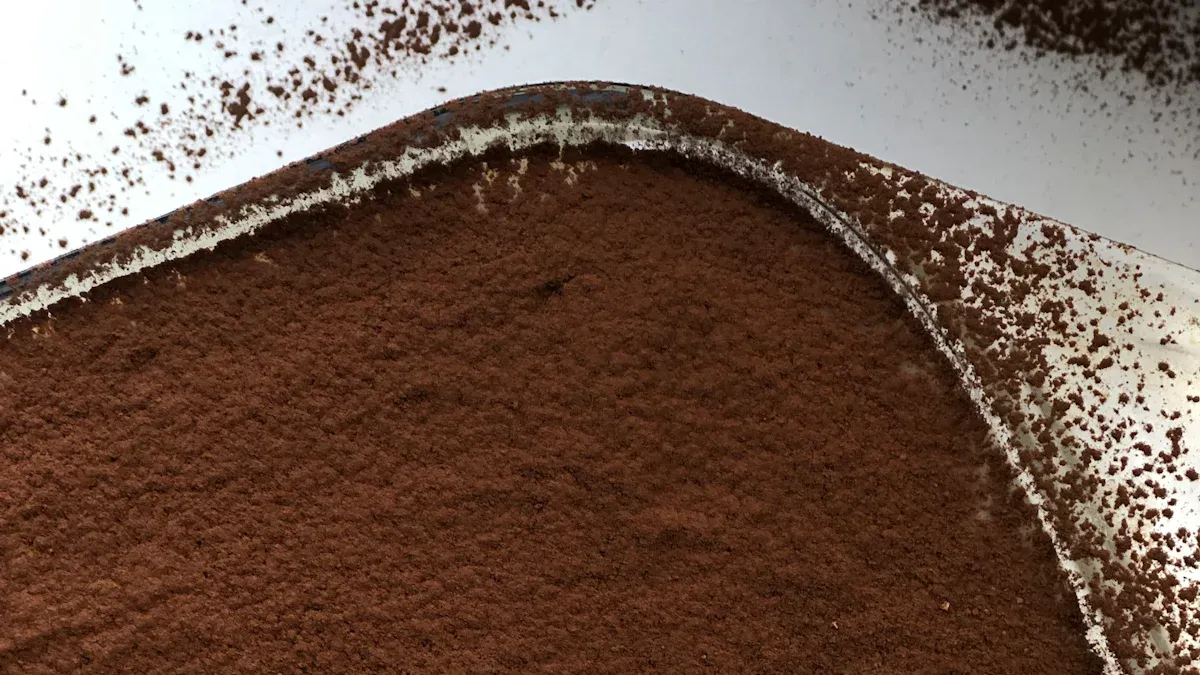
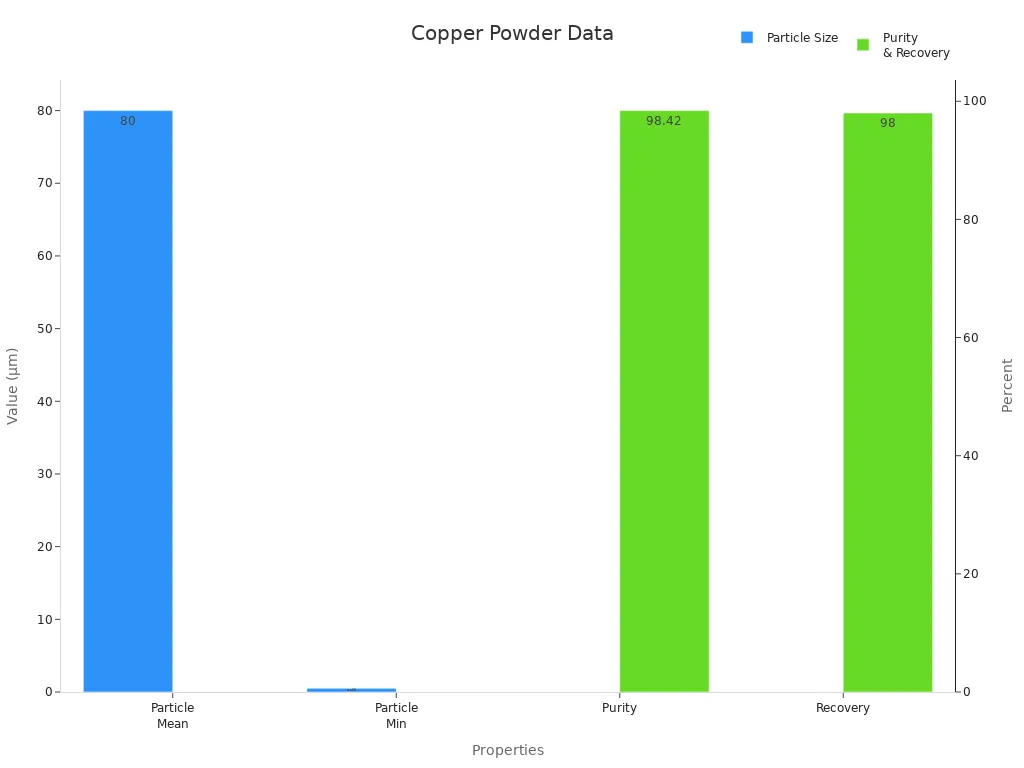
Copper powder consists of finely divided particles of metallic copper, widely used in industries such as electronics, metallurgy, and additive manufacturing. In 2022, the global market for ultra-fine copper powder reached approximately USD 378.2 million, with electronics accounting for 55% of demand. Key properties include high purity—up to 98.42%—and variable particle sizes, ranging from 0.499 μm to about 80 μm. Particle morphology, density, and recovery rates depend on production methods and influence performance in technical applications.
Key Takeaways
- Copper powder comes in various types and sizes, each suited for specific industrial applications, such as electronics, metallurgy, and catalysis.
- Different production methods, such as atomization and electrolysis, impact the purity, particle size, and cost of copper powder, ultimately affecting its performance.
- Copper powder plays a key role in making strong metal parts, improving electrical devices, and supporting advanced technologies like 3D printing and renewable energy.
- Using copper powder offers benefits like improved strength, conductivity, and antimicrobial properties, but requires careful handling to ensure safety.
- Proper selection, storage, and safety measures help maintain copper powder quality and protect workers from exposure risks.
Copper Powder Production Methods

Types of Copper Powder
Copper powder comes in several forms, each with distinct characteristics and uses. Classification depends on composition, particle size, and surface area. The table below summarizes the main types and their applications:
| Copper Form | Key Metric / Composition | Particle Size Range (mm) | Specific Surface Area (mm²/mg) | Regulatory Classification | Application / Notes |
|---|---|---|---|---|---|
| Massive Copper | Bulk copper | N/A | ≤ 0.67 | Not classified | Non-hazardous, used in bulk applications |
| Fine Copper Powder | Powder form | N/A | > 0.67 | Aquatic Acute 1, Chronic 1 | Electronics, catalysts, Powder Metallurgy |
| Granulated Copper | Granulated particles | 0.9–6.0 (L), 0.494–0.949 (W) | N/A | Aquatic Chronic 2 | Biocidal products, specialty chemicals |
| Copper Flakes | Flakes coated with aliphatic acid | N/A | N/A | Acute 1, Chronic 1, health endpoints | Biocidal agents, coatings, pigments |
This classification helps manufacturers and users select the right copper powder for specific industrial needs.
Atomization, Electrolysis, and Other Production Techniques
Manufacturers use several methods to produce copper powder, each offering unique advantages. Atomization involves melting copper and dispersing it into fine droplets, which solidify into powder. This method provides high purity and good control over particle shape but often comes with higher costs and smaller batch sizes. Electrolysis uses electrical current to deposit copper onto cathodes, then removes and processes the deposits into powder. This technique yields very fine particles and supports high-volume production, though purity may be slightly lower than atomized powder.
Other techniques include ball milling, which grinds copper scrap into powder, and chemical reduction, which produces ultrafine powders for specialized applications. The table below compares key parameters:
| Method | Typical Particle Size | Purity/Quality Aspect | Cost/Volume Aspect |
|---|---|---|---|
| Atomisation | 5 – 250 microns | High purity, good shape control | Small batch, higher cost |
| Electrolysis | Under 10 microns | Very fine particles, lower purity | High volume, lower cost |
| Ball Milling | 10 – 250 microns | Uses scrap, size limitations | Lower cost |
| Chemical Reduction | Under 1 micron | Ultrafine powders, special grades | Specialized, higher cost |
Note: Electrolysis parameters such as current density and temperature directly affect particle size and morphology. For example, increasing current density or temperature reduces particle size and promotes dendritic structures.
Purity and Particle Size Considerations
Purity and particle size play critical roles in determining copper powder performance. Most industrial applications require a minimum copper content of 99.5%. Oxygen content, particle shape, and density also influence powder behavior during processing. The following table highlights typical values:
| Parameter | Details / Typical Values |
|---|---|
| Copper Purity | Minimum 99.5% copper content |
| Oxygen Content | 0.01 to 0.379 wt% depending on production method |
| Particle Size Distribution | Ultrafine: 1-10 μm; Fine: 10-30 μm; Coarse: 30-150 μm |
| Apparent Density | 3.5-5.0 g/cm³; up to 60% of true density with spherical powders |
| Tap Density | Higher than apparent density, varies by morphology |
| Particle Shape | Spherical and irregular shapes available |
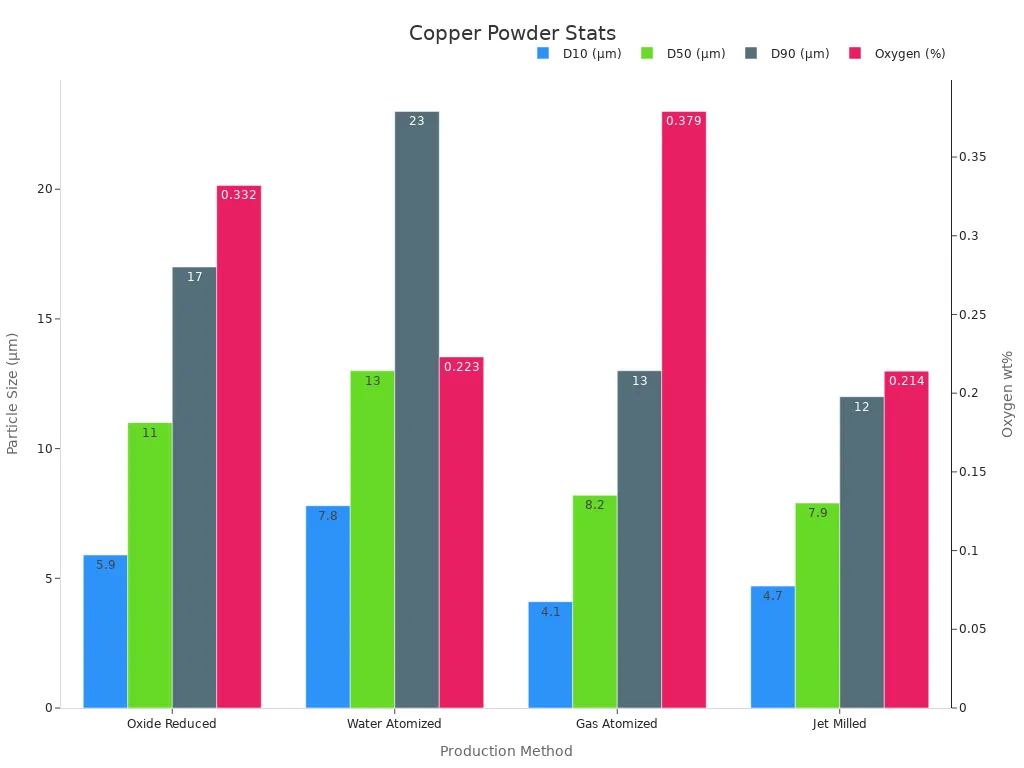
Smaller particle sizes increase surface area, which can enhance reactivity and improve mechanical properties in alloys. However, finer powders may agglomerate more easily and reduce flowability. Manufacturers must balance these factors to match powder characteristics with application requirements.
Copper Powder Applications
Metallurgy and Metalworking
Copper powder plays a vital role in modern metallurgy and metalworking. Manufacturers use it in powder metallurgy (PM) and metal injection molding (MIM) to create components with enhanced mechanical properties. When blended with iron powder, copper powder increases the strength and durability of structural parts. For example, grades such as CU165, CU151, and CU301, when mixed with 2-10% iron powder, deliver measurable improvements in mechanical performance.
- Copper powder improves frictional performance in braking systems for aircraft and automobiles. CU151 is a preferred choice for friction components.
- It serves as a matrix-bonding material in abrasive wheels and cutting tools, increasing the lifespan of these products.
- Bronze self-lubricating bearings, produced by blending copper powder with tin, offer reliable performance in rotating machinery.
Numerical studies show that high-purity copper powder (D50 = 3.4 µm) processed by binder jetting and cold pressing begins Sintering at approximately 680 °C and 900 °C, respectively. Vacuum sintering achieves better pore closure and uniform densification than argon atmosphere. Air sintering with graphite leaves about 6.9% residual porosity, highlighting the importance of sintering conditions on final product quality.
Researchers have also demonstrated efficient copper powder production from recycled wire and fabrication scraps. Energy consumption ranges from 1.32 to 1.44 kWh/kg, with current efficiency above 89%. Over 80% of the resulting powder particles are finer than 325 mesh, confirming suitability for powder metallurgy.
Laser powder bed fusion (L-PBF) of high-purity copper powder (99.9 wt%) allows precise control over process parameters, such as laser power and scanning speed. This flexibility supports the production of complex, high-performance metal parts for advanced applications.
Electrical and Electronics Uses
Copper powder dominates the electrical and electronics sector due to its excellent conductivity and adaptability. The following table summarizes key market statistics:
| Statistical Measure | Value | Explanation |
|---|---|---|
| Market share of ultrafine copper powder in electrical and electronics (2024) | 52.8% | Indicates dominance of copper powder in electrical and electronics end-use applications. |
| CAGR of copper powder market (2024-2032) | 4.3% | Demonstrates steady market growth reflecting increasing demand and adoption. |
| North America's market share (2024) | 47.3% | Highlights regional leadership in copper powder usage, driven by electronics manufacturing. |
The global copper powder market reached approximately USD 765 million in 2023 and is projected to exceed USD 1.1 billion by 2032. This growth reflects the widespread use of copper powder in electrical contacts, conductive pastes, and printed circuit boards. Its superior electrical and thermal conductivity supports the expanding electronics market, including smartphones, computers, and consumer devices.
- The complexity and miniaturization of electronic components increase demand for copper powder, which provides high precision and reliability.
- Copper powder is essential for high-performance devices in renewable energy and electric vehicles.
- Technologies such as 5G, IoT, and AI require conductive materials, making copper powder indispensable.
- Sustainability concerns encourage manufacturers to choose copper powder for its eco-friendly profile.
- Medical electronics and precision medicine devices benefit from copper powder’s versatility.
Copper powder’s compatibility with additive manufacturing and 3D printing enables the production of lightweight, complex components. The US additive manufacturing copper powder market is expected to grow from USD 150 million in 2024 to USD 500 million by 2033, with a CAGR of 15.5%. Investments in powder quality, particle size distribution, and oxidation resistance further enhance its performance.
- Copper powder is critical in manufacturing PCBs, connectors, antenna interconnects, and electromagnetic shielding.
- The electric vehicle industry’s growth drives further demand for copper powder in electronic components.
- Innovations such as Sandvik’s Osprey C18150 copper-based powder offer enhanced mechanical strength and thermal properties, outperforming traditional copper powders.
Chemical and Catalytic Applications
Copper powder exhibits significant catalytic activity in chemical processes. In one-pot triazole synthesis, less than 0.015 mol equivalent of electrolytic copper powder catalyzes reactions with quantitative conversions in minutes. The catalyst’s heterogeneous nature ensures low copper contamination, meeting pharmaceutical standards.
The following table compares the catalytic activity of different copper species:
| Copper Species | Reaction Rate (min⁻¹) | Role in Catalysis |
|---|---|---|
| Highly dispersed CuO | 0.19 – 0.3 | Highest catalytic activity in NH3-SCR reaction |
| Bulk CuO | 0.14 | Moderate catalytic activity |
| Clustered CuO | 0.03 | Lowest catalytic activity, detrimental effect |
Highly dispersed copper oxide species show the highest reaction rates, confirming copper powder’s effectiveness in catalytic applications. Industries use copper powder as a catalyst in chemical formulations, supporting efficient and sustainable chemical manufacturing.
Advanced and Innovative Uses
Recent years have seen copper powder move beyond traditional roles, entering advanced and innovative applications across multiple industries. Manufacturers now tailor copper powder properties through methods such as atomization, ball milling, chemical reduction, and electrolytic processes. These techniques enable the production of powders with specific particle sizes, shapes, and purities, supporting new technologies and high-performance products.
Researchers and engineers have identified several cutting-edge uses for copper powder:
- Flexible electronics and wearable devices now rely on copper powder for conductive inks and pastes. These materials allow the creation of bendable circuits and sensors, supporting the growth of smart textiles and health-monitoring devices.
- Battery manufacturing, especially for electric vehicles and renewable energy storage, uses copper powder to improve electrode conductivity and energy efficiency. This trend drives demand in the automotive and energy sectors.
- Additives for plastics and polymers enhance thermal and electrical conductivity in lightweight components. These composites find use in consumer electronics, aerospace, and construction.
- Advanced coatings and inks containing copper powder provide antimicrobial properties, corrosion resistance, and electromagnetic shielding. Hospitals and public spaces benefit from surfaces that reduce the spread of bacteria and viruses.
- Medical devices incorporate copper powder for its biocompatibility and antimicrobial effects. Applications include implants, surgical instruments, and diagnostic equipment.
Asia-Pacific leads regional growth, with China and India showing rapid adoption due to industrialization and technological innovation. North America and Europe also demonstrate strong demand, driven by research and development as well as environmental regulations.
The copper and copper alloy powder market reached approximately 2.01 billion USD in 2023. Automotive, aerospace, electronics, construction, and energy sectors account for most of this demand. Printed circuit boards, connectors, electric vehicle batteries, renewable energy equipment, and specialized alloys for aerospace machinery represent key end-use applications.
Strategic collaborations and investments in research and development shape the competitive landscape. Companies focus on producing nanostructured and alloy copper powders for emerging technologies. Market dynamics emphasize innovation and regional expansion to maintain a competitive edge in fields such as additive manufacturing and high-performance components.
Tip: Companies that invest in advanced production methods and strategic partnerships position themselves to benefit from the expanding range of copper powder applications.
Copper Powder Advantages and Disadvantages
Benefits of Using Copper Powder
Copper powder offers a range of advantages that make it valuable across multiple industries. Manufacturers select it for its unique combination of physical and chemical properties.
- Particle size segmentation allows for targeted applications. Sizes below 50nm and up to 150nm are effective in medical and antimicrobial coatings, while larger particles above 150nm serve bulk industrial needs such as energy storage and catalysis.
- The electronics industry relies on nano pure copper powder for conductive pastes and adhesives, benefiting from excellent electrical and thermal conductivity.
- Medical devices and textiles use copper powder for its antimicrobial properties, helping reduce infection rates in healthcare settings.
- Aerospace and defense sectors utilize copper powder in rocket engine components and satellite heat management systems.
- The manufacturing process ensures consistent particle morphology, supporting reliable performance in additive manufacturing and powder metallurgy.
Performance improvements are well documented. The table below highlights key metrics:
| Performance Metric | Improvement with Copper Powder Addition |
|---|---|
| Tensile Strength | Up to 55.87% increase in composites |
| Flexural Strength | 36.36% improvement |
| Wear Resistance | Enhanced durability and reduced surface wear |
| Coefficient of Friction | Lower friction under sliding conditions |
| Load Transfer Capacity | Improved at fiber–matrix interface |
| Tribological Performance | Better self-lubrication and reduced adhesive wear |
Limitations and Safety Considerations
Despite its benefits, copper powder presents certain limitations and safety concerns.
- Achieving full theoretical density (8.94 g/cm³) in powder metallurgy parts remains impractical, which limits mechanical strength and conductivity.
- Porosity in pressed and sintered parts reduces electrical and thermal conductivity, often resulting in values between 80% and 90% of fully dense copper.
- Mechanical processing can be challenging, as prealloyed powders require higher pressing loads than premixed powders.
- Self-lubricating bronze bearings made from copper powders have operational limits defined by a PV factor of 50-60 ksi (345-414 MPa). Exceeding these limits may compromise performance.
Health and safety assessments show that copper exposure through ingestion in tested beverages remains below recommended limits, with no long-term health risks observed. However, copper’s toxic potential, even at low concentrations, highlights the need for careful handling and control of copper levels in industrial environments.
Tip: Always follow recommended safety protocols when handling copper powder to minimize exposure risks and ensure workplace safety.
Copper Powder Selection and Handling Guide
Choosing the Right Copper Powder
Selecting the appropriate powder for industrial applications requires careful evaluation of production methods, particle size, and purity. The following table summarizes how different manufacturing techniques influence powder characteristics:
| Production Method | Description | Particle Size Range |
|---|---|---|
| Atomization | Molten metal spun into droplets, rapid cooling | 5 μm to 150 μm |
| Carbonyl | Chemical deposition of pure metal | 1 μm to 15 μm |
| Roller Mill | Grinding into flat flakes | ~150 μm flakes |
| Electrolysis | Electrolytic deposition | Wide size distributions |
Atomized powders provide high flow rates and strength, making them suitable for powder metallurgy and electronic applications. Electrolytic powders offer high purity, ideal for components demanding excellent conductivity. Hydrometallurgical powders, with fine particle sizes and low density, work well in friction materials. Quality assessment often involves analyzing grain size distribution, oxygen content, and porosity. For example, sintered specimens show average grain sizes around 2.4 μm with standard deviations near 0.5 μm. Surface oxygen content typically measures about 1.7%, while core values remain below 0.5%. These metrics help ensure the powder meets performance requirements.
Safe Handling Practices
Manufacturers must prioritize safety when working with metal powders. In vitro studies show that copper particles release less than 3 µg/cm² per hour under simulated lung and skin conditions. Release rates depend on particle size, surface area, and morphology. To minimize exposure, workers should avoid generating dust, use non-sparking tools, and handle powders under dry, protective gas such as argon when possible. Systematic review frameworks and probabilistic dose-response assessments support rigorous risk evaluation, helping organizations develop evidence-based safety protocols. These approaches address complex data and ensure reproducible risk assessments for workplace exposure.
Tip: Always wear appropriate personal protective equipment (PPE) and follow established protocols to reduce inhalation and skin contact risks.
Storage and Packaging Tips
Proper storage and packaging maintain powder quality and reduce hazards. The table below outlines key recommendations:
| Parameter/Aspect | Recommendation |
|---|---|
| OSHA Permissible Exposure Limit (PEL) | 0.1 mg/m³ |
| ACGIH Threshold Limit Value (TLV) | 0.2 mg/m³ |
| Storage Conditions | Cool, dry place; tightly sealed, labeled containers; preferably under argon atmosphere |
| Storage Precautions | Keep away from heat, ignition sources, acids, halogens, and moisture |
| Handling Precautions | Avoid dust generation; use non-sparking tools; handle under dry protective gas (argon) if possible |
| Incompatible Materials | Acids, halogens, alkalis, water/moisture |
Manufacturers should store powders in cool, dry environments, using containers that are tightly sealed and clearly labeled. Keeping materials away from heat, sparks, and incompatible substances prevents unwanted reactions. Handling under an inert atmosphere, such as argon, further protects powder integrity and worker safety.
Copper powder supports a wide range of industries, from electronics to healthcare. The table below summarizes key market and application statistics:
| Aspect | Details / Numerical Summaries |
|---|---|
| Market Size (2023) | Approximately $1.2 billion |
| Projected Market Size (2032) | Around $2.3 billion |
| CAGR (2023-2032) | 7.2% |
| Product Types | Electrolytic, water atomized, gas atomized, pre-alloyed, coated |
| Applications | Metallurgy, electronics, chemical, additive manufacturing, thermal management |
| End-User Industries | Automotive, aerospace, electronics, industrial, healthcare, construction |
| Regional Dominance | Asia Pacific, North America, Europe |
| Key Trends | EV adoption, additive manufacturing growth, and electronics miniaturization |
Users should select powders based on purity, particle size, and application needs. Safe handling and proper storage remain essential. Copper’s long history of safe use in medical and industrial products reinforces its value. For technical support, industry experts and regulatory resources offer further guidance.
FAQ
What is the shelf life of copper powder?
Copper powder remains stable for several years if stored in a cool, dry, and sealed container. Exposure to moisture or air may cause oxidation, which reduces quality.
Can copper powder be recycled after use?
Yes. Industries often recycle copper powder from manufacturing scrap or used components. Recycling helps reduce costs and supports sustainability initiatives.
Is copper powder hazardous to handle?
Copper powder can pose inhalation and dust explosion risks. Workers should use personal protective equipment and follow safety protocols. Proper ventilation and dust control systems improve workplace safety.
How does particle size affect copper powder applications?
Smaller particles increase surface area and reactivity. Fine powders suit electronics and catalysis. Coarser powders work well in metallurgy and additive manufacturing.
What is the difference between electrolytic and atomized copper powder?
Electrolytic copper powder offers high purity and fine particles. Atomized powder provides better flow and spherical shapes. Each type fits specific industrial needs.