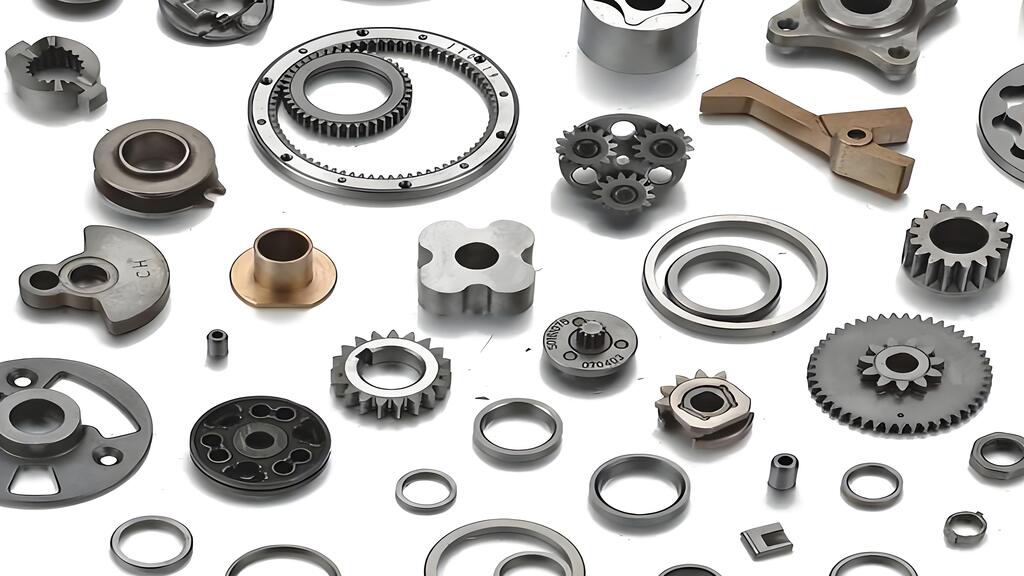


Custom Alumina Ceramic Parts for High Voltage Equipment
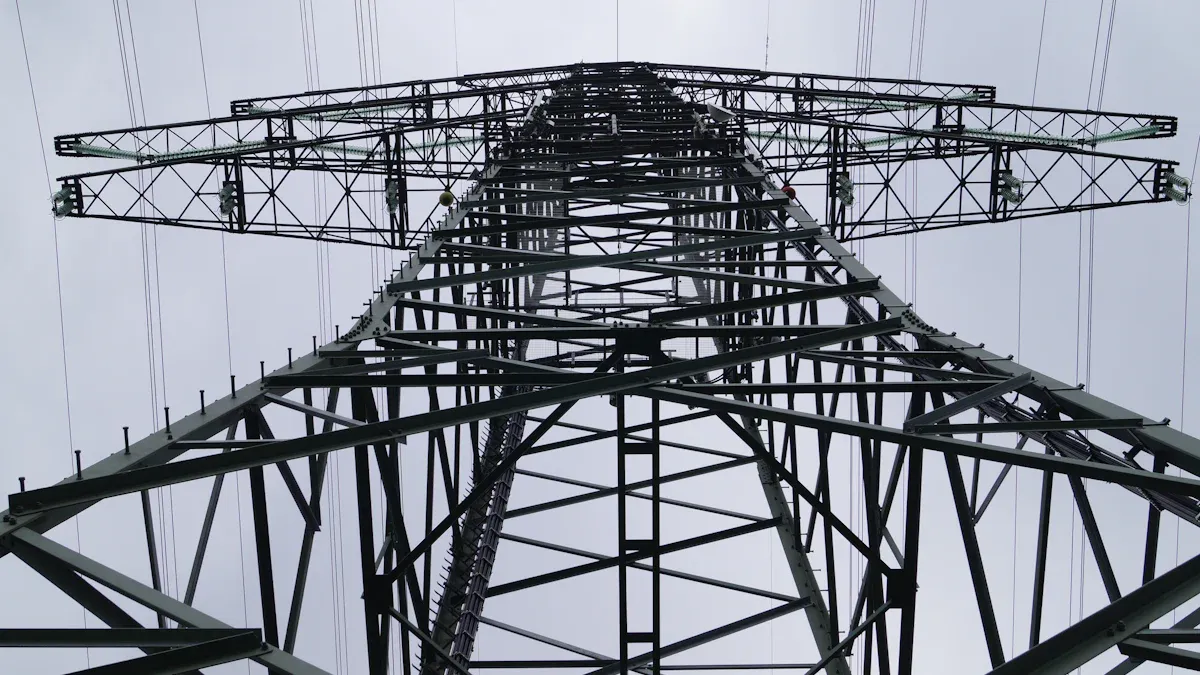
Custom Alumina Ceramic Parts offer superior electrical insulation, thermal stability, and mechanical strength. These properties make them indispensable for enhancing the performance and safety of high voltage equipment. Electrical insulation is particularly vital; in electric generators, 56% of failures stem from insulation damage. These specialized ceramic components provide a robust solution. They ensure operational integrity and longevity in demanding electrical applications.
Key Takeaways
- Alumina ceramic parts offer great electrical insulation. They prevent current leaks and electrical breakdowns.
- These parts handle high temperatures well. They also move heat away from sensitive areas.
- Alumina ceramics are very strong and durable. They resist wear, pressure, and chemicals.
- Manufacturers can customize alumina parts. They meet exact needs for voltage, current, and shape.
- Alumina ceramics work better than old materials. They beat plastics, glass, and other ceramics.
- Using alumina parts saves money over time. They need less repair and last longer.
- New alumina materials are being made. They will be smaller, smarter, and better for the environment.
Unmatched Electrical Insulation Properties of Custom Alumina Ceramic Parts
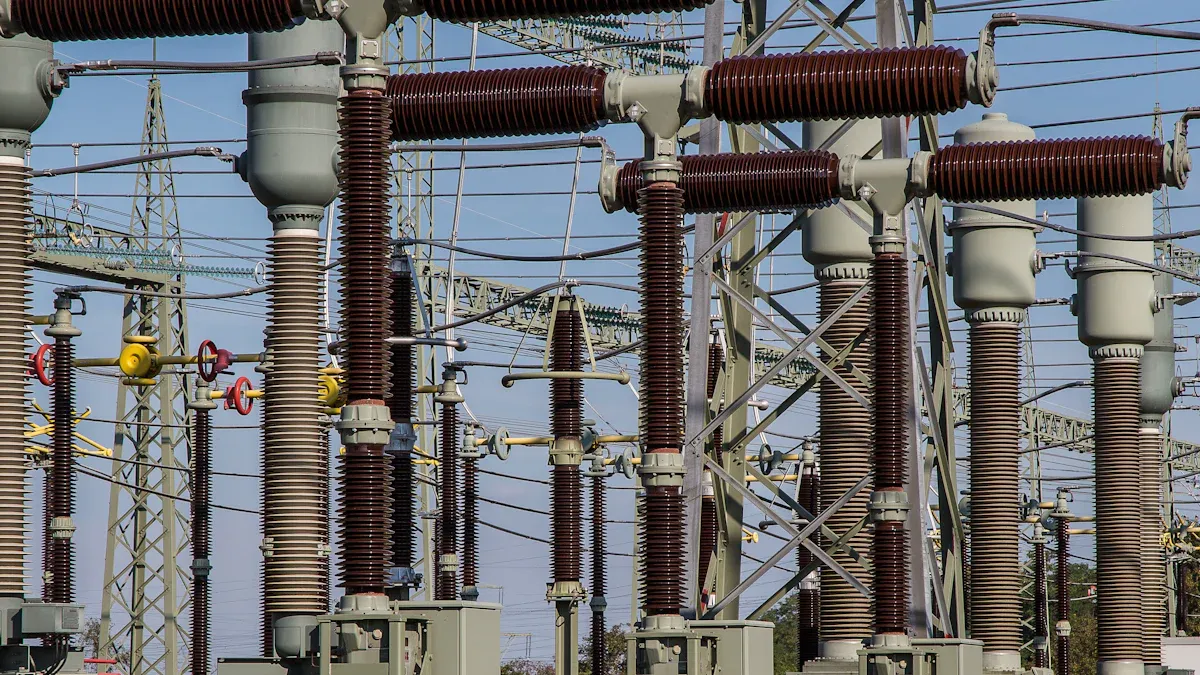
Custom Alumina Ceramic Parts offer exceptional electrical insulation, a critical feature for high voltage applications. These components reliably prevent current leakage and electrical breakdowns, ensuring the safe and efficient operation of sophisticated equipment.
High Dielectric Strength
High dielectric strength is a fundamental property for any insulating material in high voltage environments. Alumina ceramics excel in this regard, providing robust protection against electrical failure.
Preventing Electrical Breakdowns
Alumina's inherent material structure allows it to withstand intense electrical fields without conducting electricity. This resistance prevents sudden electrical breakdowns, which can cause significant damage to equipment and pose safety risks. For instance, alumina typically exhibits a dielectric strength ranging from 10 to 16 KV/mm. This performance is crucial for maintaining system integrity under stress.
Ensuring Operational Integrity
The high dielectric strength of alumina directly contributes to the operational integrity of high voltage systems. It ensures that components remain electrically isolated, preventing short circuits and maintaining consistent performance. While other materials like Macor offer higher dielectric strength (~40 kV/mm), alumina provides a balanced profile of properties, making it a preferred choice for many demanding applications. Different alumina purities, such as 94%-97% and 99.9%-100%, offer varying levels of electrical resistivity and strength, allowing for tailored solutions.
Low Dielectric Loss
Minimizing dielectric loss is essential for energy efficiency and thermal management in high-frequency and high-voltage systems. Alumina ceramics demonstrate very low dielectric loss.
Minimizing Energy Dissipation
Dielectric loss refers to the energy absorbed by an insulating material when exposed to an alternating electric field. Alumina ceramics exhibit minimal energy dissipation, which is particularly beneficial in high-frequency applications. For example, at 10 GHz, alumina ceramic has a dissipation factor (Df) between 0.0005 and 0.0010, significantly lower than FR4, which typically exceeds 0.015. This characteristic ensures that more electrical energy reaches its intended destination rather than being lost as heat.
Reducing Heat Generation
Low dielectric loss directly translates to reduced heat generation within the insulating material. This is vital for preventing thermal runaway and extending the lifespan of electronic components. High-purity alumina PCBs, such as those with 99.6% alumina, demonstrate exceptionally low electrical loss. This property supports advanced applications in aerospace, defense, and medical implants, ensuring high reliability even in extreme conditions.
Superior Arc Resistance
High voltage equipment often experiences electrical discharges or arcs. Materials must withstand these events without degrading.
Withstanding Electrical Discharges
Alumina ceramics possess superior arc resistance. They can endure high-energy electrical arcs without forming conductive paths or suffering significant surface damage. This capability is critical for components like circuit breakers and insulators, where momentary arcing is unavoidable during operation.
Preventing Material Degradation
The excellent arc resistance of alumina prevents material degradation over time. Unlike some organic insulators that can carbonize or track after repeated arcing, alumina maintains its insulating properties. This durability ensures the long-term reliability and safety of high voltage equipment, reducing the need for frequent maintenance and replacement.
High Volume and Surface Resistivity
High volume and surface resistivity are crucial properties for insulating materials in high voltage applications. These characteristics ensure that electrical current does not leak through or across the surface of the material, maintaining the integrity of the electrical system. Alumina ceramics demonstrate exceptional performance in both areas, making them ideal for demanding electrical environments.
Preventing Leakage Currents
Leakage currents represent unwanted electrical flow that can occur through or along the surface of an insulator. High volume resistivity prevents current from passing through the bulk material. High surface resistivity stops current from tracking across the material's surface. Alumina ceramics possess very high resistivity values, effectively blocking these leakage paths. This prevents energy loss and potential equipment damage. For example, at room temperature, alumina exhibits impressive volume resistivity:
| Property | Unit | Value |
|---|---|---|
| Volume Resistivity (25°C) | Ohm-cm | >10^14 |
This extremely high value indicates alumina's strong resistance to electrical conduction through its body. This property is vital for components that must isolate high voltages over long periods.
Maintaining Insulation Effectiveness
The ability of alumina ceramics to maintain high volume and surface resistivity ensures consistent insulation effectiveness over time and under various operating conditions. This stability is particularly important in environments with fluctuating temperatures or humidity, which can degrade the insulating properties of other materials. Alumina's dense, non-porous structure resists moisture absorption, a common cause of reduced surface resistivity. This resistance helps prevent the formation of conductive paths on the surface. By preventing leakage currents and maintaining stable resistivity, alumina ceramics contribute significantly to the long-term reliability and safety of high voltage equipment. They ensure that electrical energy remains confined to its intended circuits, protecting both the equipment and personnel.
Exceptional Thermal Stability and Heat Management with Custom Alumina Ceramic Parts
Custom Alumina Ceramic Parts offer outstanding thermal stability and heat management capabilities. These properties are crucial for high voltage equipment operating under demanding thermal conditions. They ensure reliable performance and extend the operational life of critical components.
High Operating Temperature Capability
Alumina ceramics maintain their structural and electrical integrity even at very high temperatures. This characteristic makes them ideal for applications where heat is a significant factor.
Maintaining Performance in Extreme Heat
Alumina ceramics possess a high melting point, typically above 2000°C. This allows them to function effectively in environments where other materials would degrade or fail. High voltage equipment often generates considerable heat during operation. Alumina components ensure consistent performance without softening or deforming. This stability prevents thermal runaway and maintains the precise dimensions required for electrical isolation.
Extending Equipment Lifespan
The ability of alumina to withstand extreme heat directly contributes to the longevity of high voltage equipment. Components made from alumina resist thermal aging and degradation. This reduces the need for frequent replacements and maintenance. Equipment can operate reliably for longer periods, leading to lower operational costs and increased uptime.
Excellent Thermal Conductivity
Effective heat dissipation is vital for preventing damage in high voltage systems. Alumina ceramics offer excellent thermal conductivity, efficiently moving heat away from sensitive areas.
Efficient Heat Dissipation
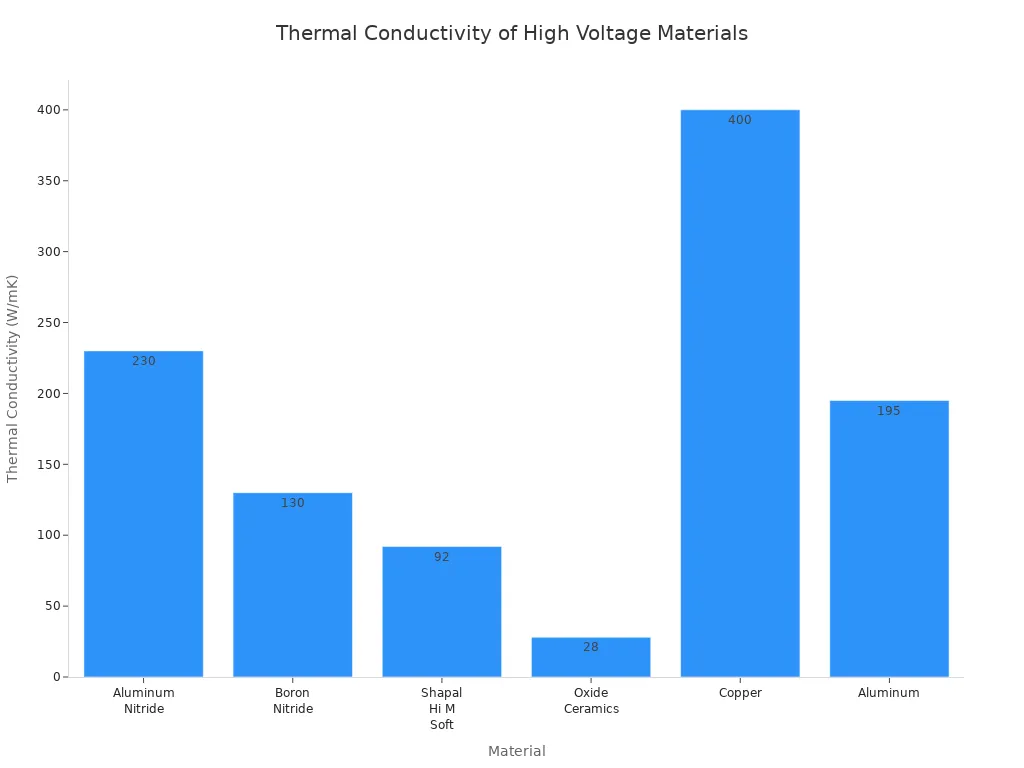
Alumina ceramics conduct heat away from critical components. This prevents localized hot spots that can lead to material breakdown or electrical failure. While not as conductive as metals like copper, alumina provides a good balance of electrical insulation and thermal transfer. This makes it suitable for many high voltage applications. For comparison, consider the thermal conductivity of various materials:
| Material | Thermal Conductivity (W/mK) |
|---|---|
| Aluminum Nitride | Up to 230 |
| Boron Nitride | Up to 130 |
| Shapal Hi M Soft | 92 |
| Oxide Ceramics | 26–30 |
| Copper | ~400 |
| Aluminum | 150–240 |
Preventing Overheating Damage
Efficient heat dissipation prevents overheating. Overheating can cause irreversible damage to electronic circuits and insulating materials. By effectively transferring heat, alumina ceramics help maintain optimal operating temperatures. This protects sensitive components from thermal stress and extends their functional life.
Thermal Shock Resistance
High voltage equipment can experience rapid temperature fluctuations. Materials must withstand these changes without damage.
Withstanding Rapid Temperature Changes
Alumina ceramics exhibit good thermal shock resistance. They can endure sudden shifts between hot and cold environments without cracking or fracturing. This property is crucial for equipment that undergoes rapid heating and cooling cycles, such as during power surges or emergency shutdowns.
Preventing Cracking and Failure
The inherent strength and low thermal expansion of alumina contribute to its resistance to thermal shock. This prevents the formation of cracks that could compromise electrical insulation or structural integrity. By resisting thermal shock, alumina components ensure the continued safe and reliable operation of high voltage systems, even under dynamic thermal conditions.
Low Thermal Expansion
Alumina ceramics exhibit a low coefficient of thermal expansion. This property means their physical dimensions change very little even with significant temperature fluctuations. This characteristic is critically important for high voltage equipment, where precision and stability are paramount. It ensures components retain their exact shape and size, preventing mechanical issues that could compromise electrical performance.
Maintaining Dimensional Stability
High voltage equipment often operates in environments with varying temperatures. Materials that expand or contract significantly can lead to serious problems. Alumina's low thermal expansion ensures components maintain their precise dimensions. This dimensional stability is vital for maintaining tight tolerances in complex assemblies. For example, in vacuum interrupters or X-ray tubes, even minute changes in component size can affect the vacuum seal or the alignment of critical electrodes. Alumina prevents these issues. It guarantees consistent performance and reliable operation over a wide range of thermal conditions. This stability directly contributes to the long-term accuracy and functionality of sensitive electrical systems.
Reducing Stress in Assemblies
High voltage equipment frequently incorporates multiple materials, each with its own thermal expansion characteristics. When these materials expand or contract at different rates, they create internal stresses within the assembly. These stresses can lead to cracking, delamination, or mechanical failure over time. Alumina's low thermal expansion minimizes this differential expansion. It reduces the stress exerted on adjacent components. This property is particularly beneficial in hermetically sealed devices or multi-layer structures. It prevents mechanical fatigue and ensures the structural integrity of the entire system. By mitigating thermal stress, alumina ceramics enhance the durability and reliability of high voltage equipment, extending its operational lifespan and reducing maintenance needs. This inherent stability makes alumina an ideal choice for demanding applications where mechanical integrity under thermal cycling is essential.
Superior Mechanical Strength and Durability of Custom Alumina Ceramic Parts
Custom Alumina Ceramic Parts offer exceptional mechanical strength and durability. These properties are crucial for high voltage equipment operating in harsh environments. They ensure long-term reliability and structural integrity.
High Hardness and Wear Resistance
Alumina ceramics possess remarkable hardness, making them highly resistant to wear and abrasion. This characteristic is vital for components exposed to friction or particulate matter.
Ensuring Longevity in Abrasive Environments
The inherent hardness of alumina ceramics allows them to withstand abrasive conditions without significant material loss. This ensures components maintain their precise dimensions and surface finish over extended periods. Higher purity alumina ceramics correlate with increased hardness and improved wear resistance. For example, the Vickers hardness values demonstrate this correlation:
| Alumina Purity | Vickers Hardness (HV1) |
|---|---|
| AL2O3 99.7 | 1600 |
| AL2O3 99.5 | 1550 |
| AL2O3 99 | 1450 |
| AL2O3 95 | 1400 |
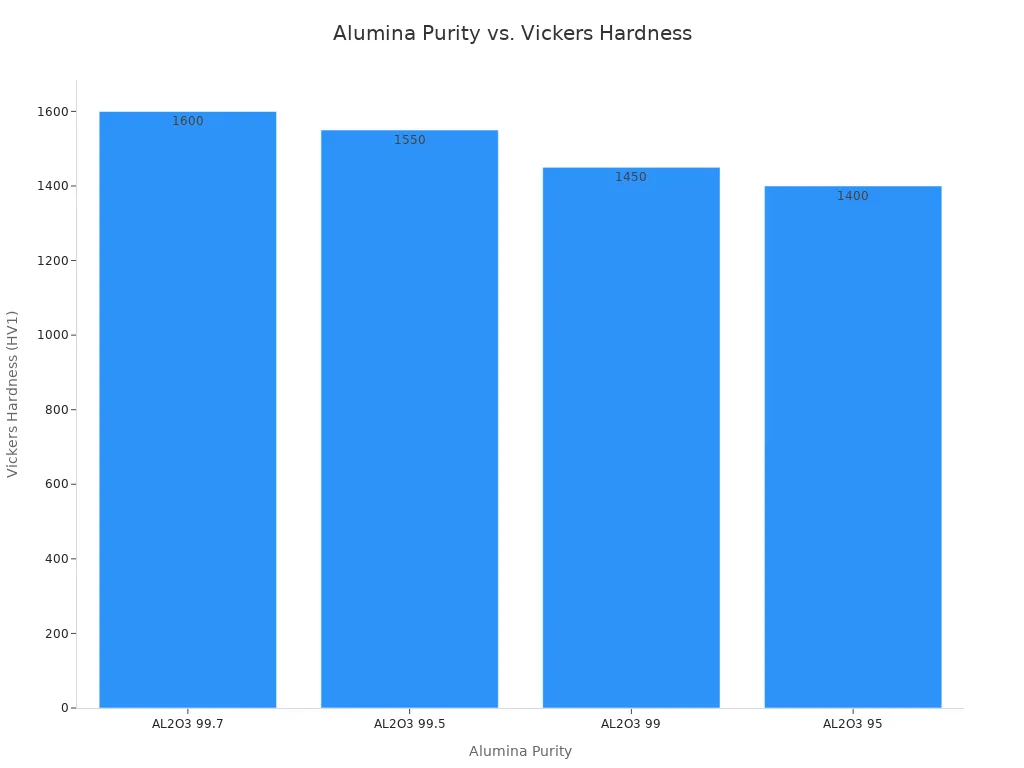
This high hardness translates directly into a longer service life for parts in demanding applications.
Resisting Mechanical Erosion
Alumina's superior hardness also provides excellent resistance to mechanical erosion. This protects components from damage caused by high-velocity particles or continuous rubbing. This resistance prevents material degradation, maintaining the integrity and performance of high voltage equipment.
Impressive Compressive Strength
Alumina ceramics exhibit outstanding compressive strength. This allows them to endure significant mechanical forces without deforming or fracturing.
Withstanding Significant Mechanical Stress
Custom alumina ceramic parts exhibit impressive strength. Their compressive strength reaches over 2,000 MPa. This makes alumina one of the toughest materials available. It withstands heavy forces, high pressure, and intense wear and tear without cracking or breaking. This is due to its dense and rigid structure. For comparison, it is several times harder than steel, indicating superior resistance to scratches, friction, and impact. Different grades of alumina demonstrate varying levels of this strength:
| Alumina Grade | Compressive Strength (Kpsi) |
|---|---|
| Al95 | 300 |
| Al97 | ~300 |
| Al99 | 377 |
| Al997 | 350 |

Supporting Heavy Loads
The high compressive strength of alumina ceramics enables them to support heavy loads and withstand continuous pressure. This makes them ideal for structural components in high voltage systems. They provide reliable support and stability, preventing mechanical failure under operational stress.
Chemical Inertness
Alumina ceramics are highly chemically inert. This property ensures their stability and performance in corrosive environments.
Resisting Corrosion from Harsh Chemicals
Pure alumina resists chemical corrosion. This makes it a primary choice for engineering components in various industrial applications. Its resistance to corrosion by chemicals is attributed to its low solubility in those chemicals. Alumina ceramics show resistance to aqueous HCl and H2SO4 solutions. They also resist acetic acid solutions and caustic alkaline solutions. Single-crystal sapphire (Al2O3) demonstrates good resistance to HF acid. This broad chemical resistance protects components from degradation.
Preventing Degradation from Gases
Beyond liquid chemicals, alumina ceramics also resist degradation from various corrosive gases. This inertness is crucial in sealed high-voltage systems where specific gas atmospheres are present. It ensures the long-term integrity of the ceramic components. This prevents contamination or material breakdown that could compromise electrical performance.
High Stiffness and Creep Resistance
High stiffness and excellent creep resistance are critical attributes for materials used in high-voltage equipment. These properties ensure components maintain their shape and function under continuous stress and elevated temperatures. Alumina ceramics excel in both areas, providing reliable long-term performance.
Maintaining Structural Integrity Under Load
Alumina ceramics possess inherently high stiffness, also known as Young's modulus. This property means they resist deformation when external forces apply pressure. In high voltage applications, components often experience significant mechanical loads, such as the weight of conductors or the forces generated during switching operations. Alumina's stiffness ensures these parts maintain their precise geometry. This prevents misalignment or structural failure. For example, insulators supporting heavy busbars must not bend or sag over time. Alumina provides the necessary rigidity to uphold these structures. This rigidity is crucial for maintaining the exact distances required for electrical isolation. It also ensures the safe operation of the entire system.
Preventing Deformation Over Time
Creep resistance refers to a material's ability to resist permanent deformation under prolonged stress, especially at high temperatures. High voltage equipment can operate continuously for many years, often in environments where temperatures fluctuate or remain elevated. Materials with poor creep resistance would slowly deform, compromising their function and potentially leading to electrical breakdown. Alumina ceramics exhibit excellent creep resistance. This means they retain their original shape and dimensions even after extended periods under load and heat. Mullite, another advanced ceramic, is an excellent structural material. It exhibits high temperature stability, possesses good strength, and has good creep resistance. Alumina shares these vital characteristics, making it highly suitable for demanding, long-term applications. This resistance to creep ensures the long-term reliability and safety of high voltage components. It prevents gradual changes that could lead to operational failures or increased maintenance needs.
Precision and Customization for Optimal Performance of Custom Alumina Ceramic Parts
Custom Alumina Ceramic Parts offer unparalleled precision and customization, which are essential for optimizing the performance of high voltage equipment. Manufacturers tailor these components to meet exact specifications, ensuring superior functionality and reliability in diverse applications.
Tailored Designs for Specific Needs
Engineers design alumina ceramic parts to precisely match the unique demands of each high voltage application. This customization ensures optimal performance and safety.
Meeting Unique Voltage Requirements
Designers carefully consider voltage requirements when creating ceramic components. They often use corrugation for creeping voltage insulation. This design feature increases the surface distance current must travel, preventing flashover. They also implement electric field relaxation through corona rings, which distribute the electric field more evenly. Selecting alumina based on its dielectric constant and resistivity is crucial. Optimizing the metallization range further mitigates electric fields. These considerations ensure proper electrical insulation by incorporating appropriate insulation barriers. This prevents signal interference and short circuits.
Accommodating Specific Current Loads
Custom designs also accommodate specific current loads. The material's excellent thermal and electrical properties allow for configurations that manage heat generated by high currents. This prevents overheating and maintains operational stability.
Adapting to Environmental Conditions
Alumina ceramic parts adapt to various environmental conditions. Their chemical inertness and thermal stability make them suitable for harsh environments, including those with extreme temperatures, corrosive chemicals, or high humidity. This adaptability ensures long-term durability and consistent performance.
Tight Tolerances in Manufacturing
Manufacturing processes for alumina ceramics achieve exceptionally tight tolerances. This precision is critical for high voltage equipment.
Ensuring Exact Fit and Assembly
Tight tolerances ensure components fit together perfectly. This precision is vital for complex assemblies in high voltage systems, where even minor misalignments can compromise performance or safety. For example, standard dimensional tolerance for pressed parts is ±1% or ±.002, whichever is greater. Green machined parts have a standard dimensional tolerance of ±1% or ±.005, whichever is greater. Angular tolerance is typically ±2°.
Guaranteeing Reliable Operation
Precise manufacturing guarantees reliable operation. Components with exact dimensions maintain their structural integrity and electrical isolation properties over time. This reduces the risk of failure and extends the equipment's lifespan. The table below shows typical achievable tolerances:
| Parameter | Achievable Range |
|---|---|
| Dimensional Tolerance (straight) | ±0.05 mm |
| Dimensional Tolerance (OD/ID) | ±0.02 mm (on request) |
| Flatness/Straightness | ≤0.05 mm/100 mm |
| Surface Roughness (Ra) | ≤0.8 µm std., ≤0.3 µm polish |
Enabling Complex Geometries
Advanced manufacturing techniques allow for the creation of highly complex geometries in alumina ceramic parts. This capability opens doors for innovative designs.
Facilitating Innovative Solutions
Complex geometries facilitate innovative solutions for high voltage challenges. Techniques like gelcasting on 3D printed molds combine 3D printing of expendable molds with gelcasting. This method creates intricate shapes. Direct Material Additive Manufacturing (AM), including Selective Laser Sintering (SLS) and Three-Dimensional Printing (3DP), also produces complex-shaped ceramics. These methods enable engineers to design parts that were previously impossible to manufacture.
Optimizing Space Utilization
Complex shapes also optimize space utilization within high-voltage equipment. Intricate designs allow for more compact and efficient systems. This is particularly beneficial in applications where space is at a premium.
Material Composition Customization
Material composition significantly influences the performance of alumina ceramic parts. Manufacturers precisely control the purity levels and incorporate specific additives. This customization ensures the parts meet the exact demands of high-voltage applications.
Adjusting Purity Levels for Performance
Alumina's purity levels directly impact its electrical and mechanical properties. Higher purity alumina generally leads to outstanding hardness, high strength and rigidity, and excellent electrical insulation capabilities. This makes it suitable for demanding industrial applications requiring durability and long-term reliability. The mechanical characteristics of alumina, such as strength and hardness, improve with increasing purity. This makes higher purity alumina suitable for demanding applications like wear plates, grinding media, and load-bearing components. Electrically, alumina exhibits high resistivity, which further improves with higher purity. This makes it an excellent thermal and electrical insulator. Its exceptional dielectric properties, including the ability to withstand extreme electrical charges without dielectric loss, are crucial for applications like spark plug insulators and integrated circuit packages.
The table below illustrates how different purity levels affect key properties:
| Property | Unit | 96% Alumina | 99.7% Alumina | 99.95% Alumina |
|---|---|---|---|---|
| Compressive Strength | MPa | 2000 | 2000 | 3500 |
| Tensile Strength | MPa | 140 | 150 | 200 |
| Flexural Strength @ 25°C | MPa | 200-300 | 250-350 | 500-600 |
| Hardness | GPa | 12 | 14 | 18 |
| Dielectric Strength DC @ 25°C | kV/mm | 9 | 11 | 16 |
| Volume Resistivity @ 25°C | ohm-cm | >10^14 | >10^14 | >10^16 |
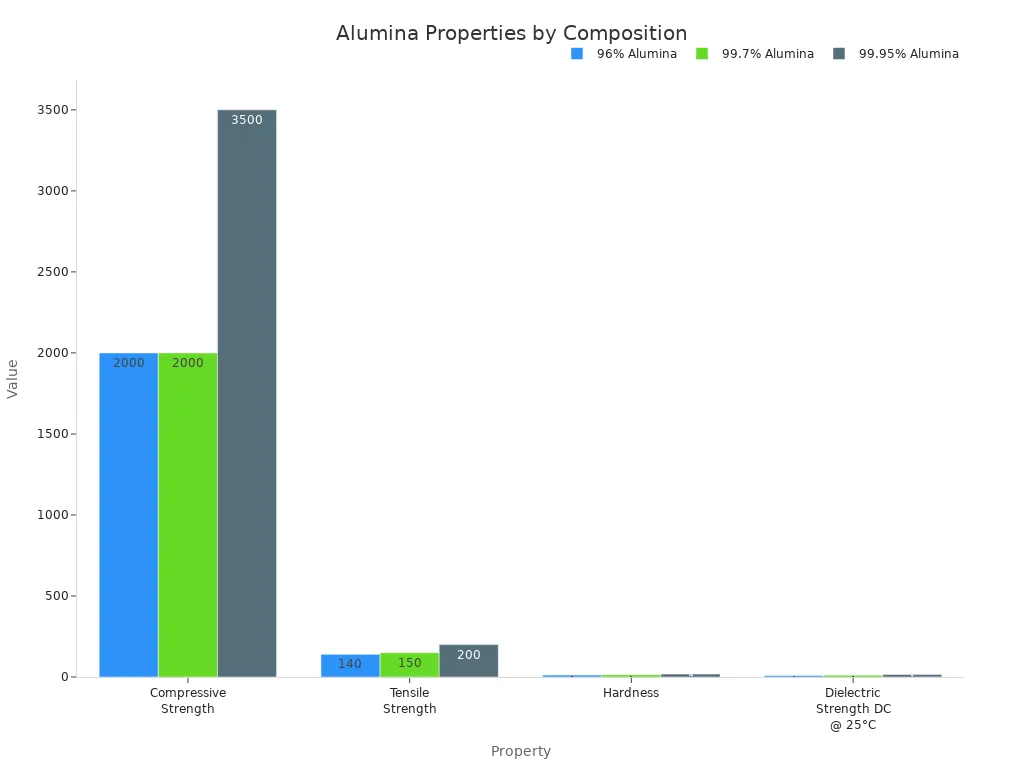
This data clearly shows that increasing alumina purity significantly enhances properties like compressive strength, flexural strength, hardness, and dielectric strength. These improvements are vital for high voltage equipment.
Incorporating Additives for Specific Properties
Beyond purity, manufacturers can modify alumina's material composition through microstructural optimization. This includes controlling grain size. Coarse-grained alumina offers superior wear and impact resistance. Fine-grained alumina provides exceptional dimensional precision. These adjustments allow engineers to fine-tune the material for specific performance requirements.
Incorporating additives also tailors alumina's characteristics. Small amounts of other oxides, for example, can improve fracture toughness or reduce sintering temperatures. These additives can enhance specific performance attributes. They expand the application range of alumina ceramics. This precise control over material composition ensures each component performs optimally in its intended high voltage environment.
Diverse Applications and Impact on High Voltage Equipment with Custom Alumina Ceramic Parts
Custom Alumina Ceramic Parts find widespread use across various high-voltage equipment. They significantly enhance performance and safety. Their unique properties make them indispensable in critical electrical applications. These advanced ceramic components enable the development of more reliable and efficient high-voltage systems.
Insulators and Bushings
Alumina ceramic parts serve as crucial insulators and bushings. These components prevent electrical breakdown in high-voltage equipment. Alumina bushings are utilized as insulating components to prevent electrical breakdown. Specialized insulators are essential for high-voltage equipment.
Enhancing Safety in Power Transmission
Alumina insulators provide high voltage isolation in wind turbines. TMEIC alumina insulators are used in solar inverters for their low-loss dielectric properties and compact size. These applications significantly enhance safety in power transmission. They ensure consistent power delivery and protect infrastructure from electrical faults. This minimizes downtime and maintenance costs.
Improving Reliability in Distribution Networks
Siemens transmission insulators are known for their extended service life. This leads to fewer replacements and less waste. This improves reliability in distribution networks. Alumina's robust nature ensures long-term performance.
Vacuum Interrupters and Circuit Breakers
Alumina ceramic parts also play a vital role in vacuum interrupters and circuit breakers. They improve switching efficiency.
Improving Switching Efficiency
Alumina offers excellent electrical insulation properties. This is essential for vacuum interrupters. It provides excellent hermetic sealing, ensuring leak-tight joints. This helps maintain the necessary vacuum level for efficient arc quenching. This material also offers high-intensity sealing, high air-tightness, and high reliability. Its excellent insulation performance and high temperature resistance allow operation in demanding conditions.
Extending Operational Lifespan
The high mechanical strength of Mo-Mn metallized layers contributes to a longer life for vacuum interrupters. Great bonding strength facilitates robust connections between ceramic and metal parts. This is crucial for high voltage, high vacuum, and high-pressure applications. These features extend the operational lifespan of these critical devices. They ensure safe and rapid interruption of high currents, protecting electrical grids. This contributes to overall system stability.
Sensor Components and Feedthroughs
Furthermore, alumina ceramic parts are integral to sensor components and feedthroughs. They ensure accuracy in monitoring systems.
Ensuring Accuracy in Monitoring Systems
Alumina provides stable electrical connections. Its superior insulation properties prevent signal interference. This guarantees precise data acquisition in sensitive measurement devices. The material's chemical inertness and thermal stability ensure reliable performance. This is true even in harsh operating environments. This makes alumina an ideal choice for critical sensor applications.
Providing Stable Electrical Connections
These components maintain signal integrity. They also protect delicate electronics from high voltage surges. This ensures the long-term functionality of monitoring and control systems. They are vital for real-time data collection and system control in complex high voltage setups. This enhances operational safety and efficiency.
High Voltage Capacitors and Resistors
Alumina ceramic parts are essential components in high voltage capacitors and resistors. They significantly improve the performance and reliability of these critical electrical devices.
Improving Performance Stability
Alumina's exceptional dielectric properties directly contribute to the stability of high voltage capacitors and resistors. Its high dielectric strength prevents electrical breakdowns, even under extreme voltage fluctuations. This ensures the components maintain their specified capacitance or resistance values consistently. The material's low dielectric loss minimizes energy dissipation within the component. This prevents unwanted heating and maintains stable electrical characteristics over time. Manufacturers rely on alumina to provide a robust, non-conductive substrate. This substrate isolates the active elements of these devices, ensuring their precise and reliable operation in demanding electrical circuits.
Enhancing Heat Dissipation
High voltage capacitors and resistors often generate considerable heat during operation. This heat can degrade performance and shorten lifespan. Alumina ceramics offer excellent thermal conductivity, efficiently dissipating this heat away from sensitive areas. This prevents localized hot spots and thermal runaway. By effectively managing heat, alumina helps maintain optimal operating temperatures for these components. This extends their operational life and ensures consistent performance. The material's thermal stability also means it resists degradation from prolonged exposure to elevated temperatures. This makes it an ideal choice for components requiring both electrical insulation and efficient thermal management.
X-ray Tubes and Electron Microscopes
Alumina ceramic parts are indispensable in advanced scientific and medical equipment like X-ray tubes and electron microscopes. They provide crucial electrical isolation and maintain the ultra-high vacuum environments these devices require.
Providing Critical Electrical Isolation
X-ray tubes and electron microscopes operate at extremely high voltages, often hundreds of kilovolts. Alumina's superior electrical insulation properties are vital in these applications. It effectively isolates the high voltage electrodes, preventing arcing and electrical discharge. This precise isolation ensures the accurate control and focusing of electron beams. Without alumina's robust insulating capabilities, these sensitive instruments could not function reliably or safely. The material's ability to withstand intense electrical fields guarantees the integrity of the high voltage system. This protects both the equipment and its operators.
Ensuring Vacuum Integrity
Maintaining an ultra-high vacuum is paramount for the operation of X-ray tubes and electron microscopes. Any gas leakage can disrupt the electron beam and compromise image quality or X-ray generation. Alumina ceramics possess a dense, non-porous structure. This structure makes them excellent materials for creating hermetic seals. Manufacturers often braze alumina components to metal parts, forming strong, leak-tight joints. These seals effectively prevent gas ingress, ensuring the long-term vacuum integrity required for these sophisticated instruments. Alumina's chemical inertness also means it does not outgas contaminants into the vacuum. This further contributes to the purity and stability of the vacuum environment.
Advantages of Custom Alumina Ceramic Parts Over Traditional Materials
Custom alumina ceramic parts offer significant advantages over traditional materials like polymers, plastics, glass, steatite, and porcelain. These superior properties make them the preferred choice for demanding high voltage applications. They ensure enhanced safety, reliability, and longevity in critical electrical systems.
Superiority Over Polymers and Plastics
Alumina ceramics consistently outperform polymers and plastics in high voltage environments. Their inherent material properties provide crucial benefits.
Higher Temperature Resistance
Alumina ceramics possess exceptional high temperature resistance. They maintain structural integrity and performance at extreme temperatures. Alumina can withstand temperatures up to 1750°C. This contrasts sharply with polymers and plastics, which typically melt or degrade at much lower temperatures. This good high temperature resistance makes alumina ideal for equipment operating under significant thermal stress.
Enhanced Dielectric Strength
Alumina substrates exhibit high dielectric strength. This enables them to withstand high voltages, ensuring reliable function for electronics. For instance, a 5mm thick alumina component can offer an insulating strength of 10 AC-Kv/Mm. This excellent electrical insulation is a key characteristic of alumina ceramics. Polymers and plastics often have lower dielectric strengths, making them less suitable for critical high voltage insulation.
Benefits Compared to Glass
Alumina ceramics also present clear advantages when compared to glass, particularly in mechanical robustness and thermal resilience.
Greater Mechanical Strength
Alumina possesses significantly greater mechanical strength than glass. It offers superior hardness and resistance to impact and abrasion. Glass is inherently brittle and prone to fracture under mechanical stress. Alumina components provide a more durable and reliable solution for structural elements in high voltage equipment.
Improved Thermal Shock Resistance
Alumina ceramics demonstrate improved thermal shock resistance compared to glass. They can withstand rapid temperature changes without cracking or shattering. Glass, with its lower thermal conductivity and higher thermal expansion coefficient, is highly susceptible to thermal shock. This makes alumina a safer and more reliable material for applications experiencing fluctuating temperatures.
Performance Against Steatite and Porcelain
Alumina ceramics offer superior performance when compared to traditional ceramic insulators like steatite and porcelain. This makes them a more advanced choice for modern high voltage equipment.
Superior Electrical Performance
Alumina exhibits superior electrical performance. It has a higher dielectric constant and significantly lower electrical dissipation compared to steatite. For example, alumina's dielectric constant at 1 MHz ranges from 7.8 to 11, while steatite is typically 5.7 to 6.5. Alumina's electrical dissipation at 1 MHz is also much lower, ranging from 0.00049 to 0.0013, compared to steatite's 0.0010 to 0.0060. These properties ensure more efficient and stable electrical insulation.
Advanced Mechanical Properties
Alumina also boasts advanced mechanical properties. It surpasses steatite in compressive strength, elastic modulus, flexural strength, and tensile strength.
| Property | Custom Alumina (Al2O3) Range | Steatite Range |
|---|---|---|
| Mechanical Properties | ||
| Compressive Strength (MPa) | 1920 to 2750 | 540 to 620 |
| Elastic Modulus (GPa) | 220 to 370 | 68 to 120 |
| Flexural Strength (MPa) | 260 to 430 | 32 to 150 |
| Tensile Strength: Ultimate (UTS) (MPa) | 210 to 290 | 60 to 220 |
| Electrical Properties | ||
| Dielectric Constant (1 Hz) | 8.0 to 9.0 | 6.0 |
| Dielectric Constant (1 MHz) | 7.8 to 11 | 5.7 to 6.5 |
| Electrical Dissipation (1 Hz) | 0.00031 to 0.0011 | 0.0014 to 0.022 |
| Electrical Dissipation (1 MHz) | 0.00049 to 0.0013 | 0.0010 to 0.0060 |

This chart clearly illustrates alumina's superior mechanical and electrical characteristics. These properties ensure greater durability and reliability in demanding high voltage applications.
Long-Term Cost-Effectiveness
Investing in alumina ceramic components offers significant long-term cost benefits for high voltage equipment. These benefits stem from reduced maintenance needs and extended operational lifespans. While the initial investment might be higher than traditional materials, the durability and reliability of alumina ceramics lead to substantial savings over time.
Reduced Maintenance Requirements
Alumina ceramic parts significantly reduce maintenance requirements for high voltage equipment. Their superior wear, corrosion, and thermal stress resistance mean components last longer without needing frequent repairs or replacements. This durability directly translates into lower maintenance frequency. Lower maintenance frequency leads to higher productivity. Ceramic wear liners, for example, reduce operating costs by extending equipment life. They minimize frequent repairs. This results in significant cost savings over time. High-purity, high-density alumina tubes offer superior resistance to wear and corrosion. This is crucial for demanding environments. Long-lasting high-purity alumina tubing minimizes operational interruptions. It reduces direct replacement costs. It also cuts hidden costs from lost productivity. Engineering support, including custom design optimization and application-specific consultation, further influences long-term cost-effectiveness. Collaborative engineering input leads to more efficient material use. It also results in longer service intervals for industrial alumina pipe applications. Value-added engineering services minimize rework and waste. They achieve this through accurate dimension control, compatibility assurance, and proactive risk identification. Manufacturers investing in proactive engineering assistance enable buyers to realize cost savings. This occurs through improved design fit and extended service life.
Extended Equipment Service Life
The inherent properties of alumina ceramics extend the service life of high voltage equipment. Their resistance to degradation from electrical, thermal, and mechanical stresses ensures components remain functional for longer periods. The service life of equipment using alumina ceramics is typically 5–10 times longer than equipment relying solely on steel. This extended lifespan means fewer replacements. Fewer replacements and reduced energy losses ensure long-term savings. Durability of alumina ceramic tubes directly impacts replacement frequency. It also affects the risk of unplanned downtime and maintenance expenses. Prioritizing tubes with documented flexural strength and thermal stability leads to considerable total lifecycle savings. Increased tube life reduces annual replacement spend. Reduced unplanned outages cut productivity loss. Stable performance supports accurate maintenance planning. The selection of tubes with high mechanical and thermal parameters substantially decreases unforeseen operational disruptions and replacement needs. Alumina tubes prolong equipment lifespan by resisting wear, corrosion, and thermal stress. This provides long-term cost savings and reliability.
Manufacturing Processes for Custom Alumina Ceramic Parts
Manufacturing high-performance alumina ceramic parts involves several sophisticated processes. These methods ensure the final products meet the stringent requirements of high voltage equipment. Each technique plays a crucial role in achieving specific material properties and geometries.
Powder Metallurgy Techniques
Powder metallurgy forms the foundation for many alumina ceramic components. This approach begins with fine ceramic powders.
Achieving High Density and Purity
Manufacturers employ various sintering methods to achieve high density and purity. These include atmospheric sintering, hot pressing sintering, hot isostatic sintering, and high vacuum non-pressure sintering. Sintering densifies granular ceramic billets. It removes holes, gas, impurities, and organic matter, allowing particles to grow. Hot isostatic burning or high vacuum non-pressure sintering methods are used for high value-added alumina ceramic products or special national defense components. These include ceramic bearings, reflectors, nuclear fuel, and barrel products. High vacuum non-pressure sintering equipment, such as that produced by SIMUWU, achieves high-density alumina ceramic products with simple operation and customizable specifications.
Controlling Microstructure for Performance
These powder metallurgy techniques allow precise control over the ceramic's microstructure. Engineers can manipulate grain size and density. This directly influences the material's mechanical strength, thermal conductivity, and electrical insulation properties. Controlling the microstructure ensures the final product performs optimally in its intended high voltage application.
Metal Injection Molding (MIM) for Complex Geometries
Metal Injection Molding (MIM) and its ceramic counterpart, Ceramic Injection Molding (CIM), offer exceptional capabilities for producing intricate alumina ceramic parts.
Producing Intricate Shapes with Precision
Alumina is a primary material for Ceramic Injection Molding (CIM). CIM excels at producing ceramic components with complex shapes and fine details. This method allows for integrating intricate designs, such as thin walls and complex geometrical features, into ceramic parts. Traditional ceramic shaping methods cannot replicate the complexity achieved by CIM. The more complex the part's shape, the more economically viable MIM and CIM become.
Ensuring Uniformity in Mass Production
MIM and CIM processes ensure high uniformity across large production batches. This consistency is vital for high voltage equipment. Each component must meet exact specifications for reliable and safe operation. These methods deliver repeatable precision, which is crucial for critical applications.
Advanced Sintering Processes
Beyond basic powder metallurgy, advanced sintering processes further optimize the material properties of alumina ceramics.
Optimizing Material Properties
Advanced techniques like hot-pressing sintering (HP) significantly increase density, making it suitable for high-performance alumina ceramics. Discharge plasma sintering (SPS) uses pulse current rapid heating to achieve high density and fine crystal structures quickly. Microwave sintering employs microwave heating for rapid and uniform sintering, offering energy efficiency. It suits thin-walled or complex ceramic shapes. Hot isostatic pressing (HIP) is a post-processing technique. It eliminates internal porosity and enhances density after initial sintering. Microwave furnaces and spark plasma sintering (SPS) are also used for rapid heating in pressureless sintering.
Enhancing Mechanical and Electrical Characteristics
These advanced sintering methods enhance both the mechanical and electrical characteristics of alumina ceramics. They improve properties such as flexural strength, hardness, and dielectric strength. This results in more robust and reliable components. These components can withstand extreme conditions in high voltage environments.
Quality Control and Testing
Rigorous quality control and testing procedures are essential for alumina ceramic parts. These processes ensure the components meet the demanding requirements of high voltage equipment. Manufacturers implement strict checks at every stage. This guarantees reliability and safety in critical applications.
Ensuring Adherence to Specifications
Manufacturers meticulously inspect alumina ceramic parts to confirm they meet precise specifications. This involves checking various physical and material properties. Dimensional accuracy is paramount. Technicians use advanced metrology equipment, such as Coordinate Measuring Machines (CMMs), to verify exact dimensions and tolerances. They ensure each part fits perfectly within its assembly. Surface finish is also critical. Smooth, defect-free surfaces prevent electrical breakdown and enhance performance. Optical profilometers and surface roughness testers measure these characteristics. Material composition undergoes thorough analysis. Spectroscopic methods confirm the purity levels of alumina. They also detect any unwanted impurities. These checks ensure the material possesses the correct electrical and mechanical properties. Internal defect detection is another vital step. Non-destructive testing methods, like ultrasonic inspection or X-ray radiography, identify hidden flaws. These flaws could compromise the part's integrity under stress.
Verifying Performance in High Voltage Environments
Beyond physical checks, alumina ceramic parts undergo specialized testing to verify their performance in high voltage environments. These tests simulate real-world operating conditions. Dielectric strength tests measure the material's ability to withstand high electrical fields without breaking down. This confirms its insulating capability. Insulation resistance tests quantify how effectively the material prevents current leakage. High resistance values are crucial for safety and efficiency. Partial discharge tests detect minor electrical discharges within the insulation. These discharges can indicate potential long-term failure points. Thermal cycling tests expose parts to rapid temperature changes. This verifies their thermal shock resistance. Mechanical stress tests, including flexural strength and compressive strength evaluations, ensure the parts can endure operational loads. These comprehensive tests confirm the alumina ceramic components will perform reliably and safely throughout their service life in high voltage equipment.
Future Trends and Innovations in Custom Alumina Ceramic Parts
The field of alumina ceramics constantly evolves. New advancements promise even greater performance and sustainability for high voltage equipment. These innovations focus on enhancing material properties, enabling smaller designs, and adopting environmentally friendly manufacturing methods.
Development of Advanced Alumina Composites
Researchers are actively developing advanced alumina composites. These materials combine alumina with other substances to create enhanced properties.
Enhancing Specific Performance Attributes
Engineers can now enhance specific performance attributes by integrating different materials with alumina. For example, adding silicon carbide whiskers can significantly improve fracture toughness. This makes the ceramic more resistant to sudden impacts. Incorporating zirconia can also increase strength and prevent crack propagation. These composites offer tailored solutions for demanding applications. They provide a balance of electrical insulation, thermal management, and mechanical robustness.
Expanding Application Range
The development of advanced alumina composites expands their application range. These new materials can withstand harsher conditions and perform better in extreme environments. This opens doors for their use in next-generation high voltage equipment, including advanced power electronics and specialized industrial machinery. The enhanced properties allow for more reliable and durable components in critical systems.
Miniaturization and Integration
Miniaturization and integration are key trends shaping the design of high voltage equipment. These trends drive the need for smaller, more functional ceramic components.
Enabling Compact High Voltage Designs
Miniaturization trends significantly impact the design of alumina ceramic components. As electronic devices become smaller, a growing need exists to miniaturize alumina PCB substrates. Designers must integrate more functionality into these smaller parts. This involves advancements in multi-layer alumina substrates, embedded passive components, and 3D packaging techniques. These methods maximize space utilization and enhance device performance. The expansion of automotive electronics and EV power modules also increases demand for reliable, miniaturized, and high-performance ceramic packaging. Modern vehicles, especially EVs, rely on high-performance electronic systems for power management. They operate under high electrical loads. This necessitates packaging materials that provide excellent thermal conductivity, electrical insulation, and mechanical stability. The trend toward higher voltage EV power modules specifically requires packaging materials that withstand extreme operating conditions while maintaining long-term reliability. This drives the adoption of ceramic packaging solutions.
Improving System Efficiency
Miniaturization also improves system efficiency. Smaller components often lead to reduced signal paths and lower energy losses. Advances in precision machining and sintering now enable ultra-thin ceramic layers, measured in microns. This has opened opportunities for ceramic substrates in compact devices like smartphones, wearables, and edge computing. Designers must carefully plan layouts to minimize electrical leakage, ensure adequate spacing, and consider mechanical stresses, vibrations, and thermal expansion coefficients during the design phase for these miniaturized and integrated components. This push for compactness also demands consistency, requiring defect-free ceramics at exacting production standards.
Sustainable Manufacturing Practices
The alumina ceramic industry increasingly adopts sustainable manufacturing practices. This addresses environmental concerns and promotes resource efficiency.
Reducing Environmental Impact
Manufacturers are investing in renewable energy sources like solar and wind to power kilns and factory operations. This significantly reduces CO₂ emissions. They also implement advanced filtration systems for closed-loop water recycling during forming and machining. This prevents the discharge of contaminated water. Waste reprocessing creates reusable ceramic material streams, minimizing waste. Smart kiln controls optimize firing temperature and duration, leading to lower natural gas consumption. Innovations like waste heat recovery save up to 20% in energy usage. High-yield forming techniques further reduce the ecological footprint of production. The use of recycled alumina can reduce energy consumption in production by half compared to conventional methods. This lowers carbon emissions and production costs.
Promoting Resource Efficiency
Sustainable practices promote resource efficiency throughout the manufacturing process. Ceramic injection molding is less energy-intensive compared to other ceramic manufacturing processes. It involves a one-step molding process followed by sintering, reducing production steps. New kiln technologies further enhance energy efficiency and reduce carbon footprint. This method uses precisely designed molds to minimize excess material. It ensures only the necessary amount of ceramic is injected for each part. This high precision significantly reduces waste and conserves resources by minimizing post-production modifications. Companies also invest in energy-efficient kilns and processing equipment to minimize waste and emissions. Sustainable sourcing strategies are crucial. Manufacturers partner with certified suppliers to ensure ethical practices throughout the supply chain. This leads to improved brand loyalty and customer satisfaction.
Smart Ceramic Components
The future of high voltage equipment includes smart ceramic components. These innovative materials integrate advanced functionalities directly into their structure. This transforms traditional passive parts into intelligent, active elements. This evolution promises enhanced control, safety, and efficiency for complex electrical systems.
Incorporating Sensing Capabilities
Engineers now embed micro-sensors directly within the alumina ceramic structure. These integrated sensors can monitor various critical parameters. They detect changes in temperature, pressure, and electrical fields. This direct integration offers significant advantages. It eliminates the need for external sensors, which reduces system complexity. It also minimizes potential points of failure. The robust ceramic material protects the delicate sensor elements. This ensures their longevity and accuracy in harsh high voltage environments. For instance, embedded temperature sensors can detect localized overheating. This provides crucial data for preventing thermal runaway. Pressure sensors can monitor mechanical stress. This helps assess structural integrity. These advanced ceramics transform passive components into active, intelligent systems. They provide a deeper understanding of equipment status.
Enabling Real-time Monitoring
The integration of sensing capabilities enables real-time monitoring of high voltage equipment. This provides operators with immediate insights into system performance. Real-time data allows for predictive maintenance strategies. Engineers can identify potential issues before they escalate into costly failures. This minimizes unplanned downtime and significantly reduces repair expenses. Early fault detection also enhances safety. It prevents catastrophic equipment malfunctions. Operators can optimize system performance based on live feedback. They adjust operational parameters for maximum efficiency. This leads to energy savings and improved operational reliability. Smart ceramic components contribute to a more proactive approach to equipment management. They ensure the continuous, safe, and efficient operation of complex high voltage systems. This innovation marks a new era for high voltage technology. It offers unprecedented levels of control and diagnostic capability.
Custom Alumina Ceramic Parts are critical for high voltage equipment. They offer superior electrical insulation, thermal stability, mechanical strength, and customization capabilities. These properties ensure the safety, efficiency, and longevity of high voltage systems. Their value proposition for demanding electrical applications is undeniable. They provide a robust solution for current and future high voltage challenges.
FAQ
What are custom alumina ceramic parts?
Custom alumina ceramic parts are specialized components. Manufacturers tailor these parts from aluminum oxide. They offer superior electrical insulation, thermal stability, and mechanical strength. Engineers design them for specific high voltage equipment needs.
Why are alumina ceramics essential for high voltage equipment?
Alumina ceramics are essential for high voltage equipment. They provide unmatched electrical insulation. They also offer exceptional thermal stability and robust mechanical strength. These properties ensure safety, efficiency, and long-term reliability in demanding electrical applications.
How do alumina ceramics ensure electrical insulation?
Alumina ceramics ensure electrical insulation through high dielectric strength. They also have low dielectric loss and superior arc resistance. These properties prevent electrical breakdowns and leakage currents. They maintain operational integrity in high voltage systems.
What thermal benefits do custom alumina ceramic parts offer?
Custom alumina ceramic parts offer high operating temperature capability. They also provide excellent thermal conductivity and thermal shock resistance. Their low thermal expansion maintains dimensional stability. These features ensure effective heat management and prevent overheating damage.
Are alumina ceramic parts durable?
Yes, alumina ceramic parts are very durable. They possess high hardness and wear resistance. They also have impressive compressive strength and chemical inertness. These properties ensure longevity and structural integrity in harsh operating environments.
Can manufacturers customize alumina ceramic components for specific needs?
Yes, manufacturers customize alumina ceramic components. They tailor designs for specific voltage and current requirements. They also adapt to environmental conditions. Precision manufacturing ensures tight tolerances and enables complex geometries for optimal performance.
How do alumina ceramics compare to traditional insulating materials?
Alumina ceramics offer superior performance over traditional materials. They have higher temperature resistance and enhanced dielectric strength than plastics. They also provide greater mechanical strength and thermal shock resistance than glass. They surpass steatite and porcelain in electrical and mechanical properties.