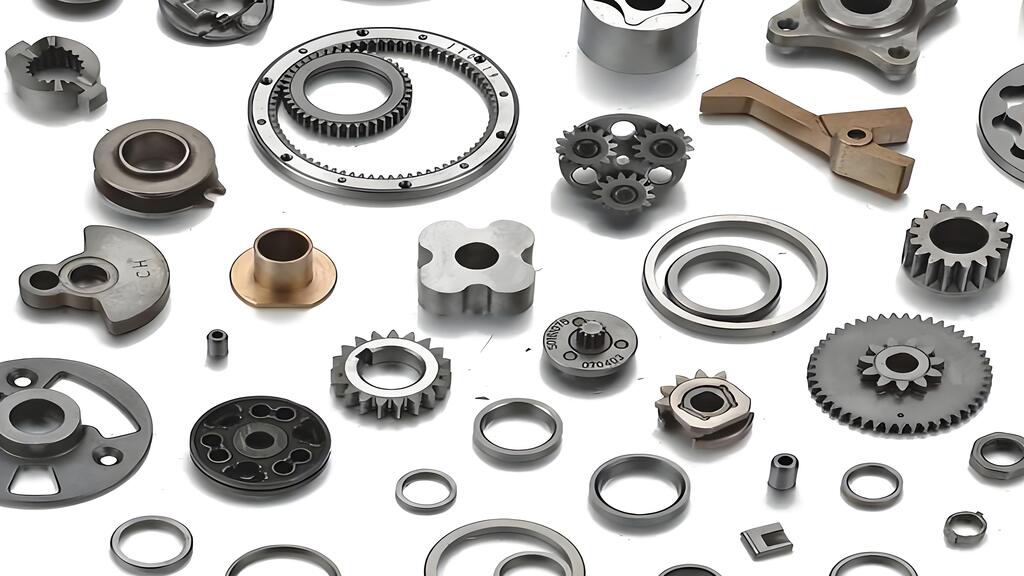


The Role of Binder and Lubricant in Powder Metallurgy

Binders are essential for achieving green strength and maintaining compact integrity. Lubricants play an equally critical role. They facilitate efficient compaction and smooth ejection of parts from the die. The Powder Metallurgy market, a sector valued at USD 2.96 billion in 2024, is projected to expand to USD 3.31 billion by 2025. These crucial additives are fundamental to the industry's continued success and growth.
Key Takeaways
- Binders give strength to Powder Parts before heating. They hold powder particles together.
- Lubricants help the powder press easily. They also help parts slide out of molds smoothly.
- Removing binders completely is important. Leftover binder can make parts weak or flawed.
- Lubricant residue can harm parts. It causes bad surfaces and weaker materials.
- Many types of binders exist. These include organic, inorganic, and water-based options.
- Lubricants make powder flow better. This helps fill molds evenly and press parts well.
- New binders and lubricants are eco-friendly. They help the environment and make parts better.
Binders in Powder Metallurgy: Enhancing Green Strength
Fundamental Function of Binders in Powder Metallurgy
Binders play a pivotal role in the initial stages of powder metallurgy, acting as temporary adhesives that hold powder particles together. Their presence ensures the compact maintains its shape and strength before the final sintering process.
Enhancing Green Strength
Binders significantly enhance the green strength of powder compacts. Green strength refers to the mechanical strength of the compacted powder before sintering. The fundamental determinant of green strength for a material is its film strength. Matrix binders achieve green strength by embedding particles within a continuous matrix of the binding material. Their effectiveness relies on the presence of this continuous phase and a high relative density, or absence of voids, in the compact structure. Film binders, which often create liquid bridges, initially provide low green strength. However, this strength increases significantly after compacts are dried or cured post-compaction. The binder's film strength then dictates the ultimate green strength. Chemical binders impart green strength through chemical reactions. These reactions occur either between the binder components or between the binder and the agglomerated material. This chemical interaction is crucial for both green strength and final product strength.
Maintaining Compact Integrity
Beyond providing strength, binders are essential for maintaining the compact's integrity. They prevent the fragile green compact from crumbling during handling, transportation, and subsequent processing steps like debinding. This structural stability is critical for achieving the desired final part geometry and preventing defects.
Types of Binders for Powder Metallurgy
Manufacturers utilize various binder types, each offering distinct properties and advantages for specific applications.
Organic Binders
Organic binders are widely used due to their versatility and ability to provide excellent green strength. They are primarily classified as natural or synthetic polymers. Examples include lignosulfonate, carboxymethyl cellulose (CMC), and carboxymethyl starch (CMS). Other common organic binders include polyvinyl alcohol, which serves as a binder for glazes and a strong surfactant. Starches produce colloidal emulsions in water with strong binding properties and mix well with dry ceramic powders. Carboxymethylcellulose, particularly at medium to high molecular weights, acts as a stronger binder, improving the plasticity and mechanical strength of dry bodies. Dextrin functions as a strong binder for preparing glaze grains or as a 'glue' for glaze slips, also enhancing clay slip plasticity. Wax emulsions act as inter-particle lubricants when wet and binders when dry, commonly appearing in technical alumina components. Polyethylene glycols, with low molecular weight types as viscous liquids, function as plasticizers or lubricants, while high molecular weight types are waxy solids used as binders and plasticizers in pressing, often as basic mediums for printing colors.
Inorganic Binders
Inorganic binders offer advantages, particularly in high-temperature applications where organic binders might degrade prematurely. Inorganic chemical binders, such as silicates and phosphates, are effective because they form a three-dimensional network structure through chemical activation or drying processes. This ability is crucial for their bonding capacity in refractory applications. Phosphates, for instance, generate significant green strength in shaped and unshaped refractories, aiding in handling during demolding and transportation. Water glasses facilitate a setting process at room temperature through a sol-gel transformation; sodium water glasses are particularly common for refractories. Ceramic binders are also commonly used in metal injection molding, ensuring the integrity and dimensional accuracy of the final product. These binders offer enhanced properties such as thermal stability, allowing them to withstand high temperatures during debinding and sintering without leaving residue. They provide good green strength, essential for handling and processing metal powders during molding. Furthermore, manufacturers can tailor their formulation to modify flowability, shrinkage, and mechanical properties, allowing for components with varying strength, hardness, and dimensional accuracy.
Water-Based Binders
Water-based binders represent an environmentally friendlier option, as they reduce the need for volatile organic solvents. These binders typically involve polymers dissolved or dispersed in water. They offer good binding properties and are often preferred for their ease of handling and cleanup. However, they require careful drying to remove the water component without introducing defects into the compact.
Impact on Green Compact Properties in Powder Metallurgy
Binders significantly influence the characteristics of the green compact, affecting its density, porosity, and dimensional stability.
Density and Porosity Control
Binders play a role in controlling the density and porosity of the green compact. The binder's volume and its distribution within the powder mixture affect how tightly particles pack together. A well-chosen binder system helps achieve a uniform density distribution throughout the compact, which is crucial for consistent material properties after sintering. It also influences the initial porosity, which can be critical for subsequent processing steps and the final part's performance.
Dimensional Stability
Maintaining dimensional stability is a key challenge in powder metallurgy. Binders contribute to this by holding the powder particles in their compacted positions, preventing slumping or distortion of the green part. A binder system that provides adequate green strength and uniform particle adhesion helps ensure the compact retains its intended shape and dimensions during handling and debinding, minimizing shrinkage or warpage before sintering.
Debinding Process in Powder Metallurgy
After compacting the powder, manufacturers must remove the temporary binder before sintering. This crucial step, known as debinding, prepares the green compact for high-temperature processing. Incomplete binder removal can lead to defects in the final product.
Thermal Debinding Mechanisms
Thermal debinding involves heating the green compacts to specific temperature profiles. This process gradually breaks down organic binders into gaseous products. Manufacturers often use multiple temperature stages to ensure the complete removal of different binder components. These components possess varying decomposition temperatures. For example, LDPE completely decomposes around 520 °C. Therefore, a thermal debinding stop for remaining LDPE is set at 550 °C for 20 minutes. Paraffin-based binders begin to evaporate before LDPE plasticizes and decompose rapidly above 150 °C. ABS and LDPE start reducing viscosity above 150 °C. Catalytic decomposition also accelerates binder removal. It uses catalysts that lower the decomposition temperature and enhance removal efficiency. Catalysts facilitate the breakdown of polymer chains, allowing for more controlled and faster decomposition, often at lower temperatures compared to purely thermal methods.
Solvent Debinding Techniques
Solvent debinding offers an alternative to thermal methods, particularly for binders soluble in specific solvents. This technique immerses the green compact in a solvent bath. The solvent dissolves the binder, leaving behind a porous compact. This method often reduces the risk of defects associated with rapid gas evolution during thermal debinding. However, it requires careful selection of the solvent to ensure compatibility with the binder and prevent damage to the metal powder. Manufacturers must also manage and dispose of the used solvent responsibly.
Catalytic Debinding Methods
Catalytic debinding represents a specialized form of thermal debinding. It introduces a catalytic gas, such as nitric acid vapor, into the debinding furnace. This gas reacts with the binder, typically polyacetal, at lower temperatures than conventional thermal decomposition. The catalytic reaction rapidly breaks down the binder into gaseous byproducts, significantly reducing debinding time. This method offers advantages in terms of speed and energy efficiency, but it requires precise control of the gas atmosphere and careful handling of potentially corrosive gases.
Binder Removal Challenges
Binder removal presents several challenges that can impact the quality of the final part. Slurry settlement can occur due to an inappropriate CMC type (low substitution/molecular weight), insufficient CMC amount, excessive CMC in kneading, or SBR breakage from high mechanical forces or pH fluctuations. To address this, manufacturers use high substitution/molecular weight CMC, increase CMC amount (balancing process capability and cell performance), reduce CMC in kneading, or decrease stirring speed after SBR addition. Filter blockage poses another issue, often stemming from poor wetting/dispersion of active material or SBR emulsion breakage. Utilizing a kneading process or reducing stirring speed after SBR addition helps prevent demulsification. Gel formation, both physical and chemical, also presents difficulties. Physical gels result from water absorption by cathode active materials, SP, or NMP, high environmental water content, or polymer chain entanglement due to high slurry content. Chemical gels occur with high nickel/basic active materials or during stationary processes, or PVDF de-HF in high pH environments, leading to double bond formation and crosslinking with moisture/amines. Solutions for physical gels include controlling moisture in raw materials and the environment, and using appropriate stirring speed during slurry storage. For chemical gels, baking active substances/conductive carbon to remove moisture, improving NMP purity, strictly controlling ambient moisture during homogenization, reducing free Li on NCM particle surfaces, or developing anti-gel PVDF (e.g., by grafting groups) or non-PVDF cathode binders are effective strategies.
Lubricants in Powder Metallurgy: Facilitating Compaction

Lubricants are crucial additives in powder metallurgy. They ensure efficient compaction and smooth ejection of parts from the die. These substances reduce friction within the powder compact and between the powder and the die walls. This reduction in friction is vital for producing high-quality components.
Primary Functions of Lubricants in Powder Metallurgy
Lubricants perform several key functions during the compaction process. These functions directly impact the quality and consistency of the final product.
Reducing Die Wall Friction
Lubricants primarily reduce friction between the metal powder and the die walls. During compaction, high pressures force powder particles together. Without lubrication, this process creates significant friction against the die surfaces. This friction can lead to uneven density distribution within the compact and can also cause damage to the die. Lubricants form a thin film that minimizes this resistance, allowing the powder to flow more freely and compact uniformly.
Improving Powder Flowability
Lubricants enhance the flowability of metal powders. This improvement facilitates the compacting and ejection of powder compacts. Proper admixing of lubricants directly influences the premix flowability. Consequently, it impacts the die filling performance of the premix. Researchers measure flowability using various metrics. These include the angle of repose, flow function, Hausner ratio, and Carr indices. Funnel discharge time also provides a measurement. Advanced instruments, like the FT4 Powder Rheometer, determine a range of powder characteristics under various conditions. These conditions include aerated and low-pressure states. The rheometer also includes a conditioning cycle for improved accuracy. Measurements based on avalanche behavior indicate flowability potential and dynamic density. These measurements offer more sensitivity and reproducibility than traditional static measurements.
Facilitating Ejection
After compaction, lubricants play a critical role in facilitating the ejection of the green compact from the die. The reduced friction between the compact and the die walls allows for easier removal. This prevents damage to the compact and reduces wear on the tooling. Without adequate lubrication, ejection forces can be excessively high, leading to cracks or delamination in the green part.
Common Lubricant Types for Powder Metallurgy
Manufacturers use various types of lubricants, each with specific properties suitable for different applications.
Metallic Stearates
Metallic stearates are among the most common lubricants in powder metallurgy. Zinc stearate is a widely used example. It offers a good lubrication effect, especially for iron-based structural parts. These lubricants form a thin, slippery layer on the powder particles and die walls. This layer effectively reduces friction during compaction and ejection. However, metallic stearates can leave residues that require careful removal during the debinding and sintering stages.
Waxes and Polymers
Waxes and polymers also serve as effective lubricants. Acrawax, for instance, provides a lower lubrication effect compared to zinc stearate. However, it offers the advantage of complete removal by pre-sintering without leaving residue. Waxes and polymers exhibit characteristics such as high crystallinity and linearity, low solubility, and hardness at high temperatures. They also possess self-lubricating properties and provide wear resistance. These materials find applications as lubricant additives in lubricating oils and coatings, in the rubber industry, and in PVC processing. They also function as spreading agents for paint, in carpet production, and in printing ink production. In plastic processing, they improve efficiency and prevent adhesion of films, pipes, and sheets. They also enhance smoothness and gloss. These lubricants can delay or accelerate PVC gelation, reduce friction and heat in PVC melt, and improve PVC thermal stability. In masterbatches, they provide lubrication and dispersion, enhancing compatibility with resins and improving production efficiency and gloss. For coatings and inks, they contribute to matting, scratch resistance, wear resistance, anti-polishing, anti-imprinting, anti-adhesion, anti-precipitation, and thixotropy. They also offer good lubricity and processability, aid metal pigment positioning, prevent hard agglomerate deposition, and increase storage stability.
| Material Type | Specific Material | Key Characteristic/Function |
|---|---|---|
| Binders | Polyvinyl alcohol (PVA) | Water-soluble synthetic polymer with excellent bonding properties; easy to remove with minimal residue. |
| Wax-based binders (e.g., paraffin wax) | Form strong green bodies; easy to melt and evaporate; helps bind powders like tungsten carbide. | |
| Lubricants | Zinc stearate | Good lubrication effect, suitable for iron-based structural parts. |
| Acrawax | Lower lubrication effect than zinc stearate, but completely removable by pre-sintering without residue. |
Solid Lubricants
Solid lubricants, such as graphite or molybdenum disulfide, are sometimes used in specialized applications. These materials offer excellent high-temperature stability and can provide lubrication in environments where organic lubricants might degrade. They are particularly useful for parts requiring self-lubricating properties in the final product. However, their incorporation requires careful consideration to avoid contamination or adverse effects on the final material properties.
Effects on Compaction and Ejection in Powder Metallurgy
Lubricants significantly influence the compaction and ejection stages, impacting the quality and efficiency of the manufacturing process.
Uniform Density Distribution
Lubricants are crucial for achieving uniform density distribution in compacted parts. They reduce friction between powder particles and die walls. This friction otherwise impedes powder flow during compaction and leads to density gradients from top to bottom. Non-uniform density compromises structural integrity and can cause warping or cracking during sintering. By reducing friction and facilitating powder flow, lubricants enable a more even distribution of powder. This leads to higher and more uniform compaction density. Without optimized lubricant systems, controlling density variations, especially in complex geometries, becomes challenging. Advanced lubricant systems, such as Höganäs AB's Starmix® technology, optimize density distribution in green compacts. These systems bond lubricants to metal powder particles for homogeneous distribution, preventing segregation. Research shows that optimized lubricant systems can achieve green densities up to 7.2 g/cm³ in iron-based parts with excellent green strength. Warm compaction technology, which combines temperature-controlled die systems with specialized lubricants, can achieve near-theoretical densities exceeding 7.4 g/cm³ in green components.
Lower Ejection Forces
The presence of lubricants significantly lowers the forces required to eject the compacted part from the die. This reduction in ejection force minimizes the risk of damage to the green compact. It also extends the lifespan of the tooling. High ejection forces can cause surface defects, cracks, or even complete failure of the part. Lubricants create a smooth interface, allowing the part to slide out with minimal resistance.
Reduced Tool Wear
Lubricants contribute to reduced tool wear. The abrasive nature of metal powders, combined with high compaction pressures, can cause significant wear on dies and punches. The lubricating film protects the tooling surfaces from direct contact and friction. This protection prolongs the life of expensive tooling components. It also maintains dimensional accuracy over many production cycles.
Lubricant Residue and Its Consequences in Powder Metallurgy
Lubricants are essential for efficient compaction and ejection in Powder Metallurgy. However, their incomplete removal can lead to significant issues. Residue left behind after processing can compromise the final product's quality and performance.
Surface Defects
Lubricant residue often causes various surface defects on finished components. These defects can impact both the functionality and aesthetic appeal of the parts.
- Poor Surface Finish: Inadequate coolant or lubrication can cause the cutting tool to overheat. This leads to an uneven or rough surface texture, which affects functionality and aesthetics.
- Surface Contamination: Inadequate coolant or lubrication systems can cause unwanted substances to accumulate on the workpiece. This results in poor surface finish and aesthetics, reduced accuracy and precision, increased risk of corrosion and damage, and difficulty in post-processing and assembly.
- Burr Formation: Insufficient coolant or lubrication can contribute to small protrusions or raised edges on the machined part. This leads to reduced accuracy and precision, increased risk of damage and corrosion, difficulty in post-processing and assembly, and aesthetic issues. Surface blemishes can also arise from mold residue or improper lubrication. These issues represent common contamination defects in injection molding.
Mechanical Property Degradation
Incomplete lubricant removal significantly degrades the mechanical properties of sintered powder metallurgy components. If lubricant is not completely removed from the compact, a carbon residue forms. This negatively impacts the final properties of the product. Carbon contamination, particularly from sooting when lubricant is exposed to high temperatures (above 537°C), causes variations in properties. Conversely, the complete removal of lubricant allows for a better sinter. This enables clean powder particles to contact one another, leading to increases in physical properties. A lesser amount of carbon in the part due to better lubricant removal directly correlates with improved physical properties such as transverse rupture strength, hardness, and density.
Conventional admixed lubricants generally reduce the green and sintered strength of aluminum P/M compacts. If the lubricant leaves residual products, it can impede the formation of good metallurgical bonds during sintering. This reduces the sintered properties. Low green strength can also lead to issues like part lamination, cracks, edge blunting, and part breakage before sintering.
The table below illustrates the potential for property improvement when comparing advanced lubricant systems (Vulcan) to conventional methods:
| Property | Improvement (Vulcan vs. Conventional) |
|---|---|
| Transverse Rupture Strength (single layer) | Up to 18.0% better |
| Rockwell B Hardness (single layer) | Up to 6.3% better |
| Density (single layer) | 1.2% increase |
| Transverse Rupture Strength (double-stack) | 5.6% better |
| Hardness (double-stack) | 4.3% better |
| Density (double-stack) | 1.7% better |

Environmental Concerns
Lubricant residue also raises environmental concerns. Many traditional lubricants contain volatile organic compounds (VOCs). These compounds can contribute to air pollution during the debinding process. Improper disposal of lubricant-containing waste can also contaminate soil and water. Manufacturers must consider the environmental impact of their chosen lubricants and implement responsible handling and disposal practices. The industry increasingly seeks eco-friendly lubricant alternatives to mitigate these concerns.
Synergistic Roles of Binder and Lubricant in Powder Metallurgy
Binders and lubricants, while serving distinct purposes, work together in Powder Metallurgy to ensure efficient and high-quality component production. Their combined action is crucial for successful processing.
Distinct Yet Complementary Functions
Binders and lubricants each have unique roles, but they complement each other throughout the powder metallurgy process.
Strength vs. Friction Reduction
Binders primarily provide green strength. They hold powder particles together, giving the compact enough integrity for handling. Lubricants, on the other hand, focus on friction reduction. They minimize resistance between particles and between the powder and die walls. This allows for smoother compaction and ejection.
Temporary vs. Process Aid
Binders act as temporary adhesives. Manufacturers remove them before sintering. They are essential for the compact's initial form. Lubricants serve as process aids. They facilitate the mechanical steps of compaction and ejection. Their presence is temporary, but their impact on process efficiency is significant.
Combined Impact on Processing in Powder Metallurgy
The combined use of binders and lubricants significantly influences the overall processing of powder compacts.
Optimizing Overall Performance
When used together, binders and lubricants optimize the overall performance of the powder metallurgy process. Binders ensure the compact holds its shape, while lubricants allow for efficient pressing. This combination leads to higher-quality green parts and reduces defects.
Preventing Segregation and Dusting
Binders are crucial in preventing segregation and dusting issues in powder mixes. They hold the powder base in a semi-rigid state. This ensures a uniform blend even when granules naturally tend to separate due to differing masses and chemical compositions. Lubricants primarily manage die wall friction and aid compaction. They indirectly support the binder's role by facilitating a smoother process. This maintains powder integrity during handling and compaction. POLYOX™ polymers offer high binding efficiency for metal powders. This increases the green strength of compacts and reduces defects like cracks and breakage. This property also helps prevent segregation during the sintering of alloy-based metal powders. Additionally, POLYOX™ imparts significant lubricity to metal powders. This reduces adhesion and friction between particles. It facilitates easier compaction with less power consumption and reduces wear on dies, simplifying part ejection.
Binder-Lubricant Interactions in Powder Metallurgy
Binders and lubricants often interact within the powder mixture, influencing processing behavior.
Oily and Waxy Phases
Interactions between binder and lubricant components, such as oily and waxy phases, are common. Stearic acid (SA) acts as a lubricant. It significantly aids the mixing process to produce a homogeneous blend. It reduces the time required for torque to reach a steady state during mixing. The addition of SA also reduces the viscosity of the feedstock, which is beneficial for injection molding. Strong interactions were observed between acrawax (AW) and polyethylene glycol (PEG). Evidence includes a temperature increase during mixing and shifts in FTIR absorption peaks. These interactions were approximately two times stronger between AW (containing C_O and N–H groups) and PEG (with C–O and –OH groups) compared to carnauba wax (CW) and PEG analogs. This suggests specific chemical interactions like hydrogen bonding. Low molecular weight additives like wax can decrease the viscosity of polyoxymethylene (POM)-based binders. The overall viscosity of the powder-binder mixture is highly sensitive to temperature and the specific binder components. This influences flow behavior (pseudoplastic vs. dilatant). Strong adhesion between the binder and powder, often facilitated by these interactions, minimizes separation during molding. In systems like alumina powder with binder components, polar organic compounds form hydrogen bonds more readily due to acid-base interactions. Stearic acid, even in small amounts, plays a major role in determining processing behavior. It reduces apparent viscosity and minimizes binder-powder separation through chemisorbed interactions.
Enhanced Pressing and Ejection
These interactions between binders and lubricants lead to enhanced pressing and ejection. A well-integrated binder-lubricant system ensures the powder flows smoothly into the die. It compacts efficiently and ejects cleanly. This reduces defects and improves overall production yield.
Selection and Application of Additives in Powder Metallurgy
Manufacturers carefully select and apply binders and lubricants in Powder Metallurgy. This process ensures optimal performance and high-quality final products. The choice of additives depends on various factors, including material compatibility and processing requirements.
Material Compatibility in Powder Metallurgy
Material compatibility is a critical consideration when selecting additives. The chosen binders and lubricants must interact favorably with the metal powder and the overall processing environment.
Powder Chemistry Interactions
The chemical nature of the metal powder significantly influences additive selection. Different metal powders react uniquely with various binders and lubricants. For instance, some metals are more prone to oxidation. They require binders that offer protective properties or decompose cleanly without leaving reactive residues. The binder and lubricant must not chemically degrade the powder or introduce impurities that compromise the final product's properties.
Sintering Atmosphere Effects
The sintering atmosphere plays a crucial role in the debinding and sintering stages. The atmosphere, whether hydrogen, nitrogen, or vacuum, affects how cleanly binders and lubricants burn off. Some additives might leave undesirable carbon residues or react negatively with specific atmospheres. This can lead to defects or altered material properties. Manufacturers select additives that decompose effectively and cleanly within the chosen sintering atmosphere.
Mixing and Homogenization for Powder Metallurgy
Proper mixing and homogenization are essential steps. They ensure uniform distribution of additives throughout the metal powder. This uniformity directly impacts the consistency and quality of the final component.
Uniform Distribution Techniques
Manufacturers uniformly combine precise recipes of metal powders, alloying elements, binders, and lubricants during the mixing and blending stage. This quality-controlled blending is crucial for material homogeneity. It also improves sintering behavior and enhances mechanical properties like hardness, wear resistance, and corrosion resistance. Common blending and mixing techniques include the rotating drum, rotating double cone, screw mixer inside a drum, and blade mixer within a drum. The initial stage of Powder Metallurgy involves mixing element or pre-alloyed metal powders with lubricants or other alloy additions. This creates a homogeneous blend. Proper mixing is vital for providing a uniform blend of materials for subsequent process stages. It is central to achieving final part consistency. Ball milling is a common technique for powder mixing and particle size reduction. It involves a horizontal hollow cylindrical vessel, typically half-filled with cycloid-shaped media, a solvent, additives, and the powder mix. The rotation of this vessel causes powder mixing as the media climbs and cascades down. This action breaks agglomerates by shear and crushes individual powder particles.
Preventing Agglomeration
Effective mixing techniques prevent powder agglomeration. Agglomerates are clumps of powder particles. They can lead to non-uniform density, porosity, and defects in the final product. Uniform distribution of binders helps coat individual particles. This reduces their tendency to stick together in undesirable ways. This ensures a consistent and predictable material for compaction.
Optimization Strategies for Powder Metallurgy
Optimizing additive content and process parameters is vital for achieving desired part characteristics and efficient production.
Binder and Lubricant Content
Determining the optimal content of binders and lubricants is a delicate balance. Too little binder results in poor green strength. This makes the compact fragile. Too much binder can lead to excessive residue after debinding. This causes defects. Similarly, insufficient lubricant causes high friction and tool wear. Excessive lubricant can reduce green strength or leave more residue. Manufacturers conduct extensive testing to find the ideal percentages for specific applications.
Process Parameter Adjustments
Manufacturers must adjust process parameters in conjunction with additive selection. Compaction pressure, debinding temperature, and heating rates all influence the effectiveness of binders and lubricants. For example, a higher compaction pressure might require more lubricant. A binder with a higher decomposition temperature needs a different debinding profile. These adjustments ensure efficient additive removal and optimal part quality.
Environmental and Health Aspects in Powder Metallurgy
Powder metallurgy processes involve various materials. These materials include metal powders, binders, and lubricants. Manufacturers must carefully consider their environmental and health impacts. Responsible practices ensure worker safety and environmental protection.
Volatile Organic Compounds
Many organic binders and lubricants used in powder metallurgy contain volatile organic compounds (VOCs). These compounds evaporate easily at room temperature. They release into the air during mixing, compaction, and especially during the debinding process.
VOCs pose significant environmental and health risks. Environmentally, they contribute to air pollution. They can form ground-level ozone, a key component of smog. This harms ecosystems and human respiratory health. From a health perspective, exposure to VOCs can cause various adverse effects. These include headaches, dizziness, and nausea. Long-term exposure may lead to more serious health issues. Manufacturers must implement strategies to minimize VOC emissions. They can use low-VOC or VOC-free additives. They can also install effective ventilation and exhaust systems.
Safe Handling Practices
Implementing safe handling practices for all materials in powder metallurgy is paramount. This protects workers and prevents environmental contamination.
- Ventilation Systems: Facilities must have robust ventilation systems. These systems capture and remove airborne contaminants. They include dust from metal powders and VOCs from binders and lubricants. Proper ventilation maintains air quality in the workplace.
- Personal Protective Equipment (PPE): Workers must wear appropriate PPE. This includes respirators, gloves, and safety glasses. Respirators protect against inhaling fine metal dust and VOCs. Gloves prevent skin contact with chemicals. Safety glasses shield eyes from particles and splashes.
- Material Storage: Store binders, lubricants, and metal powders correctly. Keep them in sealed containers. Store them in designated areas away from ignition sources. This prevents spills, leaks, and accidental exposure.
- Waste Management: Implement proper waste management protocols. Dispose of spent lubricants, contaminated materials, and debinding byproducts according to local regulations. This prevents soil and water contamination.
- Training and Education: Provide comprehensive training to all personnel. This training covers safe handling procedures, emergency response, and the risks associated with specific materials. Educated workers are better equipped to prevent accidents.
Adhering to these practices creates a safer working environment. It also minimizes the ecological footprint of powder metallurgy operations.
Advanced Considerations for Powder Metallurgy Additives
Binder Treatments and Their Evolution
Binder treatments in powder metallurgy have significantly evolved. They now address more complex challenges than just preventing dusting and segregation.
Beyond Dusting and Segregation
Modern binder research extends beyond basic powder handling. Researchers explore organic and renewable binders for various products. Examples include soy protein, gelatin, zein protein, pectin, and Salix lignin. These materials show strength comparable to commercial chemical binders. This offers potential for transfer to other material systems. Such advancements align with demands for lower carbon footprints and renewable sources. Another innovation is the 'shell printing' technique in binder jetting. This method deposits binder only around the part surface. It significantly enhances green part density by 3.7% and final part density by approximately 5%. This technique also improves tensile strength by 8.84% and grain size by about 290%. It allows better densification and grain growth, unlike traditional methods that can hinder these processes.
Improving Green Strength and Ejection
Optimized binder formulations now directly improve mechanical properties and green strength. For instance, in vat-photopolymerization 3D printed silica ceramics, incorporating Urethane Acrylate (UA) significantly impacts curing depth, viscosity, and mechanical properties. An optimum amount between 20-30 wt.% UA yields the best mechanical properties. Adjusting NVP and HDDA content (15 wt.% NVP and 55–65 wt.% HDDA) reduces viscosity in ceramic-loaded mediums. This leads to better mechanical properties due to increased mobility during polymerization. Adding multifunctional monomer PEA (15 wt.%) increases the flexibility of ceramic bodies. This contributes to optimal viscosity, tensile strength, and flexural strain. Furthermore, bio-based alternatives derived from renewable resources like vegetable oils and natural waxes offer comparable performance to traditional lubricants. They reduce ejection forces while significantly lowering carbon footprints, achieving up to a 40% reduction in greenhouse gas emissions. These environmentally friendly lubricants and binders address regulatory frameworks and contribute to sustainable manufacturing principles.
Lubricants as Flow Agents in Powder Metallurgy
Lubricants play a crucial role beyond friction reduction. They also act as effective flow agents in powder metallurgy.
Smoother Mold Filling
Lubricants enhance the flowability of powder particles. This improved flow allows for smoother and more complete filling of complex mold cavities. A consistent flow prevents voids and ensures uniform distribution of powder within the die.
More Uniform Compaction
Better powder flow, facilitated by lubricants, leads to more uniform compaction. When powder fills the die evenly, the applied pressure distributes more consistently throughout the compact. This results in a more homogeneous green part with fewer density variations.
Feedstock Composition in Powder Metallurgy
The overall feedstock composition is critical. It involves careful integration of all additives.
Organic Additives Integration
Organic additives, including binders and lubricants, are integral to the feedstock. Their precise integration ensures the powder mixture behaves predictably during compaction and debinding. This careful balance prevents issues like segregation and inconsistent part quality.
Binder Systems with Lubricants
Modern powder metallurgy often uses sophisticated binder systems that incorporate lubricants. These systems are designed to provide both green strength and efficient processing. They ensure the powder compacts well and ejects smoothly, optimizing the entire manufacturing process.
Future Trends and Innovations in Powder Metallurgy
The powder metallurgy industry continuously evolves. It embraces new technologies and sustainable practices. Future trends focus on eco-friendly materials, advanced binder systems, and smart lubrication. These innovations aim to enhance performance and reduce environmental impact.
Eco-Friendly Formulations for Powder Metallurgy
The industry increasingly prioritizes sustainability. This drives the development of environmentally friendly formulations for binders and lubricants.
Biodegradable Binders
Environmentally friendly binder systems have emerged. They reduce the ecological footprint of metal injection molding (MIM) operations. These systems also maintain or improve performance. Technological advancements, including bio-based binders and smart formulation techniques, improve the environmental footprint of binder printing powders. The European market, with stringent environmental standards, encourages the development of biodegradable and non-toxic binder powders. Countries like Germany, France, and the UK lead the adoption of advanced binder technologies. There is a growing emphasis on sustainable material inputs. This increases demand for organic binders across industrial applications. The expansion of eco-friendly construction practices highlights biodegradable binder systems. Original Equipment Manufacturers (OEMs) develop starch-, cellulose-, and lignin-based binders. This aligns with circular economy principles. Rising regulatory pressure to eliminate synthetic and VOC-emitting binders accelerates the substitution with bio-based alternatives. Challenges in thermal and water resistance propel the development of modified natural polymers.
Water-Soluble Lubricants
Water-soluble lubricants offer another eco-friendly solution. They reduce the need for organic solvents. This minimizes volatile organic compound (VOC) emissions during processing. These lubricants simplify cleanup and waste disposal. Their development aligns with global efforts to create safer and more sustainable manufacturing environments.
Advanced Binder Systems in Powder Metallurgy
Innovations in binder technology lead to enhanced material properties and processing efficiency.
Reactive Binders
Emerging advanced binder systems incorporate additives like nanoparticles, fibers, or reactive monomers. Manufacturers design multifunctional binders with active functional groups. These binders offer improved mechanical, thermal, or electrical properties. Mussel-inspired polymers increase the functionality of aqueous binders. They provide strong and reversible adhesion, especially with Si nanoparticle anodes that experience significant volume changes. A key direction for new binders is the incorporation of self-healing capabilities. This allows electrodes to better withstand strain from large volume changes and repair damage in flexible electronics. Self-healing occurs through strong yet reversible bonds and sufficient mobility for bonding sites to reform. Examples include metal–ligand coordination bonding (Fe3+ and catechol groups) or dynamic exchange of disulfide bonds. Benefits include enhanced adhesion, stress dissipation, improved mechanical properties, and better capacity retention over numerous charge/discharge cycles.
Nanoparticle Additives
Nanoparticle additives revolutionize binder systems. Nanomaterials like graphene and carbon nanotubes offer high strength, low weight, enhanced electrical conductivity, and thermal stability. This makes them desirable for electronics and structural components. Their incorporation into binders can significantly improve the green strength and final properties of powder metallurgy parts.
Smart Lubrication Technologies for Powder Metallurgy
Smart lubrication technologies aim to optimize friction management and wear resistance.
In-Situ Lubrication
In-situ lubrication involves solid lubricants forming a lubricious phase through tribo-chemical reactions. This ensures a continuous supply of lubricant to interfaces. Beyond lubricity, self-lubricating materials require high thermal conductivity, oxidation resistance, chemical stability, and low shear strength across their operating range. Powder metallurgy is a widely employed method for incorporating solid lubricants into various matrices. This creates self-lubricating materials.
Self-Lubricating Powders
Sintered parts created through powder metallurgy possess inherent porosity. This allows for the retention of lubricants like oil or graphite. This enables continuous lubrication at contact surfaces, reducing friction and wear. Impregnated lubricants provide a constant supply of lubrication during operation. This eliminates the need for external replenishment. The layered structure of impregnated graphite facilitates easy shearing at contact zones, offering low-friction lubrication. Porosity can be maintained near the surface to hold lubrication, while the core remains dense for strength. This optimizes wear resistance. Powder metallurgy produces self-lubricating gears, bushings, and bearings. Incorporating graphite into composites enhances wear resistance. Novel CoCrNi MPEA-based self-lubricating composites, featuring in-situ graphite and high-hardness silicides/carbides, are prepared using powder metallurgy and reactive sintering.
Binders are indispensable for initial compact integrity, providing essential green strength. Lubricants are critical for efficient processing and smooth part ejection from dies. Their combined optimization is key to successful Powder Metallurgy outcomes, ensuring high-quality components. Continuous innovation drives advancements in additive technology, promising enhanced performance and sustainability for the industry's future.
FAQ
What is the primary function of binders in powder metallurgy?
Binders provide green strength to powder compacts. They hold powder particles together. This maintains the compact's shape and integrity before sintering. Manufacturers remove them before the final heating process.
Why are lubricants essential in powder metallurgy?
Lubricants reduce friction during compaction and ejection. They minimize resistance between powder particles and die walls. This facilitates efficient pressing and smooth removal of parts. Lubricants also reduce tool wear.
What happens if manufacturers do not completely remove binders?
Incomplete binder removal can lead to defects in the final product. It causes issues like porosity, reduced density, and compromised mechanical properties. Residue can also react negatively during sintering.
What are the consequences of lubricant residue in sintered parts?
Lubricant residue causes surface defects and degrades mechanical properties. It can lead to carbon contamination, which reduces strength and hardness. Manufacturers must ensure complete removal for optimal part quality.
What are some common types of binders used in powder metallurgy?
Common binders include organic types like polyvinyl alcohol and waxes. Inorganic binders such as silicates and phosphates also find use. Water-based binders offer an environmentally friendlier option.
How do lubricants improve powder flowability?
Lubricants enhance powder flowability by reducing inter-particle friction. This allows powder to move more freely. Improved flow ensures uniform die filling and consistent compaction. This leads to better part quality.
Why are eco-friendly formulations gaining importance in powder metallurgy?
Eco-friendly formulations reduce environmental impact. Biodegradable binders and water-soluble lubricants minimize VOC emissions. They also simplify waste disposal. This aligns with global sustainability goals and regulatory pressures.