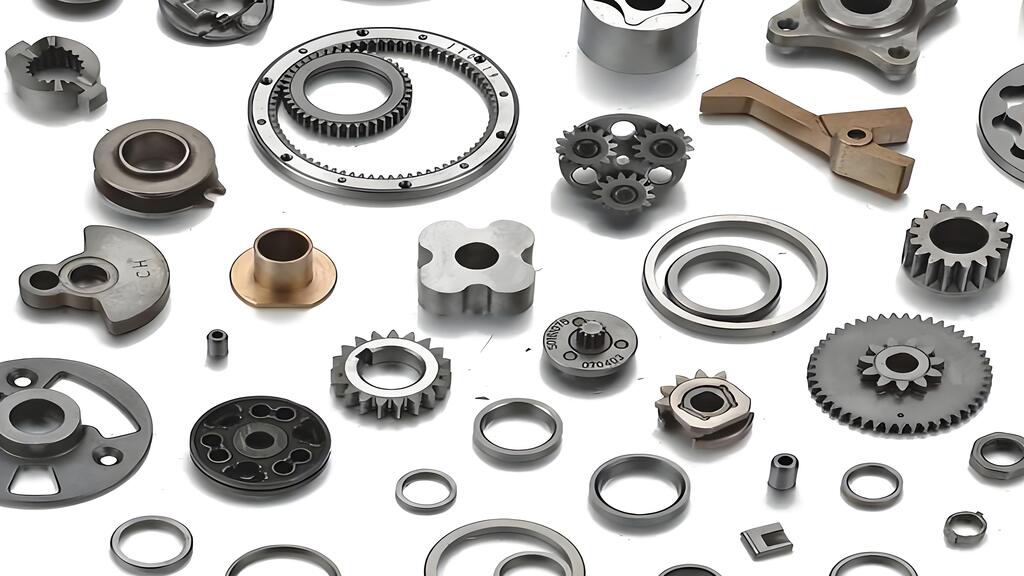


What is powder metallurgy process

The Powder Metallurgy process forms metal parts by pressing powdered metals into shape and heating them below their melting point, which bonds the particles. Manufacturers use this method to achieve high precision and create complex parts with minimal waste. For example, powder metallurgy enables production of parts with tensile strengths reaching about 75% of those made from wrought materials, while still maintaining refined microstructures and isotropic properties. The process also supports sustainability, as shown in the table below, by reducing raw material waste through recycling:
| Property | Virgin Powder | Recycled Powder | Notes on Impact |
|---|---|---|---|
| Particle Size Distribution | ~35 µm | ~30 µm | Smaller particles in recycled powder indicate material changes. |
| Shape Factor | 1.57 | 1.28 | Reduced shape factor affects flowability. |
| Microhardness (HV) | N/A | 39% reduction (to 147 HV) | Decrease due to microstructural changes. |
| Residual Powder Waste | N/A | Up to 40 wt.% residual powder, with 10 wt.% non-reusable | Recycling improves sustainability by reducing waste. |
Key Takeaways
- Powder metallurgy forms metal parts by pressing and heating metal powders below their melting point, creating strong, precise components with minimal waste.
- The process includes key steps: powder production, blending, compacting, sintering, and secondary operations to improve part quality.
- Powder production methods like atomization, chemical, and mechanical techniques affect powder quality and final part properties.
- Powder metallurgy supports complex shapes, high material efficiency, and sustainability by recycling powders and reducing scrap.
- Advanced methods such as metal injection molding, isostatic pressing, and additive manufacturing expand capabilities for intricate and high-performance parts.
- Industries like automotive, aerospace, medical devices, and industrial machinery benefit from powder metallurgy’s cost savings, design flexibility, and consistent quality.
- Limitations include size and shape restrictions, lower ductility compared to forged parts, and higher initial equiPment costs, making it best for high-volume production.
- Choosing powder metallurgy depends on part complexity, production volume, material needs, and performance requirements to optimize cost and quality.
Main Steps of the Powder Metallurgy Process
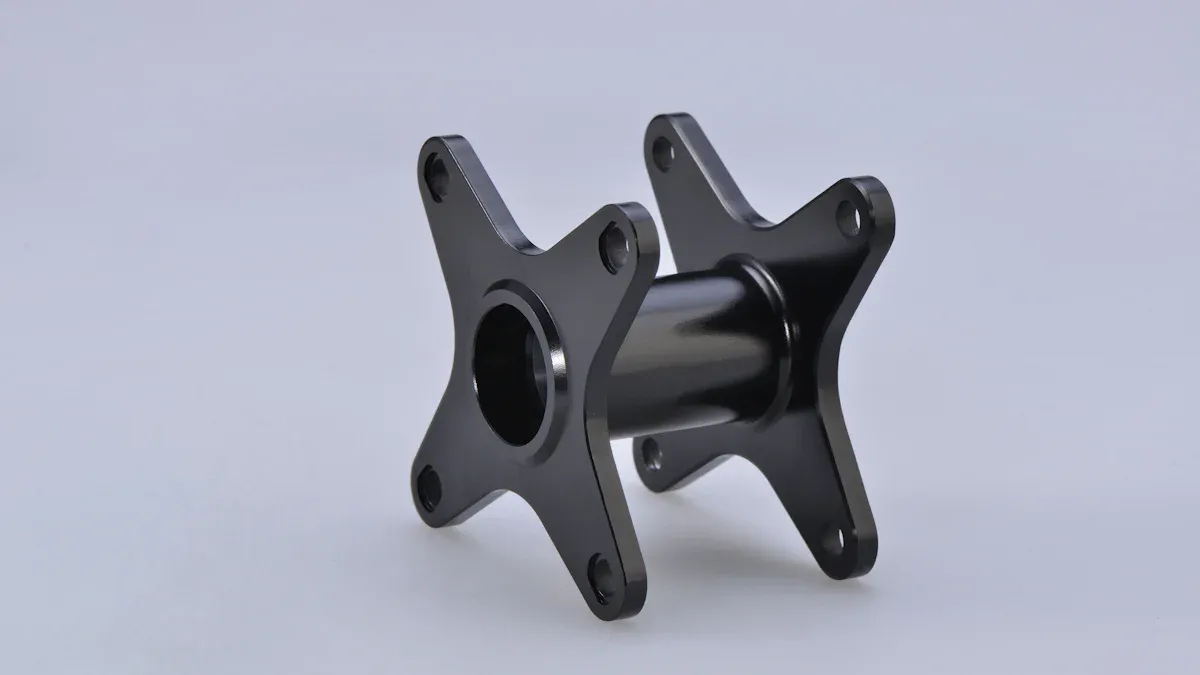
The powder metallurgy process consists of several critical steps, each designed to optimize material properties, efficiency, and part performance. Manufacturers follow a sequence that includes powder production, blending and mixing, and compacting. Each stage contributes to the overall quality and precision of the final component.
Powder Production
The first step in the powder metallurgy process involves creating metal powders with specific characteristics. The choice of production method affects particle size, shape, purity, and flowability, all of which influence the final product's properties.
Atomization
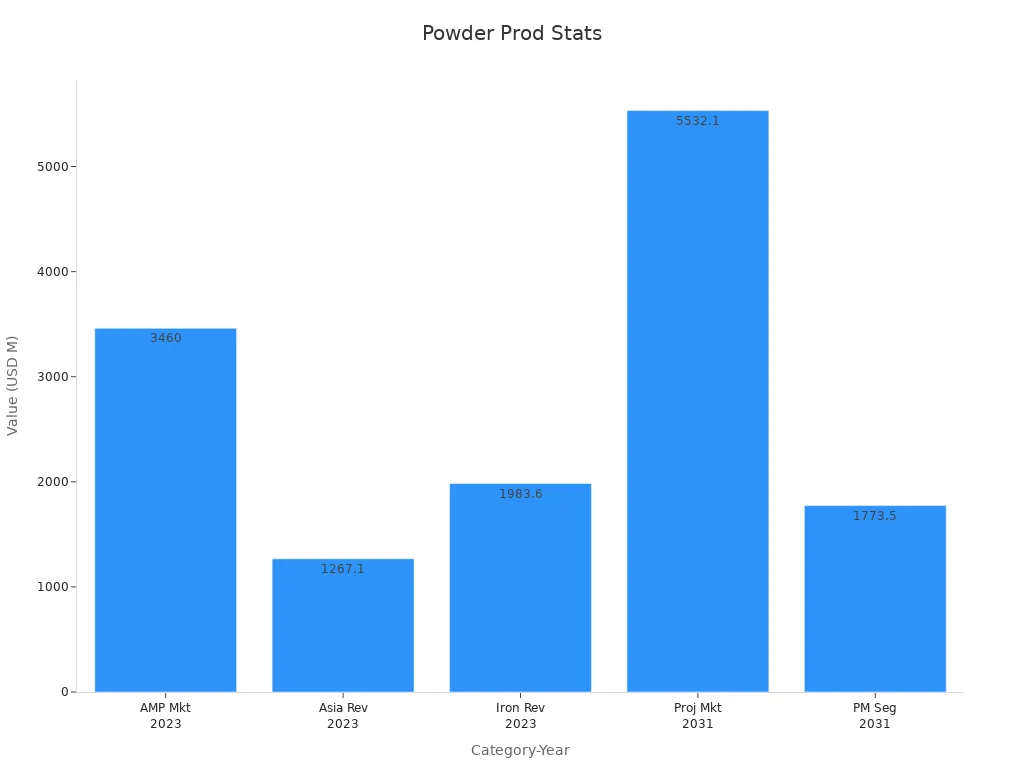
Atomization stands as the most widely used technique for producing metal powders. In this method, manufacturers melt the base metal and then disperse it into fine droplets using a high-pressure gas or water stream. The droplets solidify rapidly, forming spherical or irregular particles. Gas atomization produces powders with high purity and controlled particle size distribution, making it ideal for advanced applications such as additive manufacturing. Industry data shows that the atomizing metal powder market reached USD 3,460 million in 2023, with a projected growth to USD 5,532.1 million by 2031, driven by the adoption of additive manufacturing and powder metallurgy techniques.
Chemical Methods
Chemical methods include reduction, electrolysis, and precipitation. These processes yield powders with high purity and controlled composition. For example, reduction involves converting metal oxides to metal powders using a reducing agent such as hydrogen or carbon monoxide. Electrolytic methods deposit pure metal onto a cathode, which is then scraped off and processed into powder. These techniques are essential for producing specialty powders like ultra-fine copper or nickel.
Mechanical Methods
Mechanical methods rely on physical forces to break down bulk metals into powders. Ball milling, grinding, and mechanical alloying fall under this category. These methods allow for the production of composite powders and alloys that may not be achievable through melting. Mechanical alloying, in particular, enables the creation of unique microstructures and enhanced material properties.
| Statistic/Aspect | Value/Description |
|---|---|
| Powder Metallurgy Market Size (2024) | USD 2.99 billion |
| Projected Market Size (2033) | USD 8.15 billion |
| CAGR (2025-2033) | 11.8% |
| Yield Improvement | PM methods reduce or eliminate metal removal operations, significantly lowering manufacturing yield losses |
Blending and Mixing
After powder production, manufacturers blend and mix powders to achieve uniformity in composition and properties. This step is crucial for ensuring consistent mechanical performance in the final product.
Homogenizing Powders
Homogenizing involves thoroughly mixing different metal powders and additives. Uniform distribution of particles minimizes porosity and ensures that each part of the compacted material exhibits similar mechanical properties. Research shows that advanced mixing techniques, such as barrel mixing, can increase compressive strength by up to 20% and hardness by up to 10–20% compared to conventional methods. However, blending alone does not guarantee uniform properties. Heat treatment after mixing promotes interdiffusion and homogenization, resulting in improved alloy composition and microstructure.
Adding Lubricants or Alloying Elements
Lubricants and alloying elements play a vital role during blending. Lubricants improve powder flow and reduce friction during compaction, which helps achieve higher density and better surface finish. Alloying elements enhance specific properties such as strength, corrosion resistance, or magnetic behavior. The addition of these materials must be carefully controlled to maintain uniformity and prevent segregation.
Tip: Effective blending and the right choice of additives are essential for minimizing porosity and achieving optimal mechanical properties in powder metallurgy components.
| Stage / Process | Description & Benefits |
|---|---|
| Mix and Blend Powders | Powders and additives are mixed under controlled conditions to ensure uniform mechanical properties and minimize porosity. Lubricants and binders improve flow and green part strength. Particle sizes range from 0.1 to 1000 µm. |
Compacting
Compacting transforms the blended powder into a solid shape, known as a "green compact." This step determines the part's initial geometry and density.
Pressing Powders into Shape
Manufacturers use mechanical, hydraulic, or servo-electric presses to compress the powder into a die cavity. The applied pressure rearranges particles, fills voids, and increases adhesion between them. This process produces a green compact with sufficient strength for handling but lower density than the final product. Precise control during compaction is necessary to achieve uniform hardness and minimize defects.
Types of Dies and Presses
The choice of die and press depends on the part's complexity, size, and required properties. Uniaxial pressing, the most common method, applies pressure in one direction and suits simple geometries. Cold isostatic pressing uses flexible molds and applies pressure from all directions, resulting in isotropic parts with uniform density. Hot isostatic pressing combines high temperature and pressure, producing components with nearly 100% density and excellent mechanical properties. Each method offers distinct advantages in terms of density, dimensional accuracy, and production cost.
| Stage / Process | Description & Benefits |
|---|---|
| Powder Compaction | Powder feedstock is pressed in a die cavity at room temperature using hydraulic or mechanical presses. This rearranges particles, fills voids, and increases adhesion, producing a 'green compact' with low strength and density. |
The powder metallurgy process, through these main steps, achieves high material efficiency—often reaching about 97% raw material utilization. This efficiency, combined with the ability to produce complex shapes and minimize waste, makes the process highly attractive for industries such as automotive, aerospace, and healthcare.
Sintering
Sintering transforms the compacted powder into a strong, cohesive metal part. This stage uses controlled heat to bond particles without melting the entire material. The process determines the final density, strength, and microstructure of the component.
Heating to Bond Particles
During sintering, manufacturers heat the green compact to a temperature below the metal’s melting point. This temperature typically ranges from 70% to 90% of the melting point. The heat causes atoms to move across particle boundaries, forming "necks" that grow and connect the particles. As the process continues, these necks expand, and the part becomes denser and stronger.
Researchers have developed kinetic models to describe how sintering bonds metal particles. Kuczynski’s models show that the growth of the neck radius between particles depends on time and the dominant diffusion mechanism. For example, diffusional creep leads to a neck radius that grows with the square root of time, while volume diffusion follows a different time relationship. The main driving force for sintering is the reduction of surface free energy, which encourages atoms to move and fill gaps. Experimental studies confirm that grain boundary and volume diffusion play a major role in densification and bonding, while surface diffusion mainly smooths the pores without increasing density.
| Sintering Stage | Driving Force | Dominant Mechanisms | Effect on Bonding and Densification |
|---|---|---|---|
| Initial Stage | Curvature gradient between particle and neck | Surface diffusion, volume diffusion, grain boundary diffusion, evaporation, dislocation motion | Neck growth begins; little densification |
| Intermediate Stage | Curvature around cylindrical pores | Grain boundary diffusion, volume diffusion, plastic flow | Most densification occurs; pores shrink |
| Final Stage | Curvature around spherical pores | Volume diffusion (slow), grain boundary motion | Pores close; densification slows |
Temperature and particle size influence which diffusion mechanism dominates. Smaller particles and higher temperatures accelerate sintering, leading to faster densification and stronger bonds.
Sintering Atmospheres
The atmosphere inside the sintering furnace plays a critical role in the powder metallurgy process. Manufacturers select the atmosphere based on the metal type and desired properties. Common atmospheres include:
- Hydrogen: Reduces oxides and produces clean, bright surfaces.
- Nitrogen: Used for steels and some non-ferrous metals; prevents oxidation.
- Vacuum: Eliminates contamination and is ideal for reactive metals like titanium.
- Endothermic or exothermic gases: Control carbon content in steel parts.
A controlled atmosphere prevents unwanted chemical reactions, such as oxidation or decarburization, and ensures consistent quality. The choice of atmosphere affects the final microstructure, mechanical properties, and surface finish of the part.
Secondary Operations
After sintering, many components require additional processing to achieve precise dimensions, improved properties, or enhanced performance. These secondary operations refine the part and prepare it for its final application.
Sizing and Coining
Sizing and coining improve the dimensional accuracy and surface finish of sintered parts. In sizing, manufacturers press the part in a rigid die to correct any distortion or shrinkage from sintering. Coining involves applying additional pressure to create sharp features, engravings, or specific surface textures.
- Sizing increases dimensional precision, often achieving tolerances within ±0.01 mm.
- Coining enhances surface density and can imprint logos or identification marks.
Note: Sizing and coining help meet strict industry standards for fit and function, especially in automotive and aerospace applications.
Impregnation and Infiltration
Some sintered parts remain porous after sintering. Impregnation and infiltration address this issue by filling the pores with another material.
- Impregnation: The part absorbs a liquid, such as oil, resin, or polymer, under vacuum or pressure. This process improves sealing, corrosion resistance, and self-lubricating properties.
- Infiltration: A molten metal, such as copper or bronze, fills the pores. This increases density, strength, and thermal conductivity.
These techniques extend the range of applications for powder metallurgy components, making them suitable for demanding environments.
Heat Treatment and Finishing
Heat treatment further enhances the mechanical properties of sintered parts. Manufacturers use processes such as annealing, quenching, and tempering to increase hardness, strength, or ductility. Finishing operations, including machining, grinding, or surface coating, provide the final shape and appearance.
- Heat treatment tailors properties to specific requirements.
- Finishing ensures the part meets exact specifications and aesthetic standards.
Secondary operations add value to the powder metallurgy process by delivering parts that meet or exceed performance expectations in critical industries.
Types of Powder Metallurgy Processes
Powder metallurgy offers several distinct processing routes, each tailored to specific part requirements, material properties, and production volumes. Understanding these methods helps manufacturers select the most efficient and cost-effective approach for their applications.
Conventional Press and Sinter
Conventional press and sinter remains the most widely used method in the industry. Manufacturers compact metal powders at room temperature using mechanical or hydraulic presses, then sinter the "green" parts at temperatures below the metal’s melting point. This process produces components with 5–15% porosity, resulting in mechanical properties slightly below those of wrought steel. Despite this, the method supports the production of approximately 1 million tonnes of iron-based structural parts annually. The simplicity of room temperature compaction and atmospheric-pressure sintering reduces energy consumption and streamlines production. Compared to advanced techniques like hot isostatic pressing, conventional pressing and sintering are ideal for high-volume manufacturing of simple shapes, even though they yield lower density and strength.
- The process delivers parts close to the die dimensions, minimizing machining.
- It remains practical and efficient for large-scale production.
- Manufacturers benefit from lower tooling costs and straightforward equipment.
Note: The widespread use of this process highlights its reliability and cost-effectiveness for medium to high-volume runs.
Metal Injection Molding (MIM)
Metal injection molding combines the versatility of plastic injection molding with the strength of sintered metals. Manufacturers blend fine metal powders with a thermoplastic binder to create a feedstock, which is then injected into precision molds. After molding, the binder is removed, and the part is sintered to achieve high density and strength.
| Aspect | Metal Injection Molding (MIM) | Conventional Powder Metallurgy (PM) |
|---|---|---|
| Tooling and Equipment | Specialized injection molding machines, high tooling costs | Simpler compaction dies; lower tooling costs |
| Production Volume | Cost-effective at high volumes | Suitable for medium to high volumes |
| Part Complexity | Excels at complex, near-net-shape parts | Best for simpler parts |
| Density & Properties | High density (95–99%), strength near wrought materials | Lower density (80–90%), controlled porosity |
| Size & Material Limits | Limited to small/medium parts (<100g); not all metals are suitable | More flexible in size and materials |
| Post-Processing | Often eliminates secondary operations | May require machining or finishing |
| Material Utilization | Minimal waste | Efficient, but more waste in finishing |
| Cost Structure | Higher material and tooling costs, justified by complexity and volume | Lower material and tooling costs |
MIM achieves theoretical densities of 95–99% and supports minimum wall thicknesses as low as 0.1 mm. Although material costs ($10–12 per pound) and tooling expenses are higher than conventional PM, MIM excels at producing intricate, thin-walled parts with excellent surface finish and minimal secondary operations. This makes it the preferred choice for high-volume, high-precision applications.
Isostatic Pressing
Isostatic pressing applies uniform pressure from all directions to compact powders, resulting in parts with exceptional density and isotropy. This method suits complex shapes and large components that require consistent mechanical properties throughout.
Cold Isostatic Pressing
Cold isostatic pressing (CIP) uses flexible molds and hydraulic pressure at room temperature. Manufacturers fill a rubber mold with powder, seal it, and immerse it in a pressure vessel filled with fluid. The pressure compacts the powder uniformly, producing green parts with high dimensional accuracy. CIP is ideal for ceramics, refractories, and metals that need further sintering.
Hot Isostatic Pressing
Hot isostatic pressing (HIP) combines high temperature and isostatic gas pressure to densify powders or consolidate pre-sintered parts. This process eliminates internal porosity and enhances mechanical properties such as tensile and yield strength. The chart below compares HIP with vacuum hot pressing (VHP) for beryllium powders, demonstrating HIP’s superior performance:
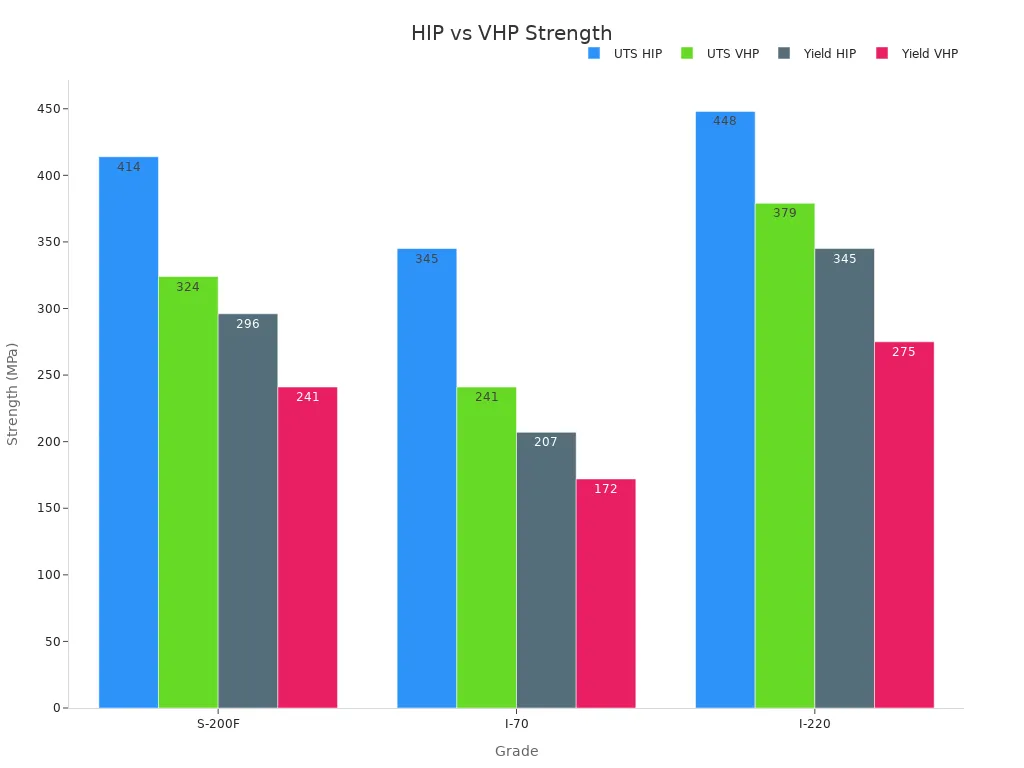
HIP enables the production of large, near-net-shape components with improved isotropy and density. Manufacturers use HIP extensively for hardmetals, superalloys, and titanium alloys, despite higher capital costs. The process also enhances the quality of ceramic coatings and complex metal parts, making it invaluable for demanding applications.
Additive Manufacturing (3D Printing)
Additive manufacturing, often called 3D printing, has transformed the way engineers and manufacturers approach metal part production. This technology builds components layer by layer from metal powders, allowing for intricate designs that traditional methods cannot achieve. Several techniques exist, including laser powder bed fusion and binder jetting, each offering unique advantages in speed and scalability.
- Laser powder bed fusion achieves printing speeds up to 250 cm³ per hour, while binder jetting can reach 4,000 cm³ per hour. These rates support both rapid prototyping and industrial-scale production.
- Post-processing steps such as heat treatment, hot isostatic pressing, and CNC machining enhance the quality and performance of printed parts.
- Companies like GKN Powder Metallurgy operate global print networks and integrate Industry 4.0 technologies, ensuring consistent quality and efficient workflows.
Additive manufacturing offers several key benefits:
- Design freedom enables the creation of complex geometries and internal features, such as lattice structures, that reduce weight without sacrificing strength.
- Near-net-shape manufacturing minimizes material waste, making the process highly efficient.
- Rapid prototyping and easy customization allow for quick design iterations without the need for new tooling.
- Sustainability improves as manufacturers can recycle nearly 100% of unused metal powder, reducing environmental impact.
In aerospace, additive manufacturing has proven its value. GE Aerospace’s GE9X engine contains over 300 3D printed components, contributing to a 5% improvement in fuel consumption. Nikon SLM Solutions demonstrated a 75% reduction in cycle times for tooling production using metal 3D printed molds. Aerospace manufacturers benefit from lighter parts, consolidated assemblies, and the ability to use advanced materials like titanium alloys, which offer excellent strength-to-weight ratios. Production agility and reduced lead times further support the adoption of metal additive manufacturing in industries that demand high performance and customization.
Hot Pressing and Spark Plasma Sintering
Hot pressing and spark plasma sintering (SPS) represent advanced consolidation techniques in powder metallurgy. Both methods apply heat and pressure simultaneously to densify metal powders, resulting in parts with superior mechanical properties and microstructures.
Hot pressing uses a heated die and uniaxial pressure to compact powders. This approach produces dense, high-strength components with minimal porosity. SPS, also known as field-assisted sintering, passes a pulsed electric current directly through the powder compact. This current generates rapid heating, enabling ultra-fast sintering cycles and precise control over grain growth.
| Aspect | Evidence Summary | Supporting Study/Source |
|---|---|---|
| Cost | FAST-forge hybrid processing is described as a cost-effective method for near net shape titanium parts. | Weston NS, Jackson M. FAST-forge - A cost-effective hybrid processing route. (2017) |
| Quality | SPS maintains nano and sub-micron structures in consolidated powders, leading to superior microstructure. | Critical review on FAST technology (2019) |
| Performance | SPS significantly shortens processing time and improves powder consolidation quality. | Critical review on FAST technology (2019) |
| Quality | Ti-6Al-4V alloys processed by SPS show enhanced mechanical properties such as high strength and ductility. | Multiple studies on Ti-6Al-4V alloys processed by SPS (Menapace et al. 2013; Crosby et al. 2014; Long et al. 2013, 2014) |
| Cost | Hot forging of SPS preforms demonstrates efficient consolidation routes reducing manufacturing steps. | Menapace C, Vicente N, Molinari A, et al. Hot forging of Ti-6Al-4V alloy preforms (2013) |
The ultra-rapid flash spark plasma sintering process can consolidate silicon carbide powder within seconds. This breakthrough drastically reduces processing time and energy consumption compared to conventional sintering, while maintaining high material quality. SPS also preserves nano and sub-micron grain structures, which leads to improved strength and ductility in alloys such as Ti-6Al-4V. Manufacturers benefit from cost-effective production, efficient consolidation, and the ability to produce high-performance parts for demanding applications.
Applications of the Powder Metallurgy Process

Powder metallurgy finds widespread use across several industries, driven by its ability to produce complex, high-performance parts with efficiency and precision. The following sections highlight its impact in automotive, aerospace, and medical device manufacturing.
Automotive Components
Automotive manufacturers rely on powder metallurgy to create gears, bearings, bushings, and structural parts. This technology supports the production of net-shape and near-net-shape components, which reduces the need for machining and minimizes material waste. Traditional metal forming methods, such as deep-drawing and forging, often result in significant material losses—deep-drawing uses only about 56% of sheet metal, while machining yields an average of around 60%. Powder metallurgy, by contrast, achieves higher material yield and supports mass production at lower cost.
Powder metallurgy enables precise control over material composition. Engineers can tailor carbon and nitrogen content in PM steels to achieve specific hardness and microstructural properties, which are essential for engine and transmission parts. The automotive sector values this process for its consistency, reliability, and ability to meet the demands of both conventional and electric vehicles.
Powder metallurgy is recognized as a green manufacturing technology, supporting the automotive industry's shift toward sustainability and efficiency.
Aerospace Parts
Aerospace applications demand lightweight, high-strength components that can withstand extreme conditions. Powder metallurgy enables the production of turbine blades, structural parts, and specialized fasteners using advanced materials like titanium and nickel alloys. These materials offer excellent strength-to-weight ratios, which improve fuel efficiency and performance.
Additive manufacturing, a subset of powder metallurgy, allows engineers to design intricate, customized parts with internal features that traditional methods cannot achieve. The aerospace sector benefits from reduced part weight, consolidated assemblies, and shorter production cycles. Continuous investment in research and development drives innovation, ensuring that powder metallurgy remains at the forefront of aerospace manufacturing.
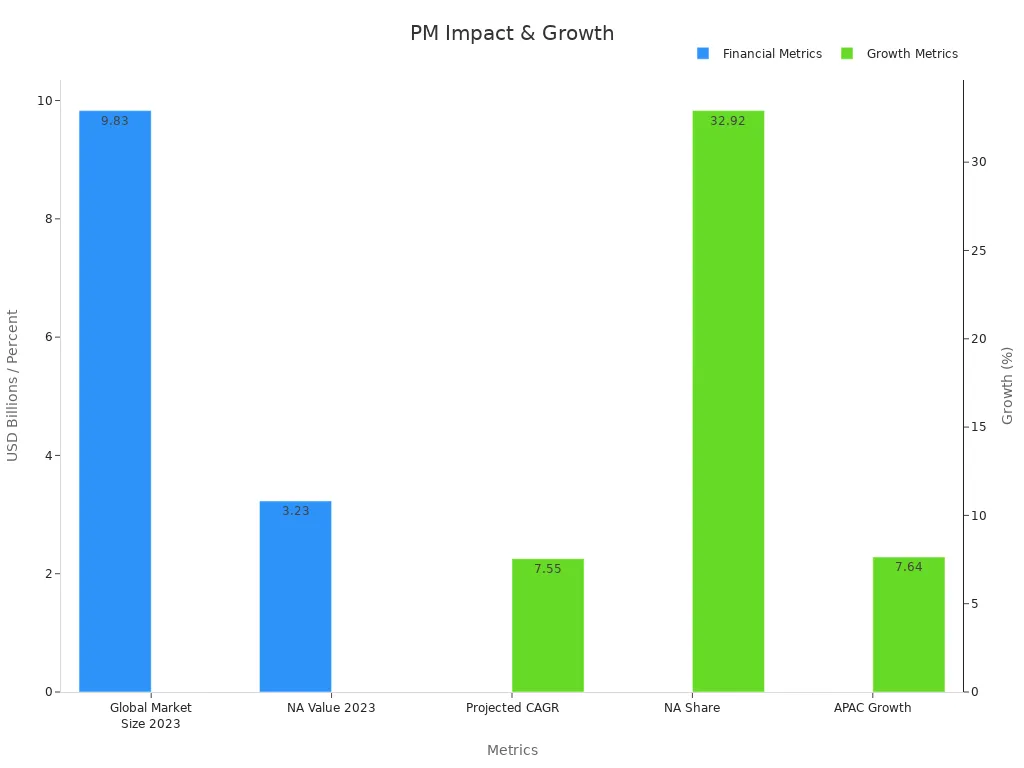
| Sector/Application | Key Impact and Growth Drivers |
|---|---|
| Aerospace & Defense | Use of lightweight, high-strength components improving fuel efficiency and performance. |
| Regional Highlights | North America: 32.92% market share in 2023, driven by aerospace and automotive demand. |
| Technological Trends | Additive manufacturing enables complex geometries and customization. |
Medical Devices
The medical industry depends on powder metallurgy for the production of implants, surgical instruments, and dental devices. This process allows for the creation of biocompatible, high-precision components with complex geometries. Titanium and its alloys, processed through powder metallurgy, provide the strength, corrosion resistance, and compatibility required for long-term implantation.
Recent advancements, such as 4D printing, enable the development of adaptive implants like stents and heart valves. These innovations support personalized care and improve patient outcomes. The ability to produce customized, reliable, and cost-effective medical devices positions powder metallurgy as a critical technology in modern healthcare.
- The medical sector uses powder metallurgy for adaptive implants and surgical tools.
- Additive manufacturing supports rapid prototyping and customization for patient-specific solutions.
Industrial Machinery
Industrial machinery manufacturers depend on powder-based technologies to produce robust and reliable components. Powder metallurgy enables the creation of gears, cams, sprockets, and wear-resistant parts that operate under high loads and harsh conditions. These components often require precise tolerances and consistent material properties. Engineers select powder metallurgy for its ability to deliver uniformity and repeatability in mass production.
Many industrial machines, such as pumps and compressors, use sintered bushings and bearings. These parts provide self-lubricating properties, which reduce maintenance needs and extend equipment life. Factories benefit from reduced downtime and lower operational costs. The process also supports the production of specialized tool steels and hard metals for cutting, grinding, and forming applications.
Note: Powder metallurgy allows for the integration of multiple functions into a single part, which simplifies assembly and improves machine reliability.
Consumer Products
Manufacturers of consumer goods leverage powder metallurgy to produce a wide range of everyday items. Household appliances, power tools, and sporting equipment often contain sintered metal parts. These components include structural frames, fasteners, and small gears. The process supports high-volume production, which helps keep costs low for consumers.
Powder metallurgy offers design flexibility. Product designers can create intricate shapes and lightweight structures that would be difficult or expensive to achieve with traditional methods. For example, kitchen blenders and electric shavers use sintered gears and bushings for quiet, efficient operation. The technology also finds use in locks, watches, and even bicycle parts.
- Key benefits for consumer products:
- Consistent quality
- Cost-effective mass production
- Ability to customize materials for specific performance needs
Electrical and Magnetic Materials
The electrical industry relies on powder metallurgy to manufacture components with specialized magnetic and conductive properties. Soft magnetic materials, such as iron and iron-silicon alloys, form the cores of transformers, inductors, and electric motors. These materials must exhibit high permeability and low energy loss.
Sintered contacts and electrodes appear in circuit breakers, switches, and relays. These parts require excellent conductivity and resistance to wear. Powder metallurgy enables the precise control of composition and microstructure, which ensures optimal performance in electrical applications.
Magnetic powders also play a crucial role in the production of permanent magnets. Devices such as speakers, sensors, and electric vehicle motors use these magnets. The process allows for the creation of complex shapes and tailored magnetic properties.
Engineers value powder metallurgy for its ability to produce advanced materials that meet the demanding requirements of modern electrical and electronic devices.
Metals and Materials Used in the Powder Metallurgy Process
Common Metals
Powder metallurgy relies on a range of metals, each selected for its unique properties and suitability for specific applications.
Iron and Steel
Iron and steel powders dominate the powder metallurgy industry. Manufacturers use these materials to produce automotive gears, structural parts, and machinery components. Iron-based powders offer excellent strength, wear resistance, and cost efficiency. Steel powders allow for further alloying, which enhances hardness and toughness. The ability to control particle size and distribution helps engineers tailor the microstructure for optimal performance.
Copper and Alloys
Copper powders serve in electrical contacts, heat exchangers, and self-lubricating bearings. Copper’s high electrical and thermal conductivity makes it ideal for these roles. Alloying copper with elements like tin or zinc improves mechanical strength and corrosion resistance. Powder metallurgy enables the production of complex copper-based parts with precise dimensions.
Aluminum
Aluminum powders provide lightweight solutions for aerospace, automotive, and electronics industries. Aluminum’s low density and good corrosion resistance make it attractive for parts that require both strength and reduced weight. Powder metallurgy allows for the creation of intricate aluminum components that would be difficult to form using traditional casting or forging.
Nickel
Nickel powders find use in superalloys, batteries, and magnetic materials. Nickel-based alloys deliver high-temperature strength and oxidation resistance, which are essential for turbine blades and aerospace components. Powder metallurgy supports the production of nickel parts with controlled porosity and tailored properties.
Titanium
Titanium powders enable the manufacture of medical implants, aerospace fasteners, and high-performance sporting goods. Titanium offers an excellent strength-to-weight ratio and outstanding corrosion resistance. Powder metallurgy allows for the production of complex titanium shapes while minimizing material waste, which is important given titanium’s high raw material cost.
Criteria for Material Selection
Engineers consider several factors when selecting materials for powder metallurgy.
Mechanical Properties
They evaluate hardness, tensile strength, ductility, and wear resistance. Powder metallurgy enables precise control over these properties by adjusting particle size, distribution, and processing parameters. This control ensures that the final part meets the required performance standards.
Cost and Availability
Material cost plays a significant role in selection. Powder metallurgy often proves more cost-effective than casting or forging because it uses raw materials efficiently and produces minimal waste. Automation in powder metallurgy also reduces labor costs and increases reproducibility.
Application Requirements
The intended use of the part influences material choice. Some applications demand high electrical conductivity, while others require resistance to corrosion or extreme temperatures. Powder metallurgy supports the production of complex shapes and specialized materials that traditional methods cannot achieve.
Tip: Engineers often select materials based on a balance of performance, cost, and the ability to form complex geometries.
Non-Metallic Additives
Non-metallic additives enhance the properties of metal powders. Lubricants improve powder flow and compaction. Ceramic particles, such as titanium dioxide (TiO₂), can increase hardness, wear resistance, or even catalytic activity. These additives allow for the creation of composite materials with tailored electrical, mechanical, or optical properties. By carefully selecting and blending additives, manufacturers expand the range of applications for powder metallurgy components.
Advantages of the Powder Metallurgy Process
Material Efficiency
Powder metallurgy stands out for its exceptional material efficiency. Manufacturers achieve high-density components with minimal waste, as the process forms parts close to their final shape. This approach reduces the need for extensive machining, which often generates scrap in traditional methods. Researchers have shown that powder metallurgy enables the production of complex shapes while maintaining excellent mechanical properties. The process involves powder manufacturing, mixing, compression, and sintering, which together support high production rates and optimal material use. By minimizing excess material and maximizing yield, companies can conserve resources and lower environmental impact.
Note: High material efficiency not only saves raw materials but also supports sustainability goals in modern manufacturing.
Design Flexibility
Engineers value powder metallurgy for its remarkable design flexibility. The process allows for the creation of intricate geometries and internal features that would be difficult or impossible to achieve with casting or forging. Designers can integrate multiple functions into a single part, reducing assembly steps and improving reliability. The ability to blend different powders and additives enables the tailoring of material properties to meet specific application requirements. This flexibility supports innovation across industries, from automotive to medical devices.
A wide range of shapes, sizes, and material combinations become possible through powder metallurgy. Manufacturers can produce both small, detailed components and larger, structurally demanding parts. This versatility opens new possibilities for product development and customization.
Cost Savings
Powder metallurgy offers significant cost savings, especially for high-volume production. The process eliminates many secondary operations, such as extensive machining or finishing, by producing parts near their final dimensions. Manufacturers benefit from reduced labor and tooling costs, as well as lower energy consumption compared to traditional methods. The ability to form complex shapes in a single step further reduces manufacturing expenses.
Research highlights that powder metallurgy achieves high dimensional accuracy and allows for the customization of material properties. These factors contribute to lower overall production costs. Companies can deliver high-quality components at competitive prices, making powder metallurgy an attractive choice for mass production.
Consistent Quality
Manufacturers value powder metallurgy for its ability to deliver consistent quality across large production runs. The process uses precise control over powder characteristics, compaction pressure, and sintering temperature. This control ensures that each part meets strict dimensional and mechanical standards. Automated systems monitor every stage, from powder blending to final inspection. These systems reduce human error and maintain uniformity.
Quality assurance teams use statistical process control (SPC) to track key parameters. They analyze data from each batch to detect any variation. When they find deviations, they can adjust the process quickly. This approach minimizes defects and scrap rates. As a result, companies achieve high repeatability, even for complex shapes and tight tolerances.
Key factors that contribute to consistent quality include:
- Uniform particle size and distribution in the starting powder
- Controlled compaction and sintering conditions
- Automated inspection and feedback systems
Note: Consistent quality reduces the need for rework and ensures that parts perform reliably in critical applications, such as automotive engines and medical devices.
Environmental Benefits
Powder metallurgy supports sustainable manufacturing practices. The process uses nearly all the raw material, which reduces waste compared to traditional methods like machining or casting. Companies recycle unused powder and scrap, further lowering environmental impact.
Energy consumption remains lower because the process forms parts near their final shape. This efficiency reduces the need for extensive machining or finishing. Many manufacturers use environmentally friendly lubricants and binders, which minimize hazardous emissions during production.
A comparison of environmental benefits:
| Benefit | Powder Metallurgy | Traditional Machining |
|---|---|---|
| Material Utilization | Up to 97% | 60–70% |
| Scrap Generation | Minimal | High |
| Energy Consumption | Lower | Higher |
| Emissions and Waste | Reduced | Significant |
Manufacturers also benefit from reduced transportation costs. They can produce parts closer to the point of use, which lowers the carbon footprint. The powder metallurgy process aligns with global efforts to create greener, more efficient manufacturing systems.
🌱 Companies that adopt powder-based technologies demonstrate a commitment to environmental stewardship and resource conservation.
Limitations and Challenges of the Powder Metallurgy Process
Size and Shape Restrictions
Powder metallurgy faces notable limitations regarding the size and shape of parts that can be produced. The characteristics of the metal powders—such as particle size, distribution, and shape—directly influence processability and final part quality. Researchers have identified several factors that restrict the range of achievable geometries:
- Particle size distribution parameters, including d10, d50, d90, and span values, play a critical role. For example, titanium powder with a d90 of 452 μm shows much larger particles than other powders, which are often capped at 200 μm. This variation impacts powder flow and packing.
- Span values above 1.5 indicate poor flow properties, while values below 1.5 suggest good flowability. These statistical thresholds help define process limits.
- Particle shape also matters. Spherical particles, such as those found in stainless steel powder, promote better flow. Irregular or dendritic shapes, like those in titanium or manganese powders, reduce flowability but may improve green strength.
- Flowability indices, such as the flow factor (ffc), classify powders into easy-flowing or poor-flowing groups. Particle size and shape dominate these classifications.
- Smaller particles increase surface area and cohesive forces, which reduces flowability. Morphology and surface roughness further affect flow beyond size alone.
- Tap density, which measures packing density, depends on particle size and shape. Poor packing leads to porosity and shrinkage during sintering, limiting achievable final densities.
- Studies show that wide particle size distributions affect packing behavior, shrinkage, and densification. These factors directly link size and shape restrictions to the limitations of powder metallurgy.
Manufacturers must carefully select powders and process parameters to minimize these challenges. Even with optimization, the process often struggles to produce very large, thick, or highly intricate parts without defects.
Mechanical Property Limits
Parts produced by powder metallurgy sometimes exhibit lower mechanical properties compared to those made by forging or casting. Porosity, a common feature in sintered components, can reduce strength, ductility, and fatigue resistance. While secondary operations and advanced sintering techniques can improve density and properties, they may not fully match the performance of wrought materials. Applications that demand maximum toughness or impact resistance may require alternative manufacturing methods. Engineers must balance the benefits of powder metallurgy with the mechanical requirements of the final product.
Equipment and Setup Costs
The initial investment in powder metallurgy equipment and tooling can be substantial. Tooling costs typically range from $8,000 to $25,000, which poses a significant barrier for low-volume production. The process becomes economically efficient only at higher production volumes, where the cost can be spread across many units. The table below summarizes cost efficiency and break-even points for various production volumes:
| Production Volume Range | PM Cost Efficiency | Initial Tooling Cost (USD) | Approximate Break-Even Volume |
|---|---|---|---|
| Less than 500 units | Poor | 8,000 - 25,000 | Not recommended |
| 500 to 5,000 units | Fair | 8,000 - 25,000 | ~3,000 units |
| 5,000 to 50,000 units | Good | 8,000 - 25,000 | ~2,000 units |
| More than 50,000 units | Excellent | 8,000 - 25,000 | ~1,000 units |
Equipment also imposes physical size constraints. Most presses limit part diameter to about 100 mm (practically up to 250 mm), height to 50 mm (up to 75 mm), and weight to 1 kg (up to 2.5 kg). Larger or heavier parts may require alternative processes, such as casting or forging.
A recent cost modeling study on metal laser powder bed fusion highlights that setup costs, including build plate expenses, contribute significantly to overall costs in single-part production. These costs remain largely fixed, so they become less significant as production volume increases. Post-processing activities add further expense, making cost management more complex. Manufacturers must consider these factors when planning production, especially for custom or low-volume orders.
Note: High equipment and setup costs make powder metallurgy most suitable for mass production, where economies of scale can offset the initial investment.
Limited Ductility and Toughness
Powder metallurgy often produces parts with lower ductility and toughness compared to those made by forging or casting. Ductility describes a material’s ability to deform without breaking, while toughness measures its resistance to crack propagation and impact. These properties are critical for components that must withstand bending, stretching, or sudden forces.
Several factors contribute to these limitations in powder-based components:
- Residual Porosity: Even after sintering, small pores remain within the material. These pores act as stress concentrators. When a force is applied, cracks can initiate and grow more easily.
- Particle Bonding: Sintering bonds particles together, but the connections may not be as strong as the grain boundaries in wrought metals. Weak bonds reduce the ability of the material to absorb energy before fracturing.
- Impurities and Inclusions: During powder production and handling, contaminants can enter the mix. These inclusions further weaken the structure and reduce both ductility and toughness.
Note: Engineers must consider these factors when selecting powder metallurgy for parts that require high impact resistance or flexibility.
A comparison of mechanical properties highlights these differences:
| Property | Powder Metallurgy Part | Wrought Metal Part |
|---|---|---|
| Ductility (% Elongation) | 1–5% | 10–30% |
| Toughness (J) | 5–20 | 30–100 |
Manufacturers can improve ductility and toughness by using advanced sintering techniques, hot isostatic pressing, or by adding ductile alloying elements. However, these methods increase production costs and complexity. For many applications, the trade-off between cost and mechanical performance remains a key consideration.
Engineers often use powder metallurgy for parts that operate under compressive loads or where high ductility is not essential. Examples include gears, bushings, and structural supports. When a design requires high toughness or the ability to withstand repeated bending, alternative manufacturing methods may offer better results.
⚠️ Always match the manufacturing process to the mechanical demands of the application to ensure safety and reliability.
Powder Metallurgy Process vs. Other Metal-Forming Methods
Comparison with Casting
Casting shapes molten metal by pouring it into a mold, allowing it to solidify into the desired form. This method excels at producing large, complex parts and supports a wide range of alloys. However, casting often introduces porosity and shrinkage defects, which can compromise mechanical properties. In contrast, powder metallurgy forms parts near their final shape using metal powders, minimizing material waste and reducing the need for machining. While casting can achieve full density, powder metallurgy can approach similar densities through advanced techniques like double pressing or roll densification. Manufacturers often choose powder metallurgy for applications requiring intricate geometries, lightweighting, or tailored porosity, such as self-lubricating bearings. Casting remains the preferred choice for very large components or when size is not a limiting factor.
| Aspect | Powder Metallurgy | Casting |
|---|---|---|
| Density | Up to 7.6 g/cm³ | Fully dense, but with defects |
| Shape Complexity | High | High |
| Material Waste | Minimal | Moderate |
| Size Limitations | Press-limited | Few |
| Unique Advantages | Tailored porosity | Large, complex castings |
Note: Powder metallurgy parts have won awards for complex designs in aerospace and automotive industries, demonstrating their capability for high-performance, mass-produced components.
Comparison with Forging
Forging uses compressive forces to shape heated metal, producing parts with excellent strength due to grain flow and work hardening. This method creates fully dense components with superior mechanical properties, making it ideal for critical structural applications. However, forging often involves high tooling and setup costs, and complex shapes can be difficult or expensive to achieve. Powder metallurgy offers a cost-effective alternative for moderate-to-high volume production, especially when intricate shapes or material efficiency are priorities. While forged parts outperform in toughness and impact resistance, powder metallurgy can deliver competitive strength and wear resistance, particularly after post-processing. For example, PM gears with roll densification can match the performance of 8620 wrought steel gears in demanding, high-cycle environments.
- Forging suits large, high-strength parts.
- Powder metallurgy excels in producing complex, lightweight, or self-lubricating components.
Comparison with Machining
Machining removes material from a solid block to achieve precise dimensions and surface finishes. This process provides tight tolerances and is essential for prototyping, finishing, and repair work. However, machining generates significant material waste and can be time-consuming for complex parts. Powder metallurgy minimizes scrap by forming parts close to their final shape, reducing both waste and production time. While machining does not alter the material’s internal structure, powder metallurgy enables control over microstructure and phase distribution, which can enhance properties like wear and corrosion resistance. For high-volume production of intricate parts, powder metallurgy offers clear advantages in efficiency and cost.
| Aspect | Powder Metallurgy | Machining |
|---|---|---|
| Material Waste | Minimal | High |
| Shape Complexity | High | Limited by tool access |
| Tolerance | Good, may need sizing | Excellent |
| Production Volume | Cost-effective at scale | Less efficient for mass production |
Tip: Manufacturers should consider powder metallurgy when seeking to optimize material use, achieve complex shapes, or tailor properties for specific applications.
When to Choose Powder Metallurgy
Selecting the right manufacturing method depends on several factors. Engineers and manufacturers often evaluate the requirements of a project before deciding on powder metallurgy. This process offers unique advantages, but it does not suit every application. Understanding when to choose powder metallurgy helps organizations maximize efficiency, quality, and cost-effectiveness.
Key scenarios where powder metallurgy stands out:
-
Complex Geometries and Intricate Features
Powder metallurgy enables the production of parts with shapes that traditional casting or forging cannot achieve. Designers can incorporate undercuts, internal channels, and fine details directly into the part. This capability reduces the need for secondary machining. -
High-Volume Production
The process becomes highly economical when producing thousands or millions of identical parts. Tooling and setup costs spread over large volumes, lowering the cost per unit. -
Material Efficiency and Sustainability
Companies seeking to minimize waste benefit from powder metallurgy. The process uses nearly all the raw material, which supports sustainability goals and reduces scrap disposal costs. -
Tailored Material Properties
Engineers can blend powders to create custom alloys or composites. This flexibility allows for the optimization of properties such as hardness, wear resistance, or magnetic behavior. -
Consistent Quality and Tight Tolerances
Automated controls and precise powder handling ensure repeatable results. Industries that require parts with strict dimensional accuracy, such as automotive or medical device manufacturing, often select powder metallurgy. -
Self-Lubricating or Porous Components
Applications like bushings, bearings, or filters benefit from the controlled porosity achievable with this method. These features improve performance and extend service life.
Tip: Powder metallurgy is ideal for parts that require minimal post-processing, high repeatability, and specialized material characteristics.
Situations where alternative methods may be preferable:
| Scenario | Preferred Method |
|---|---|
| Very large or heavy components | Casting or forging |
| Maximum ductility or impact strength | Forging or wrought metals |
| Low production volumes | Machining or casting |
| Simple shapes with loose tolerances | Casting |
Engineers should assess the design complexity, production volume, material requirements, and performance expectations. By matching these factors to the strengths of powder metallurgy, organizations can achieve optimal results in both product quality and manufacturing efficiency.
The powder metallurgy process delivers precise, efficient manufacturing for metal parts. Its main steps—powder production, blending, compacting, and sintering—enable the creation of complex, high-quality components. Studies show this method reduces material waste and labor costs, while automation ensures consistent results. A case study on additive manufacturing highlights a 40% lower carbon footprint during use, supporting sustainability. Industries such as aerospace, automotive, and medical devices benefit from its versatility and ability to tailor properties for demanding applications.
| Benefit | Impact |
|---|---|
| Material Efficiency | Minimal waste, cost savings |
| Design Flexibility | Complex shapes, near-net-shape control |
| Sustainability | Reduced carbon footprint, broad use |
FAQ
What industries use powder metallurgy the most?
Automotive, aerospace, medical device, and industrial machinery sectors rely heavily on powder metallurgy. These industries value the process for its ability to produce complex, high-performance parts with minimal waste and consistent quality.
How does powder metallurgy reduce material waste?
Powder metallurgy forms parts close to their final shape. This approach minimizes the need for machining and reduces scrap. Manufacturers often recycle unused powder, which further improves material efficiency.
Can powder metallurgy produce large parts?
Most powder metallurgy methods suit small to medium-sized components. Equipment limitations and powder flow challenges restrict the size of parts. For very large items, casting or forging usually offers better results.
What is a “green compact” in powder metallurgy?
A green compact refers to the pressed but unsintered powder part. It holds its shape but lacks full strength and density. Sintering transforms the green compact into a finished, durable component.
Are powder metallurgy parts as strong as forged parts?
Powder metallurgy parts often have lower ductility and toughness than forged parts due to residual porosity. Advanced techniques like hot isostatic pressing can improve strength, but forging remains superior for maximum mechanical performance.
Is powder metallurgy environmentally friendly?
Yes. Powder metallurgy uses nearly all raw materials, generates minimal scrap, and consumes less energy than many traditional methods. Many manufacturers recycle powders, which supports sustainable production practices.
What metals can be processed using powder metallurgy?
Common metals include iron, steel, copper, aluminum, nickel, and titanium. Engineers select materials based on application needs, mechanical properties, and cost. Non-metallic additives can also enhance specific characteristics.