

Types of Powder Metallurgy Processes: MIM, HIP, CIP, and Sintering Explained
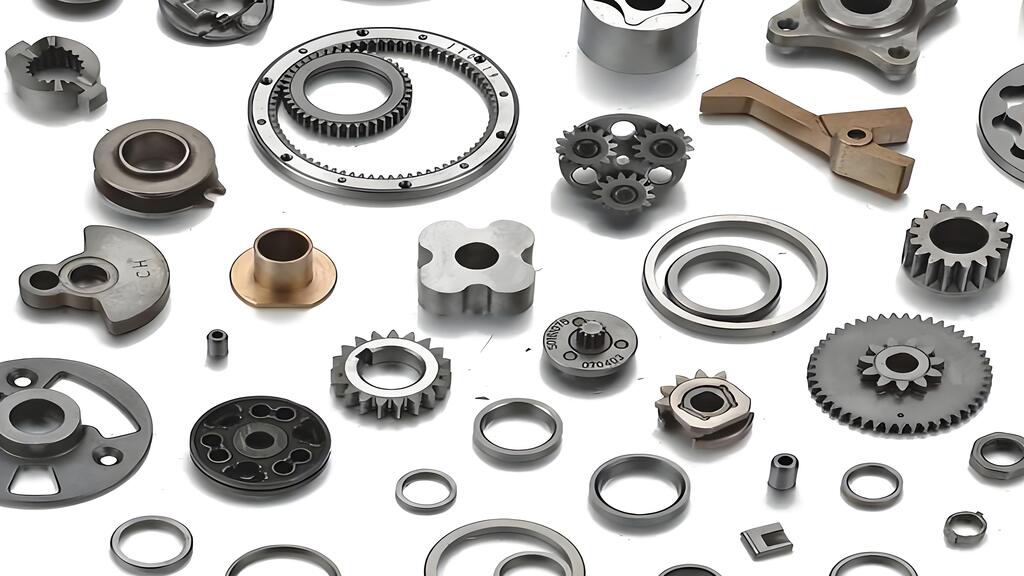
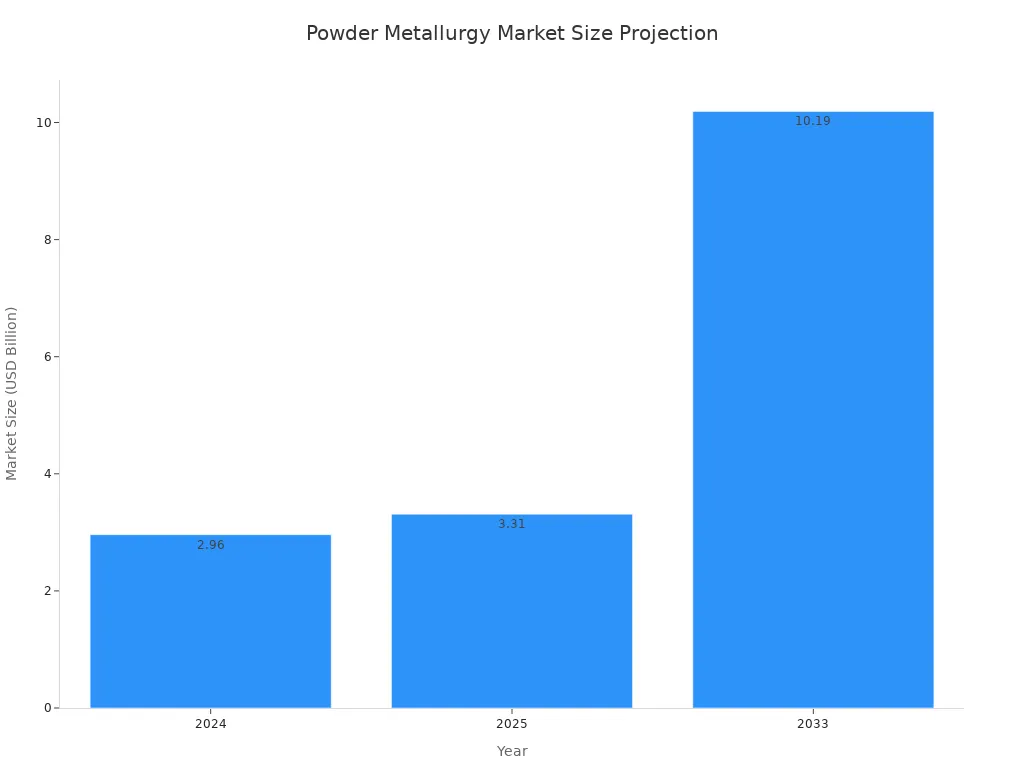
Powder Metallurgy is a manufacturing technique that forms components from metal powders. This method offers precision and efficiency in creating complex parts. The global powder metallurgy market reached USD 2.96 billion in 2024. Experts project its growth to USD 10.19 billion by 2033, indicating a 15.1% compound annual growth rate. This significant expansion highlights the importance of these technologies.
| Metric | Value |
|---|---|
| Market size in 2024 | USD 2.96 billion |
| Market size in 2025 | USD 3.31 billion |
| Projected market size in 2033 | USD 10.19 billion |
| CAGR (2025-2033) | 15.1% |
This post will explain Metal Injection Molding (MIM), Hot Isostatic Pressing (HIP), Cold Isostatic Pressing (CIP), and Sintering, key Powder Metallurgy Processes.
Key Takeaways
- Powder metallurgy makes metal parts from powders. It offers precision and efficiency.
- Metal Injection Molding (MIM) creates small, complex metal parts. It uses a process like plastic molding.
- Hot Isostatic Pressing (HIP) makes materials stronger. It uses high heat and pressure to remove flaws.
- Cold Isostatic Pressing (CIP) shapes powders at room temperature. It makes parts with even density.
- Sintering heats metal powders. This process bonds them together and makes them strong.
- Powder metallurgy saves material. It makes parts close to their final shape.
- Each process has different costs and uses. Choose the right one for your part's needs.
- Powder metallurgy is growing. It uses new materials and smart technology.
The Fundamentals of Powder Metallurgy Processes
Defining Powder Metallurgy
Powder metallurgy is a sophisticated manufacturing method. It creates components from metal powders. This technique involves several distinct steps to transform fine metallic particles into solid, functional parts.
Core Principles
The core principle of powder metallurgy centers on consolidating metal powders without melting them completely. Manufacturers first compact the powders into a desired shape. Then, they heat the compacted part to a temperature below the metal's melting point. This heating process, known as sintering, bonds the particles together. It forms a strong, dense component.
Key Stages
Powder metallurgy typically involves four key stages. First, powder production creates the fine metal particles. Second, mixing combines these powders with binders or other alloying elements. Third, compaction presses the mixed powders into a "green" compact, which is a fragile, preliminary shape. Finally, sintering heats the green compact, fusing the particles and giving the part its final strength and density.
Why Powder Metallurgy Matters
Powder metallurgy offers significant advantages over traditional manufacturing methods. It provides solutions for complex designs and specialized material needs.
Manufacturing Versatility
Powder metallurgy offers remarkable manufacturing versatility. It allows for the creation of complex shapes and intricate details. This process also enables controlled porosity, which is crucial for applications like self-lubricating bearings. Compared to other methods, powder metallurgy often provides superior material utilization.
| Feature | Powder Metallurgy | Machining | Stamping | Forging |
|---|---|---|---|---|
| Design Flexibility | Allows complex shapes and intricate details, controlled porosity. | It can offer superior precision but with significant waste. | Limited by metal deformation, requires specific radii/angles. | Limited by press size, produces simple shapes. |
| Material Utilization | Superior, minimal waste (near-net-shape). | Significant waste from material removal. | Considerable excess material (scrap). | Requires machining for final shape, resulting in waste. |
| Cost-Effectiveness | Lower production costs for high-volume due to reduced machining and tooling needs. | Cutting tools are expensive, with long lead times for high-volume. | Significant capital investment, high setup costs, expensive dies. | Significant capital investment for die and press, high labor/tooling/material costs. |
This table highlights how Powder Metallurgy Processes excel in design flexibility and material efficiency. It minimizes waste by producing near-net-shape components. This reduces the need for extensive post-processing.
Material Innovation
Powder metallurgy is a cornerstone of material innovation. It allows for the fabrication of components that would otherwise decompose or disintegrate using traditional methods. This process enables precise control over material composition. Manufacturers can tailor properties like density, porosity, and mechanical strength. It also allows for the control of mechanical, magnetic, and other unconventional properties of materials. These include porous solids, aggregates, and intermetallic compounds. Such properties are difficult to achieve through direct alloying or traditional methods like casting, extrusion, or forging. This capability opens doors for creating unique materials with enhanced performance for demanding applications.
Understanding Metal Injection Molding (MIM) Powder Metallurgy Processes
What is MIM?
Metal Injection Molding (MIM) combines the design flexibility of plastic injection molding with the strength and integrity of metals. This advanced manufacturing technique produces small, complex metal components with high precision.
Process Overview
MIM begins by mixing fine metal powders with a polymer binder to create a feedstock. Manufacturers then inject this feedstock into a mold cavity, similar to plastic injection molding. After molding, they remove the binder through a debinding process. Finally, the part undergoes sintering, where heat consolidates the metal particles into a dense, solid component.
Unique Characteristics
MIM stands out due to its ability to produce intricate shapes that are difficult or impossible to achieve with traditional metalworking methods. It offers excellent surface finishes and tight tolerances. The process also allows for the use of a wide range of metal alloys, providing versatility in material selection.
How MIM Works
The MIM process involves several distinct steps, each crucial for the final product's quality and performance.
Feedstock Preparation
The first step involves preparing the feedstock. This requires combining fine metal powders with a thermoplastic binder system. The powder-to-binder ratio typically ranges from 60:40 to 70:30 by volume. The particle size distribution significantly affects material flow during injection, the final part density, and mechanical properties after sintering. Proper mixing of metal particles with the binder is crucial for smooth flow and correct molding, preventing defects. The sphericity and aspect ratio of the powder, along with its shape and size, also influence the rheological properties and stability of viscosity.
Injection Molding Phase
Manufacturers feed the prepared feedstock into an injection molding machine. The machine heats the feedstock, making it flowable, and then injects it under high pressure into a mold cavity. This creates a "green part," which holds the desired shape but remains fragile due to the binder content.
Debinding Stage
After injection molding, the green part undergoes a debinding stage. This process removes the polymer binder from the molded component. Several methods exist for debinding, each with specific advantages:
| Debinding Method | Advantages |
|---|---|
| Catalytic Debinding | Employs acid gases (nitric or oxalic acid), suitable for polyacetal-containing thermoplastic binder, shorter processing times, rapidly dissolves binders via catalyst acceleration in a few hours (fast), minimizes deformation |
| Solvent Debinding | Effective for different binder systems, advanced techniques like supercritical fluid debinding offer economical and environmentally friendly options, quick and efficient method, fastest way to deliver superior part quality, gently removes binder without surface or structural defects, very fast binder removal, automation ensures repeatable results, accommodates wide range of MIM alloys, binders and geometries, sealed vapor degreaser equipment prevents worker exposure, fluid is recycled on-site for extended life |
| Thermal Debinding | Easiest method |
Solvent debinding, for instance, quickly and efficiently removes the binder without causing surface or structural defects. Catalytic debinding offers shorter processing times and minimizes deformation.
Sintering of MIM Parts
The final critical step is sintering. The debound part, now called a "brown part," enters a high-temperature furnace. Here, temperatures remain below the metal's melting point. The heat causes the metal particles to bond together, densifying the part and giving it its final strength and metallurgical properties. During sintering, the part shrinks significantly, a factor designers account for in the initial mold design.
Advantages of MIM
Metal Injection Molding offers several compelling advantages, making it a preferred choice for many applications.
Complex Geometries
MIM excels at producing parts with highly complex geometries. The injection molding process allows for intricate designs that would be challenging or impossible with traditional machining or casting. Examples include trigger mechanisms, triggers, frames, and slides for firearms. MIM can also create features like coring holes, decorative elements, fillets, radii, and threads, along with uniform wall thicknesses and undercuts.
High Volume Production
MIM is highly suitable for high-volume production runs. Once manufacturers create the mold, the process can rapidly produce thousands or even millions of identical parts. This efficiency makes MIM cost-effective for mass-produced components.
Excellent Surface Finish
MIM parts typically achieve a good surface finish directly from the sintering process. The typical surface finish for Metal Injection Molding products is 32 µin Ra. For very small parts, MIM can achieve exactitude better than ± 0.5% of the desired size without post-processing, translating to tolerances in the hundredths of a millimeter. A surface Ra < 1.2 is achievable without polishing. To further enhance physical performance or achieve an even better surface finish, various secondary treatments are available. These include chemical treatments like etching or polishing, organic coatings such as paint, and heat treatments for improved strength or hardness. Mechanical surface treatments like shot blasting or grinding, and metal coatings like galvanizing or chrome plating, also enhance the parts.
Material Versatility
MIM accommodates a wide array of materials, offering significant versatility. This allows engineers to select the optimal material for specific application requirements.
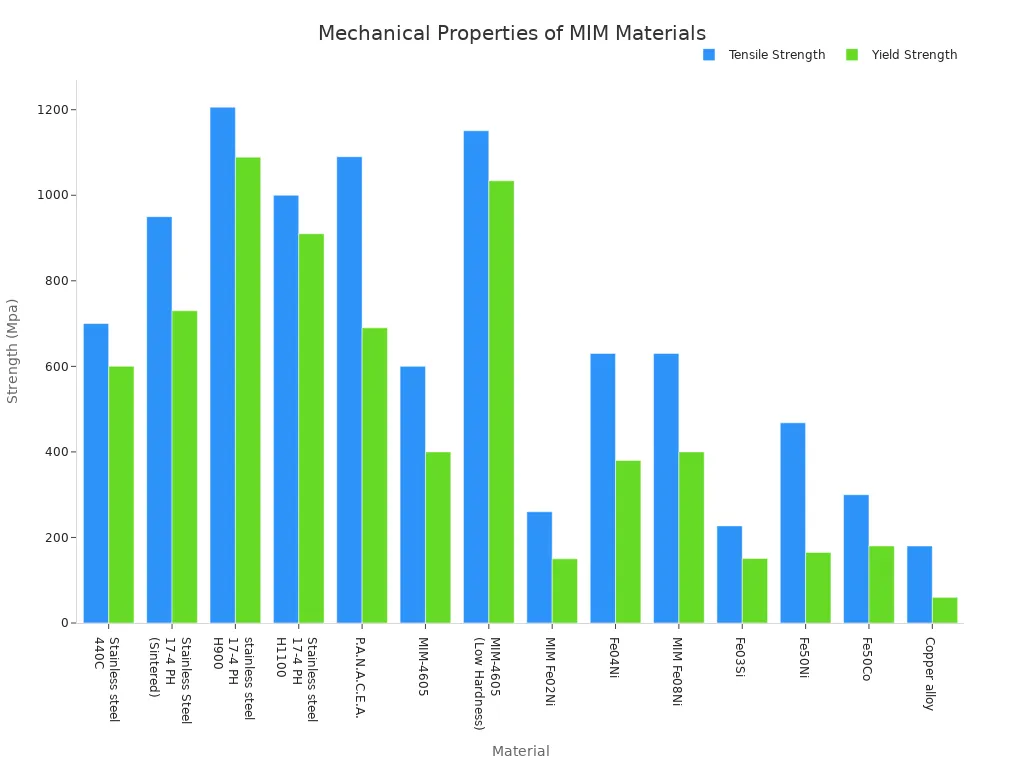
- Stainless Steel: This category includes grades like 17-4PH, 316L, 310, 420, and 440. Stainless steel is widely used due to its excellent corrosion resistance, high strength, and good elasticity, making it suitable for applications requiring durability.
- Low Alloy Steels: Examples include 2200, 2700, 4140, 4340, 4605, 8620, and 52100.
- Tool Steels: Such as S7, A2, M2, M4, and T15.
- Bioimplantable Alloys: Including F75 and MP35N.
- Thermal/Electrical Management Materials: Such as Copper (Cu), Tungsten-Copper (W-Cu), and Molybdenum-Copper (Mo-Cu). Copper MIM materials, including bronze and brass, are known for excellent thermal and electrical conductivity, good corrosion resistance, and anti-friction performance. They are ideal for electrical connectors, heat exchangers, and heat sinks.
- Magnetic Materials: Like Fe-50Ni, Fe-3Si, and Fe-50Co. These alloys exhibit ferromagnetism with high permeability and saturation magnetization. They are used in components for electric motors, sensors, transformers, and solenoids.
- Hardmetals: For instance, WC-5Co and WC-10Co.
- Refractory Metals: Including Tantalum (Ta), Tungsten (W), and Molybdenum (Mo). Tungsten alloys offer high tensile strength and corrosion resistance. Tungsten-copper alloys are particularly chosen for heat and ablation resistance, along with high thermal and electrical conduction.
- Heavy Alloys: Such as W-Ni-Fe and W-Ni-Cu. These are characterized by extremely high density (17-18 g/cc), high melting point (3400°C), strength at elevated temperatures, and good corrosion/wear resistance. Applications include counterweights, radiation shielding, and vibration-dampening components.
- Special Alloys: This group encompasses titanium alloy, cobalt-chromium (F75), nickel-base super alloy, and molybdenum alloy.
MIM parts generally exhibit moderate levels of tensile strength, hardness, and ductility. While their mechanical performance suffices for many applications, the porosity inherent to the sintering process may compromise fatigue resistance and impact toughness. Despite these limitations, MIM remains a viable choice for parts where intricate geometry and precision are prioritized over maximum strength.
Applications of MIM
Metal Injection Molding (MIM) finds widespread use across various industries due to its ability to produce complex, high-precision metal parts efficiently.
Medical Devices
MIM plays a crucial role in manufacturing medical devices, particularly for intricate components.
- Surgical Instruments: MIM is widely used for surgical instruments. It produces parts with superior material properties like 304L, 316L, 17-4 PH stainless steel, and titanium alloys. These materials offer high strength, toughness, and durability. Instruments can withstand surgical stresses and repeated sterilization. The process also achieves high density and low porosity. This is crucial for mechanical strength and reducing contamination risks. It enhances patient safety and surgical outcomes.
- Biocompatibility: MIM parts, made from materials like stainless steel and titanium, are inherently biocompatible. This means they do not negatively react with biological tissues. This characteristic is critical for patient safety and device effectiveness in surgical applications. The controlled manufacturing process minimizes contaminants, ensuring compliance with stringent medical standards.
- Regulatory Compliance: MIM-produced instruments can meet FDA and ISO standards, including ISO 13485. Manufacturers achieve this through rigorous testing for biocompatibility, mechanical performance, and sterilization. This adherence to quality management systems boosts marketability and builds trust with healthcare providers.
Automotive Components
The automotive industry extensively utilizes MIM for small, complex parts that require high strength and precision. Manufacturers produce components such as sensor housings, fuel injector nozzles, turbocharger components, and various gears and levers using MIM. The process allows for the creation of intricate shapes that contribute to engine efficiency and overall vehicle performance. MIM also helps reduce the weight of components, which is vital for improving fuel economy and reducing emissions.
Consumer Electronics
MIM is indispensable in the consumer electronics sector. It enables the production of miniature, high-performance parts for devices like smartphones, smartwatches, and cameras. Examples include hinges for foldable phones, camera module components, intricate connectors, and decorative bezels. The ability of MIM to create small, complex geometries with excellent surface finishes makes it ideal for the aesthetic and functional demands of modern electronic gadgets. It also supports the trend towards miniaturization in consumer electronics.
Firearms Parts
The firearms industry benefits significantly from MIM technology. It produces a variety of critical components for pistols, rifles, and shotguns. These parts include triggers, hammers, sights, safeties, and other internal mechanisms. MIM offers the precision and strength necessary for reliable firearm operation. It also allows for the cost-effective production of complex parts in high volumes, which is advantageous for manufacturers. The process ensures consistent quality and performance for these essential components.
Exploring Hot Isostatic Pressing (HIP) Powder Metallurgy Processes
What is HIP?
Hot Isostatic Pressing (HIP) is a manufacturing process that applies high temperature and isostatic gas pressure to materials. This process eliminates internal porosity and increases material density. Manufacturers use HIP to improve the mechanical properties of castings, ceramics, and additively manufactured parts.
Process Overview
HIP involves placing a component inside a high-pressure vessel. The vessel then applies inert gas, typically argon, at elevated temperatures and pressures. This simultaneous application of heat and pressure causes the material to densify. It closes internal voids and defects, leading to a more uniform and stronger microstructure.
Densification Mechanism
The densification mechanism in HIP relies on several physical phenomena. High temperatures promote atomic diffusion and creep, allowing material to flow into voids. The isostatic pressure collapses pores and cracks, forcing material surfaces into intimate contact. This combination of heat and pressure results in plastic deformation, creep, and diffusion bonding. These mechanisms work together to eliminate internal defects and achieve near-full theoretical density for the material.
How HIP Works
The HIP process involves careful preparation and precise control of environmental conditions to achieve optimal material properties.
Encapsulation Techniques
For parts made from powder, manufacturers often use encapsulation techniques before HIP. This involves sealing the powder in a flexible container, or "can," which maintains the part's shape during processing. Common encapsulation materials include steel or other materials capable of withstanding HIP conditions. A Low Pressure Plasma Spraying (LPPS) encapsulation technique has also shown success for bonding Oxide Dispersion Strengthened (ODS) alloys. This ensures the inert gas does not penetrate the powder compact directly, allowing the pressure to act uniformly on the compact's surface.
High Temperature Application
HIP operates at significantly high temperatures. These temperatures are crucial for making the material ductile and promoting atomic diffusion. The specific temperature depends on the material being processed. For instance, aluminum typically undergoes HIP at around 900 °F (482 °C), while nickel-based superalloys require much higher temperatures, reaching up to 2,400 °F (1,320 °C). Overall, HIP processes typically operate at temperatures ranging from approximately 1,650 to 2,300 degrees Fahrenheit.
High Pressure Application
Alongside high temperature, HIP applies substantial pressure. This pressure is isostatic, meaning it acts uniformly from all directions on the component. This uniform pressure effectively collapses internal voids. Typical pressures for Hot Isostatic Pressing range from 7,350 psi (50.7 MPa) to 45,000 psi (310 MPa). A common operating pressure for metal powders is 15,000 psi (100 MPa).
| Parameter | Range/Common Value |
|---|---|
| Pressure | 7,350 psi (50.7 MPa) to 45,000 psi (310 MPa) |
| Common Pressure | 15,000 psi (100 MPa) |
| Temperature (Aluminum) | 900 °F (482 °C) |
| Temperature (Nickel-based superalloys) | 2,400 °F (1,320 °C) |
Advantages of HIP
Hot Isostatic Pressing offers several significant advantages, enhancing the performance and reliability of various materials and components.
Near-Net Shape Capability
HIP can produce components close to their final dimensions, a characteristic known as near-net shape capability. This reduces the need for extensive post-processing machining, saving time and material. For powder-based parts, manufacturers can form complex shapes by encapsulating the powder in a mold that approximates the final geometry.
Improved Material Properties
HIP significantly improves the overall material properties of components. By eliminating internal defects and increasing density, it enhances strength, ductility, and toughness. This process leads to a more consistent and reliable material performance, crucial for demanding applications.
Elimination of Internal Defects
One of HIP's primary benefits is its ability to eliminate internal defects. It effectively removes porosity, including residual shrinkage, gas porosity, and micro and macro porosity. HIP also closes cracks, internal inclusions, and voids within the material. This process addresses intrinsic pores and large contour defects, leading to a more sound and homogeneous microstructure. The elimination of these defects is vital for ensuring the structural integrity of components.
Enhanced Fatigue Life
HIP significantly enhances the fatigue life of materials. It achieves this by eliminating porosity, a primary cause of reduced fatigue capability. This process not only increases fatigue life but also reduces the statistical spread of material properties, leading to enhanced reliability and more efficient material utilization. HIP treatment provides higher strength, longer creep life, greater fatigue resistance, and improved toughness. The HIP process enhances material properties through three main mechanisms:
- Plastic Deformation: Heat and pressure cause the material to deform, collapsing surface irregularities and pores.
- Creep: Sustained pressure and temperature induce atomic-level material flow, redistributing material into voids.
- Diffusion Bonding: Elevated temperatures facilitate atomic migration across grain boundaries, forming strong metallurgical bonds that eliminate porosity and strengthen the structure. This microstructural refinement closes internal voids, improving fatigue life, fracture toughness, and corrosion resistance. For instance, HIP improves the creep rupture life of nickel-based single crystal superalloys by reducing residual eutectics and micropores in interdendritic regions. These defects typically cause stress concentration, promoting plastic deformation and crack initiation during creep. HIP treatment prolongs the slow-accelerating creep stage and suppresses microcrack initiation and propagation, leading to significantly increased creep rupture life.
Applications of HIP
Hot Isostatic Pressing (HIP) finds extensive application across various industries. It significantly enhances material properties and component performance.
Aerospace Components
HIP plays a critical role in the aerospace industry. It improves the reliability and performance of high-stress components. Aerospace parts often operate under extreme conditions. HIP ensures these parts meet stringent safety and performance standards.
HIP significantly enhances material properties for aerospace components:
- Fatigue Life: HIP eliminates micro-voids. These voids are primary failure initiation sites. This process significantly increases the number of cycles a part can endure before failure. This is especially crucial for aerospace engine parts.
- Ductility and Toughness: Fully densified materials result from HIP. These materials can deform more before fracturing. They also absorb impact energy better.
- Strength and Hardness: A void-free structure is inherently stronger and more resistant to wear. HIP achieves this structure.
- Wear Resistance: HIP improves wear resistance. It enhances material hardness and reduces porosity. This makes parts more durable in abrasive or frictional environments. This is vital for components like gas turbine engine parts exposed to high temperatures or high-speed contact.
- Microstructure Refinement: HIP refines the microstructure. It promotes atom redistribution. This results in a more uniform and finer structure. This leads to improved toughness, ductility, and resistance to brittle fracture. It enhances overall performance for high-performance applications.
- Porosity Reduction: HIP increases material density. It eliminates internal voids. This benefits aerospace components.
- Overall Durability: HIP ensures long-term durability for aerospace components in extreme conditions.
HIP processes components like turbine disks, engine mounts, and structural airframe parts. It ensures these critical parts withstand the rigorous demands of flight.
Medical Implants
HIP is essential in manufacturing medical implants. These implants require exceptional strength, biocompatibility, and long-term reliability. HIP processes materials like titanium alloys and cobalt-chromium alloys. It removes internal defects and porosity from these materials. This creates a denser, more uniform structure. This enhanced density improves the mechanical properties of implants. It increases their fatigue strength and wear resistance. This is crucial for devices such as hip and knee replacements, dental implants, and spinal fusion devices. HIP ensures these implants perform reliably within the human body for many years.
Tooling and Dies
Manufacturers widely use HIP for tooling and dies. These components experience high stress and wear during manufacturing operations. HIP improves the performance and lifespan of these tools. It densifies tool steels, high-speed steels, and cemented carbides. This process eliminates internal porosity and micro-cracks. These defects can lead to premature tool failure. HIP-treated tools exhibit increased hardness, toughness, and wear resistance. This results in longer tool life and reduced production costs. It also improves the quality of manufactured parts.
Turbine Blades
Turbine blades operate in extremely harsh environments. They endure high temperatures, high rotational speeds, and corrosive gases. HIP is vital for producing high-performance turbine blades. It processes superalloys used in these blades. HIP eliminates internal voids and defects. These defects can compromise the blade's structural integrity. The process ensures a uniform microstructure. This enhances the blade's creep resistance and fatigue life. HIP-treated turbine blades offer superior performance and reliability. They contribute to the efficiency and safety of power generation and jet engines.
Delving into Cold Isostatic Pressing (CIP) Powder Metallurgy Processes
What is CIP?
Cold Isostatic Pressing (CIP) is a powder metallurgy technique. It uses a liquid medium to apply uniform pressure to a powder compact. This process densifies materials at room temperature. CIP is distinct from Hot Isostatic Pressing (HIP) because it does not involve high temperatures during the pressing phase.
Process Overview
CIP involves placing a powder material into a flexible mold. Manufacturers then seal this mold and submerge it in a fluid, typically water or oil. A pressure vessel applies high hydrostatic pressure to the fluid. This pressure transmits uniformly to the powder compact from all directions. The uniform pressure compacts the powder into a dense, solid shape. This method creates a "green" part. This part then usually requires further processing, such as sintering, to achieve final strength.
Green Compact Formation
The CIP process forms a "green compact." This is a preliminary, un-sintered part. The green compact holds its shape due to the mechanical interlocking of powder particles under pressure. It has sufficient strength for handling. However, it remains porous and relatively fragile compared to a fully sintered component. The uniform pressure application in CIP helps create a green compact with consistent density throughout its structure.
How CIP Works
The CIP process involves specific steps to ensure uniform compaction and high-quality green parts.
Powder Loading Methods
CIP uses two primary powder loading methods: wet bag and dry bag. Each method suits different production needs.
- Wet Bag CIP: This method involves placing the powder into a flexible mold. Operators then seal the mold and immerse it directly into the pressure fluid. This technique offers high flexibility. It is ideal for producing parts with complex shapes. Manufacturers use it for both small and large quantity production. Wet bag CIP allows for pressing large products. It is highly applicable for experimental research and small batch production. This method can simultaneously press multiple different shapes of parts in one high-pressure cylinder. It produces large and complex parts. The production process is short and cost-effective. Wet bag CIP allows for engineering somewhat complex shapes into elastomeric molds. It achieves high compact densities. This method is particularly suitable for the production of large parts. Industries commonly use it where high compact densities are required and where complex shapes cannot be compacted using uniaxial presses.
| Aspect | Wet Bag CIP |
|---|---|
| Best For | Prototypes, complex shapes, low volume |
| Flexibility | High, handles varied sizes and geometries |
| Tooling Cost | Lower per design, simpler molds |
Wet bag CIP is excellent for research and development, prototyping, or producing complex parts in low volumes. It offers the necessary design freedom and flexibility for these applications.
- Dry Bag CIP: In this method, the flexible mold is a permanent part of the pressure vessel. Operators load powder into the mold without removing it from the vessel. This method is faster and more automated. It is suitable for high-volume production of simpler shapes.
Isostatic Pressure Application
After loading the powder, the pressure vessel is sealed. A pump then introduces fluid into the vessel, increasing the pressure. The typical pressures applied during Cold Isostatic Pressing (CIP) range from 400 to 1,000 MPa (60,000 to 150,000 psi). This immense, uniform pressure forces the powder particles together. Air pockets and voids between the particles collapse. The material compacts into a solid form. Its density approaches its theoretical maximum. Because pressure applies from all sides, the resulting component has a highly uniform density throughout its structure. The pressures employed in the CIP process may be extremely high. High-performance ceramics are often pressed at 200-300 MPa. As the pressure acts evenly from all directions, the resulting powder compacts have high homogeneity and isotropic density.
Demolding Process
Once the desired pressure is held for a specific duration, operators release the pressure. They then remove the compacted green part from the mold. The demolding process requires care to avoid damaging the fragile green compact. The part is then ready for subsequent processing steps, such as sintering.
Advantages of CIP
Cold Isostatic Pressing offers several distinct advantages for manufacturing various components.
Uniform Density
CIP excels at producing parts with highly uniform density. The isostatic application of pressure ensures that every point within the powder compact experiences the same compressive force. This eliminates density gradients often found in parts compacted by uniaxial pressing. Uniform density leads to consistent material properties throughout the component. This is crucial for performance and reliability.
Large Part Capability
CIP can produce very large components. The size of the part is primarily limited by the dimensions of the pressure vessel. This capability makes CIP suitable for manufacturing large ceramic tubes, refractory blocks, or other sizable industrial components. Other Powder Metallurgy Processes often have more significant size limitations.
Cost-Effective for Prototypes
CIP is a cost-effective method for prototyping and small-batch production. The flexible molds used in wet bag CIP are relatively inexpensive to produce. This reduces initial tooling costs significantly compared to rigid dies used in other compaction methods. This makes CIP an attractive option for developing new products or producing specialized parts in limited quantities.
Reduced Tooling Costs
The tooling costs for CIP are generally lower than for other powder compaction methods. Flexible molds, often made from rubber or polyurethane, are less expensive to design and fabricate than hard metal dies. This cost efficiency is particularly beneficial for complex shapes or when producing a variety of different parts. It allows manufacturers to experiment with designs without a large upfront investment.
Applications of CIP
Cold Isostatic Pressing (CIP) finds diverse applications across various industries. It produces components requiring high density, uniform properties, and specific shapes.
Ceramic Components
CIP is a crucial process for manufacturing advanced ceramic components. It produces high-quality parts for demanding applications. The uniform pressure application during CIP ensures consistent density throughout the ceramic green body. This consistency minimizes warpage and cracking during subsequent sintering. Manufacturers use CIP for ceramic insulators, cutting tools, and wear-resistant parts. It also produces components for electronic devices and medical implants. The process allows for the creation of complex ceramic shapes with excellent dimensional control.
Refractory Materials
CIP is widely utilized in industries such as refractory materials. It processes materials designed to withstand extremely high temperatures. Refractory materials include bricks, crucibles, and furnace linings. These components require exceptional density and structural integrity. CIP can be utilized with a wide range of materials, including refractory materials. The uniform compaction achieved through CIP enhances the performance and lifespan of these critical industrial components. This process ensures the refractory parts maintain their shape and strength under severe thermal stress.
Filter Elements
CIP plays a significant role in producing porous filter elements. These filters require precise pore size distribution and high mechanical strength. The isostatic pressure compacts the powder uniformly. This creates a consistent pore structure throughout the filter. Manufacturers use CIP for ceramic filters, metal filters, and polymer filters. These filters find applications in water purification, chemical processing, and automotive systems. The process ensures the filter elements effectively remove impurities while maintaining structural integrity.
Graphite Electrodes
The production of large graphite electrodes often employs CIP. These electrodes are essential for electric arc furnaces in the steel industry. They require high density, low electrical resistivity, and excellent thermal shock resistance. CIP compacts the graphite powder uniformly. This creates a dense green body. This body then undergoes baking and graphitization. The uniform compaction from CIP minimizes internal defects. It also ensures consistent material properties throughout the large electrodes. This leads to improved performance and longer service life in demanding industrial environments.
The Role of Sintering in Powder Metallurgy Processes
Sintering represents a pivotal stage in Powder Metallurgy Processes. It transforms a fragile compact of metal powder into a strong, cohesive component. This thermal treatment is essential for achieving the desired mechanical and physical properties of the final product.
What is Sintering?
Process Overview
Sintering is a heat treatment process. It applies to a powder compact or "green part." Manufacturers heat the compact to a temperature below the main constituent's melting point. This heat causes the individual powder particles to bond together. The process reduces porosity and increases the density and strength of the material.
Particle Bonding
Particle bonding during sintering occurs through various mass transport mechanisms. These mechanisms facilitate the formation and growth of inter-particle necks. The process typically progresses through distinct stages:
- Initial Stage: Bonding begins with the formation of small "necks" between metal particles.
- Intermediate Stage: Material from particles is transported to the necks. Diffusion and other mass transport mechanisms cause the necks to grow. Pores also begin rounding.
- Final Stage: Mass transport continues. This leads to further rounding of pores. Some pores become isolated from grain boundaries.
Researchers investigate the bonding mechanism in the sintering of Ag nanoparticles (NPs) using classical sphere-sphere models. Different sintering mechanisms reveal themselves at various temperatures. These mechanisms often relate to the decomposition of organic components. This approach helps understand how Ag NP pastes form strong bonds. This is particularly useful for applications like electronic packaging requiring high-temperature resistance.
In indirect selective laser sintering (SLS), particle bonding occurs when a molten polymer binder permeates through the porous ceramic shell. This shell surrounds polymer particles. This permeation leads to the formation of solid bridges as the polymer solidifies. This effectively binds the ceramic particles together. This mechanism is crucial for producing ceramics with intricate geometries.
The primary mechanisms of particle bonding during sintering involve distinct stages and various mass transport processes:
Sintering Stages and Driving Forces:
- Initial Stage: This stage characterizes the growth of a bond (neck) between two particles. The driving force is the curvature gradient between the particle and the neck. Mechanisms include diffusion (surface, volume, or grain boundary) and dislocation motion.
- Intermediate Stage: Merging necks shrink pores into interconnected, usually cylindrical shapes. This stage sees most densification and property changes. The driving force is the curvature around the cylindrical pore.
- Final Stage: Pores close, becoming spherical and isolated. The driving force is the curvature around the spherical pore.
Mass Transport Mechanisms:
- Shrinkage-inducing (densification): These include volume diffusion, grain boundary diffusion, plastic flow, and viscous flow (for amorphous solids).
- Non-shrinkage inducing: These include surface diffusion, evaporation–condensation, and volume diffusion from a surface source to a surface sink.
How Sintering Works
Sintering involves precise control over temperature and atmosphere. These factors significantly influence the final properties of the sintered part.
Temperature Control
Temperature is a critical parameter in sintering. It provides the energy for atomic diffusion and particle bonding. The sintering temperature of metals generally falls between 60% and 80% of their melting point. For instance, iron typically sinters at 1120-1150 °C (2048-2102°F). Copper sinters at 800 °C. Stainless steel requires a sintering temperature of 1250 °C. Ceramics typically sinter between 1000 and 2000 °C. For pure metal solid solutions, the sintering temperature is typically 2/3 – 3/4 of their melting temperature (Tm). For instance, iron (Fe) sinters at 1000°C. The holding time during sintering is inversely related to temperature; higher temperatures allow for shorter holding times to achieve the desired porosity.
Atmosphere Control
The atmosphere within the sintering furnace plays a crucial role. It prevents oxidation or decarburization. It also reduces oxide layers on powder surfaces. It helps burn off lubricants and adhesives. Common sintering atmospheres include hydrogen, nitrogen, argon, vacuum, and decomposed ammonia.
Different sintering atmospheres are necessary for various materials. Noble metal powders and stable oxide-coated powders can sinter in air. However, metals like Cu, Fe, Co, Ni, W, and Mo, along with their alloys, require a reductive atmosphere. This reduces surface oxides. Common reductive gases include transformed coal gas, decomposed ammonia, and H2. Metals with high affinities to oxygen (e.g., Cr, Be, Mn, and stainless steel) require highly pure and protective atmospheres. No oxygen or water steam is allowed. Vacuum sintering applies to reactive metals prone to gas absorption or dissolution. These include Ta, Nb, Ti, and Zr. For example, metallic Ti typically sinters in a vacuum or highly pure Ar atmosphere due to its reactivity with H, O, N, and C.
Sintering atmospheres categorize into several types:
- Oxidative atmosphere: Pure oxygen, air, and water steam.
- Reductive atmosphere: Pure hydrogen, decomposed ammonia, CO, and transformed gas (mixture of H2 and CO) from carbon hydrides.
- Inert or neutral atmosphere: N2, Ar, He, and vacuum.
- Carburization atmosphere: CO, CH4, and other carbon hydrides.
- Nitriding atmosphere: NH3 and N2 for sintering of stainless steels and Cr-steels.
Stages of Sintering
The sintering process involves heating the green compact through a carefully controlled thermal cycle. This cycle typically includes a pre-sintering stage, a high-temperature sintering stage, and a cooling stage. During pre-sintering, binders and lubricants evaporate. The high-temperature stage promotes particle bonding and densification. The cooling stage allows the part to solidify and stabilize.
Types of Sintering
Manufacturers employ various sintering methods. Each method suits specific material types and desired properties.
Solid-State Sintering
Solid-state sintering occurs below the melting point of all components in the powder mixture. Material transport happens through diffusion mechanisms. This process maintains the chemical purity of the original powder. It introduces no new elements into the final part. Solid-state sintering is best for high-purity applications.
Liquid-Phase Sintering
Liquid-phase sintering involves the presence of a liquid phase during the heating process. This liquid forms from a component with a lower melting point or a eutectic reaction. The liquid phase helps rearrange particles and fill pores more effectively. Liquid-phase sintering generally achieves higher final densities. The liquid's ability to fill small pores and actively pull particles together is more effective at eliminating porosity than diffusion alone. However, it alters the material's composition. The solidified liquid phase remains as part of the microstructure. If achieving maximum density quickly and at lower temperatures is the primary focus, liquid-phase sintering is superior. This is true provided the presence of the additive phase is acceptable in the final product.
| Feature | Solid State Sintering | Liquid State Sintering |
|---|---|---|
| Final Density | Lower | Higher |
| Material Purity | Maintains original composition | Altered by the additive phase |
| Best For | High-purity applications | Maximum density, efficiency |
Compared with solid-state sintering, liquid-phase sintering allows easy control of microstructure and reduction in processing cost. However, it degrades some important properties, for example, mechanical properties. In contrast, many specific products utilize properties of the grain boundary phase. Hence, they need to be sintered in the presence of a liquid phase. Zinc oxide varistors and SrTiO3 based boundary layer capacitors are two examples. In these cases, the composition and amount of liquid phase are of prime importance in controlling the sintered microstructure and properties.
Vacuum Sintering
Vacuum sintering occurs in a vacuum environment. This method is particularly useful for materials sensitive to oxidation or those requiring high purity. It effectively removes volatile impurities and gases from the compact. This results in a denser, cleaner product. Reactive metals like titanium and refractory metals often undergo vacuum sintering.
Pressure-Assisted Sintering
Pressure-assisted sintering combines heat with externally applied pressure. This method enhances densification and reduces sintering time. Hot Isostatic Pressing (HIP) is a prime example of pressure-assisted sintering. It applies uniform pressure from all directions. This helps close internal pores and achieve near-theoretical density. Other forms include hot pressing, which applies uniaxial pressure. These methods are ideal for producing high-performance components with minimal porosity.
Advantages of Sintering
Sintering offers numerous benefits in powder metallurgy, making it a cornerstone process for manufacturing diverse components.
Material Consolidation
Sintering fundamentally consolidates material. It transforms a collection of loose powder particles into a dense, solid mass. This process effectively reduces internal voids and creates strong bonds between material grains. A fragile powder compact becomes a robust, engineered component. The reduction of porosity, the space between initial powder particles, represents a significant change. As particles heat, atoms migrate to contact points, forming 'necks' that grow. This action pulls particles closer, shrinks voids, and dramatically increases overall density. A denser material is inherently stronger because forces distribute across more solid matter, rather than concentrating around pores, which act as stress risers.
Property Enhancement
Sintering significantly enhances a material's mechanical properties. It increases strength, hardness, and durability. Sintering also creates a cohesive network of interlocked grains, forming and strengthening grain boundaries through atomic diffusion. Strong, well-formed grain boundaries are critical for mechanical integrity. They act as barriers to dislocation movement, directly resulting in increased hardness and strength.
| Sintering Parameter | Key Impact on Mechanical Properties |
|---|---|
| Temperature | Higher density equals increased strength and hardness. |
| Holding Time | Improves integrity but risks excessive grain growth, which reduces toughness. |
| Applied Pressure | Enables high strength at lower temperatures or shorter times. |
| Powder Characteristics | Affects the final homogeneity and consistency of properties. |
Sintering, particularly through advanced powder metallurgy techniques like hot isostatic pressing (HIP) and spark plasma sintering (SPS), can lead to a synergistic enhancement in strength, ductility, and electrical conductivity. These methods mitigate detrimental effects like macro-segregation. They also ensure compositional homogeneity and enhanced densification, ultimately improving the overall mechanical and electrical properties of alloys. For instance, samples reinforced by both SiC and TiCx achieved the highest hardness and strength, averaging 550 HV and 720 MPa, and 635 HV and 683 MPa, respectively. This demonstrates a hybrid reinforcement effect, outperforming samples with a single reinforcing agent. The study also notes that the characteristics of fast resistance-sintering technology, including the types of reinforcing particles and electrical conductivity, are critical factors contributing to mechanical performance. Stronger particles with better load-bearing ability, such as SiC and TiCx, improve hardness and strength by transferring load from the matrix to the reinforcements. High electrical conductivity is also essential for generating sufficient joule heat for effective sintering. For example, the electric resistance of Ti3AlC2 was much lower than SiC, leading to effective sintering and increased hardness and strength with increasing content (15–20%).
Cost-Effectiveness
Sintering contributes to cost-effectiveness in manufacturing. It often allows for near-net-shape production, minimizing the need for extensive machining. This reduces material waste and labor costs associated with secondary operations. For high-volume production, the efficiency of the sintering process further lowers the per-part cost.
Wide Material Compatibility
Sintering accommodates a wide range of materials. It processes various metals, ceramics, and composites. This versatility allows manufacturers to select the optimal material for specific application requirements. It also enables the creation of unique material combinations with tailored properties not achievable through other manufacturing routes.
Applications of Sintering
Sintering finds extensive use across numerous industries, producing components with specific performance characteristics.
Gears and Bushings
Sintering is a primary method for manufacturing gears and bushings. These components require precise dimensions and good wear resistance. The process produces complex gear geometries directly, reducing machining steps. Sintered bushings often incorporate controlled porosity, allowing them to be self-lubricating, which is beneficial in many mechanical assemblies.
Porous Filters
Sintering creates porous filter elements. These filters require controlled pore sizes and high mechanical strength. The sintering process bonds powder particles together while leaving interconnected voids. This forms a permeable structure. Manufacturers use these filters in various applications, including fluid filtration, gas diffusion, and sound dampening.
Electrical Contacts
Sintering is crucial for producing electrical contacts. These components demand high electrical conductivity and wear resistance. Liquid-phase sintering is a method used to produce electrical contacts. This process enhances the bonding of solid particles through a liquid phase, leading to improved diffusion and densification. It also creates microstructures with hard particles within a ductile matrix, which can increase the toughness of otherwise brittle components. This method ensures the contacts maintain their integrity and performance over many operational cycles.
Cutting Tools
Sintering plays a vital role in manufacturing cutting tools. These tools require extreme hardness and wear resistance. Manufacturers often sinter cemented carbides and high-speed steels to form durable cutting inserts and tool bits. The sintering process bonds the hard carbide particles within a metallic binder matrix, creating a composite material capable of withstanding the harsh conditions of machining operations.
Comparative Analysis of Powder Metallurgy Processes
Powder metallurgy encompasses a range of processes. Each process offers distinct advantages and limitations. Understanding these differences helps manufacturers select the most suitable method for specific applications.
MIM vs. HIP vs. CIP vs. Sintering
Manufacturers often compare Metal Injection Molding (MIM), Hot Isostatic Pressing (HIP), Cold Isostatic Pressing (CIP), and Sintering. Each process plays a unique role in producing metal components.
Process Complexity
The complexity of powder metallurgy processes varies significantly. Metal Injection Molding (MIM) involves multiple stages. These stages include feedstock preparation, injection molding, debinding, and sintering. This makes MIM a relatively complex process. Hot Isostatic Pressing (HIP) also requires specialized equipment and a controlled environment. It involves high temperatures and pressures, along with encapsulation techniques. Cold Isostatic Pressing (CIP) is generally simpler than HIP. It focuses on cold compaction using flexible molds and pressure application. Sintering, as a fundamental heat treatment, can range in complexity. Its complexity depends on the specific type, such as vacuum sintering or pressure-assisted sintering.
Achievable Density
Achievable density is a critical factor distinguishing these processes. Hot Isostatic Pressing (HIP) achieves near theoretical density. It combines high pressure and high temperature. This enhances properties through diffusion and consolidation, effectively reducing porosity. Cold Isostatic Pressing (CIP) involves cold compaction. It uses isostatic pressure but does not involve high temperatures. This implies lower density compared to HIP, as CIP often serves as a preliminary shaping method. Conventional sintering typically results in moderate to high porosity and lower density. High-temperature sintering, however, achieves lower porosity and higher density, often reaching near-theoretical density. For Metal Injection Molding (MIM), specifically with AISI M2 high-speed steel, a density of 99.6% is achievable.
| Aspect | Conventional Sintering | High-Temperature Sintering |
|---|---|---|
| Achievable Density | Moderate to high porosity, lower density | Lower porosity, higher density (near-theoretical density) |
| Temperature | Around 2100℉ (1150℃) | Above 2300℉ (1260℃), often 2400–2500℉ (1315–1370℃) |
| Key Benefits | N/A | Achieves higher density and lower porosity; improves mechanical properties and service life |
Material Properties
Each process imparts distinct material properties. HIP significantly enhances strength, ductility, toughness, and fatigue life. It achieves this by eliminating internal defects. CIP improves uniform density. This leads to more consistent properties after subsequent sintering. Sintering bonds particles, increasing strength, hardness, and durability. High-temperature sintering further improves mechanical properties. MIM produces parts with good mechanical properties. However, residual porosity from the sintering stage can sometimes affect fatigue resistance and impact toughness.
Part Size and Geometry
The capabilities for part size and geometry vary among the processes. MIM excels at producing small, complex geometries with intricate details. HIP can produce large, near-net-shape components. CIP is capable of producing very large components. Its size limitation primarily depends on the dimensions of the pressure vessel. CIP also handles complex shapes effectively with flexible molds. Sintering, as a standalone or integrated step, accommodates a range of sizes and geometries. Manufacturers often combine it with other powder metallurgy processes.
Production Volume
Production volume significantly influences process selection. MIM proves cost-effective at high production volumes. Conventional Press and Sintering suits medium to high volumes. It offers efficiency for large-scale production of simpler shapes. HIP involves higher capital costs. It finds value in demanding applications, often for lower volume, high-value parts. CIP is cost-effective for prototypes and small batches when using the wet bag method. It also suits high-volume production of simpler shapes with the dry bag method.
Cost Implications
Cost implications differ considerably across these processes. MIM involves higher material and tooling costs. These costs are justifiable by the complexity and volume of parts produced. MIM material costs typically range from $10–12 per pound, which is higher than conventional powder metallurgy. Conventional powder metallurgy (PM) generally has lower tooling and material costs. Hot Isostatic Pressing (HIP) involves higher capital costs. However, it produces large, near-net-shape components with improved properties. This makes it valuable for demanding applications despite the initial investment. Conventional Press and Sintering is the most widely used method. It features lower tooling costs and straightforward equipment. It is practical and efficient for the large-scale production of simple shapes. It supports medium to high-volume runs due to its reliability and cost-effectiveness. It also minimizes machining needs as parts are close to die dimensions. CIP offers lower tooling costs for its flexible molds. This makes it cost-effective for prototypes. High equipment and setup costs generally make powder metallurgy most suitable for mass production. Economies of scale can offset the initial investment in such scenarios.
| Aspect | Metal Injection Molding (MIM) | Conventional Powder Metallurgy (PM) |
|---|---|---|
| Tooling and Equipment | Specialized injection molding machines, high tooling costs | Simpler compaction dies; lower tooling costs |
| Production Volume | Cost-effective at high volumes | Suitable for medium to high volumes |
| Cost Structure | Higher material and tooling costs, justified by complexity and volume | Lower material and tooling costs |
| Material Costs | $10–12 per pound (higher than conventional PM) | Lower |
| Post-Processing | Often eliminates secondary operations | May require machining or finishing |
| Material Utilization | Minimal waste | Efficient, but more waste in finishing |
| Production Volume Range | PM Cost Efficiency | Initial Tooling Cost (USD) | Approximate Break-Even Volume |
|---|---|---|---|
| Less than 500 units | Poor | 8,000 - 25,000 | Not recommended |
| 500 to 5,000 units | Fair | 8,000 - 25,000 | ~3,000 units |
| 5,000 to 50,000 units | Good | 8,000 - 25,000 | ~2,000 units |
| More than 50,000 units | Excellent | 8,000 - 25,000 | ~1,000 units |
Selecting the Optimal Powder Metallurgy Process
Choosing the right powder metallurgy process requires careful consideration of several factors. Manufacturers must align the process with specific project needs.
Design Requirements
Design requirements heavily influence process selection. For intricate, small parts with complex features and tight tolerances, MIM is often the best choice. CIP suits large components requiring uniform density. HIP is ideal for parts demanding high performance and defect-free structures. Sintering serves as a fundamental step for most powder metallurgy components. Its specific type depends on the material and desired properties.
Performance Criteria
Performance criteria guide the selection of the most appropriate process. When maximum strength, hardness, fatigue life, and density are paramount, HIP offers superior results. MIM provides a good balance of properties and complexity for many applications. CIP ensures uniform density before sintering, which contributes to consistent performance. The specific material properties required for the final product dictate the choice.
Economic Factors
Economic factors play a crucial role in process selection. Tooling costs, material costs, production volume, and post-processing needs all contribute to the overall expense. MIM is cost-effective for high-volume production of complex parts. Conventional powder metallurgy suits medium to high volumes of simpler components. CIP is economical for prototypes or large, simpler parts. HIP is reserved for high-value, critical components where enhanced performance justifies the higher investment. Manufacturers must weigh the initial investment against long-term production costs and part performance.
Key Considerations for Powder Metallurgy Processes
General Advantages of Powder Metallurgy
Powder metallurgy (PM) offers several compelling benefits. These advantages make it a preferred manufacturing method for many applications.
Material Utilization Efficiency
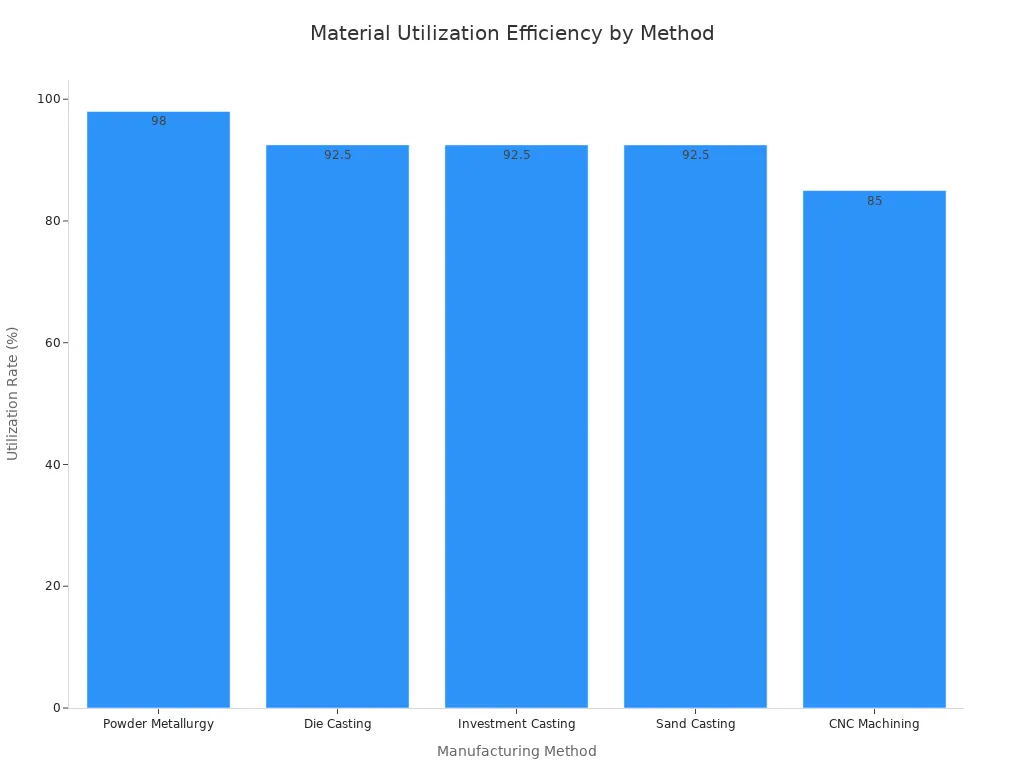
Powder metallurgy processes demonstrate very high material utilization. This efficiency often exceeds 95%. Traditional subtractive methods, like CNC machining, can waste over 50% of the raw material. In specialized fields such as aerospace, traditional machining can result in 94% waste, reflecting a 17:1 buy-to-fly ratio. Powder metallurgy significantly reduces this waste. It transforms nearly all raw materials into the final product.
| Manufacturing Method | Material Utilization Rate |
|---|---|
| Powder Metallurgy | Up to 98% |
| Die Casting | 90%-95% |
| Investment Casting | 90%-95% |
| Sand Casting | 90%-95% |
| CNC Machining | Lower than 90%-95% |
Net-Shape Manufacturing
Powder metallurgy excels at net-shape or near-net-shape manufacturing. This capability means the process produces components very close to their final dimensions. It minimizes the need for extensive post-processing or machining. This reduces production steps and overall manufacturing costs.
Unique Material Combinations
Powder metallurgy allows for the creation of unique material combinations. Manufacturers can combine different metals, ceramics, or composites. This capability produces materials with tailored properties not achievable through conventional melting and casting. It opens possibilities for advanced material development.
Controlled Porosity
Powder metallurgy offers precise control over a component's porosity. Manufacturers can design parts with specific levels of interconnected or isolated pores. This feature is crucial for applications like self-lubricating bearings, filters, and biomedical implants.
General Disadvantages of Powder Metallurgy
Despite its advantages, powder metallurgy also presents certain limitations. Manufacturers must consider these factors during process selection.
Initial Powder Cost
Metal powders, especially fine or specialized alloys, often carry a higher initial cost than bulk raw materials. This can impact the overall economic viability of some applications.
Tooling Investment
Powder metallurgy processes, particularly those involving compaction, require significant upfront tooling investment. Dies and molds can be expensive to design and fabricate. This makes PM more suitable for high-volume production where costs can amortize over many parts.
Part Size Limitations
Some powder metallurgy processes have inherent part size limitations. While CIP can produce large components, MIM typically focuses on smaller, intricate parts. The size of the compaction equipment or sintering furnaces can restrict the dimensions of the final product.
Mechanical Property Trade-offs
Powder metallurgy parts may exhibit certain mechanical property trade-offs. Residual porosity, even minimal, can sometimes lead to lower ductility or impact strength compared to wrought materials. Engineers must carefully evaluate these properties against application requirements.
Common Materials in Powder Metallurgy
Powder metallurgy accommodates a wide array of materials. This versatility allows for diverse applications across industries.
Ferrous Alloys
Ferrous alloys, primarily iron and steel, represent the largest segment of PM materials. These include plain carbon steels, alloy steels, and stainless steels. Manufacturers use them for gears, automotive components, and structural parts.
Non-Ferrous Alloys
Non-ferrous alloys also see extensive use in PM. These include aluminum, copper, brass, bronze, and titanium alloys. Applications range from electrical contacts and bearings to medical implants and aerospace components.
Ceramics
Powder metallurgy techniques are vital for processing ceramic materials. Manufacturers produce advanced ceramics for cutting tools, wear-resistant parts, and electronic components.
Composites
Powder metallurgy enables the creation of composite materials. These composites combine different powders to achieve enhanced properties. Examples include metal-matrix composites and cermets, which offer superior hardness and wear resistance.
Innovations and Future Trends in Powder Metallurgy Processes
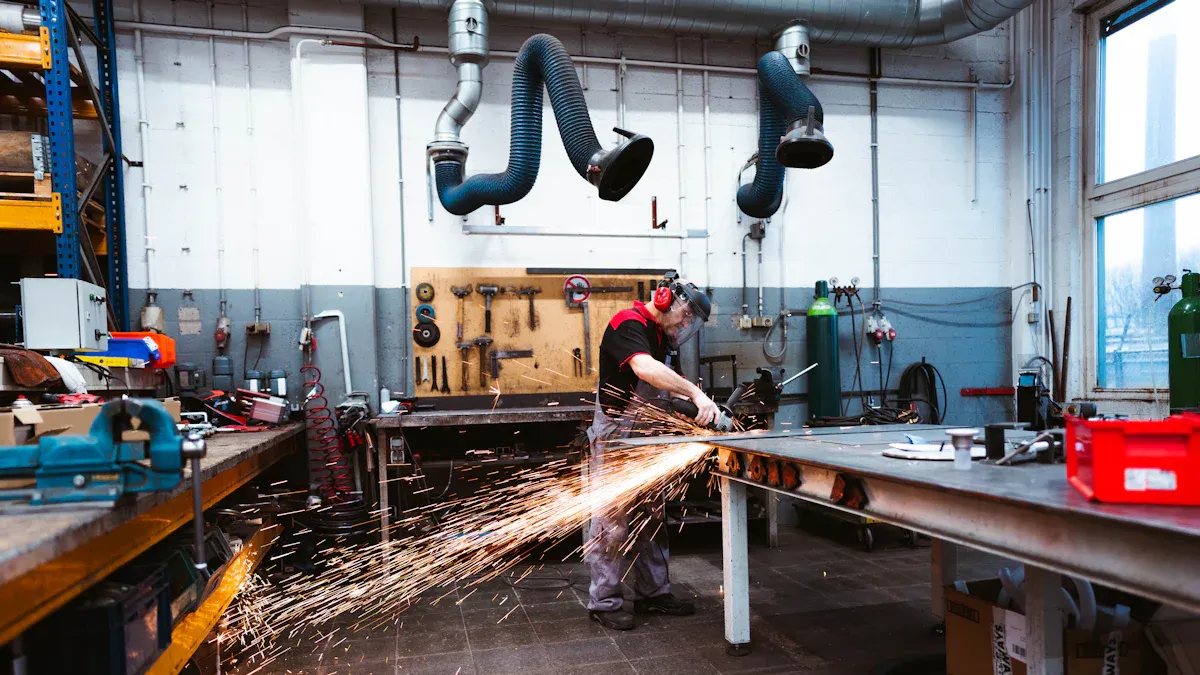
Powder metallurgy continues to evolve. Researchers develop new materials and refine existing processes. These advancements push the boundaries of manufacturing capabilities.
Advanced Powder Materials
The foundation of powder metallurgy lies in its raw materials. Innovations in powder technology drive significant progress.
Nanopowders
Nanopowders represent a significant leap in material science. Their ultra-fine particle size offers unique properties. These properties enhance component performance. Nanopowders improve sintering efficiency. This leads to parts with higher density and superior mechanical strength. They also enable the creation of materials with enhanced thermal and electrical conductivity. Magnetic nanopowders, specifically nanostructured alloy powders, gain traction. They offer improved magnetic performance in compact circuits.
Custom Alloys
The demand for specialized materials drives the development of custom alloys. Manufacturers create bespoke alloy formulations. These blends meet sector-specific needs. Examples include applications in medical imaging or space systems. These custom alloys offer tailored properties for demanding environments.
Process Enhancements
Continuous improvements in processing techniques enhance the efficiency and capability of powder metallurgy.
Hybrid Processes
Hybrid processes combine powder metallurgy with other manufacturing methods. This integration leverages the strengths of multiple techniques. For example, combining powder metallurgy with additive manufacturing can create complex parts with optimized material properties. These hybrid approaches offer greater design freedom and performance.
Automation and AI
Automation and artificial intelligence (AI) revolutionize powder metallurgy. Automated systems improve process control and consistency. AI algorithms optimize parameters for powder mixing, compaction, and sintering. This leads to higher quality parts and reduced production costs. AI also predicts material behavior, further enhancing process efficiency.
Emerging Applications
Powder metallurgy expands into new and exciting application areas. These innovations address modern industrial challenges.
Additive Manufacturing Integration
Additive manufacturing (AM) increasingly integrates with powder metallurgy. Metal powders are the primary feedstock for many AM processes. This synergy allows for the creation of highly complex geometries. It also enables rapid prototyping and customized production. The combination offers unparalleled design flexibility.
Sustainable Manufacturing
Powder metallurgy inherently supports sustainable manufacturing practices. Its high material utilization reduces waste. Ongoing research focuses on developing more energy-efficient processes. Manufacturers also explore the use of recycled powders. These efforts contribute to a more environmentally friendly manufacturing future.
Powder metallurgy offers diverse processes for advanced manufacturing. Metal Injection Molding (MIM), Hot Isostatic Pressing (HIP), Cold Isostatic Pressing (CIP), and Sintering each provide unique capabilities. These processes cater to specific application needs. Their continuous evolution drives innovation across various industries. This ensures the production of high-performance components.
FAQ
What is powder metallurgy?
Powder metallurgy is a manufacturing method. It creates components from metal powders. This technique involves compacting powders into a shape. Then, it heats the shape below its melting point. This process forms strong, dense parts.
What are the main advantages of powder metallurgy?
Powder metallurgy offers high material utilization. It enables net-shape manufacturing, reducing waste. The process allows unique material combinations. It also provides precise control over porosity. These benefits make it efficient and versatile.
What is Metal Injection Molding (MIM)?
MIM combines plastic injection molding's design flexibility with metal's strength. It mixes fine metal powders with a binder. Manufacturers inject this mixture into a mold. Then, they remove the binder and sinter the part. This creates complex, high-precision components.
How does Hot Isostatic Pressing (HIP) improve materials?
HIP applies high temperature and isostatic gas pressure to materials. This process eliminates internal porosity. It increases material density. HIP enhances strength, ductility, toughness, and fatigue life. It creates a more uniform microstructure.
What is Cold Isostatic Pressing (CIP) used for?
CIP uses liquid pressure to compact powders at room temperature. It creates green compacts with uniform density. Manufacturers use CIP for ceramic components, refractory materials, and filter elements. It is cost-effective for prototypes and large parts.
What is the role of sintering in powder metallurgy?
Sintering is a heat treatment. It bonds powder particles together. This process occurs below the material's melting point. Sintering reduces porosity and increases density. It transforms fragile compacts into strong, cohesive components.
Which industries benefit most from powder metallurgy?
Many industries benefit from powder metallurgy. These include automotive, aerospace, and medical device manufacturing. Consumer electronics and firearms also use PM extensively. It provides solutions for complex designs and specialized material needs.