


How to choose between MIM, CNC, casting, and forging?
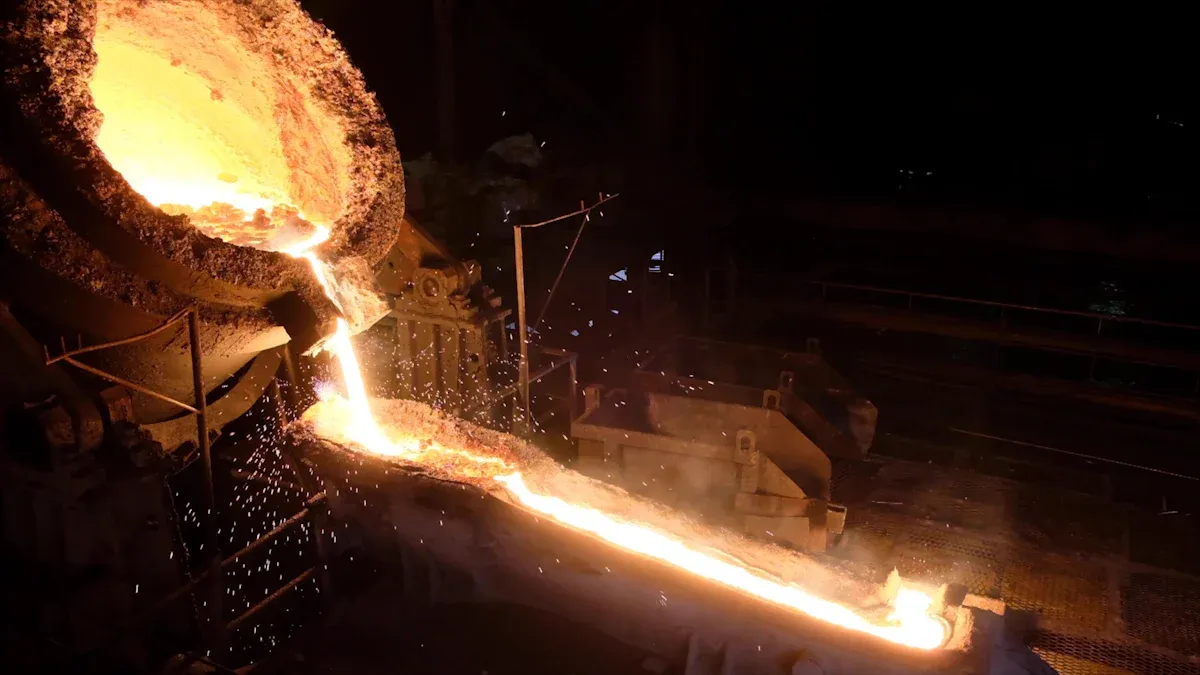
Selecting the right manufacturing process shapes the success of any project. Decision-makers often ask how to choose between MIM, CNC, casting, and forging. Critical factors include part complexity, material, volume, tolerances, and mechanical properties. Matching process capabilities to requirements reduces defects and boosts reliability. For example, higher Cp and Cpk values in the table below show how process alignment lowers defect rates, ensuring quality production.
| Cp/Cpk Value | 1.00 | 1.20 | 1.30 | 1.33 | 1.66 | 2.00 |
|---|---|---|---|---|---|---|
| Defect Rate (pPm) for Cp | 3000 | 300 | 100 | <60 | <1 | <0.00001 |
| Defect Rate (ppm) for Cpk | 1500 | 150 | 50 | <30 | <1 | <0.00001 |
Key Takeaways
- Choose a manufacturing process by matching part complexity, material, volume, tolerances, and mechanical needs to the process strengths.
- MIMis best for small, complex Metal Parts at high volumes, offering tight tolerances and cost savings after initial tooling investment.
- CNC machining provides high precision and flexibility, ideal for low to medium volumes and projects needing quick design changes.
- Casting suits complex shapes and a wide range of metals, working well for low to very high volumes with moderate tolerances.
- Forging delivers the strongest, most durable parts, perfect for high-stress applications and medium to high production volumes.
- Production volume greatly affects cost efficiency; processes like casting and forging become cheaper per part at high volumes.
- Lead time varies by process; CNC machining offers the fastest turnaround, while MIM and forging require longer setup times.
- Use a decision matrix and a step-by-step checklist to align project needs with process capabilities, ensuring better quality and cost control.
Key Decision Factors for Manufacturing Process Selection
Part Complexity and Design Features
Manufacturers must evaluate part complexity and design features before selecting a manufacturing process. Complex parts often require advanced techniques and careful planning. Increased complexity can negatively impact product quality, reliability, throughput, and lead time. It also raises uncertainty and failure rates within manufacturing systems. Both internal factors, such as product variety and complexity, and external factors, like demand uncertainty and supplier variability, contribute to overall complexity.
- Product variety demands higher flexibility in manufacturing. Changes in technical and functional features influence the choice of process.
- Uniform wall thickness, simple geometry, and draft angles help reduce defects and costs, especially in processes like injection molding.
- Advanced manufacturing methods, such as 3D printing, enable the creation of intricate geometries that traditional processes cannot achieve.
- Statistical tools, such as Design of Experiments (DOE), allow engineers to analyze how multiple design variables affect manufacturing outcomes. This approach helps optimize process selection.
- Early integration of Design for Manufacturing (DFM) analysis and CAD-based simulations can forecast part quality and performance. These tools improve the accuracy of process choice and reduce the risk of costly redesigns.
- Higher complexity leads to more data generation and unpredictable system behaviors. Adaptive manufacturing strategies become necessary to manage these challenges.
Tip: Early collaboration between design and manufacturing teams ensures that part features align with process capabilities, reducing the risk of defects and delays.
Material Compatibility and Selection
Material compatibility plays a critical role in determining manufacturing outcomes. Experimental studies show that the right material selection directly affects processability, part quality, and long-term performance. For example, in additive manufacturing, researchers found that adjusting the ratio of two pharmaceutical excipients, PVP/VA and PCL, changed the viscosity and flowability of the material. Higher PVP/VA content increased viscosity, which reduced flowability and led to poor printability and part quality. Formulations with balanced ratios processed smoothly and produced high-quality parts. Processing parameters, such as temperature and drop aspect ratio, also influenced the final product.
Chemical compatibility between materials and manufacturing environments is equally important. Studies evaluating fluid-metal combinations in thermal control systems revealed that certain fluids, like methanol, decomposed when in contact with specific metals, such as Invar alloy. Other combinations, like aluminum and stainless steel with toluene, experienced galvanic corrosion. Rapid decomposition of ethylene glycol above 150°C occurred regardless of the metal used. These findings highlight the necessity of compatibility testing to prevent corrosion, chemical reactions, and device failure. Manufacturers must carefully select materials and test for compatibility to ensure reliable, high-quality products.
Production Volume Requirements
Production volume significantly influences the choice of manufacturing process. Each method offers unique advantages depending on the required quantity. The following table summarizes how production volume affects process selection and cost efficiency:
| Production Volume Range | Characteristics | Typical Manufacturing Methods | Cost Efficiency Insights |
|---|---|---|---|
| Low Volume (1-10,000) | Short lead times, low tooling/setup cost | CNC machining, 3D printing, laser & press brake sheet metal | Tooling/setup costs dominate; CNC machining preferred; Die Casting not economical below ~1,000 units |
| Mid Volume (10,000-50,000) | Moderate lead times and tooling costs | Powder metal, thread rolling, die casting, turret punch, modular tooling, injection molding | Die casting becomes cost-effective near 1,000 units; significant savings at 10,000 units compared to CNC |
| High Volume (>50,000) | Moderate to high lead times and tooling costs | Die casting, modular tooling, progressive die, injection molding | Progressive die sheet metal shows lowest per-part cost at high volumes (e.g., $0.50 vs $3.73 for laser/press brake) |
For example, die casting requires a significant initial investment in tooling, making it less suitable for low-volume production. However, as volume increases, the per-part cost drops, and die casting becomes more economical than CNC machining. At 10,000 units, die casting can yield annual savings of over $300,000 compared to CNC. Progressive die tooling, while expensive upfront, offers the lowest per-part cost at high volumes.
Note: Manufacturers should assess both current and future production needs. Selecting a process that scales efficiently with volume can lead to substantial cost savings and improved delivery timelines.
Tolerances and Dimensional Precision
Dimensional precision and tolerance control play a critical role in manufacturing process selection. Each process offers different capabilities for achieving tight tolerances, which directly impact part fit, function, and quality. Manufacturers must match the required tolerance level to the process capability to avoid unnecessary costs or quality issues.
- Standard CNC machining typically achieves tolerances of ±0.005 inches (0.127 mm), while precision machining can reach ±0.001 inches or better.
- Tolerance bands define the allowable dimensional variation. Tighter bands require advanced equipment and increase production costs.
- The ISO 2768 standard classifies tolerances into fine, medium, coarse, and very coarse categories for machined parts.
- Engineers select tolerances based on functional requirements, material properties, and the capabilities of the chosen manufacturing process.
- Consistent compliance with specified tolerances ensures part functionality and supports quality control throughout production.
Statistical methods such as process capability ratios (Cp, Cpk) and measurement uncertainty analysis help manufacturers assess and validate achievable tolerances. Techniques like Monte Carlo Simulation and Root-sum-square (RSS) analysis provide reliable control limits and confidence bounds. For example, fused deposition modeling (FDM) in plastics can achieve ±4.5σ limits, while 3D printing of non-ferrous alloys has demonstrated Cp values of 1.33 or higher within ±5σ limits. These approaches link manufacturing technology to achievable tolerances, supporting informed process selection and optimization.
Tip: Selecting the tightest possible tolerance may seem ideal, but it often leads to higher costs and longer lead times. Engineers should specify tolerances that are "fit for purpose" to balance quality and efficiency.
Mechanical Properties and Performance
Mechanical properties determine how a part will perform under real-world conditions. The manufacturing process directly influences these properties by affecting the material's microstructure, composition, and the presence of defects. Manufacturers rely on standardized mechanical testing to compare performance across different processes.
- Mechanical testing measures key properties such as tensile strength, hardness, ductility, toughness, fatigue limit, and fracture toughness.
- These properties are sensitive to the chosen manufacturing technique and processing conditions.
- Standardized tests, including tensile, hardness, and impact tests, provide quantitative data for comparing materials produced by different methods.
- Testing under controlled conditions ensures reliable and repeatable results.
Variability in mechanical properties often arises from factors such as heat treatment, surface finishing, and the specific manufacturing process. For example, forging typically produces parts with superior strength and toughness due to grain alignment, while casting may introduce porosity that reduces fatigue resistance. Metal injection molding (MIM) and CNC machining can achieve high hardness and dimensional stability, making them suitable for precision components. Testing results provide measurable evidence of how each process affects material performance, enabling engineers to select the best method for demanding applications.
Note: Always consider the end-use environment and required mechanical properties when selecting a manufacturing process. The right choice ensures long-term reliability and safety.
Cost Considerations and Budget Constraints
Cost remains a decisive factor in manufacturing process selection. Each method presents a unique balance of initial investment, per-part cost, and suitability for different production volumes. Understanding these differences helps manufacturers align process choice with budget constraints and project goals.
| Process | Cost Range | Production Volume Suitability | Typical Tolerance (mm) | Key Characteristics and Applications |
|---|---|---|---|---|
| Casting | Low to Medium | Low to High | 0.5 – 2.0 | Suitable for complex shapes, economical for large volumes |
| Forging | Medium to High | Medium to High | 0.3 – 1.0 | Produces strong, durable parts, good for high-stress uses |
| Metal Injection Molding (MIM) | Medium | High | 0.1 – 0.3 | Ideal for small, complex parts with medium cost |
| CNC Machining | High | Low to High | 0.025 – 0.1 | High precision, tight tolerances, higher cost |
Casting offers cost advantages for large volumes and complex shapes, while forging delivers superior mechanical properties for high-stress applications. MIM provides a balance between cost and complexity for small, intricate parts at high volumes. CNC machining achieves the highest precision but often comes with higher costs, making it ideal for low to medium production runs or when tight tolerances are essential.
Callout: Manufacturers should evaluate both short-term and long-term costs, including tooling, setup, and per-part expenses. Selecting the right process can lead to significant savings and improved product quality over the project lifecycle.
Lead Time and Production Speed
Lead time and production speed play a decisive role in manufacturing process selection. Manufacturers must understand how quickly a process can deliver finished parts, especially when project timelines are tight or market demands fluctuate. Lead time refers to the total duration from order receipt to product delivery. This period includes preprocessing, active production, and post-processing activities such as inspection, packaging, and shipping. Cycle time, a related metric, measures only the time spent actively producing an item, including any wait times between tasks.
Manufacturers track several key performance indicators (KPIs) to assess production speed and lead time:
- Cycle time: Measures the duration to complete the manufacturing process from start to finish.
- Schedule attainment: Indicates how often planned production schedules are met; rates above 95% signal excellent performance.
- Order fulfillment lead time: Captures the total time from customer order to product receipt.
- Production attainment: Reflects the percentage of planned production achieved within a set period.
World-class manufacturers often achieve cycle times below 24 days, while less efficient operations may exceed 96 days. High schedule attainment ensures that customers receive products on time, which builds trust and supports repeat business.
Each manufacturing process offers distinct advantages and challenges regarding lead time and production speed:
- CNC Machining: Delivers rapid turnaround for prototypes and low-volume runs. Minimal setup and no tooling requirements allow manufacturers to start production quickly. CNC excels when customers need parts within days rather than weeks.
- Metal Injection Molding (MIM): Requires longer lead times due to tooling design and fabrication. Once tooling is complete, MIM supports high-volume production with consistent cycle times. This process suits projects with stable designs and large batch requirements.
- Casting: Offers moderate lead times. Tooling and mold preparation can extend the initial timeline, but casting supports efficient batch production once setup is complete. Manufacturers often choose casting for medium to high volumes where speed and cost balance matter.
- Forging: Involves significant setup and tooling, which can increase initial lead times. However, forging delivers high production rates for large orders. This process works best for projects that prioritize mechanical strength and can accommodate longer upfront preparation.
Tip: Manufacturers should analyze both cycle time and total lead time when selecting a process. Fast cycle times do not always translate to short lead times if preprocessing or post-processing stages introduce delays.
The type of lead time also matters. Production lead time measures the time to process and deliver an order. Material lead time tracks how long it takes to receive raw materials. Customer lead time covers the entire journey from order placement to product delivery. Manufacturers often break down order lead time into actual, requested, quoted, and confirmed stages, each reflecting different expectations and realities in the production process.
A clear understanding of these metrics helps manufacturers identify bottlenecks and optimize workflows. For example, if a customer places an order on June 1st and receives the product on July 1st, the lead time totals 30 days. By targeting both active production and supporting processes, manufacturers can reduce delays and improve responsiveness.
Note: Shorter lead times and faster production speed provide a competitive edge, especially in industries where time-to-market drives success. Manufacturers who consistently meet or exceed schedule attainment targets build stronger customer relationships and enhance their reputation for reliability.
How to choose between MIM for Complex Metal Parts
When to Use MIM
Manufacturers often ask how to choose between MIM for projects that demand intricate metal components. Metal Injection Molding (MIM) excels when parts require complex geometries, thin walls, or integrated features that traditional machining cannot achieve efficiently. MIM suits applications where small to medium-sized parts must meet tight tolerances and high production volumes. Industries such as automotive, medical, firearms, and consumer electronics frequently select MIM for its ability to deliver consistent quality and repeatability.
The following table highlights optimum usage scenarios for MIM across various industries:
| Industry | Application Examples | Case Study Summary |
|---|---|---|
| Automotive | Powertrain parts, safety systems, interior hardware | Replaced machined stainless steel transmission part with MIM, reducing cost by 43% and improving wear resistance. |
| Medical & Dental | Surgical instruments, implantable devices | Produced titanium surgical tool components with complex thin walls, too costly to machine traditionally. |
| Firearms | Triggers, hammers, safety mechanisms | Converted 14 machined parts to MIM, cutting production costs by over 60% while maintaining performance. |
| Consumer Electronics | Hinges, frames, heat sinks | Used MIM for smartwatch cases achieving complex aesthetics and integrated functionality not possible with other methods. |
Advantages of MIM
MIM offers several advantages for manufacturers considering how to choose between MIM and other processes. This method enables the production of highly complex shapes with fine details and excellent surface finishes. MIM supports a wide range of metal alloys, including stainless steel, titanium, and specialty materials. Manufacturers benefit from high material utilization, minimal waste, and the ability to produce thousands or millions of identical parts with consistent quality.
- Conversion from machined parts to MIM achieves equal performance with reduced costs.
- Switching from plastic to MIM results in durable underwater components with up to 75% cost savings.
- Award-winning MIM designs, such as the Braille device core plate, demonstrate the process’s capability for complex, high-performance parts.
MIM also streamlines assembly by integrating multiple features into a single component, reducing the need for secondary operations. This approach shortens lead times and lowers total production costs, especially at higher volumes.
Tip: MIM is ideal for projects where design complexity, tight tolerances, and high production volumes intersect.
Limitations of MIM
While MIM provides many benefits, manufacturers must consider certain limitations when deciding how to choose between MIM and other manufacturing methods. MIM requires significant upfront investment in tooling and mold design, making it less suitable for low-volume or prototype production. Part size also presents a constraint, as MIM works best for small to medium-sized components, typically weighing less than 100 grams. Some highly specialized alloys may not be compatible with the MIM process.
Dimensional changes during sintering can affect final tolerances, so careful design and process control are essential. Despite these considerations, MIM remains a top choice for producing complex, high-precision metal parts at scale.
Cost and Volume Considerations for MIM
Manufacturers evaluating how to choose between MIM must carefully assess both cost and production volume. Metal Injection Molding involves a unique cost structure that differs from other metalworking processes. The initial investment in tooling and mold design stands out as a significant factor. High upfront costs make MIM less attractive for projects with low production volumes or frequent design changes.
- MIM requires a substantial initial investment in molds and tooling.
- The process becomes cost-effective only when producing high volumes, typically above 5,000 to 10,000 pieces.
- Cost per part decreases as production volume increases, thanks to economies of scale.
- MIM supports the manufacture of small to medium-sized parts, generally weighing between 0.1 and 150 grams.
- Complex geometries and tight tolerances are achievable, but the process involves multiple stages, which can increase labor and production time costs.
- Frequent design modifications lead to additional tooling expenses, making MIM unsuitable for prototyping or small batch runs.
A comparison of cost and volume suitability for MIM and other common processes appears in the table below:
| Process | Initial Tooling Cost | Suitable Volume Range | Cost per Part (Low Volume) | Cost per Part (High Volume) | Part Size Range |
|---|---|---|---|---|---|
| MIM | High | 5,000+ | High | Low | 0.1 – 150g |
| CNC Machining | Low | 1 – 10,000 | Moderate to High | Moderate | Flexible |
| Die Casting | High | 10,000+ | High | Low | Up to several kg |
| Powder Metallurgy | Moderate | 1,000+ | Moderate | Low | 1 – 2,500g |
MIM offers excellent material utilization, reducing waste and lowering long-term material costs. However, the process involves several steps, including mixing, molding, debinding, and sintering. Each stage requires strict control, which can add to labor and overhead expenses. Some parts may need post-processing, further increasing production time and cost.
Note: MIM delivers the greatest value for projects that demand high volumes of small, complex metal parts with tight tolerances. Manufacturers should avoid MIM for low-volume or frequently changing designs due to the high cost of new molds.
When considering how to choose between MIM and other manufacturing methods, decision-makers should weigh the balance between initial investment, production volume, and long-term cost savings. Projects with stable designs and large batch requirements benefit most from the efficiencies that MIM provides.
Choosing CNC Machining for Precision and Flexibility
When to Use CNC Machining
CNC machining stands out as the preferred choice when projects demand high precision, repeatability, and adaptability. Manufacturers select CNC machining for parts that require tight tolerances, intricate geometries, or rapid prototyping. This process excels in producing both simple and complex components from a wide range of metals and plastics. Industries such as aerospace, automotive, medical devices, and electronics rely on CNC machining for critical parts where accuracy cannot be compromised.
CNC machining becomes essential when design changes occur frequently or when small to medium production runs are needed. The process allows for quick setup and easy modification of digital designs. Manufacturers often choose CNC machining for custom parts, fixtures, and prototypes, as well as for components that must meet strict regulatory standards.
Tip: CNC machining is ideal for projects where design flexibility and dimensional accuracy are top priorities.
Advantages of CNC Machining
CNC machining offers several key advantages that set it apart from traditional manufacturing methods. The computerized control system ensures consistent quality and high repeatability across production batches. CNC machines achieve precision levels typically ranging from 0.02 to 0.1 mm, with advanced systems reaching up to 0.01 mm accuracy. This level of precision makes CNC machining suitable for applications such as precision grinding tools, surgical instruments, and aerospace components.
Manufacturers benefit from the versatility of CNC machining. The process handles a broad spectrum of materials, including aluminum, stainless steel, titanium, and engineering plastics. CNC machines can produce complex shapes, undercuts, and fine details that manual machining cannot match. The ability to switch between different part designs with minimal downtime increases productivity and reduces lead times.
A comparative analysis shows that CNC machining delivers superior consistency compared to manual methods. The automated system reduces human error and maintains tight tolerances, even for intricate parts. CNC machining also supports efficient material usage, minimizing waste and optimizing production costs for low to medium volumes.
- High precision and repeatability
- Flexibility in handling various materials and geometries
- Rapid prototyping and easy design modifications
- Reduced human error and improved safety
Limitations of CNC Machining
Despite its many strengths, CNC machining presents some limitations that manufacturers must consider. The initial investment in CNC equipment and programming expertise can be significant. Complex parts may require advanced programming skills and longer setup times. CNC machining may not be the most cost-effective solution for very high-volume production, where processes like casting or forging offer lower per-part costs.
Material selection also plays a role. While CNC machines handle most metals and plastics, extremely hard or abrasive materials can increase tool wear and maintenance requirements. Some geometries, such as deep internal cavities or features with limited tool access, may challenge even advanced CNC systems.
Manufacturers should evaluate production volume, part complexity, and budget constraints before choosing CNC machining. For projects that demand the highest precision and flexibility, CNC machining remains a leading solution.
Note: CNC machining provides unmatched accuracy and adaptability, but careful planning ensures optimal results and cost efficiency.
Cost and Volume Considerations for CNC
CNC machining offers unique advantages in cost and volume flexibility. Manufacturers often select CNC machining for projects that require high precision but do not demand extremely large production runs. The cost structure of CNC machining differs from processes like casting or MIM, making it important to understand how volume impacts overall expenses.
Key Cost Factors in CNC Machining:
- Setup and Programming: CNC machining requires initial setup and programming. This step involves creating digital models and tool paths. For small batches, setup costs can represent a significant portion of the total expense.
- Material Costs: CNC machining removes material from a solid block. Material waste can increase costs, especially for expensive metals.
- Tooling and Maintenance: Tool wear and machine maintenance add to operational costs. Complex parts may require specialized tools, which can increase expenses.
- Labor and Overhead: Skilled operators and engineers oversee the process. Labor costs remain steady regardless of batch size.
Volume Impact on Cost:
CNC machining excels at low to medium production volumes. The process does not require expensive molds or dies, so manufacturers avoid large upfront investments. This makes CNC ideal for prototypes, custom parts, and small production runs.
| Production Volume | Cost Efficiency | Typical Use Cases |
|---|---|---|
| 1–100 units | High | Prototyping, custom components |
| 100–10,000 units | Moderate | Small to medium batch production |
| 10,000+ units | Lower | Less competitive vs. casting/MIM |
For high-volume production, per-part costs in CNC machining remain relatively stable. However, processes like casting or MIM become more cost-effective as volume increases due to economies of scale.
Tip: CNC machining provides the best value for low to medium volumes or when frequent design changes occur. Manufacturers can quickly adjust digital files without investing in new tooling.
Cost Comparison Example:
- Producing 100 custom aluminum brackets with CNC machining may cost less than creating a die for casting.
- For 50,000 identical parts, casting or MIM usually offers a lower cost per part.
Summary of Considerations:
- CNC machining suits projects with variable designs, tight tolerances, and moderate quantities.
- Manufacturers should evaluate total project costs, including setup, material, and labor.
- For large-scale production, alternative processes may deliver better cost efficiency.
Note: Choosing CNC machining allows manufacturers to balance flexibility, speed, and quality, especially when production volumes do not justify high tooling investments.
Selecting Casting for Versatility and Complex Shapes
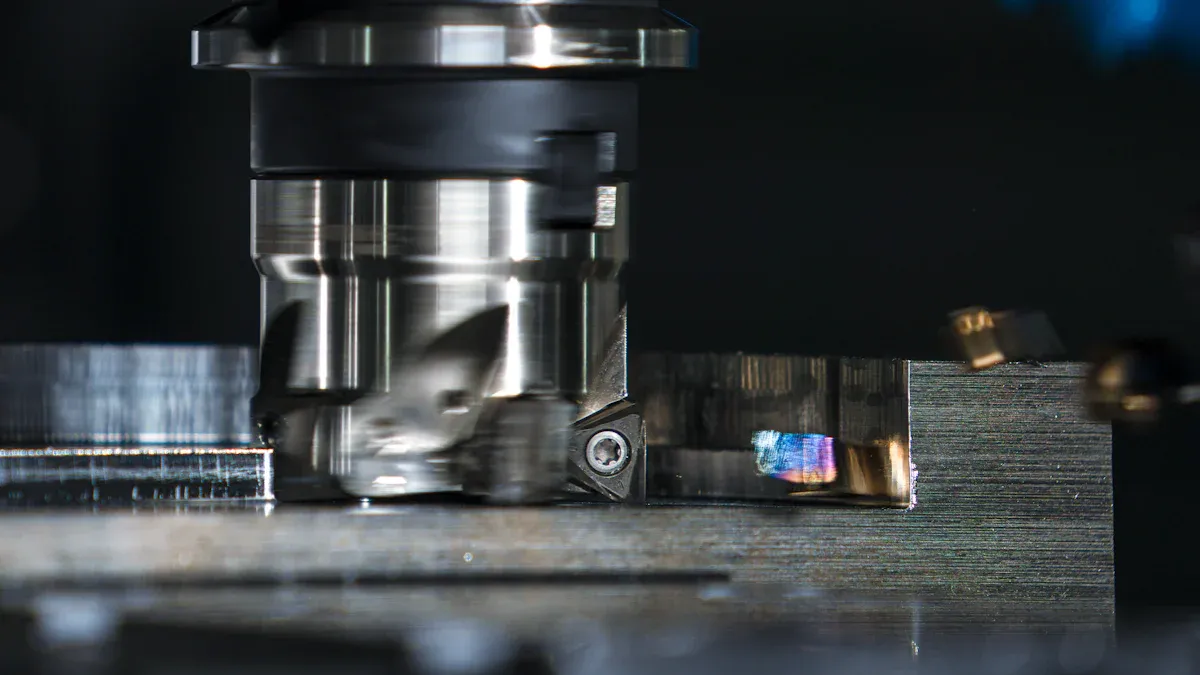
When to Use Casting
Casting serves as a go-to solution when manufacturers need to create parts with complex geometries, internal cavities, or intricate surface details. This process involves pouring molten metal into a mold, allowing it to solidify into the desired shape. Casting works well for both small and large components, making it suitable for a wide range of industries. Automotive, aerospace, heavy machinery, and infrastructure sectors often rely on casting for engine blocks, transmission housings, pump bodies, and structural fittings.
Manufacturers choose casting when they require:
- Economical production of complex or hollow shapes that are difficult to machine.
- The ability to use a wide range of metals and alloys, including aluminum, stainless steel, and specialty materials.
- Rapid prototyping and iterative testing for new product development.
- High customization in part design, surface finish, and mechanical properties.
Casting also supports both low and high production volumes, offering flexibility for different project needs.
Advantages of Casting
Casting offers several advantages that make it a versatile choice for manufacturing complex parts. The process enables the creation of shapes that would be challenging or impossible to achieve with machining, forging, or other methods. Manufacturers benefit from the ability to produce parts with intricate internal features, thin walls, and detailed surface textures.
- Casting economically produces complex shapes by pouring molten metal into molds that solidify into intricate forms.
- The process supports a wide range of metals and alloys, expanding its application scope.
- Advanced techniques like Hot Isostatic Pressing (HIP) improve mechanical strength and reduce defects, making casting suitable for aerospace and medical components.
- Squeeze casting combines the benefits of casting and forging, resulting in dense, high-strength parts.
- Slush and rotational casting allow for the production of hollow or uniformly thick parts with complex designs.
- Vacuum casting achieves fine details and high dimensional accuracy, ideal for prototyping and small batch production.
- Sand casting enables the use of diverse alloys, allowing manufacturers to tailor tensile strength, ductility, and conductivity for specific needs.
Tip: Casting provides a cost-effective way to produce large quantities of parts with complex geometries, especially when design flexibility and material variety are important.
Limitations of Casting
While casting delivers many benefits, manufacturers should consider certain limitations. The process may introduce porosity or internal defects if not carefully controlled. Achieving very tight tolerances can be challenging, and some post-processing may be necessary to meet precise dimensional requirements. The initial setup, including mold design and fabrication, can extend lead times for new projects.
- Dimensional accuracy may not match that of CNC machining or forging.
- Surface finish can vary depending on the casting method and material.
- Some casting processes require significant energy and specialized equipment.
- Large or thick parts may cool unevenly, leading to internal stresses or warping.
Despite these challenges, casting remains a preferred method for producing complex, high-performance parts across many industries. Manufacturers can often overcome limitations through process optimization, advanced mold design, and post-casting treatments.
Note: Careful planning and quality control help maximize the benefits of casting while minimizing potential drawbacks. This approach ensures reliable, high-quality results for even the most demanding applications.
Cost and Volume Considerations for Casting
Casting offers manufacturers a flexible and cost-effective solution for producing metal parts across a wide range of volumes. The economics of casting depend heavily on both the chosen process and the expected order quantity. Manufacturers must evaluate these factors early in the project to ensure optimal cost efficiency.
Order quantity plays a decisive role in selecting the right tooling and casting process. For smaller production runs, wood or plastic tooling provides an economical option. These materials work well for up to 500 parts, allowing for quick changes and lower upfront investment. When annual production exceeds 2,000 parts, metal tooling becomes the preferred choice. Metal molds withstand higher production rates and deliver consistent quality over longer runs.
Sand casting stands out for its flexibility and adaptability. Manufacturers often select sand casting for low to medium volumes because it accommodates design changes with minimal cost impact. This process also supports complex geometries and thin walls, which can reduce overall manufacturing expenses compared to other methods.
- Smaller runs (up to 500 parts): Wood or plastic tooling offers low initial costs and fast turnaround.
- Medium runs (500–2,000 parts): Sand casting provides a balance between cost and design flexibility.
- Large runs (over 2,000 parts annually): Metal tooling and processes like high-pressure die casting (HPDC) deliver the lowest per-part costs.
The following table summarizes how different casting methods align with production volume and cost considerations:
| Casting Method | Ideal Volume Range | Tooling Material | Cost Efficiency | Key Benefits |
|---|---|---|---|---|
| Sand Casting | 10 – 5,000 units | Wood/Plastic/Metal | High for low-medium | Flexible, easy design changes |
| Gravity Casting | 100 – 10,000 units | Metal | Moderate to high | Good for medium complexity |
| High-Pressure Die Casting (HPDC) | 50,000+ units | Metal | Very high for large | Fast cycle, minimal material waste |
Casting processes also accommodate intricate shapes and internal features, which can lower costs compared to forging, especially for parts with complex designs. High-pressure die casting becomes the most economical choice for very high volumes, thanks to rapid production cycles and reduced material waste.
Tip: Manufacturers should match the casting process and tooling material to the expected order quantity. This approach ensures the best balance between upfront investment and long-term cost savings.
By understanding these cost and volume dynamics, manufacturers can select the most suitable casting method for their project, achieving both budget targets and production goals.
Opting for Forging for Strength and Durability
When to Use Forging
Manufacturers often select forging when a project demands exceptional strength, durability, and reliability. Forging shapes metal using compressive forces, which aligns the grain structure and enhances mechanical properties. This process works best for parts that must withstand high stress, impact, or repeated loading. Automotive, aerospace, oil and gas, and heavy machinery industries frequently rely on forging for components such as crankshafts, gears, connecting rods, and structural brackets. These parts require superior fatigue resistance and toughness.
Forging also suits applications where safety and performance cannot be compromised. Engineers choose forging for critical load-bearing parts, especially when failure could result in significant risk or downtime. When a design calls for a combination of strength, ductility, and resistance to cracking, forging provides a proven solution.
Tip: Forging is ideal for high-stress applications where part failure is not an option.
Advantages of Forging
Forging offers several key advantages that set it apart from other manufacturing processes. The most significant benefit comes from the alignment and refinement of the metal’s grain structure during deformation. This grain flow follows the shape of the part, which increases impact and fatigue resistance. Closed die forging, in particular, produces components with consistent quality and minimal internal defects.
- Grain flow alignment enhances impact and fatigue resistance.
- Forging reduces the likelihood of fracture and cracking during use.
- Mechanical properties such as strength, ductility, and toughness improve due to microstructural changes like grain elongation and refinement.
Material strength tests, including tensile strength, fatigue strength, fracture toughness, and impact resistance, consistently show that forged parts outperform cast or machined equivalents. Reduction in area from tensile ductility tests further demonstrates the improved ductility of forged components. Manufacturers often rely on laboratory-tested steel grades and certified material test reports to confirm these benefits.
The following table summarizes common tests used to verify the mechanical advantages of forged parts:
| Test/Inspection Type | Purpose/Description |
|---|---|
| Compressive Strength | Measures max pressure metal can endure without fracturing |
| Elastic Limit | Max stress before permanent deformation |
| Reduction in Area | Indicates ductility from tensile test |
| Magnetic Particle Inspection (MPI) | Detects surface and subsurface defects in magnetic metals |
| Dye Penetrant Testing | Reveals surface flaws using liquid dye |
| Ultrasonic Testing | Identifies internal structural defects using ultrasonic waves |
These tests help manufacturers ensure that forged parts meet the highest standards for strength and reliability.
Limitations of Forging
While forging delivers outstanding mechanical properties, it does present some limitations. The process typically requires significant initial investment in tooling and equipment. Forging works best for medium to high production volumes, as setup costs can be high for small batches. Complex shapes with intricate internal features may be difficult to achieve through forging alone.
Some materials, such as certain high-alloy steels or non-ferrous metals, may not respond well to forging. Size limitations also exist, as extremely large or thin-walled parts may require alternative methods. Despite these challenges, forging remains the preferred choice for applications where strength, durability, and safety are paramount.
Note: Manufacturers should evaluate part geometry, material selection, and production volume before choosing forging to ensure the process aligns with project requirements.
Cost and Volume Considerations for Forging
Forging stands out as a preferred manufacturing process when projects demand high strength and durability. However, cost and production volume play a decisive role in determining its suitability. Manufacturers must evaluate both the upfront investment and the long-term operational efficiency before selecting forging for their applications.
Tooling costs represent a significant portion of forging expenses. In hot forging operations, tool manufacturing can account for 30–40% of the total production cost. This high percentage reflects the importance of tool durability and the need for robust die materials. A typical die set produces approximately 3,300 forged elements before requiring replacement. This production volume per tool set demonstrates the process’s efficiency for medium to high-volume manufacturing.
| Aspect | Statistic / Data | Explanation |
|---|---|---|
| Tool manufacturing cost share | 30–40% of total hot forging operation costs | Tool durability significantly impacts overall production cost. |
| Average die life | ~3,300 forged elements per tool set | Indicates achievable production volume before tool replacement. |
| Coating impact | More than 2x increase in tool durability | Hybrid coatings (e.g., CrN, TiAlN) extend tool life, reducing downtime and costs. |
| Cost-benefit of coatings | High initial investment justified by long-term efficiency gains | Reduced retooling, reheating, and maintenance costs improve process economics. |
Manufacturers often invest in advanced coatings for forging dies, such as chromium nitride (CrN) or titanium aluminum nitride (TiAlN). These coatings can more than double tool life, which reduces downtime and maintenance costs. Although the initial investment in coated tooling is higher, the long-term savings from fewer replacements and less frequent reheating cycles justify the expense. This approach improves overall process economics, especially for large production runs.
Forging becomes most cost-effective at medium to high production volumes. The high upfront tooling cost spreads over thousands of parts, lowering the per-unit price as volume increases. For small batches or prototypes, the cost per part remains high due to limited tool usage. Manufacturers seeking enhanced durability and mechanical performance often accept these initial costs, knowing that forged parts deliver superior reliability in demanding applications.
Tip: Companies planning for high-volume production should consider investing in advanced die coatings. This strategy maximizes tool life and minimizes long-term operational costs.
Decision Matrix: Comparing MIM, CNC, Casting, and Forging
Key Factors Side-by-Side Comparison
A decision matrix helps manufacturers compare MIM, CNC machining, casting, and forging across critical factors. This tool provides a clear overview of each process’s strengths and best-fit scenarios. The table below summarizes key attributes for quick reference:
| Factor | MIM | CNC Machining | Casting | Forging |
|---|---|---|---|---|
| Part Complexity | High (intricate shapes) | High (complex geometries) | High (internal cavities) | Moderate (simple to medium) |
| Material Range | Wide (metals, alloys) | Very wide (metals, plastics) | Wide (many alloys) | Limited (mainly metals) |
| Tolerances | Tight (±0.1–0.3 mm) | Very tight (±0.025–0.1 mm) | Moderate (±0.5–2.0 mm) | Moderate (±0.3–1.0 mm) |
| Mechanical Properties | Good (after sintering) | Good (depends on material) | Moderate (porosity risk) | Excellent (grain alignment) |
| Production Volume | High (5,000+ units) | Low to medium (1–10,000) | Low to high (10–50,000+) | Medium to high (3,000+) |
| Lead Time | Moderate (tooling needed) | Short (fast setup) | Moderate (mold prep) | Moderate (tooling needed) |
| Cost Efficiency | High (at scale) | Moderate (low-medium runs) | High (at volume) | High (at volume) |
| Surface Finish | Excellent | Excellent | Good to moderate | Good |
📝 Note: This matrix allows teams to quickly identify which process aligns with their project’s needs. For example, MIM suits small, complex parts at high volumes, while CNC machining excels in precision and flexibility for lower quantities.
How to Use the Decision Matrix
Manufacturers can use the decision matrix as a practical guide during the early stages of project planning. The following steps outline an effective approach:
- List Project Requirements: Define the part’s complexity, material, required tolerances, mechanical properties, production volume, and budget.
- Match Needs to Matrix: Compare each requirement with the attributes in the matrix. Identify which process best fits the majority of your criteria.
- Prioritize Critical Factors: Some projects may value precision over cost, or speed over complexity. Rank the importance of each factor for your application.
- Shortlist Processes: Eliminate options that do not meet essential needs. For example, if a project requires extremely tight tolerances and low volume, CNC machining may stand out.
- Consult with Experts: Engage with manufacturing partners early. Their experience can help interpret the matrix and recommend the most suitable process.
💡 Tip: Teams often revisit the matrix as designs evolve. This approach ensures the selected process continues to align with changing requirements.
When teams ask how to choose between MIM and other methods, the decision matrix provides a structured, objective way to evaluate options. It reduces guesswork and supports informed, data-driven decisions.
Step-by-Step Guide to Choosing the Right Manufacturing Process
Actionable Checklist for Process Selection
Selecting the optimal manufacturing process requires a structured approach. Teams can use the following checklist to ensure all critical factors receive proper evaluation:
-
Define Part Requirements
Identify the part’s function, size, complexity, and required features. Specify any unique design elements or performance needs. -
Select Material
Choose materials based on mechanical properties, compatibility, and end-use environment. Consider corrosion resistance, strength, and cost. -
Determine Production Volume
Estimate the total number of parts needed. Decide if the project involves prototyping, low-volume, or mass production. -
Set Tolerance and Precision Goals
Establish acceptable dimensional tolerances. Match these requirements to the capabilities of each process. -
Assess Mechanical Performance
Review the required strength, durability, and fatigue resistance. Align these needs with the process that best enhances material properties. -
Evaluate Cost Constraints
Calculate available budget for tooling, setup, and per-part costs. Factor in both short-term and long-term expenses. -
Consider Lead Time and Speed
Analyze project deadlines. Select processes that can meet delivery schedules without sacrificing quality. -
Review Design Flexibility
Determine if frequent design changes are likely. Processes like CNC machining offer greater flexibility for modifications. -
Consult with Manufacturing Experts
Engage with experienced engineers or suppliers. Their insights can help avoid costly mistakes and ensure process alignment with project goals.
🛠️ Tip: Teams that follow a systematic checklist reduce the risk of overlooking key requirements and improve the likelihood of project success.
Flowchart for Decision-Making
A flowchart provides a clear, visual path for selecting the right manufacturing process. In engineering and manufacturing, flowcharts use standardized shapes—rectangles for actions, diamonds for decisions, and ovals for start or end points. This visual language helps teams quickly interpret each step and decision point.
The flowchart below outlines a logical sequence for process selection:
- Start
- Is the part highly complex or does it require intricate features?
- Yes → Consider MIM or Casting
- No → Proceed to next step
- Is tight tolerance or high precision required?
- Yes → Consider CNC Machining
- No → Proceed to next step
- Does the part need exceptional strength or durability?
- Yes → Consider Forging
- No → Proceed to next step
- Is production volume high (over 5,000 units)?
- Yes → MIM, Casting, or Forging may be most cost-effective
- No → CNC Machining or low-volume Casting
- Are material or budget constraints present?
- Yes → Reassess material selection or process
- No → Proceed
- Consult with experts and finalize process selection
- End
Flowcharts in manufacturing guide users step-by-step through each decision, mapping out possible outcomes and ensuring all options receive consideration. This structured approach helps teams identify bottlenecks, streamline workflows, and maintain compliance with best practices. By visualizing the process, teams can adapt quickly to challenges and make informed, consistent decisions.
📊 Note: Using a flowchart not only clarifies the decision-making process but also supports continuous improvement by highlighting areas for workflow optimization.
Selecting the right manufacturing process—whether MIM, CNC, casting, or forging—depends on part complexity, material, volume, and performance needs. Teams achieve better outcomes when they align process capabilities with project goals. Statistical tools like control charts, capability analysis, and performance metrics help monitor and optimize decisions. User feedback from surveys, prototype testing, and online communities validates the effectiveness of decision tools. By leveraging these resources, manufacturers ensure their process choice supports quality, efficiency, and long-term success.
FAQ
What is the main difference between MIM, CNC, casting, and forging?
MIM creates complex small parts using metal powder and injection molding. CNC machining removes material for high precision. Casting pours molten metal into molds. Forging shapes metal with compressive force for strength.
Which process offers the best dimensional accuracy?
CNC machining provides the highest dimensional accuracy. Tolerances can reach ±0.01 mm. This process suits applications where precision is critical.
When should a manufacturer choose casting over forging?
Manufacturers select casting for complex shapes or internal cavities. Forging works best for parts needing superior strength and durability.
Can MIM handle high production volumes?
MIM excels at high-volume production. The process becomes cost-effective above 5,000 units. It produces consistent, repeatable parts.
What materials work best with CNC machining?
CNC machining handles a wide range of metals and plastics. Aluminum, stainless steel, titanium, and engineering plastics are common choices.
How does production volume affect process selection?
Low volumes favor CNC machining or sand casting. High volumes make MIM, die casting, or forging more economical due to lower per-part costs.
Which process delivers the strongest parts?
Forging produces the strongest parts. The process aligns the metal’s grain structure, increasing strength, toughness, and fatigue resistance.
How can a manufacturer reduce lead time?
CNC machining offers the shortest lead times. Quick setup and no tooling allow for rapid prototyping and fast delivery.