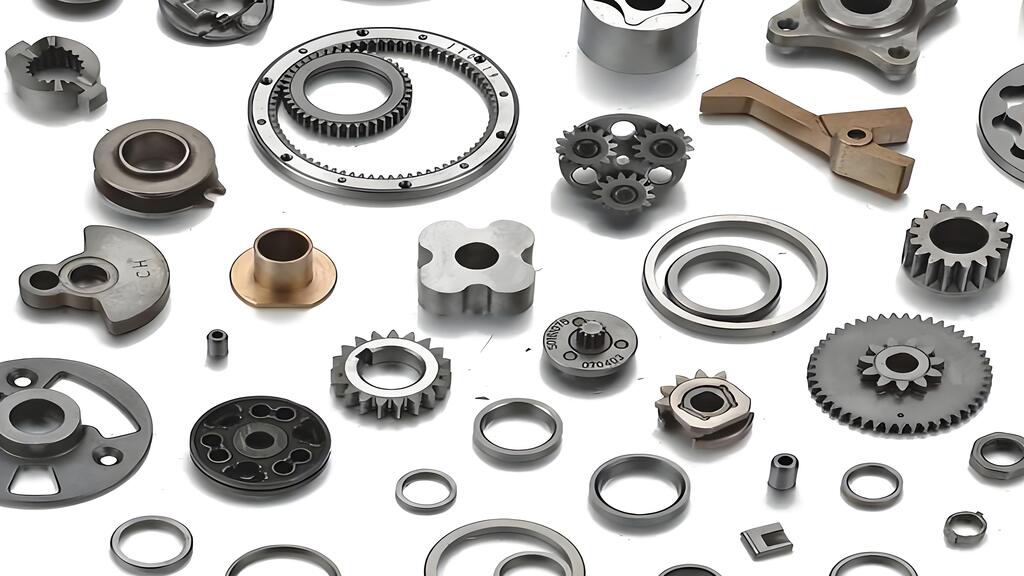


How to Improve the Density of Powder Metallurgy Components

Higher density of Powder Metallurgy components directly enhances their mechanical properties and reliability. Recent studies have shown that after direct powder forging, the Ti-6Al-4V alloy achieves a near-theoretical density of 99.8%, resulting in significant gains in tensile strength and ductility.
| Condition | Density (g/cm³) | Relative Density (%) |
|---|---|---|
| Theoretical | 4.430 | 100 |
| Before DPF | 2.787 ± 0.010 | 62.9 |
| After DPF | 4.420 ± 0.004 | 99.8 |
Grain refinement and uniform microstructure, achieved through optimized processing, further improve thermal stability and mechanical reliability. Selecting the right methods ensures optimal density without sacrificing dimensional accuracy or cost-effectiveness.
Key Takeaways
- Choosing the right compaction method, like cold, warm, or high-pressure pressing, directly impacts the density and quality of powder metallurgy parts.
- Optimizing Sintering temperature, time, and atmosphere is crucial to reducing porosity and improving mechanical strength without causing defects.
- Post-processing techniques such as hot isostatic pressing, forging, and surface treatments further increase density and enhance part reliability.
- Using powders with controlled particle size and shape, along with proper lubricants and alloying elements, helps achieve better packing and densification.
- Careful control of shrinkage and dimensional changes during sintering ensures parts meet tight tolerances and maintain accuracy.
- Advanced process optimization methods like the Taguchi method and Response Surface Methodology help engineers fine-tune parameters for consistent high density.
- Higher density in powder metallurgy components leads to stronger, more wear-resistant, and corrosion-resistant parts with longer service life.
- Industries such as automotive, aerospace, and medical benefit greatly from high-density powder metallurgy parts due to their improved performance and reliability.
Compaction Methods for the Density of Powder Metallurgy Components

Achieving high density in powder metallurgy components begins with the compaction stage. The choice of compaction method directly influences the uniformity, mechanical properties, and overall performance of the final part. Engineers select from several compaction techniques based on part geometry, required density, and production volume.
Cold Compaction
Cold compaction remains the most widely used approach in powder metallurgy. This process operates at room temperature and relies on mechanical pressure to consolidate metal powders into a "green" compact.
Uniaxial Pressing
Uniaxial pressing, also known as die compaction, applies pressure in a single direction using a punch and die set. Manufacturers favor this method for its efficiency and cost-effectiveness, especially when producing large volumes of simple-shaped parts. The process achieves consistent results for straightforward geometries, but it can introduce density gradients due to friction between the powder and die walls. These gradients may lead to defects or reduced mechanical performance in critical applications.
| Compaction Method | Description | Usage/Applications | Effectiveness/Advantages |
|---|---|---|---|
| Uniaxial Pressing (Die Pressing) | Applies pressure in one direction using a punch and die. Most common and cost-effective. | High-volume production of simple geometries | Efficient, low cost, but can have density gradients and defects due to non-uniform pressure and die friction. |
For materials like 316L stainless steel, cold compaction can achieve relative densities up to 97% when using high compaction pressures (up to 1600 MPa) and optimal sintering temperatures. The applied pressure directly increases the green density, while subsequent sintering further enhances densification through microstructural changes. However, excessive pressure or temperature may cause undesirable grain growth, which can limit further improvements in density.
Isostatic Pressing
Cold isostatic pressing (CIP) addresses the limitations of uniaxial pressing by applying pressure uniformly from all directions. This method uses a flexible mold filled with powder, which is then submerged in a fluid medium. The fluid transmits pressure evenly, resulting in a compact with uniform density and mechanical properties throughout its volume. CIP proves especially valuable for complex shapes and high-density parts used in aerospace and medical applications, where uniformity and reliability are critical.
Tip: Isostatic pressing significantly reduces density gradients, minimizing the risk of internal defects and improving the overall integrity of the component.
Warm Compaction
Warm compaction introduces moderate heat during the pressing stage, typically raising the powder temperature to between 100°C and 150°C. This approach enhances the plasticity of metal powders and lubricants, leading to improved particle rearrangement and densification.
Process Overview
During warm compaction, the combination of elevated temperature and pressure induces large-scale plastic deformation in the metal particles. This mechanism, absent in cold compaction, allows for higher relative density and a more uniform stress distribution within the green compact. The softened lubricant flows more easily, reducing friction between particles and enabling better packing.
Benefits and Limitations
Warm compaction offers several advantages over cold compaction:
- Achieves higher green density and improved uniformity.
- Reduces friction and porosity, especially in magnetic powder cores.
- Enhances soft magnetic properties in materials like FeSiCr and Finemet.
For example, warm-compacted Finemet magnetic powder cores with silicone resin binder reached a density of 5.62 g/cm³, surpassing densities achieved by cold compaction. However, warm compaction requires precise temperature control and specialized equipment, which can increase production complexity and cost. Not all powder systems respond equally to warm compaction, so material selection remains important.
High-Pressure Compaction
High-pressure compaction methods push the boundaries of achievable density by applying pressures far beyond those used in standard cold or warm compaction.
Advanced Pressing Techniques
Dynamic and explosive compaction techniques use extremely high shock wave pressures, often delivered over microseconds. These methods can produce green densities approaching the theoretical maximum for certain metals, such as 99% for aluminum and 97.6% for tungsten. The rapid consolidation process results in high green and sintered strength, with lower density gradients compared to conventional methods. However, these techniques remain mostly confined to laboratory or specialized industrial applications due to their complexity and safety considerations.
Equipment Considerations
Implementing high-pressure compaction requires robust, precisely engineered equipment capable of withstanding extreme forces. For dynamic or explosive compaction, safety protocols and specialized containment systems are essential. While these methods offer exceptional density and mechanical properties, their high cost and operational demands limit widespread adoption in standard manufacturing environments.
Note: Selecting the appropriate compaction method depends on part geometry, required density, production scale, and application-specific performance criteria. Each technique offers unique benefits and trade-offs that must align with the overall goals for the density of powder metallurgy components.
Vibrational and Bimodal Powder Compaction
Vibrational Compaction
Vibrational compaction uses controlled vibrations to improve the packing of metal powders during the forming process. The technique applies a small static normal stress while introducing oscillatory horizontal shear stress. This combination reduces particle interlocking and encourages particles to settle into a denser arrangement. As a result, engineers observe a significant increase in green density and improved uniformity throughout the compact.
Researchers have found that vibrational compaction addresses common challenges such as poor powder flowability and high cohesion. By promoting better particle movement, the process minimizes voids and defects between layers. This leads to powder layers that are more uniform and compact, which is essential for producing high-quality components. Vibrational compaction also proves effective for powders with irregular shapes or wide particle size distributions, where traditional pressing methods may struggle to achieve consistent results.
Tip: Vibrational compaction can be especially beneficial for complex or thin-walled parts, where uniform density is critical for mechanical performance.
Bimodal Powder Mixtures
Bimodal powder mixtures combine two distinct particle size ranges, typically fine and coarse powders, to optimize packing efficiency. The smaller particles fill the gaps between larger ones, resulting in a more tightly packed structure. This approach enhances the green density and reduces the number of voids within the compact.
Experimental research from MIT demonstrates that using bimodal powder mixtures with vibrational compaction can increase green density from about 58% to over 75%. This improvement comes from enhanced packing homogeneity and fewer defects between layers. The combination of bimodal mixtures and vibration ensures that both large and small particles settle efficiently, creating a dense and uniform powder bed.
Engineers often select bimodal mixtures when they need to maximize the density of powder metallurgy components without increasing compaction pressure. The method also helps overcome issues related to powder segregation and uneven distribution, which can affect the final properties of the part.
- Advantages of Bimodal Powder Mixtures:
- Improved packing density
- Reduced porosity
- Enhanced mechanical properties in the final component
The synergy between vibrational compaction and bimodal powder mixtures offers a powerful solution for achieving high density and uniformity. Manufacturers who adopt these techniques can produce components with superior mechanical strength and reliability.
Sintering Optimization for the Density of Powder Metallurgy Components

Optimizing the sintering process plays a crucial role in achieving high density and superior mechanical properties in powder metallurgy components. Sintering transforms the compacted powder into a solid structure by promoting atomic diffusion, reducing porosity, and enhancing particle bonding. Careful control of sintering temperature, time, and atmosphere ensures the desired microstructure and density.
Sintering Temperature
Effects on Densification
Sintering temperature directly influences the densification process. As temperature increases, atomic diffusion accelerates, allowing particles to bond more effectively and pores to shrink or disappear. Recent experimental data highlight this relationship:
| Sintering Temperature (°C) | Density (g/cm³) | Relative Density (%) | Microstructural Observations |
|---|---|---|---|
| 930 | 7.1 | 86.5 | Large pores occupy a significant space; many pores are visible |
| 1030 | - | Increasing trend | Pores progressively diminish and spheroidize |
| 1070 | 8.14 | 99.2 | Near full densification; pores minimal and spheroidized |
| 1090 | 8.13 | 99.1 | Slight melting and extrusion observed; pore elimination nearly complete |
The table shows that increasing the sintering temperature from 930°C to 1070°C leads to a dramatic rise in density. At 1070°C, the material reaches near full densification, with minimal and spheroidized pores. Micrographs reveal that higher temperatures reduce both the size and number of pores, resulting in a more uniform and robust structure. Specially designed multicomponent alloys can achieve full density at even lower temperatures, starting around 600°C, due to controlled phase evolution and effective gas management. These alloys require less energy and time, making them attractive for efficient manufacturing.
Risks of Overheating
While higher temperatures promote densification, excessive heat introduces risks. Temperatures above the optimal range can cause minor melting, grain coarsening, or even extrusion of material. These effects may compromise dimensional accuracy and mechanical integrity. For example, at 1090°C, slight melting and extrusion become visible, but density does not improve further. Manufacturers must identify the ideal temperature window to maximize density without sacrificing part quality.
Note: Always monitor sintering temperature closely. Exceeding the optimal range can lead to unwanted microstructural changes and reduced performance.
Sintering Time
Balancing Time and Density
Sintering time determines how long the compacted powder remains at the target temperature. Longer sintering times allow densifying mechanisms—such as lattice diffusion and grain boundary diffusion—to progress further. These mechanisms move atoms to eliminate pores, increasing density and improving particle bonding. However, not all diffusion processes contribute to densification. Surface diffusion and vapor transport increase the bonding area but do not reduce porosity.
- Longer sintering times generally improve densification by enhancing particle bonding.
- However, longer sintering times also promote grain growth, which can negatively affect material properties.
- Optimizing sintering time is crucial to balance densification (reducing porosity and increasing density) and controlling grain growth.
Grain Growth Concerns
Grain growth occurs as grains merge and boundaries move during sintering. While some grain growth is inevitable, excessive growth can weaken the material by reducing its strength and toughness. Techniques like two-step sintering (TSS) help control grain size by using an initial high temperature for densification, followed by a lower temperature to limit grain boundary movement. Pores and second-phase particles can also slow grain growth by pinning grain boundaries. Manufacturers must carefully select sintering schedules to achieve high density while maintaining a fine-grained microstructure.
Tip: Use advanced sintering schedules, such as two-step sintering, to achieve high density and control grain size for optimal mechanical properties.
Sintering Atmosphere
Inert vs. Reducing Atmospheres
The choice of sintering atmosphere affects both density and microstructure. Different atmospheres control oxidation, chemical reactions, and impurity levels during sintering. Common options include nitrogen, hydrogen, argon, and vacuum environments.
| Sintering Atmosphere | Effects on Density | Microstructure Characteristics | Mechanical Properties (Strength, Hardness) | Additional Notes |
|---|---|---|---|---|
| Nitrogen | Increases sintered density | Improved pore geometry and porosity ratio; presence of chromium nitride at grain boundaries | Higher tensile strength (~2900 MPa) and hardness | Nitrogen enters the solid solution, enhancing corrosion resistance and mechanical properties |
| Argon | Lower sintered density compared to nitrogen | Bi-phase microstructure without chromium nitride | Lower tensile strength (~2260 MPa) and hardness | Results in lower strength and hardness; better densification rate (10–21%) than nitrogen (8–14%) |
| Vacuum | Reduces oxidation and contamination | High-purity microstructure | Not specified in detail | Ideal for advanced materials requiring precision |
| Hydrogen | Reduces oxides effectively | Not detailed | Not detailed | Fast diffusion and oxide reduction |
Nitrogen atmosphere prevents oxidation and increases sintered density, especially in stainless steels. It also enhances mechanical strength and corrosion resistance by forming chromium nitride at grain boundaries. Argon, an inert gas, protects active elements like titanium and chromium, but results in lower density and strength compared to nitrogen. Vacuum sintering removes air, minimizing oxidation and contamination, which is ideal for high-precision and high-purity components. A hydrogen atmosphere offers strong oxide reduction and fast diffusion, making it suitable for refractory metals and stainless steels.
Controlling Oxidation
Oxidation during sintering can trap gases and form unwanted oxides, reducing density and mechanical performance. Using inert or reducing atmospheres, such as argon, nitrogen, or hydrogen, helps maintain powder purity and prevents the formation of oxides. Vacuum sintering further reduces the risk of contamination, ensuring a clean and controlled environment. Manufacturers select the appropriate atmosphere based on material type, desired properties, and application requirements.
Alert: Always match the sintering atmosphere to the material system. Proper atmosphere selection prevents oxidation, maximizes density, and ensures optimal mechanical properties.
High-Temperature Sintering
Specialized Furnaces
High-temperature sintering uses advanced furnace technology to reach temperatures well above those in conventional sintering. Standard sintering furnaces typically operate around 2100℉ (1150℃). In contrast, high-temperature sintering requires specialized equipment that can sustain temperatures above 2300℉ (1260℃), often reaching 2400–2500℉ (1315–1370℃). These furnaces must also maintain precise control over the atmosphere inside the chamber. Many manufacturers use vacuum or inert gas environments to prevent oxidation and contamination at these elevated temperatures.
Specialized furnaces feature robust insulation, advanced temperature control systems, and durable heating elements. These features ensure uniform heat distribution and stable operation during extended sintering cycles. Operators often select graphite or molybdenum heating elements for their ability to withstand extreme heat. The design of these furnaces also allows for rapid heating and cooling, which helps minimize unwanted grain growth and distortion.
Note: Investing in high-temperature furnace technology increases both upfront and maintenance costs. However, this investment enables manufacturers to achieve superior material properties and higher density in powder metallurgy components.
The table below highlights the main differences between conventional and high-temperature sintering:
| Aspect | Conventional Sintering | High-Temperature Sintering |
|---|---|---|
| Temperature | Around 2100℉ (1150℃) | Above 2300℉ (1260℃), often 2400–2500℉ (1315–1370℃) |
| Achievable Density | Moderate to high porosity, lower density | Lower porosity, higher density |
| Furnace Technology | Standard furnace | Specialized furnace with advanced controls |
| Cost | Lower upfront and maintenance costs | Higher upfront and maintenance costs |
| Precision | High precision | Precision can be affected by post-sintering shrinkage |
Density Improvements
High-temperature sintering significantly enhances the density of powder metallurgy components. At elevated temperatures, atomic diffusion accelerates, allowing metal particles to bond more completely. This process reduces porosity and closes internal voids that remain after compaction. As a result, parts exhibit higher mechanical strength, improved fatigue resistance, and greater reliability.
Manufacturers often observe that high-temperature sintering produces near-theoretical density, especially in alloys such as stainless steel, titanium, and nickel-based superalloys. Lower porosity translates to better wear resistance and longer service life in demanding applications. However, operating at these temperatures can increase the risk of dimensional changes due to post-sintering shrinkage. Careful process control and precise furnace calibration help minimize these effects.
- Key benefits of high-temperature sintering:
- Achieves higher density and lower porosity than conventional sintering
- Improves mechanical properties and service life
- Enables production of advanced components for aerospace, automotive, and medical industries
Tip: To maximize the density of powder metallurgy components, engineers should optimize both temperature and atmosphere during high-temperature sintering. Monitoring shrinkage and dimensional changes ensures that finished parts meet tight tolerances.
Post-Processing Techniques to Enhance the Density of Powder Metallurgy Components
Post-processing methods play a vital role in achieving near-theoretical density in powder metallurgy parts. These techniques address residual porosity left after compaction and sintering, further improving mechanical properties and reliability.
Forging
Forging applies intense mechanical force to densify powder metallurgy components. This process not only increases density but also refines the grain structure, resulting in superior strength and ductility.
Hot Forging
Hot forging involves heating the sintered part to elevated temperatures, often above 1100°C, before applying pressure. This method collapses internal pores and promotes material flow. For example, hot forging of sintered AISI 8740 PM steels at 1120°C causes pore collapse, increasing density as a function of true height strain and preform aspect ratio. Lower aspect ratio performs densify faster, achieving higher fractional theoretical density at the same strain. Hot forging eliminates most of the initial 15%-20% porosity found in pressed and sintered parts, pushing density close to theoretical values. The process also creates a uniform wrought grain structure, which significantly boosts mechanical properties such as strength, hardness, and ductility.
Cold Forging
Cold forging applies pressure at room temperature. This technique relies on strain and work hardening to increase density. Cold forging can achieve near full densification, especially when performed in the α-phase region of certain alloys. The process also refines the microstructure and eliminates prior particle boundaries, leading to improved toughness and mechanical performance.
Tip: Forging, whether hot or cold, reduces porosity and enhances the load-bearing area, making components more reliable for demanding applications.
Hot Isostatic Pressing (HIP)
Hot isostatic pressing (HIP) uses high temperature and isostatic gas pressure to eliminate internal pores and increase density uniformly throughout the component.
Process Steps
The HIP process places the component in a high-pressure vessel filled with an inert gas, usually argon. The vessel heats to temperatures between 900°C and 1300°C while applying pressures up to 200 MPa. This combination of heat and pressure closes internal pores and promotes atomic diffusion, resulting in a dense, homogeneous structure.
Impact on Density and Properties
Recent studies on Ti-6Al-4V alloy produced by electron beam powder bed fusion show that HIP significantly reduces both the number and size of pore defects. The process closes internal pores and decreases overall porosity, leading to higher density. However, the effectiveness of HIP depends on the initial porosity and processing atmosphere. Specimens processed under nitrogen show minimal residual porosity after HIP, while those processed under argon may retain trapped gas, preventing full densification. Although HIP enhances density, it may also cause grain coarsening, which can affect other properties such as corrosion resistance.
Powder Forging and Sizing
Powder forging and sizing combine sintering with precision forging to achieve near-full density and optimal mechanical properties.
Powder Forging Process
Powder forging transforms pressed and sintered semifinished products into solid components with outstanding material properties. The forging step applies high pressure to the sintered preform, reducing porosity and increasing density beyond what sintering alone can achieve. Densities above 98% and up to 99.3% are common. The process also refines grain structure and distributes reinforcing particles uniformly, which supports densification and enhances strength and ductility.
Repressing and Sizing
Sizing, or repressing, before sintering ensures proper green density and prevents cracks during forging. This step facilitates densification and helps maintain dimensional accuracy. Cold powder forging can further increase density without requiring additional infiltration processes. The combination of forging and sizing promotes material flow, refines texture, and supports the achievement of near-theoretical density in powder metallurgy components.
Note: Powder forging and sizing offer a practical route to high-density, high-performance parts, especially for applications where reliability and mechanical strength are critical.
Surface Densification and Mechanical Treatments
Surface Rolling
Surface rolling stands out as a highly effective method for increasing the surface density of powder metallurgy components. During this process, a roller compresses the outer layer of the part, closing surface pores and creating a nearly pore-free layer. The depth of densification typically ranges from 0.35 mm to 0.7 mm, with some processes achieving up to 0.75 mm. This dense surface layer dramatically improves mechanical properties, while the core remains porous, usually at about 95% density.
| Aspect | Effect of Surface Densification and Mechanical Treatments on P/M Parts |
|---|---|
| Surface densification depth | 0.35 mm to 0.7 mm (up to 0.75 mm pore-free) |
| Core density | Remains porous (~95%), unaffected by surface treatments |
| Surface porosity after machining | Nearly fully dense (~2 µm thick), <0.2% porosity |
| Mechanical property improvements | Enhanced fatigue endurance, wear resistance, corrosion resistance |
| Surface finish improvement | Mirror-like finish after rolling, better than a ground finish |
| Fatigue strength increase | 15-20% improvement with carburizing |
| Dimensional accuracy | Improved; gear quality can reach AGMA class 9 |
| Additional benefits | Ability to crown gear teeth, reduced noise, improved gear geometry |
Surface rolling not only improves the surface finish to a mirror-like quality but also enhances dimensional accuracy. Gears treated with this method can achieve high precision and reduced noise. The process allows for the crowning of gear teeth, which further improves gear geometry and performance.
Surface densification by rolling creates a strong, wear-resistant outer shell while preserving the lightweight, vibration-damping benefits of a porous core.
Shot Peening
Shot peening involves bombarding the surface of powder metallurgy parts with small spherical media. This mechanical treatment induces compressive residual stresses and further densifies the surface. Studies show that shot peening increases fatigue strength by about 20% in sintered steels. The process creates a thin, nearly fully dense surface layer, typically around 2 µm thick, with very low porosity. This modification significantly enhances fatigue resistance and wear properties without altering the core structure.
Engineers often combine shot peening with other surface treatments, such as carburizing, to maximize fatigue endurance and surface hardness. The result is a component with improved service life and reliability, especially in demanding applications like gears and automotive parts.
Copper Infiltration and Impregnation
Copper Infiltration
Copper infiltration serves as a valuable post-processing technique for increasing the density of powder metallurgy components. In this process, molten copper flows into the interconnected pores of a sintered part, filling voids and creating a denser matrix. The effectiveness of copper infiltration depends on the sintering temperature and applied pressure.
| Parameter | Effect on Porosity (Density) | Effect on Mechanical Performance (CBS) |
|---|---|---|
| Sintering temperature 900 °C | Higher porosity | Lower mechanical stability |
| Sintering temperature 1040 °C | Reduced porosity due to partial melting and matrix flow | Improved mechanical performance |
| Applied pressure increase from 35 to 70 MPa | Porosity decreases by ~50% | Critical bond strength was not significantly affected |
Raising the sintering temperature near the copper solidus (1040 °C) allows partial melting and better matrix flow, which reduces porosity and enhances mechanical properties. Although some porosity can benefit coolant flow in specific applications, most engineers aim for maximum density to improve strength and durability.
Impregnation Techniques
Impregnation techniques involve filling the remaining open pores of a sintered part with resins, oils, or other sealants. This process seals the surface, prevents fluid leakage, and further increases the functional density of the component. Impregnation improves corrosion resistance and dimensional stability, making it essential for parts exposed to harsh environments or requiring airtightness.
Impregnation and copper infiltration both target the reduction of surface and interconnected porosity, leading to improved mechanical performance and longer service life.
By combining these surface and post-sintering treatments, manufacturers can significantly enhance the density of powder metallurgy components, achieving properties that rival or even surpass those of wrought materials.
Material and Additive Choices Affecting the Density of Powder Metallurgy Components
Material selection and additive optimization play a decisive role in achieving high density and superior properties in powder metallurgy parts. Engineers must consider powder characteristics, lubricant and binder systems, and alloying strategies to maximize performance.
Powder Particle Size and Shape
Fine vs. Coarse Powders
Powder particle size directly influences packing density and final part quality. Fine powders offer a large surface area, which can enhance sintering activity. However, they often pack less densely due to strong interparticle forces such as Van der Waals and electrostatic interactions. This leads to higher porosity and reduced mechanical strength. Coarse powders, while easier to handle, may not fill voids as efficiently, resulting in lower green density. A balanced approach, often using a mix of sizes, can improve packing and minimize porosity.
Spherical vs. Irregular Particles
Particle shape also affects how powders pack and bond during compaction and sintering. Spherical particles, especially when uniform in size, achieve the highest theoretical packing density—up to 74% in close-packed arrangements. This results in lower porosity and improved thermal conductivity. Irregular or non-spherical particles tend to jam, creating more voids and less uniform microstructures. The table below summarizes these effects:
| Factor | Effect on Packing Density | Consequence on Final Properties |
|---|---|---|
| Spherical particles (monodisperse) | Up to 74% (close-packed); 60-64% (random) | Lower porosity, better thermal conductivity, improved mechanical properties |
| Non-spherical particles (irregular) | Lower due to jamming | Increased porosity, less uniform microstructure |
| Fine particles | Lower due to interparticle forces | Higher porosity, reduced mechanical strength |
| Polydisperse (mixed sizes) | Higher, close to theoretical max | Reduced porosity, but risk of segregation |
Optimizing both size and shape is essential for controlling the density of powder metallurgy components and ensuring consistent quality.
Lubricants and Binders
Role in Compaction
Lubricants and binders serve critical functions during powder compaction. Lubricants reduce friction between powder particles and die walls, which prevents tool wear and allows for more effective pressing. This leads to higher green density and improved mechanical properties. Lubricants also act as thermal barriers, managing heat during compaction and protecting the part from corrosion. They reduce ejection force, making it easier to remove parts from molds and extending equipment life.
Binders, such as methyl methacrylate, improve the machinability of green bodies. This enables the formation of complex shapes before sintering. Die wall lubrication, compared to bulk lubrication, enhances green strength and tensile properties.
- Lubricant content and mixing time influence the microstructure and mechanical properties of the final part.
- Warm die compaction with lubrication can produce highly dense powder metallurgy components.
Effects on Final Density
The choice and amount of lubricant or binder impact the final density. Too much lubricant can leave residues that hinder sintering, while too little increases friction and reduces compaction efficiency. Engineers must optimize lubricant composition and content to balance ease of removal and mechanical performance.
Proper lubricant and binder selection ensures high green density, uniform compaction, and optimal final properties.
Alloying Elements and Additives
Enhancing Sinterability
Alloying elements and additives improve sinterability and densification. Copper infiltration, for example, increases density, strength, hardness, and wear resistance. Additives enhance powder fluidity, which shortens mold filling time and leads to more uniform green density. They also increase loose density and compressibility, making compaction more effective.
Alloying elements in titanium alloys accelerate densification by enhancing mass transfer and filling pores. Rare earth elements scavenge oxygen impurities and strengthen particle bonding, which improves mechanical properties and reduces processing costs. These strategies help achieve full-density products and make powder metallurgy alloys more competitive with wrought materials.
Trade-Offs in Mechanical Properties
While alloying elements boost strength, hardness, and ductility, they can also affect other properties. Some additives may increase brittleness or alter corrosion resistance. Engineers must balance these trade-offs to meet specific application requirements.
Careful selection of alloying elements and additives tailors the density and mechanical performance of powder metallurgy components for demanding industries.
Practical Considerations for Achieving High Density of Powder Metallurgy Components
Dimensional Control
Shrinkage During Sintering
Shrinkage remains a primary challenge when increasing the density of powder metallurgy components. Several factors influence shrinkage, including powder characteristics, compaction pressure, sintering temperature, and atmosphere. Material properties such as particle size, shape, and alloy content also play a significant role. Engineers must account for part geometry and wall thickness, as these affect how much a component shrinks during sintering. Uniform green density helps minimize unpredictable shrinkage, while advanced sintering technologies—like batch and continuous furnaces with precise controls—allow for better management of dimensional changes.
- Main challenges:
- Managing shrinkage and dimensional variation during sintering
- Ensuring uniform green density
- Controlling powder characteristics and compaction parameters
Powder forging addresses these issues by compacting pre-alloyed powder, sintering to form metallurgical bonds, and then forging the part. This sequence achieves near full density and improved dimensional stability, resulting in parts with optimized geometry and superior surface finish.
Tolerance Management
Maintaining tight tolerances in powder metallurgy requires careful process control. Engineers use digital workflows, including digital twins, to enhance repeatability and monitor dimensional changes. Automation of de-powdering and refining sintering processes helps reduce dimensional variation, aiming for tolerances comparable to metal injection molding. Material development, such as cleaner powders and optimized alloy content, further supports dimensional stability. Post-sintering operations, like sizing or machining, also play a role in achieving final tolerances.
Tip: Increasing design know-how (DfAM) allows for better optimization of parts specifically for powder metallurgy, improving both density and dimensional accuracy.
Cost and Equipment
Investment vs. Performance Gains
High-density powder metallurgy processes demand significant initial investment. Specialized equipment for powder production, blending, compaction, and sintering increases capital costs, which can challenge small and medium-sized enterprises. Despite these expenses, the technology delivers cost-effectiveness for complex, lightweight, and high-performance components. Industries such as automotive, aerospace, and medical benefit from the production of precision parts that meet strict standards.
- Performance gains include:
- Lightweight, high-strength, and corrosion-resistant components
- Design flexibility and improved mechanical properties
- Sustainability through reduced scrap and the use of recycled materials
Ongoing advancements in powder metallurgy continue to justify these investments by expanding applications and enhancing component properties.
Maintenance and Scalability
Maintaining specialized equipment requires regular attention to ensure consistent quality. Scalability depends on the ability to automate processes and maintain uniform powder characteristics across batches. Automation and digital monitoring support industrial viability and help manufacturers scale production while preserving the density of powder metallurgy components.
Process Integration and Optimization
Workflow Optimization
Effective process integration starts with meticulous feedstock selection and preparation. High-purity metals and precise alloy blending ensure consistent powder properties. Advanced atomization techniques and mechanical milling control particle morphology and size distribution. Rigorous post-processing, such as sieving and surface treatment, guarantees powder uniformity and purity. Controlled packaging in moisture-resistant environments preserves powder quality for manufacturing.
Quality Assurance
Quality assurance relies on comprehensive testing of powder characteristics, including chemical composition, morphology, and flowability. In production, optimizing parameters like laser power, scanning speed, and layer thickness minimizes defects and improves density. Multi-objective optimization methods help balance mechanical properties and defect reduction. Post-processing techniques, such as hot isostatic pressing, further enhance density and reliability. Combining precise process integration with targeted post-processing ensures consistent production of high-density powder metallurgy parts.
Note: Consistent quality control and process optimization remain essential for achieving reliable, high-density components that meet industry demands.
Process Parameter Optimization Techniques
Optimizing process parameters stands as a cornerstone in powder metallurgy. Engineers rely on statistical and analytical methods to fine-tune variables such as compaction pressure, sintering temperature, and sintering time. These techniques help maximize part density, mechanical strength, and overall product quality. Two widely adopted approaches—Taguchi Method and Response Surface Methodology (RSM)—offer structured frameworks for achieving robust and repeatable results.
Taguchi Method
The Taguchi method streamlines experimental design by using orthogonal arrays. This approach reduces the number of required experiments, saving both time and resources. Engineers select key process parameters and assign them to specific levels within the array. Each experiment then tests a unique combination of these levels.
A central feature of the Taguchi method is the use of signal-to-noise (S/N) ratios. These ratios measure the effect of parameter changes on output variability. By maximizing the S/N ratio, engineers identify parameter settings that produce consistent, high-quality results. In powder metallurgy, the Taguchi method often targets properties like microhardness and compressive strength. Both properties closely relate to densification and porosity reduction.
For example, an engineer might use an L9 orthogonal array to test three parameters at three levels each. After conducting the experiments, the analysis pinpoints the optimal settings for maximum density and strength. This systematic approach ensures robust design and improved efficiency in manufacturing.
The Taguchi method not only improves product quality but also reduces manufacturing costs by minimizing trial-and-error experimentation.
ANOVA and Response Surface Methodology (RSM)
Analysis of Variance (ANOVA) and Response Surface Methodology (RSM) provide deeper insights into how process parameters interact. ANOVA breaks down the total variation in experimental results, showing which factors have the most significant impact on outcomes. This analysis helps engineers focus on the most influential variables.
RSM builds on this foundation by modeling the relationship between input parameters and output responses. Engineers use RSM to create mathematical models that predict how changes in parameters affect density, grain growth, and porosity. The method assigns weights and importance to each input, then calculates desirability values for different parameter combinations.
A typical RSM workflow includes:
- Defining input variables and desired outputs.
- Conducting experiments based on a central composite or Box-Behnken design.
- Fitting a response surface model to the data.
- Using the model to find optimal parameter settings.
RSM enables simultaneous analysis and optimization, allowing engineers to balance multiple objectives. For instance, they can maximize density while minimizing grain growth. The result is precise control over the manufacturing process and improved part performance.
RSM and ANOVA together empower engineers to make data-driven decisions, ensuring consistent quality and high-density outcomes in powder metallurgy.
Impact of Density of Powder Metallurgy Components on Part Quality and Performance
Mechanical Properties
Strength and Hardness
Engineers recognize that the mechanical properties of powder metallurgy parts depend strongly on density. As density increases, both strength and hardness improve significantly. Empirical studies show that Young’s modulus, a measure of stiffness, follows a power law relationship with density. Higher density reduces porosity, which in turn raises the maximum allowable stress and hardness. This relationship means that denser components can withstand greater loads and resist deformation more effectively. Manufacturers often use densification and heat treatment to further enhance these properties, ensuring that parts meet demanding performance standards.
Fatigue Resistance
Fatigue resistance also correlates closely with density. Models for fatigue failure incorporate terms for both density and hardness, demonstrating that denser materials can endure higher stress amplitudes over repeated cycles. Porosity, which is inversely related to density, acts as a weak point where cracks can initiate. By increasing density, engineers minimize these weak points, resulting in improved fatigue strength and fracture toughness. This improvement extends the lifespan of components subjected to cyclic loading, such as gears and connecting rods.
Service Life and Reliability
Wear Resistance
Increased density leads to robust structures with optimized microstructures. This densification process enhances wear resistance, allowing parts to maintain their shape and function under harsh conditions. Uniform density ensures that surfaces resist abrasion and maintain tight tolerances, reducing the need for frequent replacements.
Corrosion Resistance
Higher density also improves corrosion resistance. Fewer pores mean fewer pathways for corrosive agents to penetrate the material. Secondary treatments, such as heat treatment and surface coatings, further protect the component. These enhancements contribute to longer service life and greater reliability, especially in demanding environments.
Manufacturers achieve exceptional dimensional accuracy and durability by combining high-density compaction with advanced post-processing.
Application-Specific Requirements
Automotive Components
| Industry | Density Requirements (g/cm³) | Key Application-Specific Notes |
|---|---|---|
| Automotive | 6.7 to 7.6 (medium- to high-density); up to 7.4+ achievable with double pressing/double sintering | Focus on high-strength, lightweight parts; selective densification (e.g., gear tooth density) improves wear resistance and performance. |
| Aerospace | N/A (implied high strength-to-weight ratio) | Density not explicitly quantified; emphasis on lightweight, high-strength components for fuel efficiency and performance. |
| Medical | N/A (implied biocompatibility and mechanical suitability) | Density not explicitly quantified; focus on biocompatibility and mechanical properties for implants and surgical instruments. |
The automotive industry relies on powder metallurgy for high-strength, lightweight parts such as engine components, transmission parts, bearings, and gears. Selective densification, especially in gear teeth, improves wear resistance and overall performance. These advancements help manufacturers meet goals for fuel efficiency and reduced emissions.
Aerospace and Medical Parts
Aerospace applications demand components with high strength-to-weight ratios. Lightweight, dense parts contribute to fuel efficiency and reliable performance in critical systems like turbine blades and structural supports. In the medical field, powder metallurgy enables the production of surgical instruments, orthopedic implants, and dental components. Here, biocompatibility and mechanical suitability take priority, with density playing a key role in ensuring both safety and effectiveness.
Best Practices and Quick-Reference Checklist for Density of Powder Metallurgy Components
Summary of Key Methods
Compaction
Engineers achieve optimal density by selecting the right compaction technique for each application. Uniaxial pressing works well for simple shapes and high-volume production. Isostatic pressing provides uniform density in complex geometries. Warm die compaction, which involves heating the die, improves powder flow and reduces friction, leading to higher green density. Particle size distribution and shape also play a critical role. Spherical particles and a well-controlled size range enhance packing efficiency and flowability, as measured by standards like ASTM B213.
Sintering
Precise control of sintering temperature and time is essential. High-temperature sintering promotes particle bonding and reduces porosity, but overheating can cause grain growth or unwanted phase changes. Using the correct atmosphere, such as nitrogen or hydrogen, prevents oxidation and supports densification. Industry standards like ASTM B962 guide accurate density measurement, ensuring consistency and compliance in quality control.
Post-Processing
Secondary operations further enhance the density of powder metallurgy components. Techniques such as hot isostatic pressing (HIP) eliminate internal pores and improve uniformity. Copper infiltration fills remaining voids, increasing both density and mechanical strength. Sizing and double-press-double-sinter methods refine dimensional accuracy and boost density after sintering. Surface treatments like rolling and shot peening strengthen the outer layer, improving wear and fatigue resistance.
Checklist for Improving Density
Step-by-Step Actions
- Optimize part design for compaction by adjusting geometry and material distribution.
- Select material blends that support high density, such as copper-alloyed steels or iron-nickel alloys.
- Use warm die compaction to improve powder flow and reduce friction.
- Control particle size and shape for efficient packing and flow.
- Set sintering parameters—temperature, time, and atmosphere—according to material requirements.
- Apply post-processing methods like HIP, copper infiltration, or sizing to address residual porosity.
- Measure density using standardized methods, such as those outlined in ASTM B962, to verify results.
Tip: Monitor environmental factors like humidity, as they can affect powder behavior and final density.
Common Pitfalls to Avoid
- Mishandling fine powders can lead to safety risks and inconsistent density.
- Overuse of organic additives may cause defects during sintering due to degradation.
- Non-equilibrium sintering conditions can result in unexpected liquid phases, crystal overgrowth, and segregation, requiring additional homogenization.
- Inadequate control of granulate size or powder homogeneity may reduce density and mechanical strength.
- Failing to address entrapped gas porosity in atomized powders can limit final density; post-processing like HIP may be necessary.
Note: Consistent process control and adherence to industry standards help prevent these issues and ensure high-quality results.
Improving the density of powder metallurgy components demands a holistic strategy. Engineers focus on achieving high green density during compaction to reduce shrinkage and maintain dimensional accuracy. Sintering parameters—such as temperature, time, and atmosphere—directly affect final density and mechanical properties.
- Advances like hot isostatic pressing and additive manufacturing boost performance and consistency.
- Industry standards help ensure reliable quality for demanding applications.
Regular review and optimization of process parameters lead to durable, high-quality results.
FAQ
What is the most effective way to increase density in powder metallurgy components?
Engineers achieve the highest density by combining optimized compaction pressure, precise sintering control, and advanced post-processing methods such as hot isostatic pressing. Each step targets porosity reduction and improves the final mechanical properties.
Why does density matter in powder metallurgy parts?
Higher density leads to stronger, more reliable components. Dense parts resist wear, fatigue, and corrosion better than porous ones. Industries such as automotive and aerospace require high-density parts for safety and performance.
How does particle size affect final density?
Fine powders promote better sintering but may cause higher porosity due to poor packing. Coarse powders pack more efficiently but may not bond as well. Engineers often use a blend of sizes to balance packing and sintering.
Can post-processing eliminate all porosity?
Post-processing methods like hot isostatic pressing and forging can remove most internal pores. However, some very small or isolated pores may remain. These rarely affect performance if the process parameters are well controlled.
What role do lubricants play in compaction?
Lubricants reduce friction between powder and die walls. This allows for higher compaction pressure and easier part ejection. Proper lubricant selection and removal are critical for achieving high green density and clean sintering.
Are there risks with increasing sintering temperature?
Yes. Excessive sintering temperature can cause grain growth, melting, or distortion. Engineers must carefully select the optimal temperature to maximize density without damaging the part’s structure.
Which industries benefit most from high-density powder metallurgy components?
Automotive, aerospace, and medical device industries rely on high-density powder metallurgy parts. These sectors demand components with superior strength, wear resistance, and reliability.
How do engineers measure density in powder metallurgy parts?
Engineers use standardized methods such as ASTM B962. They often employ the Archimedes' principle, which involves weighing the part in air and water to calculate density accurately.