

Powder Pressing
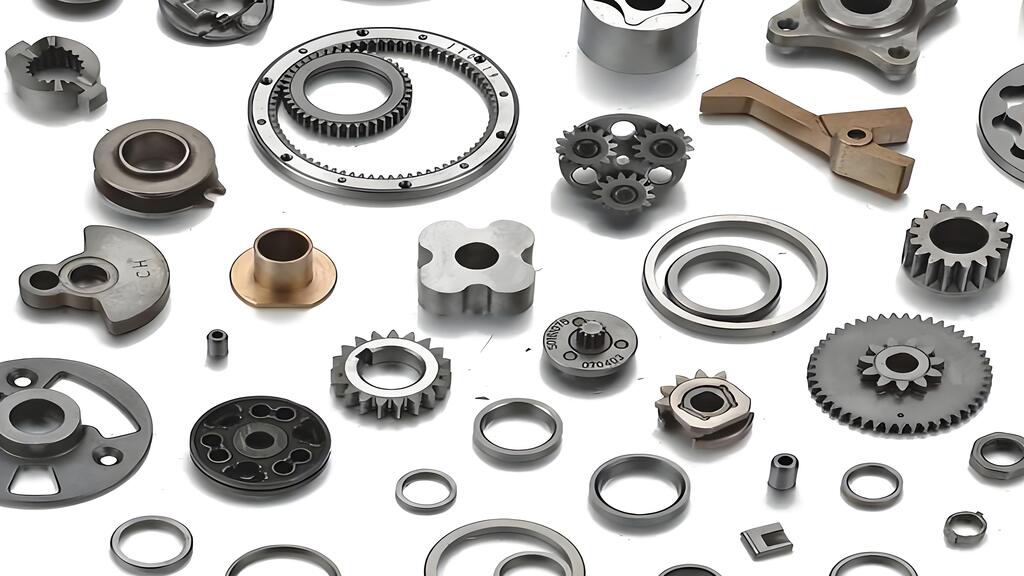
Powder Pressing compacts powdered materials into solid shapes by applying high pressure. This process produces a "green part," which has enough strength for subsequent handling and processing. Precision and efficiency define powder pressing, especially in Powder Metallurgy and ceramics.
The global market for powder pressed components continues to grow rapidly, driven by automotive, aerospace, and medical industries.
| Statistic/Category | Value/Description |
|---|---|
| Market Size (2024) | USD 2.79 billion |
| Projected Market Size (2034) | USD 6.38 billion |
| Material Utilization | Up to 98% |
| Key Applications | Automotive, aerospace, medical, energy |
| Sustainability Benefits | High efficiency, minimal scrap, recyclable powder |
Key Takeaways
- Powder pressing shapes powdered materials into strong parts by applying high pressure, creating a 'green part' ready for further processing.
- Controlling powder properties like particle size, purity, and hardness is essential to achieve good flow, density, and strength in the final product.
- Lubricants reduce friction during pressing, improving powder flow and part quality, but too much lubricant can weaken the part and cause defects.
- Advanced equiPment and precise tooling ensure uniform density and accurate dimensions, supporting high-quality and consistent production.
- Optimizing pressing conditions, such as pressure, speed, and powder mix, helps prevent defects and produce reliable, high-performance components.
Powder Pressing Process Overview

Main Steps in Powder Pressing
Manufacturers follow a series of precise steps to transform loose powder into strong, reliable components. The process ensures uniformity and high performance in the final product. The standard stages include:
-
Mixing and Blending
Technicians combine base metal powders with additives such as lubricants and binders. This step ensures the powder mixture has consistent properties and improved green strength. -
Compaction (Pressing)
Operators fill the powder into a die and apply pressure. They may use uniaxial (axial) pressing, which compresses the powder in one direction, or isostatic pressing, which applies pressure from all directions for even density. Die design and pressure control play a crucial role in achieving uniform density and precise dimensions. -
Sintering
The green compact undergoes heating below its melting point. This process bonds the particles metallurgically, enhancing mechanical properties and durability. Controlled temperature, atmosphere, and cooling rates are essential for optimal results. -
Specialized Pressing Methods
Some applications require hot pressing, where pressing and sintering occur simultaneously at elevated temperatures. This method is common for producing carbide tools and other specialized parts.
Note: Each step in the powder pressing process contributes to the strength, accuracy, and performance of the final component.
Purpose and Typical Applications
Powder Pressing serves a wide range of industries by enabling the efficient production of complex, high-strength parts. The process supports both high-volume manufacturing and specialized applications. The following table highlights the most common industrial uses and their market shares:
| Application Segment | Market Share (2024) | Growth Notes |
|---|---|---|
| Powder Metallurgy | 58.1% | Dominant; driven by automotive, aerospace, electronics |
| Automotive (end-user) | 42.9% | Largest end-user; growth from vehicle production and lightweight parts |
| Ceramic & Cement | N/A | Fastest-growing, high-strength ceramics, construction |
| Pharmaceutical | N/A | Significant; supports pharmaceutical manufacturing |
| Electronics | N/A | Growing, miniaturization, and precision needs |
| Others (Aerospace, Defense, Construction) | N/A | Niche applications contribute to the market |
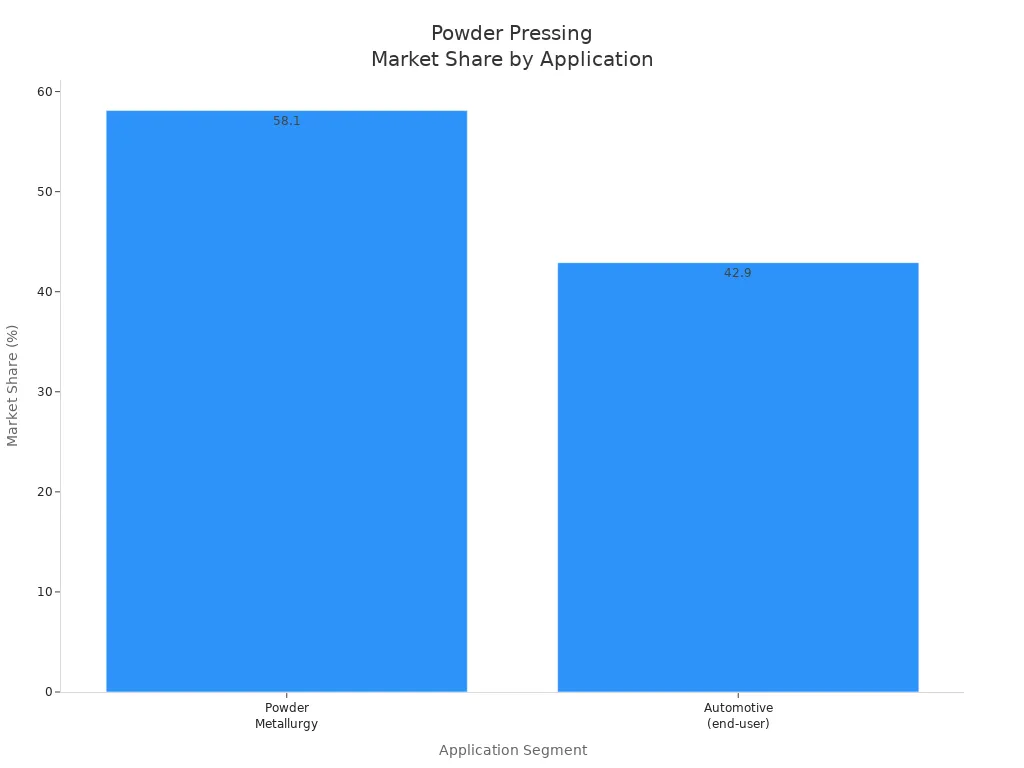
Powder metallurgy leads as the primary application, especially for automotive, aerospace, and electronics. The process also supports the rapid growth of ceramics, pharmaceuticals, and advanced electronics, meeting demands for efficiency, miniaturization, and durability.
Die Compaction in Powder Pressing
Equipment and Tooling Used
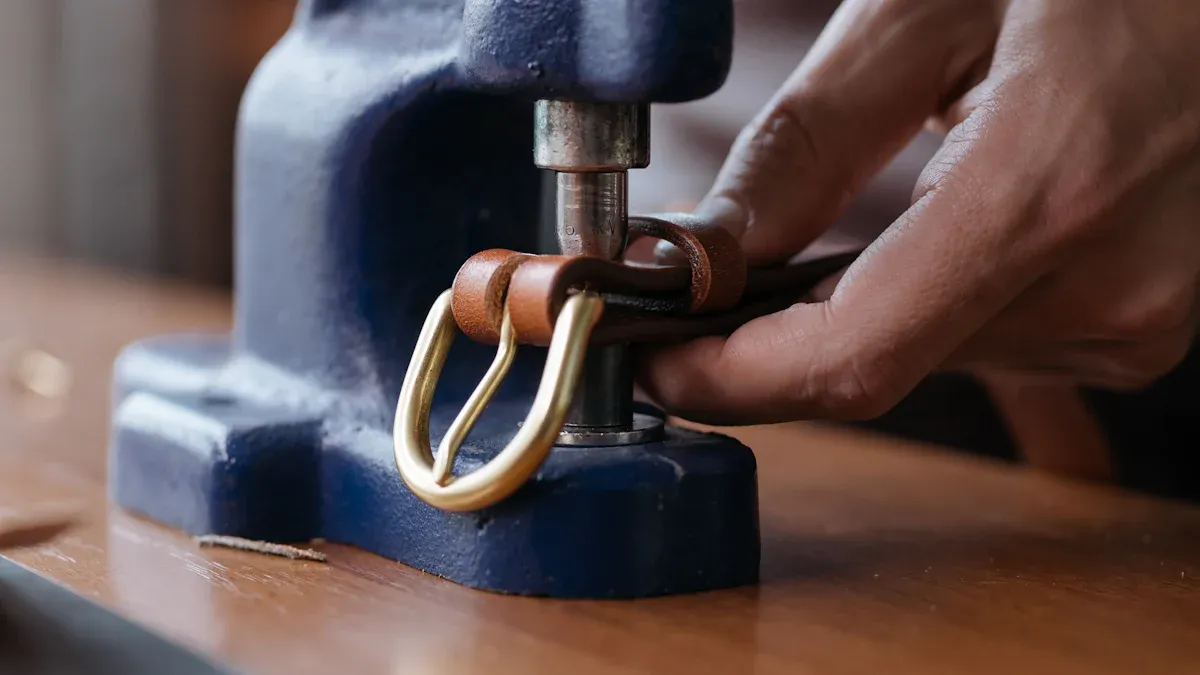
Die compaction relies on advanced equipment and precision tooling to shape powder into strong, uniform parts. Manufacturers use hydraulic, mechanical, and electric presses, with capacities ranging from 15 to 1,200 tons. Hydraulic presses handle single- or multi-level parts and work well with carbides, ceramics, and polymers. Mechanical presses suit technical ceramics and complex shapes, while electric presses offer programmable control for intricate geometries. Cold isostatic presses use flexible molds in pressure chambers to achieve uniform density.
Tooling design plays a critical role in the process. Engineers manufacture compaction tooling using CNC machining, wire EDM, grinding, and polishing to achieve tight tolerances and smooth finishes. Tool steels with high hardness and wear resistance ensure durability. Punch-to-cavity clearances can be as tight as 0.0002 inches, preventing powder leakage and ensuring part accuracy. Companies like Overton Industries specialize in custom dies that deliver consistent, high-quality results.
The Compaction Cycle Explained
The compaction cycle transforms loose powder into a dense, cohesive green part. Operators fill the die with powder, then apply pressure using the press. Pressure levels depend on the material:
| Material Type | Typical Pressure Range (MPa) |
|---|---|
| Aluminum-based | 200 - 400 |
| Iron-based | 400 - 600 |
| Hard alloys | 600 - 800 |
| Tungsten carbide | 800 - 1000+ |
For example, in Al2O3 powder compaction, the punch force increases from 3.5 kN to 46 kN, with a compression plateau lasting about 3 seconds. The force then decreases, and the die extracts the compact at a controlled speed. This cycle ensures optimal density and dimensional accuracy.
Key Terms: Green Part and Green Strength
A "green part" refers to the compacted but unsintered component produced during Powder Pressing. Green strength measures the part's ability to withstand handling before sintering. Industry standards such as ASTM B925-15 and ISO 3995 define test methods for green strength, using uniaxially compacted specimens to ensure quality and consistency. The Metal Powder Industries Federation (MPIF) provides additional benchmarks, helping manufacturers compare powder lots and control production variables. Reliable green strength is essential for safe handling and successful downstream processing.
Factors Influencing Powder Pressing Success
Particle Size and Distribution
Particle size and its distribution play a critical role in the outcome of Powder Pressing. Manufacturers often select powders with a particle size range between 40 and 400 micrometers to achieve optimal compaction. Spherical or equiaxial particles within this range flow smoothly, fill dies uniformly, and produce high green density. Very fine powders, typically less than 10 micrometers, tend to clump together and require additives or granulation to improve handling.
A balanced particle size distribution enhances powder flowability and tap density. When powders contain too many fine particles, oxygen content increases, which can lead to the formation of Prior Particle Boundaries (PPBs). These boundaries act as weak points and reduce ductility in the final product. On the other hand, a trimodal distribution—combining fine, intermediate, and coarse particles—improves powder bed density and homogeneity. This approach reduces segregation, enhances packing, and leads to better mechanical properties in the finished part. Studies on nickel-based superalloys have shown that controlling particle size distribution minimizes defects and maximizes both density and strength.
Tip: Sieving powders to remove extremes in particle size helps achieve consistent flow and reduces chemical inhomogeneities, resulting in superior densification and mechanical performance.
Powder Composition and Purity
The composition and purity of the powder directly affect the quality and performance of pressed components. Several characteristics define powder composition, including particle size, shape, morphology, surface chemistry, and the presence of alloying elements. Each of these factors influences how powders pack, flow, and bond during compaction and sintering.
- Particle size and distribution determine density, strength, and surface finish. Fine powders sinter more easily but may agglomerate, while coarse powders require higher sintering temperatures.
- Particle shape and morphology impact packing density and flowability. Spherical powders offer better flow and packing compared to irregular shapes.
- Surface chemistry, especially oxide content, affects reactivity and sinterability. High oxide levels may require special atmospheres during sintering to maintain desired properties.
Purity is especially important for high-performance applications. Powders used in critical industries, such as aerospace or electronics, often require purity levels of 99.95% or higher. Ultra-high purity grades, reaching up to 99.999%, are available for the most demanding uses. Standards like ASTM B777 and ISO 9001 ensure consistent quality.
| Specification | Description |
|---|---|
| Purity Grades | 99.95%, 99.99%, up to 99.999% for demanding applications |
| Particle Size | 1 µm to 100 µm, finer powders for precision applications |
| Standards | ASTM B777, ISO 9001 |
Controlling powder composition and purity reduces porosity, improves density, and enhances mechanical properties such as strength and ductility. High purity also prevents impurities from causing problems during secondary operations like welding.
Hardness and Compressibility
Powder hardness and compressibility determine how easily powders compact and how strong the resulting green part will be. Softer particles deform more readily under pressure, allowing them to conform to each other and create a dense, cohesive structure. This increased contact between particles leads to higher green density and improved green strength.
Harder powders, often due to impurities or surface oxides, resist deformation. This resistance reduces compressibility, making it more difficult to achieve the desired density during Powder Pressing. Lower green density results in fewer particle contacts and larger pores, which weaken the green part and can cause defects during sintering.
Engineers use compressibility curves to optimize compaction parameters. These curves plot green density against applied pressure, helping manufacturers select the right conditions for each powder type. Standard methods, such as ASTM D6683, involve applying incremental compressive stress to a powder sample and recording changes in bulk density. This data guides decisions in equipment design and quality control.
Note: Achieving high green density through proper control of powder hardness and compressibility is essential for producing reliable, high-strength components.
Lubrication and Its Effects
Lubrication plays a vital role in Powder Pressing by reducing friction between the powder and the die wall. This reduction in friction lowers the ejection force needed to remove the compacted part, which helps prevent cracks and breakage during extraction. Lubricants also improve powder flowability, ensuring uniform filling of the die and consistent part quality.
Common Types of Lubricants
Manufacturers use several types of lubricants in Powder Pressing. Each type offers unique benefits for different materials and applications:
- Metallic salts of fatty acids (such as magnesium stearate)
- Fatty acids, hydrocarbons, and fatty alcohols
- Fatty acid esters
- Alkyl sulfates
- Polymers
- Inorganic materials
Wax-like stearates, especially magnesium stearate, are widely used in both ceramic and pharmaceutical powder pressing. Even at low concentrations, magnesium stearate significantly improves powder flow and reduces ejection force. This waxy lubricant forms a thin layer on the die surface and powder particles, minimizing drag and internal stresses. As a result, pressed parts show fewer defects and better mechanical integrity.
Solid particle lubricants, such as molybdenum disulfide (MoS₂), graphite, and soft metals like tin or aluminum, are also frequently used. These materials reduce friction between powder particles and the mold wall, which lowers the required compression pressure and enhances densification. Polymers like nylon and polyethylene can serve as lubricants as well, especially in specialized applications.
| Lubricant Type | Role in Powder Pressing | Effect on Part Quality |
|---|---|---|
| Solid particle lubricants (MoS₂, graphite, soft metals, polymers) | Reduce friction between powder particles and mold walls, lower compression pressure, improve densification | Improve density, hardness, porosity, and mechanical strength; excessive amounts cause agglomeration and reduce compressibility |
| Wax-like stearates (e.g., magnesium stearate) | Reduce ejection force, improve flowability, commonly used in pharmaceutical and ceramic pressing | Reduce friction during ejection, minimize defects such as cracks, improve flowability and processability |
| Particle size ratio (lubricant vs metal powder) | Influences percolation behavior and densification | Affects mechanical performance and densification; critical size ratio prevents spontaneous particle permeation |
Mechanisms of Lubrication
Lubricants work through two main mechanisms:
- Liquid lubricants form a thin fluid layer between the powder and die, allowing smooth movement during compaction and ejection.
- Boundary lubricants create a solid layer on the surface of powder particles or the die, reducing direct contact and friction.
Both mechanisms help maintain part integrity and reduce the risk of defects.
Effects of Lubrication on Part Quality
Proper lubrication offers several advantages:
- Lower ejection force, which reduces the risk of cracks and breakage
- Improved powder flowability, leading to uniform die filling
- Enhanced densification and mechanical strength
- Minimized density gradients and internal stresses
Tip: Using the right lubricant and amount can improve both process efficiency and final part quality.
Risks of Excessive Lubrication
While lubrication is essential, too much can cause problems. Excess lubricant may accumulate around the edges of the compact, leading to gum buildup. This buildup increases friction and generates heat, which can damage equipment and compromise part quality. High lubricant content—above about 0.8%—can reduce powder compressibility and weaken the strength of the green compact. In some cases, excessive lubricant even raises the ejection force, despite a slight increase in green density.
| Negative Effect | Explanation |
|---|---|
| Reduced powder compressibility | Lubricant proportion over ~0.8% decreases powder compressibility, weakening compact strength. |
| Weakened compact strength | Some lubricants reduce inter-particle stress, lowering strength, especially in powders with poor compactibility. |
| Increased ejection force | Higher lubricant content leads to higher ejection force despite slightly higher green density. |
| Gum buildup and friction | Excess lubricant can cause gum buildup, increasing friction and heat damage during pressing. |
Manufacturers must carefully balance lubricant type and quantity to optimize Powder Pressing results. They monitor process parameters and adjust formulations to achieve the best combination of flowability, density, and mechanical performance.
Optimizing Powder Pressing Results
Improving Compactibility
Manufacturers enhance compactibility by adjusting several process variables and using specialized additives. They often:
- Optimize pressure levels and duration to achieve strong mechanical bonding without damaging equipment.
- Introduce lubricants during powder mixing. These fill gaps between particles, improving density and reducing friction.
- Control compaction speed to balance productivity and minimize defects.
- Employ isostatic pressing methods, such as Cold Isostatic Pressing (CIP) and Hot Isostatic Pressing (HIP), to apply uniform pressure from all directions. This approach achieves even density and reduces directional weaknesses.
- Adjust particle size distribution and compaction parameters to reduce porosity and enhance compactibility.
Additives also play a crucial role. Glidants and lubricants like talc, magnesium stearate, and silicon dioxide (colloidal or fumed silica) improve flowability and reduce interparticle forces. Dry nanocoating with silica nanoparticles, applied using high-speed shear mixers or conical screen mills, enhances powder flow and compressibility. Mechanical shear forces during coating ensure even dispersion and adhesion of glidant particles. These methods lower surface free energy and improve surface energy homogeneity, resulting in better compactibility.
Process Control and Consistency
Consistent results depend on precise control of every stage. Operators select pressing methods based on part requirements. Uniaxial pressing increases density but can create gradients due to friction at die walls. Isostatic pressing uses a liquid medium and a flexible mold to apply uniform pressure, overcoming these limitations. Combining heat and pressure in hot pressing or hot isostatic pressing achieves full density and improved consistency.
Preparation of the starting powder is critical. Manufacturers control milling, particle size distribution, and homogeneity to ensure uniformity. They may add binders or moisture to aid compaction and granulate powders for better handling. Advanced sintering techniques, such as Spark Plasma Sintering and Microwave Sintering, further enhance structural integrity.
Automated monitoring systems now play a vital role. These systems use sensor data to track punch position and force, detecting anomalies that indicate defects. Algorithms like dynamic time warping and random forest regression analyze the process in real time. The system segments the process into phases, focusing on critical intervals. Results appear within seconds, allowing immediate quality assessment and reducing the need for random sampling.
Troubleshooting Common Issues
Operators encounter several common defects during pressing. Poor adhesion, often seen as chipping or peeling, usually results from inadequate surface preparation or incorrect powder type. Thorough cleaning and abrasive blasting remove contaminants and create a suitable surface profile. Using the right powder for the substrate and environment prevents many issues.
Other frequent problems include incomplete coverage, pinholes, blistering, chipping, and uneven thickness. These defects often stem from uneven application, surface contaminants, or improper temperature control. The table below summarizes typical defects and their root causes:
| Defect | Root Cause(s) | Description/Explanation |
|---|---|---|
| Poor Adhesion | Surface contamination, wrong powder type | Chipping, peeling, or weak bonding |
| Incomplete Coverage | Skipped areas, uneven application | Exposed substrate, risk of corrosion |
| Pinholes | Oil, grease, and moisture on the surface | Gas release during curing creates holes |
| Blistering | Impurities, trapped dirt, improper curing | Bubbles or blisters on the surface |
| Chipping | Poor pretreatment, rough handling | Cracks or flakes in the coating |
| Uneven Thickness | Inconsistent application | Variations in coating thickness |
Regular equipment maintenance, staff training, and quality inspections before and after pressing help prevent these issues. Manufacturers who adopt best practices and advanced monitoring achieve higher reliability and product quality.
Mastering the compaction process ensures manufacturers achieve precise control over density, shape, and porosity. This attention to detail during pressing forms the basis for strong, reliable components. Custom tooling and careful adjustment of process variables lead to consistent results and high structural integrity. Ongoing optimization of material properties and equipment settings supports efficiency and product performance. Manufacturers who focus on these factors deliver parts that meet demanding industry standards.
FAQ
What is a "green part" in powder pressing?
A green part refers to a compacted powder shape before sintering. It holds together with enough strength for handling and further processing. Manufacturers rely on green parts to maintain precise dimensions and structural integrity during subsequent steps.
How does powder pressing improve material utilization?
Powder pressing maximizes material use by compacting powders with minimal waste. Up to 98% of the raw material becomes part of the final product. This efficiency reduces scrap and supports sustainable manufacturing practices.
Which industries benefit most from powder pressing?
Automotive, aerospace, electronics, and medical device industries benefit most. These sectors require high-precision, high-density components. Powder pressing meets these demands by producing reliable, complex parts at scale.
Why is particle size important in powder pressing?
Particle size affects powder flow, packing density, and final part strength. Uniform, optimally sized particles ensure consistent compaction and reduce defects. Manufacturers select specific size ranges to achieve the best mechanical properties and surface finish.