

Introduction
Choosing a custom aluminum die affects far more than the profile shape coming off the press: it influences run speed, scrap rate, dimensional consistency, maintenance frequency, and total unit cost across the full production cycle. This guide explains how buyers should evaluate die design, steel quality, expected die life, and supplier capability as connected cost drivers rather than isolated specifications. You will learn which performance metrics matter most when sourcing Aluminum Dies, how to compare quotes beyond purchase price, and what technical details help extend service life while reducing rework, downtime, and per-part manufacturing cost.
Why Aluminum Dies Matter in Extrusion Economics
The profitability of an aluminum extrusion operation is fundamentally tied to the precision and durability of its extrusion dies. Custom aluminum dies dictate the flow of the heated billet, directly impacting the surface finish, dimensional stability, and production speed of the final profile. Understanding the economics of these critical tools is the first step toward optimizing overall manufacturing costs.
How buyers should define custom aluminum dies
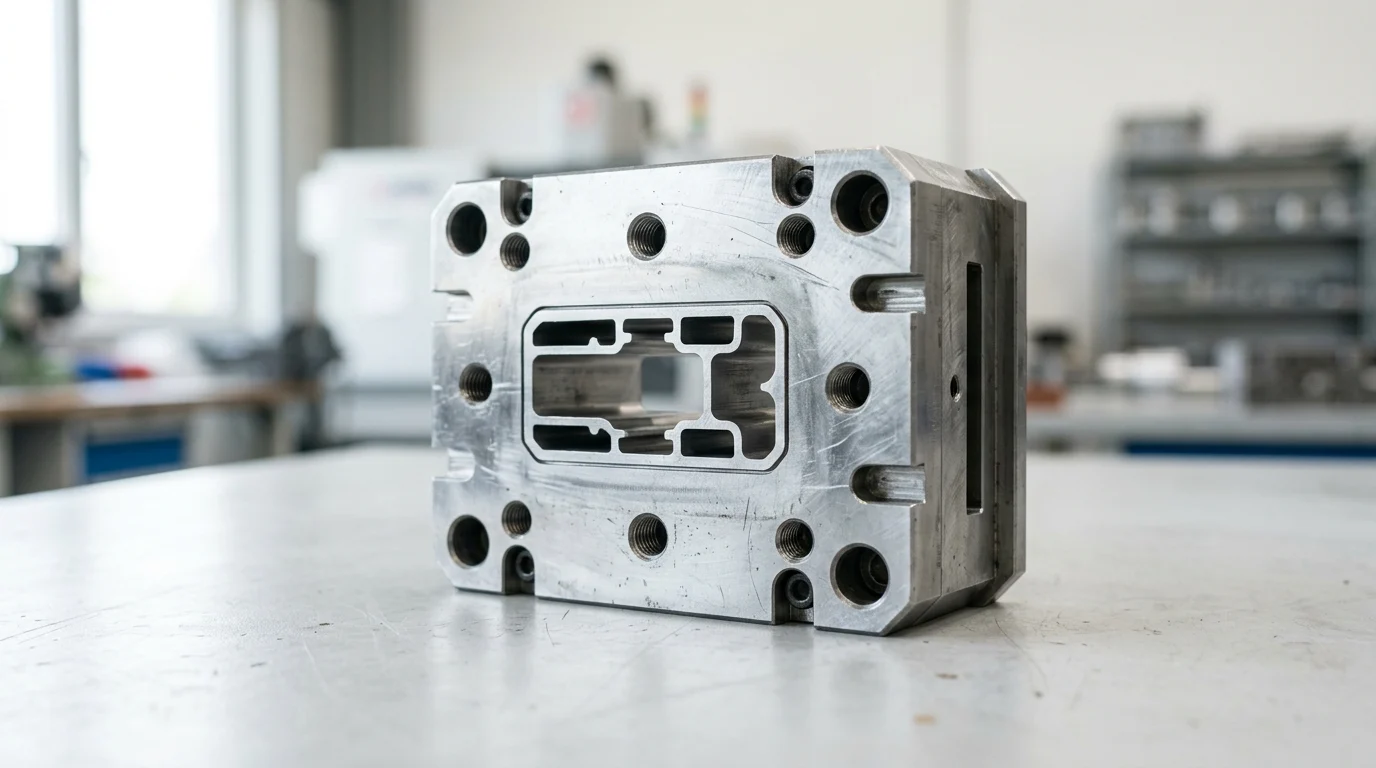
Procurement teams must view custom aluminum dies not as consumable commodities, but as high-precision capital assets. A custom die is a highly engineered steel disc featuring complex internal geometries designed to control the flow of heated aluminum at press capacities often exceeding 2,500 tons. Tolerances for these tools are routinely held to within +/- 0.05 mm to ensure the final extruded profile meets exact customer specifications. Defining a die accurately requires specifying not just the output shape, but the expected extrusion ratios, run speeds, and the specific press tonnage it will operate on.
Which metrics link die performance to cost
The total cost of ownership for a custom aluminum die extends far beyond its initial purchase price, which typically ranges from $500 to $3,000 depending on profile complexity and die diameter. The true economic drivers in extrusion are run speed, scrap rate, and total die life. A high-quality die optimized for fluid dynamics can push extrusion speeds by 15% to 20% and survive 30,000 to 50,000 billets before retirement. Conversely, a poorly designed or improperly treated die may fail prematurely after just 5,000 billets, causing costly machine downtime, excessive scrap material, and delayed production schedules.
Key Specifications of Custom Aluminum Dies
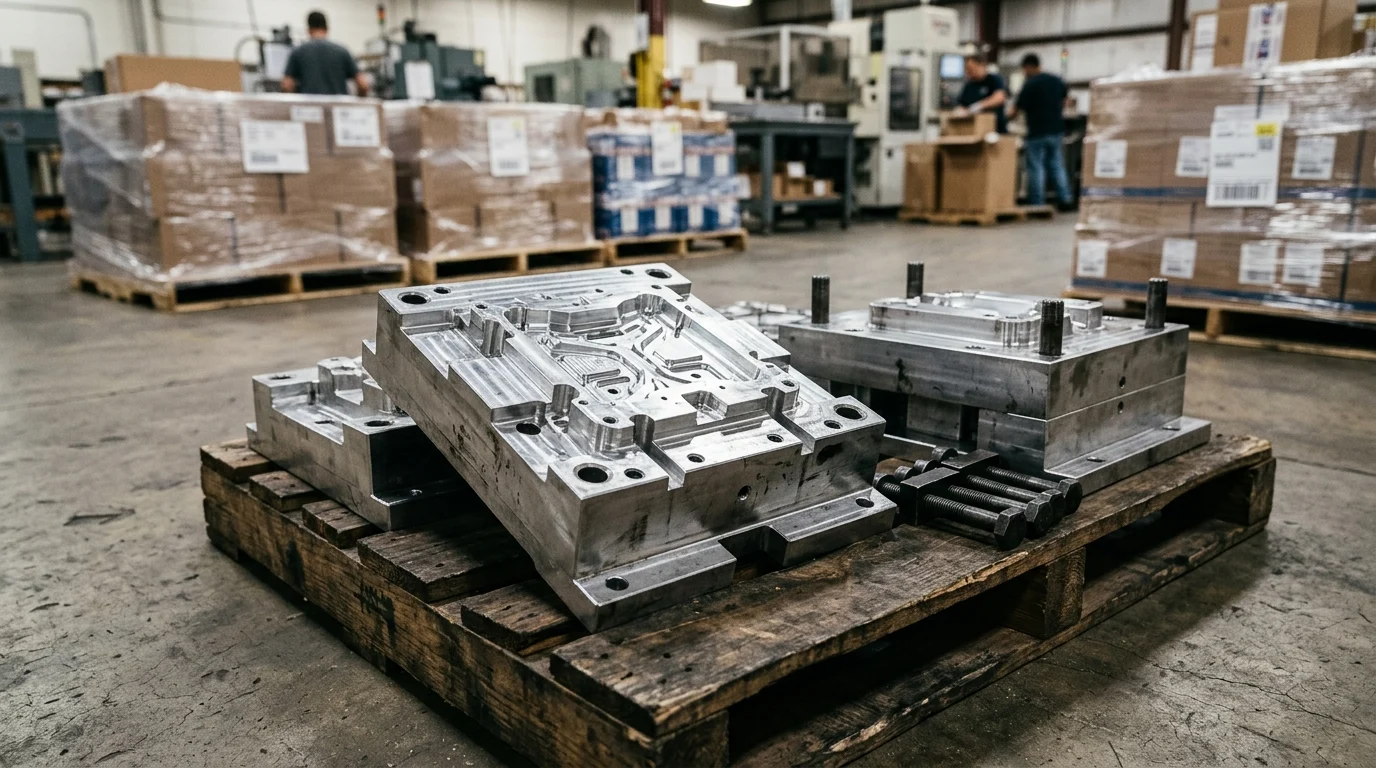
Engineering a custom extrusion die requires balancing fluid dynamics with metallurgical constraints. The technical specifications established during the design phase determine the tool's ability to withstand extreme thermal and mechanical stresses over multiple production runs.
How alloy, profile geometry, and wall thickness affect die design
The specific aluminum alloy being extruded heavily influences the die's internal design. For instance, extruding standard 6061 or 6063 alloys requires different bearing lengths and choke angles compared to harder, more abrasive 7000-series alloys. Profile geometry and wall thickness are equally critical; profiles with wall thicknesses below 1.2 mm or those with high tongue ratios (exceeding a 3:1 depth-to-width ratio) introduce significant stress concentrations. Die designers must compensate by utilizing specialized support structures, such as bridge or porthole designs for hollow profiles, to prevent tongue failure and deflection under immense extrusion pressure.
Which die steel, heat treatment, and nitriding options matter
Material selection and thermal processing form the backbone of die durability. The global industry standard is AISI H13 hot-work tool steel, favored for its excellent thermal fatigue resistance and toughness. To endure the abrasive nature of flowing aluminum, the H13 steel must undergo precise vacuum heat treatment to achieve a core hardness of 48 to 52 HRC. Following this, gas or plasma nitriding is applied to the bearing surfaces. This creates an ultra-hard surface layer of 65 to 70 HRC with a diffusion depth typically ranging from 0.15 mm to 0.25 mm. The nitrided layer drastically reduces friction, prevents aluminum adhesion, and extends the run time between routine die corrections.
How to compare single-hole and multi-hole die designs
Selecting between a single-hole and a multi-hole die configuration is a critical decision driven by press capacity, profile size, and expected production volume. Multi-hole dies increase throughput by extruding multiple profiles simultaneously, but they require highly balanced flow control to ensure uniform exit speeds and prevent profile twisting.
| Feature | Single-Hole Die | Multi-Hole Die (e.g., 2 to 4 cavities) |
|---|---|---|
| Initial Tooling Cost | Baseline ($800 - $1,500) | 1.5x to 2.5x Baseline ($1,200 - $3,500+) |
| Extrusion Throughput | Standard (1x output) | High (Increases proportionally with cavities) |
| Design Complexity | Low to Moderate | High (Requires precise flow balancing) |
| Ideal Production Run | Low volume, complex shapes | High volume, symmetrical or simple shapes |
| Scrap Rate Risk | Lower | Higher if flow is unbalanced |
How to Source Custom Aluminum Dies
Establishing a robust supply chain for custom aluminum dies requires moving beyond simple transactional purchasing. Buyers must evaluate potential suppliers on their engineering capabilities, manufacturing technology, and quality assurance protocols to ensure consistent tooling performance.
Which supplier qualification criteria matter most
When vetting die manufacturers, critical qualification criteria include the modernity of their machining centers and their quality management certifications. Top-tier suppliers utilize 5-axis CNC machining and precision wire Electrical Discharge Machining (EDM) capable of achieving tolerances tighter than 0.02 mm. Furthermore, buyers should verify ISO 9001 certification and assess the supplier's standard lead times, which typically range from 2 to 4 weeks for standard solid dies and 4 to 6 weeks for highly complex, multi-stage hollow dies.
How to compare die makers and extrusion partners
Procurement teams often face the choice between sourcing directly from independent die makers or utilizing the in-house tooling departments of their extrusion partners. Independent die makers generally offer superior specialized expertise, utilize advanced finite element analysis (FEA) simulation software, and provide competitive upfront pricing for the tooling itself. Conversely, integrated extrusion partners provide seamless accountability; if the die fails or the profile is out of spec, the extruder bears full responsibility for die correction, eliminating the risk of finger-pointing between the external toolmaker and the production facility.
What to include in the RFQ, review, and trial-run process
A comprehensive Request for Quotation (RFQ) must include more than just a 2D drawing. It should detail the 3D CAD model, the specific aluminum alloy (e.g., 6063-T5), the expected annual volume, and the extrusion press specifications (such as an 8-inch billet diameter on an 1800-ton press). Following the design review, the sourcing process must mandate a trial run (T1 sample). During the T1 phase, the first 10 to 20 meters of the extrusion are rigorously measured against dimensional tolerances and surface finish requirements. This trial determines what minor bearing corrections the die maker must execute before mass production is approved.
Quality, Compliance, and Logistics Controls
Even the most perfectly designed die will underperform if subjected to poor quality control, improper handling, or inadequate maintenance. Implementing stringent inspection and logistical controls is paramount to safeguarding the tooling investment and ensuring repeatable profile quality.
Which inspection and testing points are essential
Essential inspection points begin at the raw material stage, where ultrasonic testing must be employed to detect internal micro-cracks or voids in the H13 steel blanks. Post-machining, Coordinate Measuring Machines (CMM) are used to verify bearing lengths and choke angles against the CAD geometry. Finally, surface hardness testing is mandatory to confirm the nitrided layer meets the specified 65+ HRC threshold. A deviation of just 2 or 3 HRC points below the specification can reduce the die's wear resistance by over 30%, leading to rapid dimensional drift during extrusion.
How packaging, storage, and refurbishment affect die life
The lifecycle of a custom aluminum die is heavily dependent on maintenance and storage logistics. After an extrusion run, dies are subjected to a caustic soda bath to dissolve residual aluminum. If the caustic concentration or temperature (typically maintained around 80°C) is not strictly controlled, the die surface can suffer corrosive pitting. Between runs, dies must be stored in climate-controlled environments to prevent rust. Furthermore, a proactive refurbishment schedule is critical; dies should undergo re-nitriding after every 10 to 15 tons of extruded aluminum to restore the hardened bearing surface and maximize the tool's operational lifespan.
Which compliance, documentation, and IP safeguards to require
To mitigate operational risks, procurement must enforce strict documentation and intellectual property (IP) safeguards. Suppliers should be required to provide EN 10204 3.1 material certificates verifying the chemical composition and heat treatment records of the die steel. Because custom profile designs often contain proprietary engineering features, robust Non-Disclosure Agreements (NDAs) must be executed prior to sharing any CAD files. Additionally, the tooling contract should clearly state that the buyer retains full ownership of the physical die and all associated design files, ensuring the tooling can be legally relocated to a different extruder if the primary supplier underperforms.
How Procurement and Engineering Can Work Better Together
Misalignment between procurement and engineering departments frequently results in sub-optimal sourcing decisions, where upfront tooling savings are quickly erased by increased scrap rates and production delays. A collaborative approach is essential for maximizing extrusion economics.
What sourcing framework helps balance cost and performance
Implementing a Total Cost of Ownership (TCO) sourcing framework allows cross-functional teams to objectively evaluate die investments. Engineering must define the hard technical limits—such as minimum wall thicknesses and expected extrusion ratios—while procurement models the financial impact of die longevity and maintenance intervals. By analyzing the cost per kilogram of extruded aluminum rather than the raw cost of the die, organizations can justify investing in premium tooling that delivers superior performance.
| TCO Component | Impact on Extrusion Economics | Measurement / Metric |
|---|---|---|
| Initial Tooling Price | Direct capital expenditure | $500 - $3,500 per die |
| Production Speed | Determines machine hour costs | Meters per minute (m/min) |
| Scrap & Defect Rate | Wasted material and energy costs | Percentage of rejected profile (%) |
| Maintenance & Re-nitriding | Ongoing operational expenditure | Cost per maintenance cycle |
| Total Die Life | Frequency of die replacement | Total tons extruded per die |
How to prioritize supplier selection criteria
When prioritizing supplier selection criteria, organizations must adopt a weighted scorecard that reflects both technical and commercial imperatives. While unit price and lead time might account for 40% of the decision weight, the remaining 60% should be allocated to the supplier's engineering support, historical defect rates, and metallurgical consistency. By prioritizing die makers who utilize predictive simulation software and maintain strict heat treatment controls, procurement and engineering can jointly secure a supply chain that guarantees long-term dimensional stability and drives down the total cost of extruded components.
Key Takeaways
- The most important conclusions and rationale for Aluminum Dies
- Specs, compliance, and risk checks worth validating before you commit
- Practical next steps and caveats readers can apply immediately
Frequently Asked Questions
What details should I send a supplier for a custom aluminum die?
Provide profile drawing, alloy grade, wall thickness, tolerance, hollow/solid type, press tonnage, target run speed, and annual volume. This helps the die maker optimize flow and die life.
Which die material and treatment are best for longer die life?
Ask for H13 tool steel, vacuum heat treated to 48-52 HRC, then gas or plasma nitrided to about 65-70 HRC with 0.15-0.25 mm depth.
When is a multi-hole aluminum die worth the extra cost?
Choose multi-hole dies for high-volume, simple or symmetrical profiles on presses with enough capacity. For complex or low-volume parts, single-hole dies usually reduce scrap risk.
How can I reduce unit cost without shortening die life?
Match die design to alloy and wall thickness, keep flow balanced, and schedule regular polishing and re-nitriding. Faster stable runs and lower scrap usually save more than the lowest die price.
Can JHPIM help with custom aluminum die and profile manufacturing?
Yes. Share your drawings, alloy, tolerances, and volume targets through jhpim.com so the team can review manufacturability and recommend a suitable die and production approach.