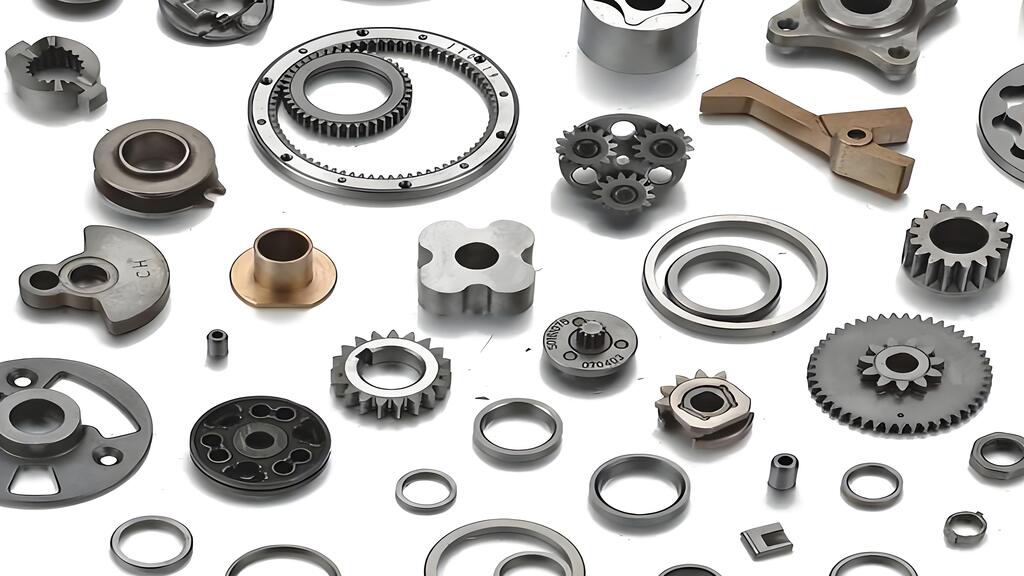


Die casting vs sand casting
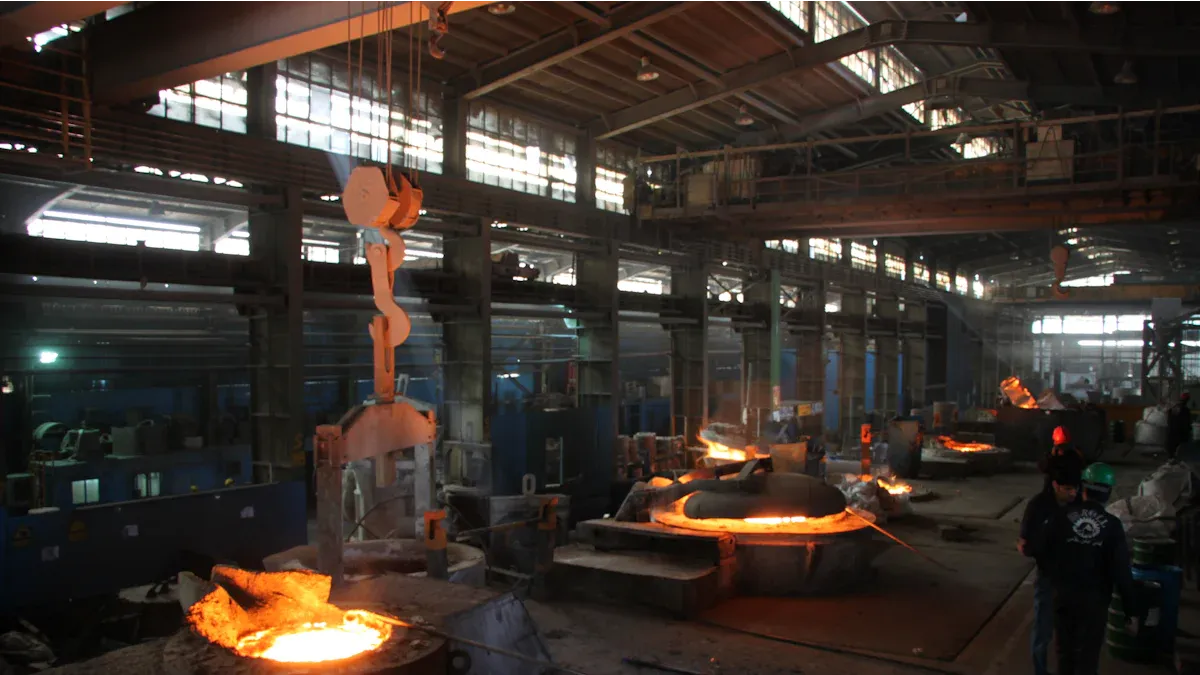
Die Casting and sand casting are two widely used manufacturing processes for producing metal components. Each method has distinct characteristics that make it suitable for specific applications. Sand casting dominates the market with a 45.6% share in 2024, largely due to its versatility and cost-effectiveness for large-scale production. In contrast, die casting offers superior dimensional accuracy and surface finish, making it ideal for intricate designs.
Choosing the right casting method impacts production efficiency, cost, and quality. Modern advancements, such as numerical simulation techniques like ProCAST, further optimize these processes, reducing trial-and-error costs. Understanding the differences between die casting vs sand casting ensures the success of any project.
Key Takeaways
- Die casting is very accurate and smooth, great for detailed, large-scale production.
- Sand casting is flexible and cheaper, good for small batches and unique designs.
- Picking the right method affects speed, cost, and quality; think about your project’s needs.
- Die casting costs more at first because of steel molds, but sand casting is cheaper upfront and may need more finishing work.
- Both methods affect the environment differently; think about eco-friendliness and costs when choosing.
What is Die Casting?
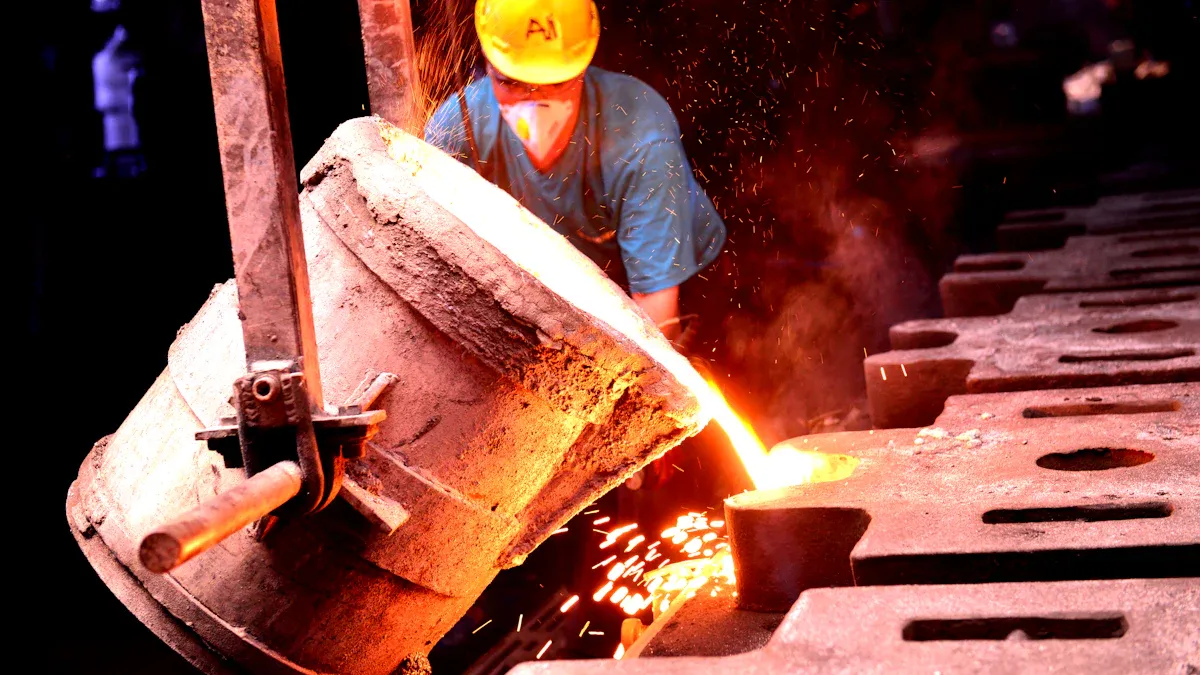
Overview of the die casting process
Die casting is a manufacturing process that involves forcing molten metal into a mold cavity under high pressure. This method is known for producing components with excellent dimensional accuracy and smooth surface finishes. The process typically uses reusable steel molds, also called dies, which allow for high-volume production with consistent quality.
Efficiency plays a critical role in die casting. For instance:
- Resource allocation in casting achieves up to 95% equiPment utilization.
- Dimensional tolerances maintain a 99.5% conformity rate, ensuring precision.
- Material waste is reduced by 15-20%, making the process cost-effective.
Additionally, advancements in robotics and automation have significantly improved productivity. Robotics can increase output by 20-30% while enhancing safety and reliability. These innovations make die casting a preferred choice for industries requiring high production volumes and precision.
Common materials used in die casting
Die casting primarily uses non-ferrous metals due to their excellent casting properties. Common materials include:
- Aluminum: Lightweight, corrosion-resistant, and ideal for automotive and aerospace applications.
- Zinc: Offers high strength and ductility, making it suitable for intricate designs.
- Magnesium: Known for its lightweight properties, it is often used in electronics and automotive components.
These materials are selected based on their ability to meet specific performance requirements, such as durability, weight reduction, and thermal conductivity.
Typical applications of die casting
Die casting is widely used across various industries due to its ability to produce complex and precise components. Key applications include:
- Automotive: The automotive sector dominates the die casting market, accounting for 55.6% of its share in 2025. Components like engine blocks, gearboxes, and structural parts benefit from die casting's precision and efficiency.
- Aerospace: Lightweight and durable die-cast parts are essential for improving fuel efficiency and safety in aircraft.
- Electronics: The process is ideal for creating intricate housings and components for consumer electronics.
The transition to electric vehicles has further increased the demand for advanced die-cast components, highlighting the process's adaptability to evolving industry needs.
What is Sand Casting?
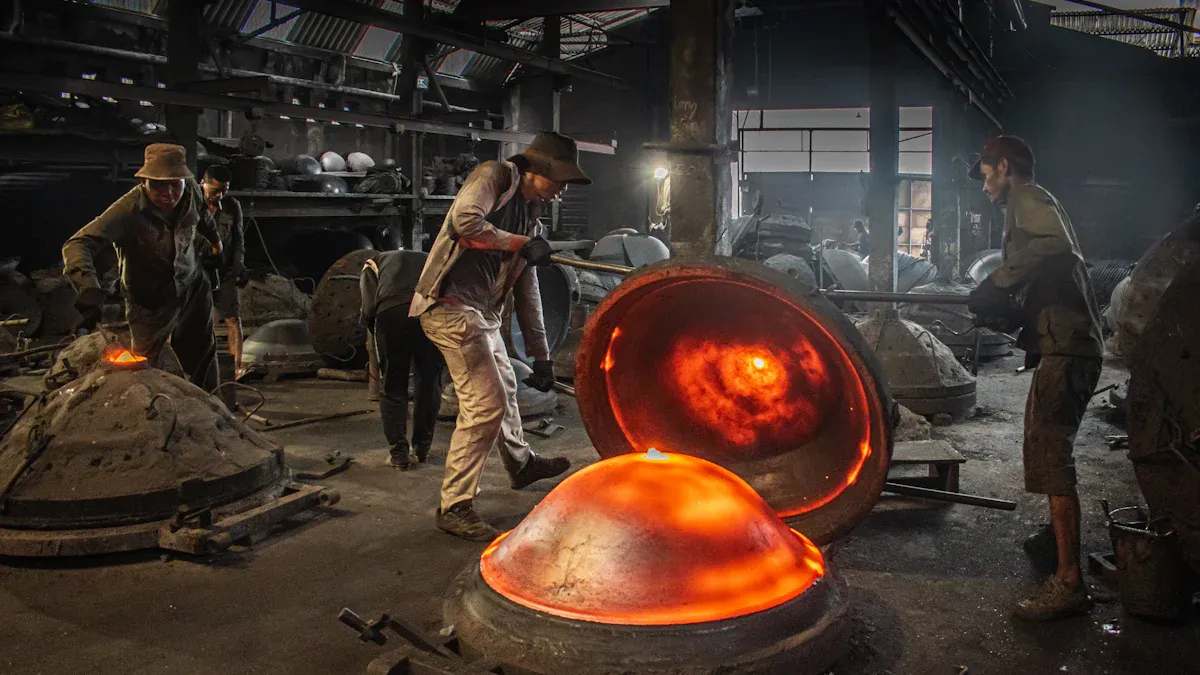
Overview of the sand casting process
Sand casting is a traditional manufacturing process that involves creating a mold from sand to shape molten metal into desired components. This method is highly versatile and suitable for producing both simple and complex parts. The process begins with the creation of a pattern, which is used to form the mold cavity. Molten metal is then poured into the cavity, allowed to cool, and solidify. Once the metal hardens, the mold is broken to retrieve the final product.
The efficiency and reliability of sand casting depend on several factors:
- Effective tooling design minimizes core defects and enhances reliability. Simulation software plays a key role in achieving this.
- Adherence to certifications like ISO and ASTM ensures strict quality standards.
- Proper technical expertise is crucial to avoid defects caused by poor mold designs or incorrect material selection.
Time studies have shown significant improvements in workflow efficiency. For example:
| Measurement Type | Value |
|---|---|
| Time study before | 73% |
| Time study after | 39% |
| Takt time achieved | Significant reduction |
These benchmarks highlight the process's potential for optimization and reliability.
Common materials used in sand casting
Sand casting accommodates a wide range of materials, making it a preferred choice for various industries. Aluminum dominates the market with a 38% share due to its lightweight and corrosion-resistant properties. Cast iron and steel are also commonly used for their strength and durability. Other materials, such as zinc and magnesium, are employed for specific applications requiring unique characteristics.
| Material Type | Market Share (%) |
|---|---|
| Aluminum | 38 |
| Cast Iron | N/A |
| Steel | N/A |
| Zinc | N/A |
| Magnesium | N/A |
| Others | N/A |
Typical applications of sand casting
Sand casting is widely used across industries due to its ability to produce large and intricate components. Common applications include engine components, structural parts, housings, heat exchangers, and electrical enclosures.
| Process | Application Areas |
|---|---|
| Sand Casting | Engine components, structural parts, housings, heat exchangers, electrical enclosures |
| Other Processes | Intake manifolds, oil pan housings, chassis parts, cylinder heads, transmissions, wheels, brakes, heat transfers, others |
The flexibility of sand casting makes it an excellent choice for projects requiring custom designs or low production volumes. When comparing die casting vs sand casting, sand casting often stands out for its cost-effectiveness and adaptability to various materials and designs.
Die Casting vs Sand Casting
Startup time and production speed
The startup time and production speed differ significantly between die casting and sand casting. Die casting requires more preparation time due to the creation of reusable steel molds, which can take minutes or even hours depending on the complexity. However, once the molds are ready, the production speed is exceptionally fast, with cycle times measured in seconds or minutes. This makes die casting ideal for high-volume production.
In contrast, sand casting offers a quicker startup if the pattern is already available. However, the production speed is slower because each mold is single-use and must be recreated for every part. This process is better suited for low-volume production or custom designs.
| Casting Type | Startup Time | Production Speed |
|---|---|---|
| Die Casting | Longer (Minutes/Hours) | Faster (Seconds/Minutes) |
| Sand Casting | Shorter (If Pattern Exists) | Slower (Per Part) |
Surface finish and dimensional accuracy
Die casting produces components with a high-quality surface finish and excellent dimensional accuracy. The smoothness of the final product is due to the precision of the steel molds and the high-pressure injection of molten metal. This reduces the need for extensive post-processing, saving time and costs.
Sand casting, on the other hand, results in a rougher surface finish due to the granular texture of the sand molds. Achieving a smoother finish requires additional machining, which increases production time and expenses. Dimensional accuracy is also lower in sand casting, making it less suitable for parts requiring tight tolerances.
Part complexity and design flexibility
Die casting excels in creating complex shapes with thin walls and intricate details. The high-pressure injection process ensures that molten metal fills every part of the mold, enabling the production of detailed components. However, the rigidity of steel molds limits design flexibility, especially for larger or highly customized parts.
Sand casting offers greater flexibility in design and size. The use of sand molds allows for the creation of larger and more intricate shapes that would be challenging or impossible with die casting. However, this flexibility comes at the cost of reduced dimensional accuracy and surface quality.
| Process | Design Complexity Limitations | Dimensional Accuracy |
|---|---|---|
| Die Casting | Limited flexibility, ideal for thin walls | High dimensional accuracy |
| Sand Casting | Greater flexibility, suitable for large parts | Lower dimensional accuracy |
The choice between die casting vs sand casting depends on the specific requirements of the project, including production volume, design complexity, and desired surface finish.
Cost considerations
Cost plays a crucial role when deciding between die casting and sand casting. Each method has distinct cost structures influenced by factors such as tooling, production volume, and post-treatment requirements.
Die casting typically involves higher initial costs due to the creation of reusable steel molds. These molds are durable and suitable for high-volume production, which helps offset the upfront investment over time. Additionally, die casting minimizes material waste, reducing long-term expenses. However, the process may require specialized equipment and automation, further increasing the initial setup costs.
Sand casting, on the other hand, offers a more cost-effective solution for low-volume production or custom designs. The molds, made from sand, are inexpensive and easy to produce. However, sand casting often incurs higher post-treatment costs. For example:
- Sand cleaning can become expensive for intricate designs requiring specialized cleaning methods.
- Renovation costs may rise if high-quality standards demand additional finishing work.
- Shaping processes might require separate cost calculations based on deformation levels and customer specifications.
Ultimately, the choice between die casting and sand casting depends on the project's budget, production scale, and quality requirements.
Environmental impact and sustainability
Sustainability is an increasingly important consideration in manufacturing. Both die casting and sand casting have unique environmental impacts that influence their suitability for eco-conscious projects.
Die casting is generally more energy-intensive due to the high-pressure injection process and the use of non-ferrous metals like aluminum and zinc. However, advancements in energy-efficient technologies and recycling practices have reduced its environmental footprint. For instance, aluminum used in die casting is often recycled, minimizing resource depletion.
Sand casting, while less energy-intensive, generates significant waste due to the single-use nature of sand molds. The disposal of used sand poses environmental challenges, especially when it contains chemical binders. Despite this, sand casting can utilize recycled materials, making it a viable option for sustainable manufacturing.
The following studies provide insights into the environmental impacts of these processes:
| Study Title | Focus | Link |
|---|---|---|
| A computer-aided system for sustainability assessment for the Die-Casting process planning | Die casting sustainability assessment | Link |
| Life cycle assessment of conventional manufacturing techniques: sand casting | Sand casting life cycle assessment | Link |
| Evaluation and comparison of environmental impacts of sand casting process using life cycle assessment | Sand casting environmental impacts | Link |
| Modelling the environmental impact of an aluminium pressure die-casting plant and options for control | Die casting environmental impact modeling | Link |
Manufacturers must weigh these environmental factors alongside economic and technical considerations when choosing between die casting vs sand casting.
Which Process is Better for My Project?
Factors to consider when choosing a casting method
Selecting the appropriate casting method depends on several critical factors. Each project has unique requirements, and understanding these can help determine whether die casting or sand casting is the better choice. Key considerations include time, cost, and quality. The following table outlines evaluation criteria supported by measurable metrics:
| Evaluation Criteria | Metrics | Description |
|---|---|---|
| Time | Project completion within six months | Measures the timeliness of project delivery |
| Cost | Strict adherence to the $100,000 budget | Assesses financial constraints |
| Quality | 95% user satisfaction | Evaluates the effectiveness of the project outcomes |
Projects with tight deadlines may benefit from the faster production speed of die casting. However, sand casting offers greater flexibility for projects with limited budgets or custom designs. Quality expectations also play a significant role. Die casting provides superior dimensional accuracy, while sand casting is better suited for larger, less intricate components.
Die casting and sand casting serve distinct purposes in manufacturing. Die casting excels in precision, speed, and surface finish, making it ideal for high-volume production. Sand casting, however, offers greater flexibility and cost-effectiveness for custom or large-scale designs.
Choosing the right method requires evaluating project-specific factors such as budget, production volume, and design complexity. Each project has unique needs, and selecting the wrong process can lead to inefficiencies.
Consulting with industry experts ensures informed decisions, optimizing both cost and quality for successful outcomes.
FAQ
What are the main differences between die casting and sand casting?
Die casting uses high-pressure injection and steel molds for precision and speed. Sand casting employs sand molds, offering flexibility for larger or custom parts. Die casting provides better surface finish and accuracy, while sand casting is more cost-effective for low-volume production.
Which casting method is better for small production runs?
Sand casting is better for small production runs. Its molds are inexpensive and easy to create, making it ideal for low-volume or custom designs. Die casting, with its higher initial costs, suits high-volume production.
Can both methods handle complex designs?
Both methods can handle complex designs, but their capabilities differ. Die casting excels in producing intricate shapes with thin walls and tight tolerances. Sand casting offers greater flexibility for larger, more customized designs but sacrifices dimensional accuracy.
How do material options differ between the two methods?
Die casting primarily uses non-ferrous metals like aluminum, zinc, and magnesium due to their casting properties. Sand casting accommodates a broader range, including aluminum, cast iron, steel, and other alloys, making it more versatile for material selection.
Which process is more environmentally friendly?
Die casting is more energy-intensive but benefits from recycling practices, especially with aluminum. Sand casting generates significant waste from single-use molds, though it can also utilize recycled materials. The environmental impact depends on the project's scale and material usage.