Introduction
Choosing a Zinc Foundry for mass production involves more than comparing quoted piece prices. The real test is whether the supplier can hold dimensional consistency, control scrap, sustain cycle efficiency, and deliver the surface quality your product and downstream finishing require at scale. This article outlines the quality standards that matter most when qualifying a foundry, from process capability and defect control to inspection discipline and production stability. It also explains how to assess surface finishing options such as plating, coating, and cosmetic preparation, so you can judge not just whether a foundry can make the part, but whether it can support reliable, cost-effective volume manufacturing.
Why evaluating a zinc foundry matters for mass production
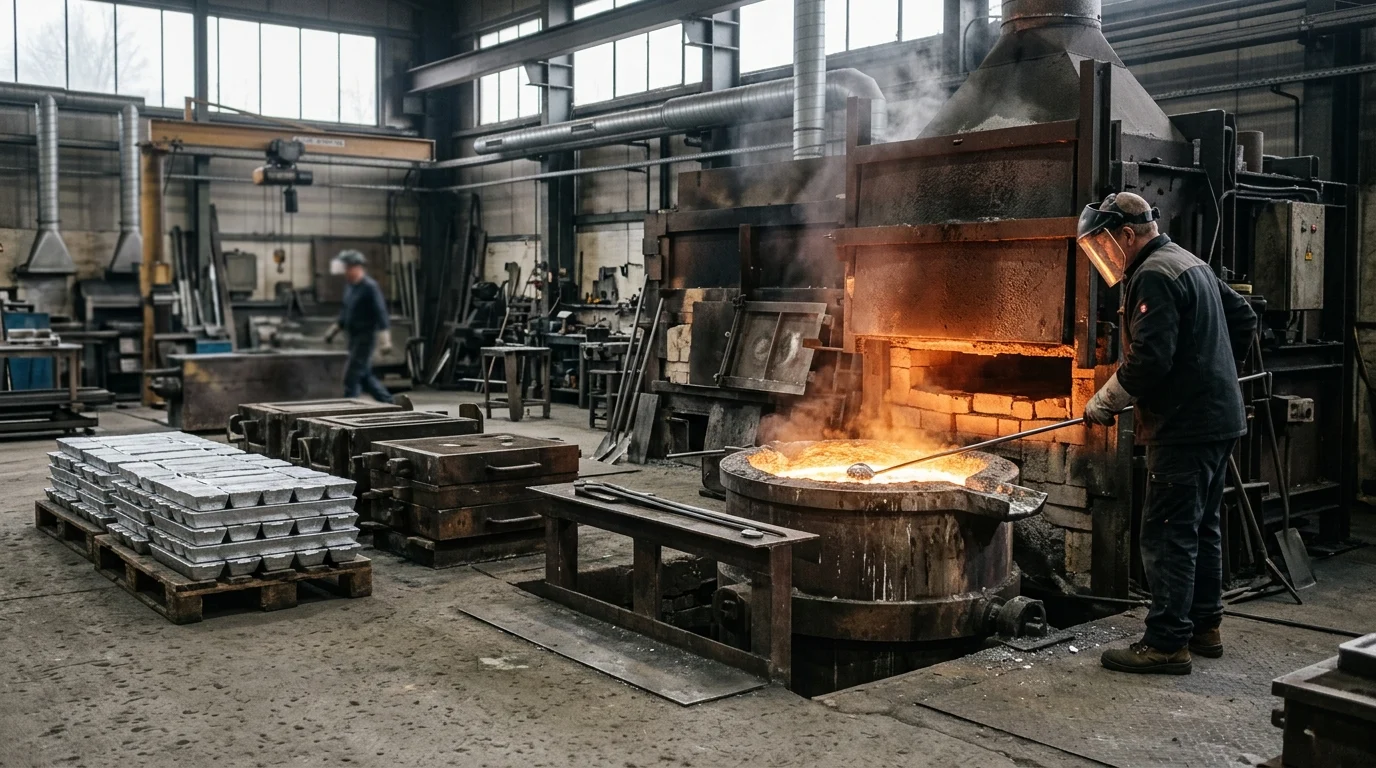
Transitioning a Zinc Die-cast component from prototyping to mass production requires rigorous supplier qualification. A zinc foundry acts as a high-volume manufacturing partner, meaning minor inefficiencies can scale rapidly into substantial financial losses. While zinc alloys—renowned for their excellent fluidity and low melting points—enable rapid production cycles, achieving consistent results across millions of units demands specialized operational maturity.
Volume stability, scrap control, and total cost
Volume stability relies heavily on optimized cycle times and stringent scrap control. In a well-managed hot-chamber zinc Die Casting process, machines can consistently achieve 150 to 400 shots per hour, depending on part complexity and mold design. Foundries operating at this pace must maintain scrap rates below 2% to 3%. When scrap exceeds these thresholds, the costs associated with remelting, machine downtime, and wasted energy aggressively erode profit margins, ultimately inflating the total cost per part.
Commercial risks from weak foundry performance
The commercial risks of partnering with an underperforming foundry extend far beyond immediate piece-price metrics. Substandard process control leads to dimensional drift, surface defects, and, ultimately, part rejection by end-users. Furthermore, zinc tooling represents a significant capital expenditure. While a properly maintained H13 steel mold for zinc casting should yield between 1,000,000 and 2,000,000 shots, poor thermal management or inadequate preventative maintenance by the foundry can reduce tool life by 40%, forcing premature and costly tool replacements.
Quality standards a zinc foundry should meet
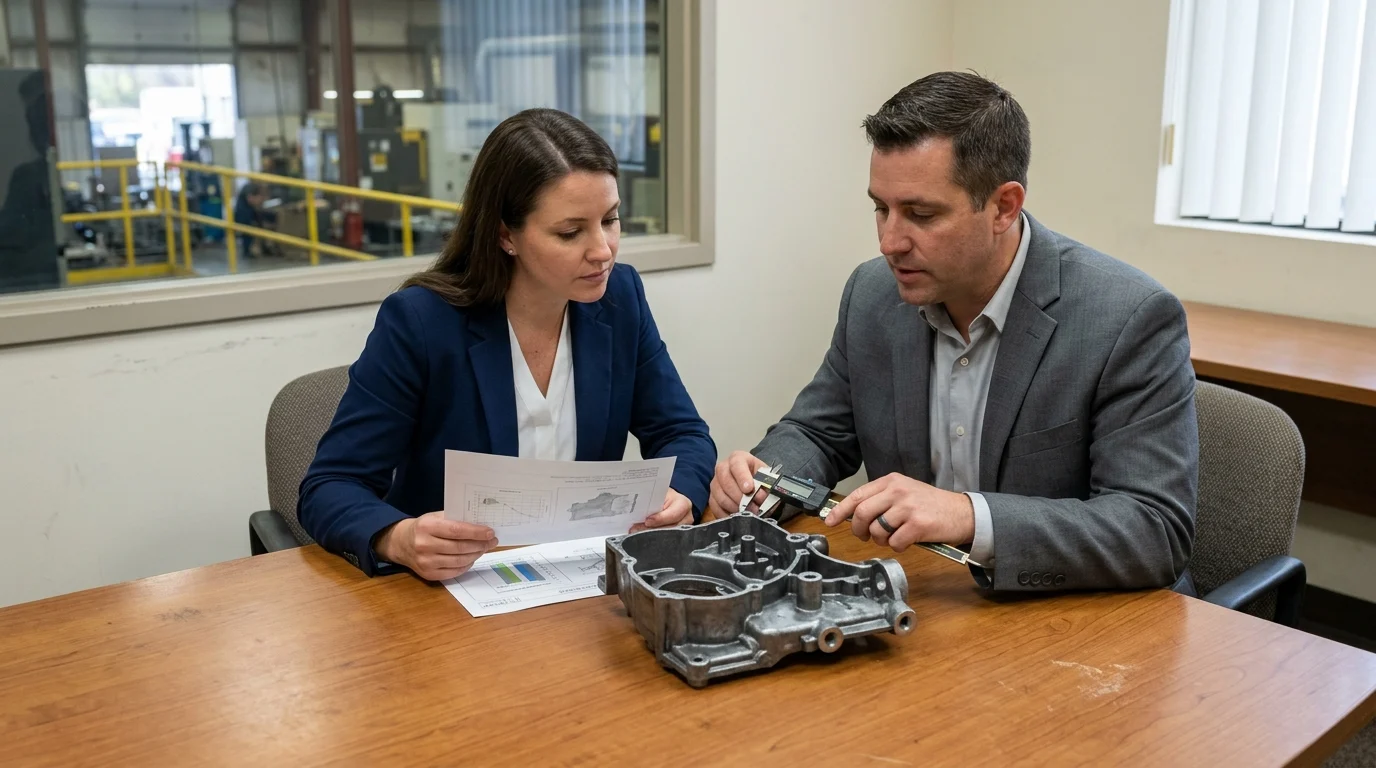
Mass production environments mandate that a zinc foundry operates under internationally recognized quality management systems, such as ISO 9001, or IATF 16949 for automotive applications. These frameworks ensure that the foundry possesses the institutional discipline to maintain metallurgical integrity and dimensional accuracy across high-volume production runs.
Dimensional, metallurgical, and process control requirements
Zinc alloys exhibit a predictable shrinkage rate of approximately 0.6% during cooling, which must be precisely calculated during the mold design phase. Foundries must demonstrate the ability to hold tight dimensional tolerances, often as narrow as +/- 0.02 mm on critical features.
| Alloy Type | Yield Strength (MPa) | Hardness (Brinell) | Primary Application Focus |
|---|---|---|---|
| Zamak 3 | 221 | 82 | Excellent balance of physical properties and castability |
| Zamak 5 | 295 | 91 | Higher strength and better wear resistance |
| ZA-8 | 290 | 103 | High-performance creep resistance, decorative finishes |
Beyond dimensional accuracy, metallurgical control is paramount. The foundry must carefully monitor alloy composition to prevent intergranular corrosion, a catastrophic failure mode caused by lead, tin, or cadmium impurities exceeding strict limits of 0.005%.
Inspection systems, traceability, and process capability
Robust inspection systems are the backbone of process capability. A qualified zinc foundry will utilize Coordinate Measuring Machines (CMM) for dimensional verification, X-ray inspection to detect internal porosity, and optical emission spectrometers to verify alloy chemistry per batch. For mass production, suppliers must utilize statistical process control (SPC) to track production stability, aiming for a Process Capability Index (Cpk) greater than 1.33 for standard dimensions and exceeding 1.67 for critical-to-function features. Full traceability—linking raw material batches to specific production shifts and finished lots—is non-negotiable for rapid root-cause analysis.
How to assess surface finishing capabilities
Zinc components are highly susceptible to oxidation, forming a layer of white rust if left unprotected in harsh environments. Consequently, the surface finishing capabilities of a zinc foundry are just as critical as its casting expertise, directly dictating the component's final corrosion resistance, wear properties, and cosmetic appeal.
Surface finishing options for corrosion resistance and appearanc
e
Foundries typically offer or manage a range of finishing options, including electroplating, powder coating, e-coating, and chromate conversion coatings. For highly cosmetic or wear-resistant applications, copper-nickel-chrome electroplating is standard, providing a brilliant finish and excellent durability. When evaluating corrosion resistance, the foundry should provide empirical data, such as neutral salt spray (NSS) test results. High-performance finishes on zinc parts should routinely withstand 96 to over 240 hours of salt spray exposure before exhibiting signs of red or white rust, depending on the specific coating specification.
Pre-treatment, adhesion testing, and thickness control
The integrity of any finish depends entirely on the pre-treatment process. Zinc die castings require specialized alkaline cleaning and acid activation to remove release agents and surface oxides without pitting the substrate. Foundries must perform regular adhesion testing, such as the cross-hatch tape test (ASTM D3359), to ensure the coating bonds securely to the zinc surface. Furthermore, rigorous thickness control is required to maintain part tolerances post-finishing. Non-destructive X-ray fluorescence (XRF) testing should be used to verify that plating thicknesses remain within strict bands, such as 5 to 12 microns for functional zinc plating or 15 to 25 microns for heavier powder coats.
How to compare zinc foundry suppliers
Comparing zinc foundry suppliers requires a holistic assessment of their technical infrastructure, operational capacity, and alignment with the specific mass production requirements of the project. Procurement teams must look beyond the initial unit price to evaluate the total value and risk profile of the supplier.
Criteria for tooling expertise and manufacturing fit
A primary differentiator among foundries is their tooling expertise. Facilities equipped with in-house mold design and mold flow simulation software can identify and resolve potential porosity or filling issues before cutting steel. Manufacturing fit is equally critical; the foundry must possess a fleet of hot-chamber die casting machines that align with the required part sizes. An optimal supplier will operate machines ranging from 50 to 500 tons of clamping force, ensuring they can efficiently cast both micro-components and larger, complex housings without tying up inappropriately sized equipment.
Supplier audit steps to verify capacity and process control
Conducting a rigorous supplier audit is essential for verifying claimed capabilities. Auditors should review the facility's Overall Equipment Effectiveness (OEE), targeting sustained rates above 85% as an indicator of operational excellence.
| Audit Category | Key Metric / Verification Target | Benchmark Standard |
|---|---|---|
| Production Capacity | Hot-chamber machine tonnage | 50 to 500+ tons depending on part size |
| Process Control | Overall Equipment Effectiveness (OEE) | > 85% sustained |
| Quality Assurance | Process Capability Index (Cpk) | > 1.33 for standard features |
| Tooling Management | Preventative maintenance frequency | Every 100,000 to 250,000 shots |
Additionally, the audit must evaluate the foundry's adherence to the Production Part Approval Process (PPAP). Reviewing past PPAP submissions provides insight into how meticulously the supplier documents material certifications, control plans, and gauge repeatability and reproducibility (GR&R) studies.
Decision framework for selecting the right zinc foundry
Selecting the ideal zinc foundry requires synthesizing technical, quality, and commercial data into a structured decision matrix. This framework ensures that procurement decisions are objective, repeatable, and aligned with the long-term strategic goals of the mass production program.
How to weigh quality, finishing, and supplier capabilities
A robust evaluation matrix assigns weighted scores to various supplier attributes based on project priorities. For complex, high-visibility components, a recommended weighting might allocate 40% to quality assurance and metallurgical control, 30% to surface finishing capabilities and yield rates, 20% to production capacity and logistics, and 10% to piece-price and tooling costs. Buyers must also align on Minimum Order Quantities (MOQ). Mass production foundries typically require MOQs ranging from 10,000 to 50,000 units per run to absorb setup and thermal stabilization costs efficiently. By systematically weighing these factors, organizations can confidently select a zinc foundry capable of delivering tight-tolerance, cosmetically flawless components at a scale and cost structure that supports global market demands.
Key Takeaways
- The most important conclusions and rationale for Zinc Foundry
- Specs, compliance, and risk checks worth validating before you commit
- Practical next steps and caveats readers can apply immediately
Frequently Asked Questions
What quality certifications should a zinc foundry have?
Look for ISO 9001 at minimum, and IATF 16949 for automotive programs. These indicate controlled processes, traceability, and documented quality systems for mass production.
What scrap rate is acceptable for zinc die casting at scale?
A capable zinc foundry should generally keep scrap below 2% to 3%. Higher rates can quickly raise part cost through rework, remelting, and downtime.
How can I verify dimensional consistency from a zinc foundry?
Ask for CMM reports, SPC data, and Cpk results. For production parts, Cpk above 1.33 is a practical baseline, with tighter targets for critical features.
Which tests confirm alloy quality and internal casting integrity?
Use optical emission spectrometer reports for alloy chemistry and X-ray inspection for internal porosity. Batch traceability should link raw material, shift, and finished lots.
How do I evaluate a foundry’s surface finishing capability?
Request details on pre-treatment, coating thickness control, adhesion testing, and NSS salt spray results. For zinc parts, many qualified finishes should achieve about 96 to 240+ hours depending on spec.