

Introduction
Selecting a dependable manufacturer for metal injection molding parts in China requires more than comparing unit prices. Material control, tooling capability, Sintering expertise, dimensional consistency, and production scale all directly affect part performance, lead time, and total cost. This article explains the key technical and commercial criteria to evaluate before choosing a supplier, including process stability, quality systems, tolerance capability, and communication during development and mass production. By the end, you will have a practical framework for assessing Chinese MIM manufacturers, reducing sourcing risk, and identifying partners that can deliver complex metal parts reliably at volume.
Why Choosing the Right China Supplier for Metal Injection Molding
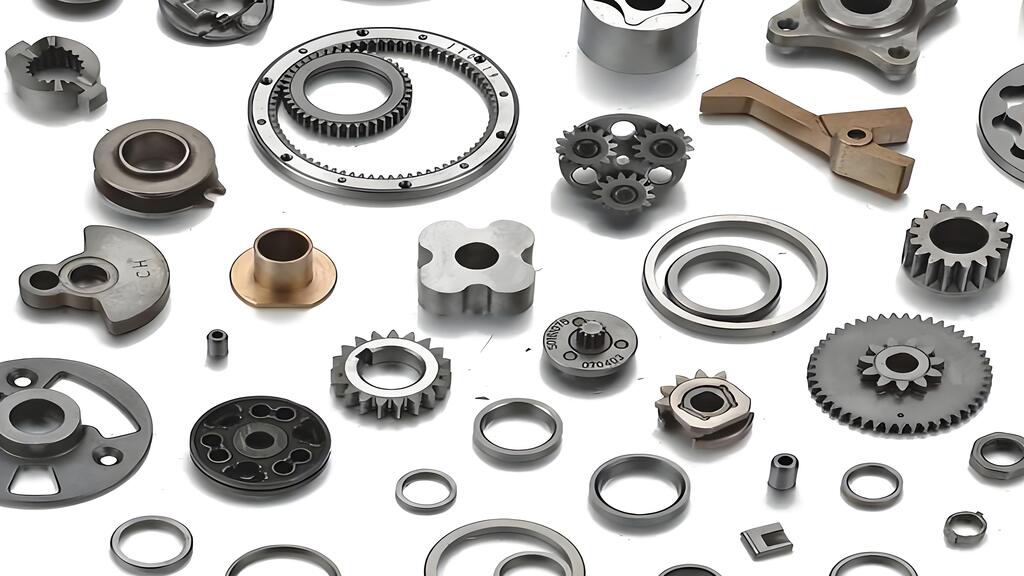
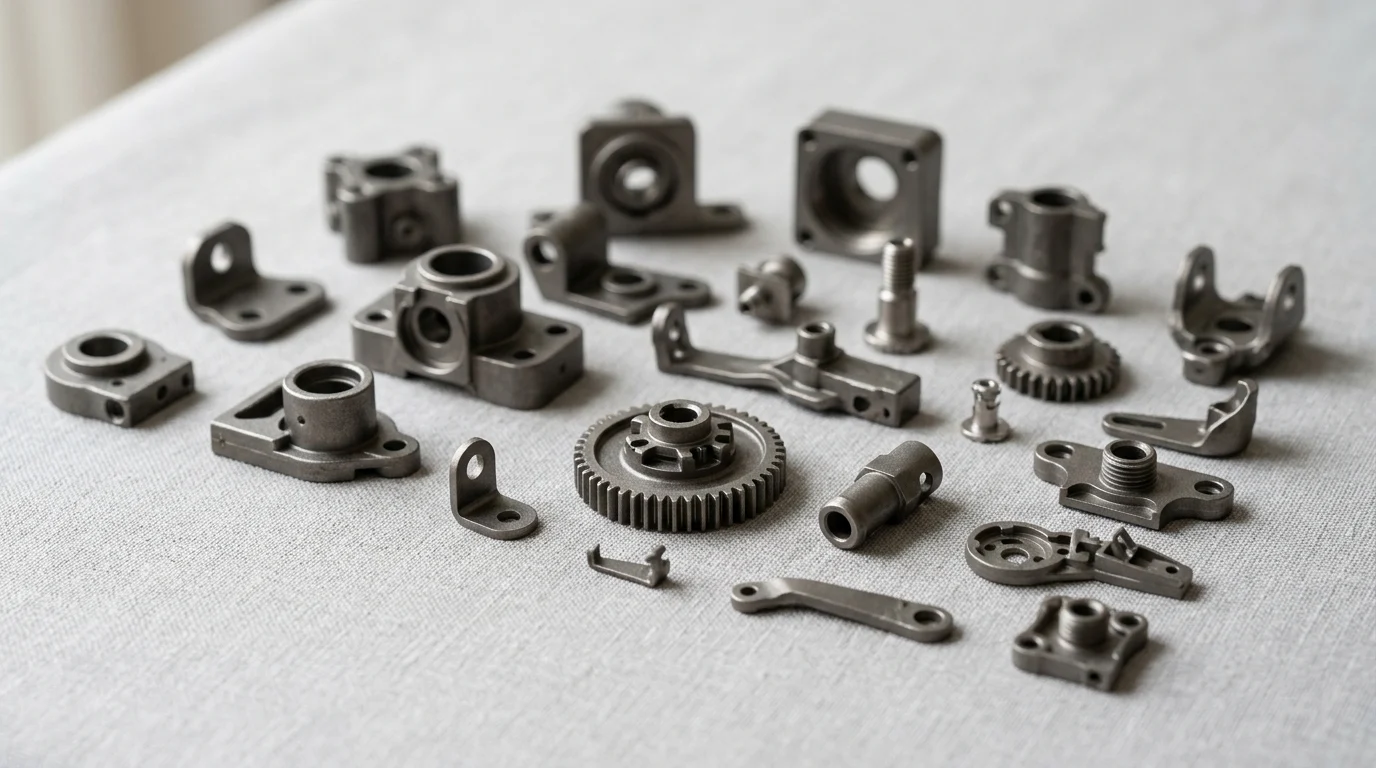
China has established itself as a dominant hub for metal injection molding(MIM) parts, accounting for over 40% of the global market share. However, navigating the highly fragmented supplier landscape requires rigorous technical and commercial vetting. The Mim Process combines the design flexibility of plastic injection molding with the structural integrity of wrought metals, making it ideal for high-volume, complex geometries. Partnering with a highly capable manufacturer ensures that metallurgical integrity and dimensional stability are maintained throughout mass production, while mitigating the substantial risks associated with offshore procurement.
How cost, tolerances, and production scale affect outcomes
The economic viability of metal injection molding is heavily dependent on part size, tolerances, and production volume. MIM is most competitive for intricate components weighing under 100 grams, where traditional CNC machining would be cost-prohibitive due to extensive material waste and cycle times. Because initial tooling investments typically range from $5,000 to $30,000 depending on mold complexity and cavitation, production scales usually need to exceed 10,000 units annually to fully amortize these upfront costs.
Furthermore, achieving standard MIM tolerances of ±0.3% to ±0.5% requires a supplier capable of precise feedstock compounding and tightly controlled thermal processing. When production scales up to hundreds of thousands of parts, even minor deviations in tolerance can compound, leading to severe assembly friction or total functional failure in the end product.
What risks separate reliable suppliers from weak ones
The primary risk separating top-tier MIM manufacturers from substandard ones is the mastery of the debinding and sintering phases. During sintering, MIM parts undergo a massive volumetric shrinkage of 15% to 20%. Weak suppliers often lack the advanced flow simulation software or the thermal uniformity required to manage this shrinkage accurately, resulting in warped parts, internal porosity, or carbon contamination.
Conversely, reliable suppliers mitigate these risks through continuous monitoring of furnace atmospheres and stringent lot control of the metal feedstock. They utilize automated feedback loops during the injection phase to ensure consistent green part density, which is the foundational prerequisite for predictable, repeatable metallurgical outcomes post-sintering.
What Technical Capabilities Buyers Should Verify
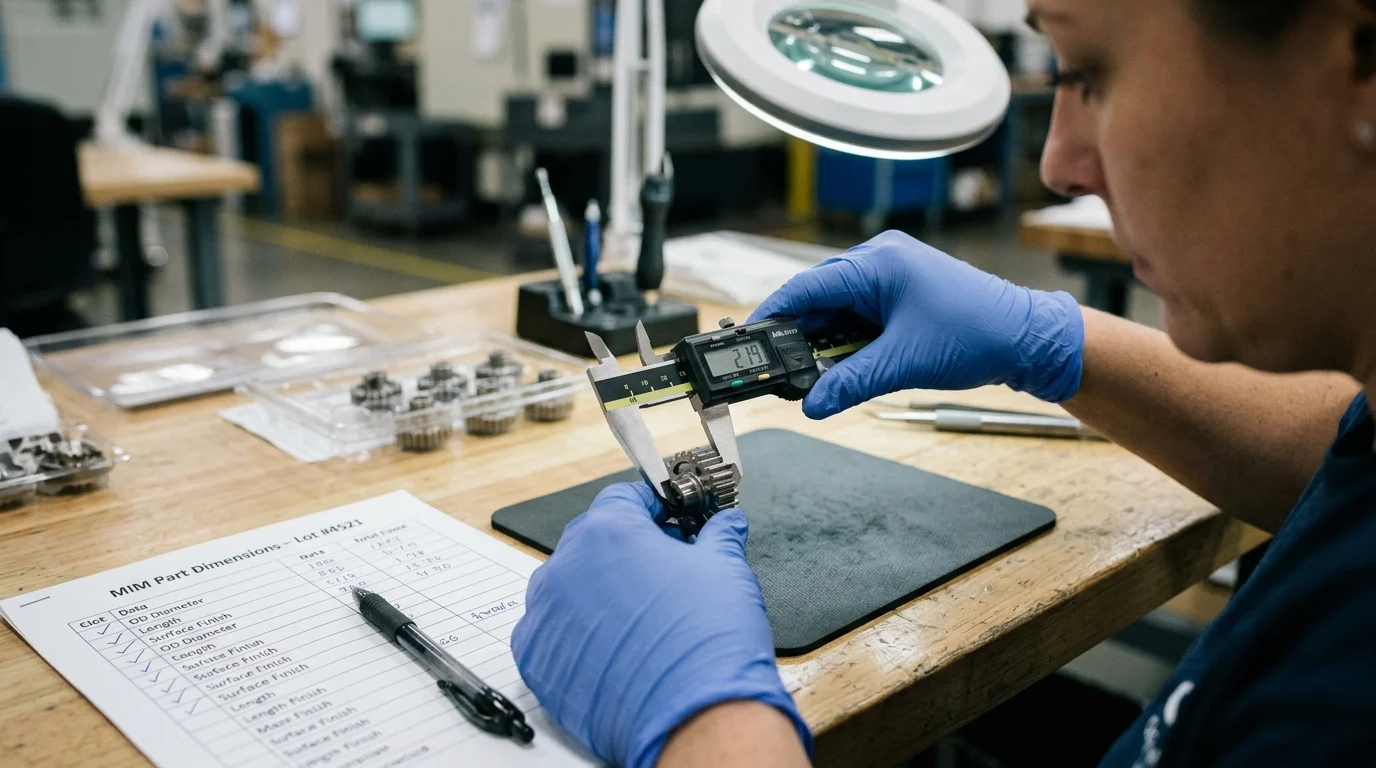
Evaluating a prospective supplier requires looking beyond basic machinery lists to understand their core metallurgical competencies. Metal injection molding is highly sensitive to the interplay between alloy powders and polymer binders, demanding strict adherence to engineered process parameters. Buyers must audit a supplier's technical infrastructure to ensure it aligns with the specific performance requirements of the intended component.
Which materials, density targets, tolerances, and surface finish
es are supported
A proficient supplier must confidently handle a range of MIM-grade alloys, most commonly 316L and 17-4PH stainless steels, low-alloy steels (such as FN02), and increasingly, titanium grades like Ti-6Al-4V. Buyers must verify that the manufacturer can consistently achieve theoretical densities exceeding 95%, with high-performance medical or aerospace applications often demanding >97% density for 316L stainless steel.
Standard dimensional tolerances should be held at ±0.3% of the nominal dimension without secondary machining. Additionally, the as-sintered surface finish typically ranges from Ra 0.8 to Ra 1.6 µm; suppliers should be able to demonstrate these baseline metrics reliably before any secondary polishing, tumbling, or machining operations are applied.
How to assess tooling, debinding, and sintering processes
The integration of tooling, debinding, and sintering processes dictates final part quality. Suppliers with robust in-house tooling capabilities offer faster iterations and tighter control over the mold modifications necessary to correct shrinkage deviations. When assessing debinding, buyers must identify whether the supplier uses catalytic (POM-based), thermal, or solvent methods, as the chosen method directly affects the residual carbon footprint and structural integrity of the final part.
For sintering, the type of furnace utilized is a critical indicator of capability. Batch furnaces provide superior atmospheric and thermal control, making them essential for complex, heavy, or highly critical components. In contrast, continuous pusher furnaces are optimized for high-volume, lower-complexity production runs where throughput is the primary driver.
What comparison criteria to use when evaluating suppliers
To systematically evaluate technical capabilities, procurement engineers should benchmark suppliers against specific operational criteria. Distinguishing between a baseline commodity vendor and an advanced engineering partner requires analyzing their approach to feedstock, thermal processing, and secondary operations.
| Capability Area | Baseline Supplier | Advanced Supplier |
|---|---|---|
| Feedstock Control | Purchases pre-mixed commercial feedstock only | In-house custom compounding and rheology testing |
| Sintering Technology | Single-atmosphere continuous furnaces | Multi-gas batch furnaces with precise thermal profiling |
| Dimensional Accuracy | ±0.5% standard tolerance | ±0.3% or better, supported by in-process automation |
| Secondary Operations | Outsourced machining and heat treatment | Integrated CNC machining, coining, and passivation |
How to Evaluate Quality Systems and Compliance
Because the most critical defects in metal injection molding parts—such as internal voids, binder residue, or micro-cracking—are often invisible to the naked eye, robust quality management systems are non-negotiable. End-of-line visual inspections are entirely insufficient for validating MIM components, making systemic quality assurance the most vital pillar of supplier evaluation.
Which certifications, inspection methods, and traceability pract
ices matter
Baseline compliance begins with ISO 9001 certification, but buyers in regulated sectors must demand specialized credentials, such as IATF 16949 for automotive applications or ISO 13485 for medical devices. Verification of internal inspection methodologies is equally critical to ensure these standards are actively practiced.
Reliable manufacturers employ X-ray or Computed Tomography (CT) scanning to non-destructively detect internal porosity. They utilize coordinate measuring machines (CMM) for validating complex geometric dimensioning and tolerancing (GD&T), and Archimedes-method density scales to verify metallurgical consolidation. Furthermore, strict traceability practices must be enforced, allowing any finished component to be traced back to its specific feedstock batch, molding shift, and sintering run.
How suppliers prevent defects and manage corrective actions
A proactive approach to defect prevention is a hallmark of a mature quality system. Suppliers should be able to demonstrate a Process Capability Index (Cpk) of >1.33 for critical dimensions, proving that their manufacturing process is statistically stable and highly capable of meeting specification limits without relying on excessive sorting.
In steady-state mass production, the internal scrap rate should be maintained strictly below 3%. When deviations do occur, the manufacturer must utilize structured problem-solving methodologies, such as 8D reporting or Root Cause Corrective Action (RCCA), to permanently eliminate the source of the defect through process engineering, rather than merely sorting bad parts from good ones.
What Commercial and Supply Chain Factors Affect Total Cost
Commercial negotiations for metal injection molding parts must account for the total landed cost rather than just the per-unit piece price. Hidden supply chain variables, opaque tooling agreements, and logistical hurdles can quickly erode the perceived savings of an attractive initial quote from a Chinese manufacturer.
How MOQ, tooling ownership, lead times, and logistics impact
pricing
Minimum Order Quantities (MOQs) significantly influence the MIM pricing structure. Due to the extensive setup times for molding and the specific loading density requirements of sintering furnaces, typical MOQs range from 10,000 to 50,000 parts per run. Tooling ownership must be explicitly defined in the contract to prevent intellectual property lock-in, ensuring the buyer can transfer the mold if the supplier relationship sours.
Buyers should expect lead times of 4 to 6 weeks for T1 (first out-of-tool) samples, followed by an additional 3 to 5 weeks for mass production once samples are approved. Factoring in trans-Pacific ocean freight (typically 4 to 6 weeks) or air freight, inventory carrying costs and buffer stock requirements must be calculated into the total procurement strategy.
Which warning signs appear in quotes, communication, and enginee
ring support
Procurement teams must be vigilant for warning signs during the quoting and engineering phases. An unusually low tooling quote—for instance, under $3,000 for a complex, multi-cavity mold—often indicates the use of soft P20 steel instead of hardened H13 tool steel. Soft molds will suffer rapid wear, degrading dimensional accuracy after merely 50,000 shots.
Another red flag is a lack of Design for Manufacturing (DFM) feedback. A reliable supplier will proactively suggest design modifications to eliminate thick cross-sections, which are prone to incomplete debinding and sinks.
| Cost Driver | Typical Impact on Total Cost | Mitigation Strategy |
|---|---|---|
| Raw Material (Alloy) | 15% - 30% | Optimize part volume; select standard alloys like 316L or 17-4PH. |
| Mold Tooling | Highly variable (amortized) | Specify H13 steel for >200k shot life; clarify contract ownership. |
| Processing (Molding/Sintering) | 50% - 65% | Design for uniform wall thickness to reduce furnace cycle times. |
| Secondary Operations | 10% - 25% | Maximize as-sintered features to avoid post-sinter CNC machining. |
How to Build a Practical Supplier Selection Process
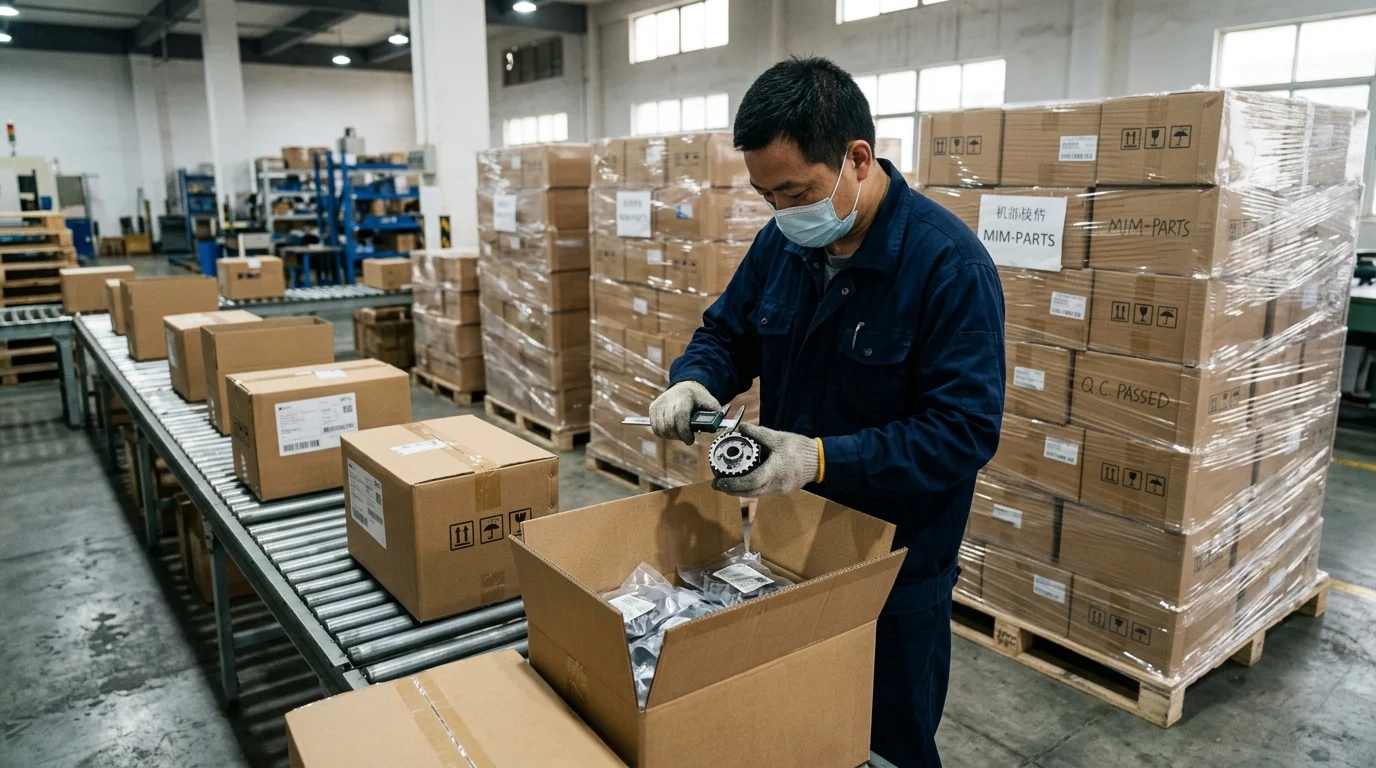
Transitioning from a broad list of potential candidates to a single, reliable manufacturing partner requires a phased, objective qualification process. Hasty onboarding frequently leads to stalled production, quality disputes, and costly tooling transfers. A structured approach ensures that only highly capable suppliers reach the final contracting phase.
What step-by-step qualification process helps shortlist supplier
s
The qualification process should begin with a Request for Information (RFI) to filter out trading companies and unverified facilities. After executing a Non-Disclosure Agreement (NDA), buyers should submit a comprehensive Request for Quote (RFQ) that includes 3D CAD models, 2D drawings with precise GD&T, and realistic annual volume projections.
Shortlisted candidates should then undergo a rigorous facility audit, ideally aligned with VDA 6.3 or equivalent automotive process audit standards. Finally, commissioning a paid prototype or small-batch sample run is critical. This step validates the supplier's real-world capability to manage shrinkage, hit target densities, and hold tolerances before the buyer commits to expensive, multi-cavity mass production tooling.
Which final criteria support long-term supplier selection
For long-term supplier selection, final criteria must extend beyond immediate technical competence to include financial stability, capacity for scale, and continuous improvement initiatives. A strategic manufacturing partner will offer Early Supplier Involvement (ESI) during the product development phase, potentially identifying opportunities to reduce part weight by 10% to 15% through intelligent coring and wall thickness optimization.
Clear, transparent English communication, robust document control, and a demonstrated willingness to invest in automation or dedicated work cells are the ultimate indicators of a manufacturer capable of supporting multi-year product lifecycles and scaling alongside the buyer's market demands.
Key Takeaways
- The most important conclusions and rationale for metal injection molding parts
- Specs, compliance, and risk checks worth validating before you commit
- Practical next steps and caveats readers can apply immediately
Frequently Asked Questions
What should I verify first when choosing a China metal injection molding parts manufacturer?
Check material capability, density results, tolerance control, and whether tooling, debinding, and sintering are managed in-house. Ask for production data on similar MIM parts.
What tolerances are realistic for metal injection molding parts?
For standard MIM parts, ±0.3% to ±0.5% of nominal dimension is typical. Confirm whether your supplier can hold this consistently without heavy secondary machining.
Which materials should a reliable MIM supplier support?
A strong supplier should commonly offer 316L, 17-4PH, and low-alloy steels, and ideally titanium for advanced applications. Match the alloy to your strength, corrosion, and density needs.
Why are debinding and sintering so important in MIM production?
These stages control shrinkage, density, and final part integrity. Poor control can cause warping, porosity, or contamination, so ask about furnace type, atmosphere control, and lot traceability.
When is metal injection molding more cost-effective than CNC machining?
MIM is usually better for complex metal parts under 100 grams and annual volumes above about 10,000 units. It reduces material waste and lowers unit cost after tooling is amortized.