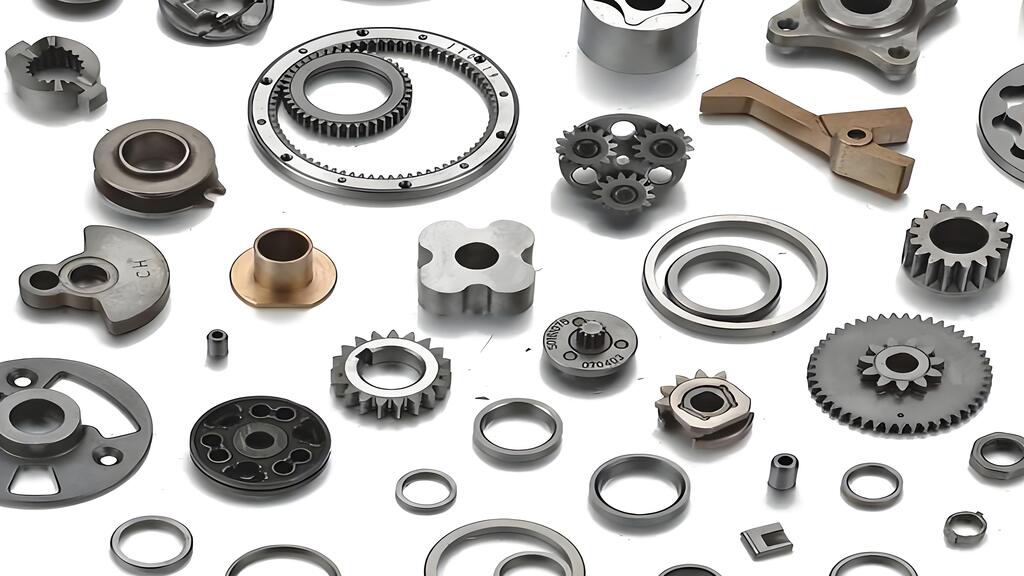


Industrial Benefits of Sintered Metal Products Explored
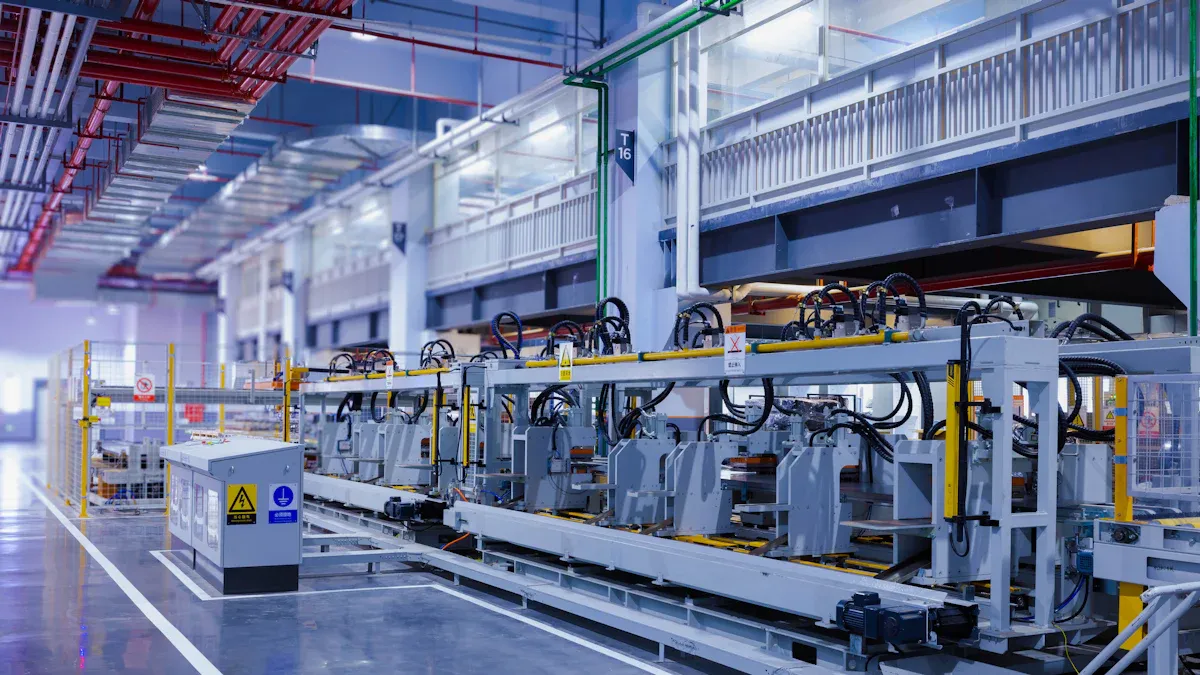
Industries rely on sintered metal products for superior performance, cost savings, and sustainable operations. Advances in Powder Metallurgy sintering create components with high strength, wear resistance, and efficiency, supporting demanding applications in sectors like automotive and filtration. The global market for sintered metal filters reached $1.2 billion in 2024 and continues to expand, driven by improved durability, lower manufacturing waste, and greater compliance with environmental standards.
Key Takeaways
- Sintered Metal products offer high strength, durability, and precise shapes bybonding metal powders without melting.
- The powder metallurgy sintering process allows complex designs, tight tolerances, and lightweight parts that traditional methods cannot easily achieve.
- Sintered metals reduce material waste and machining needs, lowering production costs and supporting sustainable manufacturing.
- These products perform well in harsh environments, resisting wear, corrosion, and high temperatures across industries like automotive and aerospace.
- Additive manufacturing combined with sintering enables fast, energy-efficient production of customized, intricate metal parts.
- Sintered metal components support key sectors such as automotive, medical, electronics, and industrial machinery with reliable, cost-effective solutions.
- The industry faces challenges like raw material costs and quality control, but advances in technology and digital tools drive ongoing improvements.
- Sustainability efforts, including recycling and energy-efficient processes, position sintered metal products as eco-friendly choices for the future.
Powder Metallurgy Sintering: The Foundation of Sintered Metal Products
Defining Sintered Metal Products
Key Characteristics and Properties
Sintered metal products result from a process that bonds metal powders into solid shapes without melting the main material. This method creates parts with controlled density, high strength, and excellent dimensional stability. Manufacturers value these products for their consistent surface finish and ability to meet tight tolerances. The process allows for the production of components with complex internal structures, which traditional methods often cannot achieve. Industry standards, such as ASTM B 243-13, define sintered products by metrics like relative density, shrinkage, and green density. These metrics help ensure quality and performance in demanding applications.
Common Types and Alloys
Industries use a wide range of alloys in sintered metal products. Common types include iron, copper, stainless steel, and nickel-based alloys. Each alloy offers unique properties, such as corrosion resistance or magnetic behavior. For example, iron-based sintered parts often serve in automotive gears, while copper alloys appear in electrical contacts. The choice of alloy depends on the required mechanical properties and the intended application.
The Powder Metallurgy Sintering Process
Compaction and Sintering Stages
Powder metallurgy sintering begins with compaction, where metal powders are pressed into a desired shape. This step forms a "green" part with enough strength for handling. The next stage, sintering, involves heating the compacted part below its melting point. During this phase, particles bond together through atomic movement, reducing surface energy and increasing density. The process includes three main stages: initial neck formation, intermediate grain growth, and final densification. Achieving a high green density at the start helps minimize shrinkage and ensures dimensional accuracy.
Note: Sintering mechanisms include both surface and bulk transport. Surface transport moves atoms along particle surfaces, while bulk transport shifts material from particle interiors to neck regions, causing densification.
Process parameters such as temperature, time, compaction pressure, and atmosphere play a critical role in determining the final properties of sintered parts. The table below highlights key process parameters and their impact:
| Process Parameters | Performance Outcomes |
|---|---|
| Sintering temperature | Densification, grain growth |
| Compaction pressure | Green density, dimensional accuracy |
| Sintering atmosphere | Oxidation control, microstructure |
| Sintering time | Mechanical strength, hardness |
| Lubricant content | Surface finish, shrinkage |
Sinter-Based Additive Manufacturing Techniques
Recent advances in powder metallurgy sintering include sinter-based additive manufacturing. This approach uses digital designs to build parts layer by layer from metal powders. Techniques such as binder jetting and powder bed fusion allow for the creation of intricate geometries and lightweight structures. Laser power, scanning speed, and powder characteristics influence the quality of the final product. Machine learning models now help optimize these parameters for better performance and fewer defects.
The evolution of powder metallurgy sintering has led to impressive efficiency gains. For example, manufacturers report up to 50% reduction in material use for sintered gears and more than 15% energy savings compared to other metal forming methods. Typical sintered gears reach relative densities of 90–95% without further densification, reflecting the process's ability to produce strong, reliable components with minimal waste.
Core Industrial Benefits of Sintered Metal Products
Enhanced Performance and Material Properties
Strength, Durability, and Longevity
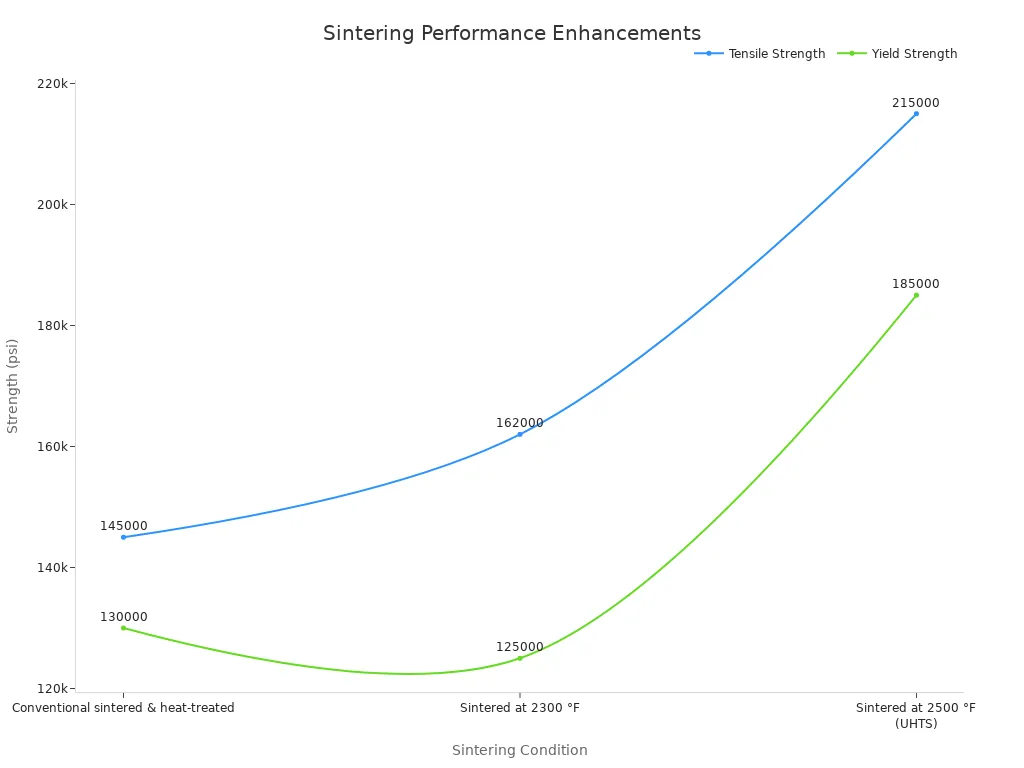
Sintered metal products deliver exceptional strength and durability, making them ideal for demanding industrial applications. Manufacturers can tailor the mechanical properties of these components by adjusting alloy composition and sintering conditions. For example, iron-molybdenum-nickel-carbon alloys sintered at ultra-high temperatures (2500°F) achieve ultimate tensile strengths up to 215,000 psi and yield strengths of 185,000 psi. These values represent a significant improvement over conventional sintering, which typically yields tensile strengths around 162,000 psi. The density remains consistent at 7.1 g/cm³, indicating that the enhanced performance results from the sintering process rather than increased material use.
Case studies further highlight these advantages. The custom tungsten/brass dashboard counterweight demonstrates how sintered metal technology produces specialized parts with superior structural integrity for automotive dashboards. In another example, powdered metal bevel gears provide reliable and precise components for disposable medical instruments, meeting strict quality and performance standards in healthcare.
Wear and Corrosion Resistance in Demanding Environments
Sintered metal products excel in environments where wear and corrosion pose significant challenges. Manufacturers select specific alloys, such as stainless steel or nickel-based materials, to enhance resistance to harsh chemicals and abrasive conditions. The planetary gearset case study illustrates this benefit, with sintered components delivering reliable performance in tractors, medical devices, and construction equipment. Enhanced gear tooth surface treatments further improve longevity, reducing maintenance needs and downtime.
The ability to engineer self-lubricating properties into sintered parts also contributes to reduced operational costs. These features ensure that components maintain performance over extended periods, even under continuous stress or exposure to corrosive substances.
Design Flexibility and Complexity
Customization and Precision Engineering
Sintered metal production offers unmatched design flexibility. Engineers can create parts with intricate internal structures and tight tolerances that traditional manufacturing methods struggle to achieve. For instance, sintered metal products have met extremely tight internal diameter tolerances required for electric vehicle components, supporting the precision and quality control essential in advanced automotive applications.
Material extrusion combined with spark plasma sintering enables the fabrication of complex geometries from a wide range of metals and composites. This process supports the creation of objects with compositional gradients and specialized properties, such as enhanced corrosion resistance or unique magnetic characteristics. As a result, manufacturers can deliver highly customized solutions tailored to specific industrial needs.
Lightweight and Complex Geometries
The sintering process allows for the production of lightweight components with complex shapes. Advances in powder metallurgy enable the formation of detailed and varied designs, including intricate shapes made from stainless steel, specialty steels, and even titanium dioxide. These capabilities surpass those of conventional manufacturing, which often requires multiple steps or additional assembly to achieve similar results.
Sintered metal parts can incorporate features such as internal channels, lattice structures, or composite layers, all within a single manufacturing cycle. This flexibility supports innovation in industries where weight reduction and design complexity drive performance, such as aerospace, automotive, and medical devices.
Cost Efficiency and Productivity
Reduced Material Waste and Machining
Sintered metal manufacturing stands out for its cost efficiency. The process uses near-net-shape forming, which minimizes material waste and reduces the need for secondary machining. For example:
- Sintered steel manufacturing involves minimal material waste, contributing to cost-effectiveness.
- Precise dimensional control during sintering reduces the need for additional machining and assembly.
- Recycling and reuse of steel particles during sintering enhance environmental sustainability.
These factors lower both material costs and environmental impact, supporting sustainable manufacturing practices.
Lower Production Costs and Time Savings
Manufacturers benefit from shorter production cycles and lower overall costs when using sintered metal products. A new production method by JFE Steel Corporation has reduced energy consumption in sintered steel manufacturing by up to 20%. The ability to produce complex shapes in a single step further decreases production time and labor requirements.
- Sintered steel is more affordable than conventional manufacturing techniques due to powder metallurgy, allowing complex shapes with little material waste.
- Shorter manufacturing cycles and cheaper production costs benefit both producers and end users.
- Increased efficiency from sintered steel parts results in higher output and reduced downtime, boosting total industrial productivity.
Comprehensive market analyses confirm these advantages. The global sintered steel market reached approximately USD 25.3 billion in 2023 and is projected to grow to around USD 42.8 billion by 2033, with a compound annual growth rate of 5.4%. This growth reflects strong demand for cost-effective, high-performance components across the automotive, industrial machinery, and consumer goods sectors. Rigorous research and statistical modeling validate the competitive edge of sintered metal products, highlighting their role in driving industrial productivity and innovation.
Sustainability and Environmental Impact
Energy Efficiency in Manufacturing
Sintered metal products offer significant advantages in energy efficiency during manufacturing. The manufacturing sector uses a vast amount of energy, with estimates reaching about 1.35E+19 joules each year. This high energy demand leads to substantial carbon emissions, measured at 521 million metric tons of CO₂ equivalent. Sintered metal processes, especially those using powder metallurgy and additive manufacturing, help address these challenges.
Additive manufacturing (AM) methods, such as direct metal laser sintering (DMLS), use high-energy beams to fuse metal powders layer by layer. These techniques improve energy utilization by reducing material waste and enabling the production of parts only when needed. Hybrid manufacturing approaches, which combine additive and subtractive methods, further lower energy use by minimizing post-processing steps. This reduction in extra machining shortens lead times and decreases the environmental burden.
- Metal AM processes like selective laser sintering (SLS) and selective laser melting (SLM) allow for complex part production without the need for traditional tooling.
- Life cycle analysis (LCA) shows that energy consumption occurs at several stages, including raw material extraction, manufacturing, and post-processing.
- Eco-design and energy optimization in metal AM can lower greenhouse gas emissions and reduce resource consumption.
Manufacturers who adopt these advanced sintering and AM techniques can achieve better energy efficiency, which supports both cost savings and environmental goals.
Minimizing Emissions and Waste
Sintered metal products also contribute to lower emissions and reduced waste throughout their lifecycle. Traditional manufacturing often generates excess scrap and requires multiple processing steps, each adding to the environmental footprint. In contrast, powder metallurgy and AM technologies use near-net-shape forming, which minimizes material waste from the start.
- Additive manufacturing enables the creation of complex geometries without excess material, reducing the need for cutting or machining away large amounts of metal.
- Hybrid additive-subtractive manufacturing further cuts down on post-processing, which means less energy use and fewer emissions.
- Most current studies focus on operational energy consumption, but experts agree that integrating eco-friendly practices into the entire supply chain, including recycling and reuse, will enhance sustainability.
Note: The industry continues to explore ways to optimize energy consumption and develop more eco-friendly metal AM processes. Comprehensive life cycle assessments remain essential to fully understand and improve the environmental impact of sintered metal products.
By focusing on energy efficiency and waste reduction, sintered metal manufacturing supports a more sustainable industrial future. Companies that invest in these technologies not only meet regulatory requirements but also position themselves as leaders in responsible production.
Industrial Applications of Sintered Metal Products
Automotive Sector
Engine and Transmission Components
Automotive manufacturers rely on sintered metal products for critical engine and transmission parts. These components include gears, bearings, pistons, and synchronizer hubs. Sintered metals provide high strength and thermal stability, which help engines operate efficiently under extreme conditions. Iron and nickel-based alloys reduce vehicle weight while maintaining durability. This weight reduction improves fuel economy by 10–15% compared to traditional parts. Sintered components also withstand high temperatures and stresses, extending service life and reducing replacement frequency. The automotive sector’s demand for lightweight, high-performance, and cost-effective parts drives the global sintered metal components market, which reached approximately $25 billion in 2023 and is projected to grow to $45 billion by 2032.
Filtration and Structural Parts
Sintered metal filters and structural parts play a vital role in modern vehicles. These filters remove contaminants from oil, fuel, and air systems, ensuring engine reliability and longevity. Structural parts, such as chassis brackets and body supports, benefit from the precision and strength of powder metallurgy. Manufacturers achieve cost savings of 20–30% through powder metallurgy processes versus conventional metalworking. Advanced manufacturing techniques, including additive manufacturing, enable complex geometries and near-net-shape production, reducing waste and improving performance. Approximately 80% of powder metal used in sintering can be recycled, supporting sustainability goals and compliance with strict emission regulations.
Note: The Asia-Pacific region leads the market, accounting for nearly 50% of global share in 2023, with China and India as key players. The rise of electric vehicles further increases demand for sintered steel components.
Aerospace and Defense
Lightweight Alloys and High-Performance Parts
Aerospace and defense industries require materials that combine low weight with exceptional mechanical properties. Sintered metal products, especially those made from stainless steel and titanium alloys, meet these demands. Advances in powder production, such as gas and water atomization, have improved powder quality and consistency. Additive manufacturing enables the creation of complex, lightweight parts with high precision and minimal waste. These innovations support the production of aircraft engine components, turbine blades, and structural elements that must endure extreme environments.
Precision Components for Critical Systems
Precision is essential in aerospace and defense applications. Sintered metal products deliver tight tolerances and reliable performance for critical systems, including control actuators, landing gear, and missile components. The adoption of additive manufacturing technologies, such as powder bed fusion, allows for flexible, cost-effective production of high-performance parts. The industry’s focus on sustainability and eco-friendly powder production methods further supports market growth and innovation.
Medical and Healthcare Devices
Implants, Surgical Tools, and Custom Prosthetics
Medical device manufacturers use sintered metals to produce implants, surgical instruments, and custom prosthetics. Titanium alloy implants, created through additive manufacturing, offer biocompatibility and mechanical strength. By April 2021, regulatory agencies in China certified 11 3D-printed medical devices, including orthopedic implants made from sintered metals. Major orthopedic device companies, such as Stryker and Zimmer Biomet, have introduced additive-manufactured implants, demonstrating clinical and regulatory acceptance. Standards address mechanical properties, biocompatibility, and quality control, ensuring safety and effectiveness. The regulatory framework continues to evolve, balancing innovation with patient safety and supporting the growing adoption of sintered metal products in healthcare.
| Aspect | Details |
|---|---|
| Market Size (2023) | USD 25.27 billion |
| Projected Market Size (2033) | USD 37.77 billion |
| CAGR (2023-2033) | 4.10% |
| Leading Region | Asia-Pacific (49.84% market share in 2023) |
| Major Industrial Sectors | Automotive, machinery, electronics, aerospace, power generation, consumer goods |
Electronics and Industrial Machinery
Electrical Contacts and Heat Sinks
Sintered metal products play a vital role in the electronics industry. Manufacturers use advanced sintering technologies to create miniaturized, high-performance components. These parts offer superior thermal and electrical properties, which are essential for modern electronic devices. Sintered steel stands out for its wear resistance, strength, and dimensional accuracy. These qualities make it ideal for use in inductors, transformers, electric motors, switches, and circuit breakers.
The strong magnetic properties and excellent electrical conductivity of sintered metals ensure efficient energy transfer. Devices that rely on reliable electrical connections, such as power distribution units and control panels, benefit from these materials. Sintered heat sinks help manage heat in compact electronic assemblies. Their porous structure increases surface area, which improves heat dissipation and protects sensitive circuits from overheating.
Tip: Engineers often select sintered copper or aluminum for heat sinks because these metals combine high thermal conductivity with the ability to form complex shapes.
The electronics sector demands components that maintain performance under stress. Sintered metal parts deliver this reliability. Their dimensional stability and durability support long-term use in harsh environments, including high temperatures and vibration-prone settings. As electronics continue to shrink in size, the need for precise, high-density sintered components grows.
Machinery Bearings and Filters
Industrial machinery depends on sintered metal bearings and filters for smooth operation and longevity. Sintered bearings provide self-lubricating properties, which reduce friction and wear. This feature extends the service life of machines and lowers maintenance costs. Manufacturers can tailor the porosity and composition of these bearings to meet specific load and speed requirements.
Sintered filters offer high mechanical strength, corrosion resistance, and thermal stability up to 950°C. These characteristics make them suitable for demanding filtration tasks in energy, defense, and heavy industry. GKN Sinter Metals reports that their forged powder metallurgy components achieve 15% to 30% greater durability than traditional wrought steels. This improvement results in more reliable machinery and fewer unexpected breakdowns.
The ability to produce high-density metal parts with enhanced mechanical properties supports the growing demand for efficient, dependable components. Sintered filters remove contaminants from fluids and gases, protecting sensitive equipment and ensuring consistent performance. Their robust construction allows them to withstand harsh chemicals and extreme operating conditions.
| Application Area | Key Benefits of Sintered Metal Products |
|---|---|
| Bearings | Self-lubrication, reduced wear, extended service life |
| Filters | High strength, corrosion resistance, thermal stability |
Sintered metal technology continues to validate its place in electronics and industrial machinery. Its combination of performance, reliability, and adaptability meets the evolving needs of these critical sectors.
Comparing Sintered Metal Products to Traditional Manufacturing Methods
Performance and Mechanical Properties
Strength, Tolerances, and Precision
Sintered metal products consistently outperform many traditional metal components in strength and precision. Powder metallurgy sintering enables manufacturers to control porosity and microstructure, resulting in parts with high density and uniform properties. For example, hardness values can reach up to 67.1 HRC at 1050°C, while three-point bending strength tests show values as high as 1196.67 MPa. These results stem from optimized sintering temperatures and controlled cooling rates, which create strong, wear-resistant microstructures. Additive manufacturing (AM) further enhances these properties by allowing higher sintering temperatures and energy absorption, producing parts with superior microhardness and fewer defects.
Suitability for Harsh Conditions
Sintered metals excel in demanding environments. Their tailored microstructures, such as bainite and martensite, provide exceptional resistance to wear, heat, and corrosion. Pin-on-disk tests confirm that higher sintering temperatures reduce wear coefficients, while controlled porosity supports applications like filtration and lubrication. Industries such as automotive, aerospace, and industrial machinery rely on these properties for gears, bearings, and engine components that must withstand high loads and extreme temperatures.
Sustainability and Resource Efficiency
Material and Energy Consumption
Powder metallurgy sintering achieves a material conversion rate exceeding 90%, which significantly reduces waste compared to traditional subtractive methods. Additive manufacturing builds parts layer by layer, using only the necessary material and minimizing scrap. This approach not only conserves raw materials but also lowers energy consumption during production. Hybrid processes, such as hot isostatic pressing, further improve energy efficiency and part integrity, especially in high-stress applications.
Waste Generation and Environmental Impact
Sintered metal manufacturing generates less waste and emissions than conventional machining. The near-net-shape process reduces the need for secondary operations, which often produce excess scrap. Many manufacturers use recycled powders, supporting circular economy initiatives and reducing the environmental footprint. Life cycle assessments show that these methods contribute to lower greenhouse gas emissions and more sustainable industrial practices.
Application Versatility and Scalability
Design Limitations and Opportunities
Sintered metal products offer unmatched design flexibility. AM and powder metallurgy sintering enable the creation of complex geometries and assemblies as single pieces, reducing assembly time and potential errors. Engineers can tailor porosity, material composition, and part shape to meet specific requirements, which traditional manufacturing often cannot achieve. This flexibility supports rapid prototyping, advanced tooling, and the integration of features like conformal cooling channels.
Production Volume and Customization
Sintered metal technology scales efficiently from small-batch, customized parts to high-volume production. Market data shows that automotive applications account for over 40% of global demand, while aerospace, electronics, and healthcare sectors continue to grow. Advanced manufacturing processes produce more than 1.5 million metric tons of sintered parts annually, demonstrating scalability. AM supports easy customization and short lead times, while traditional methods remain suitable for very large production runs.
Sintered metal products combine high performance, sustainability, and versatility, making them a preferred choice for modern manufacturing challenges.
Challenges and Future Trends in Sintered Metal Products
Current Limitations and Industry Barriers
Material Selection and Property Constraints
Producers of sintered metal products face several persistent challenges. The selection of raw materials remains a critical issue. Fluctuations in alloy powder prices can disrupt production planning and profitability. Manufacturers often struggle to achieve the higher strength required for some applications, especially when compared to cast or forged parts. The industry also encounters difficulty in producing large sintered components, which limits the range of potential applications. Competition from alternative materials, such as aluminum, adds further pressure.
- Fluctuating raw material prices
- Difficulty producing large sintered parts
- Need for higher strength in components
- High machinery and equipment costs
- Competition from alternative materials
- Regulatory hurdles and economic factors
Quality Control and Standardization
Quality control and standardization present additional barriers. The high cost of advanced machinery and equipment can restrict access for smaller manufacturers. Regulatory requirements vary across regions, making it difficult to maintain consistent product standards. Companies must invest in rigorous testing and certification processes to ensure reliability and compliance. These factors can slow innovation and increase time-to-market for new products.
Note: Industry reports highlight that regulatory and economic factors continue to impact the pace of adoption and expansion for sintered metal technologies.
Technological Advancements in Powder Metallurgy Sintering
Innovations in Materials and Processes
Recent years have seen significant progress in powder metallurgy sintering. Field Assisted Sintering Technology (FAST) has emerged as a promising method for producing metallic systems, composites, and porous materials. FAST enables rapid production and tolerates variations in powder feedstock, making it suitable for materials that are difficult to process with conventional sintering. Companies like Hoganas and Sandvik have introduced innovations in titanium powders and 3D-printed cemented carbide components. Research into water atomized powders for Binder Jetting aims to lower costs and improve powder quality. Other emerging technologies include Direct Current Plasma Sintering and Flake Powder Metallurgy, both of which show strong potential for future adoption.
- Additive Manufacturing (AM) technologies such as Selective Laser Melting (SLM) and Direct Metal Laser Sintering (DMLS) enable complex, lightweight, and customized components.
- Innovations in powder production, including improved atomization processes, enhance powder quality and efficiency.
- Process improvements like hot isostatic pressing and two-step sintering boost mechanical properties and corrosion resistance.
Integration with Digital Manufacturing
Digital manufacturing is transforming the industry. Companies now use AI, machine learning, and data analytics to optimize production and quality control. Patents and industrial developments from leading firms demonstrate ongoing innovation in powder production and sintering processes. The integration of digital tools allows for better monitoring, predictive maintenance, and process automation. These advancements help manufacturers reduce waste, improve efficiency, and respond quickly to market demands.
Sustainability Initiatives and Market Growth
Green Manufacturing and Circular Economy
Sustainability has become a central focus for the sintered metal industry. Companies adopt eco-friendly materials and circular economy practices to reduce their environmental impact. Energy efficiency and waste reduction are now standard goals. The global sintered steel market was valued at $3.5 billion in 2024 and is expected to reach $5.7 billion by 2033, growing at a CAGR of 6.5%. Asia-Pacific will drive more than 35% of total revenue growth, reflecting strong regional demand and investment in sustainable manufacturing.
- Adoption of eco-friendly materials
- Circular economy practices
- Energy efficiency and waste reduction
- ESG compliance
Recycling and Lifecycle Management
Recycling and lifecycle management play a key role in future market trends. Manufacturers increase the use of recycled powders in additive manufacturing, which reduces waste and energy consumption. Companies pursue product launches, expansions, and new product development to meet evolving market needs. The market benefits from the cost-effectiveness, precision, and durability of sintered steel products. Growth is supported by demand in automotive, aerospace, and healthcare, as well as by regulatory and policy support.
| Market Driver | Impact on Sintered Metal Products |
|---|---|
| Sustainability Initiatives | Lower emissions, reduced waste |
| Technological Advancements | Improved efficiency, new applications |
| Regional Growth (Asia-Pacific) | Increased production and innovation |
Tip: Companies that invest in green manufacturing and recycling position themselves as leaders in the evolving sintered metal market.
Sintered metal products continue to shape modern manufacturing with their outstanding performance, cost savings, and sustainability. Key performance indicators highlight their value:
- Improved permeability and mechanical strength
- Enhanced process control through sensor monitoring and deep learning
- Removal of harmful impurities and recycling of waste materials
These factors drive higher product quality and economic efficiency. As industries seek reliable and eco-friendly solutions, sintered metal technology stands out. Professionals should explore these products to stay competitive and support future innovation.
FAQ
What are sintered metal products?
Sintered metal products are components formed by compacting metal powders and heating them below their melting point. This process creates strong, precise parts used in many industries.
Why do manufacturers prefer sintered metals over traditional metals?
Manufacturers choose sintered metals for their cost efficiency, design flexibility, and reduced material waste. These products also offer excellent strength and durability.
Which industries use sintered metal products the most?
Automotive, aerospace, medical, electronics, and industrial machinery sectors use sintered metal products. These industries value the performance and reliability of sintered components.
How do sintered metals support sustainability?
Sintered metals minimize waste and energy use during production. Many manufacturers recycle metal powders, which supports circular economy goals and reduces environmental impact.
Can sintered metal parts handle high-stress environments?
Yes. Sintered metal parts show high strength, wear resistance, and thermal stability. They perform well in demanding applications like engines, turbines, and heavy machinery.
What design advantages do sintered metals offer?
Engineers can create complex shapes, internal channels, and lightweight structures with sintered metals. This flexibility supports innovation and customization in product design.
Are sintered metal products cost-effective for large-scale production?
Sintered metal technology scales efficiently. It supports both high-volume manufacturing and custom, small-batch production. This versatility helps companies control costs and meet market demands.
Tip: Sintered metal products often require less machining, which saves time and money during manufacturing.