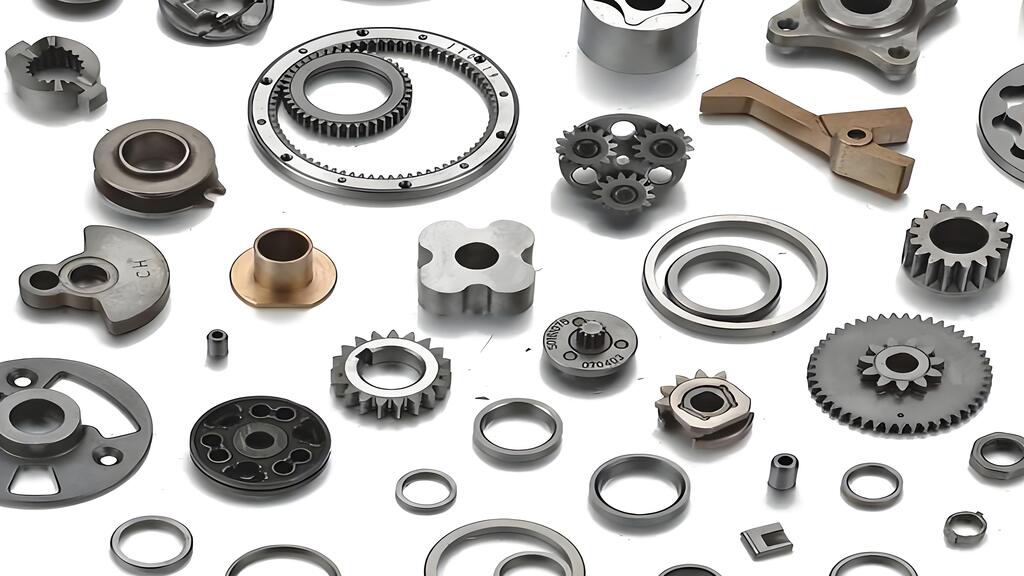


What Are Powder Metal Products

What Are Powder Metal Products?
Definition and Characteristics
Powder metal productsare components created by compressing and Sintering Metal powders into specific shapes. These powders consist of finely divided solids, typically ranging from 25 to 200 µm in size. Their unique properties allow them to behave like both solids and liquids. For instance, they flow under gravity yet remain compressible, making them ideal for shaping into complex geometries.
The characteristics of metal powders include particle size, distribution, surface state, and compressibility. These attributes enable manufacturers to produce components with high precision and minimal material waste. Powder Metal products retain the solid characteristics of metals after processing, ensuring durability and reliability. Applications for these products span industries such as automotive, aerospace, and healthcare, where precision and performance are critical.
Importance in Modern Manufacturing
Powder metal products play a pivotal role in modern manufacturing due to their versatility and efficiency. The powder metallurgy market encompasses a wide range of materials, including titanium, nickel, steel, aluminum, and cobalt. These materials are processed using advanced techniques like additive manufacturing, metal injection molding, and hot isostatic pressing. Such methods allow for the creation of intricate parts that would be challenging or costly to produce using traditional manufacturing techniques.
Industries such as automotive, aerospace, and healthcare heavily rely on powder metal products. In the automotive sector, these products are used to manufacture essential components like engines, transmissions, and chassis. The aerospace and defense industry benefits from advancements in additive manufacturing, which enables the production of complex parts and prototypes. Additionally, the healthcare sector has seen a surge in demand for titanium implants, addressing critical medical needs such as bone deformities.
The growing adoption of powder metal products highlights their importance in achieving sustainable and cost-effective manufacturing. By minimizing material waste and enabling the production of high-quality components, powder metallurgy continues to drive innovation across various industries.
How Are Powder Metal Products Made?

Powder Production Techniques
The production of powder metal products begins with the creation of metal powders. Manufacturers employ various techniques to produce these powders, including atomization, reduction, and electrolysis. Atomization, the most common method, involves breaking molten metal into fine droplets using high-pressure gas or water. Reduction processes use chemical reactions to extract metal powders from their oxides, while electrolysis separates metals from their compounds through electrical currents.
The choice of technique depends on the desired particle size, shape, and purity. Studies on wet granulation reveal that processing conditions significantly impact the flowability and quality of the resulting powders. For instance:
- Granules with higher Basic Flowability Energy (BFE) values exhibit better tablet hardness, enhancing product quality.
- Dynamic testing of powders in screw feeders shows that feed rates can be predicted from dynamic properties, aiding process optimization.
These findings underscore the importance of selecting the right production method to ensure consistent and high-quality powders.
Compaction and Tooling
Once the metal powders are prepared, they undergo compaction to form the desired shape. This step involves pressing the powders into molds or dies under high pressure. The tooling used in this process must be precise and durable to achieve uniform density and dimensional accuracy. Advanced machinery applies controlled pressure to ensure the powders bond effectively, creating a "green" compact with sufficient strength for handling.
The design of the tooling plays a critical role in the success of this stage. Engineers must account for factors like powder flow, friction, and die wear to optimize the process. Proper compaction ensures that the final product meets the required specifications for strength and performance.
Sintering Process
Sintering solidifies the compacted powders by heating them to a temperature below their melting point. This process causes the particles to bond through diffusion, resulting in a dense and durable component. The sintering environment, typically a controlled atmosphere or vacuum, prevents oxidation and ensures consistent quality.
Experimental data highlights the efficiency and challenges of sintering in powder metallurgy. Specific energy consumption (SEC) comparisons between theoretical and real inputs reveal areas for energy optimization. However, the low strength of components after compaction limits sintering efficiency, suggesting opportunities for improvement in pre-sintering processes.
Despite these challenges, sintering remains a cornerstone of powder metallurgy. It enhances the mechanical properties of the product, ensuring reliability and performance in demanding applications.
Secondary Operations for Finishing
Secondary finishing operations play a crucial role in enhancing the quality and functionality of powder metal products. These processes refine the components after sintering, ensuring they meet precise specifications for strength, durability, and surface finish. Manufacturers employ a variety of techniques to achieve these goals, tailoring the operations to the specific requirements of each application.
One of the most common finishing methods is heat treatment. Processes like quenching and tempering significantly improve the mechanical properties of powder metal components. Quenching increases hardness by rapidly cooling the material, while tempering enhances ductility, reducing brittleness. These treatments ensure that the final product can withstand demanding operational conditions, such as high stress or extreme temperatures.
Machining operations, including drilling, grinding, and turning, further refine the dimensions and surface quality of the components. These techniques allow manufacturers to achieve tight tolerances and smooth finishes, which are essential for parts used in precision applications. For example, grinding removes surface irregularities, ensuring a uniform appearance and optimal performance. Drilling creates accurate holes for assembly, while turning shapes the component to its final dimensions.
Vacuum impregnation is another critical finishing process, particularly for components with inherent porosity. This technique seals leak paths within the material, preventing issues such as fluid leakage or air entrapment. It also enhances the interaction between machining tools and the part surface, improving cutting efficiency and tool life. By maintaining the integrity of machining fluids, vacuum impregnation ensures effective cooling and chip removal during operations. These benefits contribute to a higher-quality finish and longer-lasting components.
Secondary finishing operations also address specific challenges in powder metallurgy. For instance:
- Heat treatment improves material properties like strength and corrosion resistance.
- Machining techniques refine tolerances and surface finishes.
- Vacuum impregnation prevents tool interaction with porosity, enhancing machining efficiency and tool durability.
These processes collectively elevate the performance and reliability of powder metal products. They enable manufacturers to produce components that meet stringent industry standards, ensuring their suitability for critical applications in automotive, aerospace, and medical sectors. By investing in advanced finishing techniques, the powder metallurgy industry continues to push the boundaries of what these products can achieve.
Applications of Powder Metal Products
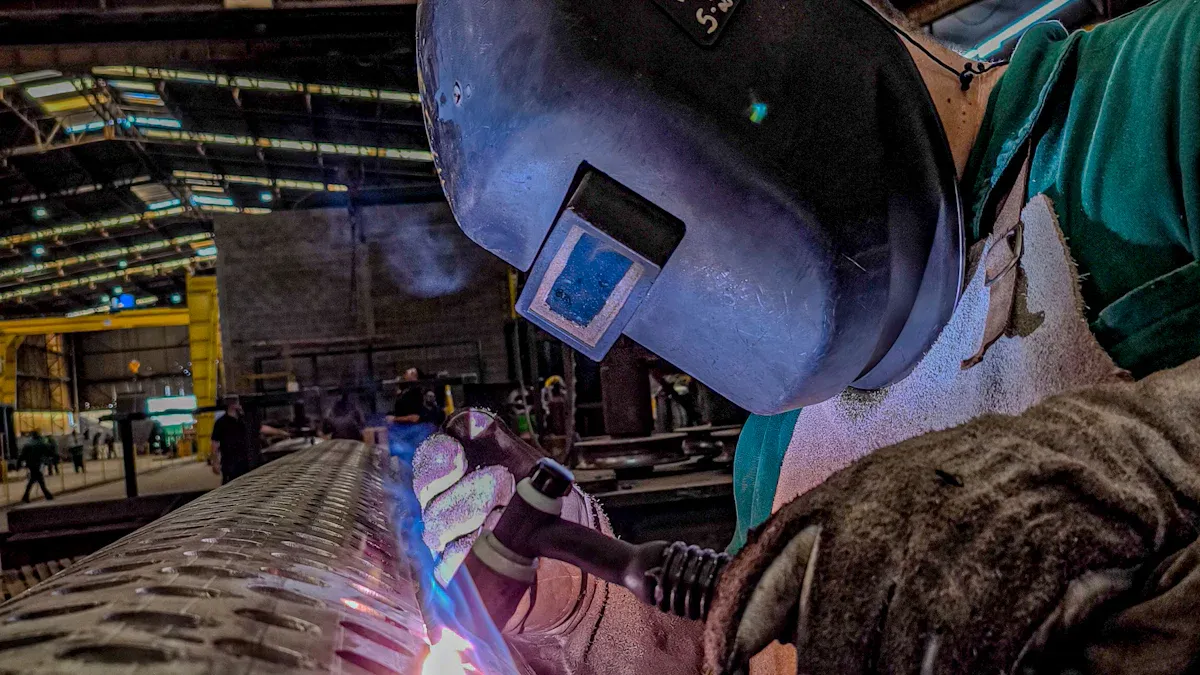
Powder metal products have revolutionized various industries by offering precision, efficiency, and sustainability. Their applications span automotive, aerospace, and medical sectors, where performance and reliability are paramount.
Automotive Components
The automotive industry extensively uses powder metal products to manufacture critical components. These include gears, bearings, and connecting rods, which require high strength and durability. Powder metallurgy enables the production of complex shapes with minimal material waste, aligning with the industry's push for cost-effective and sustainable solutions.
A key advantage of powder metal components in automotive applications is their ability to meet stringent quality standards. For instance, the IATF 16949 standard ensures that these components integrate seamlessly into the automotive supply chain. Additionally, the use of ferrous and non-ferrous materials allows manufacturers to tailor components for specific performance requirements, such as wear resistance or lightweight construction.
| Aspect | Details |
|---|---|
| Market Segmentation | Segmented by Material, Technology, and End-use Industry. |
| Key Materials | Ferrous (iron, steel, alloys) and Non-ferrous (aluminum, copper, titanium). |
| Applications | Used in automotive, aerospace, healthcare, and manufacturing machinery. |
| Technological Advancements | Includes additive manufacturing techniques like direct metal laser sintering. |
The integration of powder metal products in automotive manufacturing highlights their importance in achieving high performance and sustainability.
Aerospace Parts
In aerospace, powder metal products play a crucial role in producing lightweight yet durable components. These include turbine blades, structural parts, and fasteners. The ability to create intricate geometries through powder metallurgy reduces material waste and enhances fuel efficiency in aircraft.
The aerospace sector relies on strict certifications to ensure the reliability of powder metal components. Standards such as Nadcap and ISO 9001 validate the quality and consistency of these products. Advanced techniques like direct metal laser sintering further enhance the precision and performance of aerospace parts.
| Standard/Certification | Description | Relevance to Aerospace Applications |
|---|---|---|
| MPIF | Sets benchmarks for powder characteristics and testing methodologies. | Ensures quality and consistency in PM components. |
| ISO 9001 | Quality Management Systems standard. | Enhances overall product performance and reliability. |
| Nadcap | Accreditation program for special processes. | Ensures compliance and quality in aerospace and defense PM applications. |
The adoption of powder metal products in aerospace underscores their ability to meet the industry's rigorous demands for safety and efficiency.
Medical Devices
The medical field benefits significantly from powder metal products, particularly in the production of implants and surgical instruments. Titanium-based components, known for their biocompatibility and strength, are widely used in orthopedic and dental implants. Powder metallurgy allows for the customization of these devices to meet individual patient needs.
Compliance with stringent regulations ensures the safety and effectiveness of powder metal medical devices. Standards such as ISO 13485 and FDA QSR govern the manufacturing processes, ensuring that these products meet the highest quality benchmarks.
| Standard | Description |
|---|---|
| ISO 13485 | Specifies requirements for a quality management system in medical device manufacturing. |
| EU MDR | Imposes stringent requirements for safety and performance in medical devices. |
| FDA QSR | Mandates quality system regulations for medical device manufacturers in the US. |
The versatility of powder metal products in medical applications demonstrates their potential to address critical healthcare challenges.
Consumer and Industrial Goods
Powder metal products have become indispensable in the production of consumer and industrial goods. Their ability to deliver high precision, durability, and cost-efficiency makes them a preferred choice for manufacturers across various sectors. Powder metallurgy enables the creation of components with complex geometries, which would be challenging to achieve using traditional manufacturing methods.
The versatility of powder metal products is evident in their applications. Commonly produced items include gears, bearings, cutting tools, and electrical contacts. These components benefit from the sintering process, which creates strong bonds between particles, resulting in exceptional strength and wear resistance. Manufacturers also value the design flexibility and material efficiency offered by powder metallurgy. This process minimizes waste while enhancing the material properties of the final product.
- Powder metallurgy provides significant cost savings by reducing material waste.
- The sintering process ensures high strength and durability in finished components.
- Industries such as automotive, aerospace, electronics, and medical rely heavily on powder metal products.
- Lightweight and high-strength components are increasingly in demand, particularly in automotive and aerospace sectors.
The automotive industry exemplifies the advantages of powder metal products. Components like gears, bearings, and pistons require high accuracy and durability, which powder metallurgy delivers. The growing trend toward lightweight vehicles has further increased the demand for these products. By enabling the production of lightweight yet robust parts, powder metallurgy supports the industry's goals of improving fuel efficiency and reducing emissions.
Emerging Applications
Innovations in powder metallurgy continue to expand its applications into new and exciting areas. Recent advancements in materials and processes have unlocked opportunities in industries such as renewable energy, advanced electronics, and sustainable manufacturing. These developments highlight the potential of powder metal products to address emerging challenges and meet evolving market demands.
One notable innovation involves the development of cold plasma technology by AM 4 AM. This eco-friendly process enhances the strength and adaptability of metal powders while using minimal energy and nitrogen gas. The resulting HiperAl alloy demonstrates superior mechanical performance, particularly under high temperatures, making it ideal for applications requiring significant weight reductions.
- Cold plasma technology improves the quality and sustainability of metal powders.
- HiperAl alloy offers enhanced performance under extreme conditions.
- The process supports sustainable manufacturing practices by minimizing energy consumption.
Other advancements include the creation of novel refractory alloys for high-temperature applications and the investment in nickel alloys to reduce cracking and improve temperature resistance. High-strength aluminum alloys compatible with additive manufacturing processes have also gained traction, enabling the production of lightweight components with exceptional durability.
- Novel refractory alloys address the needs of high-temperature environments.
- Nickel alloys enhance temperature resistance and reduce material failure.
- High-strength aluminum alloys support lightweight designs and additive manufacturing.
These innovations demonstrate the versatility and potential of powder metal products in shaping the future of manufacturing. By embracing cutting-edge technologies, the powder metallurgy industry continues to push the boundaries of what is possible, paving the way for sustainable and efficient solutions across various sectors.
Benefits of Powder Metal Products
Cost-Effectiveness and Efficiency
Powder metal products offer significant cost advantages over traditional manufacturing methods. The ability to minimize material waste and streamline production processes makes powder metallurgy an efficient choice for industries. For example, converting multi-component parts into a single powdered metal piece reduces assembly costs and time. This approach enhances structural integrity and functionality while lowering production expenses.
Powder metallurgy also allows for tailored production with smaller batch sizes, unlike traditional methods that require large-scale operations. This flexibility reduces inventory costs and ensures efficient resource utilization.
| Advantage | Description |
|---|---|
| Material Utilization | Powder metallurgy minimizes material waste, leading to cost savings and efficient resource use. |
| Design Flexibility | Enables the creation of complex geometries that are difficult to achieve with traditional methods. |
| Reduced Waste | Significantly lowers scrap rates compared to conventional manufacturing processes. |
Statistical comparisons further highlight the cost-effectiveness of powder metallurgy. For instance, studies show that traditional methods result in higher material losses, with waste percentages ranging from 20% to 64%. In contrast, powder metallurgy achieves recycling rates of up to 91.5%, making it a more sustainable and economical option.
Material Conservation and Sustainability
Powder metallurgy promotes sustainability by conserving resources and reducing environmental impact. The process generates less waste compared to conventional manufacturing, which often involves extensive material removal. Studies reveal that powder metallurgy can reduce the carbon footprint of components by up to 40% during their use phase. This reduction aligns with global efforts to adopt greener manufacturing practices.
The ability to recycle metal powders further enhances sustainability. Manufacturers can reuse leftover powders, minimizing resource depletion and waste generation. Additionally, the design freedom offered by powder metallurgy supports the creation of lightweight components, which improve energy efficiency in applications such as automotive and aerospace.
- Powder metallurgy reduces waste and scrap, enhancing cost-efficiency.
- Recycling metal powders minimizes environmental impact.
- Lightweight designs contribute to energy savings and sustainability.
Design Flexibility and Customization
Powder metal products excel in design flexibility, enabling manufacturers to create intricate geometries and customized components. This capability is particularly valuable in industries requiring precision and innovation, such as aerospace, medical, and consumer goods. For instance, metal binder jetting allows for the production of lightweight racing bicycle components, improving performance and reducing production time.
| Case Study | Description |
|---|---|
| EAC Innovation & Métal | Replaced brass lost wax casting with stainless steel 3D printing, enhancing precision and reducing waste. |
| Tamau Italia & Stelbel | Utilized metal binder jetting for lightweight bicycle components, improving performance. |
| BAK Kohler Medical Technology | Combined metal binder jetting with CNC machining to produce complex surgical instruments efficiently. |
The ability to customize powder metal products extends to rapid prototyping and niche market applications. Manufacturers can develop prototypes quickly, accelerating product development cycles. This adaptability ensures that powder metallurgy remains a versatile and valuable tool in modern manufacturing.
High-Quality and Reliable Performance
Powder metal products are renowned for their exceptional quality and reliability, making them indispensable in industries where precision and durability are critical. The manufacturing process ensures that these components meet stringent performance standards, delivering consistent results even under demanding conditions.
Advanced testing methods play a pivotal role in guaranteeing the high performance of powder metal products. Manufacturers utilize cutting-edge tools like the FT4 Powder Rheometer to conduct dynamic, shear, and bulk testing. These tests provide a comprehensive understanding of powder behavior across various conditions, ensuring reproducibility and accuracy in powder characterization. This multi-faceted approach allows manufacturers to predict how powders will perform during compaction and sintering, minimizing defects and enhancing product reliability.
- Dynamic testing evaluates the flowability of powders, ensuring smooth processing during manufacturing.
- Shear testing assesses the internal friction of powders, which directly impacts the strength of the final product.
- Bulk testing measures density and compressibility, critical factors for achieving uniformity in components.
These rigorous testing protocols ensure that powder metal products consistently meet or exceed industry standards. For example, in applications like tablet pressing, the correlation between powder properties and performance highlights the importance of precise characterization. By understanding these properties, manufacturers can optimize production processes, resulting in components with superior mechanical strength and dimensional accuracy.
The sintering process further enhances the reliability of powder metal products. By bonding particles through diffusion, sintering creates a dense and durable structure capable of withstanding high stress and extreme temperatures. This process ensures that the final components maintain their integrity over extended periods, even in harsh environments.
Industries such as aerospace, automotive, and medical rely on the dependable performance of powder metal products. In aerospace, components like turbine blades must endure high temperatures and pressures without failure. Automotive parts, including gears and bearings, require exceptional wear resistance to ensure long-term functionality. Medical implants demand biocompatibility and strength to support patient safety and recovery. Powder metallurgy meets these diverse requirements, solidifying its reputation as a reliable manufacturing method.
The combination of advanced testing techniques and precise manufacturing processes ensures that powder metal products deliver unmatched quality and performance. This reliability makes them a preferred choice for critical applications across various industries.
Types of Metals Used in Powder Metallurgy
Powder metallurgy relies on a diverse range of metals and alloys to meet the specific requirements of various industries. The selection of materials plays a crucial role in determining the performance, durability, and cost-effectiveness of the final components.
Common Metals (e.g., Iron, Steel, Aluminum)
Common metals such as iron, steel, and aluminum form the backbone of powder metallurgy. These materials are widely used due to their availability, versatility, and excellent mechanical properties.
- Iron: Iron is a primary material in powder metallurgy, offering strength and cost-efficiency. It is often combined with other elements to enhance specific properties.
- Steel: Steel, particularly carbon and alloyed steels, dominates the powder metallurgy market. Its strength, wear resistance, and adaptability make it suitable for automotive and industrial applications.
- Aluminum: Aluminum is valued for its lightweight nature and corrosion resistance. It is commonly used in aerospace and automotive industries to produce energy-efficient components.
| Metal Type | Description |
|---|---|
| Iron | Commonly used in powder metallurgy components. |
| Steel | Includes carbon and alloyed steels, offering versatility and strength. |
| Aluminum | Lightweight and corrosion-resistant, ideal for aerospace and automotive. |
| Stainless Steel | Available in 300 and 400 series alloys for enhanced corrosion resistance. |
| Copper | Known for its excellent conductivity and strength. |
The dominance of ferrous materials, particularly steel, highlights their importance in the powder metallurgy market. Steel holds the largest market share due to its strength and adaptability, with applications spanning automotive, aerospace, and industrial machinery.
Specialty Alloys (e.g., Titanium, Tungsten)
Specialty alloys like titanium and tungsten are essential for high-performance applications. These materials offer unique properties that make them indispensable in extreme environments.
- Titanium: Titanium is lightweight, strong, and corrosion-resistant. It is widely used in aerospace and medical industries for components like turbine blades and implants.
- Tungsten: Tungsten provides exceptional hardness and high-temperature resistance. It is ideal for applications requiring durability under extreme conditions, such as cutting tools and heat shields.
Comparative studies of specialty alloys, such as TZM (titanium-zirconium-molybdenum) and Mo-La (molybdenum-lanthanum), reveal their superior mechanical properties and high-temperature performance. These alloys are critical in industries where reliability and precision are paramount.
Factors Influencing Metal Selection
The choice of metals in powder metallurgy depends on several factors, including the desired mechanical properties, manufacturing processes, and application requirements.
- Sintering Process: The sintering response of metals, such as 316L stainless steel, varies based on the atmosphere and temperature. Proper control of these parameters ensures optimal mechanical properties and corrosion resistance.
- Atmosphere Control: Maintaining a controlled furnace atmosphere is crucial for achieving consistent quality. Thermodynamic calculations and smart technologies help optimize production processes.
- Application Needs: Industries like automotive and aerospace demand lightweight yet durable materials. This drives the selection of metals like aluminum and titanium for their specific advantages.
| Critical Factor | Description |
|---|---|
| Sintering Process | Determines mechanical properties and corrosion resistance. |
| Atmosphere Control | Ensures consistent quality through optimized furnace conditions. |
| Application Needs | Influences material choice based on industry-specific requirements. |
The integration of Industry 4.0 technologies further enhances metal selection by improving production efficiency and product quality. By carefully considering these factors, manufacturers can achieve superior results in powder metallurgy applications.
Why Are Powder Metal Products Valuable and Versatile?
Key Advantages Across Industries
Powder metal products have become indispensable across industries due to their unique advantages. Their ability to deliver cost-effective solutions, design flexibility, and high-performance components has revolutionized manufacturing processes. Industries such as automotive, aerospace, and healthcare rely heavily on powder metallurgy to meet their demanding requirements.
- Automotive Sector: Powder metal products dominate automotive applications, including transmission gears, bearings, and brake discs. Their durability and precision ensure optimal performance under high stress.
- Healthcare Applications: Orthopedic implants and dental restorations benefit from powder metallurgy’s ability to produce biocompatible and lightweight components.
- Aerospace Industry: Aircraft brake pads and structural components leverage the lightweight yet durable nature of powder metal products, enhancing fuel efficiency and agility.
Technological advancements continue to expand the scope of powder metallurgy, enabling manufacturers to produce intricate geometries with minimal material waste. This innovation drives the adoption of powder metal products across diverse sectors.
The demand for lightweight components has surged, particularly in automotive and aerospace industries. Powder metallurgy addresses this need by offering materials that improve fuel efficiency and reduce emissions. Additionally, the process minimizes secondary machining costs, increases raw material utilization, and delivers special properties like self-lubrication. These benefits make powder metal products a sustainable and efficient choice for modern manufacturing.
| Application Area | Key Insights |
|---|---|
| Automotive | Extensive use in vehicle components like bearings, gears, and brake discs. |
| Aerospace | Applications in aircraft brake pads and other critical components. |
| Electrical Industries | Increasing demand for lightweight components in electric vehicles, evidenced by significant market growth. |
Future Trends and Innovations in Powder Metallurgy
The future of powder metallurgy is shaped by technological advancements and evolving market demands. Innovations in manufacturing techniques, such as additive manufacturing and advanced sintering processes, are driving the industry forward. These developments enable the production of lightweight and durable components, which are essential for improving fuel efficiency in automotive and aerospace applications.
Emerging trends include the integration of automation and digitalization in manufacturing processes. These technologies enhance production efficiency and quality control, ensuring consistent results. The development of high-performance alloys and metal matrix composites is broadening the applications of powder metallurgy, particularly in industries requiring extreme durability and precision.
The Powder Metallurgy Products Market is projected to grow at a compound annual growth rate (CAGR) of 13.8%, fueled by the increasing demand for lightweight materials. Sustainability is also becoming a key focus, with manufacturers prioritizing recycling and environmentally friendly production techniques. This shift aligns with global efforts to reduce the environmental impact of manufacturing.
Key companies are investing heavily in research and development to create innovative metal powders and alloys. Government funding for new technologies further supports this growth, paving the way for groundbreaking advancements in powder metallurgy.
The industry’s emphasis on sustainability and innovation ensures its continued relevance and expansion. As manufacturers adopt cutting-edge technologies and materials, powder metallurgy will play a pivotal role in shaping the future of efficient and eco-friendly manufacturing.
Powder metal products represent a transformative approach to manufacturing, combining efficiency, precision, and sustainability. These components, created through powder metallurgy, have revolutionized industries by enabling the production of complex geometries with minimal waste. Their applications span automotive, aerospace, healthcare, and beyond, showcasing their versatility and reliability.
The environmental and economic advantages of powder metallurgy further underscore its value. For instance, additive manufacturing (AM) within this field reduces energy consumption and carbon footprints while offering cost-effective solutions for small production runs. The table below highlights key aspects of its impact:
| Aspect | Details |
|---|---|
| Environmental Impact | AM is projected to reduce energy consumption and carbon footprint, but further research is needed. |
| Economic Viability | AM is favored for small production lots due to lower fixed costs, but large production viability depends on reducing recurring costs. |
| Mechanical Properties | The review discusses the mechanical properties of AM materials and the challenges in qualification and certification. |
Powder metallurgy continues to drive innovation, paving the way for sustainable manufacturing practices. Its ability to conserve resources while delivering high-performance components positions it as a cornerstone of modern industry.
FAQ
What are the main advantages of powder metal products?
Powder metal products offer cost-efficiency, material conservation, and design flexibility. They enable the production of complex geometries with minimal waste. Additionally, they deliver high-quality performance, making them ideal for industries like automotive, aerospace, and healthcare.
How does powder metallurgy contribute to sustainability?
Powder metallurgy minimizes material waste and supports recycling. The process uses less energy compared to traditional manufacturing methods. Lightweight designs produced through this method also improve energy efficiency in applications like automotive and aerospace.
Which industries benefit the most from powder metal products?
Industries such as automotive, aerospace, medical, and consumer goods benefit significantly. These sectors rely on powder metal products for their precision, durability, and ability to meet stringent performance standards.
Can powder metal products replace traditional manufacturing methods?
Powder metal products complement traditional methods rather than replacing them entirely. They excel in producing intricate shapes and lightweight components, which are challenging or costly to achieve with conventional techniques.
What metals are commonly used in powder metallurgy?
Common metals include iron, steel, and aluminum. Specialty alloys like titanium and tungsten are also used for high-performance applications. The choice depends on the desired properties and application requirements.
Are powder metal products suitable for high-stress environments?
Yes, powder metal products are designed for durability and reliability. The sintering process enhances their mechanical properties, making them suitable for high-stress applications like automotive gears, aerospace components, and medical implants.
How does sintering improve powder metal products?
Sintering bonds metal particles through diffusion, creating dense and durable components. This process enhances mechanical strength, dimensional accuracy, and resistance to wear, ensuring the product performs reliably in demanding conditions.
What is the future of powder metallurgy?
The future includes advancements in additive manufacturing, automation, and sustainable practices. Innovations in materials and processes will expand applications, particularly in lightweight and high-performance components for automotive, aerospace, and renewable energy sectors.
💡 Tip: Powder metallurgy is a rapidly evolving field. Staying updated on new technologies and materials can help manufacturers remain competitive.