


Magnets and stainless steel
Many people wonder if magnets stick to stainless steel. The answer depends on the specific type of stainless steel in question. Stainless steel comes in several varieties, each with its own unique structure and composition. Some types attract magnets strongly, while others do not respond at all. This difference arises from the way elements like iron, chromium, and nickel arrange themselves within the alloy. In the world of magnets and stainless steel, not all combinations behave the same way.
Key Takeaways
- Stainless steel comes in different types, each with unique magnetic properties based on its structure and composition.
- Austenitic stainless steels, like grades 304 and 316, are usually non-magnetic but can become magnetic if bent or cold worked.
- Ferritic and martensitic stainless steels have crystal structures that make them strongly magnetic and useful in many industrial applications.
- Alloying elements such as nickel and chromium affect whether stainless steel is magnetic by changing its internal structure.
- Processing methods like cold working and heat treatment can change the magnetic behavior of stainless steel by altering its phases.
- Powder metallurgy allows precise control of stainless steel’s microstructure, helping tailor magnetic and mechanical properties.
- A simple magnet test helps quickly identify the magnetic nature of stainless steel, aiding in material selection and quality control.
- Magnetism in stainless steel does not indicate quality; it reflects the type of alloy and how it was processed.
Magnets and stainless steel: Why Magnetism Varies
What Is Stainless Steel?
Basic Composition and Structure
Stainless steel belongs to a family of iron-based alloys that contain a minimum of 10.5% chromium by weight. This chromium content forms a passive layer on the surface, which protects the metal from corrosion. Metallurgists classify stainless steel into five main families: austenitic, ferritic, martensitic, duplex (ferritic–austenitic), and precipitation-hardening steels. Each family features a unique crystalline structure or microstructure. For example, austenitic stainless steels have a face-centered cubic structure, while ferritic types display a body-centered cubic arrangement. Martensitic stainless steels result from a transformation process, and precipitation-hardening steels gain strength through the formation of microscopic precipitates during heat treatment.
Note: The classification of stainless steel depends on both its microstructure and the mechanisms used to harden or strengthen it. Heat treatment and alloying elements play a critical role in defining the mechanical properties and corrosion resistance of each grade.
Role of Iron, Chromium, Nickel, and Other Elements
Iron serves as the base element in all stainless steels. Chromium provides corrosion resistance by forming a stable oxide layer. Nickel stabilizes the austenitic structure, making the steel non-magnetic and improving its ductility. Other elements, such as molybdenum, nitrogen, silicon, and manganese, further enhance specific properties. For instance, molybdenum increases resistance to pitting corrosion, while carbon and nitrogen can influence hardness and phase stability. The combination and proportion of these elements determine the final properties of each stainless steel type.
| Stainless Steel Classification | Definition / Characteristics | Crystal Structure / Microstructure | Key Alloying Elements | Typical Properties / Notes |
|---|---|---|---|---|
| Ferritic Stainless Steels | Iron-based alloys with ≥10.5% chromium, low carbon | Body-centered cubic (BCC) | Chromium, silicon, manganese | Good corrosion resistance, magnetic |
| Austenitic Stainless Steels | Iron-based alloys with ≥10.5% chromium and nickel to stabilize austenite | Face-centered cubic (FCC) | Chromium, nickel, molybdenum, nitrogen | Excellent corrosion resistance, non-magnetic, not hardenable by heat treatment |
| Ferritic–Austenitic (Duplex) | Combination of ferritic and austenitic phases | Mixed BCC and FCC | Chromium, nickel, molybdenum | Balanced strength and corrosion resistance |
| Martensitic Stainless Steels | Iron-based alloys with chromium and higher carbon | Transformed microstructure from austenite | Chromium, carbon | Hardenable by heat treatment, moderate corrosion resistance |
| Precipitation-Hardening Steels | Stainless steels strengthened by heat treatment forming precipitates | Usually martensitic or austenitic | Chromium, nickel, aluminum, copper, titanium, molybdenum | High strength and corrosion resistance, used in aerospace and military |
What Makes a Metal Magnetic?
Ferromagnetism Explained Simply
Ferromagnetism describes the phenomenon where certain metals, such as iron, cobalt, and nickel, become strongly attracted to magnets. This property arises from the alignment of unpaired electron spins within atoms. When these spins align in the same direction, they create a strong magnetic field. In steel, the presence of iron atoms with unpaired electrons allows for this alignment, making the material magnetically responsive.
- Magnetic properties of steel depend on several factors:
- Chemical composition
- Microstructure and grain size
- Processing methods, such as cold working or heat treatment
- Presence of different phases, like ferrite or martensite
Ferromagnetic materials exhibit high permeability, meaning they can conduct magnetic flux efficiently. They also show remanence, which is the ability to retain magnetization after the external magnetic field is removed. Coercivity measures the resistance to demagnetization.
Why Iron Is Usually Magnetic
Iron is magnetic because its atomic structure contains unpaired electrons in its d-orbitals. These electrons can align their spins through exchange interactions, resulting in a net magnetic moment. The crystal lattice of iron, especially in the body-centered cubic form, supports the alignment of magnetic domains. When exposed to an external magnetic field, these domains align, causing the material to become magnetized.
| Factor | Explanation |
|---|---|
| Atomic Electron Structure | Ferromagnetism arises from atoms with unpaired electrons whose spins align. |
| Crystal Lattice Spacing | Optimal atomic spacing allows exchange interactions to align magnetic moments. |
| Quantum-Mechanical Principles | The Pauli Exclusion Principle influences electron spin alignment and energy states. |
| Magnetic Domains | Steel contains small regions with different magnetization directions; external fields align them. |
| Microstructure and Imperfections | Imperfections help retain magnetization by preventing domain rotation. |
Recent studies from 2020 to 2024 highlight that the variation in magnetism among stainless steel types depends on chemical composition, microstructure, and phase transformations. For example, austenitic stainless steels are generally paramagnetic, but the presence of δ-ferrite or martensitic phases can increase their magnetism. The stability of the austenitic phase, and thus its magnetic behavior, relies on elements like nickel, manganese, carbon, and nitrogen. Lower contents of these elements promote martensitic transformation and ferromagnetism. Experimental techniques such as severe plastic deformation, solution annealing, and Mössbauer spectrometry help analyze these magnetic properties and phase compositions. Factors like plastic strain, grain size, and grain orientation also influence the amount of induced martensite and, consequently, the magnetic properties of the steel.
The relationship between magnets and stainless steel depends on these scientific principles. Understanding the atomic structure, alloying elements, and processing methods helps explain why some stainless steels attract magnets while others do not.
Types of Stainless Steel and Their Magnetic Properties
Austenitic Stainless Steel
Common Grades (304, 316)
Austenitic stainless steels represent the most widely used family of stainless steels. Grades such as 304 and 316 dominate applications in kitchenware, medical devices, and chemical processing equiPment. These grades contain high levels of chromium and nickel, which stabilize the austenitic phase and enhance corrosion resistance. Grade 304 typically contains 18% chromium and 8% nickel, while grade 316 includes additional molybdenum for improved resistance to chlorides.
Why Austenitic Steels Are Usually Not Magnetic
Austenitic stainless steels possess a face-centered cubic (FCC) crystal structure. This structure causes the electron spins within the metal to pair up and cancel each other out, resulting in non-magnetic behavior under normal conditions. Nickel plays a crucial role in maintaining this structure, suppressing the formation of magnetic phases.
- Austenitic stainless steel, such as SUS304L, starts as non-magnetic due to its FCC austenitic phase.
- When subjected to plastic deformation, such as cold working or bending, it can undergo a transformation known as strain-induced martensitic transformation (SIMT). This process converts some of the non-magnetic austenite into ferromagnetic martensite, especially at lower temperatures or under high strain.
- The extent of this transformation depends on factors like nickel content, strain rate, and temperature. Higher nickel content suppresses the transformation, while lower temperatures and slower strain rates promote it.
- Magnetic measurements can detect the presence of martensite, making them useful for quality control in industrial settings.
Note: Powder metallurgy techniquescan influence the microstructure of austenitic stainless steels. By controlling particle size, compaction pressure, and Sintering temperature, manufacturers can minimize the formation of magnetic martensite during processing, ensuring the final product remains non-magnetic.
Austenitic stainless steels stand out because they do not exhibit magnetic transformation under typical service conditions, unlike ferritic or martensitic types. However, severe deformation or specialized processing can induce some magnetism.
Ferritic Stainless Steel
Common Grades (430, 409)
Ferritic stainless steels, including grades 430 and 409, contain chromium as the primary alloying element and little or no nickel. Grade 430 is commonly used in automotive trim, kitchen appliances, and architectural applications. Grade 409 finds use in automotive exhaust systems due to its good oxidation resistance and cost-effectiveness.
Why Ferritic Steels Are Magnetic
Ferritic stainless steels have a body-centered cubic (BCC) crystal structure. This structure allows unpaired electron spins to align, creating a strong magnetic field. The absence of significant nickel content ensures that the ferritic phase remains stable and magnetic.
Experimental research confirms that the magnetic properties of ferritic stainless steel directly relate to its chemical composition and crystal structure. For example, 430 stainless steel consistently exhibits magnetic attraction due to its BCC structure and chromium content. Magnetic detection instruments and simple magnet tests verify this behavior in both laboratory and industrial environments.
A recent study investigated the magnetic properties of 430 stainless steel under various metallurgical treatments, such as magnetic annealing and alloying with elements like molybdenum and silicon. The research provided detailed hysteresis curve data at different frequencies and showed how treatments could modify magnetic parameters like maximum magnetic induction, remanent magnetization, and coercive force. These findings highlight the ability to tailor the magnetic properties of ferritic stainless steels through precise control of composition and processing.
Tip: Powder Metallurgy offers additional control over the microstructure of ferritic stainless steels. By adjusting the alloying elements and sintering conditions, manufacturers can fine-tune the magnetic properties for specific applications, such as transformer cores or electromagnetic components.
Martensitic Stainless Steel
Common Grades (410, 420)
Martensitic stainless steels, such as grades 410 and 420, contain moderate chromium and higher carbon content. Grade 410 is often used for cutlery, turbine blades, and valve parts, while grade 420 is popular for surgical instruments and knives due to its ability to achieve high hardness after heat treatment.
Magnetic Properties of Martensitic Steels
Martensitic stainless steels display strong ferromagnetic properties. Their crystal structure transforms from face-centered cubic austenite to body-centered tetragonal (BCT) martensite during heat treatment. This transformation aligns unpaired electron spins, resulting in significant magnetism.
| Stainless Steel Type | Crystal Structure | Magnetic Property Description | Magnetic Permeability / Behavior |
|---|---|---|---|
| Martensitic Stainless Steel | Body-Centered Cubic (BCC) or Body-Centered Tetragonal (BCT) | Ferromagnetic due to BCC/BCT structure; unpaired electron spins cause magnetism; magnetic character stable after heat treatment | Significantly magnetic; permeability higher than austenitic grades |
| Austenitic Stainless Steel (304L, 316) | Face-Centered Cubic (FCC) | Mostly non-magnetic due to FCC structure; nickel content supports austenite formation reducing magnetism | Permeability close to 1.02 (almost non-magnetic); can increase if work-hardened or badly annealed |
| Ferritic Stainless Steel | Body-Centered Cubic (BCC) | Even higher magnetic permeability than martensitic steels due to microstructure; used in transformers and inductors | Higher magnetic permeability than martensitic steels |
Carbon content in martensitic steels strengthens the BCT structure and enhances ferromagnetism. Heat treatments such as hardening, quenching, and tempering stabilize the martensitic phase and influence magnetic properties. Annealing protocols also affect the final magnetic behavior by controlling phase transformations.
Note: Powder metallurgy enables precise control over the carbon and alloying content in martensitic stainless steels. This control allows manufacturers to produce components with consistent magnetic properties and tailored hardness, meeting the demands of high-performance applications.
Martensitic stainless steels maintain their magnetic character even after repeated heat treatments, making them reliable for applications where both strength and magnetism are required.
Duplex and Other Stainless Steels
Duplex and Super Duplex Grades
Duplex stainless steels combine the best features of austenitic and ferritic stainless steels. Their microstructure contains roughly equal parts of austenite and ferrite. This dual-phase structure gives duplex steels high strength, excellent corrosion resistance, and unique magnetic properties. Super duplex grades, such as UNS S32750 and S32760, offer even greater resistance to corrosion and higher mechanical strength.
Duplex stainless steels display partial magnetism. The ferrite phase is ferromagnetic, while the austenite phase remains mostly non-magnetic. When a magnet approaches duplex steel, it attracts the ferritic regions, but the overall magnetic response is weaker than that of pure ferritic stainless steel. Super duplex grades follow the same principle, though their higher alloy content can slightly reduce magnetic attraction.
Recent studies have compared the magnetic properties of duplex stainless steels with other types. Researchers measured saturation magnetization and coercive field in lean duplex grades like UNS S32304 and S2304. They found that both ferrite and strain-induced martensite contribute to the magnetic behavior. Magnetic measurements, combined with advanced microscopy, help distinguish between the different phases. Thermodynamic modeling supports these findings by predicting the intrinsic magnetic values for each phase.
| Steel Type / Grade | Key Magnetic Properties Measured | Microstructural Features | Comparative Findings |
|---|---|---|---|
| UNS S32304 Lean Duplex Steel | Saturation magnetization, Coercive field | Ferrite and strain-induced α′-martensite; austenite reversion | Both ferrite and α′-martensite contribute to magnetism; phase distinction is possible |
| 2304 Lean Duplex Stainless Steel | Magnetic quantification of α′-martensite | Ferrite and austenite; martensite forms during cold work | Magnetic response changes with phase transformation, compared to austenitic 321 steel |
| 317L Austenitic Stainless Steel | Magnetization, Coercive field | Predominantly austenite; minor martensite and delta ferrite | Magnetic tracking of phase changes; contrasts with duplex steels |
| 321 Metastable Austenitic Steel | Magnetic measurements of martensite | Austenite prone to the TRIP effect | Used as a reference for duplex steel magnetic response |
The formation of strain-induced martensite during cold working increases the magnetic response in duplex steels. When manufacturers use powder metallurgy to produce duplex stainless steel, they can control the distribution and size of ferrite and austenite phases. This control allows for precise tuning of magnetic properties, which is valuable in applications requiring both strength and specific magnetic behavior.
Note: Duplex stainless steels offer a balance between strength, corrosion resistance, and moderate magnetism. Their unique structure makes them suitable for chemical processing, marine environments, and structural components.
Precipitation-Hardening Stainless Steel
Precipitation-hardening (PH) stainless steels achieve high strength through a special heat treatment process. This process causes fine particles, or precipitates, to form within the steel matrix. These precipitates block dislocation movement, increasing hardness and mechanical strength. Common PH grades include 17-4PH (UNS S17400) and 15-5PH.
PH stainless steels can display a range of magnetic properties. The magnetic response depends on the specific alloy composition and the heat treatment applied. Many PH steels start with a martensitic or semi-austenitic structure, which can be magnetic. After precipitation hardening, the magnetic properties may change, depending on the amount and type of precipitates formed.
Powder metallurgy plays a significant role in the production of PH stainless steels. By carefully selecting powder composition and controlling sintering conditions, manufacturers can achieve uniform distribution of alloying elements and precipitates. This uniformity leads to consistent mechanical and magnetic properties throughout the material.
- Key features of PH stainless steels:
- High strength after aging treatment
- Good corrosion resistance
- Variable magnetic properties, depending on phase composition and processing
Engineers often select PH stainless steels for aerospace, medical, and high-performance industrial applications. The ability to tailor both strength and magnetism through processing methods, including powder metallurgy, makes these steels highly versatile.
Tip: When choosing a stainless steel for applications where both strength and controlled magnetism are important, precipitation-hardening grades produced by powder metallurgy offer a reliable solution.
Magnets and stainless steel: What Determines Magnetism
Atomic Structure and Crystal Lattice
How Structure Affects Magnetism
The atomic structure and crystal lattice of stainless steel play a decisive role in its magnetic properties. Each atom contains electrons that spin and create tiny magnetic moments. In metals, these moments can align if the crystal lattice allows it, resulting in magnetism. When the arrangement of atoms in the lattice supports this alignment, the material becomes ferromagnetic.
Researchers at Osaka University demonstrated that even small changes in the crystal lattice can alter magnetic behavior. By expanding the lattice in a cobalt oxide compound, they observed a shift from ferromagnetism to helimagnetism. This experiment highlights how sensitive magnetic interactions are to the spacing and arrangement of atoms. The substitution of larger ions disrupted the original magnetic order, confirming that the crystal lattice directly influences magnetic properties.
Britannica further explains that in magnetic materials, many electron moments align in the same direction, while in nonmagnetic materials, these moments cancel out due to random orientation. The crystal lattice determines whether this alignment is possible. For example, the body-centered cubic (BCC) structure in ferritic stainless steel supports alignment, making it magnetic. In contrast, the face-centered cubic (FCC) structure in austenitic stainless steel does not result in non-magnetic behavior.
A study published in Nature used advanced microscopy to show that even the stacking order of atomic layers in a crystal can change magnetic coupling. Subtle shifts at the nanoscale, such as the way layers stack or slide, can switch a material from ferromagnetic to antiferromagnetic. These findings underscore the importance of atomic structure in determining whether stainless steel will attract a magnet.
Alloying Elements and Their Effects
Role of Nickel, Chromium, and Others
Alloying elements have a profound impact on the magnetic properties of stainless steel. Scientists have prepared stainless steel samples with different amounts of manganese, aluminum, silicon, nickel, chromium, and carbon to study these effects.
- Nickel increases the stability of the austenitic phase, which is generally non-magnetic. Higher nickel content suppresses the formation of magnetic martensite.
- Chromium provides corrosion resistance and also influences the crystal structure. It helps maintain the BCC structure in ferritic stainless steels, supporting magnetism.
- Aluminum and manganese affect the stability of austenite. Aluminum, in particular, strongly stabilizes austenite, reducing magnetism.
- Silicon shows a nonlinear effect on magnetic properties. Small additions can change the transformation temperatures and magnetic behavior.
- Carbon content and grain size also play roles. Carbon stabilizes the structure, while grain size can shift transformation temperatures by up to 30 K, affecting when and how magnetic phases form.
Experimental data reveal that these elements not only change the lattice structure but also influence the temperatures at which magnetic transitions occur. For example, the start temperature for martensitic transformation depends on both composition and grain size. Thermodynamic and quantum-mechanical calculations support these observations, showing a direct link between alloying elements, phase stability, and magnetic properties.
Tip: By carefully selecting and controlling alloying elements, manufacturers can tailor the magnetic behavior of stainless steel to meet specific application requirements. This precision is especially important in advanced manufacturing processes such as powder metallurgy, where microstructure control is key to achieving desired magnetic characteristics.
How Processing Methods Affect magnets and stainless steel
Cold Working and Its Impact
How Bending or Forming Can Induce Magnetism
Cold working, such as bending or rolling, changes the internal structure of stainless steel. When manufacturers apply mechanical force to austenitic stainless steel, they introduce plastic deformation. This process transforms the original paramagnetic austenite phase into ferromagnetic deformation martensite. As a result, the steel becomes more magnetic. Research on AISI 304 stainless steel demonstrates that cold rolling increases the magnetic field intensity by creating more martensite. After cold working, annealing at around 100 °C can partially reverse this transformation, reducing magnetism as martensite converts back to austenite. Higher annealing temperatures further decrease magnetic properties due to recrystallization and stress relief. These changes also affect hardness and tear-off force. Magnetic measurements provide a non-destructive way to monitor these microstructural changes, which proves valuable in applications like biomedical implants.
Heat Treatment Effects
Changes in Magnetic Properties After Heating
Heat treatment significantly influences the magnetic behavior of stainless steel. During tempering, the microstructure undergoes changes that alter electromagnetic properties such as coercivity and remanence. Tempering reduces hardness and restores magnetic softness, making the steel easier to magnetize and demagnetize. The chemical composition, crystal structure, and presence of impurities all play roles in determining the final magnetic state. For example, elements like carbon, chromium, molybdenum, and nickel affect how magnetic domains move within the steel. Impurities and defects can hinder this movement, impacting magnetic performance. Studies on martensitic stainless steel show that tempering and annealing adjust the balance between martensite and austenite phases, directly affecting properties like permeability and saturation magnetization. Lower carbon content increases permeability and decreases coercive field, while cooling to very low temperatures makes the steel magnetically harder. Electromagnetic measurements during heat treatment help detect changes in steel quality early, supporting reliable production.
Powder Metallurgy and Magnetism
Influence of Powder Metallurgy on Microstructure and Magnetic Behavior
Powder metallurgy offers precise control over the microstructure and magnetic properties of stainless steel. By adjusting processing parameters such as pressure and temperature during sintering, manufacturers can refine grain size and phase distribution. Hot powder forging, for example, allows for the creation of nickel-free austenitic stainless steel with tailored grain sizes and phase compositions. These microstructural features directly influence magnetic behavior, making it possible to design materials for specific applications, including those in the biomedical field. High-pressure, high-temperature sintering produces dense stainless steel with a mix of microcrystalline and ultrafine-grained phases. The ultrafine-grained phase contributes most to strength, while the microcrystalline phase enhances ductility. Grain boundary strengthening and controlled phase distribution also affect how the material responds to magnetic fields. Powder metallurgy enables the production of stainless steel with consistent mechanical and magnetic properties, supporting the diverse requirements of magnets and stainless steel applications.
Magnets and stainless steel: How to Test for Magnetism
Simple Magnet Test
Step-by-Step Instructions
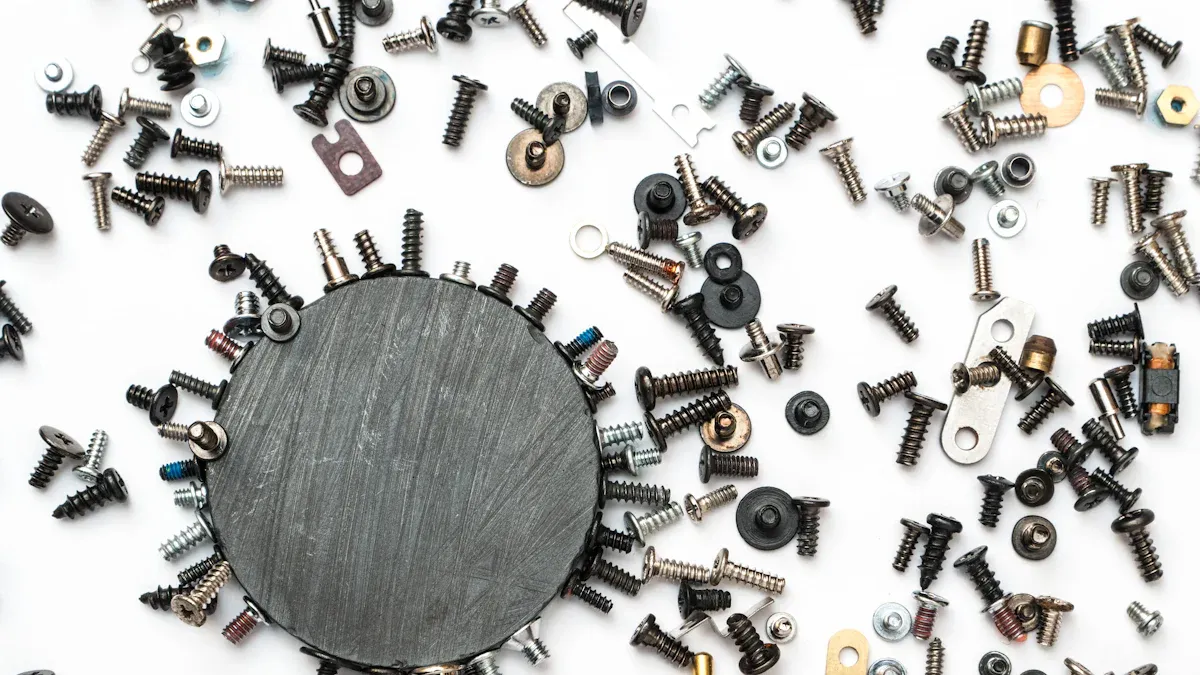
Testing stainless steel for magnetism requires only a small, strong magnet and a clean sample surface. This method provides a quick, non-destructive way to distinguish between different stainless steel types. The following steps outline the process:
-
Prepare the Surface
Clean the stainless steel surface to remove dust, oil, or coatings. A clean surface ensures accurate results. -
Select a Magnet
Use a neodymium or other strong magnet. Weak magnets may not reveal subtle magnetic responses. -
Apply the Magnet
Gently touch the magnet to the stainless steel. Observe whether the magnet sticks firmly, weakly, or not at all. -
Test Multiple Areas
Move the magnet to different spots, especially if the steel has been welded, bent, or cold-worked. Magnetic properties can vary across the same piece. -
Record Observations
Note the strength of attraction. A strong pull suggests a ferritic or martensitic grade, while little or no attraction points to an austenitic grade.
Tip: The magnet test is scientifically validated. Metallurgical studies confirm that austenitic stainless steels like 304 and 316 are generally non-magnetic in their annealed state, while ferritic and martensitic grades such as 430 and 410 show strong magnetic attraction. This test serves as a reliable preliminary screening method, though it cannot identify exact grades.
| Stainless Steel Grade | Magnetic Response | Additional Tests | Notes |
|---|---|---|---|
| 304 (Austenitic) | No attraction (unless cold-worked) | Nitric acid: no reaction; Molybdenum spot: negative; Spark test: short orange sparks | The magnet test is usually reliable for non-magnetic behavior |
| 316 (Austenitic) | No attraction (unless heavily cold-worked) | Nitric acid: no reaction; Molybdenum spot: positive; Spark test: short orange sparks | Magnet test is effective, but cold work can affect results |
| 430 (Ferritic) | Strong magnetic attraction | Nitric acid: no reaction; Molybdenum spot: negative; Spark test: longer white sparks | Magnet test reliably indicates magnetic stainless steel |
What Test Results Mean
Interpreting Weak vs. Strong Attraction
The results of the magnet test provide valuable clues about the stainless steel’s composition and processing history. A strong magnetic pull typically indicates a ferritic or martensitic stainless steel. These types contain higher concentrations of ferromagnetic elements such as iron and chromium, which align their atomic structure to support magnetism. In contrast, austenitic stainless steels, especially those with higher nickel content, show little or no attraction because nickel stabilizes the non-magnetic austenitic phase.
Empirical research demonstrates that weak magnetic attraction often results from lower concentrations of ferromagnetic elements or the presence of cold-worked regions in austenitic grades. Microstructural changes, such as the formation of martensite during bending or forming, can increase magnetic pull in otherwise non-magnetic steels. Strong attraction, on the other hand, reflects a stable ferritic or martensitic structure with high magnetic permeability.
- Austenitic stainless steels (304, 316) are generally non-magnetic unless cold-worked.
- Ferritic and martensitic stainless steels (430, 410) are magnetic and attract magnets strongly.
- A weak magnetic pull does not exclude austenitic grades, but a strong pull usually indicates ferritic or martensitic grades.
- The magnet test is a fast, non-destructive field test useful for sorting and preliminary identification.
- Complementary tests such as nitric acid corrosion resistance, molybdenum spot tests, and spark tests provide additional confirmation and improve reliability.
Choosing the Right Stainless Steel for Your Needs
When Magnetism Matters
Applications Where Magnetic Properties Are Important
Magnetic properties play a crucial role in many industrial and commercial applications. Ferritic and martensitic stainless steels, known for their magnetic behavior, often serve in environments where interaction with magnetic fields is essential. For example, manufacturers use magnetic stainless steels in electromagnetic components, solenoids, and fuel injectors. CNC machining processes benefit from magnetic grades because magnetic fixtures can securely hold workpieces, improving efficiency and precision.
In the food and pharmaceutical industries, magnetic separators rely on the ability to attract and remove small stainless steel particles during production. This process ensures product purity and safety. Automotive and industrial sectors use ferritic stainless steel in exhaust systems, trim, and structural components due to its magnetic nature and corrosion resistance. Martensitic stainless steel, valued for its strength and wear resistance, finds use in tools, machinery, and surgical instruments. Duplex stainless steels, which combine magnetic and non-magnetic phases, offer a balance of strength and corrosion resistance for harsh environments like chemical processing and marine applications.
- Magnetic stainless steels enable:
- Secure workholding in machining
- Efficient separation and detection in food and pharma
- Reliable performance in electromagnetic and automotive systems
Tips for Selecting Stainless Steel
Matching Grade to Your Project
Selecting the right stainless steel grade requires understanding both the magnetic requirements and the operating environment. Industry standards, such as AMS specifications, provide detailed guidance for critical applications like aerospace, where mechanical and magnetic properties must meet strict benchmarks. These standards recommend thorough testing, including chemical analysis, mechanical testing, and magnetic particle inspection, to ensure compliance.
Austenitic grades like 304 and 316, with higher nickel content, remain mostly non-magnetic and excel in environments demanding corrosion resistance. Ferritic and martensitic grades, which lack significant nickel, offer strong magnetic properties and suit applications where magnetic response is necessary. Duplex grades provide intermediate magnetism and high strength, making them suitable for structural and corrosive settings.
| Stainless Steel Grade | Magnetic Property | Typical Application |
|---|---|---|
| 304 (Austenitic) | Non-magnetic (may become partially magnetic when cold worked) | General purpose machinery, food processing, appliances |
| 316 (Austenitic) | Non-magnetic (may become partially magnetic when cold worked) | Marine and chemical processing environments |
| 410 (Martensitic) | Magnetic | High strength applications with mild corrosion resistance |
| 430 (Ferritic) | Magnetic | Decorative, automotive trim, appliances with moderate corrosion resistance |
| 2205 (Duplex) | Weak magnetic pull | High-strength corrosive environments like chemical processing and oil & gas |
Testing methods such as magnet tests, magnetic permeability measurements, and X-ray diffraction help identify the magnetic behavior of stainless steel. These tools assist engineers and designers in selecting the most suitable grade for each project.
Common Uses and Recommendations
Kitchen, Industrial, and Decorative Uses
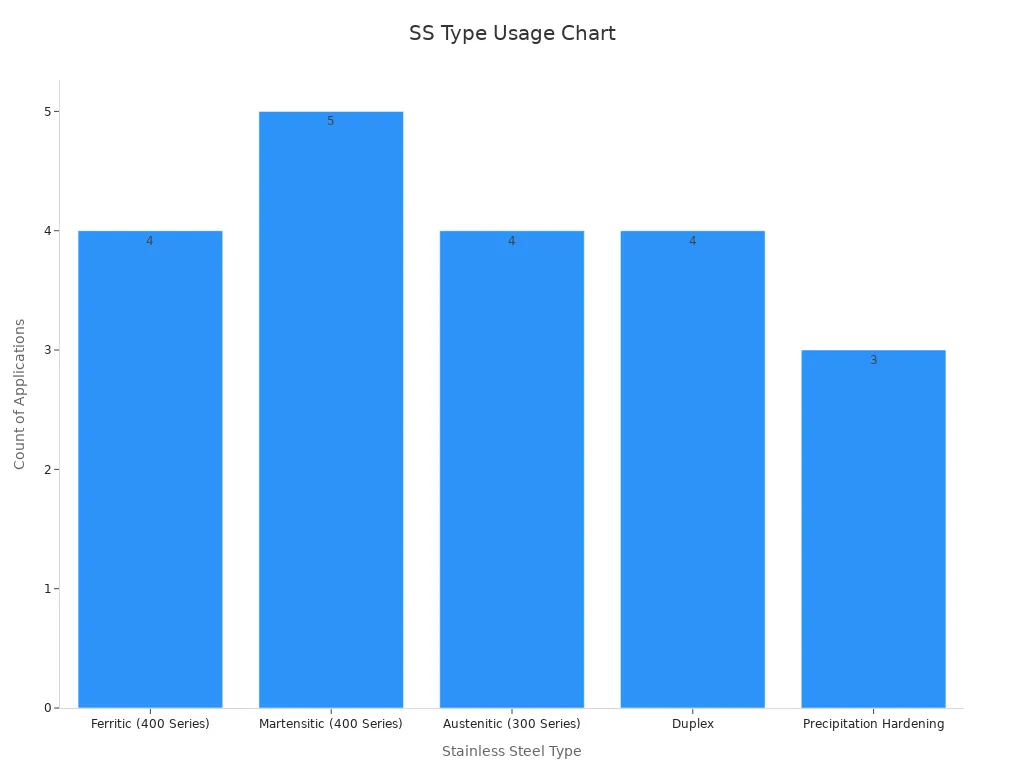
Stainless steel’s versatility stems from its range of magnetic properties and corrosion resistance. In kitchens, austenitic grades like 304 and 316 dominate due to their non-magnetic nature and resistance to food acids and cleaning chemicals. Industrial equipment, automotive parts, and cutlery often use ferritic and martensitic grades for their magnetic response and durability.
| Stainless Steel Type | Magnetic Properties | Common Applications |
|---|---|---|
| Ferritic (400 Series) | Magnetic | Industrial equipment, automotive parts, cutlery, aerospace components |
| Martensitic (400 Series) | Magnetic | Cutlery, industrial equipment, automotive components, aerospace, and surgical instruments |
| Austenitic (300 Series) | Generally Non-magnetic | Food processing (pipes, tanks), chemical processing, medical devices, architectural |
| Duplex | Combined magnetic and non-magnetic properties | Chemical processing, oil and gas, marine, and structural engineering |
| Precipitation Hardening | Magnetic | Durable components like gears, fasteners requiring high strength and hardness |
Practical recommendations emphasize aligning the stainless steel grade with the application’s magnetic and environmental needs. For example, magnetic grades suit equipment requiring magnetic response, while non-magnetic grades are ideal for medical devices and environments where magnetism could interfere with sensitive equipment. Heat treatment and cold working can further tailor magnetic properties, allowing manufacturers to optimize performance for each use case.
Tip: Always consider both the magnetic behavior and the corrosion resistance of stainless steel when selecting a grade for your project. This approach ensures optimal performance and longevity in any application.
Common Myths and Misconceptions About magnets and stainless steel
“All Stainless Steel Is Non-Magnetic”
Why This Isn’t True
Many people believe that all stainless steel resists magnets, but this idea does not align with scientific and technological findings. Stainless steel is not a single material; it is a family of alloys with different chemical compositions and microstructures. Some types, such as ferritic and martensitic stainless steels, display strong magnetic properties. Others, like austenitic stainless steels, remain mostly non-magnetic due to their high nickel content. However, even austenitic grades can become slightly magnetic after cold working or welding, which changes their internal structure.
The following table summarizes key factors that explain why not all stainless steel is non-magnetic:
| Aspect | Explanation |
|---|---|
| Metallurgical Composition | Stainless steel includes various alloys. Chromium defines stainless steel, but nickel content varies. |
| Microstructure Types | Ferritic and martensitic types have magnetic microstructures. Austenitic types, with nickel, are generally non-magnetic. |
| Effect of Nickel | Nickel in austenitic stainless steels stabilizes the non-magnetic phase. |
| Processing Effects | Cold working and welding can increase martensite or ferrite, making some areas more magnetic. |
| Practical Example | Stainless steel sinks often show less magnetism on flat surfaces but more in pressed corners due to martensite formation during manufacturing. |
| Authoritative Validation | The British Stainless Steel Association confirms that magnetism depends on microstructure and processing, not simply on the label "stainless." |
Note: The magnetic response of stainless steel depends on its alloy type and how it was processed. This fact dispels the myth that all stainless steel is non-magnetic.
“Magnetism Means Low Quality”
Debunking Quality Myths
Another common misconception suggests that magnetic stainless steel must be of lower quality. This belief does not reflect the reality of how magnets and stainless steel interact. Scientific research shows that magnetism in stainless steel results from its microstructure and alloy composition, not from inferior quality. Ferritic stainless steels, which contain mostly iron, naturally exhibit magnetic properties. Austenitic stainless steels, with higher chromium and nickel, usually remain non-magnetic. However, when austenitic stainless steel undergoes cold working or certain treatments, it can become slightly magnetic. This change is temporary and does not signal poor quality.
Quality in stainless steel depends on factors such as corrosion resistance, strength, and durability. Magnetism only indicates the type of alloy and its processing history. Many high-quality stainless steels, especially those produced through advanced methods like powder metallurgy, can be magnetic or non-magnetic depending on their intended application. The presence or absence of magnetism does not determine the performance or reliability of the material.
Tip: When selecting stainless steel, focus on the grade, intended use, and required properties. Magnetism alone does not define quality.
Not all stainless steels show the same magnetic behavior. Austenitic grades usually remain non-magnetic, while ferritic and martensitic types display strong magnetism. Simple magnet tests help users quickly identify these differences. Selection should always match the application’s requirements for magnetism.
| Aspect | Key Findings |
|---|---|
| Phase Transformation | Transition from austenite to martensite changes magnetic properties and signals fatigue. |
| Morphology Changes | Strain alters martensite grain size, affecting magnetic response. |
| Correlations | Magnetic properties shift with microstructure and fatigue, showing strong measurable links. |
Tip: Always consider both the grade and processing history when choosing stainless steel for magnetic applications.
FAQ
Do all stainless steels attract magnets?
No, not all stainless steels attract magnets. Ferritic and martensitic types show magnetic properties. Austenitic stainless steels, such as 304 and 316, usually remain non-magnetic unless cold worked.
How does powder metallurgy affect stainless steel magnetism?
Powder metallurgy allows precise control over microstructure. This process can tailor grain size and phase distribution, which directly influences the magnetic properties of stainless steel components.
Can cold working make non-magnetic stainless steel magnetic?
Yes. Cold working, such as bending or rolling, can transform some austenitic stainless steels into a partially magnetic state by forming martensite within the structure.
Why do some kitchen appliances made of stainless steel attract magnets?
Manufacturers often use ferritic stainless steel for appliances. This type contains a body-centered cubic structure, which supports magnetism. Austenitic grades, used in sinks or cookware, usually do not attract magnets.
How can someone test if stainless steel is magnetic?
A simple magnet test works well. Place a strong magnet against the steel surface. If the magnet sticks firmly, the steel is magnetic. Weak or no attraction suggests a non-magnetic grade.
Does magnetism indicate stainless steel quality?
Magnetism does not reflect quality. It only shows the alloy’s structure and composition. High-quality stainless steel can be either magnetic or non-magnetic, depending on its intended application.
Are duplex stainless steels magnetic?
Duplex stainless steels contain both ferritic and austenitic phases. They show partial magnetism. The ferritic phase contributes to magnetic behavior, while the austenitic phase reduces overall attraction.
Can heat treatment change the magnetic properties of stainless steel?
Heat treatment can alter the balance between magnetic and non-magnetic phases. For example, tempering martensitic stainless steel can adjust its magnetic response by changing the amount of martensite present.