

Introduction
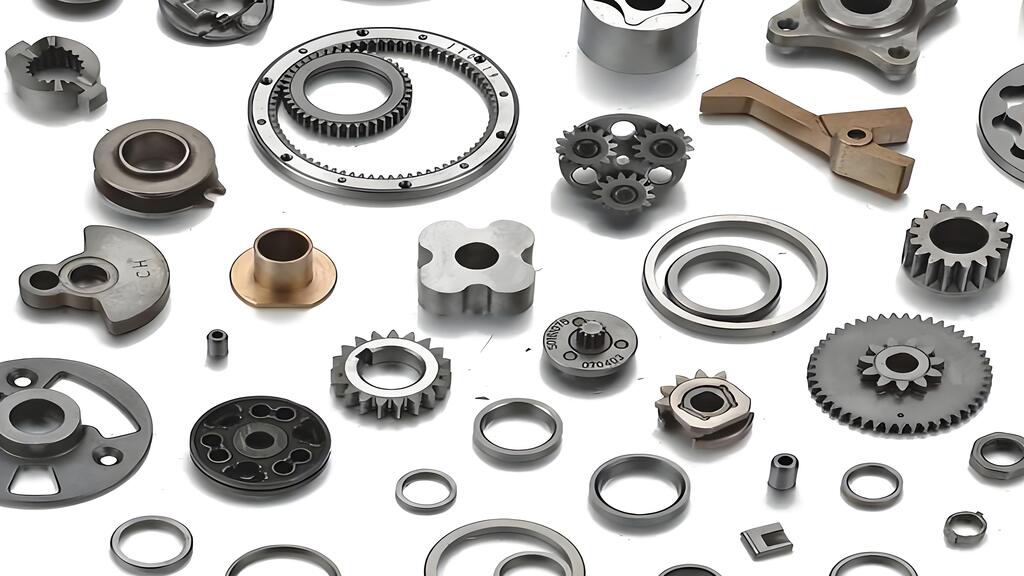
For manufacturers producing small, complex components at scale, MIM metal offers a practical balance of precision, performance, and cost. By combining metal powders with injection molding and Sintering, the process can create near-net-shape parts that are difficult or uneconomical to machine conventionally. This article explains the core properties of MIM metal, where it performs best, and why it has become a strong option for precision parts in industries that demand tight tolerances, repeatability, and efficient high-volume production. It also sets up the key tradeoffs engineers should understand when comparing MIM with machining, casting, and other metal forming methods.
Why Is MIM Metal a Strategic Choice for Precision Parts
metal injection Molding (MIM) represents a transformative manufacturing process that bridges the gap between plastic injection molding andtraditional metallurgy. By combining fine metal powders with a thermoplastic or wax binder, MIM metal technology allows engineers to produce highly complex geometries that would be economically prohibitive or technically impossible to machine from solid bar stock. Once molded, the binder is removed, and the part is sintered at high temperatures to fuse the metal particles into a solid, high-density component.
How does MIM metal combine design freedom with high-volume efficiency
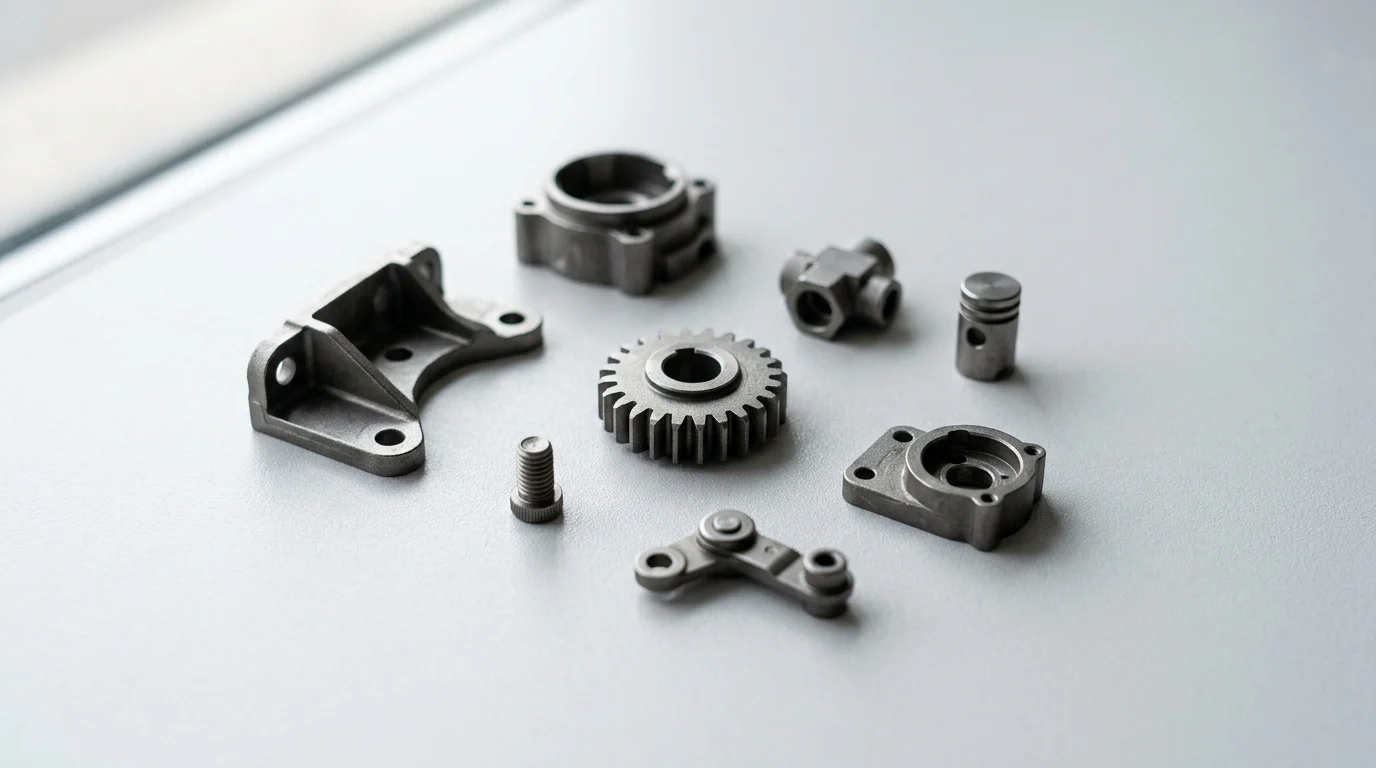
The primary advantage of MIM metal lies in its ability to deliver intricate design features—such as undercuts, internal threads, and cross-holes—without requiring secondary machining. While creating injection molds requires an initial capital investment, the per-part cost drops significantly at production runs exceeding 10,000 to 25,000 units annually.
Furthermore, the process is uniquely suited for small, intricate components. MIM metal typically provides the highest return on investment for parts weighing between 0.1 and 250 grams. In this specific size band, the material waste and extensive machine time associated with subtractive manufacturing would otherwise cripple overall profitability.
Which industries rely on MIM metal for complex precision parts
A diverse array of demanding industries leverages MIM metal to solve complex engineering challenges. In the medical sector, surgical instruments, articulating forceps, and orthodontic brackets demand rigorous biocompatibility alongside precise geometries. The automotive industry relies heavily on MIM for fuel injector nozzles, turbocharger vanes, and sensor housings, requiring materials that can withstand extreme thermal cycling and mechanical stress.
Additionally, the consumer electronics and firearms sectors utilize the process for mass-producing intricate latches, hinges, and fire-control components. Across these diverse applications, MIM consistently achieves dimensional tolerances of ±0.3% to ±0.5% of nominal dimensions. This high degree of repeatability ensures seamless integration into complex mechanical assemblies without the need for manual hand-fitting.
What Properties of MIM Metal Matter Most
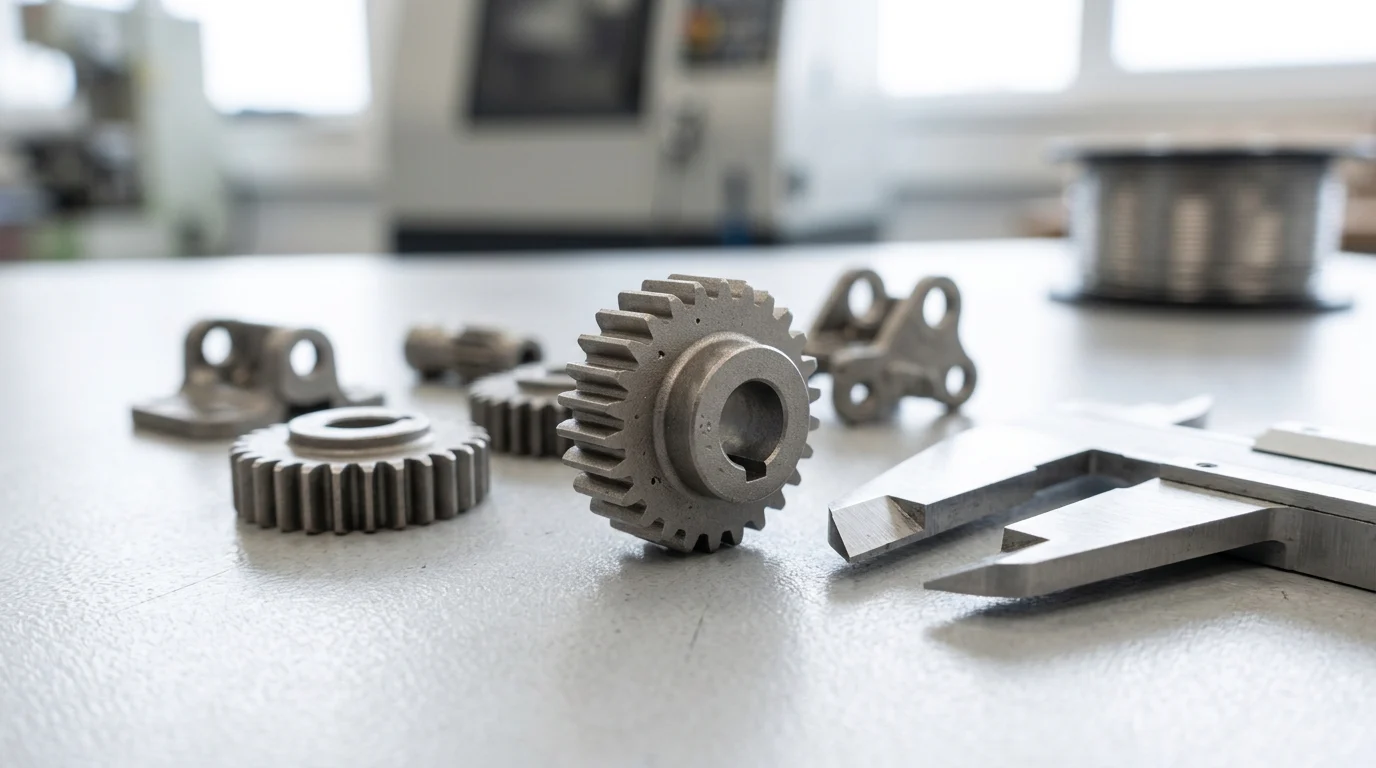
The fundamental value of MIM metal is rooted in its metallurgical integrity. Unlike conventional press-and-sinter powder metallurgy, which often leaves significant internal porosity and unidirectional structural weaknesses, the MIM process yields components that closely mimic the isotropic properties of wrought metals.
Which mechanical, dimensional, and surface properties define MIM parts
The mechanical strength, hardness, and fatigue resistance of MIM metal parts are directly tied to their final sintered density, which typically reaches 95% to 99% of theoretical limits. This near-full density ensures that the parts exhibit excellent tensile and yield strengths, making them fully capable of replacing forged or machined components in load-bearing applications.
Dimensionally, the process is highly repeatable once the tooling and thermal profiles are dialed in. On the surface, an as-sintered MIM part generally presents a surface roughness ranging from Ra 0.8 to 1.5 µm. This baseline finish is smooth enough for many end-use applications and provides an excellent foundation for subsequent secondary operations like polishing, passivation, or electroplating.
How do alloy selection, density, shrinkage control, and post-processing affect performance
Achieving optimal mechanical properties requires rigorous control over alloy selection and the sintering environment. Standard alloys like 316L stainless steel provide superior corrosion resistance for medical applications, while 17-4 PH stainless steel is frequently selected for its exceptional strength, often exceeding 900 MPa in ultimate tensile strength after precipitation hardening.
A critical manufacturing variable is shrinkage control. Because the polymeric binder is chemically or thermally removed, parts typically shrink by 15% to 20% during the high-temperature sintering phase. Engineers must precisely calculate this reduction during the mold design phase to ensure final dimensional accuracy. If specific application demands exceed standard MIM capabilities, post-processing techniques such as Hot Isostatic Pressing (HIP) can be deployed to eliminate residual micro-porosity, driving the material density to virtually 100%.
How Does MIM Metal Compare with Other Manufacturing Methods
Selecting the optimal manufacturing process requires understanding exactly where MIM metal sits within the broader landscape of metalworking techniques. It occupies a specialized niche, consistently outperforming traditional methods in scenarios involving geometric complexity, miniature part sizing, and significant production volumes.
Which comparison points show where MIM metal delivers the most value
When comparing MIM metal to CNC machining, material utilization stands out as a primary differentiator. CNC machining often suffers from a high buy-to-fly ratio, sometimes reaching 10:1 for complex aerospace or medical components, meaning up to 90% of the raw material is machined away as chips. In stark contrast, MIM metal generates less than 5% material waste, as runners and sprues can frequently be reground and recycled.
Against investment casting, MIM provides superior surface finishes and tighter tolerances, particularly for micro-components weighing under 10 grams—a threshold where casting processes struggle with reliable mold filling and consistency. Compared to traditional powder metallurgy (PM), MIM allows for true three-dimensional design freedom. PM is generally restricted to 2D vertical pressing and cannot easily accommodate undercuts, whereas MIM achieves both complex 3D routing and much higher structural density.
What should a comparison table include when evaluating MIM
To systematically evaluate manufacturing options, engineering teams must weigh metallurgical properties against economic constraints. The following comparison matrix illustrates how MIM metal stacks up against alternative processes across critical manufacturing metrics.
| Process | Typical Density | Standard Tolerance | Optimal Part Weight | Material Waste |
|---|---|---|---|---|
| MIM Metal | 95% - 99% | ±0.3% - ±0.5% | 0.1g - 250g | Low (<5%) |
| CNC Machining | 100% | ±0.01mm | Any | High (Up to 90%) |
| Investment Casting | 99% | ±0.5% - ±1.0% | >10g to 100kg+ | Moderate |
| Powder Metallurgy | 85% - 92% | ±0.1% - ±0.2% | 10g - 1kg+ | Low (<5%) |
This table highlights that while CNC machining holds the ultimate edge in absolute precision and 100% density, MIM metal provides the most balanced combination of extremely low waste, high complexity enablement, and acceptable tolerances for small-scale parts.
Where Is MIM Metal Used and How Should Buyers Evaluate
Transitioning from a prototype concept to full-scale production requires not only validating the technical feasibility of MIM metal but also ensuring the supply chain is robust. Identifying the right end-use cases and partnering with a highly capable supplier are critical steps in mitigating mass-production risks.
Which applications are best suited to medical, automotive, and electronics uses
Medical applications, such as endoscopic scissors, scalpel handles, and articulation joints, represent some of the most rigorous environments for MIM metal. These parts demand the chemical stability and biocompatibility of alloys like 316L, alongside stringent resistance to repeated autoclave sterilization cycles.
In the automotive sector, MIM is heavily deployed for powertrain components, seat belt locking mechanisms, and fuel injection systems, where parts must endure millions of cycles without catastrophic fatigue failure. Meanwhile, consumer electronics manufacturers leverage MIM for structural integrity in wearables and smartphones, producing folding screen hinges and camera lens bezels. In these consumer tech applications, production scales often demand upwards of 1,000,000 units per month, requiring MIM facilities capable of massive, uninterrupted throughput and stringent cosmetic grading.
What qualification steps help assess MIM metal suppliers
Evaluating a prospective MIM supplier requires a deep dive into their quality management systems and operational capacity. Buyers should verify industry-specific certifications, such as ISO 13485 for medical devices, IATF 16949 for automotive components, or AS9100 for aerospace applications.
A highly capable supplier should demonstrate strict statistical process controls, consistently targeting defect rates below 50 Parts Per Million (PPM). Additionally, buyers must assess the supplier's tooling infrastructure. High-quality MIM molds constructed from hardened tool steel should guarantee a lifespan of 300,000 to 1,000,000 shots before requiring major refurbishment. Evaluating the supplier's feedstock sourcing strategy—whether they compound their own proprietary materials in-house or purchase pre-mixed commercial feedstock—can also provide valuable insight into their cost structures, material traceability, and ability to handle custom alloy requests.
When Is MIM Metal the Right Choice for Cost and
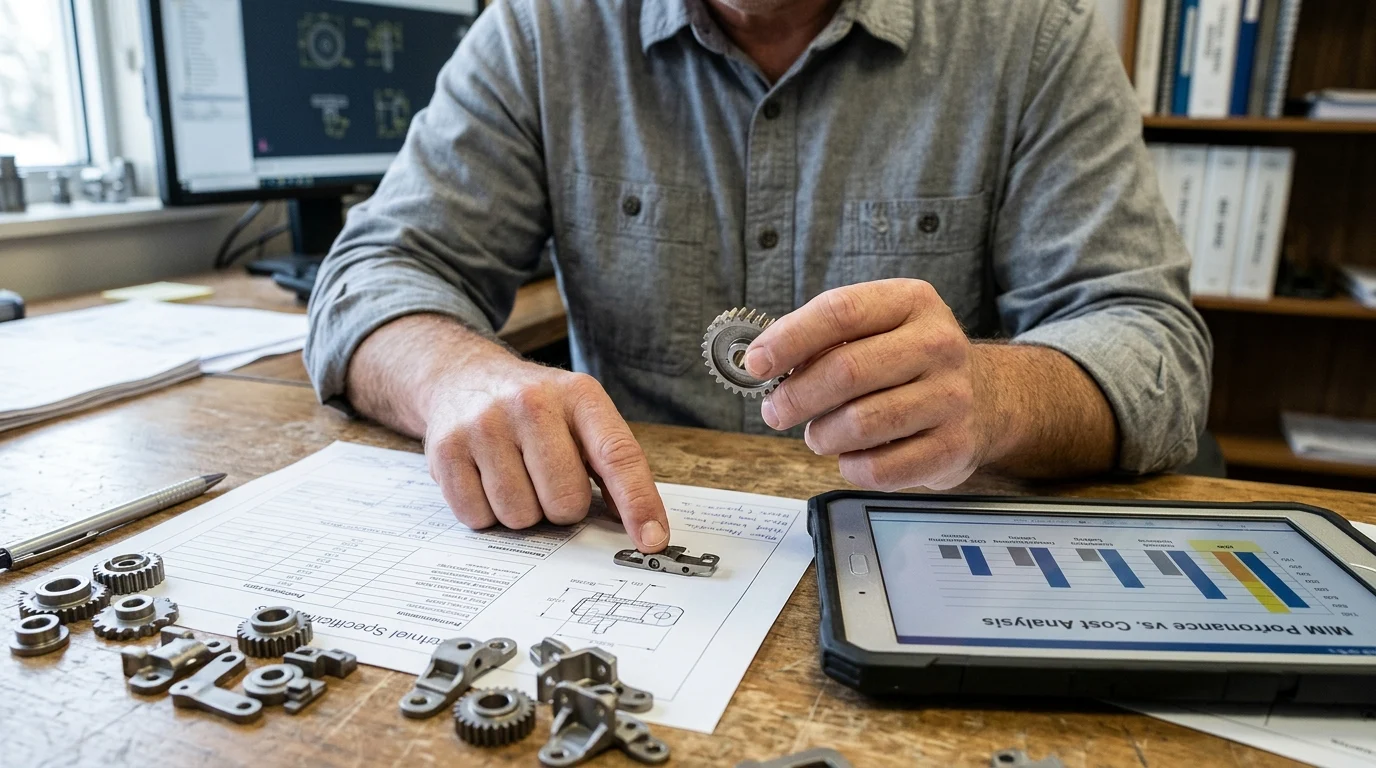
The ultimate decision to specify MIM metal hinges on a comprehensive total cost of ownership (TCO) analysis. While the technological benefits of near-net-shape manufacturing are clear, commercial viability is entirely dictated by upfront tooling investments, projected production volumes, and lifecycle engineering requirements.
How should manufacturers decide whether MIM metal is the right process
The primary barrier to entry for MIM metal is the initial tooling expenditure. Designing and cutting the precise injection molds typically costs between $10,000 and $50,000, depending on the number of cavities, the inclusion of side-actions, and overall geometric complexity. Because of this upfront capital requirement, MIM is rarely suitable for low-volume production runs or rapid prototyping.
Manufacturers generally find that the economic breakeven point—the juncture where the amortized tooling cost and lower piece price of MIM undercut the high piece price of CNC machining—occurs between 15,000 and 20,000 units annually. If a product's lifecycle demands 100,000 units or more, MIM metal quickly becomes an overwhelmingly dominant choice for long-term cost reduction and supply chain scalability.
Which commercial and engineering criteria determine long-term value
Long-term value in MIM metal procurement relies on aligning engineering needs with commercial realities. Design consolidation—the practice of combining multiple machined or stamped sub-components into a single monolithic MIM part—can eliminate secondary assembly labor, reduce points of failure, and lower inventory tracking costs, effectively multiplying the return on investment.
| Decision Criteria | Favorable for MIM Metal | Unfavorable for MIM Metal |
|---|---|---|
| Annual Volume | > 20,000 units | < 5,000 units |
| Part Weight | Under 100 grams | Over 500 grams |
| Geometry | Highly complex, multi-axis features | Simple 2D profiles, easily turned |
| Material Utilization | Expensive raw materials (e.g., Titanium) | Cheap raw materials (e.g., Aluminum) |
By carefully evaluating these specific thresholds, engineering and procurement teams can confidently deploy MIM metal to optimize their manufacturing strategies. When applied to the right geometric profiles and production scales, the technology delivers a compelling synthesis of mechanical reliability, scalable design freedom, and sustained long-term cost efficiency.
Key Takeaways
- The most important conclusions and rationale for MIM Metal
- Specs, compliance, and risk checks worth validating before you commit
- Practical next steps and caveats readers can apply immediately
Frequently Asked Questions
What part sizes are best suited for MIM metal?
MIM is most cost-effective for small, complex parts weighing about 0.1 to 250 grams, especially when machining would waste material or require long cycle times.
When is MIM metal more economical than CNC machining?
MIM usually becomes more economical for intricate parts at annual volumes above roughly 10,000 to 25,000 pieces, where tooling cost is spread across large runs.
What tolerances can MIM metal parts typically achieve?
Typical MIM tolerances are about ±0.3% to ±0.5% of nominal dimensions, with repeatable results once tooling, debinding, and sintering parameters are optimized.
Which alloys are commonly used for MIM metal parts?
Common MIM alloys include 316L stainless steel for corrosion resistance and 17-4 PH stainless steel for high strength, depending on the application’s environment and load.
Can JH PIM help with custom precision MIM metal components?
Yes, JH PIM focuses on custom metal injection molding for precision parts, helping with material selection, tooling design, shrinkage control, and volume production planning.