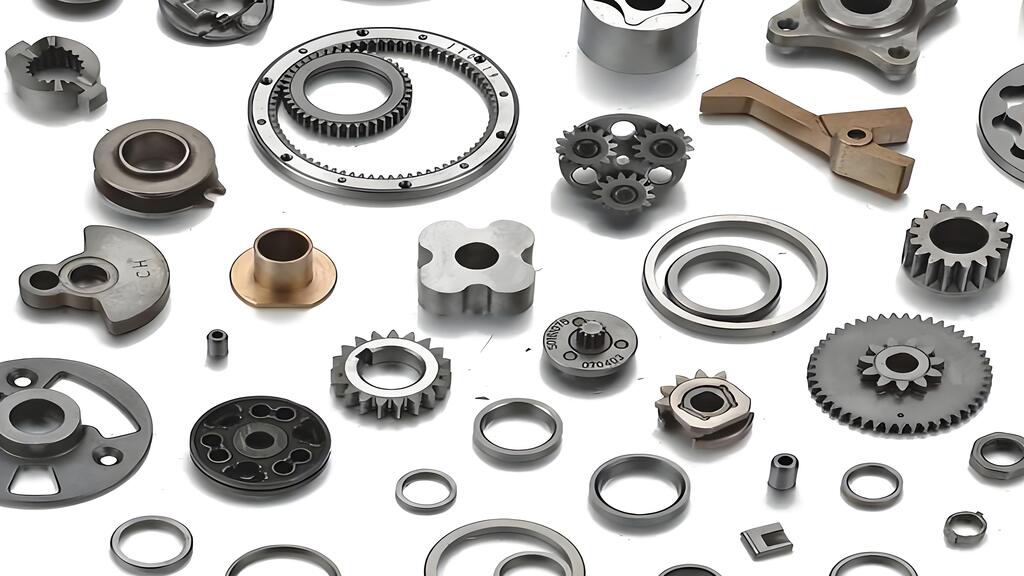


Powder Metal Parts vs Forged Parts
Powder forging has transformed manufacturing. Powder Metal parts now perform better than cast iron products that make up 80% of the powder metal industry today. A look at the manufacturing world shows that specific application needs and production limits determine the choice between powder metal parts and forged components.
Powder Metallurgy creates complex, small parts with precise dimensions and minimal waste. Traditional forging, however, produces components with better mechanical properties. Forged parts show 26% higher tensile strength than cast alternatives. The distinction between powder forging and powder metallurgy matters especially when you have production volume and stress tolerance requirements. Powder metal forging is a chance to get the best of both processes for certain applications.
This comparison will break down both manufacturing methods by their production processes, mechanical properties, cost efficiency, and ideal applications. You'll learn which technique matches your manufacturing needs best.
Manufacturing Process Overview
Manufacturing processes make powder metal parts distinct from their forged counterparts. Let's get into how these methods differ in execution and results.
Powder Metallurgy: Compacting and Sintering Explained
The conventional powder metallurgy (PM) process, also called press-and-sinter, starts when metal powders mix with lubricants or additives to create a uniform mixture. The mixture gets compacted in a die at pressures that typically range from 138 MPa (10 tsi) to 965 MPa (70 tsi). Neighboring powder particles create cold welds during compaction, which provides enough "green strength" to handle the material.
The critical heat treatment of sintering happens below the metal's melting point. The compact moves through a controlled-atmosphere furnace where diffusion creates necks that form and grow at particle contact points. This process eliminates pressing lubricants, cuts down surface oxides, and turns the compacted powder into a solid metal component.
Forging Process: Open Die vs Closed Die
Forging shapes components differently than powder metallurgy by applying force to solid metal. Metal placed between multiple dies that don't fully enclose the material creates open die forging. The metal deforms through hammering or stamping until it reaches the desired shape. Simple, large components like disks, rings, and shafts work well with this method.
Closed die forging (impression die forging) works by compressing metal under high pressure to fill an enclosed die cavity. The metal's grain structure realigns along the force lines, which enhances strength and impact resistance by a lot. The process achieves tighter tolerances and better surface finishes that often need minimal secondary machining.
Difference Between Powder Forging and Powder Metallurgy
Powder forging blends elements from both processes. Traditional powder metallurgy steps come first, followed by a forging operation on the sintered compact. The additional step boosts density and improves mechanical properties beyond conventional PM parts.
The automotive industry shows this hybrid approach's effectiveness in connecting rods. These components start as powder metal compacts but undergo forging to achieve required strength. The parts gain extra strength from the deformation energy while keeping some of powder metallurgy's dimensional precision.
Mechanical Properties and Performance
The structural differences between powder metal and forged components create a mechanical performance gap. A close look at these properties helps us determine the best manufacturing method for specific applications.
Tensile Strength: Forged vs Powder Metal Parts
Mechanical tests show that forged steel components have 19% higher yield strength than powder metal alternatives. Their ultimate tensile strength is about 8% better. This advantage comes from the forging process that creates a continuous, arranged grain structure throughout the material. Powder metallurgy parts show lower ductility than forged components.
Proper density control helps PM parts reach good strength levels. Press-and-sintered ferrous PM materials reach ultimate tensile strength of 900 N/mm² as-sintered or 1200 N/mm² after heat treatment. This is a big deal as it means that powder forged steels deliver ultimate tensile strength up to 950 N/mm² as-forged and 2050 N/mm² when heat-treated.
Fatigue Resistance and Impact Strength
Forged components are much stronger than PM parts in fatigue performance. Research shows forged steel has 27% higher long-life fatigue strength than powder metal. This results in a service life. Tests prove that forged steel connecting rods have 37% higher fatigue strength, which makes them last nearly two orders of magnitude longer.
Impact resistance gets better at higher PM densities. Figure 2 shows how impact energy increases with higher density and lower carbon content. In spite of that, forged components still have better impact resistance. Their arranged grain structure absorbs and spreads impact forces more effectively.
Porosity and Density Differences
The biggest difference between these manufacturing methods comes down to density. Forged parts reach 100% density without any inherent porosity. In comparison, powder metallurgy components have tiny pores that affect their strength, ductility, and overall mechanical properties.
Powder forging can push sintered part density above 98%. This reduces porosity and improves strength and toughness Some critical components like connecting rods start as powder metal compacts and then go through forging to get the strength they need.
Heat Treatment Compatibility
Heat treatment works well with both manufacturing methods, though with different outcomes. PM steels can reach fatigue endurance limits of 540 N/mm² after heat treatment. Powder forged steels go up to 635 N/mm². Research shows that forged components respond better to heat treatment than parts made through other processes.
Cost, Efficiency, and Production Volume
Manufacturing companies base their decisions between powder metallurgy and forging techniques on economics. Both methods come with their own benefits in costs, material efficiency, and production output.
Tooling and Setup Costs
The upfront tooling investments show big differences between these manufacturing methods. Powder metallurgy (PM) tools need high precision and complex designs that push costs higher. Most PM tooling costs fall between $5,000 and $15,000 per part. Large and complex components with multiple levels can cost up to $30,000. Forging dies are simpler and cost less. But companies need to weigh this advantage against other production factors.
Die production costs for forging remain high, which makes short production runs expensive. PM proves to be more cost-effective for the right applications.
Material Waste and Utilization
PM manufacturing stands out in material efficiency and delivers better utilization with minimal waste. The process uses more than 97% of starting raw material in finished parts. This remarkable conservation leads to cost savings and helps the environment.
PM allows complex shapes with minimal waste, unlike machining processes that create lots of material waste. Forging operations can recycle their burrs and scraps, which helps manage waste. Both methods use materials better than traditional manufacturing like machining or stamping.
Production Speed: High Volume vs Low Volume
Production volumes change based on the manufacturing technique:
- Short-run PM: 500 to 10,000 pieces
- Normal-run PM: 10,000 to 100,000 pieces
- High-volume PM: 100,000 to 10,000,000 pieces
PM can produce several hundred to several thousand parts per hour. Forging needs two to three weeks for dies and samples, plus about a month for mass production. The process uses one or few presses to create final part shapes quickly, which boosts production efficiency.
Secondary Machining Requirements
Secondary operations play a big role in total production costs. PM parts need little to no secondary machining because of their net-shaping abilities. This cuts labor costs.
Forged parts often need extra machining and finishing to reach final dimensions and surface finish. These extra steps raise project costs and take more time. Modern powder forged components can achieve near-net shapes with better strength while reducing waste and machining needs.
Best Use Cases and Industry Applications

Manufacturing choices between powder metallurgy and forging depend largely on the industry. Each method shows its strengths in specific applications based on production needs and performance requirements.
Automotive Components: Gears, Rods, and Axles
The automotive sector uses both manufacturing methods wisely. Powder metallurgy works best in:
- Transmission gears and engine bushings
- Brake system components
- Ratchets, clutches, and drive shafts
PM delivers high-volume production at lower costs in these applications.
Forged components prove better for high-impact automotive parts like axles, spindles, and suspension components. The connecting rod shows an interesting hybrid case. It starts as a powder metal compact and then goes through forging to gain the strength it needs. This combination offers both the precision and speed benefits of powder metallurgy ,among other strength advantages from forging.
Aerospace and High-Stress Environments
Aerospace applications favor forged components, particularly for vital high-stress parts. Industry sources confirm that forging creates parts with better strength and impact resistance. These qualities make them perfect for high-stress, high-impact, or high-temperature uses.
Hot forging and post-processing remain the traditional methods to produce titanium alloy Ti-6Al-4V components in aerospace. Forged steel's high density and zero porosity boost resistance to wear and corrosion. These qualities matter greatly in demanding aerospace settings.
Small Complex Parts vs Large Structural Parts
Part size and complexity play a big role in choosing the manufacturing method. Powder metallurgy shines with:
- Small parts with intricate designs
- Complex shapes requiring high dimensional accuracy
- Components that need minimal secondary machining
Forging becomes the better choice when:
- Products are large
- Strength and fatigue resistance needs are high
- Part failure would cause serious problems
Powder Metal Forging in Hybrid Applications
Hybrid manufacturing methods combine the best of both processes. Forged Powder Metallurgy (FPM) shows 30% more durability than wrought steels. It also achieves up to 20% mass reduction.
This new approach works great for parts needing complex geometries with precision. FPM finds its use in differential gear sets and connecting rods for electrified drivetrains. Modern powder metal technologies now match forge-like properties while keeping PM's shape-making abilities . This advancement cuts costs in applications that once required forging only.
Comparison Table
| Characteristic | Powder Metal Parts | Forged Parts |
|---|---|---|
| Manufacturing Process | Metal powders are mixed and compacted at 138-965 MPa, then sintered | Solid metal undergoes force application through open or closed die forging |
| Density | Less than 100% with porosity present | Complete 100% density without porosity |
| Tensile Strength | Reaches 900 N/mm² after sintering and 1200 N/mm² with heat treatment | Shows 19% higher yield strength compared to PM parts |
| Fatigue Strength | Demonstrates reduced fatigue performance | Delivers 27% higher long-life fatigue strength |
| Heat Treatment Response | Achieves fatigue endurance limits of 540 N/mm² | Reaches fatigue endurance limits of 635 N/mm² |
| Material Utilization | Uses over 97% of raw material | Shows lower utilization due to burrs and scrap waste |
| Secondary Machining | Needs minimal or no machining | Requires additional machining steps |
| Tooling Costs | Complex parts range from $5,000-$30,000 | Features lower upfront tooling investment |
| Best Applications | Suits small, complex parts with detailed designs | Ideal for large structural and high-stress components |
| Ideal Production Volume | Ranges from 500 to 10,000,000 pieces | Works best for medium to large production runs |
| Primary Industries | Used in automotive transmission, engine bushings, brake systems | Serves aerospace, automotive axles, high-stress applications |
Conclusion
The choice between powder metal parts and forged components depends on your application needs and production limits. These manufacturing methods differ in their processes and results fundamentally. Forged components show better mechanical properties with 19% higher yield strength, 27% greater fatigue resistance, and zero porosity. Notwithstanding that, powder metallurgy's advantages are a great way to get material efficiency. It uses over 97% of starting materials and creates complex shapes with minimal secondary machining.
Production costs make the decision clearer. Powder metallurgy becomes an economical solution for high-volume production of small, complex parts, especially when you have automotive needs like transmission components and engine bushings. Forged parts are nowhere near a match for high-stress environments. They shine in aerospace applications where material integrity and extreme condition performance matter most. Hybrid approaches like powder metal forging create an exciting middle ground. They combine PM's precision with forging's strength advantages.
Production volumes help pick the best manufacturing method. Powder metallurgy works for batches from 500 pieces to multi-million unit runs. The tooling costs between $5,000-$30,000 might seem steep at first. Forging needs less initial tooling investment but makes economic sense for medium to large production runs due to secondary machining needs.
Our detailed comparison shows manufacturers should assess their strength requirements, production volumes, part complexity, and budget limits before choosing their manufacturing approach. Both technologies keep advancing, particularly in hybrid methods. These improvements will without doubt expand where we can use them while closing the performance gap between these distinct processes.
FAQs
Q1. What are the main differences between powder metal parts and forged parts? Powder metal parts are made by compacting and sintering metal powders, while forged parts are created by applying force to solid metal. Forged parts typically have higher strength and density, but powder metal parts offer better material utilization and can produce more complex shapes with less secondary machining.
Q2. Which manufacturing method is more cost-effective for high-volume production? Powder metallurgy is generally more cost-effective for high-volume production, especially for small, complex parts. It offers superior material utilization (over 97%) and requires minimal secondary machining, making it ideal for producing hundreds to thousands of parts per hour.
Q3. How do the mechanical properties of powder metal and forged parts compare? Forged parts typically demonstrate superior mechanical properties, with approximately 19% higher yield strength and 27% higher long-life fatigue strength compared to powder metal parts. Forged components also have 100% density without porosity, contributing to their better performance in high-stress applications.
Q4. In which industries are powder metal parts most commonly used? Powder metal parts are widely used in the automotive industry for components such as transmission gears, engine bushings, brake system parts, and drive shafts. They're also utilized in other industries where small, complex parts with high dimensional accuracy are required.
Q5. What is powder metal forging and what advantages does it offer? Powder metal forging is a hybrid process that combines elements of powder metallurgy and forging. It starts with traditional powder metallurgy steps but adds a forging operation to the sintered compact. This method offers increased density and improved mechanical properties beyond conventional powder metal parts, while retaining some of the dimensional precision and material efficiency benefits of powder metallurgy.