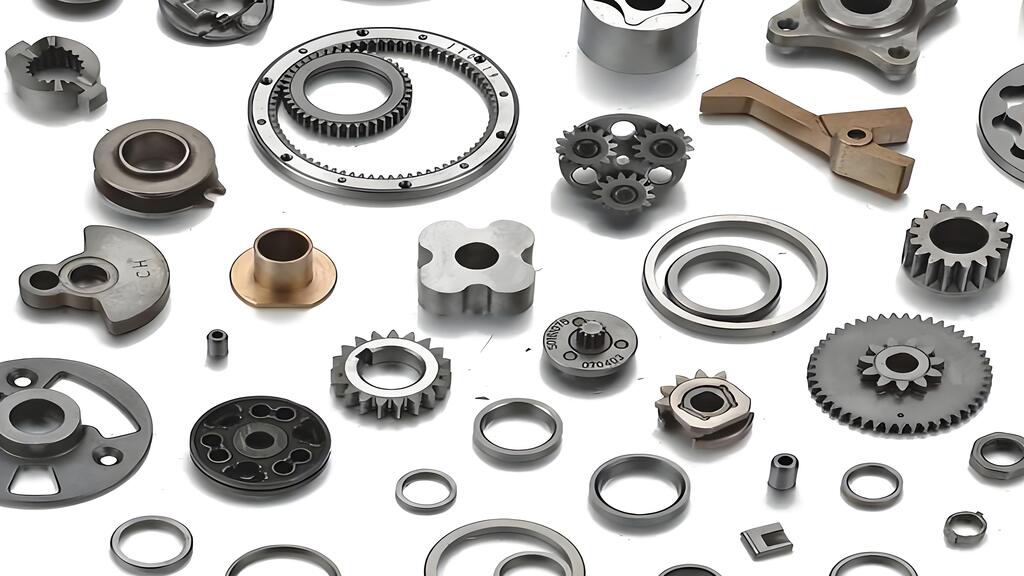


Powder Metallurgy Manufacturing Cuts Lock Production Costs

Powder metallurgy manufacturing has become one of the most important technologies in the lock industry as it creates precise and durable components . This metal-forming technology compacts metal powders into exact shapes that are sintered at high temperatures to produce solid, long-lasting parts . Lock parts made through Powder Metallurgy outperform traditional casting and forging methods with better strength, wear resistance, and complex shapes. These improvements enhance lock safety and performance.
Manufacturers find powder metallurgy exceptionally useful to produce large quantities of consistent, premium-quality parts. The process works great for standard and custom lock solutions . The powder metallurgy market keeps growing as smart locks gain popularity. This growth pushes the need for components that are more precise, durable, and resistant to wear . The process helps cut costs through efficient material use and lower energy needs during production . On top of that, it has proven its worth in many industries - about 80% of all powder metallurgy structural components go into automotive uses, including locks and latches . This piece shows how manufacturers can cut costs substantially by using powder metallurgy techniques and processes.
How Powder Metallurgy Simplifies Lock Component Design

Lock makers continually seek ways to expedite production without compromising quality. Powder metallurgy (Pm) manufacturing offers a cost-effective solution that produces precise, complex components with minimal secondary operations.
PM technology changes how companies design and produce lock components. Traditional machining removes material to create parts. However, powder metallurgy builds components by compacting metal powders into precise shapes. This approach gives lock manufacturers major design advantages.
Designing for Net-Shape Reduces CAD-to-Production Time
Net-shape capabilities of powder metallurgy speed up the production cycle substantially. Designers create CAD models first. The rigid dies are then manufactured to match these specifications. Lock components come out of the sintering process at 90% of their finished form. This eliminates or reduces the need for secondary machining operations.
The production moves quickly from design to final product:
- CAD modeling of the lock component
- Precision die creation based on the design
- Metal powder compaction in the die
- Sintering to fuse the particles
- Minimal finishing operations if required
This efficient process creates parts with excellent dimensional control and surface finish. These features are crucial for lock cylinders because minor deviations affect alignment and security.
Complex Internal Features Without Multi-Part Assembly
Powder metallurgy lets manufacturers create intricate geometries that would normally need multiple manufacturing steps or separate parts. Complex multi-level lock components with internal features become single units instead of assemblies. This removes the need for welding, brazing, or other joining processes.
Precise powder placement during compaction makes these complex shapes possible. Metal powders pressed in rigid dies let manufacturers control density distribution throughout the part. The components develop strong metallurgical bonds after sintering. This ensures structural integrity even in the most intricate designs.
Single-piece construction gives lock manufacturers several benefits:
- Lower assembly costs and time
- Fewer potential failure points
- Better overall security performance
- Higher dimensional consistency between parts
An award-winning application shows the value of this approach. PM technology saved 50% in costs compared to traditional machining from bar stock. This example proves how economical powder metallurgy can be for lock production.
Production Cost Savings from PM Process Integration

PM's cost benefits make it the best choice for lock manufacturers who want better profit margins. The PM manufacturing process saves money through combined production steps and better resource use, along with its design advantages.
Combining Forming and Sintering into One Workflow
The standard PM process uses three basic steps: powder preparation, die compaction, and sintering. Some applications let manufacturers simplify this process through hot pressing—a method that combines compaction and sintering in one step. This united approach helps producers save time in production.
The press-and-sinter technique leads PM production methods and makes up about 93% of global PM industry output. This method uses huge pressure—10,000 to 120,000 lbs/in² (70-800 MPa)—to compress metal powders in precision dies. Parts go straight to sintering furnaces after ejection, where particles bond without melting.
Reduced Labor Through Automation of PM Steps
PM manufacturing works best in high-volume production with minimal human input. The automated nature cuts down labor needs compared to traditional metal forming. The PM process needs only:
- Automatic powder feeding and compaction
- Controlled furnace sintering with exact temperature profiles
- Few secondary operations due to near-net shape abilities
The process becomes budget-friendly at just 1,000 units per year, despite higher setup costs. PM uses about 95% of raw materials—better than any other manufacturing process. This minimal waste adds to its efficiency.
Lower Energy Consumption Compared to Forging
PM shows big energy savings compared to hot forging. A complete study found that making a valve block with PM-HIP used only 5.27 MWh of energy, while hot forging needed 15.09 MWh—almost 10 MWh more.
The main energy benefits come from combining multiple heat treatments into single steps and using less raw material. Studies of components of all sizes show energy savings of 40-57% with PM versus standard machining. Making 1 kg of finished products needs about 10.5 MJ of embedded energy in raw materials for PM, compared to 28-35 MJ for machining from barstock.
Material and Surface Treatment Cost Advantages

Material choices determine both the original and lifetime costs of lock components. Powder metallurgy manufacturing gives several cost advantages that go beyond just the production process.
Iron-Copper Alloys vs Stainless Steel: Cost Comparison
We used iron-copper-carbon base alloys as the most common materials in powder metallurgy lock production because they are economical. Pure iron powder is the cheapest option, and prices increase as manufacturers add alloying elements. Stainless steel gives excellent oxidation and corrosion resistance that works great for electronic locks and fire doors. However, its price ranges between 85,000-130,000 yuan per ton—this is a big deal as it means that it costs more than iron-based alternatives. Copper-nickel alloys are a cheaper option than stainless steel, especially in large-scale projects. The price difference comes from copper and nickel's greater abundance compared to stainless steel elements.
Steam Treatment vs Electroplating for Corrosion Resistance
Surface treatment choice affects both manufacturing costs and product life. Steam treatment, also called steam blackening, is the quickest way to improve iron-based powder metallurgy products' mechanical properties. The process saves money compared to other options. Steam blackening needs minimal investment, uses less energy, and runs without heavy metal pollution that comes with electroplating. Companies can save money by cutting waste treatment expenses and regulatory compliance costs.
Self-Lubricating PM Parts Reduce Maintenance Costs
Powder metallurgy's best long-term advantage lies in making self-lubricating components. These parts have a porous metal structure filled with lubricating oil. Oil inside the pores keeps lubricating the interface between bearing and shaft, so you don't need external lubrication. This feature helps lock mechanisms, especially when you have limited maintenance access. Products last longer and need less service throughout their operational life.
Case Study: 40% Cost Reduction in Lock Cylinder Manufacturing

A real-life implementation shows how powder metallurgy manufacturing reshaped the scene of lock cylinder production economics. This case study gets into a move from conventional machining to PM processing that delivered remarkable financial outcomes.
Baseline Cost Analysis of Machined Lock Cylinders
The original traditional machining approach for lock cylinders created about 50% material waste, while powder metallurgy techniques only had 3% scrap rates. Raw metal became unusable scrap during conventional processing, which created major material inefficiencies. The manufacturer dealt with big labor expenses because of multiple machining operations and secondary processing needed for complex internal geometries. These operations needed separate programming, tooling adjustments, and labor hours for each production run.
Transition to PM: Tooling, Setup, and Yield Improvements
Powder metallurgy manufacturing needed upfront investment in specialized tooling, but this was a one-time expense instead of ongoing retooling costs. The process then enabled near-net-shape production with exceptional dimensional precision of ±0.05 mm. Components came out at 90-95% of their finished form after sintering, which eliminated most secondary machining operations. The manufacturer also achieved better material utilization as almost all input powder became part of the final product.
Final Cost Breakdown and ROI Timeline
The financial results were impressive by several measures:
- Production cost reduction of 40% compared to conventional machining
- Material cost savings of 35-40% through waste elimination
- Labor efficiency improvement of 65% through united processing steps
- Energy consumption decrease of 40-57% versus conventional methods
The ROI timeline ended up showing complete cost recovery within 12-18 months for production volumes over 1,000 units annually.
Conclusion
Powder metallurgy is reshaping the scene for lock makers who want to cut their costs. This piece shows how this technique cuts production expenses by an impressive 40% compared to traditional methods. The savings come from three main sources: near-net-shape capabilities that cut material waste, simplified processes that need less labor, and energy savings of 40-57% compared to regular machining.
The benefits go beyond just saving money. Complex internal features made without multi-part assembly remove weak points and boost security. On top of that, PM components' self-lubricating properties mean lower maintenance costs over time, which adds value throughout the product's life. Lock makers also get faster CAD-to-production times and parts that match better.
Ground implementation showed powder metallurgy's economic value for lock production. The case study proves it. Companies need to invest in tools at first, but they get their money back within 12-18 months when making more than 1,000 units yearly. This mix of quick savings and long-term gains makes powder metallurgy worth thinking over for lock makers who want to compete on price while keeping quality high. The 40% cost drop isn't just better manufacturing - it's a competitive edge in today's growing security products market.
Key Takeaways
Powder metallurgy manufacturing revolutionizes lock production by delivering substantial cost savings while maintaining superior quality and precision.
• Powder metallurgy reduces lock production costs by 40% through near-net-shape manufacturing that eliminates 95% of material waste compared to traditional machining methods.
• Energy consumption drops 40-57% versus conventional processes by consolidating forming and sintering operations into streamlined workflows with minimal secondary operations.
• Complex lock components can be produced as single units rather than assemblies, eliminating welding costs and reducing potential failure points while enhancing security performance.
• Self-lubricating PM parts eliminate maintenance costs through porous structures impregnated with oil, providing continuous lubrication without external servicing requirements.
• ROI is achieved within 12-18 months even with initial tooling investments, making powder metallurgy economically viable for production volumes exceeding 1,000 units annually.
The combination of material efficiency, automated production, and integrated processing steps positions powder metallurgy as a strategic manufacturing advantage for lock producers competing in cost-sensitive markets while delivering enhanced product performance and reliability.
FAQs
Q1. What are the main benefits of using powder metallurgy in lock manufacturing? Powder metallurgy offers several advantages including near-net shape production, reduced material waste, lower energy consumption, and the ability to create complex internal features as single units. This results in significant cost savings and improved product quality.
Q2. How does powder metallurgy compare to traditional manufacturing methods for mass production of lock components? Powder metallurgy is highly suitable for mass production of lock components. It offers cost efficiency through lower material costs, reduced labor requirements, and minimal secondary operations. For production volumes exceeding 1,000 units annually, manufacturers can achieve full cost recovery within 12-18 months.
Q3. Are there any limitations to using powder metallurgy for lock production? While powder metallurgy offers many advantages, parts produced through this method may have slightly lower density compared to forged or cast parts. This can result in somewhat reduced mechanical strength, particularly under extremely high loads or impacts. However, for most lock applications, the benefits far outweigh this limitation.
Q4. How does powder metallurgy contribute to environmental sustainability in manufacturing? Powder metallurgy is considered a green manufacturing technology. It produces minimal scrap (only about 3% compared to 50% in traditional machining), consumes 40-57% less energy than conventional methods, and creates less air, liquid, and solid waste pollution compared to foundries.
Q5. What cost savings can lock manufacturers expect by switching to powder metallurgy? Lock manufacturers can achieve significant cost reductions by adopting powder metallurgy. Case studies have shown overall production cost reductions of up to 40% compared to conventional machining. This includes material cost savings of 35-40%, labor efficiency improvements of 65%, and substantial energy consumption decreases.