


Introduction
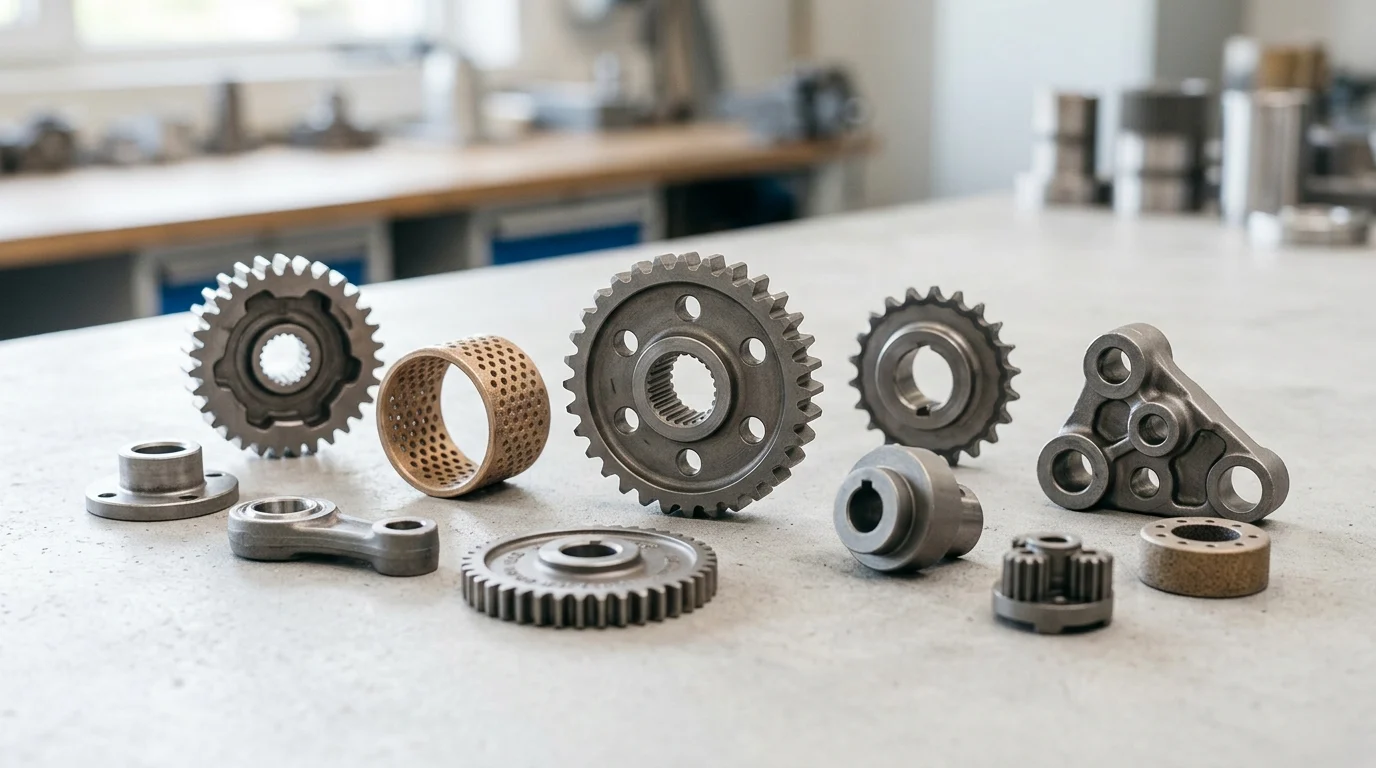
Automotive manufacturers use Powder Metallurgy to produce high volumes of parts with tight tolerances, low material waste, and predictable costs. Instead of relying on extensive machining or casting, this process forms components close to their final shape, which helps control scrap rates, shorten production cycles, and support consistent quality at scale. It also fits well with the industry’s need for lighter, more efficient drivetrains in both conventional vehicles and EVs. The discussion that follows explains where powder metallurgy parts are used in modern vehicles, why they lower overall production cost, and what makes them a practical choice for mass manufacturing.
Why Powder Metallurgy Parts Are Cost-Effective for Automotive
The automotive industry remains the dominant consumer of powder metallurgy parts, accounting for approximately 70% of global production. As original equiPment manufacturers (OEMs) face mounting pressure to optimize supply chains, reduce vehicle weight, and manage costs,sintered metal components offer a highly efficient alternative to traditional casting and machining.
How powder metallurgy reduces unit cost and material waste
The primary economic advantage of powder metallurgy lies in its net-shape or near-net-shape manufacturing capability. Traditional subtractive machining often results in material utilization rates of just 40% to 50%, generating significant scrap that must be recycled. In contrast, powder metallurgy routinely achieves material utilization rates exceeding 95%.
Furthermore, by eliminating multiple secondary machining operations, the process reduces overall energy consumption by up to 40% per component. This exceptional material and energy efficiency directly lowers unit costs, particularly in high-volume production runs where raw material expenses constitute a significant portion of the total part cost.
Where powder metallurgy parts fit in modern vehicles
Historically, internal combustion engine (ICE) vehicles have utilized 10 to 15 kilograms of sintered components per vehicle, heavily concentrated in engines, transmissions, and exhaust systems. However, the transition to electric vehicles (EVs) has shifted application focus rather than eliminating it.
Modern vehicle architectures rely on powder metallurgy for planetary gear carriers, electronic power steering components, and soft magnetic composites (SMCs) used in high-efficiency electric motors. This adaptability ensures sintered parts remain integral to both legacy and next-generation automotive platforms, providing cost-effective solutions regardless of the underlying drivetrain technology.
Technical and Commercial Criteria for Powder Metallurgy Parts
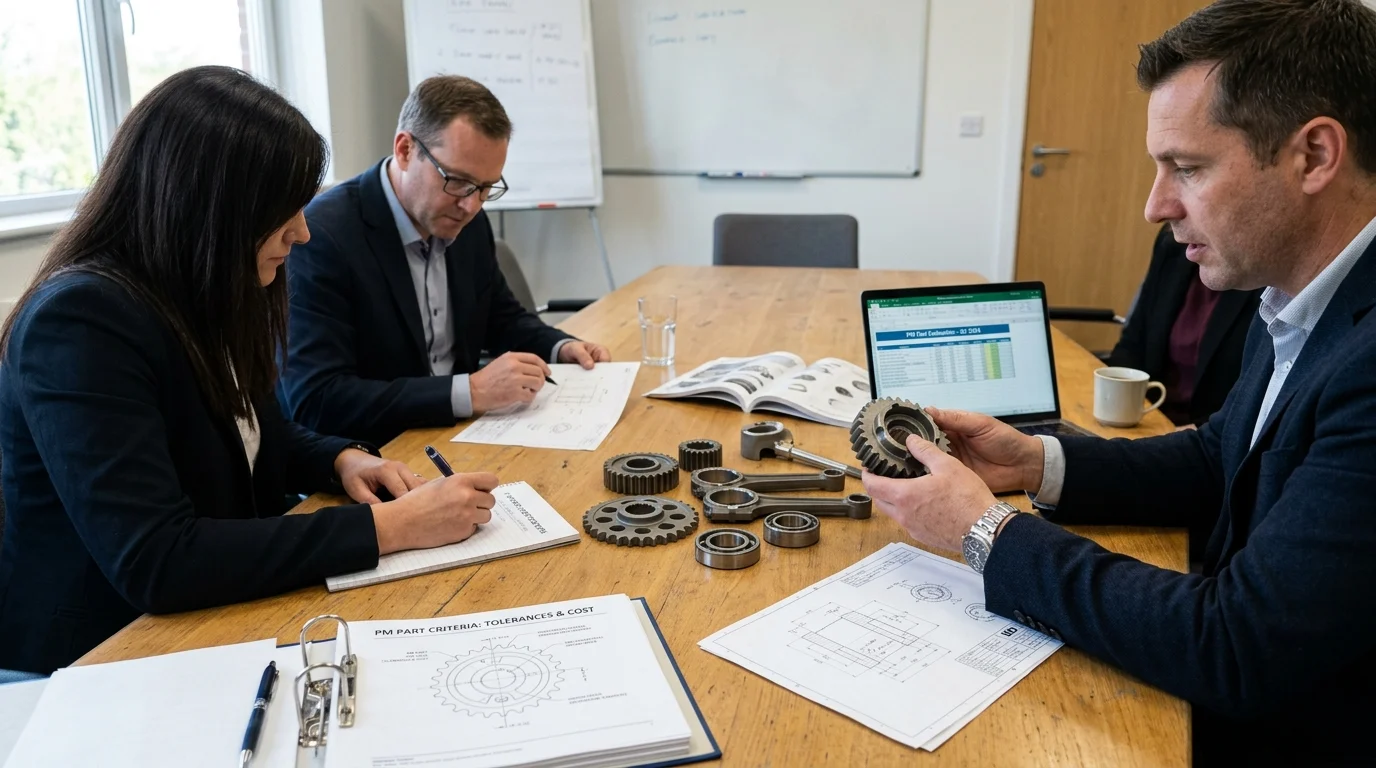
Specifying powder metallurgy parts requires a comprehensive understanding of the physical and mechanical properties achievable through sintering. Engineers must balance target performance metrics against the inherent porosity of sintered materials to ensure commercial viability.
Material, density, strength, wear, and dimensional requirements
Component density is the primary determinant of mechanical performance in powder metallurgy. Standard pressed and sintered iron parts typically range from 6.4 to 7.2 g/cm³ in density. When applications demand superior fatigue resistance and tensile strength, manufacturers employ advanced techniques such as warm compaction or powder forging, pushing densities above 7.4 g/cm³.
At these elevated densities, tensile strengths can exceed 800 MPa, making the parts highly competitive with wrought steel. Dimensional requirements are equally critical; controlling shrinkage during the sintering phase dictates the final tolerances and determines whether secondary sizing operations will be necessary.
Automotive components best suited to sintered metal parts
Certain automotive components are inherently suited to the powder metallurgy process due to their complex geometries, specific functional requirements, and high production volumes. Synchronizer hubs, oil pump gears, variable valve timing (VVT) sprockets, and connecting rods are prime examples.
| Component Attribute | Traditional Machining | Powder Metallurgy |
|---|---|---|
| Material Utilization | 45% - 55% | > 95% |
| Production Rate | Medium | High (up to 1,000 parts/hr) |
| Surface Porosity | Fully Dense | 5% - 15% (allows oil retention) |
| Typical Tolerance | IT5 - IT6 | IT7 - IT8 |
For components like oil pump gears, the inherent porosity of sintered metal is actually a functional advantage, as it allows the part to retain lubricating oil, thereby reducing friction and wear during engine start-up.
How buyers can compare powder metallurgy options
Procurement teams evaluating powder metallurgy options must conduct a rigorous cost-volume analysis. Because custom hard tooling for compaction dies can range from $10,000 to $50,000 depending on complexity, the minimum order quantity (MOQ) must be sufficient to amortize this upfront investment.
Generally, annual production volumes exceeding 50,000 units represent the breakeven threshold where powder metallurgy becomes significantly more economical than CNC machining or investment casting. Buyers should also compare secondary operation requirements, as parts needing extensive surface densification, heat treatment, or resin infiltration will incur higher unit costs that must be factored into the initial sourcing decision.
How Manufacturing Process Affects Cost and Quality
The economic and qualitative outcomes of powder metallurgy are deeply intertwined with the manufacturing process itself. Strict control over each production phase ensures that parts meet the stringent structural and dimensional demands of automotive applications.
Critical process steps in powder metallurgy manufacturing
The production cycle begins with the precise blending of elemental or pre-alloyed metal powders with 0.5% to 1.0% by weight of solid lubricants. This mixture is gravity-fed into a precision die and compacted under extreme pressures ranging from 400 to 800 MPa. The resulting green part possesses sufficient handling strength but lacks structural integrity.
Sintering follows, typically conducted in continuous belt furnaces under controlled protective atmospheres (such as nitrogen-hydrogen blends) at temperatures around 1120°C for iron-based alloys. This thermal treatment bonds the powder particles metallurgically without reaching the full melting point of the base metal, locking in the component's final geometry.
How tooling, tolerances, and quality control affect outcomes
Tooling design and maintenance are paramount to maintaining tight tolerances over long production runs. High-quality tungsten carbide dies can withstand millions of compaction strokes, allowing manufacturers to consistently achieve IT7 to IT8 dimensional tolerances straight from the furnace.
To meet automotive quality standards, process capability indices (Cpk) must consistently exceed 1.33 for critical dimensions. Robust quality control frameworks rely on automated vision systems and in-line density checks to detect micro-cracking or density gradients before parts proceed to secondary processing, ensuring that only dimensionally stable parts reach the assembly line.
Key cost drivers in total landed cost
Total landed cost in powder metallurgy is driven by raw material pricing, press cycle times, and the extent of secondary operations. While base iron powder is relatively inexpensive, fluctuating between $1.00 and $1.50 per kilogram, specialized alloying elements like molybdenum or nickel increase material costs.
Secondary operations—such as sizing for tighter tolerances, resin impregnation for sealing, or steam treating for enhanced wear resistance and corrosion protection—can add 20% to 40% to the base manufacturing cost. Minimizing these post-sintering steps through optimized die design and precise sintering control is critical for maintaining the economic viability of the part.
How Automotive OEMs and Tier Suppliers Should Source Powder Metallurgy
Sourcing automotive components demands a strategic approach to supplier selection, emphasizing both technical capability and supply chain resilience. The unique nature of powder metallurgy requires specialized assessment criteria to guarantee long-term performance.
Supplier qualification and certification criteria
Automotive OEMs require suppliers to adhere to zero-defect philosophies. At a minimum, powder metallurgy partners must hold IATF 16949 certification, which governs quality management systems in the automotive sector. Audits based on the VDA 6.3 standard are frequently utilized to evaluate process robustness and risk management.
Furthermore, acceptable defect rates for safety-critical sintered components are typically mandated at less than 10 Parts Per Million (PPM). Meeting this stringent threshold necessitates that suppliers demonstrate advanced statistical process control, continuous furnace monitoring, and automated non-destructive testing capabilities.
How to assess logistics and manufacturing footprint
The high density and corresponding weight of metal parts make logistics a critical factor in the sourcing equation. Procuring components from offshore suppliers introduces significant transit times, often adding 4 to 6 weeks for ocean freight. This extended pipeline requires larger buffer inventories, tying up working capital and increasing exposure to supply chain shocks.
Consequently, many Tier 1 suppliers prefer nearshoring or establishing localized manufacturing footprints. Assessing a supplier's geographical proximity against their unit cost advantage is essential for mitigating freight expenses and ensuring Just-In-Time (JIT) delivery schedules can be maintained without excessive expedited shipping costs.
A practical framework for engineering and procurement decisions
To optimize procurement, cross-functional teams should utilize a structured evaluation framework that balances engineering requirements with commercial realities.
| Evaluation Criteria | Key Indicators | Recommended Weighting |
|---|---|---|
| Quality Systems | IATF 16949, Cpk > 1.33, <10 PPM | 35% |
| Cost Competitiveness | Tooling amortization, unit price transparency | 30% |
| Technical Capability | In-house tooling, advanced compaction presses | 20% |
| Logistics & Supply | Lead times, regional warehousing, freight costs | 15% |
Using this matrix ensures that procurement decisions are not based solely on the lowest piece price, but rather on the Total Landed Cost (TLC) and long-term supplier viability. A supplier scoring high in technical capability but lacking in logistics infrastructure may ultimately present a higher risk to production continuity.
Practical Decision Path for Part Selection
Transitioning a component from conceptual design to mass production requires a disciplined approach to part selection. Automotive engineers must adapt their designs to the specific mechanical constraints and opportunities of the powder compaction process.
Design for manufacture actions that improve performance and cost
Successful implementation of powder metallurgy relies heavily on Design for Manufacture (DFM) principles. Because metal powder does not flow laterally like molten plastic or die-cast metal, parts must be designed for vertical ejection from the compaction die. Engineers must avoid undercuts, cross-holes, and sharp internal corners, which cannot be molded directly and require costly secondary machining.
Thin walls should be kept above a minimum thickness of 1.5 mm to prevent tooling failure and ensure uniform density during pressing. Additionally, incorporating draft angles of 0.5 to 1 degree on outer profiles significantly reduces ejection forces, minimizes tool wear, and directly lowers long-term production costs.
How to balance mass production, performance, and risk
Balancing the demands of mass production with performance targets requires careful risk management. Before committing to expensive multi-cavity hard tooling, OEMs often utilize additive manufacturing (metal 3D printing) or machine prototypes from sintered blanks to validate functional performance and fitment.
Once a design is frozen, scaling up to high volumes demands rigorous capacity planning. For automotive platforms requiring volumes exceeding 500,000 units annually, establishing dual-sourcing arrangements or ensuring the primary supplier has redundant press lines is critical to mitigating production bottlenecks and guaranteeing uninterrupted assembly line operations.
Key Takeaways
- The most important conclusions and rationale for Powder Metallurgy Parts
- Specs, compliance, and risk checks worth validating before you commit
- Practical next steps and caveats readers can apply immediately
Frequently Asked Questions
Why are powder metallurgy parts cost-effective for automotive mass production?
They use over 95% of raw material, reduce machining, and support high output rates. This lowers scrap, energy use, and unit cost, especially for volumes above about 50,000 pieces per year.
Which automotive parts are best suited to powder metallurgy?
Common fits include oil pump gears, synchronizer hubs, VVT sprockets, connecting rods, planetary gear carriers, and electronic power steering parts with stable high-volume demand.
Can powder metallurgy parts be used in EVs as well as ICE vehicles?
Yes. In EVs, they are widely used for planetary gear components, steering parts, and soft magnetic components for efficient motor systems, not just engine-related applications.
What specifications matter most when sourcing powder metallurgy parts?
Focus on density, strength, wear resistance, dimensional tolerance, and secondary operations. For higher fatigue performance, ask whether warm compaction, sizing, or densification is needed.
How can buyers evaluate a powder metallurgy supplier like JHPIM?
Check tooling cost, MOQ, density range, achievable tolerances, secondary processing capability, and automotive application experience. Request sample validation and a cost-volume analysis before full production.