


powder metallurgy tool steel
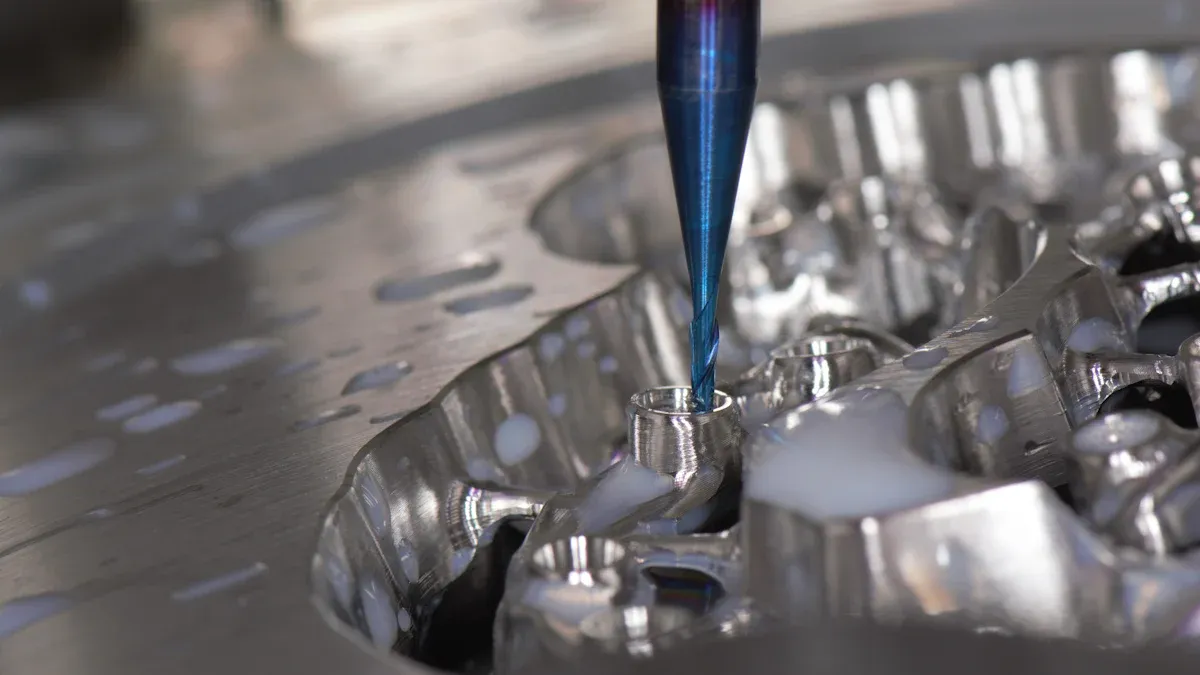
Powder Metallurgy tool steel refers to a specialized material produced through powder metallurgy techniques, which involve compacting metal powders and sintering them at high temperatures. This process yields a material with superior mechanical properties, making it significant in modern manufacturing. The global powder metallurgy market size was estimated at USD 2.96 billion in 2024 and is projected to grow significantly, reaching USD 10.19 billion by 2033.
Unique properties of powder metallurgy tool steel include isotropic behavior, improved wear resistance, and higher toughness. These characteristics differentiate it from conventional tool steels, providing advantages in various applications.
Key Takeaways
- Powder metallurgy tool steel offers superior mechanical properties, including enhanced wear resistance and toughness, making it ideal for demanding applications.
- The manufacturing process involves key stages such as powder preparation, mixing, compaction, sintering, and quality control to ensure high standards.
- This technology allows for greater design flexibility, enabling the creation of complex shapes and reducing the need for additional machining.
- While initial costs for powder metallurgy tool steel are higher, long-term savings in maintenance and replacement make it a cost-effective choice.
- Powder metallurgy processes are more environmentally friendly, producing less waste and lower CO2 emissions compared to traditional manufacturing methods.
Manufacturing Process of Powder Metallurgy
Overview of Powder Metallurgy
Powder metallurgy is a manufacturing process that transforms metal powders into solid components. This technique allows for precise control over material properties and shapes. The process begins with the production of high-quality metal powders, which are then blended with alloying elements to achieve desired characteristics. The uniform distribution of these elements is crucial for the performance of the final product.
Steps in Production
The production of powder metallurgy tool steel involves several key stages:
- Powder Preparation: Various methods, such as high-pressure gas atomization and chemical reduction, create metal powders.
- Mixing and Blending: Metal powders are combined with lubricants and alloying components to ensure uniformity.
- Compaction: The powder mixture is compressed into a desired shape, forming a "green compact."
- Sintering: The green compact undergoes heating below its melting point, allowing particles to bond together.
- Post-sintering Treatment: This stage includes machining, heat treatments, and surface finishing to enhance the final product's properties.
- Quality Check and Inspection: The final product is rigorously tested to ensure it meets industry standards.
The table below summarizes the main stages involved in the powder metallurgy manufacturing process for tool steel:
| Stage | Description |
|---|---|
| Powder Production | The initial step where the quality of powders is determined by the production method used. |
| Mixing | Involves blending metal powder with lubricants or alloying elements for uniformity. |
| Compaction | The process of compressing the powder mixture into a desired shape. |
| Sintering | Heating the compacted powder to bond particles together without melting them. |
Quality Control Measures
Quality control is vital in the powder metallurgy process to ensure consistent tool steel properties. Several measures are implemented throughout production:
- Monitoring each stage, including powder production, compaction, and sintering, prevents variations that could affect properties.
- Dimensional accuracy is critical; deviations can hinder functionality and assembly.
- Mechanical properties, such as strength and wear behavior, undergo rigorous testing.
- Microstructural integrity is assessed to avoid defects like porosity or inclusions.
- Industry standards, such as those from the Metal Powder Industries Federation (MPIF), guide quality practices.
- Advanced non-destructive testing (NDT) methods, including X-ray computed tomography, detect internal defects early.
- Statistical Process Control (SPC) analyzes real-time data to identify process variations promptly.
- Digitalization enhances quality control by connecting data with production processes for continuous monitoring.
These quality control measures ensure that powder metallurgy tool steel meets the high standards required for various applications.
Advantages of Powder Metallurgy Tool Steel
Enhanced Mechanical Properties
Powder metallurgy tool steel exhibits remarkable mechanical properties that set it apart from traditional tool steels. The fine-grain structure and uniform carbide distribution significantly enhance its performance characteristics. For instance, the Carpenter Technology Micro-Melt Maxamet alloy demonstrates higher hardness and improved wear resistance compared to conventional tool steels. Although its toughness may be lower at lower hardness levels, it remains commendable given its increased hardness.
The following table summarizes key mechanical properties of powder metallurgy tool steel:
| Property | Value |
|---|---|
| Yield Strength | Increased with Cr and Mo |
| Tensile Strength | Up to 1200 N/mm² |
| Elongation | Decreased |
The tensile strength indicates the load-bearing capacity of powder metal components. It can reach 900 N/mm² and increase to 1200 N/mm² through heat treatment. This high tensile strength allows for reliable performance under significant loads, making powder metallurgy tool steel an excellent choice for demanding applications.
Improved Wear Resistance
Wear resistance is another critical advantage of powder metallurgy tool steel. The technology maintains smaller carbide sizes compared to traditional tool steels, which enhances toughness and wear resistance. The addition of tungsten (W), vanadium (V), and chromium (Cr) promotes the formation of alloy carbides, leading to improved abrasion resistance.
Key factors contributing to the improved wear resistance include:
- The ability to incorporate a higher volume of vanadium carbide, which traditional steels limit to about 4-5%.
- The presence of dispersive alloy carbide precipitates, which contribute to the secondary hardness effect,is crucial for wear resistance.
- A low carbon concentration combined with these alloying elements increases ductility, making the steel suitable for impact loads.
These features collectively enhance the wear properties of powder metallurgy tool steel, making it ideal for applications where durability is paramount.
Design Flexibility
Powder metallurgy technology enables greater design flexibility in tool steel manufacturing. The ability to create net shape parts directly from the press reduces the need for additional machining, enhancing design possibilities. This process allows for the production of intricate details and features that are crucial for functionality.
Some notable aspects of design flexibility include:
- The creation of complex shapes and geometries that traditional methods may struggle to achieve.
- The consolidation of multi-component parts into a single piece reduces assembly costs and improves structural integrity.
- The production of near-net shape parts requires minimal finishing, streamlining the manufacturing process.
This capability addresses cost and time challenges associated with traditional manufacturing methods, allowing for innovative designs that meet specific application requirements.
Common Applications of Powder Metallurgy Tool Steel
Industrial Tools
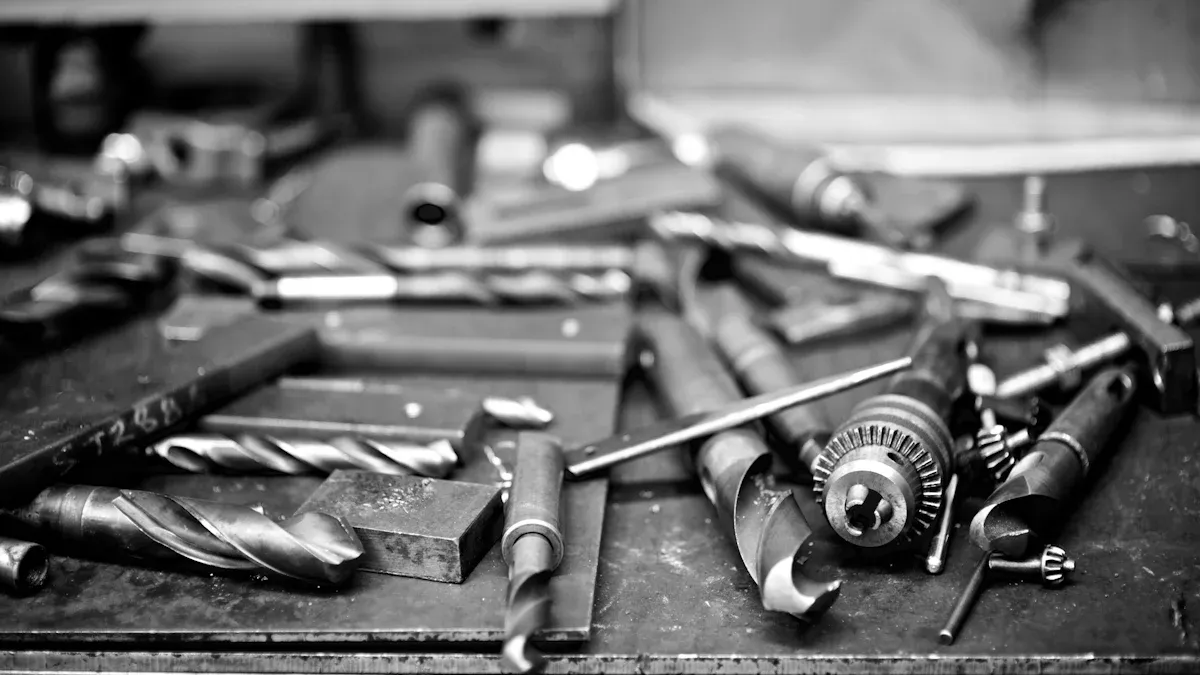
Powder metallurgy tool steel finds extensive use in various industrial tools due to its superior properties. Common tools manufactured from this material include:
- Fineblanking and punching tools
- Thread-rolling jaws
- Industrial knives
- Coin minting tools
- Sintering components
- Sonotrodes
These tools benefit from several performance advantages over traditional tool steels. The table below highlights key benefits:
| Performance Benefit | Description |
|---|---|
| Finer grain structures | Enhances overall material properties and performance. |
| Improved homogeneity | Leads to better distribution of secondary and carbide phases. |
| Elimination of secondary stringers | Reduces defects and improves material integrity. |
| Less distortion in heat treatment | Results in more stable dimensions post-processing. |
| Improved grindability | Facilitates easier machining and finishing processes. |
| Greater wear resistance | Extends tool life and reduces the frequency of replacements. |
| Improved toughness and fracture strength | Increases durability and reliability under stress. |
Automotive Components
In the automotive sector, powder metallurgy tool steel plays a crucial role in manufacturing components designed for high-load conditions. These components exhibit exceptional wear resistance and high fatigue strength, ensuring durability. Key advantages include:
- Customization for high strength and wear resistance.
- Intricate geometries that enhance performance and reliability.
- Longevity and reliability for critical components like gears.
Aerospace Parts
Aerospace applications also benefit significantly from powder metallurgy tool steel. Commonly manufactured parts include:
- Gears
- Turbine discs
- Precision components tailored for aerospace use
The use of powder metallurgy impacts performance and safety in aerospace components. The table below summarizes these aspects:
| Aspect | Description |
|---|---|
| Strength-to-Weight Ratio | Pm parts have a high strength-to-weight ratio, beneficial for aerospace use. |
| Fatigue Resistance | PM parts exhibit lower impact and fatigue resistance compared to forged parts, which may limit their application in high-stress environments. |
| Safety Concerns | Certain metal powders pose explosion risks during sintering, necessitating careful handling and safety measures. |
The unique properties of powder metallurgy tool steel make it an ideal choice for various applications across industries, enhancing performance and reliability.
Comparison of Powder Metallurgy Tool Steel with Traditional Tool Steels
Performance Differences
When comparing powder metallurgy tool steel to traditional tool steels, significant performance differences emerge. Powder metallurgy tool steels typically exhibit enhanced toughness due to their uniform microstructure. This uniformity results from the manufacturing process, which allows for finer grain structures and smaller carbide sizes. In contrast, traditional tool steels may experience lower toughness as the alloy content increases, leading to a higher likelihood of breakage or chipping under stress.
- PM tool steels like K390 demonstrate high fatigue endurance strength.
- Fatigue limits for PM tool steels remain undefined, indicating superior performance under cyclic loading.
- Stress amplitudes for failure in PM tool steels range from 700 to 1400 MPa, showcasing their robustness.
The S-N data obtained for PM cold work tool steel K390 shows a continuously decreasing shape with increasing cycle number to failure, indicating that a real fatigue limit does not exist for this material.
These characteristics make powder metallurgy tool steels particularly suitable for applications requiring high durability and resistance to wear.
Cost Considerations
Cost is a crucial factor when evaluating powder metallurgy tool steel against traditional tool steels. The manufacturing methods differ significantly in terms of expenses.
| Manufacturing Method | Cost Level |
|---|---|
| Conventional Ingot Casting | Low |
| Powder Metallurgy (P/M) | High |
| Spray Forming (SF) | Medium |
While conventional powder metallurgy tooling tends to be more expensive than ingot casting, it remains competitive with other methods such as metal injection molding, die casting, and forging.
Additionally, lifecycle costs reveal further distinctions:
| Aspect | Powder Metallurgy Tool Steel | Traditional Tool Steel |
|---|---|---|
| Initial Cost | Higher ($8-25 per pound) | Lower ($2-5 per pound) |
| Service Life | 3-5 times longer | Shorter lifespan |
| Maintenance Frequency | Less frequent | More frequent |
| Maintenance Cost per Cycle | $75-150 | Higher due to frequency |
| Energy Consumption | Higher processing costs (25-40% more) | Lower processing costs |
These factors indicate that while the initial investment in powder metallurgy tool steel may be higher, the long-term savings in maintenance and replacement can offset these costs.
Environmental Impact
The environmental impact of producing powder metallurgy tool steel is generally more favorable compared to traditional manufacturing methods.
| Environmental Factor | Powder Metallurgy | Traditional Manufacturing |
|---|---|---|
| CO2 Emissions | 0.8-1.5 kg/kg | 2.5-4.0 kg/kg |
| Water Usage | Low | Moderate to High |
| Hazardous Waste | Minimal | Significant |
| Recyclability | High (>90%) | Moderate (40-70%) |
Powder metallurgy processes, including additive manufacturing, often produce less waste and consume less energy than traditional methods. This makes tool steel powders a more sustainable choice for manufacturers aiming to reduce their environmental footprint.
In summary, powder metallurgy tool steel offers numerous advantages, including part-to-part uniformity, shape flexibility, and application versatility. These properties enhance product quality and make it suitable for various industries, such as automotive, aerospace, and industrial machinery.
The future of powder metallurgy technologies looks promising. Key trends include advancements in processing techniques, increased demand for high-performance tools, and a focus on sustainable practices. As manufacturers continue to innovate, powder metallurgy tool steel will play a vital role in shaping the future of modern manufacturing.
Key Advantages of Powder Metallurgy Tool Steel:
- Part-to-part uniformity
- Shape and material flexibility
- Application versatility
- Cost-effectiveness
FAQ
What is powder metallurgy tool steel?
Powder metallurgy tool steel is a specialized material created by compacting metal powders and sintering them. This process enhances mechanical properties, making it suitable for demanding applications in various industries.
How does powder metallurgy differ from traditional steel manufacturing?
Powder metallurgy allows for precise control over material properties and shapes. It produces finer grain structures and uniform carbide distributions, resulting in superior performance compared to traditional steel manufacturing methods.
What are the main advantages of using powder metallurgy tool steel?
Key advantages include enhanced mechanical properties, improved wear resistance, and design flexibility. These features make it ideal for applications requiring durability and precision, such as industrial tools and automotive components.
Are there any environmental benefits to using powder metallurgy?
Yes, powder metallurgy typically generates less waste and consumes less energy than traditional manufacturing methods. This results in lower CO2 emissions and a more sustainable production process.
What industries commonly use powder metallurgy tool steel?
Industries such as automotive, aerospace, and manufacturing utilize powder metallurgy tool steel. Its unique properties make it suitable for high-performance applications, including gears, cutting tools, and precision components.